As the Peeth remembers it
Datia, Madhya Pradesh · the shrine's own account · 2 min read
In October 1962 war broke out on India's northern border, on two fronts at once, in the east and in the west. The news that reached the plains was bad. The army was falling back.
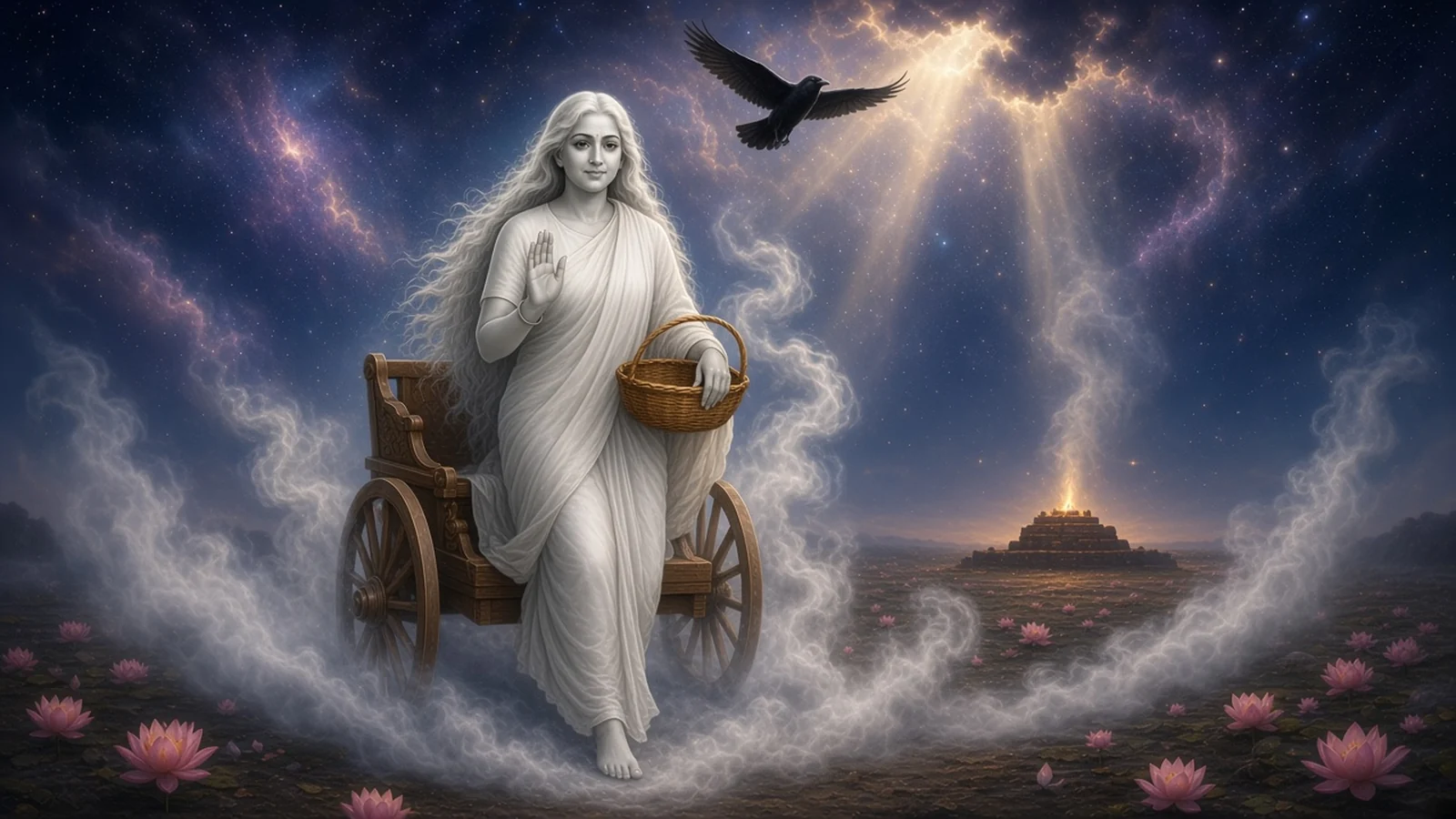
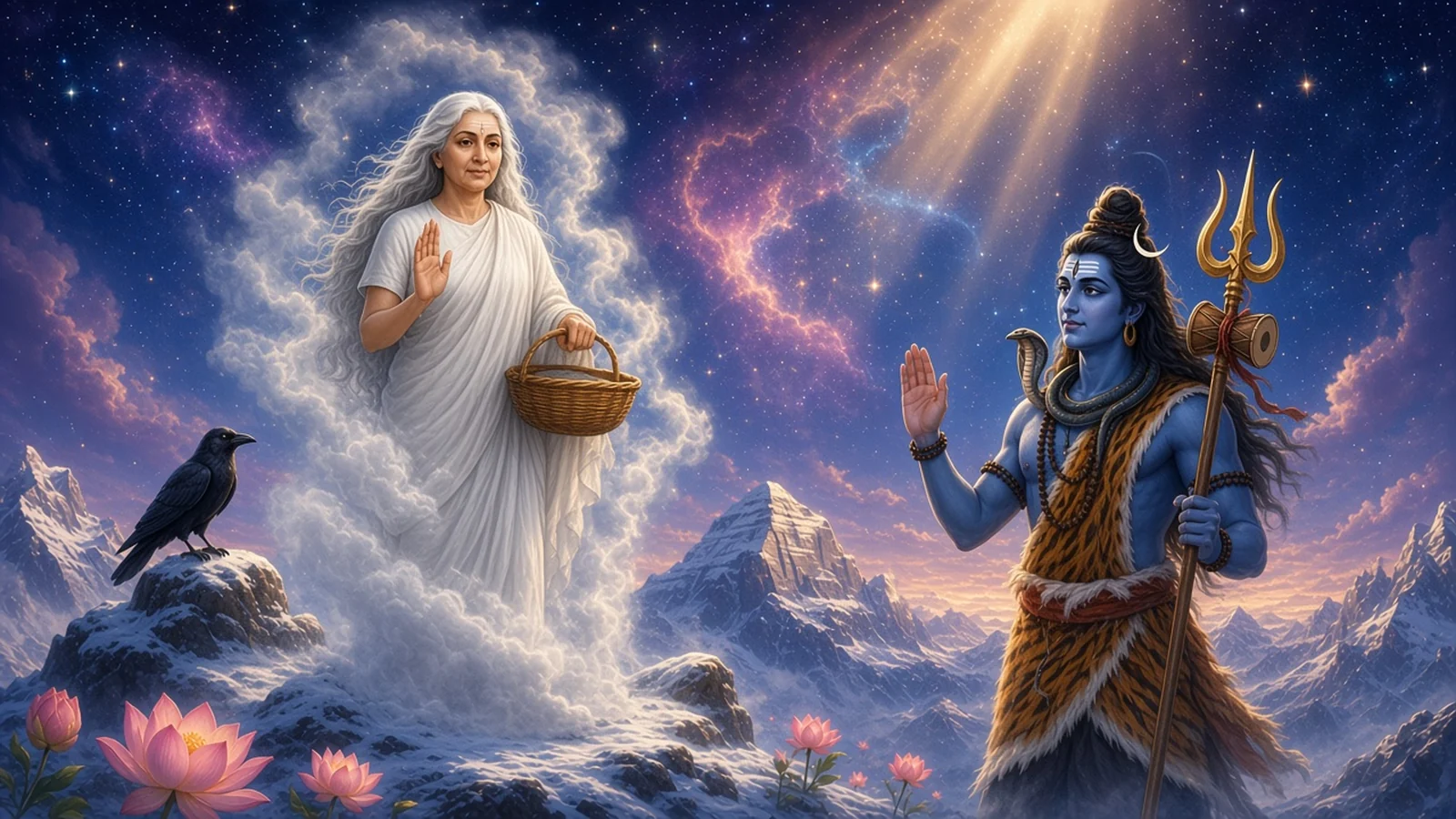
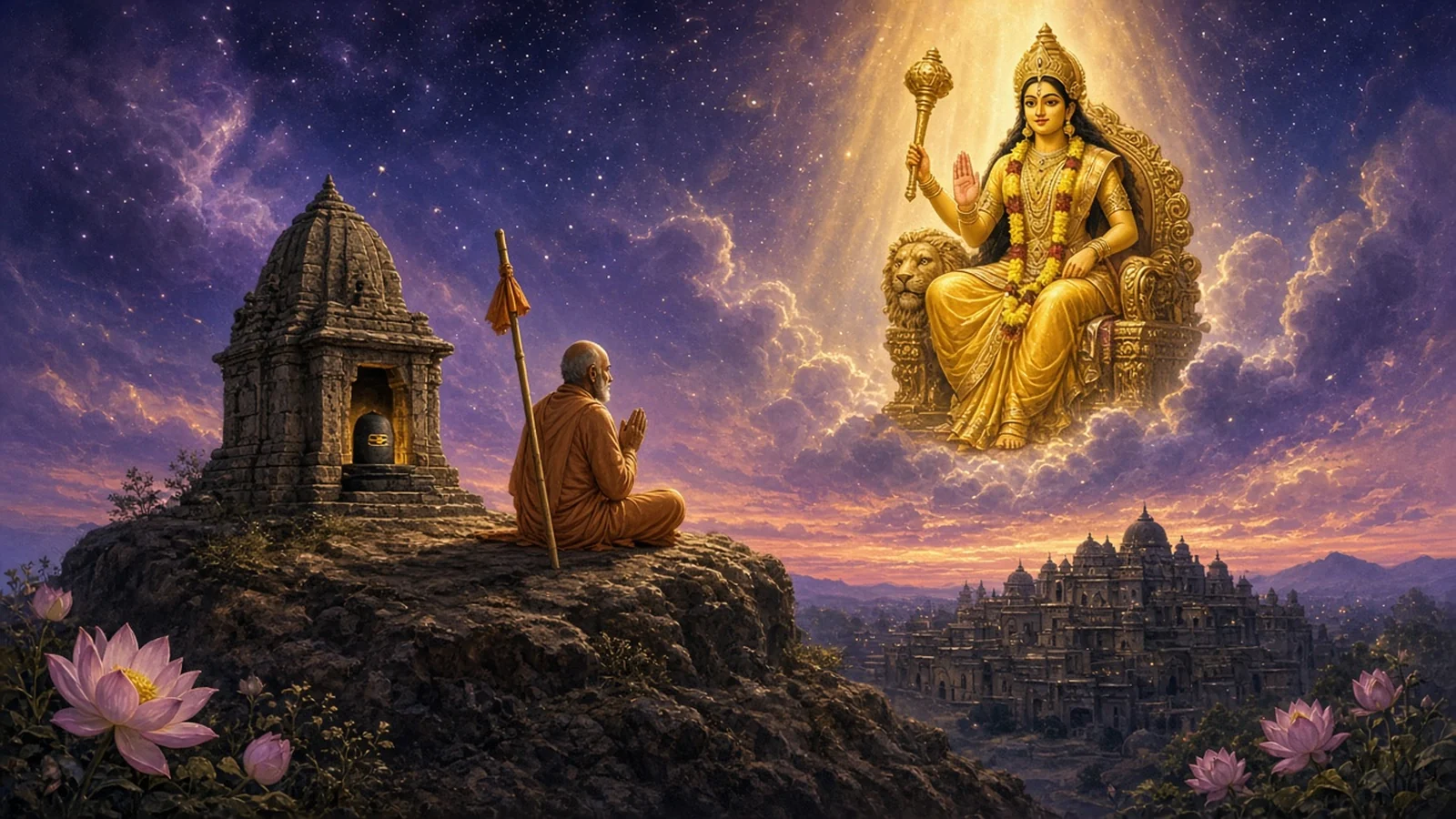
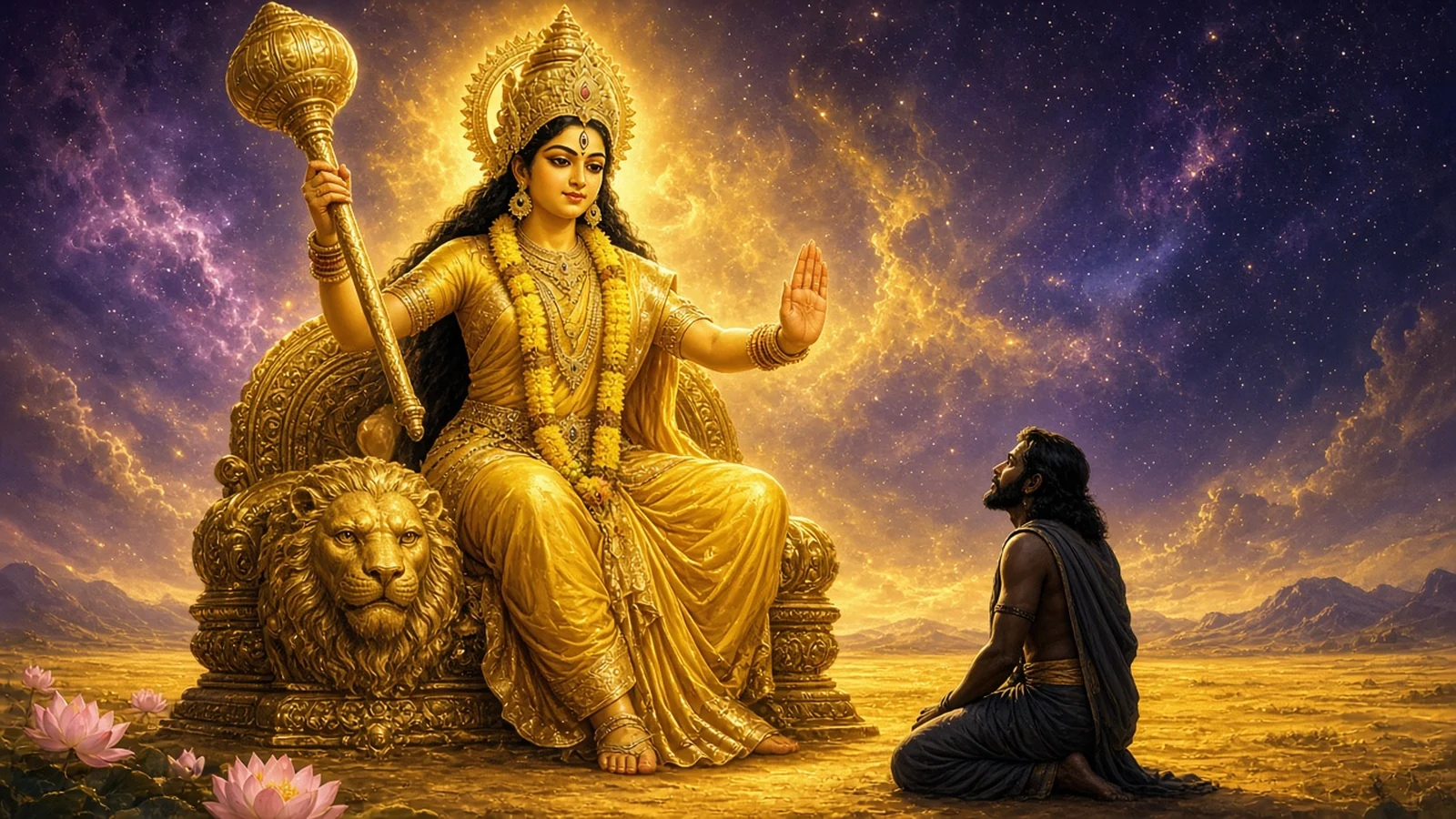
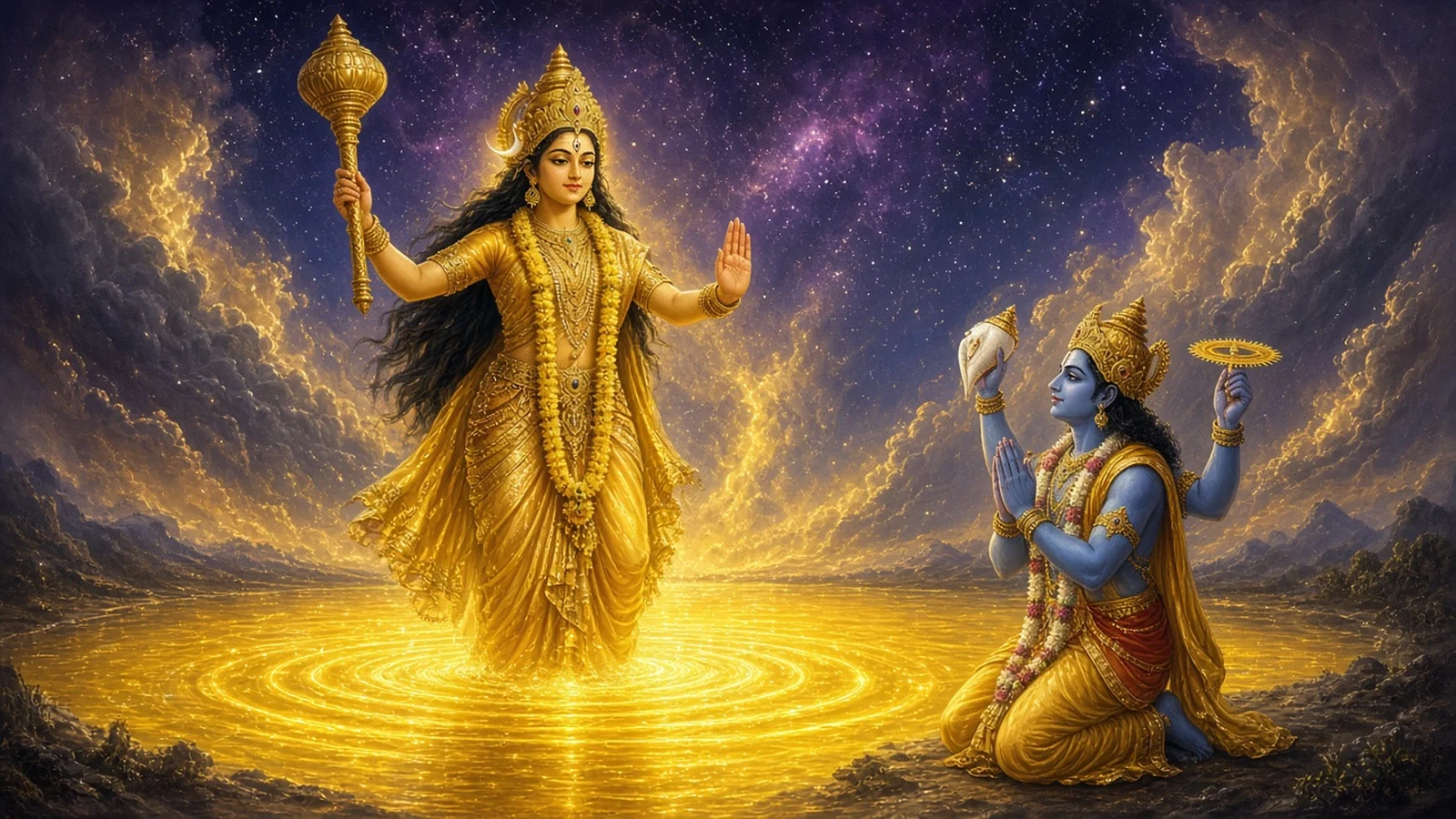
On a low hill at the edge of Datia lived the swami who never told anyone his name. He had come to the town one July day in 1929 meaning to stay a night, and had stayed for thirty years and more. He had set up the goddess in yellow, Bagalamukhi, as Pitambara, the goddess who stills whatever moves. But in that autumn, his devotees say, it was another of the ten he turned to: Dhumavati, the smoky one, the widow, whose power the Peeth calls the destroyer of enemies and of poverty.
The Peeth's devotees tell how the matter came to him. India's friends abroad, they say, would not send help, and a yogi spoke to the Prime Minister.
"There is a swami at Datia," he said. "Go to him."
The swami heard what was asked of him.
"Then let there be a rite," he said, "for the good of the whole country."
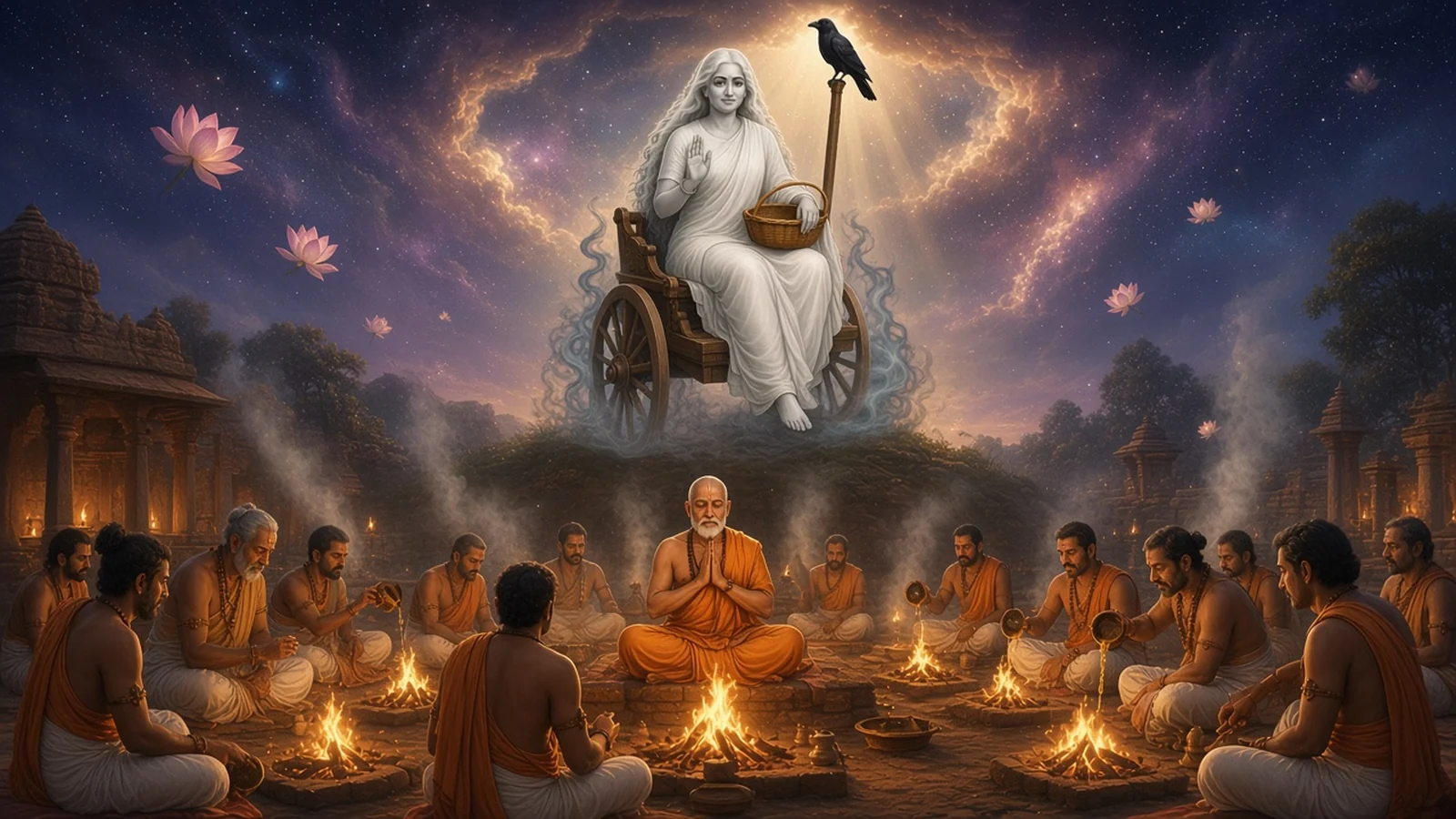
Learned priests and tantric adepts came to the hill. Fire pits were dug and the fires were lit. The devotees say the Prime Minister himself, Jawaharlal Nehru, was named the patron of the rite, the yajaman in whose name it was offered.
For nine days the fires burned, and the priests kept up their offerings.
On the ninth day, as the last full offering was being poured into the flames, a message came. The Peeth's devotees say it came from the United Nations.
"The attack has stopped," it said. "China has halted."
Sixteen years later, in 1978, the Peeth printed a small Sanskrit book on four of the ten goddesses, and in its preface it wrote the story down in a few plain lines. At the time of the Chinese attack, it said, a rite had been held in the ashram to protect the country. It bore fruit at once. China's advance was stopped.
The fire hall where the rite was held still stands on the hill.
That same year, on the eighth day of the bright half of Jyeshtha, which fell on the thirteenth of June 1978, the swami installed Dhumavati in a temple of her own beside the goddess in yellow. There is no other seat like it in the country, the Peeth's book said. Madhya Pradesh Tourism still tells visitors that the history of the Dhumavati temple goes back to the India-China war.
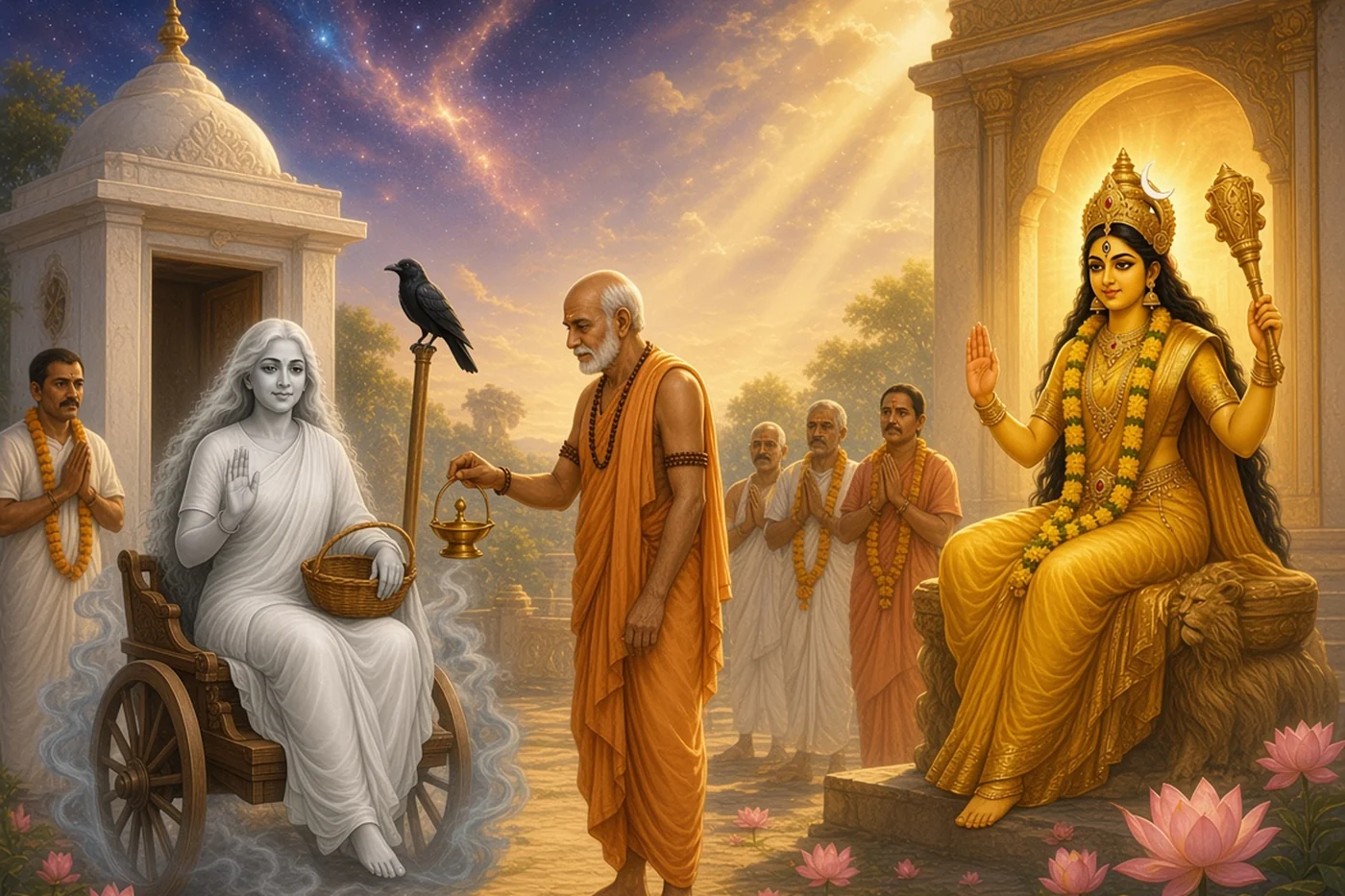
The swami had been warned against bringing her there. How he answered the learned men who warned him is told in The Swami with No Name.
As the newspapers tell it
Patrika, 2016, and the Free Press Journal, 2025 · 1 min read
The newspapers of Madhya Pradesh tell the story with more fire in it.
In 2016 the Hindi daily Patrika gave it this way. When China attacked in 1962 and the Indian army was being pushed back, the swami decided on a rite for the nation's protection. Leading priests were gathered from all over the country, and the great sacrifice began under his direction.
While it was going on, it is said, Dhumavati herself appeared in the sacrificial hall. She asked one of the chief priests to come with her to the battlefield. He was frightened and would not go. So she went alone.
At the front, the paper goes on, the soldiers on the other side saw a woman standing on a tank, huge and terrible, a great whip in one hand. Fear went through their ranks, they broke and fled, and soon after came the ceasefire.
The Free Press Journal, in 2025, called it the famous legend of the temple and counted the fire pits: fifty-one of them. In its telling Nehru is reported to have asked for the rite himself, though he may never have come to Datia, and the fires burned for several days before news came that China had stopped its invasion.
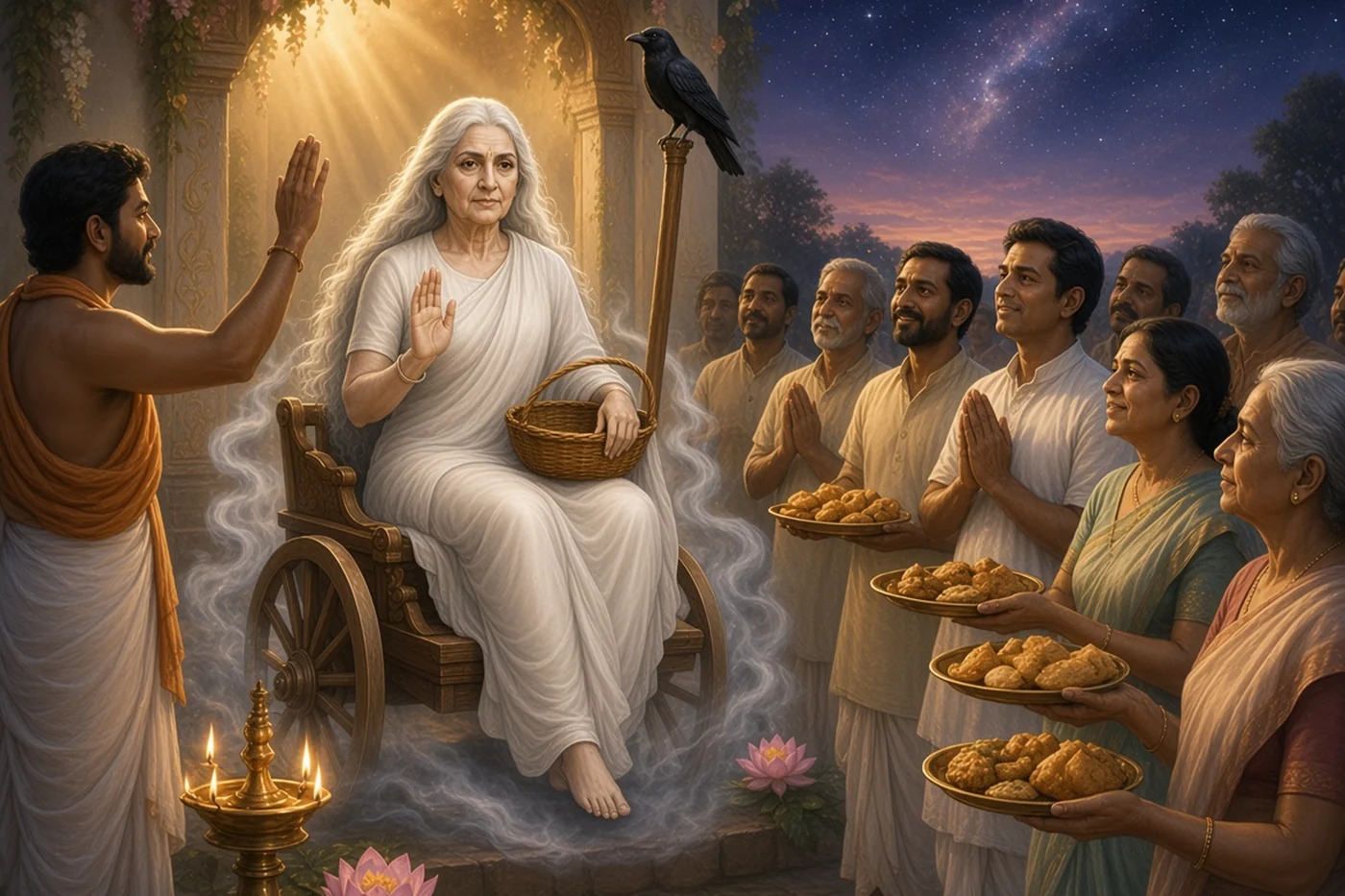
Patrika also described the goddess as people find her today. Her doors open only briefly, at the morning and evening lamp, and for longer on Saturdays, when crowds come from Gwalior, Morena and Jhansi. Her offerings are savoury, kachoris and samosas and fried snacks. And a notice asks women whose husbands are living not to take her darshan.