As the Peeth tells it
Datia, Madhya Pradesh · the shrine's own history · 3 min read
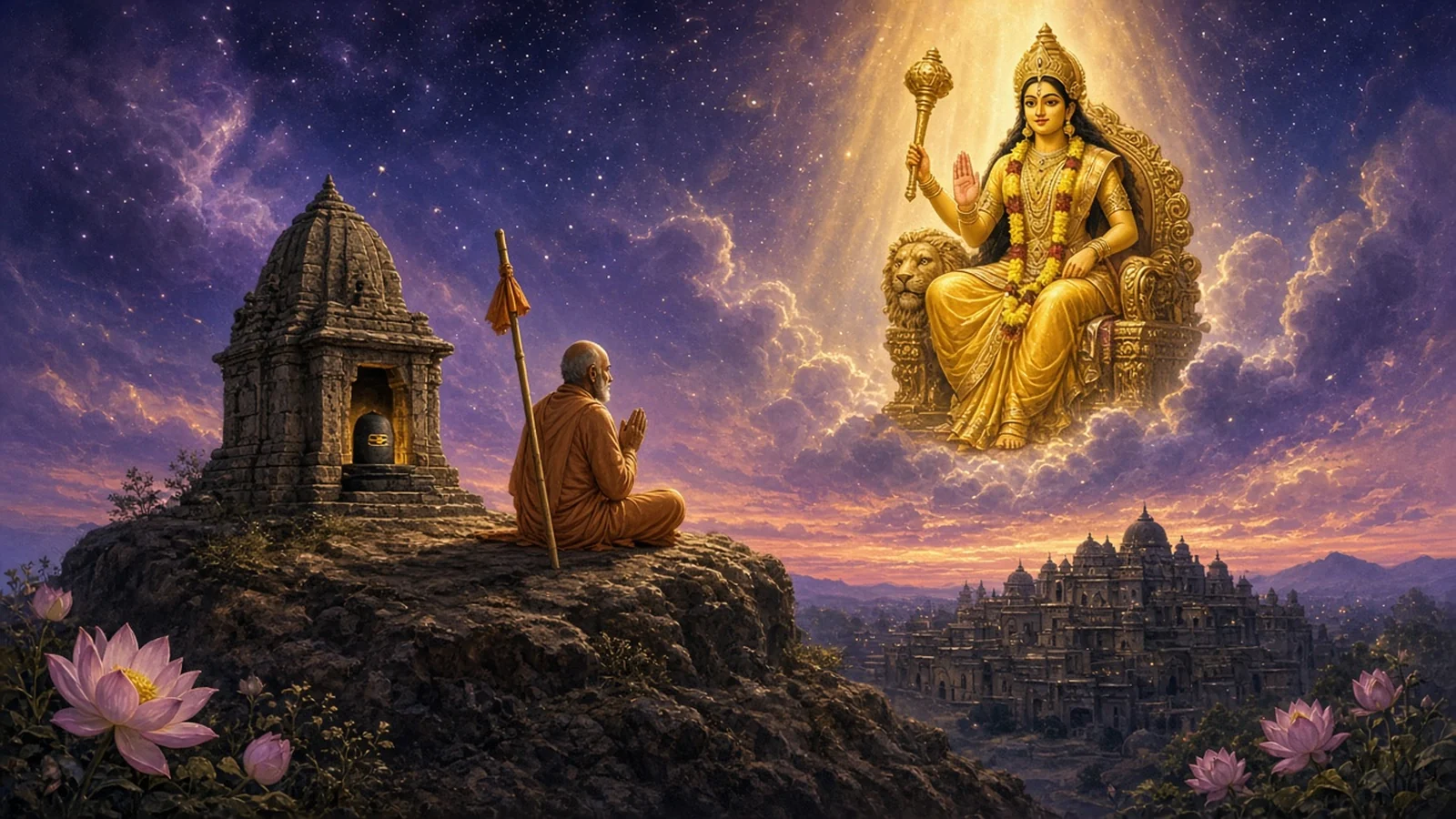
In the summer of 1929, on the ninth of July by the account his followers keep, a wandering ascetic came walking into Datia.
He was a Dandi Swami, one of the renouncers who carry a staff, and he had been walking for a long time, across the whole country. Datia was an old town of palaces and Sanskrit scholars. He meant to stay one night and go on in the morning.
He did not go on.
At the edge of the town there was a low hill, and on it stood a Shiva shrine so old that the people of Datia said it went back to the days of the Mahabharata. They called that Shiva Vankhandeshvar. The swami stopped there, and sat down, and began to pray.
He prayed on that hill for five years, and the people of the town began to come up and sit with him.
"Maharaj," one of them asked him, "what is your name? Where is your home?"
"I am a swami," he said. "That is enough."
He never told anyone. Not his name from before, not his village, not his family. The town called him Swamiji, and later Pujyapad, the one whose feet are worshipped.
They found out other things about him instead. He knew Sanskrit as well as any pandit in Datia, and Persian, Urdu and Arabic besides. He knew music, the old classical music, and in time great singers came to the ashram.
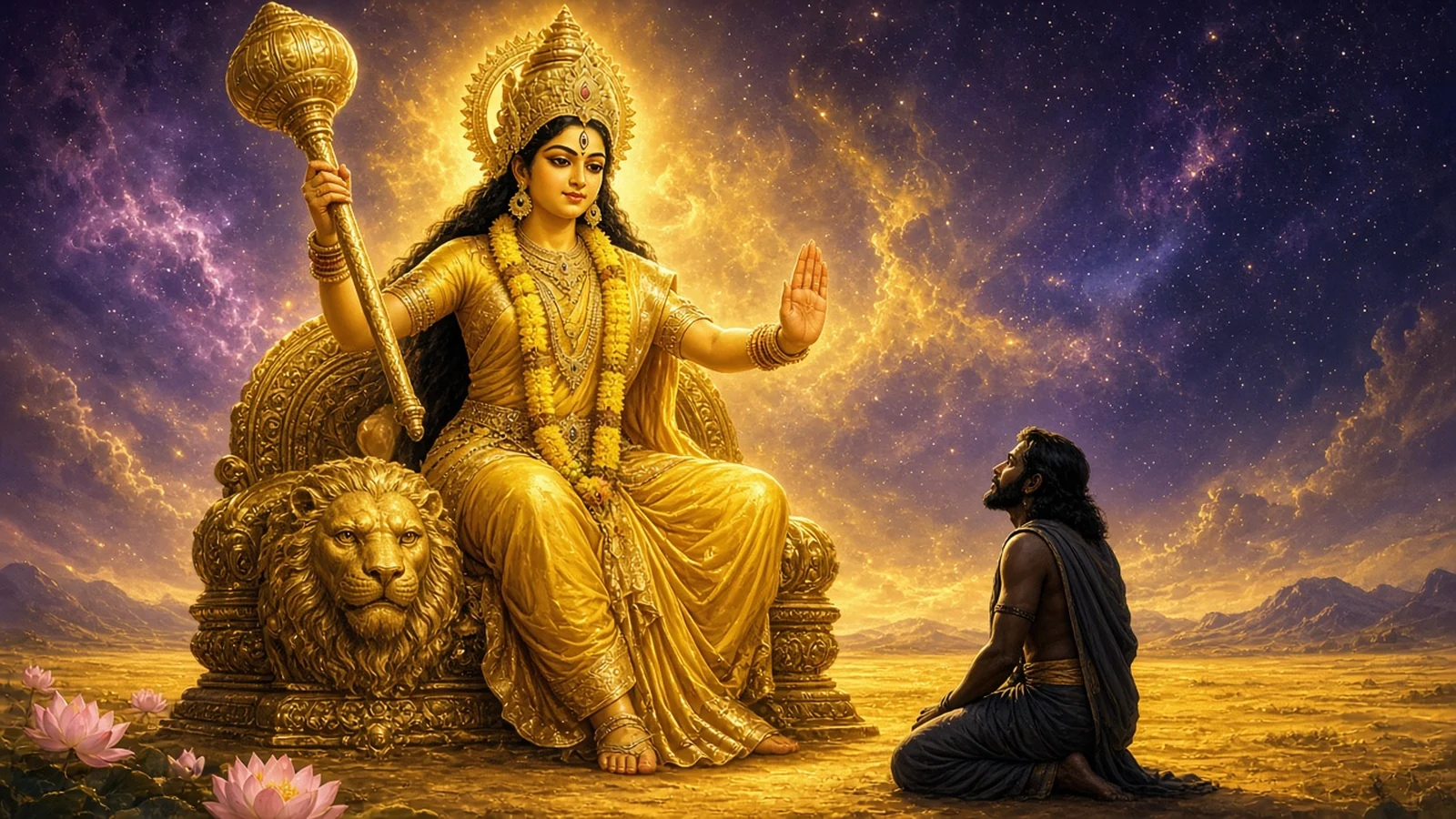
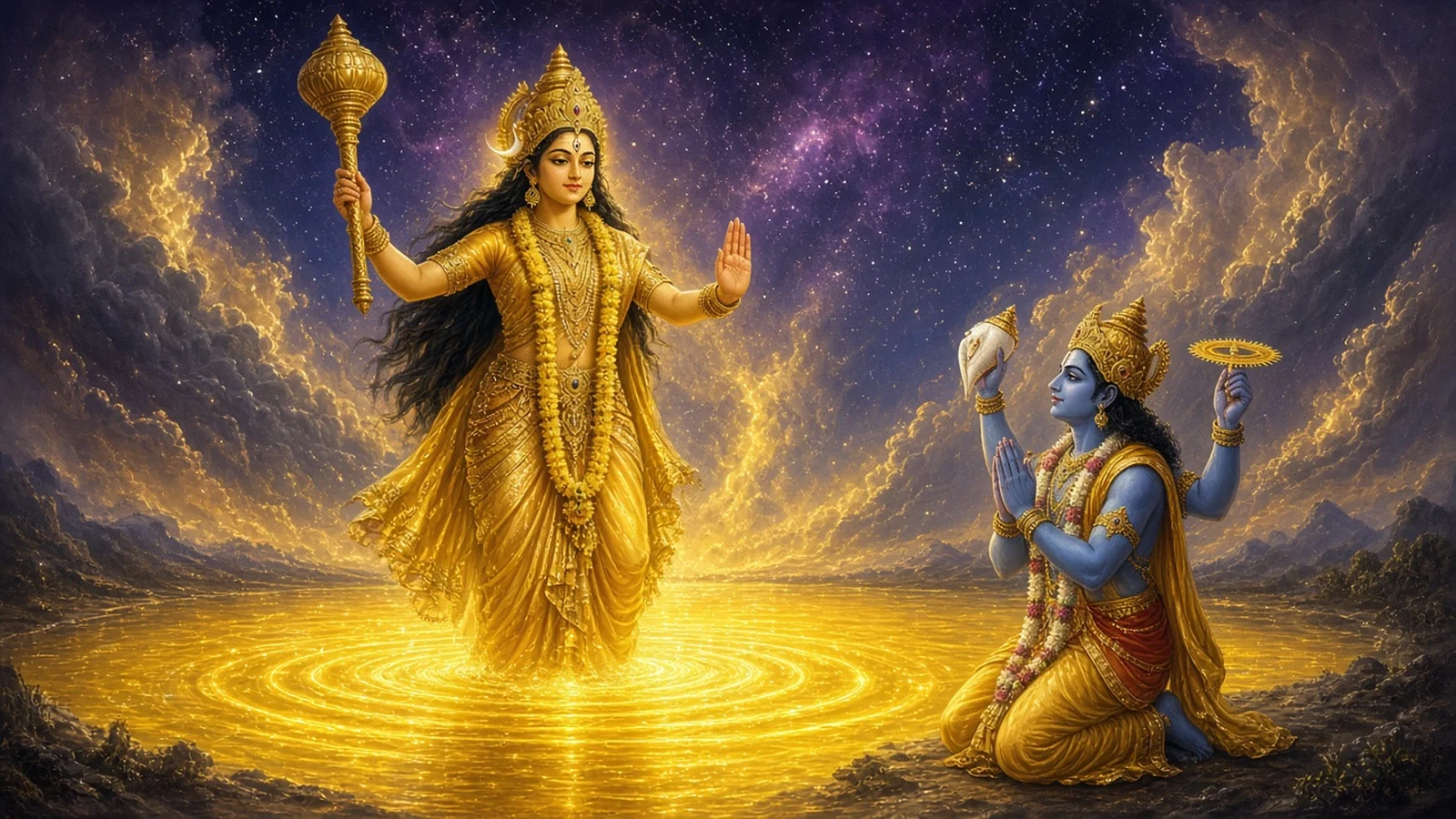
In 1935 he set up the goddess he had been praying to all those years. She was Bagalamukhi, the goddess in yellow, and on that hill she was called Pitambara. In front of her shrine a pond was named Haridra Sarovar, the lake of turmeric, after the lake where she first woke.
Some of the Peeth's ways go back to those first years.
A visitor came to the goddess's door with money in his hand.
"Keep it," the swami told him. "She does not take it."
Her main darshan still takes no money, and visitors keep silent where they are asked to.
The hill became a place of learning as well as prayer. Children are taught Sanskrit there for nothing. Books came, until the library held thousands. Scholars still come to debate in Sanskrit in the old way, one side and then the other.
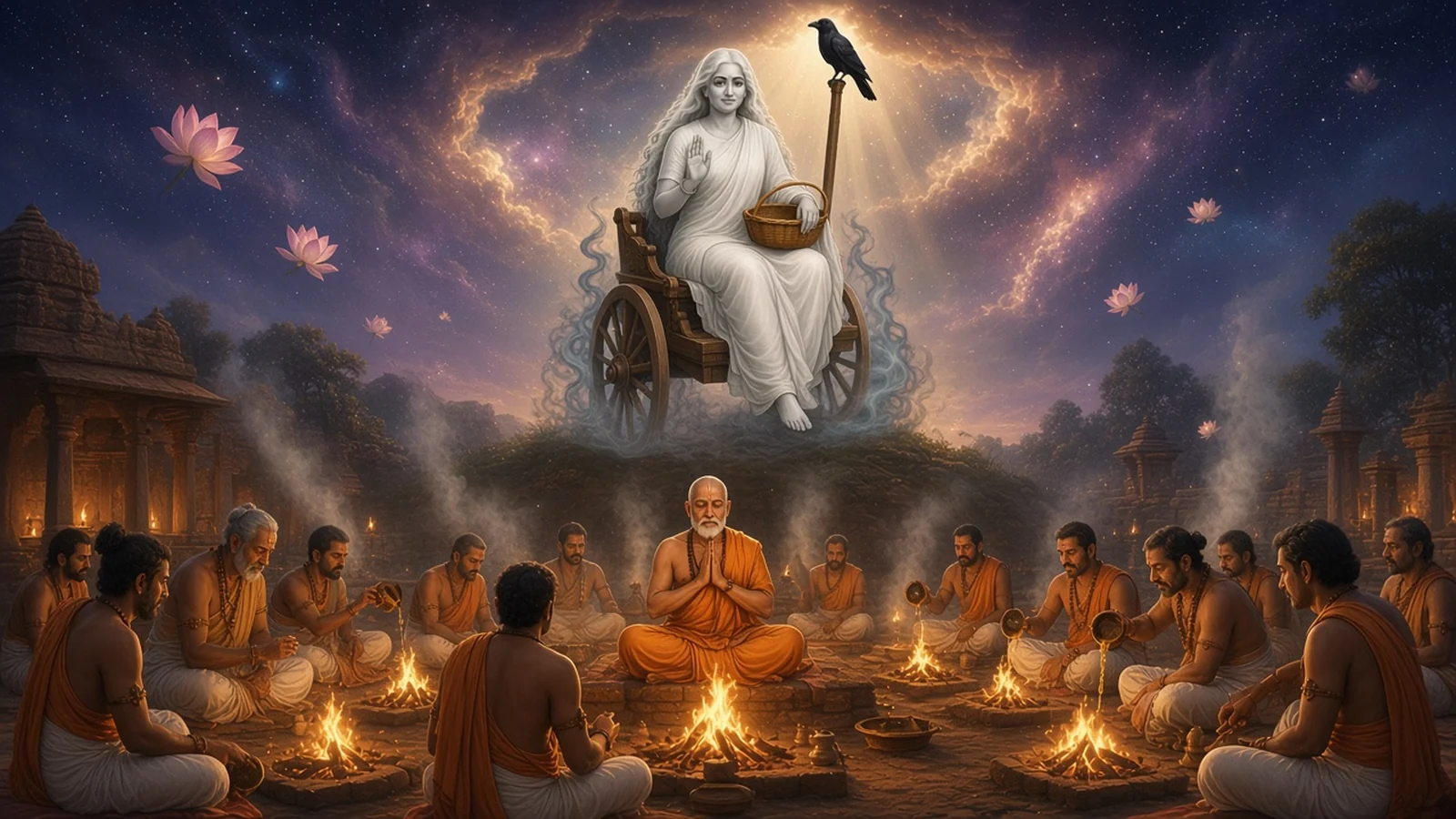
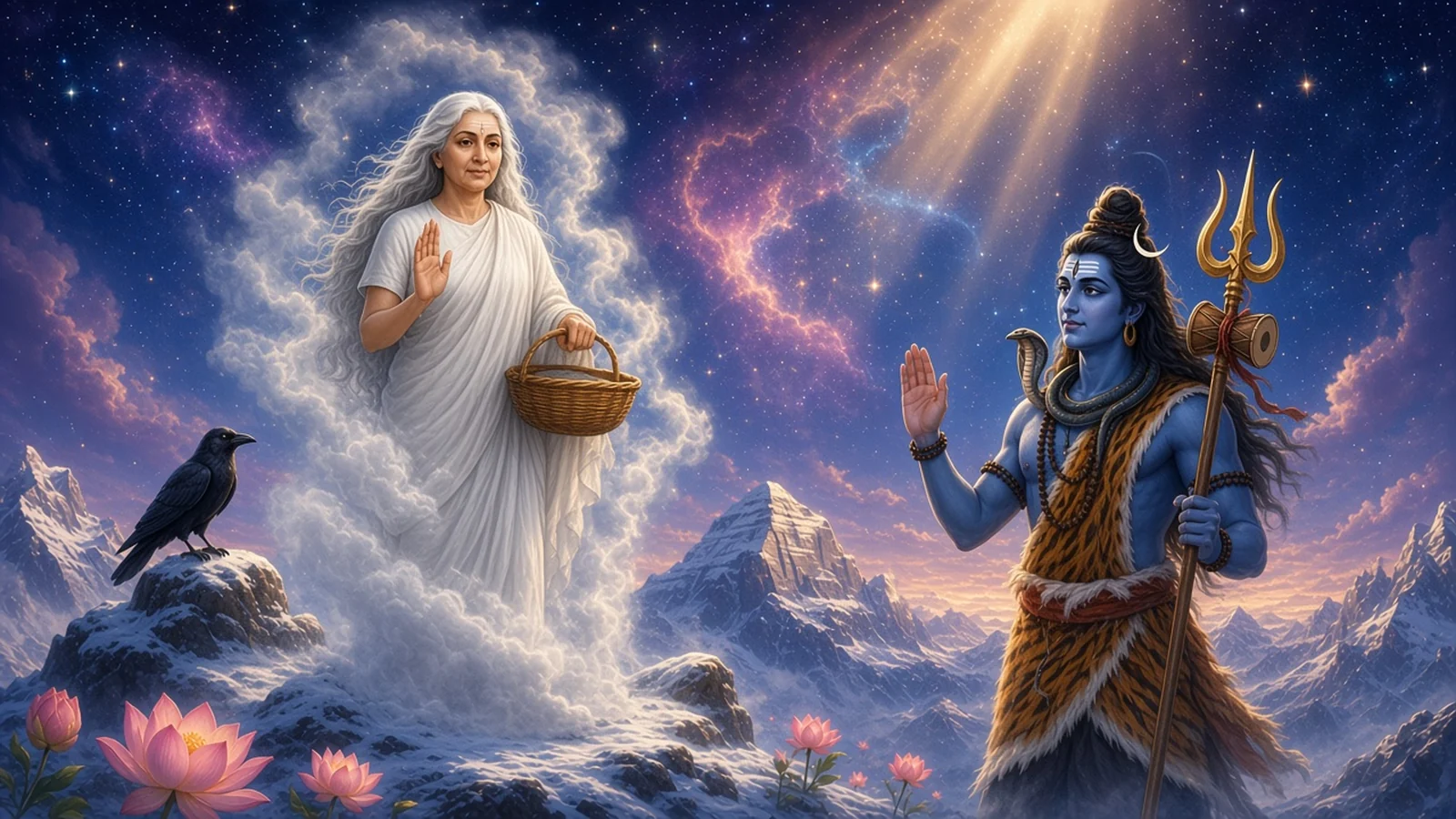
Years later he decided to set up a second goddess on the hill: Dhumavati, the smoky one, the old widow with her winnowing basket and her crow. She is one of the ten Mahavidyas, like Bagalamukhi, and almost nobody gives her a temple.
The learned men of the town came to him in alarm.
"Not her, Swamiji," they said. "Do not bring Dhumavati here."
The swami would not be moved. "Her fierce face is for the wicked," he said. "To those who love her she is all kindness."
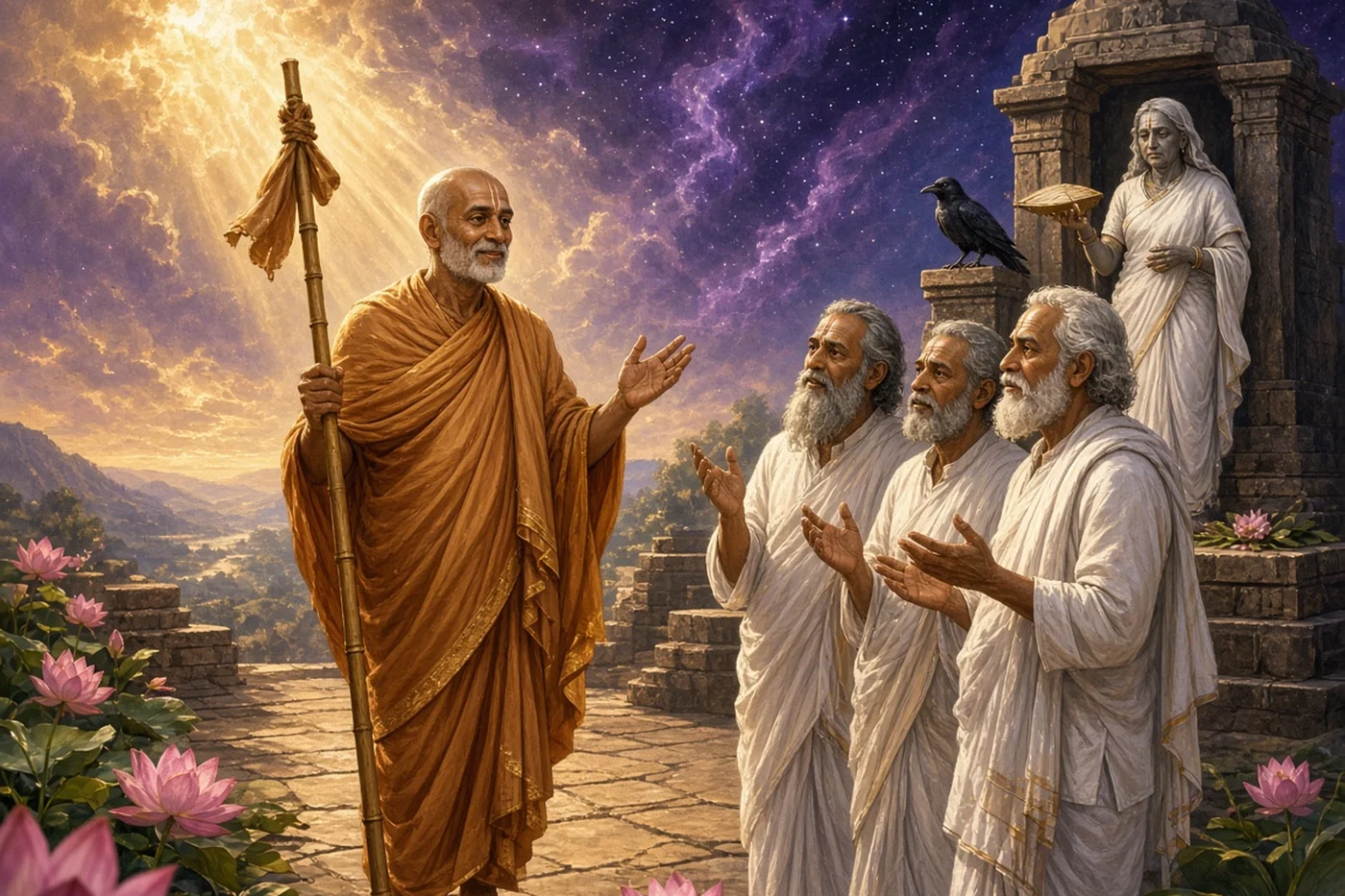
So Dhumavati came to the hill beside the goddess in yellow, and she is there still. Her doors open only for a short time each day, and longest on Saturdays.
The swami lived on the hill for fifty years. He left his body on the second of June 1979. His devotees say that he began to get ready for it on the day Dhumavati was installed, and that he went a year later, on her own festival day.
As David Kinsley heard it
Datia, Madhya Pradesh · Tantric Visions of the Divine Feminine, 1997 · 1 min read
The scholar David Kinsley travelled among the temples of the ten Mahavidyas, and he wrote that the most famous temple to Bagalamukhi was the one at Datia. He never went there himself. He wrote down what he was told.
What he was told began in the 1930s, with a sadhu who in time became known as Puja Swami. Bagalamukhi was this sadhu's chosen deity, the one goddess to whom his whole practice was given.
When he set up her image, Kinsley heard, he did it for India. The country was then in the middle of the struggle for independence, and the sadhu meant the goddess to protect it. That love of country stayed in his practice all his life. People told Kinsley that more than once, in times of danger, the founder of Datia held special worship for India and called on the goddess's power to still the country's enemies, those outside its borders and those within.
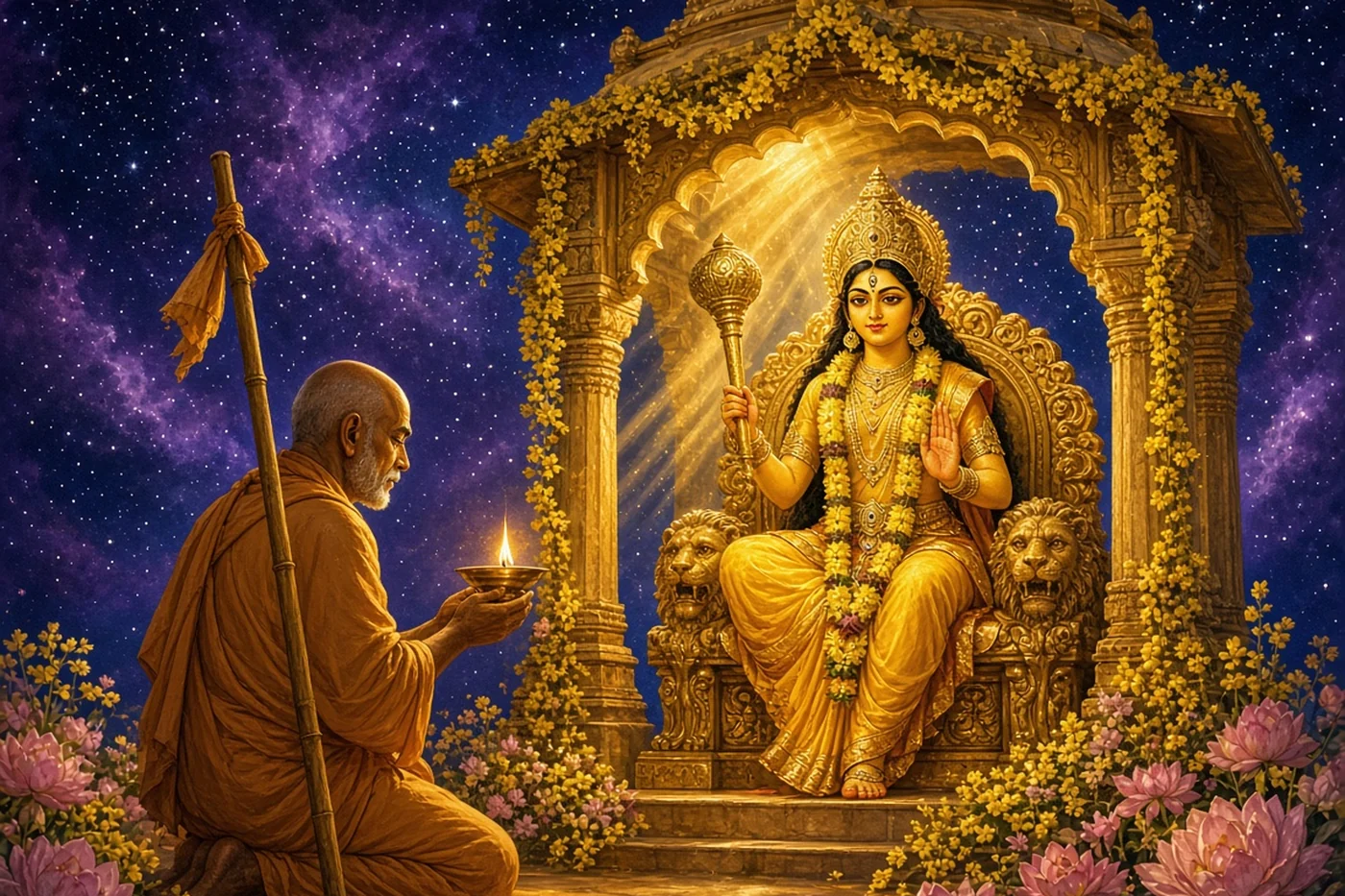
Kinsley noted something else about Datia. Dhumavati has an image there too. One report he read set the two goddesses side by side: Bagalamukhi beautiful, the giver of good things and of the welfare of the world; Dhumavati terrible, the goddess of destruction.
The Peeth has its own story of why the two belong together. A booklet printed at Datia, which Kinsley quotes, says they were born in the same moment, when Parvati, starving and kept waiting, swallowed Shiva himself. When he came out again he named her Bagalamukhi, and the smoke that rose from her body became Dhumavati.