As the Shiva Purana tells it
Kotirudra Samhita 17 · Ujjayini · 4 min read
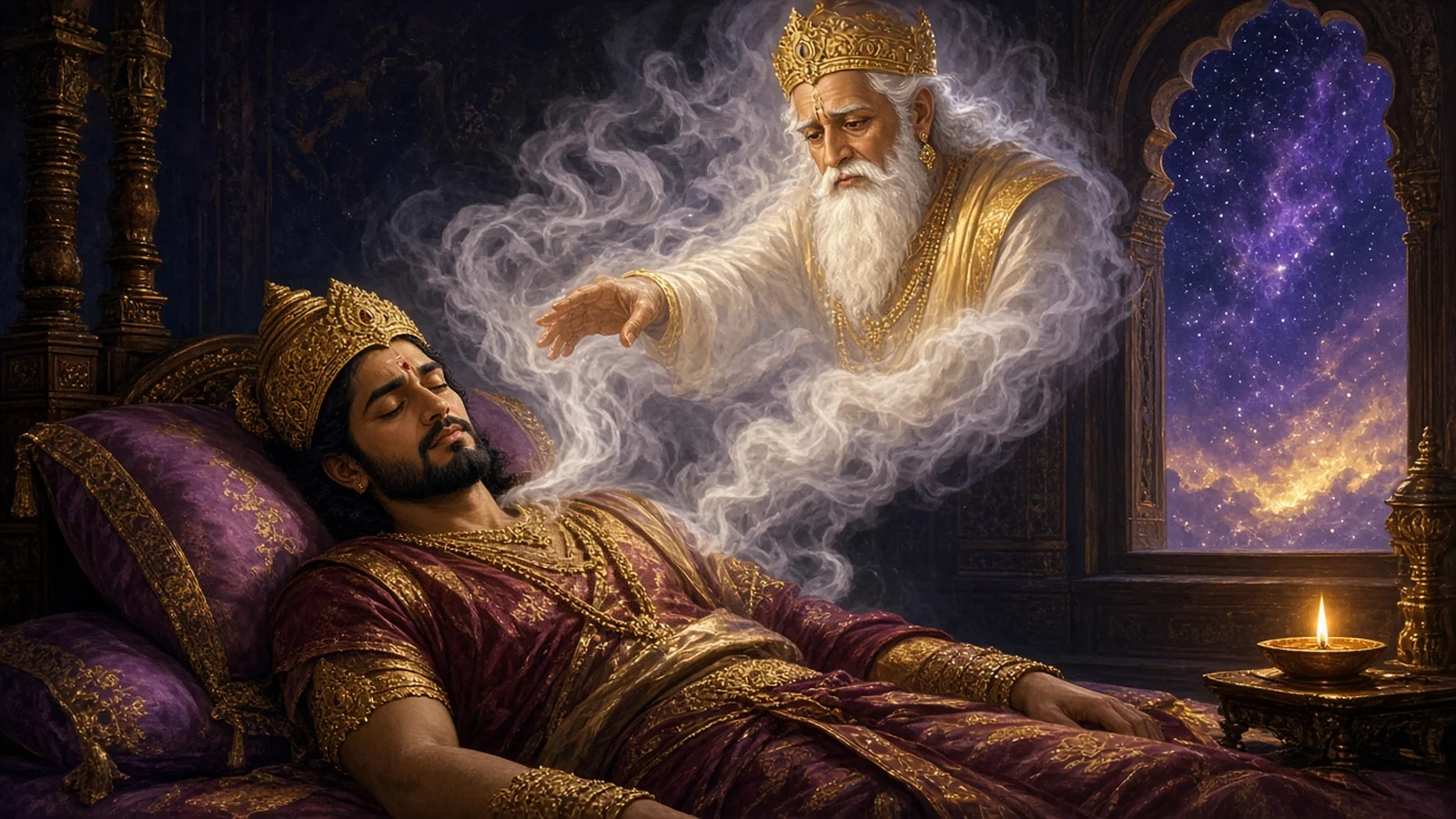
Chandrasena, king of Ujjayini, knew the scriptures and ruled his own senses, and he loved Shiva. One of Shiva's chief attendants, Manibhadra, was his friend, and one day Manibhadra gave him a jewel, the Chintamani. It shone like the sun. If its face touched bell-metal or copper or tin, or even a stone, the thing turned to gold. When the king wore it at court he shone among his nobles like a god.
Other kings heard of it and wanted it. Some asked, some schemed. Chandrasena gave it to none of them, and so they came together against him, with chariots and horses and elephants and men on foot, and closed all four gates of his city.
The king did not ride out. He went to Mahakala, gave up food, and worshipped day and night.
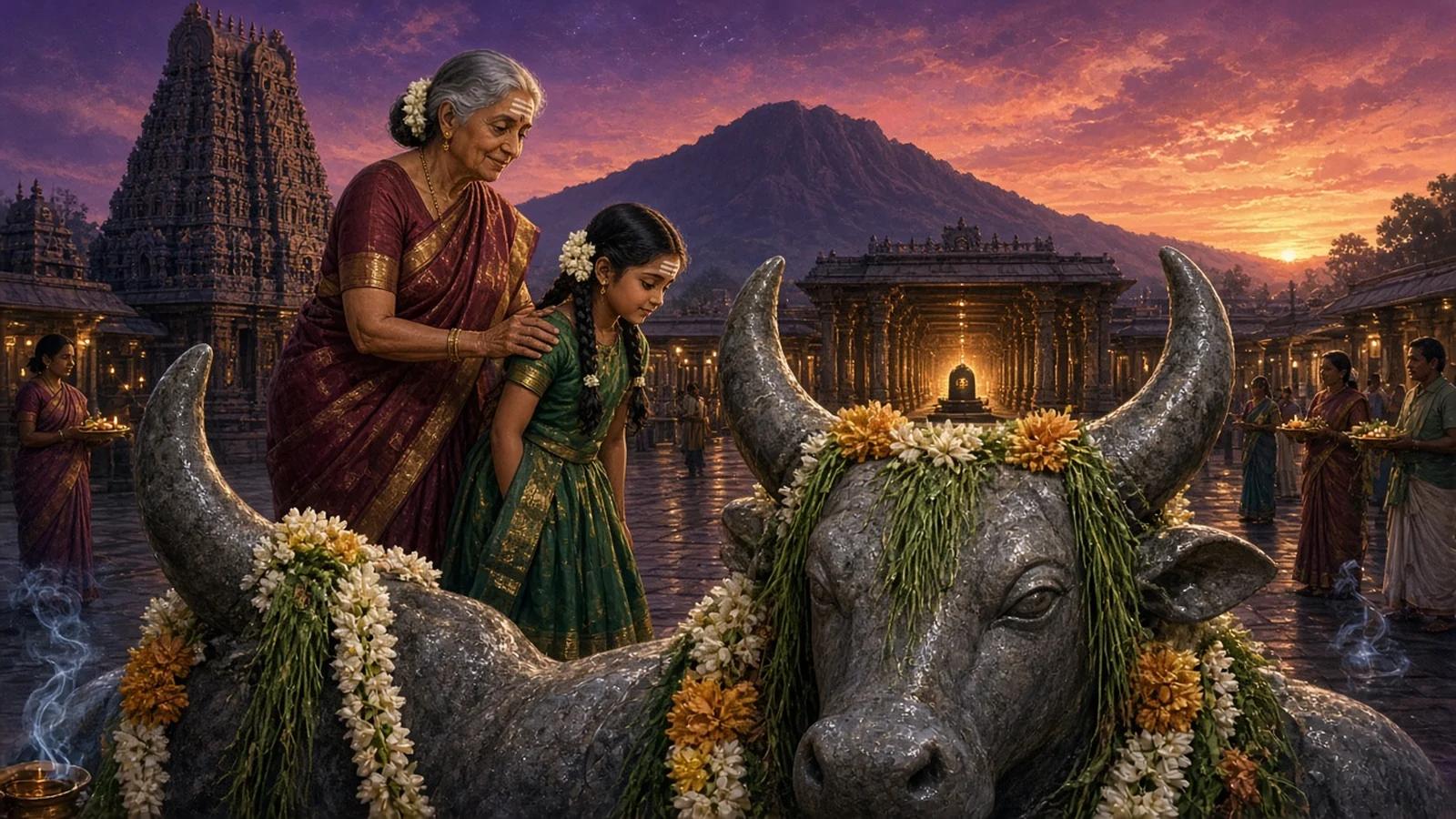
A cowherd woman who had lost her husband came into the city that day with her little son, a boy of five. She stood in the crowd and watched the king at worship, and then she carried the child back to the herders' camp outside.
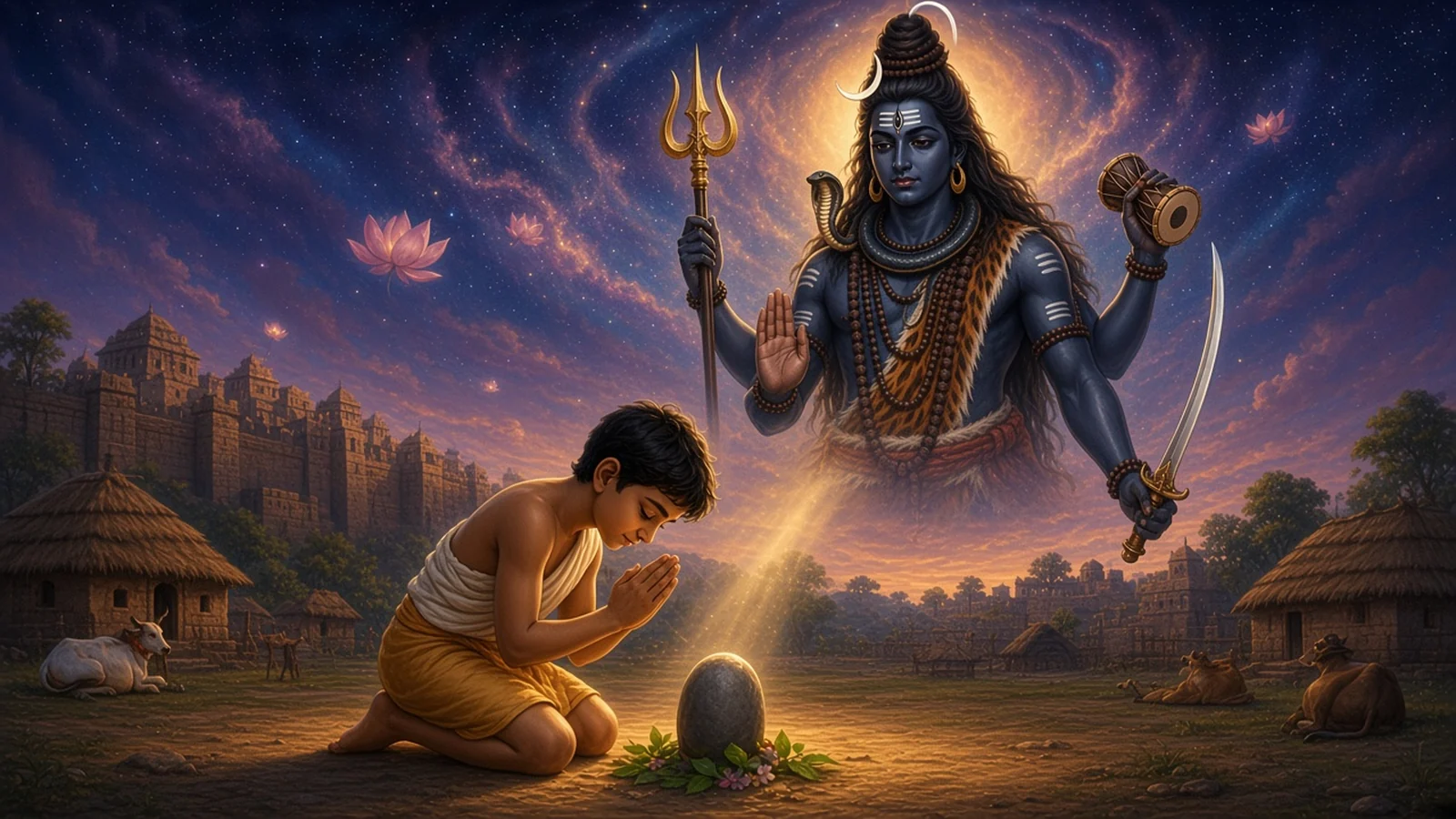
The boy had watched too. Back at the camp he found a smooth pebble and set it up on the ground.
"There," he said. "That is Shiva."
He had no sandal paste, no silk, no lamp, so he offered them in his mind, one after another, the way he had seen the king do it. He brought leaves and flowers that were real. He bathed the stone, and he danced in front of it, and he bowed to the ground again and again.
"Come and eat!" his mother called.
He did not come.
"Come and eat, I said!"
He did not hear her. At last she came looking for him, and found him bowing to a pebble. She caught him by the hand and dragged him away and beat him, and she picked up his Shiva and threw it as far as she could, and scolded him all the way home.
The boy stood where his offerings had been scattered.
"O Lord," he cried. "O Lord."
Then he fell down senseless.
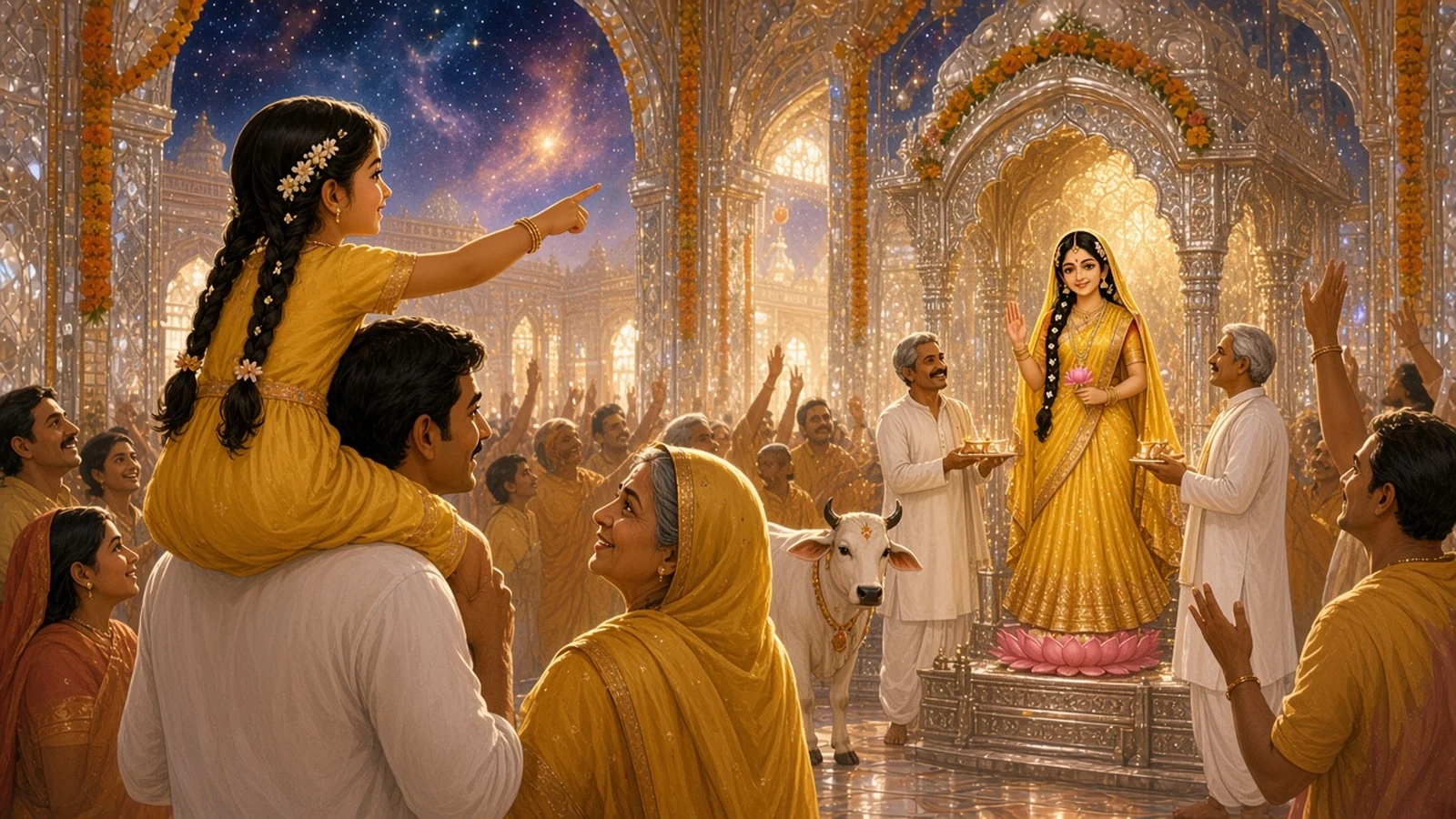
When he opened his eyes the camp was gone. In its place stood a temple of Mahakala. Its doors were gold. Its pillars were set with jewels, its floor was crystal, its dais was blue diamond, and on the dais stood a linga made of gems, with everything for its worship laid out beside it.
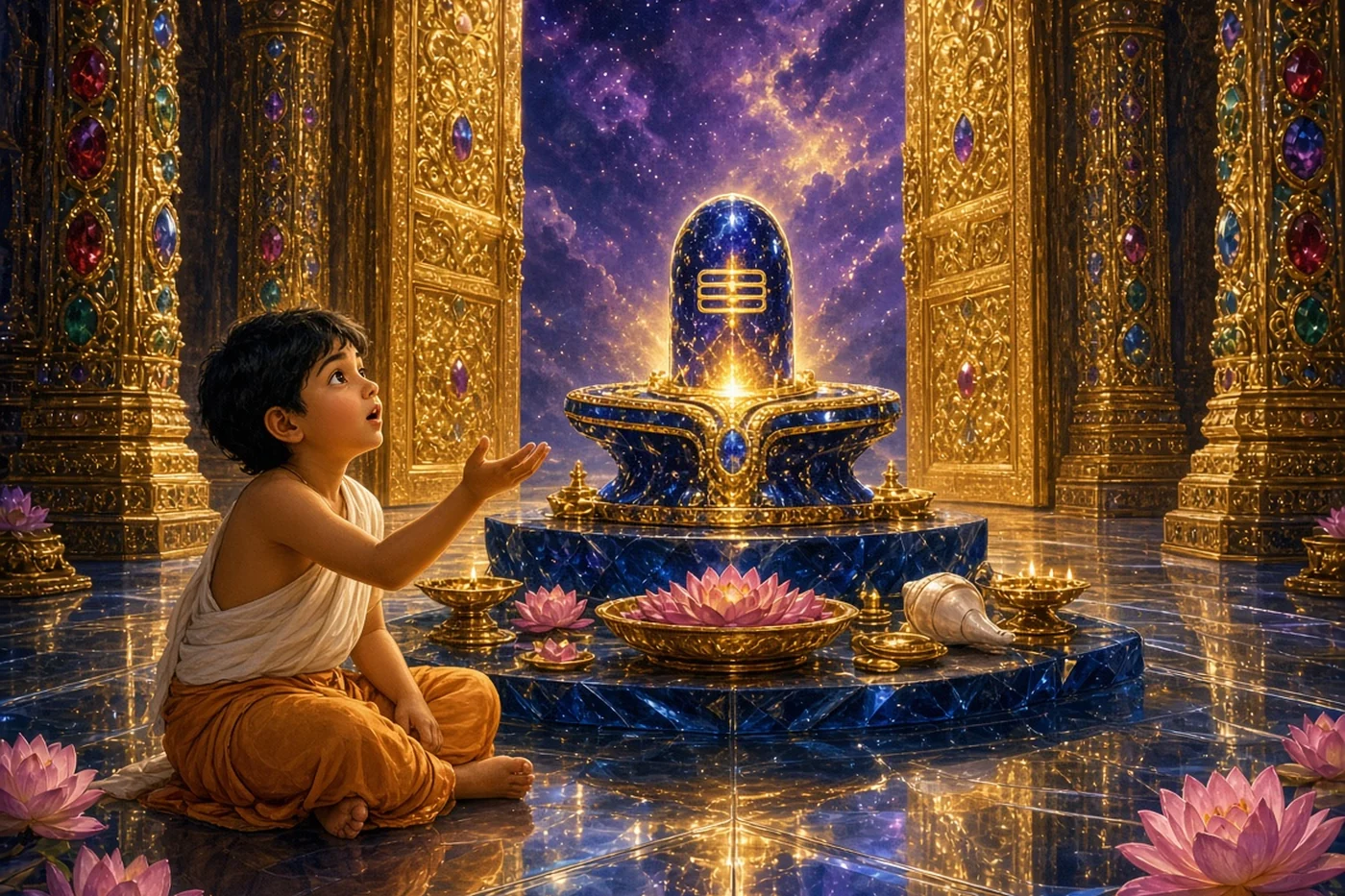
The boy praised the god and bowed, and at sunset he went out to find his home. It had become a house of gold, bright as the city of Indra. Inside, his mother lay asleep, dressed and adorned like a woman of heaven.
"Mother," he said. "Wake up."
She woke, and saw, and held him tight. Then she ran to tell the king.
Chandrasena came that night with his ministers and his priest. He looked at the shining child and could not speak; he simply took him in his arms and wept. The whole city came out, and the night went by like a single moment.
By morning the besieging kings had heard everything from their spies, and they sat down together.
"This king is Shiva's devotee," said one. "He cannot be beaten."
"And if we anger Shiva," said another, "we are finished. Let us make peace with him."
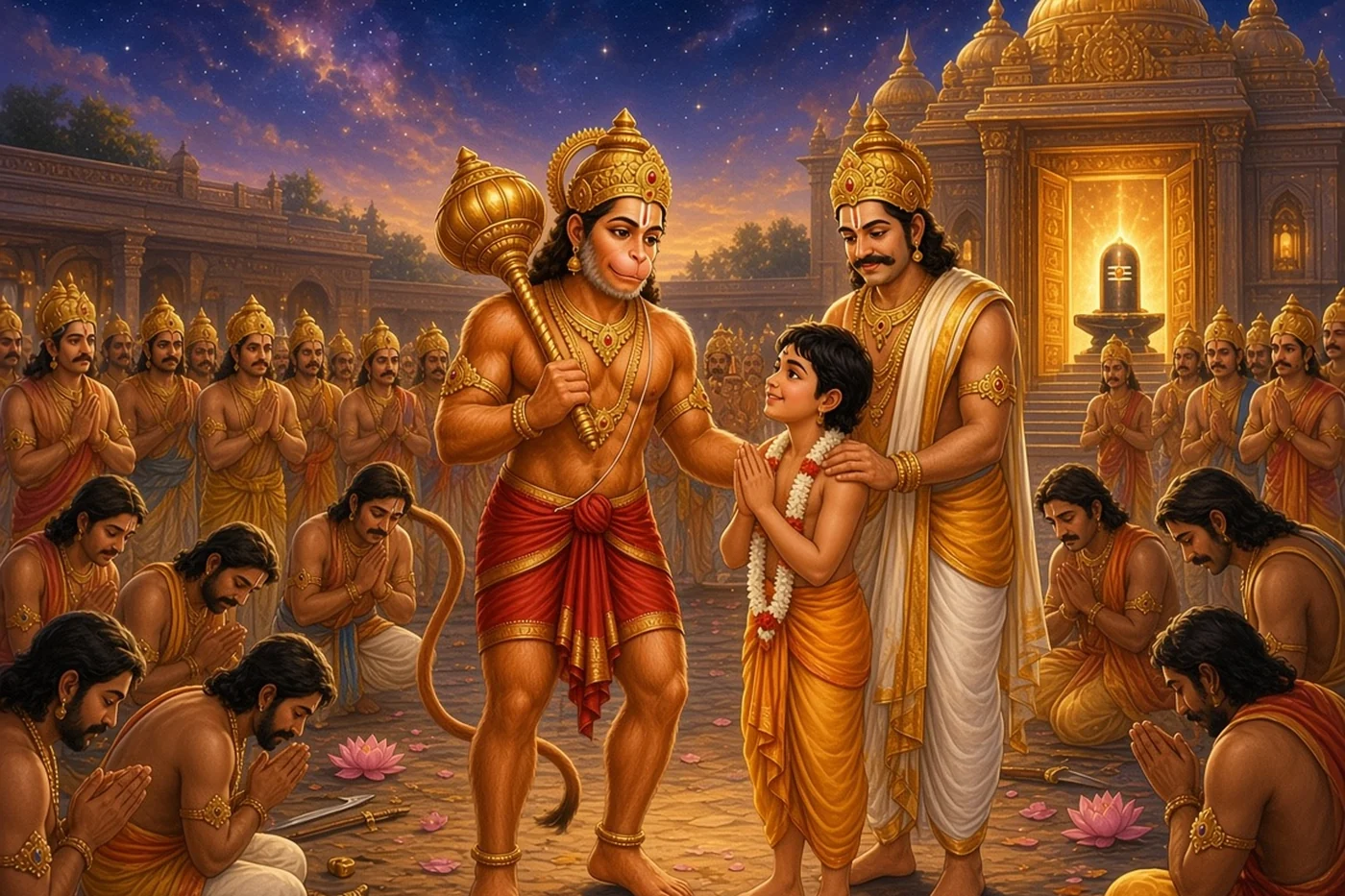
They laid down their weapons and walked into the city as friends. They bowed to Mahakala, visited the cowherd woman's golden house, and gave the boy gifts and made him chief of the cowherds in all their lands.
Then Hanuman, lord of the monkeys, stood among them, and the kings rose and bowed.
"There is no goal for anyone but Shiva," Hanuman said. "This boy saw the king's worship and did the same, without one mantra, and see what it has brought him. In his family, eight generations from now, will be born the cowherd Nanda, and Vishnu himself will be Nanda's son, Krishna. From now on, let the world know this boy as Shrikara."
He taught the boy the worship of Shiva and was gone. The kings went home. And Shrikara and Chandrasena worshipped Mahakala together for the rest of their lives.
As the Skanda Purana tells it
Brahmottara Khanda 5 · Ujjayini, on a Saturday at dusk · 1 min read
The Skanda Purana tells the same siege among its chapters on the Pradosha, Shiva's hour at dusk, and it names the besiegers: men of Saurashtra and Kalinga, Shalvas and Kaikayas, Shakas and Madrakas, Panchalas, Sauviras, Magadhas, Matsyas, Srnjayas, even men of Avanti, twelve peoples camped round the four gates of Ujjayini for one jewel.
Here the cowherd woman is a widow with an only son. The boy carries his stone into a vacant tent near their own and worships it until she breaks up his altar, flings the linga away and leaves him weeping.
When the tent becomes a temple, the first thing he does is lie flat before the jewelled linga.
"Lord of Uma," he prays, "forgive my mother. She did not know what she was doing. Whatever merit I have from this, give it to her."
Then he goes home to the golden house and wakes her gently. "Mother, get up. Come and see."
The kings who come in at dawn do not stop at making him chief of their herdsmen. They make him a king, the leader of every cowherd wherever they live.
And Hanuman, when he comes, tells them why it happened. The boy worshipped at dusk, on a Saturday, on the thirteenth day of the moon. A Pradosha that falls on a Saturday is rare, he says, and one that falls on a Saturday in the dark half of the month is rarer still. He foretells Nanda and Krishna in the boy's line, gives him the name Shrikara, teaches him the rites and vanishes.