As I-tsing heard it
A Record of the Buddhist Religion, chapter IX · the Bandhana monastery, Kushinagara · 3 min read
I-tsing came from China to India by sea, and he spent years among its monasteries, writing down how the monks lived: how they washed, how they sat, how they ate. In the great monasteries he noticed a small figure that always stood in the same kind of place, beside a pillar in the kitchen or at the porch.
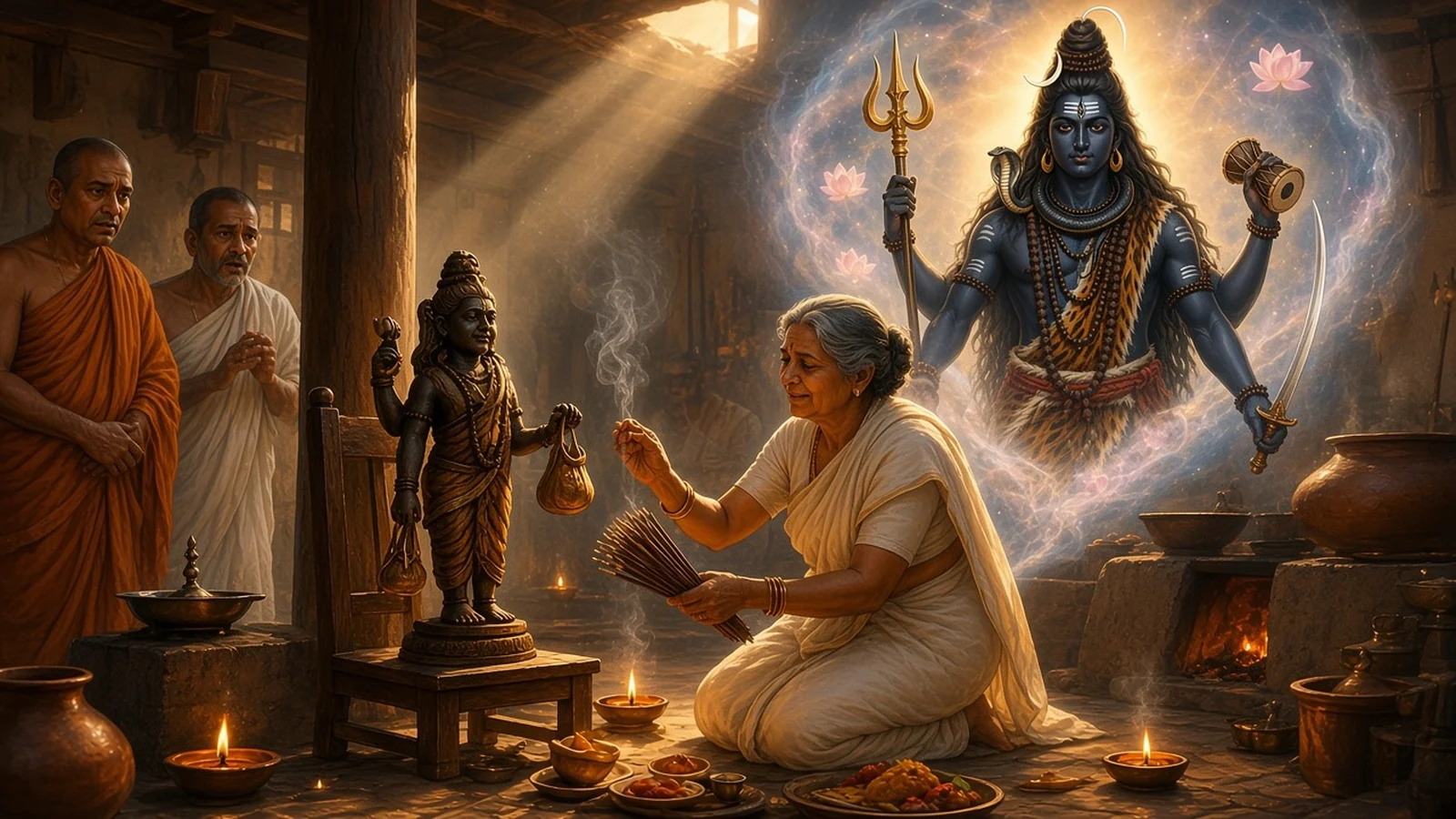
It was a god carved in wood, two or three feet high, sitting on a little chair with one foot hanging down to the ground. In his hand he held a golden bag. The servants rubbed him with oil so often that his face had gone quite black, and they called him Mahakala, the great black one. The old tradition, they said, counted him among the company of the Great God, Maheshvara. He loved the Buddha, the teaching and the community. He guarded the monks and nuns from harm, and anyone who prayed to him was answered. At every meal the kitchen servants set lamps and incense before him, and a share of every dish.
One of the places I-tsing went to honour was the monastery at Kushinagara, the place where the Buddha passed away. More than a hundred monks ate there every day. In spring and autumn, the seasons for travelling, pilgrims often came without warning.
In the kitchen he saw the black god, with food heaped in front of him.
"Why so much?" he asked.
And they told him what had happened there once.
It was about midday. The cooks had made the meal for the monks of the house, and it was nearly ready, when a crowd appeared at the gate. Five hundred monks had come together, on pilgrimage, to see the holy place.
Monks do not eat after noon, and there was no time to cook again.
The steward hurried into the kitchen.
"How are we to feed them all?" he said to the cooks. "There are five hundred of them, and the sun is nearly at the top of the sky."
The cooks had no answer. But there was an old woman in the kitchen, the mother of one of the monastery's servants, and she was not in the least worried.
"Do not trouble yourself," she said. "This happens all the time."
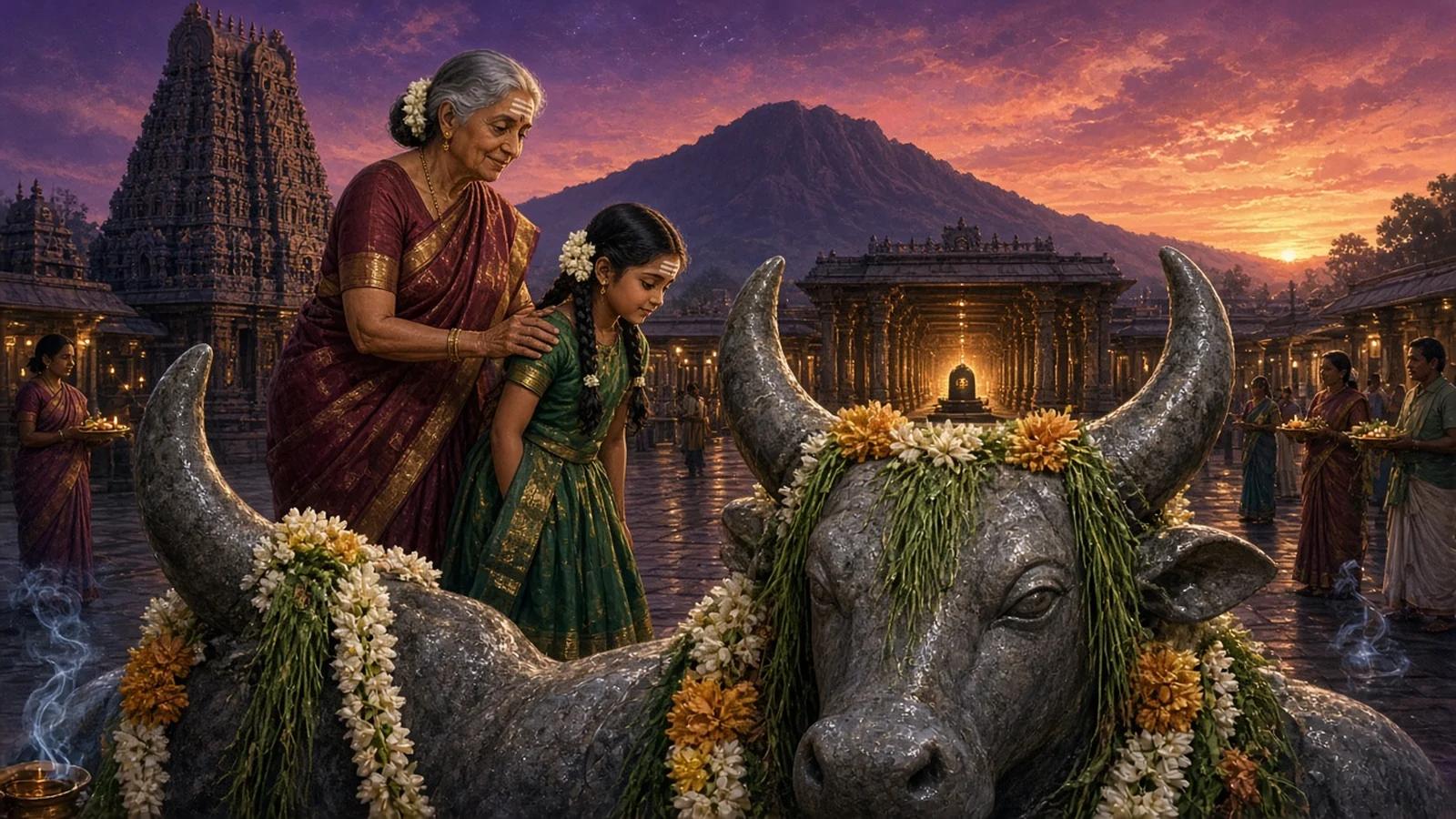
She took a great handful of incense and lit it in front of the black god, and set food before him, and spoke to him plainly.
"The Great Sage has gone into Nirvana," she said, "but beings like you are still here with us. Monks have come from every direction to honour this holy place. Do not let our food run short for them. You can do this. Mind the time."
Then the guests were asked to take their seats, and the five hundred sat down in rows. The servants began to carry the food out, the food that had been cooked for the house alone, and they served the first row, and the next, and the next, and every guest was fed. When the last row had eaten, there was as much left in the pots as there was on any ordinary day.
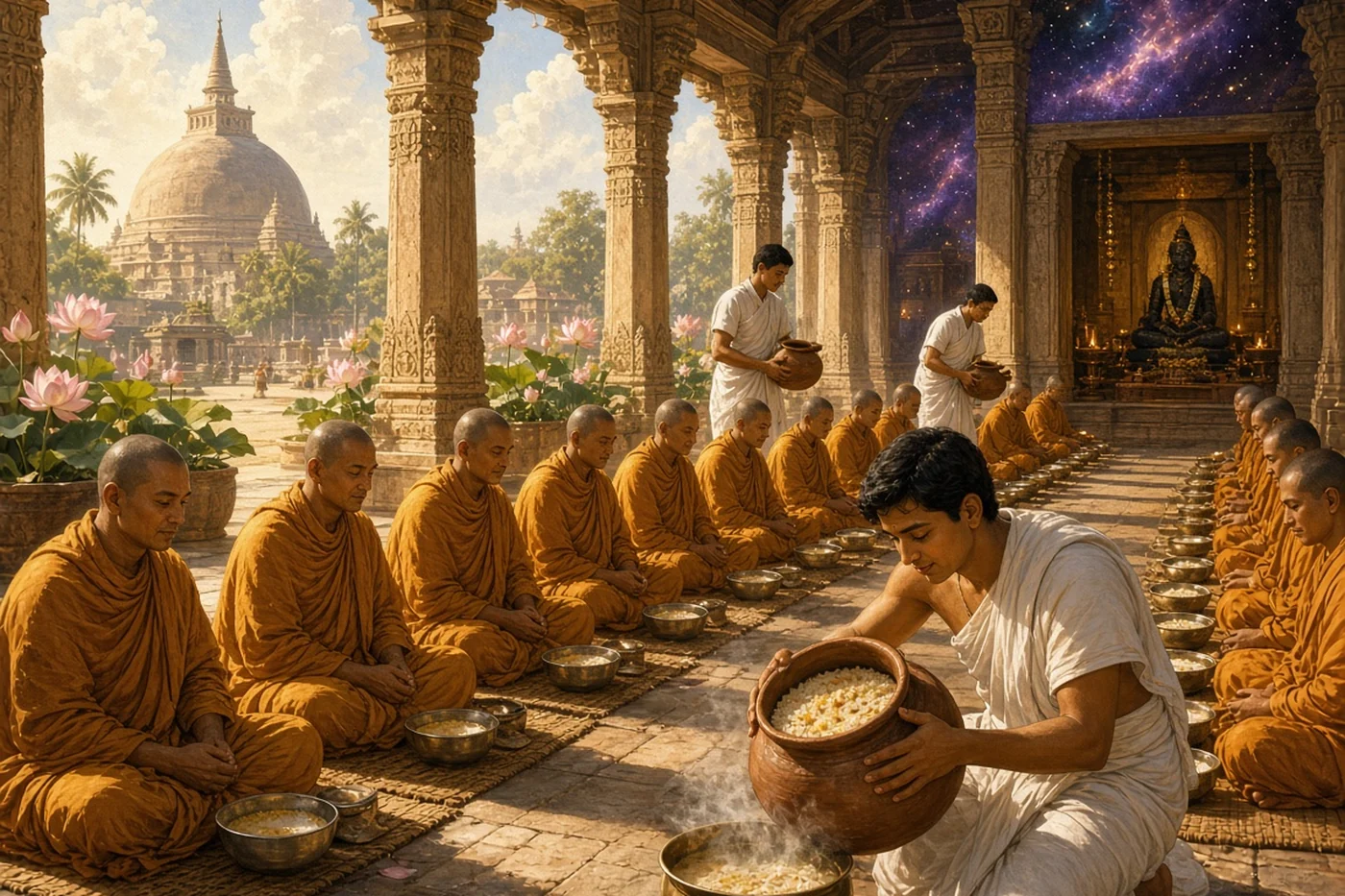
The monks all called out together, "Good!" and praised the power of the black god.
I-tsing wrote it down, and added that he had seen the image with his own eyes. Images of the same god, he said, were often found back home, south of the Yangtze, and those who asked him for things got them. He did not doubt it for a moment.
As Mount Hiei tells it
the Sanmen Shusse Daikoku-do of Enryaku-ji · Mount Hiei, Japan · 1 min read
About a century later, the god was in Japan, and Japan has its own story of how he promised to feed the monks.
The monk Saicho, the founder of the Tendai school, climbed Mount Hiei above Kyoto to build a monastery. On the mountain, the temple says, he met a hermit, and asked him who he was. The hermit answered with a line from the Lotus Sutra, about the one who takes away the suffering of beings and gives the world peace.
Saicho asked him for help. The monks who would train on this mountain would need to be healthy, he said, and the mountain would need to feed them. Would the hermit look after its living?
The hermit promised. He would provide food for three thousand people every day, and good fortune and long life to anyone who worshipped him.
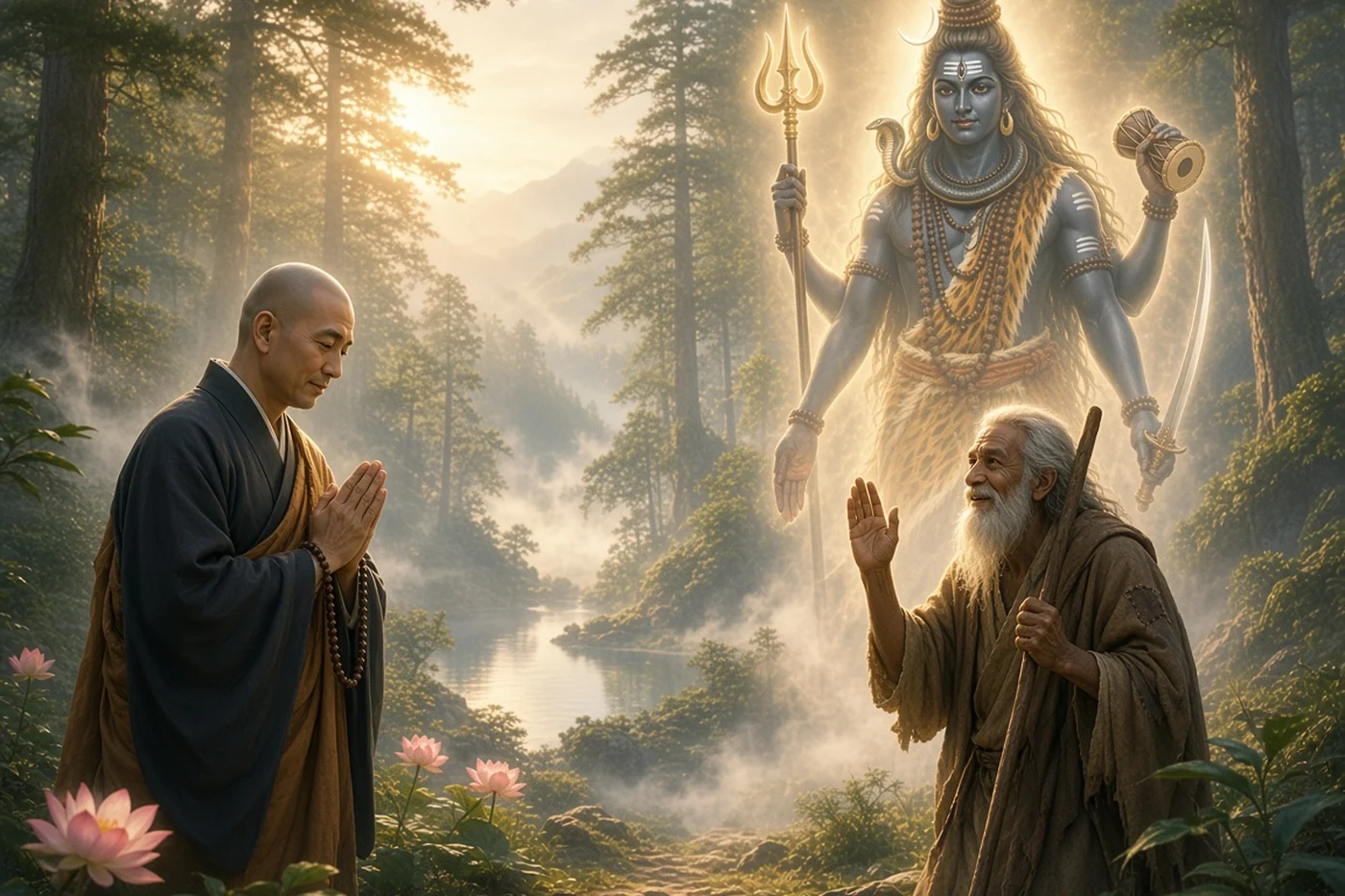
Saicho understood then who he was talking to. It was Daikokuten, the great black god, Mahakala as Japan knows him. He purified himself and carved an image of the god with three faces and six arms. In the middle is Daikoku, who gives food. On one side is Bishamonten, who gives courage, and on the other Benzaiten, who is Saraswati, and gives beauty and skill.
His disciple Kojo later set the image up on the spot where the two had met, and the hall that grew around it became the monastery's office and its dining hall. In another and older telling, as the historian Bernard Faure gives it, the god came to Saicho as an old man and offered to guard the community, and the promise of food came later.