As the Ganesha Purana tells it
Avanti and the Narmada · Ganesha Purana, Upasana Khanda 60 · 3 min read
Brahma told this to a king who wanted to know why one Chaturthi counts for more than the rest.
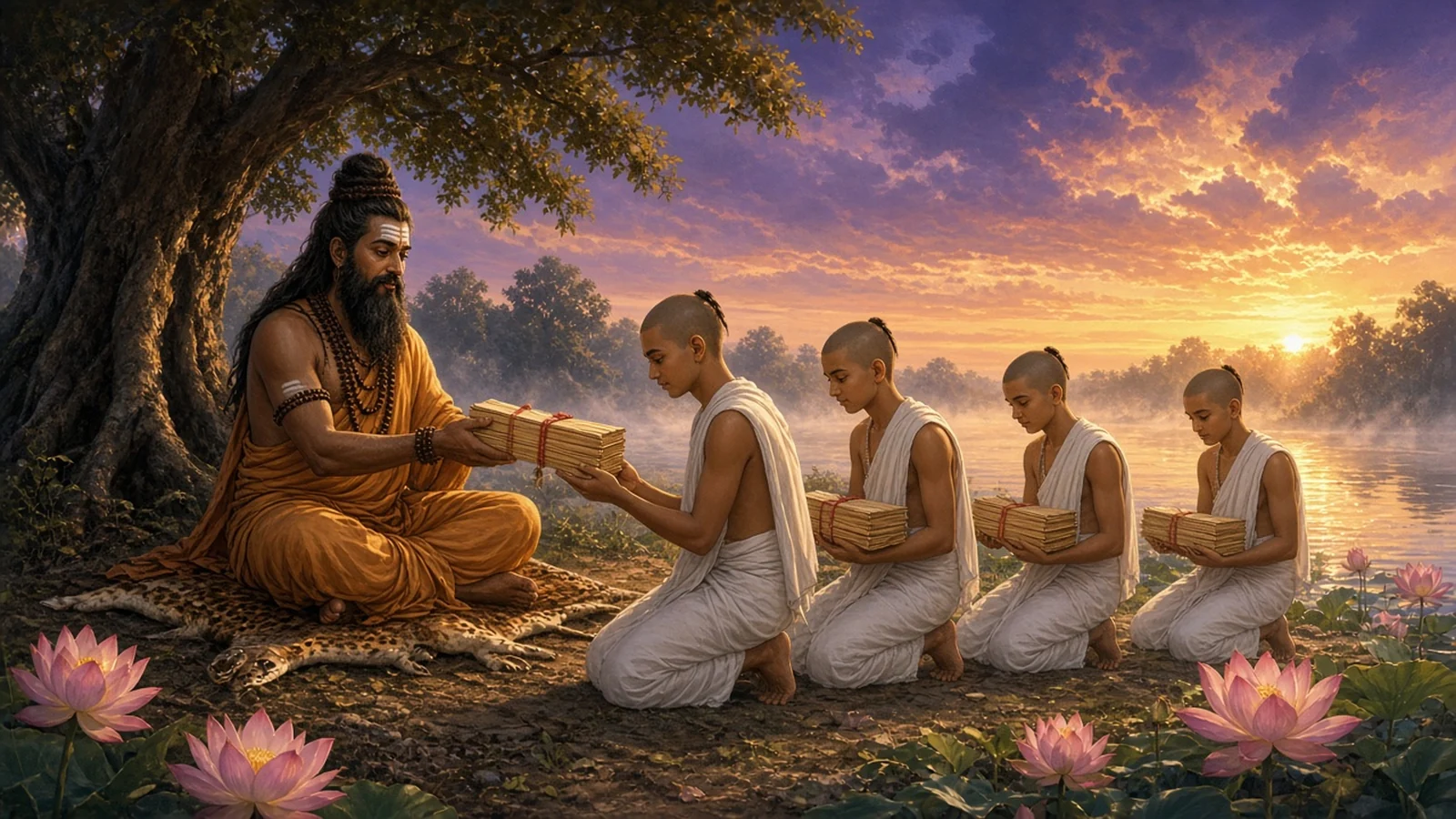
In Avanti there lived a sage named Bharadvaja, learned in the Vedas and every science, who kept his fire, taught his pupils and did his rites on the bank of a river. One day, at those rites, he saw an apsara, and the sight undid him. His seed fell to the ground and ran into a crack in the earth.
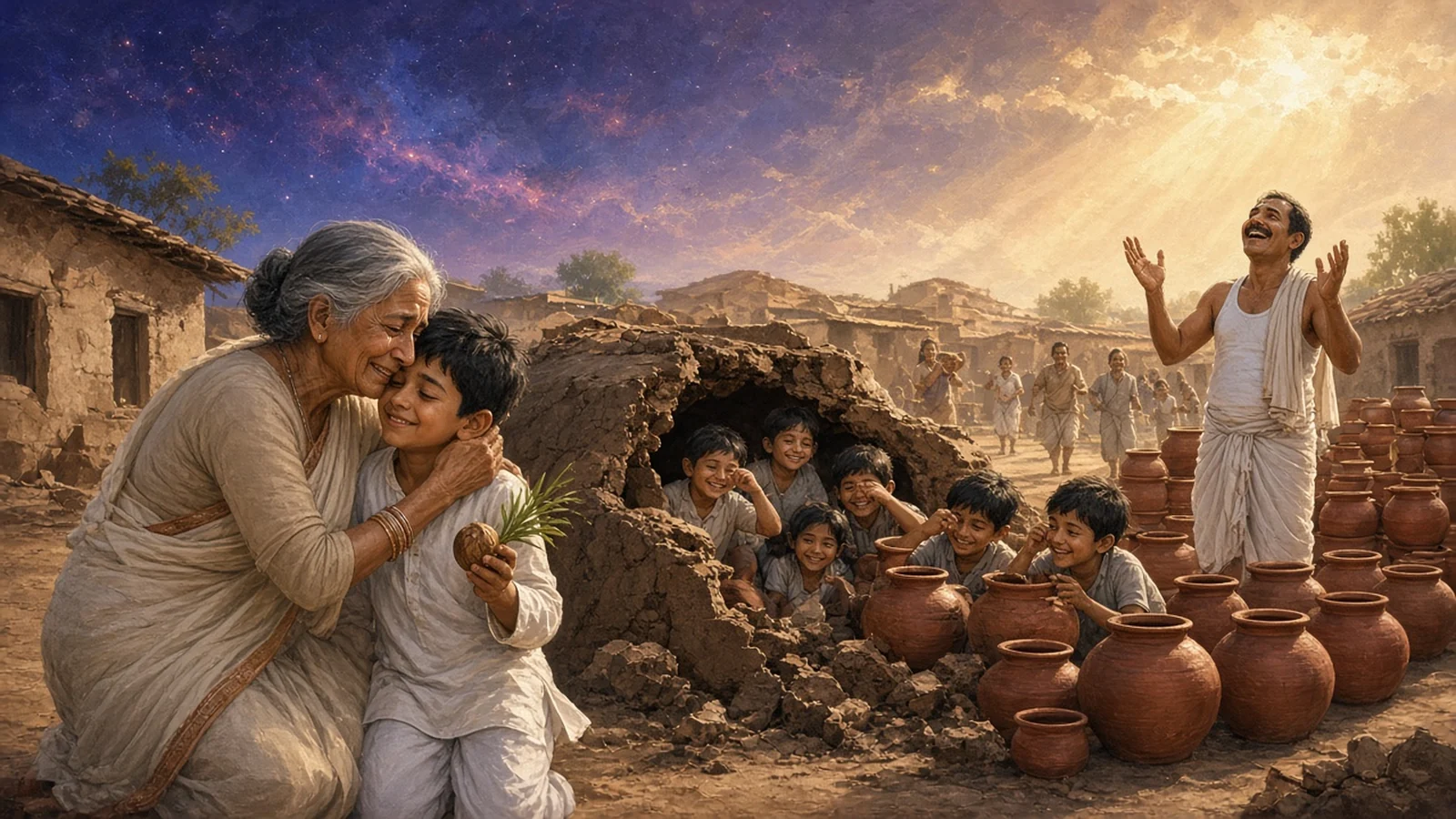
The Earth kept it. From it, in time, a boy was born, red all over, the red of a hibiscus flower, and the Earth raised him as her own, with great tenderness.
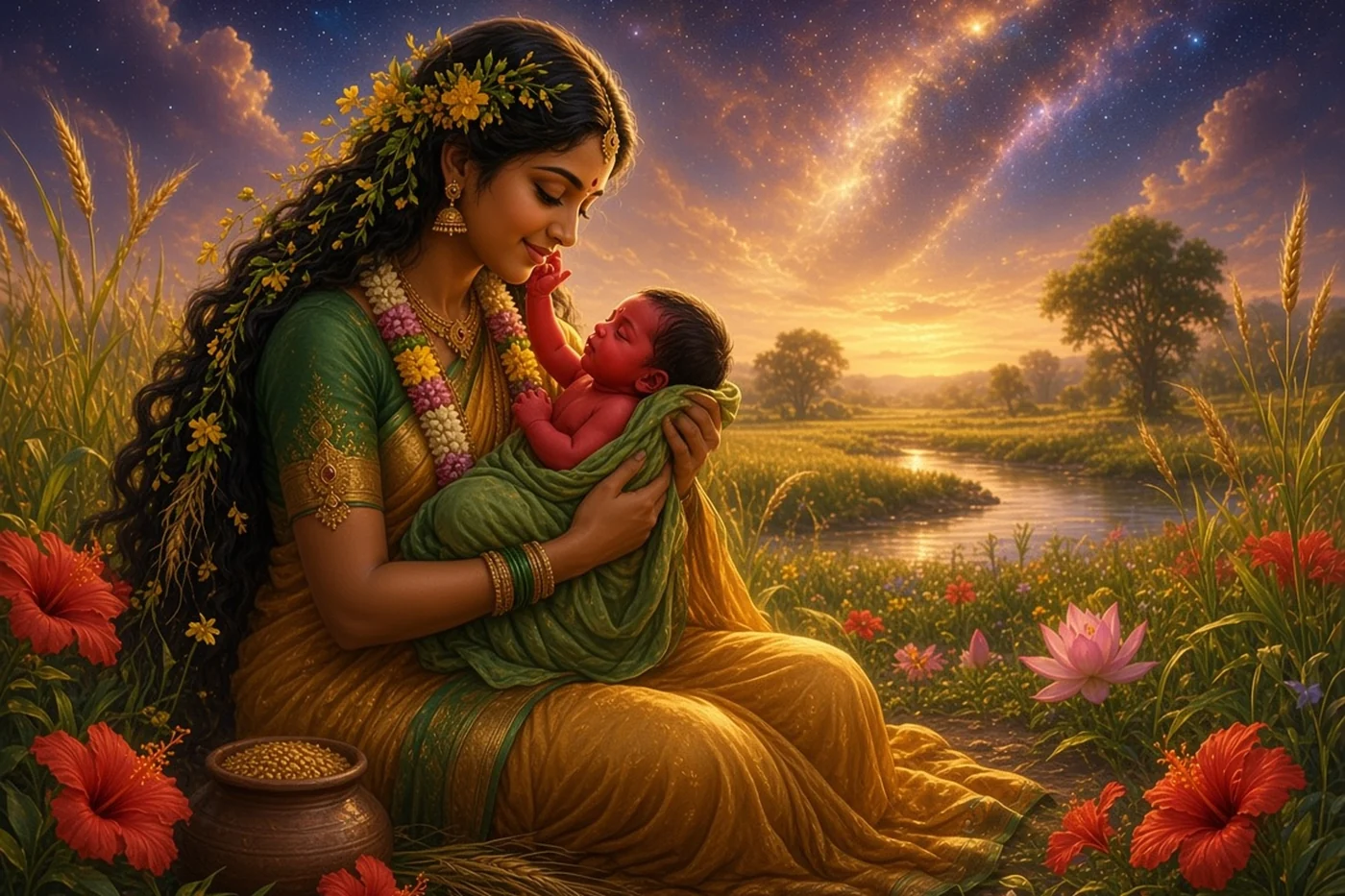
When he was seven he came to her with a question.
"Mother, why am I red? I have a human body, and no human child is this colour. And who is my father? Tell me now."
"Your father is the sage Bharadvaja," she said. "His seed came to me, you were born of it, and I have raised you."
"Then show him to me."
So the Earth took the boy to the sage, bowed, and said, "This is your son. I have brought him up. Take him now." Then she went back to her own place.
Bharadvaja was overjoyed. He held the boy, breathed in the smell of his hair and sat him in his lap. At a good hour he gave him the sacred thread, taught him the Vedas, and last of all gave him the mantra of Ganesha.
"Go and repeat it," he said. "Keep at it a long time. When Ganesha is pleased he will give you everything your heart is set on."
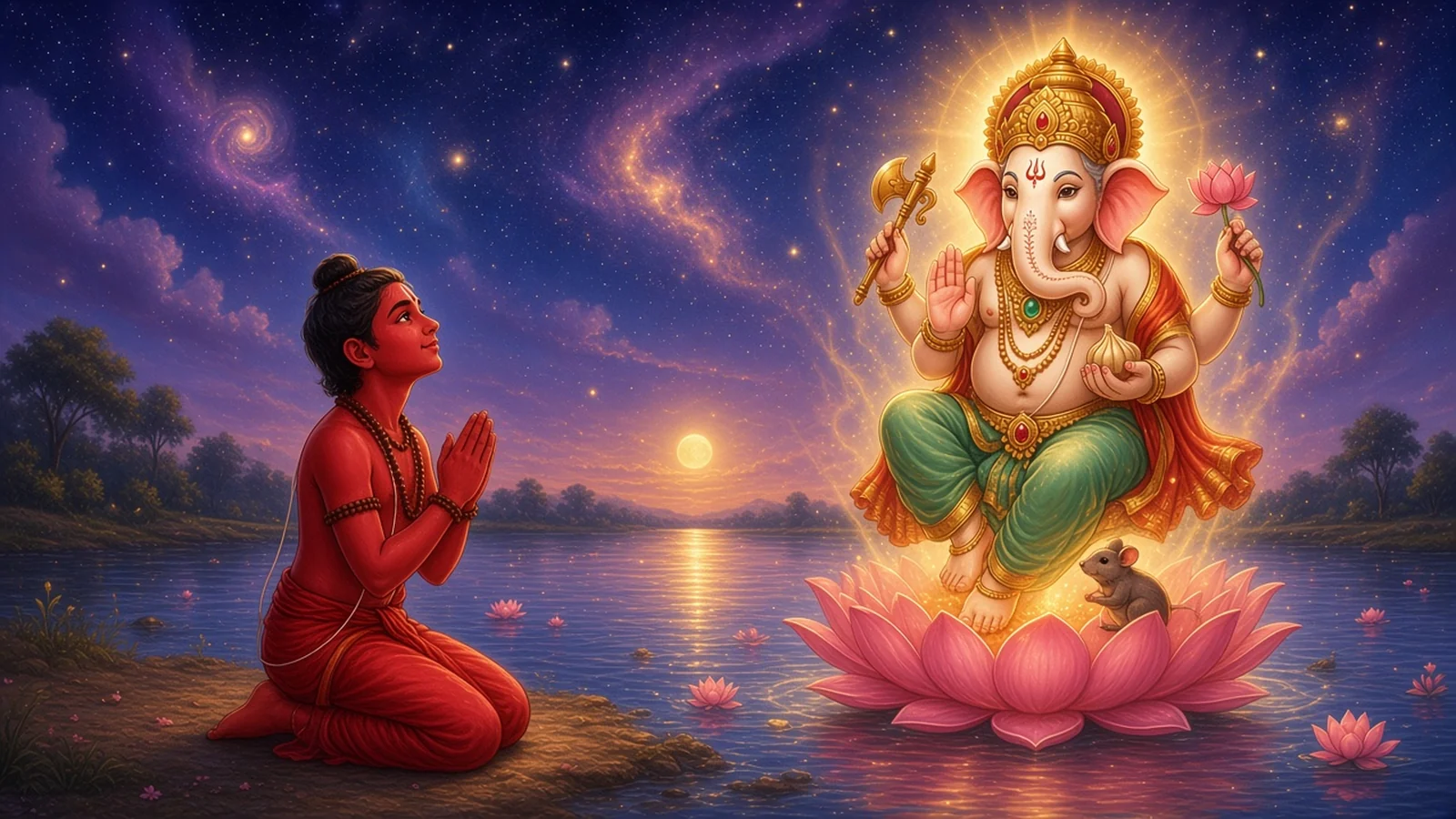
The boy went to the bank of the Narmada. He sat in the lotus seat, reined in his senses, fixed his mind on Heramba and began. He lived on air. He grew thin as a stick. A thousand years went by in the mantra.
Then, on the fourth day of the dark half of Magha, as the moon rose clean over the river, Ganesha showed himself. He had ten arms with a weapon in each, and clothes not woven on earth. The moon sat on his forehead. His trunk was fine and his tusk shone, his ears were broad as winnowing fans, and he was as bright as ten million suns.
The boy got up, fell at his feet and praised him as the one who destroys obstacles and the one who sets them, lord of gods and demons, the ground the three worlds stand on.
"Your penance pleases me," said Ganesha, "and your praise, and that a child could hold so steady. Ask."
"If you are pleased," said the boy, "let me live in heaven and drink the amrita with the gods. Let my name be one that brings good, known in all three worlds. And I saw you on a Chaturthi. Let that day always give merit, take every trouble from whoever keeps it, and give them what they wish."
"You will drink the amrita with the gods, son of the Earth," said Ganesha. "The world will call you Mangala, the auspicious. For your redness you will be Angaraka, the glowing coal, the son of Vasumati. Whoever keeps the Angaraka Chaturthi will have the merit of a whole year of Sankashtis, and nothing they begin will be blocked. And you will be king in Avanti."
Then he was gone.
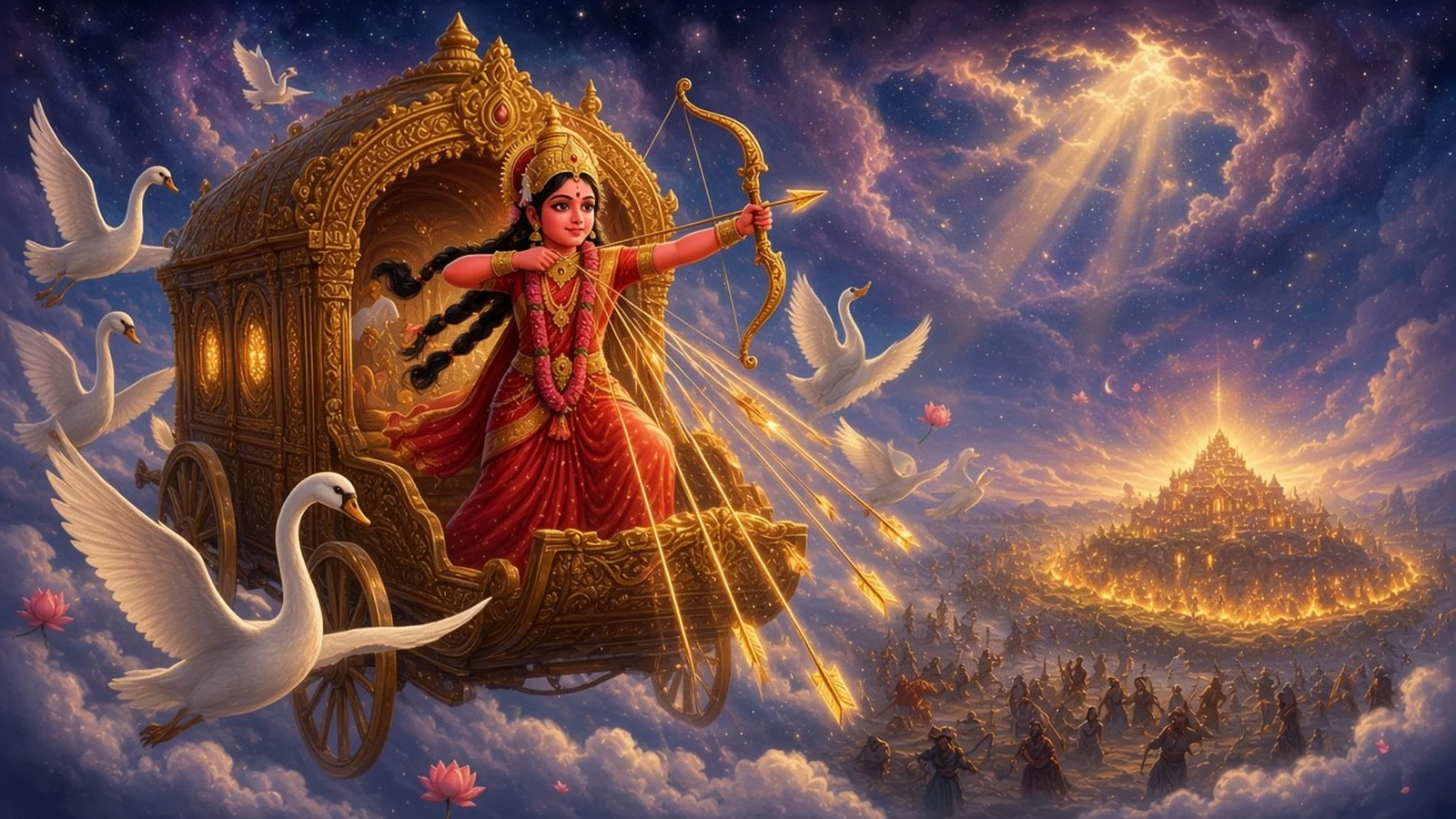
Mangala set up an image of him, ten-armed and trunk-faced, built it a temple and named it Mangalamurti, and the place became a field where wishes are granted. Then Ganesha sent a sky-car with his ganas, and they carried Mangala up to him in his own body.
Because the Earth's son had kept the Sankashti on a day joined with himself, and had drunk the amrita in heaven for it, the Chaturthi joined with Angaraka became famous on earth. The image he set up was so quick to give whatever was thought of that it came to be called Chintamani, the wish-jewel, west of the town of Parinera. The siddhas and gandharvas still worship it there at moonrise.
Angaraki as Maharashtra keeps it
Mumbai and Theur · the Tuesday Sankashti · 2 min read
In Maharashtra, when the almanac shows a Sankashti on a Tuesday, people say "Angaraki" the way they would name a guest who comes once or twice a year, and plan the day around it.
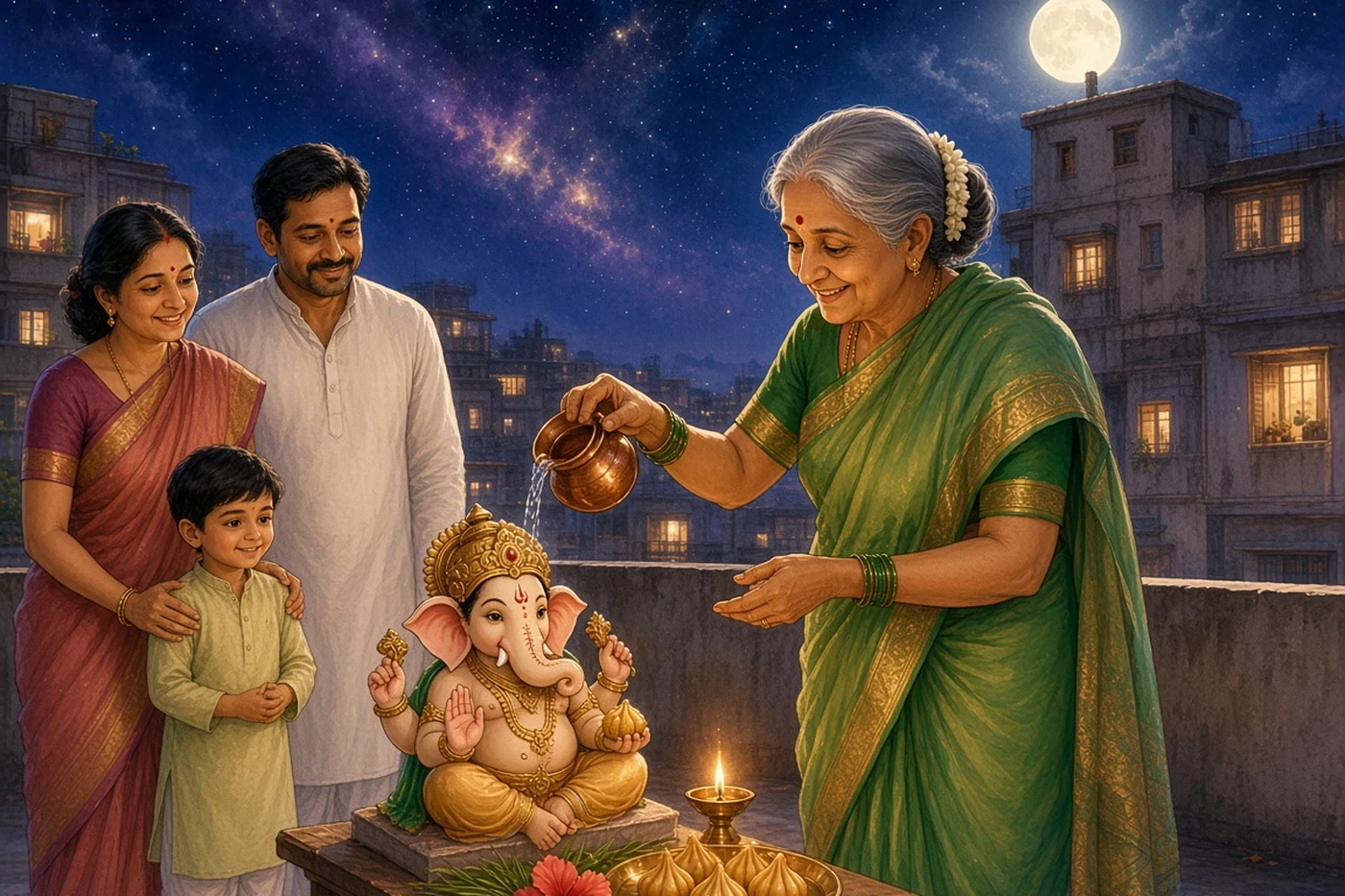
In a flat in Dadar the grandmother is up before anyone. She bathes, says aloud that she will keep the fast, and means it: no grain until the moon. The household follows her loosely, with sabudana khichdi and peanuts at noon, a banana, tea. The children hear the story at breakfast, as they do every Angaraki: the red boy the Earth brought up, the sage who taught him Ganesha's mantra, the thousand years by the Narmada, the night Ganesha came at moonrise and gave the boy a name and a day.
"So Mars fasted too?" the youngest asks.
"Mars fasted first," says the grandmother. "That is why it is his Tuesday."
A few streets away, at Siddhivinayak in Prabhadevi, the queue began the night before. On an Angaraki the trust opens the doors at half past one in the morning and keeps them open, with two short breaks, until ten to midnight. Men, women and the old stand in separate lines that start at Ravindra Natya Mandir. There are free buses from Dadar station and free tea, and screens in the pavilions for those who will see the god only from far off. Five lakh people come, or seven, depending on who is counting.
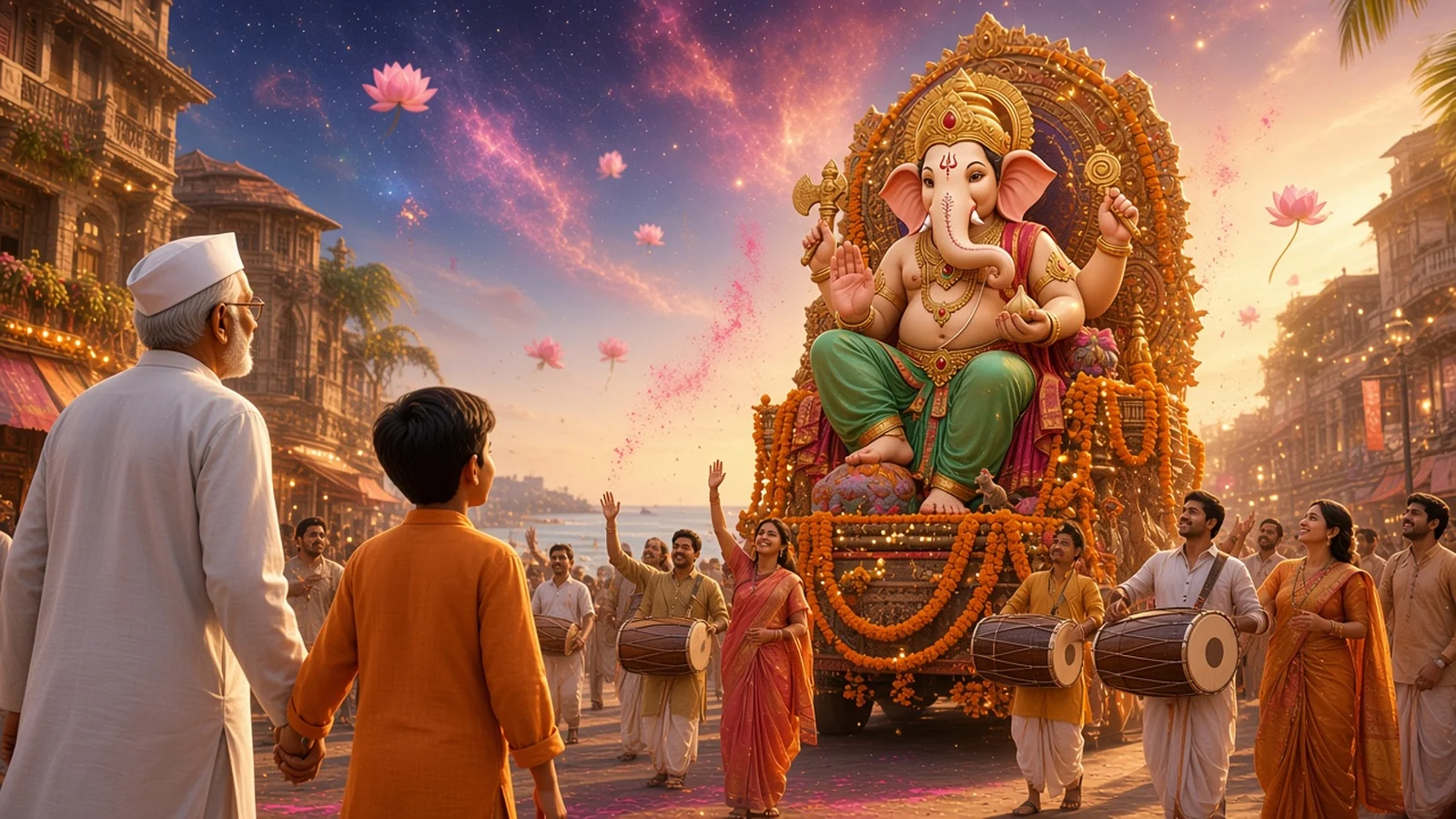
Out at Theur, near Pune, the pujari bathes Chintamani at dawn and the Chinchwad trust performs the great puja. At noon those who are fasting are handed khichdi. In the evening there is a kirtan, and when the moon is up the god is carried out round the village in procession, after which the villagers feed everyone.
In the Dadar flat, at last, the moon clears the next building. The grandmother pours water to it from a copper pot, then gives Ganesha his durva, a red hibiscus and the modaks she has been guarding all day. Only then does anyone eat.