As the Mahabharata and the Bhagavata tell it
The island in the Yamuna, and the bank of the Sarasvati · Adi Parva 63 and 1, Bhagavata Purana 1.4 · 4 min read
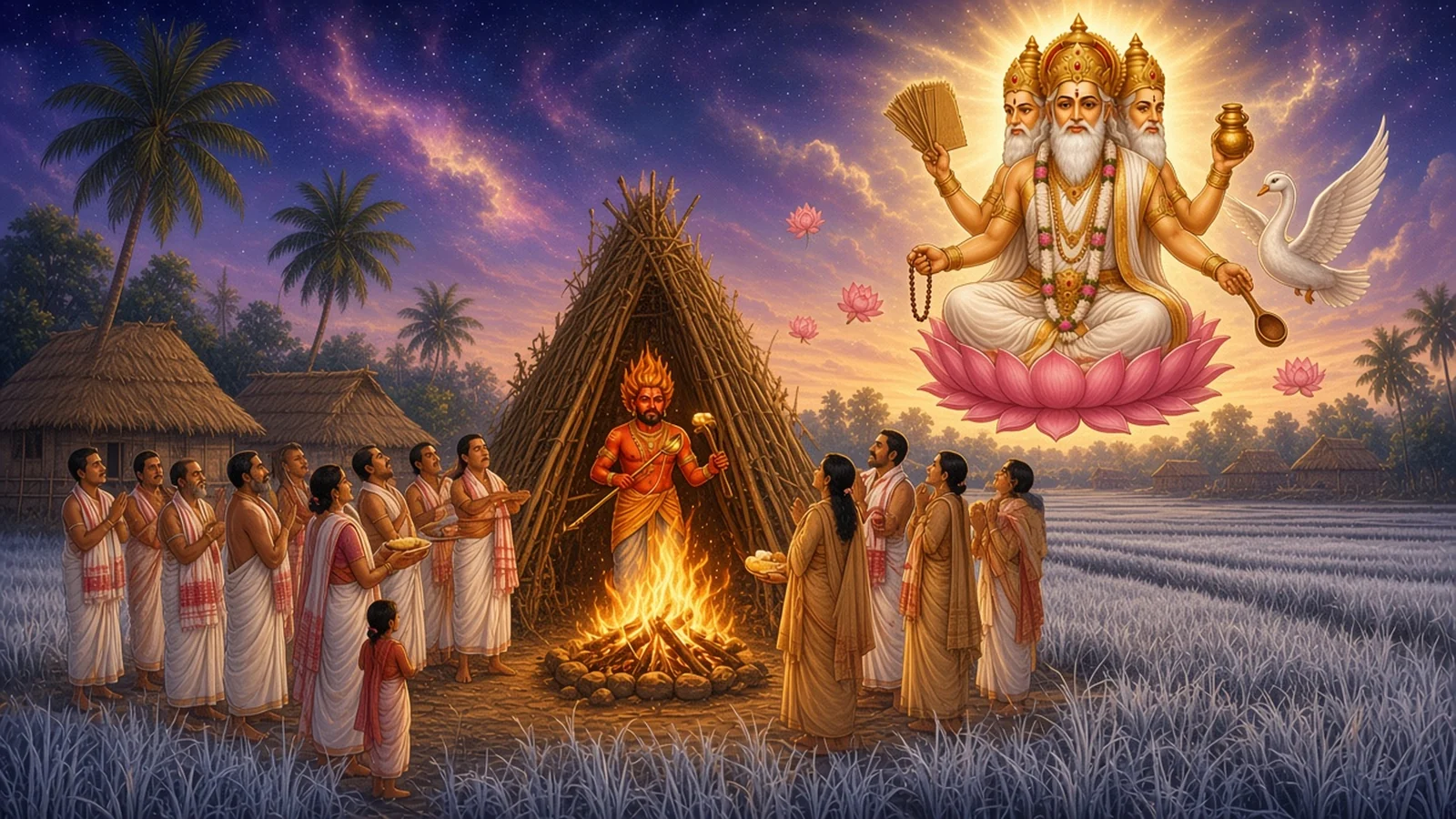
A fisherman's daughter kept the ferry on the Yamuna. She was not quite a fisherman's daughter. Her mother was an apsara cursed into the body of a fish, her father was Vasu, the king of Chedi, whose seed had fallen into the river, and when the fishermen cut the fish open they found a boy and a girl inside. The king took the boy. The girl went to the chief of the fishermen, who called her Satyavati and set her to rowing, and because she had grown up among the nets she smelled of fish, and the river people called her Matsyagandha.
One day the sage Parashara stepped into her boat. Halfway across he looked at the dark girl at the oar and told her what he wanted.
"There are rishis on both banks," she said. "They can see us. How can I do what you ask?"
He raised his hand and a fog came down on the river, so thick that the banks were gone.
"I am a girl under my father's roof," she said. "If I go home with this, what becomes of me?"
"You will go home as you came," he said. "No one will know. And the smell of fish will leave you. From today whoever passes within a yojana of you will smell flowers."
The fog lifted, the boat touched an island in the middle of the stream, and there, the same day, she gave birth to a son. He was dark, so they called him Krishna, and he was born on an island, a dvipa, so they called him Dvaipayana. He did not stay a child long. Almost at once he asked his mother's leave to go into the forest and live as an ascetic.
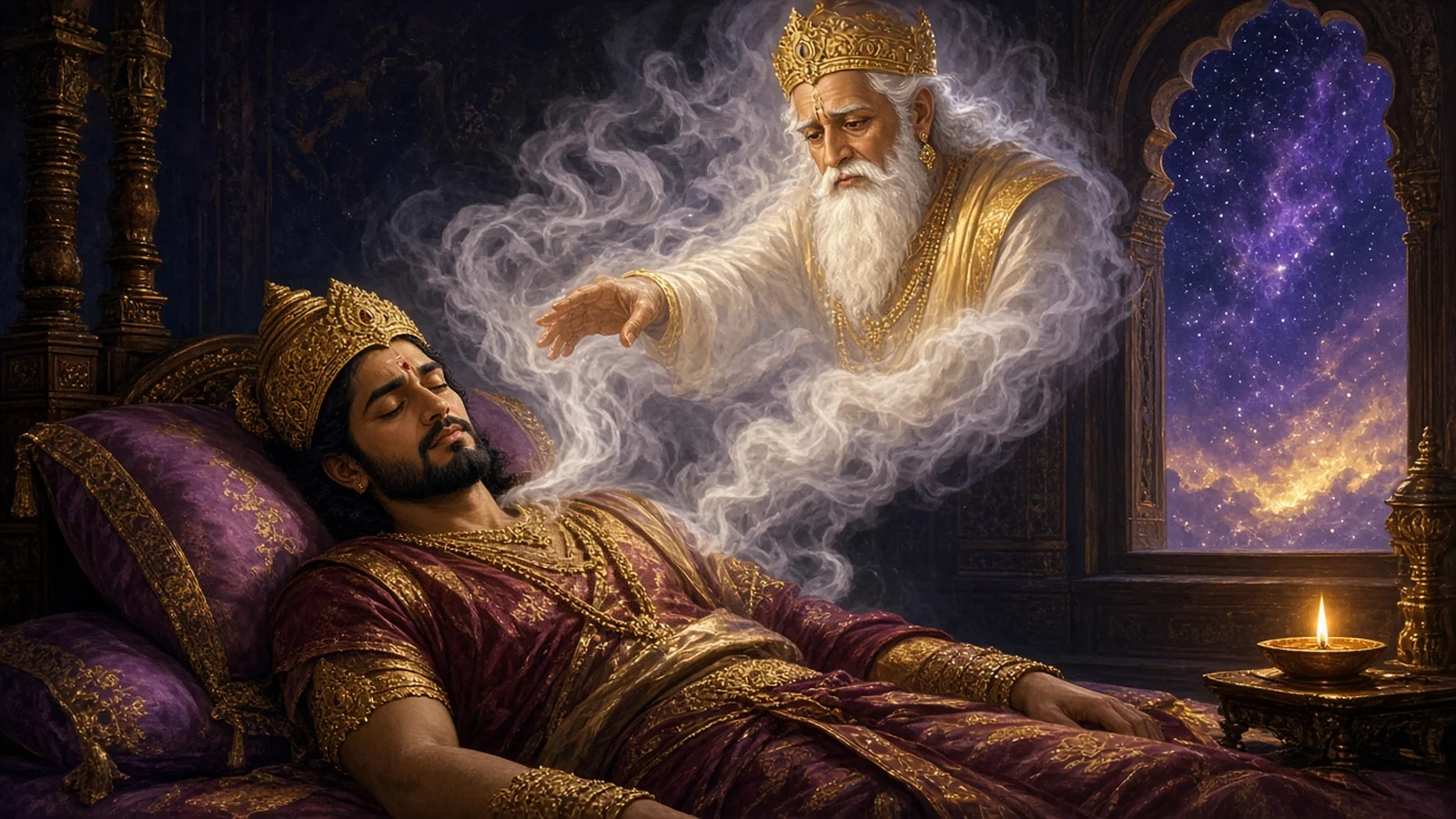
"Think of me when you need me," he told her, "and I will be there." She let him go. Years later, when her husband's line was dying out, she would think of him, and he would come, and from that the whole Mahabharata follows.
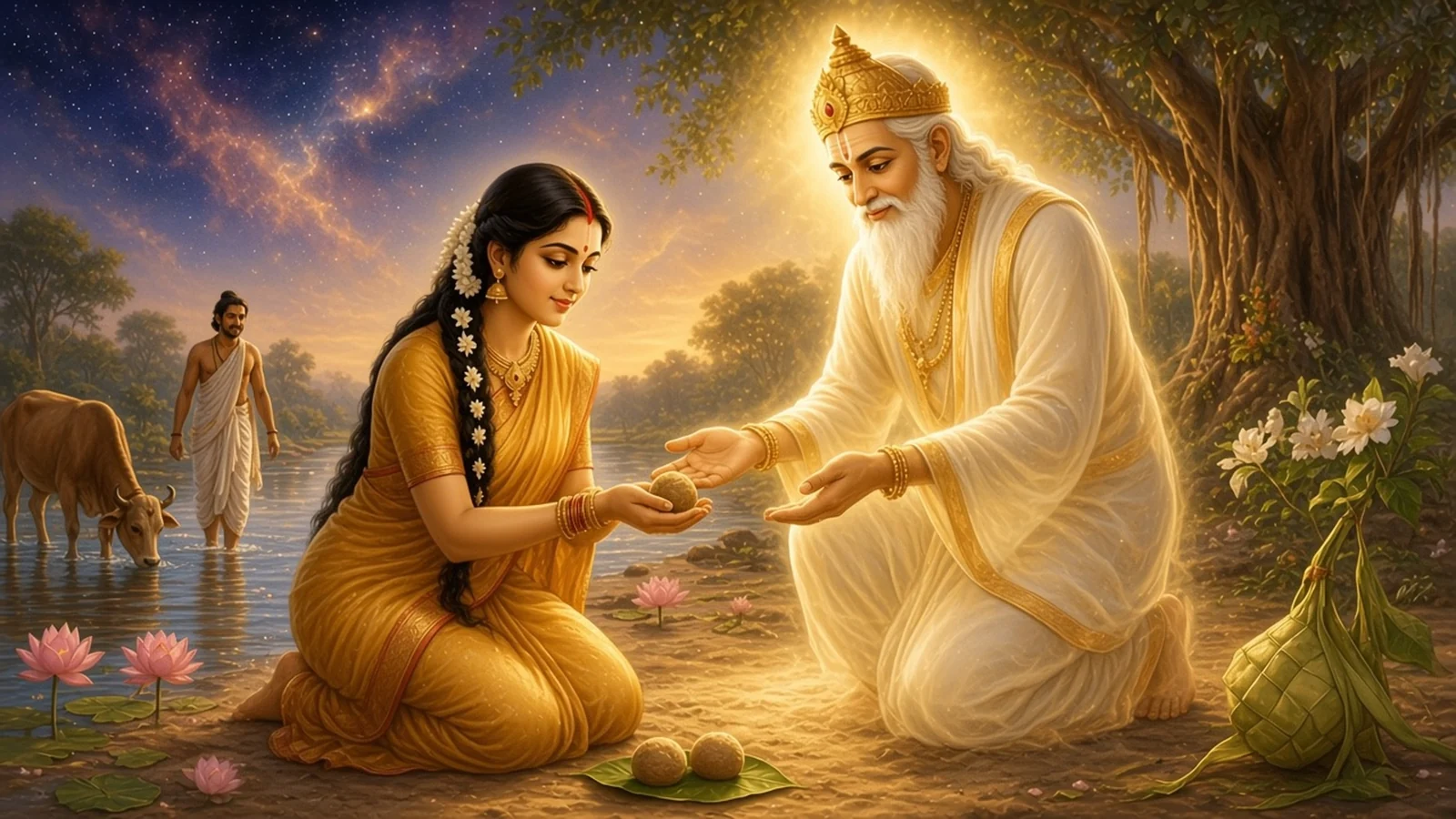
He grew into the sage men called Vyasa, and the Bhagavata tells why. One morning on the bank of the Sarasvati he bathed at sunrise and sat down and looked, not at the river, but at time. He saw the age that was coming. Men would live short lives. They would be dull, impatient and without faith, and the one Veda, which a man then had to carry whole in his memory, would be too heavy for them.
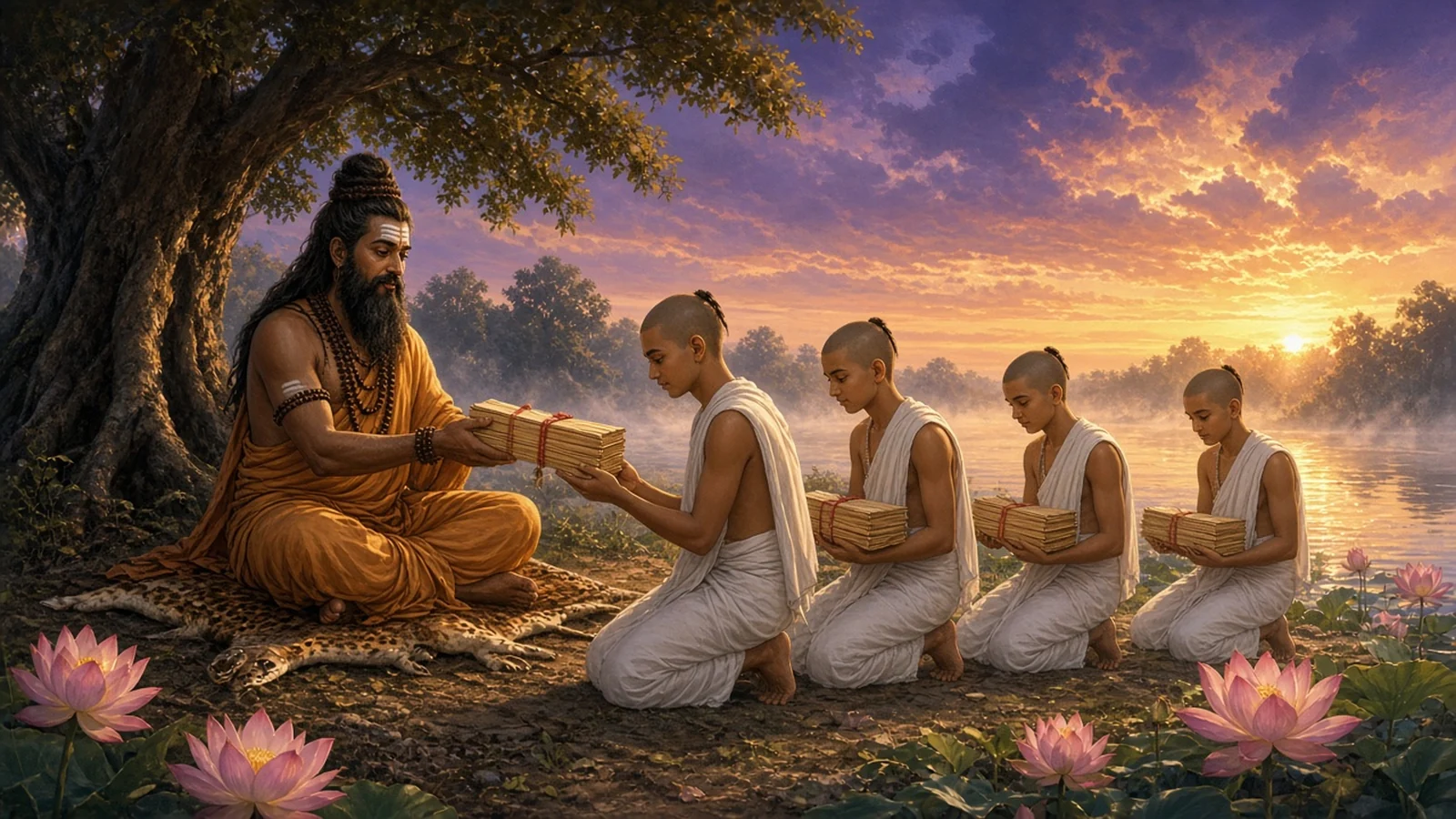
So he took the one Veda and divided it into four, as a man divides a load so that four can carry it, and called his pupils.
"Paila, the Rig is yours. Jaimini, the songs of the Sama. Vaishampayana, the Yajur, the words of the rite. Sumantu, the Atharva." To Romaharshana he gave the old histories and the Puranas, which the tradition calls the fifth Veda. And for the women, the labourers and the men born into twice-born houses who would never learn the Veda, he composed a story that held everything, the Bharata, so that they could hear it and have it all.
Then he sat down again and found that he was not content. He had done everything the Veda asked of a man, and something was missing, and he did not know what. He was still sitting there when Narada came walking down the bank, and the Bhagavata goes on from there.
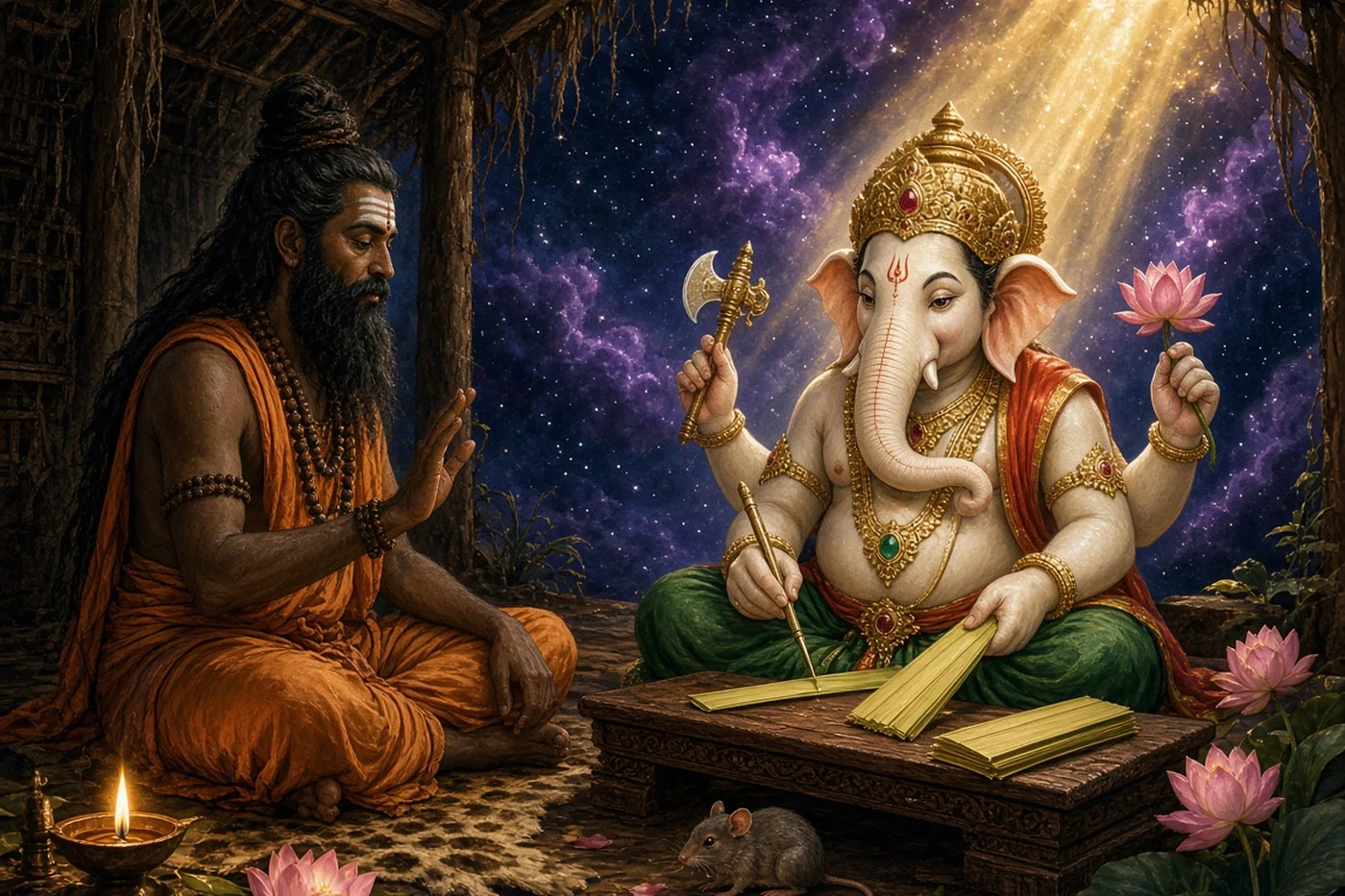
The Mahabharata itself tells how it was written down. Vyasa had the whole poem in his head and nobody on earth who could take it down, and Brahma came to his hermitage and heard his trouble.
"Think of Ganesha," said Brahma. "He will write for you."
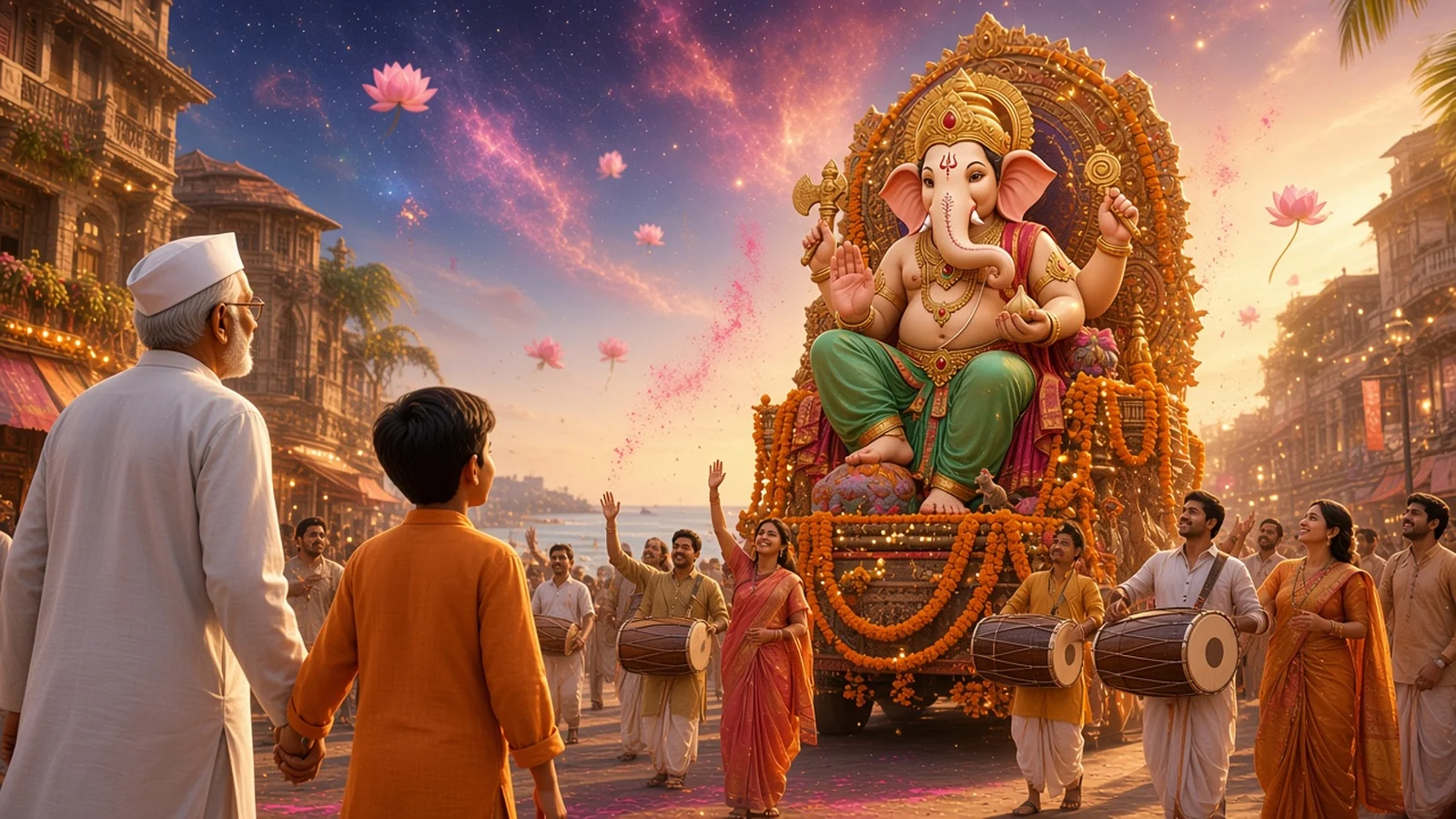
Ganesha came at once. "I will write," he said, "on one condition. My pen does not stop. If it stops for a moment, I stop."
"Agreed," said Vyasa. "On one condition of mine. You write nothing until you have understood it."
Ganesha said Om, and the dictation began. Whenever Vyasa needed time to think, he gave the scribe a verse tied in knots, so hard that even the god who removes obstacles had to put his pen down and work it out. The reciter of the epic says there are eight thousand eight hundred of them, and nobody since has untied them all.
As the maths keep the day: Vyasa's seat
Sringeri, Kanchipuram and Shirdi · Guru Purnima, the Vyasa puja and the Chaturmas · 2 min read
The rains come in Ashadha, and with the rains the roads fill with small lives, worms and insects and frogs, that a walking man cannot help treading on. So the sannyasis stop walking. On the full moon of Ashadha a wandering monk picks a place and stays there, for four fortnights by the old rule, two months as most keep it now, until the full moon of Bhadrapada. His disciples ask him to stay; he agrees; the Chaturmas has begun. Before he sits down he worships his teacher's teacher.
That is the Vyasa puja, and in the Shankaracharya maths of the south it has a shape. The Jagadguru of Sringeri, who holds a seat the tradition traces to Shankara's own pupil Sureshvara, worships Krishna first with his four emanations. Then the Vyasa Panchakam: Vyasa in the middle and his four pupils, Paila, Vaishampayana, Jaimini and Sumantu, round him. Then Shankara and his four, Padmapada, Sureshvara, Hastamalaka and Totaka. Then the four Kumaras, Sanaka and his brothers, and Shuka and Narada, and the teachers between Vyasa and Shankara, Gaudapada and Govinda. Then his own guru, his guru's guru, and the line back as far as it is remembered.
The Guru Parampara Stotram is recited and tulasi leaves are offered at every name. Then he takes the sankalpa to stay, and Sringeri's rains have begun. At Kanchipuram the same puja opens the Chaturmas, and a Viswaroopa Yatra, the acharya carried in procession through the town, closes it on the Bhadrapada moon.
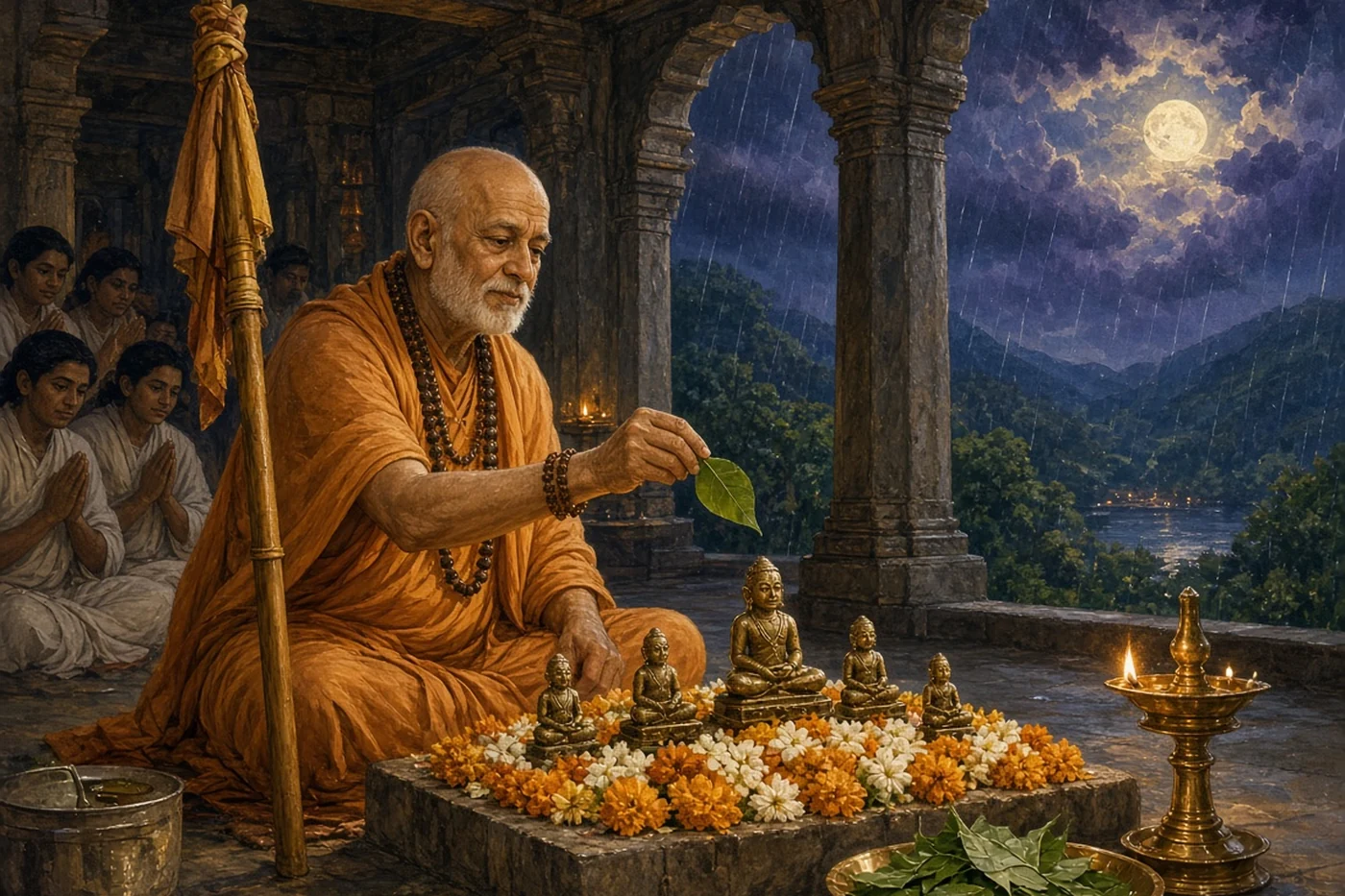
The seat is Vyasa's because he is the first link that everyone shares. The man who divided the Veda, gathered the Puranas and wrote the Brahma Sutras that Shankara commented on stands at the head of every line, so a disciple of any line, worshipping his own guru, is worshipping Vyasa a few names down.
In Shirdi it began with one man. Tatya Nulkar, a devotee staying in the village with his mother, came to the mosque on the Ashadha full moon and worshipped Sai Baba as his guru, because that was the day for it. When he had gone, Baba sent for Tatya Kote Patil, who was out in his fields.
"Why is he the only one who worships me?" Baba asked him. "Why not you?"
The village had wanted to, and had not dared ask. Now Dada Kelkar, the oldest of them, led a full puja in the Dwarakamai, and Shirdi has kept Guru Purnima for Baba every year since. Those who were there put the year differently, 1908 in most tellings, 1910 in one, 1906 in another; the Sansthan gives no year at all.