As Mahipati tells it
Bhaktavijaya, chapter 23 · Pandharpur, Maharashtra · 3 min read
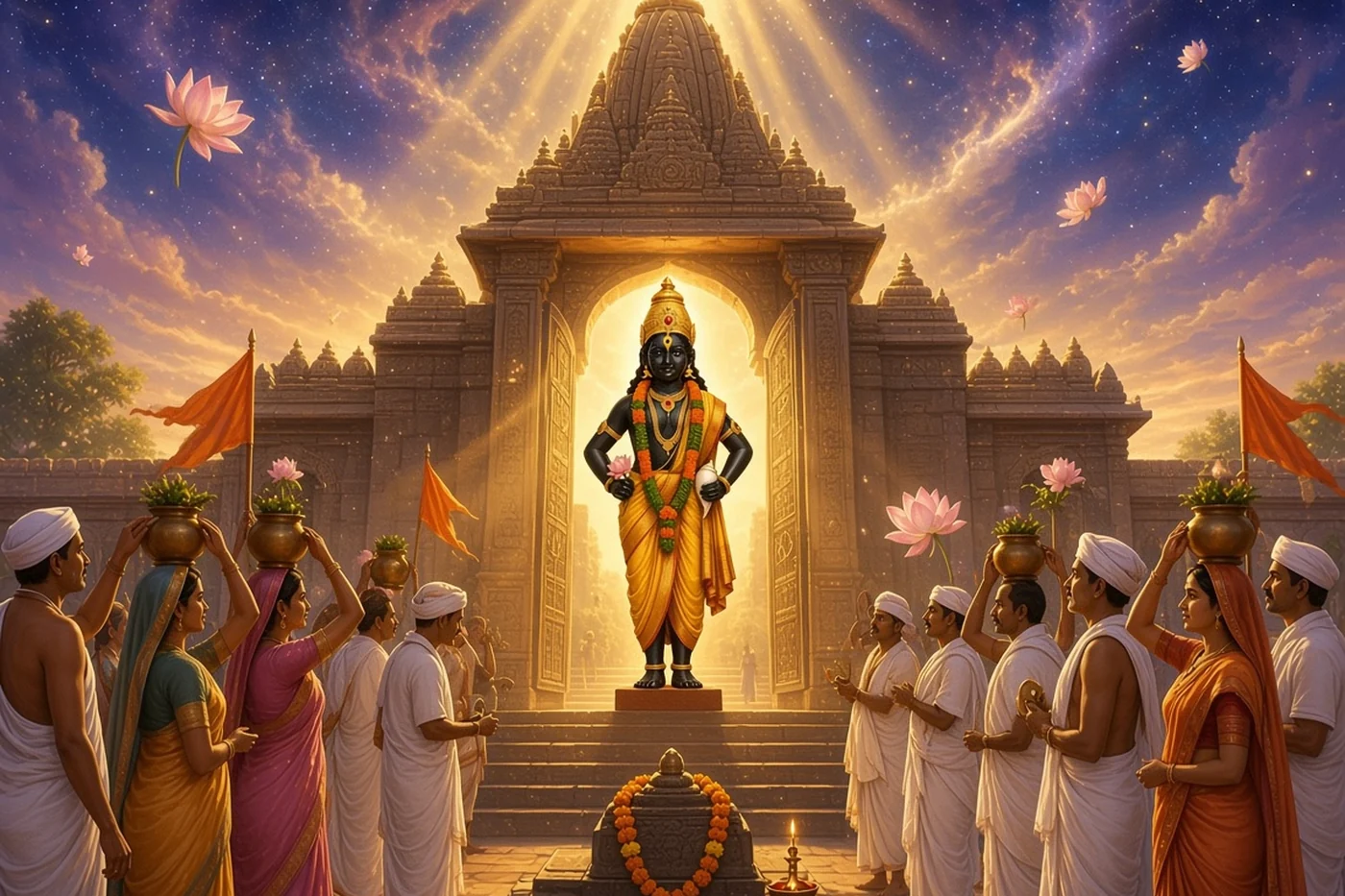
Chokhamela was a Mahar, born in Pandharpur, and the god was in his heart all day. Every morning he bathed in the Bhima, walked round the town, and bowed at the great door of the temple. Further than the door he could not go. Mahars were not let in.
One morning, as he sat by the door, some men stopped to make fun of him.
"If Vithoba loved you, he would have let you in by now. What is the use of worshipping a god you never see? A dog is not let near a Brahmin's plate. A beggar does not walk into the king's palace."
Chokha bowed to them. "The sun is very far away," he said, "and still the lotus opens to it. The tortoise feeds her young from across the water. Without love, being near is nothing." And he went home.
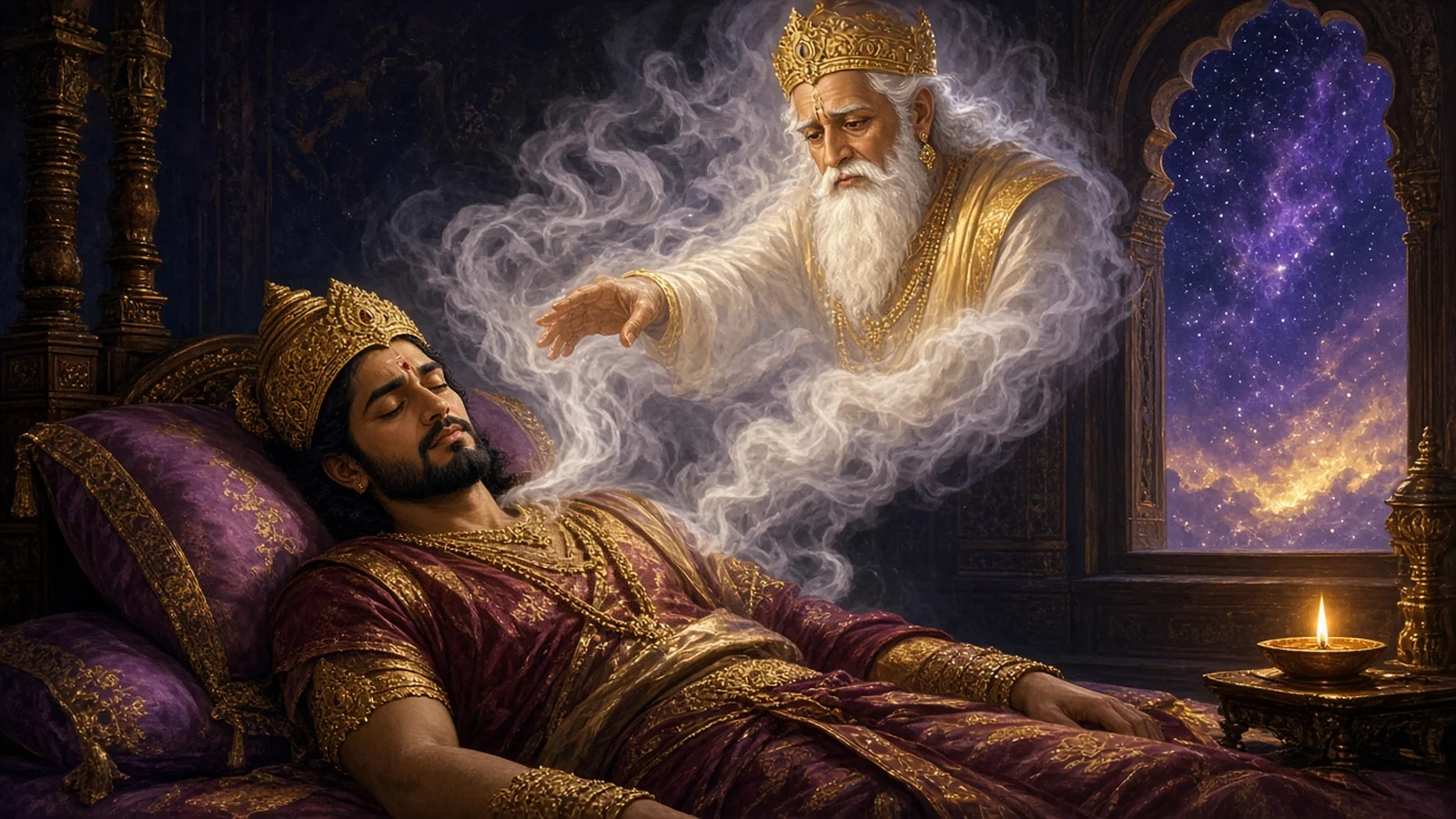
That night the god came for him.
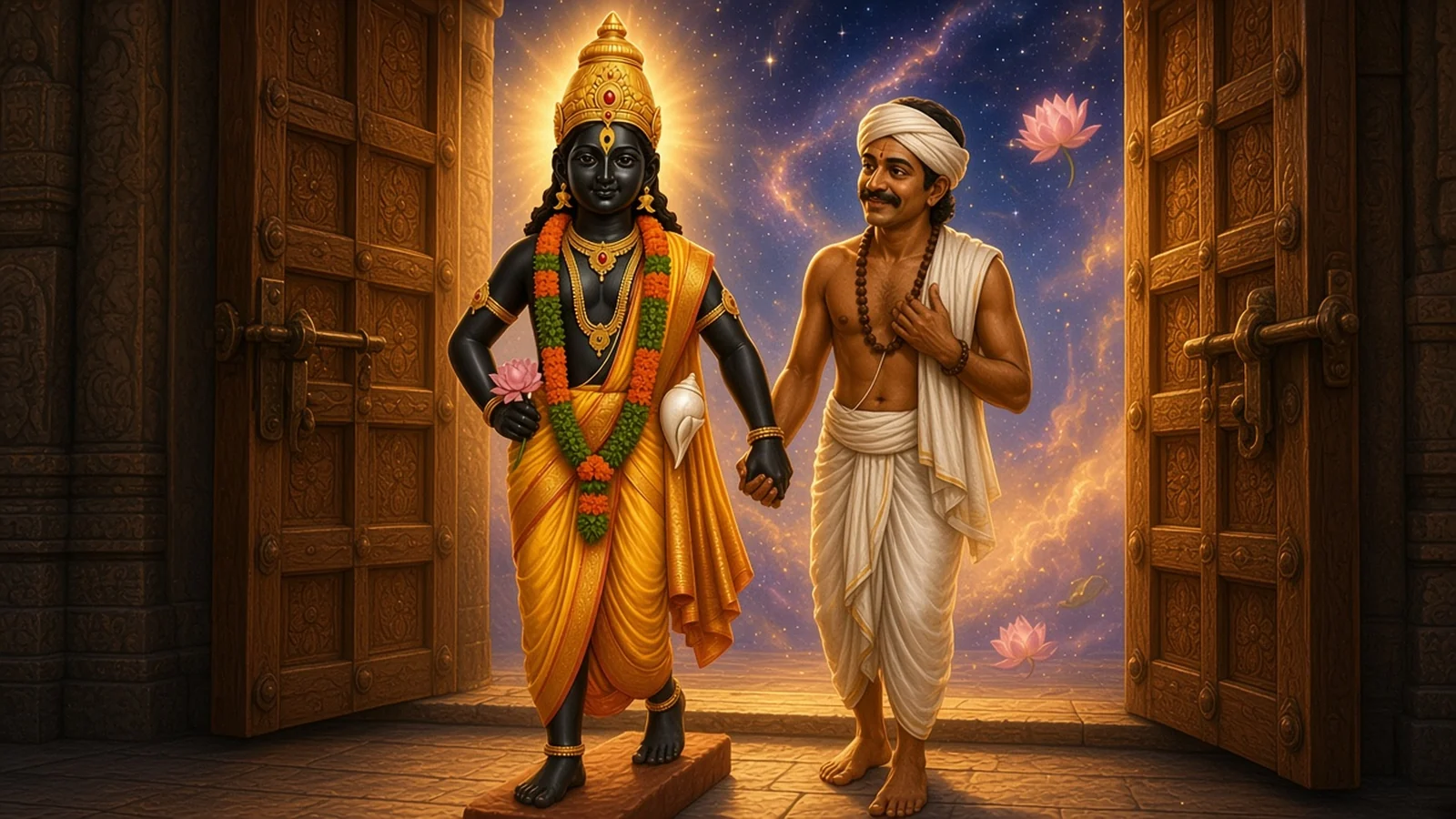
"Come," said the Lord of Pandhari. "I am taking you inside."
He took Chokha by the hand and led him through the locked doors into the inner shrine, and they talked there like old friends.
"I cannot bear a moment without you," the god told him. "Even when I sit eating with Namdev, you are in my heart."
A priest was sleeping by the door. He heard voices in the shrine in the middle of the night, and one of them sounded like Chokha's. He woke the others. The locks had not been touched. They opened them, and there was Chokha before the god.
"The dark one took me by the hand and brought me in," said Chokha. "Forgive me." And he left at once.
The priests could not forgive it. "Go and live across the river," they told him. "If you are seen on this side tomorrow, you will be punished."
He answered them with the Ganga, which no one blames when a Mahar and a Brahmin bathe in it together, and with the earth, which every caste walks on, and that made them angrier still. So Chokha went home in tears, told his wife, and they crossed the river.
He built his hut on the far bank, facing the temple, and set up a pillar there for lamps. And the god came to him there.
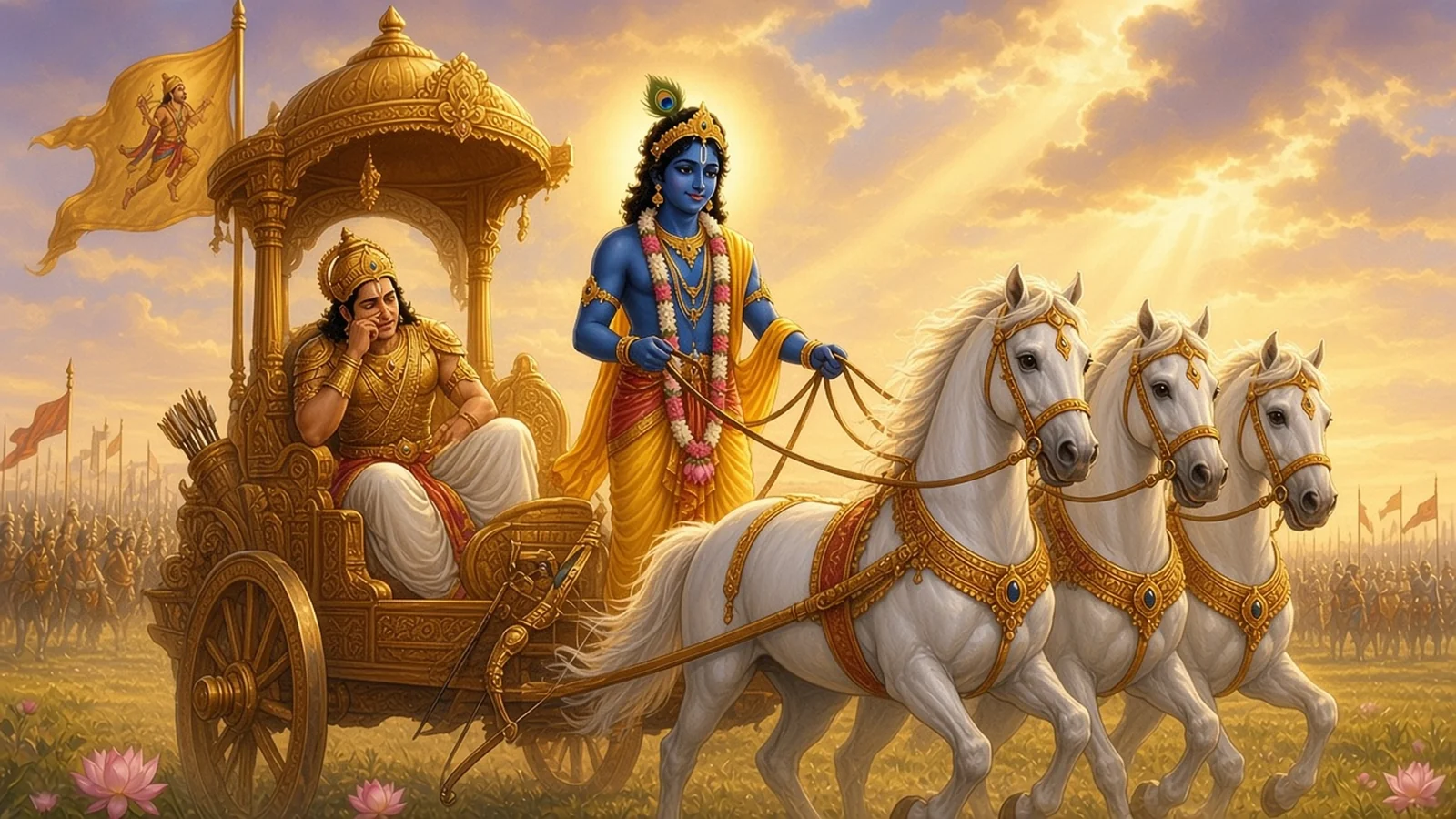
One day Chokha sat eating in the shade of a neem tree, and the god sat down beside him and ate too. Chokha's wife was serving curds. The pot dipped, and the curds splashed on the god's yellow robe.
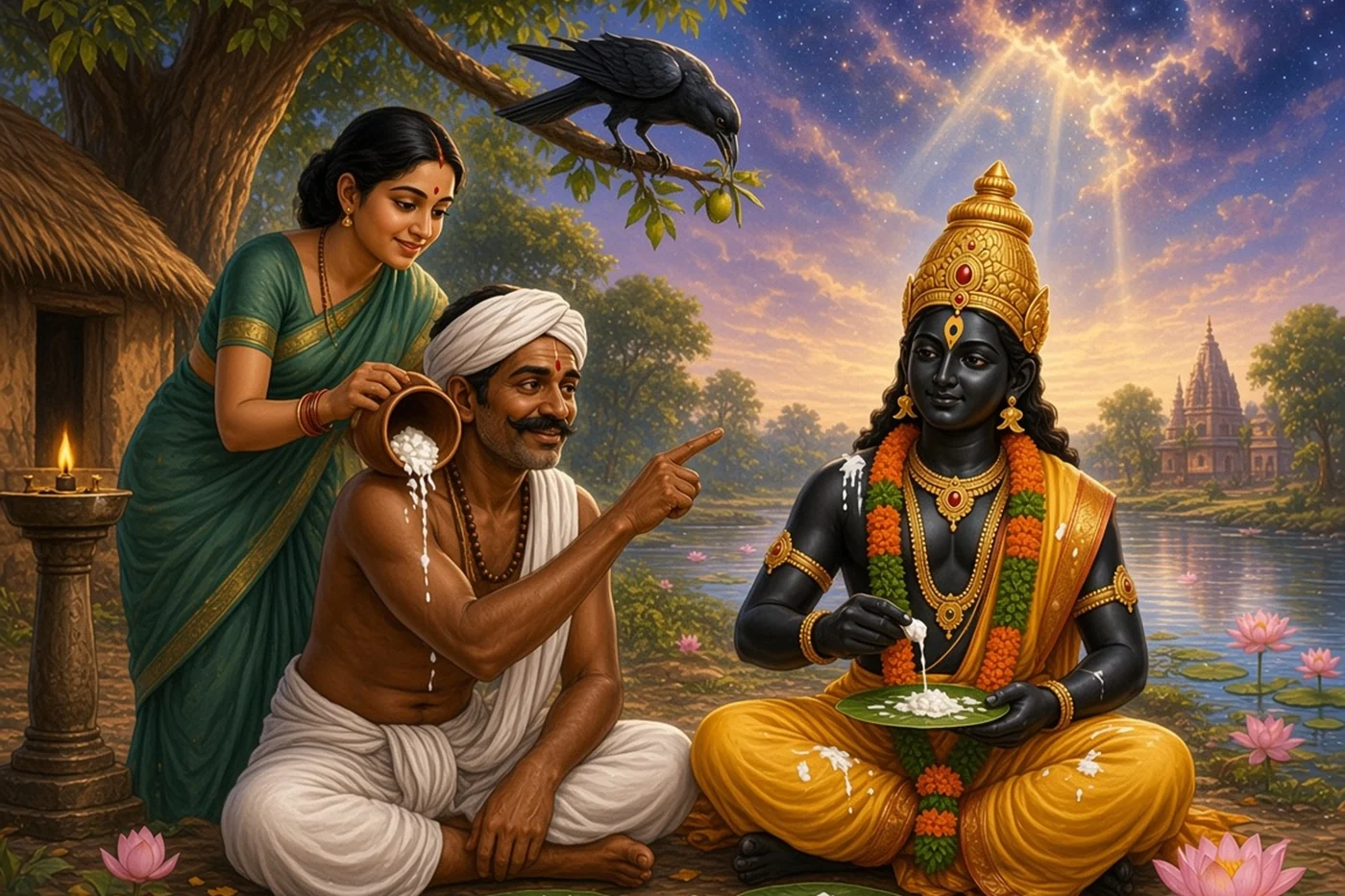
"Careful!" said Chokha. "Look what you have done to his clothes." Then he looked up at a crow pecking the neem fruit over their heads. "Go and sit on another branch. You are dropping them on him."
A priest was passing on some errand and stopped to watch. He saw a Mahar under a tree, scolding his wife and talking to a crow.
"Nonsense," he thought. "As if the Lord of the world would eat with a Mahar." He strode over and struck Chokha across the mouth, and went on to bathe in the river.
Then he went into the temple, and stopped dead.
The god stood on his brick in a yellow robe smeared with curds. One cheek was so swollen that the eye above it had closed.
The priest ran back across the river. "Come into the temple," he begged. "He felt the blow I gave you. I am afraid. Make peace between him and me."
He led Chokha in by the hand. Chokha put his arms round the god, and the swelling went down.
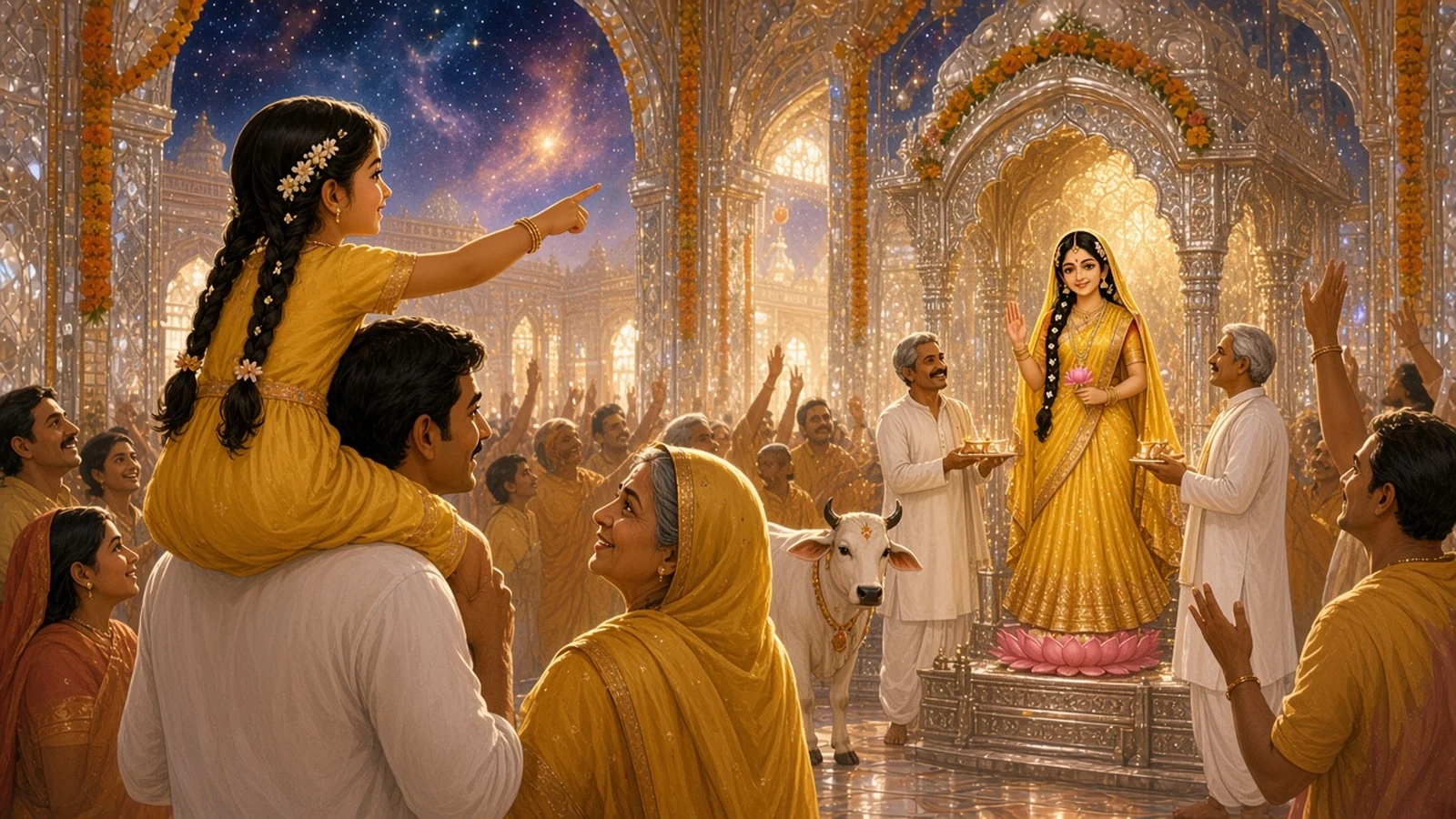
From that day Chokhamela went in to see the god whenever he liked.
As the Varkaris tell it
Mangalvedha, and the steps of the temple at Pandharpur · 1 min read
The Varkaris carry Chokha's story on past the end of Mahipati's chapter, and in their telling the door does not open for him while he lives. The keepers of the temple would not let him in, the tradition says, nor even let him stand in the doorway to worship, and he made his home across the river.
His family was a family of singers. His wife Soyarabai made songs to Vitthal, and so did his son Karmamela and his sister Nirmala. Chokha worked as Mahars worked, guarding and farming other people's land, and in one of his songs the god himself does such work for his devotees: pulling down a wall, weeding a garden, grinding grain, carrying dung, tender as a mother.
He lived at Mangalvedha, a town not far from Pandharpur, and it was there, the tradition says, that a wall was being repaired with Chokha among the labourers. The wall came down on them. Chokha was killed with the others, and when it was cleared no one could say whose bones were whose.
When Namdev heard, he went to Mangalvedha. He knelt in the broken stones and lifted the bones one at a time, and listened. Some were silent. Some were murmuring, "Vitthal, Vitthal." Those he gathered up.
He carried them to Pandharpur and buried them at the foot of the steps outside the temple gate, at the god's feet, where the tellers say Chokha had asked to lie.
His samadhi stands there still, in front of the temple. Every pilgrim on the way in to Vitthal passes the man who was kept outside the door.