Devalok ← All gods
Also calledVitthalVitthalaPandurangaPandharinath

In short

Who is Vithoba?
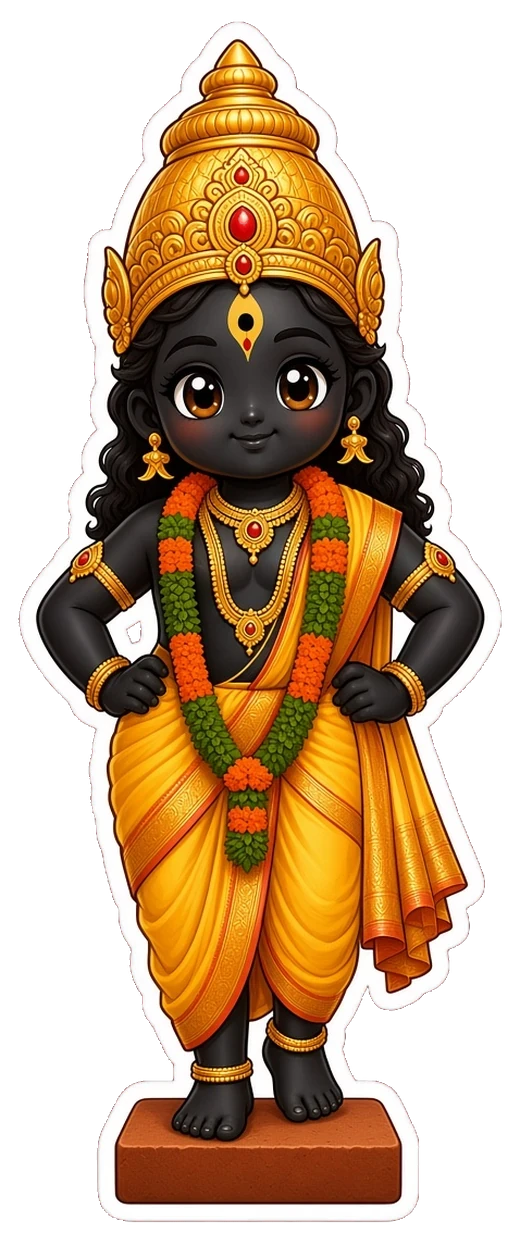
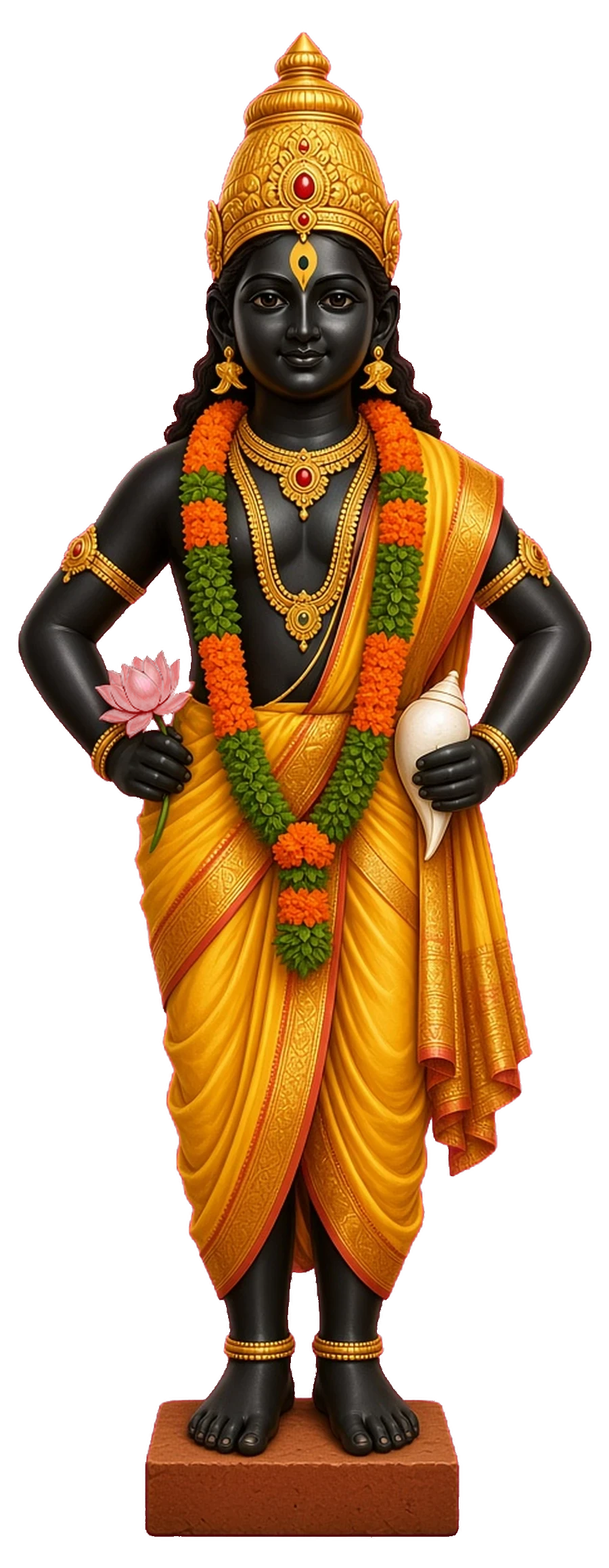
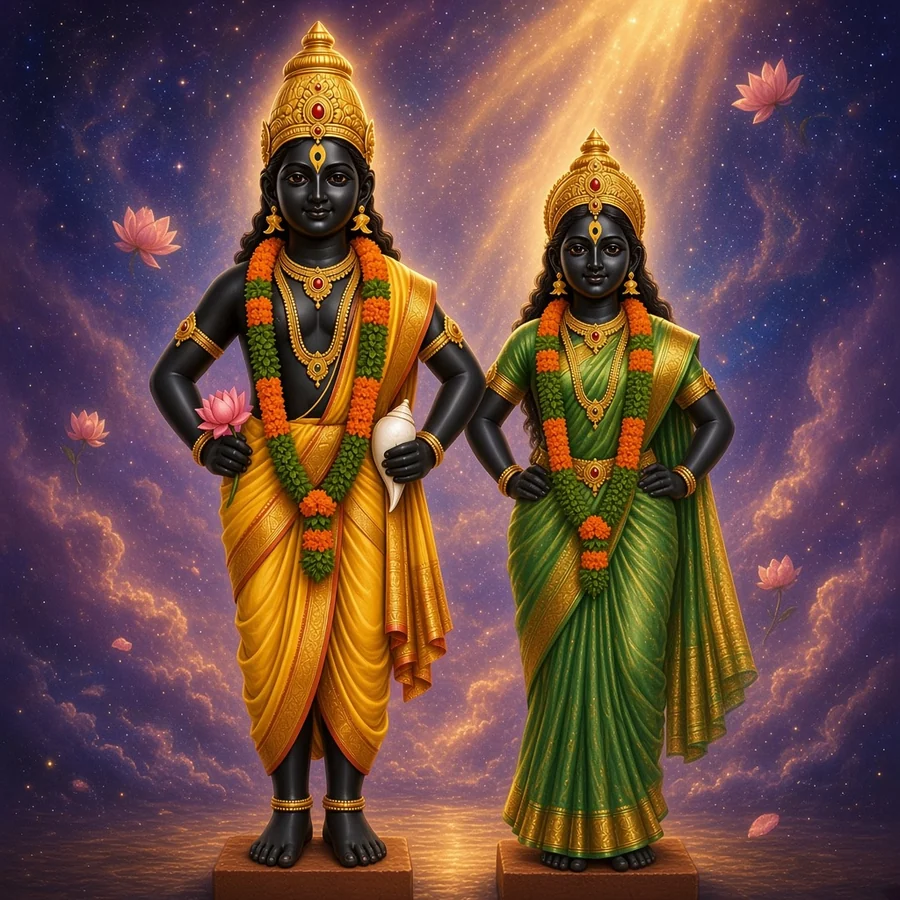
Krishna as Maharashtra knows him, a black stone god standing on a brick with his hands on his hips at Pandharpur, on the Bhima river. Rakhumai, who is Rukmini, has her own shrine in the same temple.
Why does he stand on a brick?
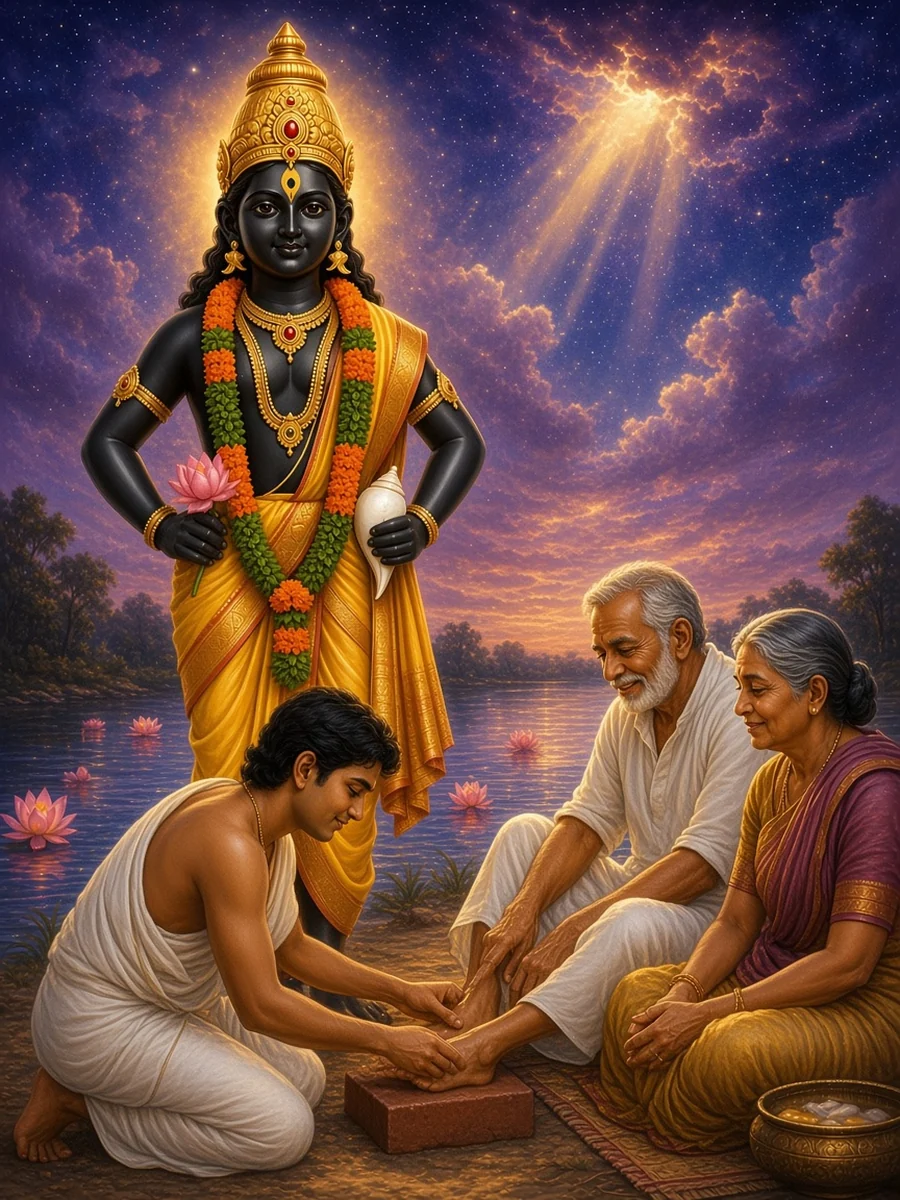
The devotee Pundalik was busy serving his old parents when the god came to his door, so he threw him a brick to wait on, and then asked him to stay. The Varkaris read the name Vitthal as the one who stands on a brick.
Who are the Varkaris?
The people who walk to him, from the saints Dnyaneshwar, Namdev and Tukaram to the million who reach Pandharpur on Ashadhi Ekadashi. Their path took in a tailor, a maidservant and a Mahar, and the god is said to have worked and eaten with all three.
Is he Krishna or Shiva?
Krishna and Vishnu, to his devotees. Scholars also see a Shiva layer, since the tall crown is read by some as a linga and Dnyaneshwar says he carries Shiva on his head.

Artwork ›

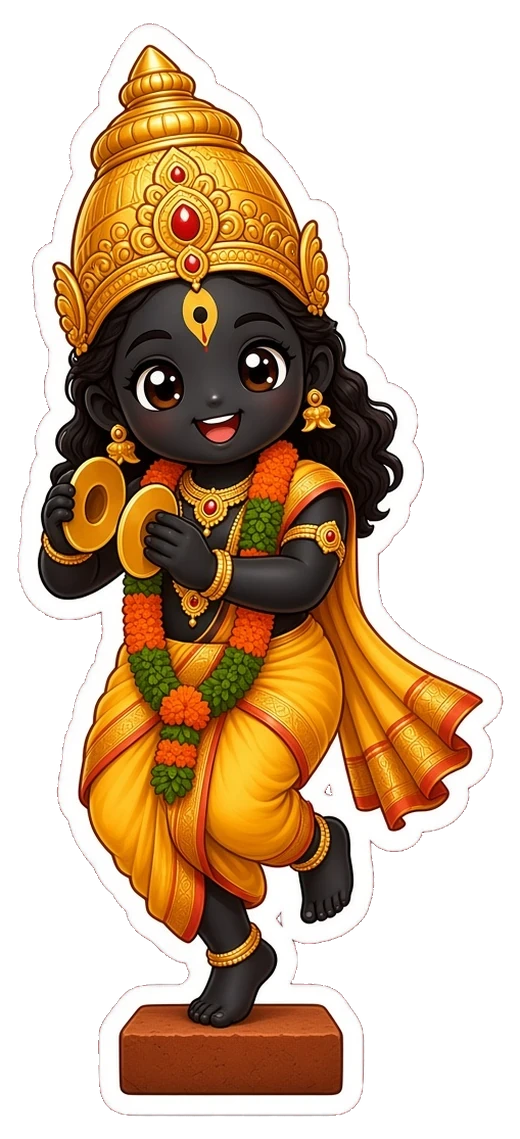
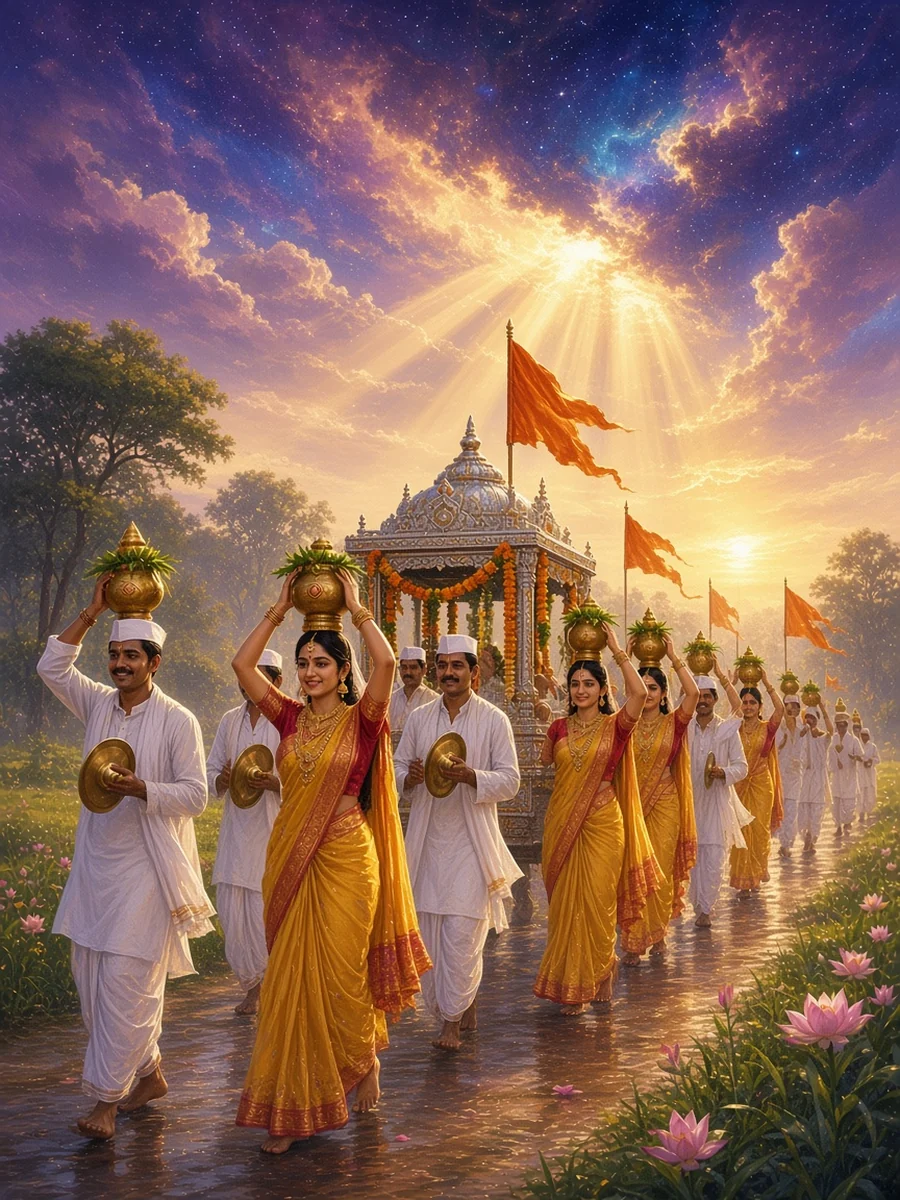
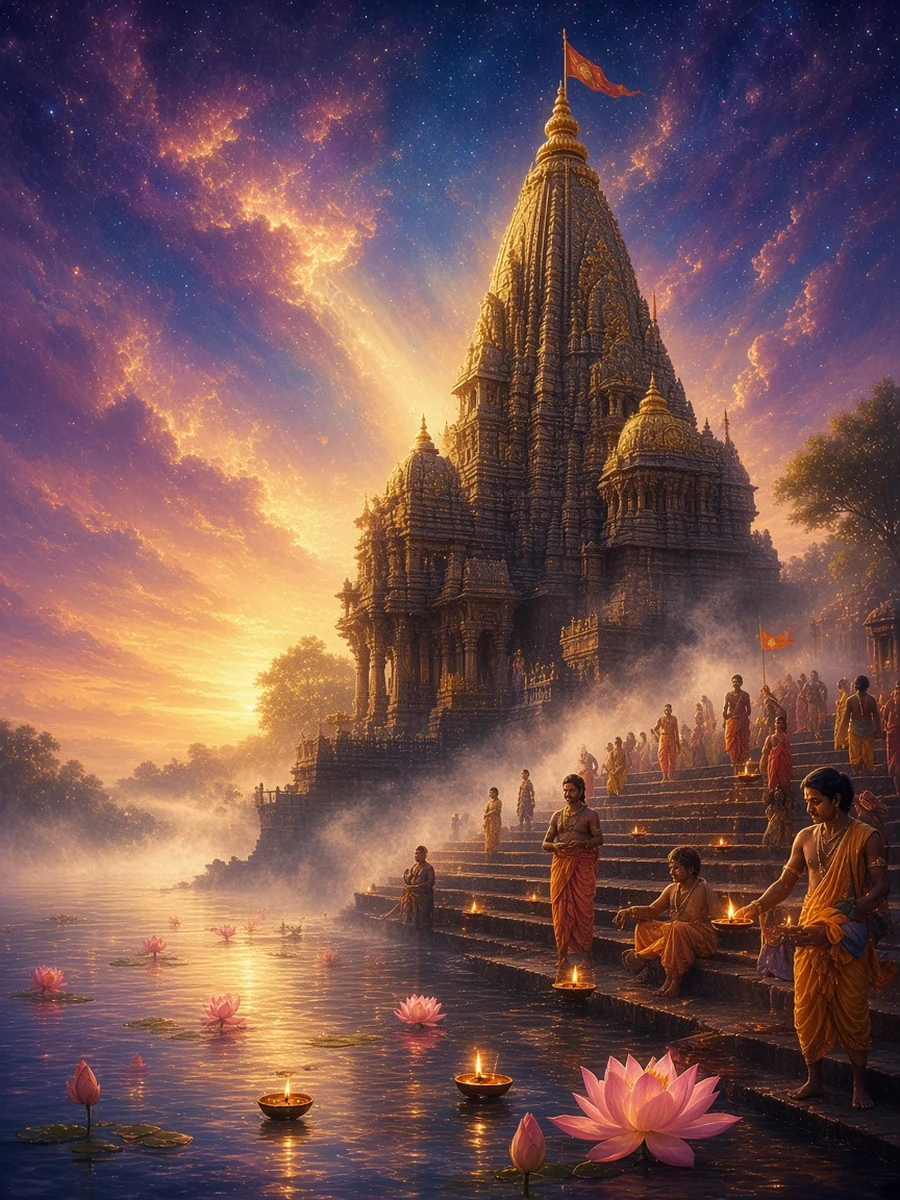
Waiting on the brick Pundalik threw him The Wari, walking to Pandharpur

For kids

Still waiting. Take your time
Jai Hari Vitthal
Jai Hari Vitthal

At a glance

TraditionVaishnava (Varkari)
FormA black stone figure a little over a metre tall, a dark young boy standing upright on a brick with his hands on his hips
HandsA conch in the left hand and a lotus in the right, both resting at the waist; no hand raised in blessing

Who Vithoba is

Vithoba is Krishna as Maharashtra loves him: a black stone god standing on a brick at Pandharpur, on the Bhima river, with his hands on his hips. The Marathi saints called him Vitthal, Panduranga and Pandharinath, and they called him mother as well as father. To the maidservant poet Janabai he was Vithabai, a woman's name for a woman's friend.

He is on the brick because of Pundalik. The god came to Pundalik's door while he was pressing his old father's feet, and Pundalik, who would not get up, tossed him a brick to keep his feet out of the mud and asked him to wait. He waited, and when Pundalik came out at last he asked the god to stay. Pundalik's shrine is on the river bank in front of him, and Rakhumai, Rukmini, stands in a shrine of her own in the same temple. One telling says she had left Dwarka in anger and was living in the forest there, and that Krishna came looking for her first.

Varam tv ishtakayam samanyastapadam, parabrahmalingam bhaje pandurangam: Whose feet are set upon the brick, the sign of the supreme Brahman, Panduranga, I worship (Panduranga Ashtakam 2, attributed to Adi Shankara).

His worshippers are the Varkaris, the people of the vari, the coming and going. Twice a year and more they walk to him from all over Maharashtra, singing the abhangs of Dnyaneshwar, Namdev, Eknath and Tukaram, and arrive on the eleventh day of the bright half of Ashadha. In the crowd of that day many never reach his feet; they bathe in the river, look up at the spire and are content.

The saints' lives are full of him. In Mahipati's Bhaktavijaya, written in Marathi verse about 1762, the god eats a little boy's offering, turns a maid's grindstone at night and sits under a neem tree across the river with a man who is not allowed through his door. He keeps a devotee's company in the plainest work of the house, and the Varkaris tell those stories as his own.

His stories on this site: The Boy Who Made the God Eat, The God at the Grindstone and The Man Outside the Door, which follow three of the saints. How he came to stand on the brick is in The God Who Waited on a Brick, the pilgrimage in The Walk to Pandharpur, and why Pandharpur says he never sleeps in The Four Months the God Sleeps.
Before the Puranas

The Vedic roots of Vithoba

The Vedas do not know Vithoba. No hymn names a god on a brick, and none of the great Sanskrit Puranas tells his story. The texts that bring Krishna to the Bhima, the Pandurangamahatmyas attached to the Skanda and Padma Puranas and Sridhara's Marathi one, are late and regional. He comes into history in stone: a monument of 1189 records a small shrine at Pandharpur, and in 1237 a Hoysala king, Someshvara, gave a village for his food offering. His thread back to the Veda runs through Vishnu, the god of the three strides, and through Krishna, whom the Varkaris see in him.

His names are argued over. The Varkaris read Vitthal as vit, a brick, and thala, standing. The scholar R. G. Bhandarkar thought Vithu was simply the way Kannada speakers said Vishnu, a change recorded from the eighth century, and that Panduranga, the white god, was first a name of Shiva at Pandharpur. The town is ringed by Shiva temples, his crown looks to some like a linga, and Dnyaneshwar says he carries Shiva on his head.

Where he came from is argued too. The historian Richard Eaton thinks he was worshipped as a pastoral Krishna by the sixth century. R. C. Dhere, whose study Anne Feldhaus translated, saw in him an old god of cattle-herding heroes, first worshipped by the Dhangar shepherds. G. A. Deleury suggested the image was a hero stone later taken for Krishna, and the missionary scholar Stevenson wondered in 1843 whether it was a Jain saint. In some Maratha temple sculptures and almanacs he takes the Buddha's place as the ninth avatar of Vishnu.

The south claims a share of him. The Kannada Haridasa singers, Purandara Dasa among them, ended their songs with the name Vitthala, and the Vijayanagara king Krishnadevaraya built a Vitthala temple at Hampi and, the tradition says, carried the Pandharpur image there, until the devotee Bhanudas brought it home. What made him the god of Maharashtra was the Marathi saints, from Dnyaneshwar about 1290 to Tukaram in the seventeenth century, and the hagiographer Mahipati, who gathered their lives in the eighteenth.

See how the Vedic gods became the Puranic ones →

Related gods