As Mahipati tells it
Bhaktavijaya, chapter 21 · Pandharpur, Maharashtra · 3 min read
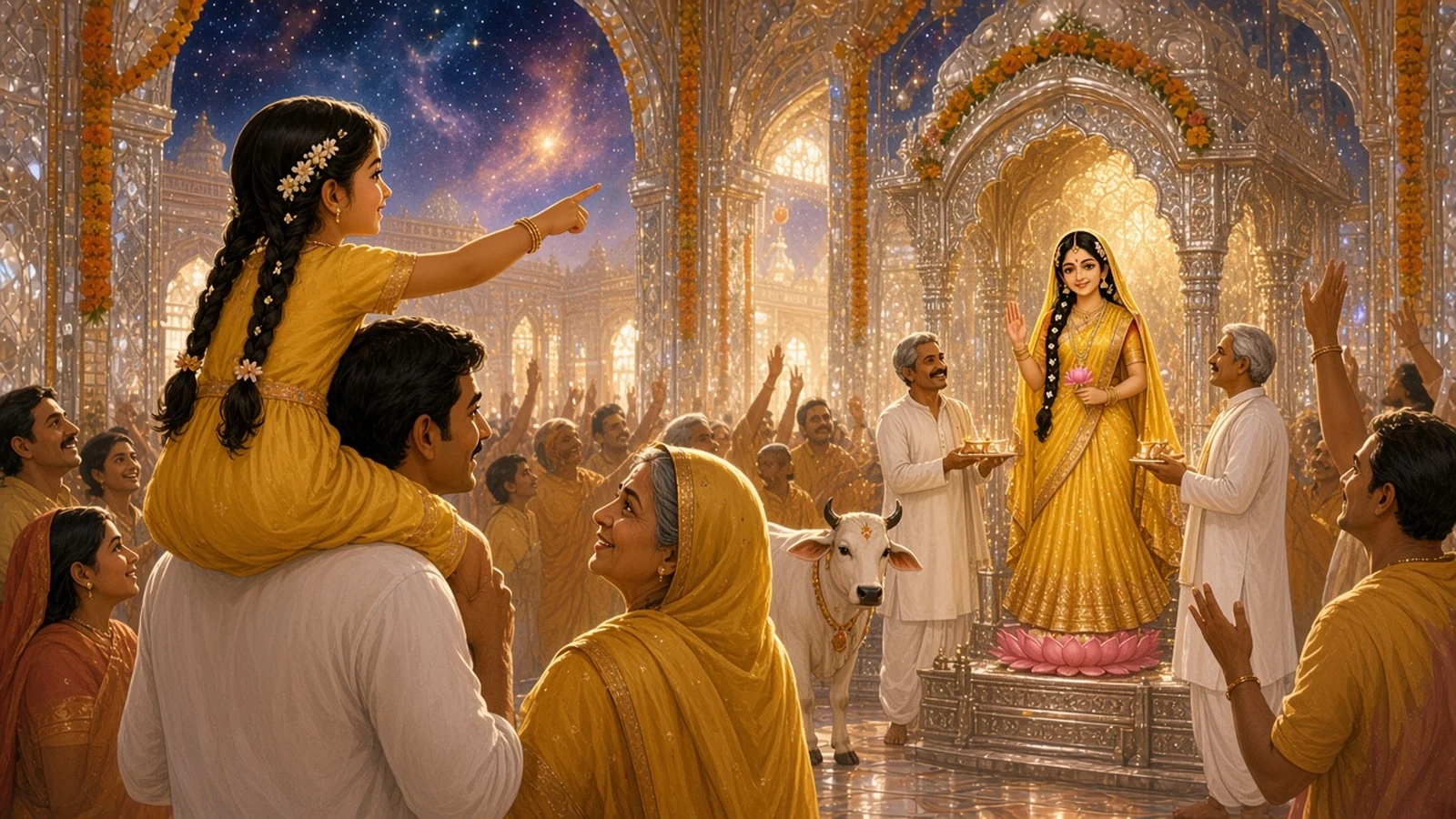
In the month of Kartik, when Pandharpur is full of pilgrims, a girl of seven sat down at the great door of the temple and would not get up.
"We are going home," said her father.
"You go," she said. "I am staying here."
Her parents begged and cried, but nothing moved her, and in the end, strangely comforted by how sure she was, they went home without her.
Namdev found her sitting there. "Whose child are you? Where is your father's village? Why have they left you?"
"My name is Jani," she said. "Vitthal is my mother and my father."
He took her by the hand and brought her home, and told his mother Gonai that the girl must be looked after. Jani grew up in that house as its maid. She swept and fetched and cooked with the god's names going under her breath all day, and at night she sat at the back of the singing and listened.
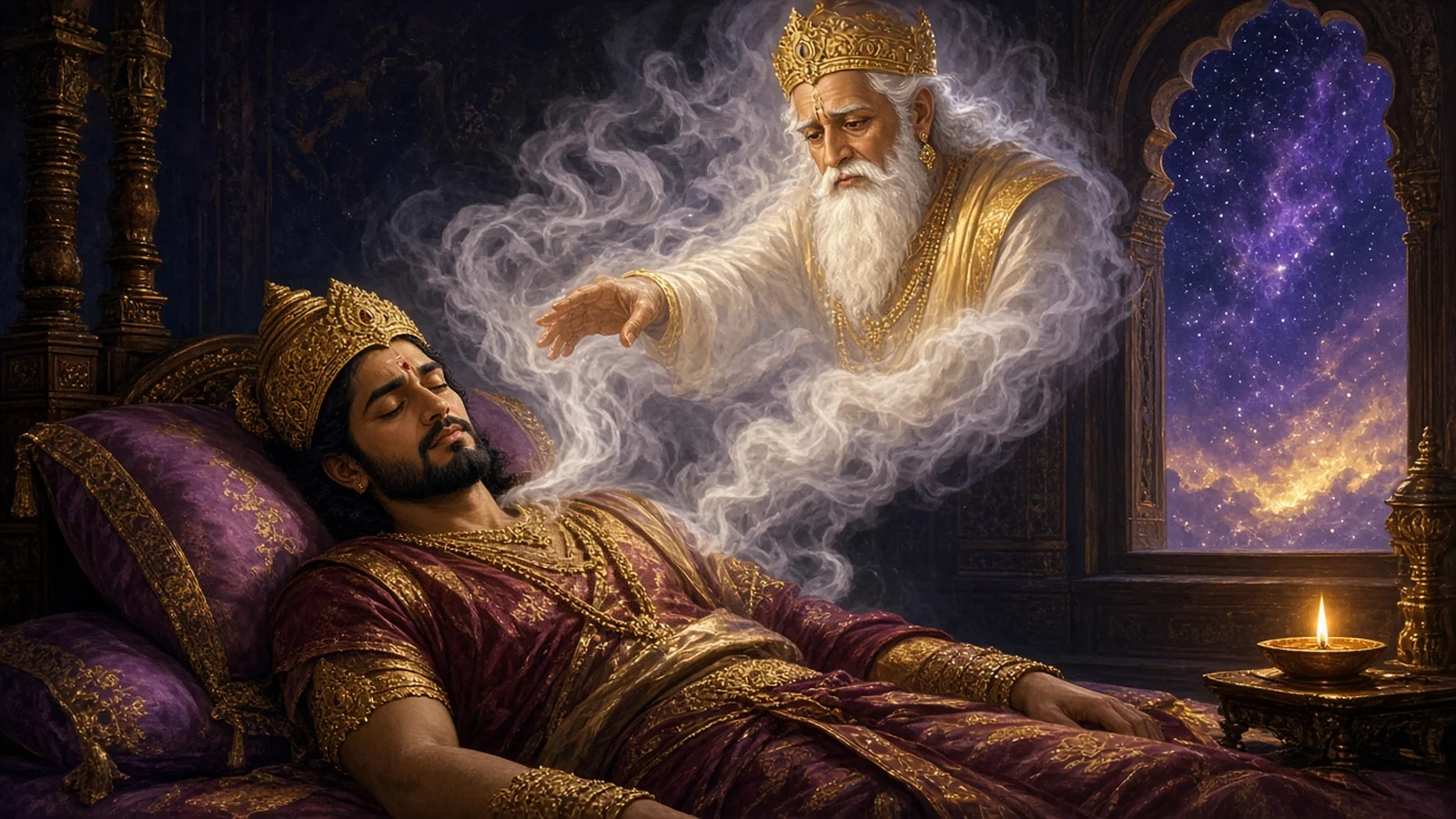
One night there was a basket of grain to grind, and Jani had fallen asleep by the mill in her little hut.
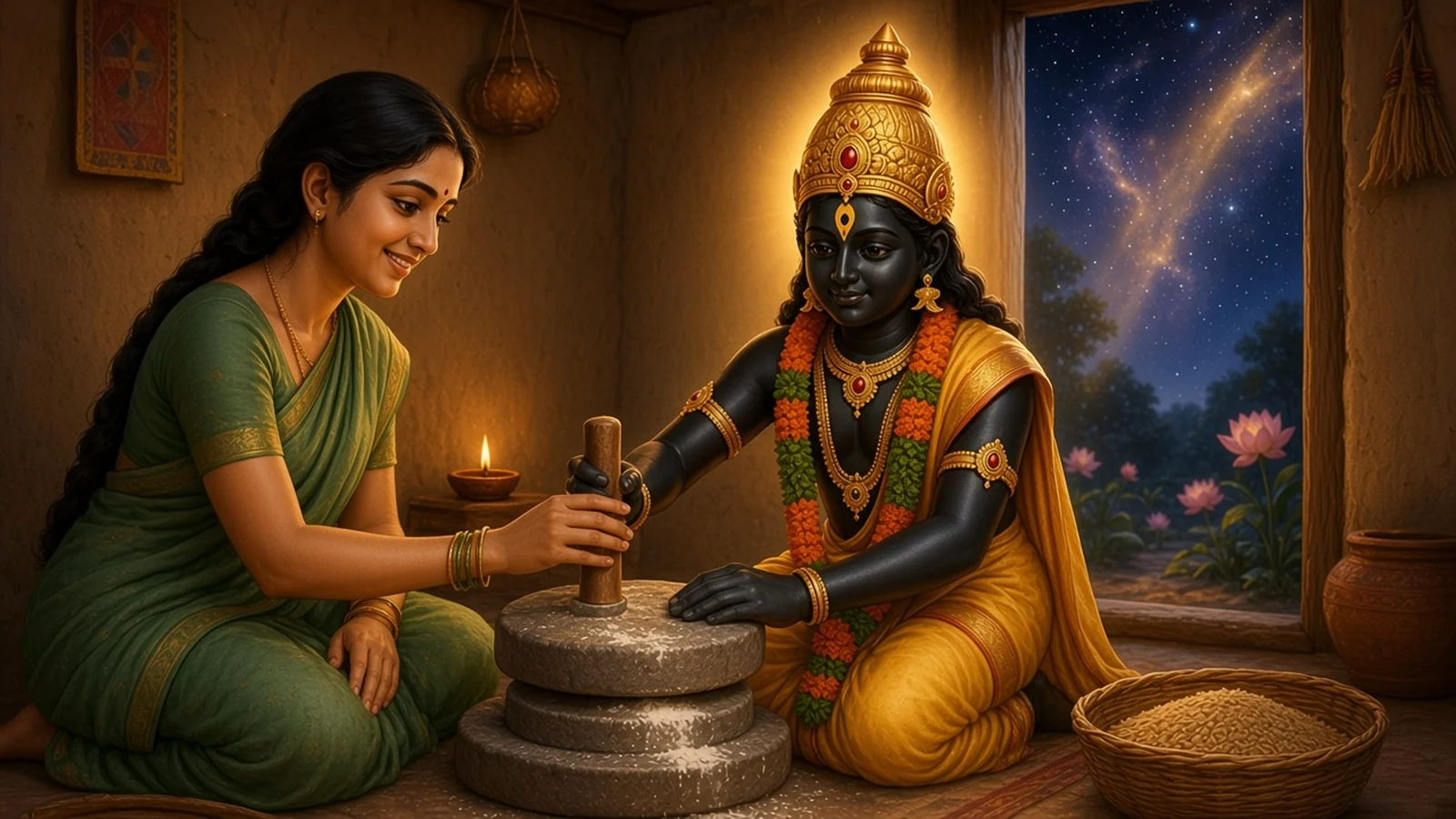
The god came in. He plaited her hair. He sat her by the grindstone and set the basket beside her.
"I will turn it," he said. "You keep your hand on the handle and sing."
She woke up glad, and sang. She sang of the saints as her own family: Namdev her father, his wife Rajai her mother, Gora the potter her uncle, Kabir and Savata her brothers. She sang of the wonders they had done. The stone went round and round, and the Lord of Pandharpur turned it and nodded along to her song.
Gonai heard singing in the night and the rumble of the mill, and came across the yard with a cane.
"Who is in there? Who is grinding for you? Some woman you have hired to steal our flour?"
Jani said nothing. Gonai struck out in the dark, and the blow fell on the god.
"It is only Vithai," said a voice. "I come early to help Jani with the grinding."
When Namdev heard of it he understood at once. "Mother," he said, "you have struck the Life of the world." Gonai went back to the house with her face burning.
The god filled the basket with flour and set it aside. Then he lay down to rest, still talking with Jani, and fell asleep, and the east began to pale.
"Get up!" said Jani, shaking him. "The priests are coming to wake you, and you are not there. If there is no morning hymn and no lamp, the whole town will be in uproar."
He jumped up and ran. In the half dark he wrapped himself in her old blanket instead of his own fine woollen shawl, and he left behind his necklace, the cluster of nine jewels on its string of pearls.
When the priests opened the doors, the god was standing on his brick wrapped in a servant's blanket, and his necklace was gone. Every lock was as they had left it.
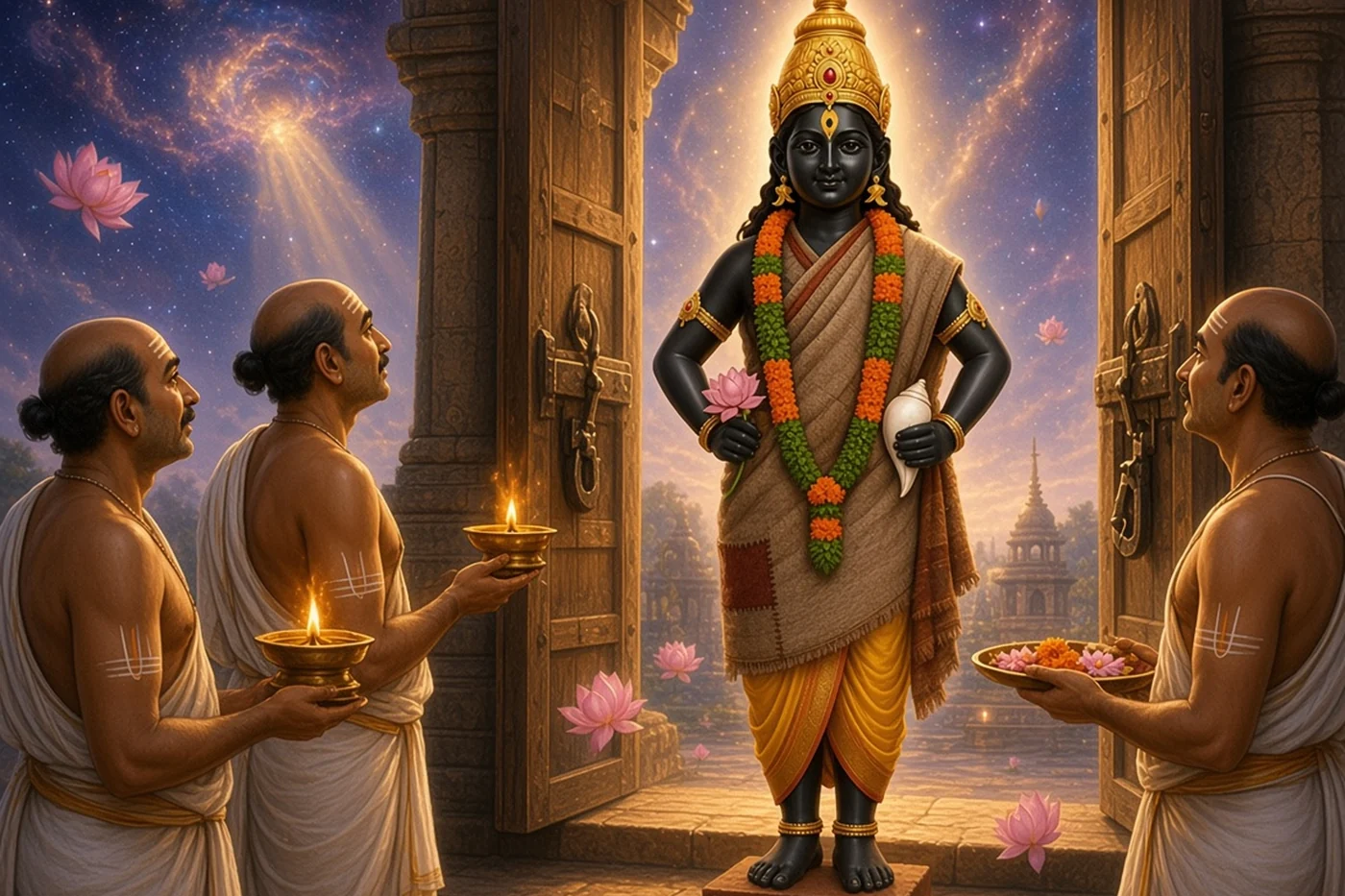
"Namdev's maid," some of them said. "She gave him a blanket and kept his jewels."
They went to the house. "Give back the god's necklace," they said, "or you will be punished."
"If I took his jewels," said Jani, "let my eyes burst."
They searched, and found the pearl necklace among the clothes. The Brahmans agreed that she had robbed God himself and must die on the iron stake.
They took her down to the bank of the Chandrabhaga, where the stake stood fixed in the ground. Jani did not argue. She thought of the god.
"You lift up the fallen. You help the helpless. I have no one. Who will come for me?"
The iron stake turned to water where it stood.
The priests stared. "He came the moment she thought of him," they said, and the devotees on the bank shouted, "Victory!"
As Janabai sings it
her own abhangs · Marathi, fourteenth century · 2 min read
In Jani's own songs there is none of this. There is no necklace, no priest and no stake. There is the work, and the god doing it with her.
He grinds with her, she sings, and pounds the grain beside her, and he has put away all his greatness to do it. He carries the water, proud as anything. He gathers the dung with his own hands. He washes her soiled clothes, and he washes her, the way women do for one another. How will I ever pay you back, she asks him. Give me a place at your feet. I am Namdev's maid.
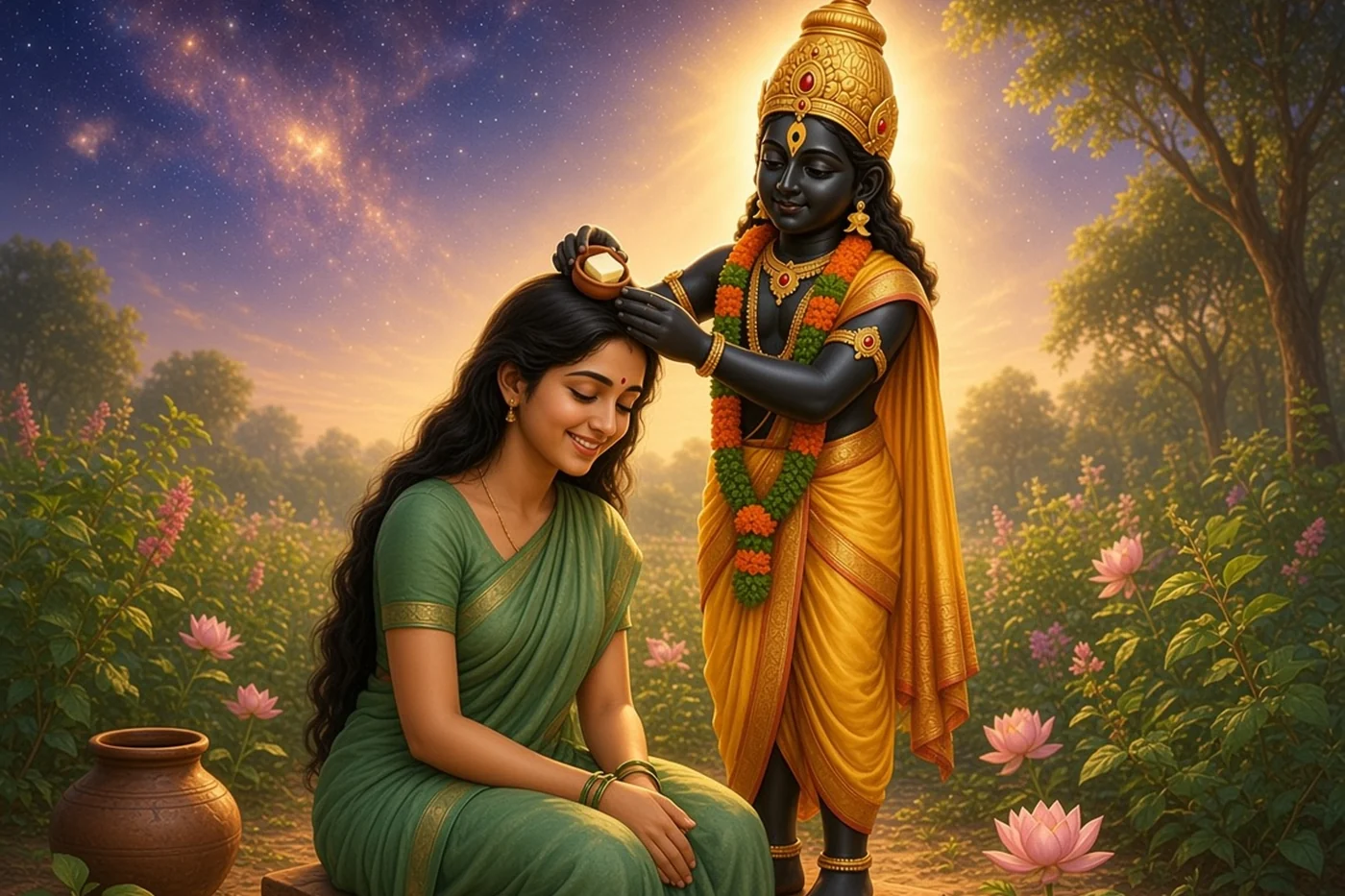
In another song she is in a grove of tulsi, unbraiding her hair, and the discus-bearer rubs butter into it.
"I have no one," says Jani.
So the god pours the water over her head himself, and she goes about telling everyone that her dearest friend is giving her a bath.
She does not always call him Vitthal. She calls him Vithabai, Mother Vitthal, a woman's name for the friend who works beside her.
And in one song the thief is not Jani at all. She catches the thief of Pandharpur. She ties him up with a rope, shuts him in her heart, binds his feet and beats him with a holy word, and he complains the whole time.
She begs his pardon for it, and holds on to him all the same.
Her songs go further than the stories about her. Everything she eats and drinks is God, she sings, and the mat she sleeps on; Vithabai has filled all of it from the inside out. If the sea turned a river away, who would the river complain to? Does a mother push away her own child? Whoever comes to him, she sings, he has to take.