As the temple's Goswamis tell it
Shri Banke Bihari temple tradition · the Nidhivan grove, Vrindavan · 3 min read
Long ago Vrindavan was a forest, and in a quiet corner of it, near the Yamuna, lived a singer who owned almost nothing.
His name was Haridas. He had left his village near Aligarh and come into the forest, and here, among low tulsi bushes whose branches bend down to the ground, he found the stillness he wanted. The place is called Nidhivan. Every day he sang. He sang of the play that never ends, Radha and Krishna in the groves of Vrindavan, and the people who heard him said he sang as though he were watching it.
His followers believed he was. In their tradition he was Lalita, the dearest companion of Radha, born again as a man.
There was one bower in Nidhivan, a kunj of close green branches, where Haridas went more than anywhere else. He would stay there for hours. His disciples watched the bower and wondered.
"Swamiji," one of them said at last, "what is in there? Every day you go in, and every day you come out with a face we do not know."
"Do you want to see?" said Haridas.
"If you allow it."
He allowed it. The disciples went in under the branches, and at once they stopped. The bower was full of light, so bright and so near that they could not see a leaf of it. They stood blinking, half afraid, and could make out nothing at all.
Then Haridas went in himself.
"Show yourselves to them," he said into the light. "They have come this far."
And the pair came. Krishna stood there, dark as a rain cloud, and Radha beside him, bright as lightning, smiling and full of play, as if they had only that moment turned from a game. The disciples did not fall at their feet. They could not move at all. They stood like figures cut in stone, with their eyes wide open.
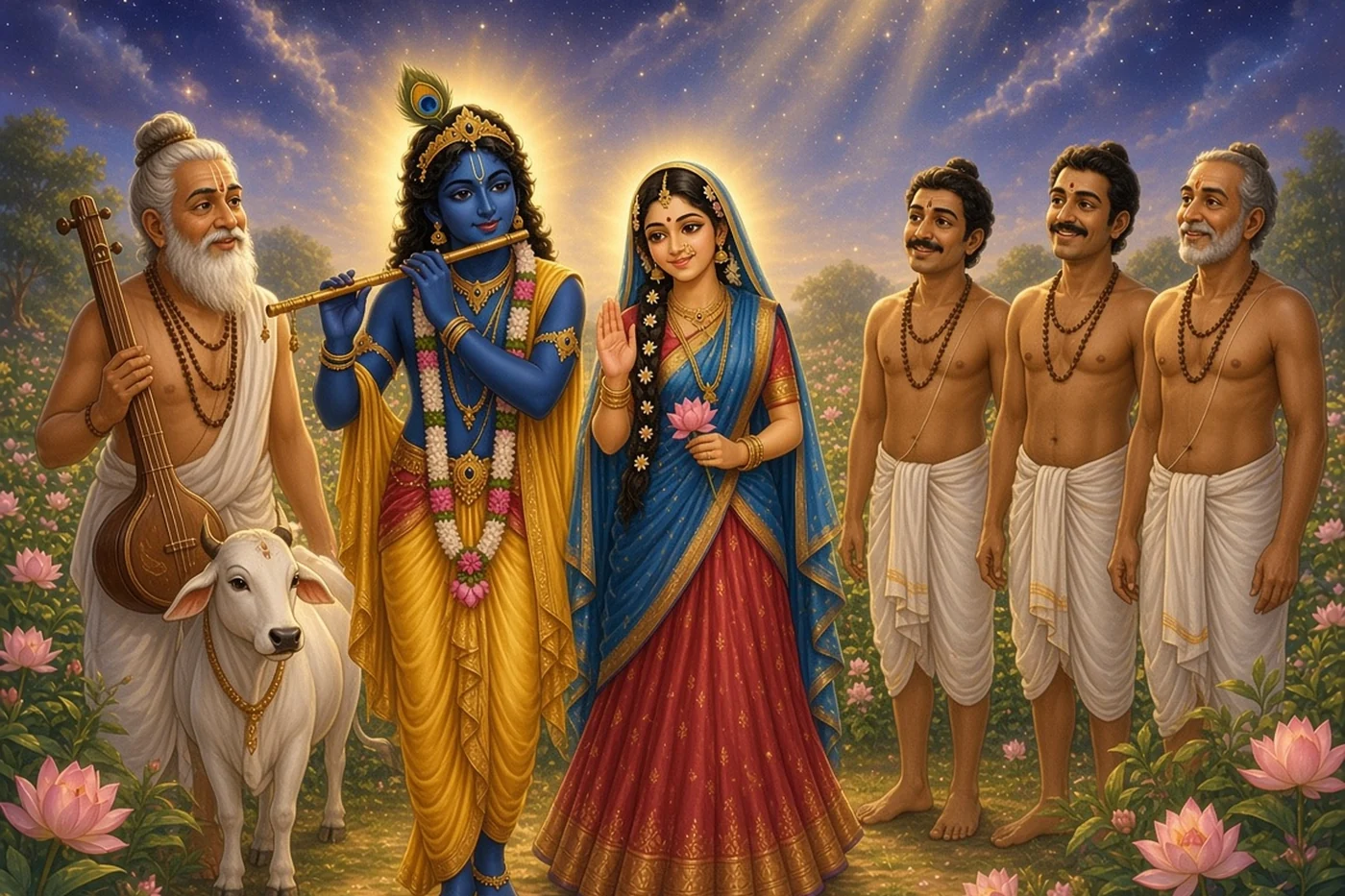
Haridas looked at his disciples, rigid and staring, and he looked at the two before him, and he understood that this was too much. The beauty of the pair together was more than an ordinary person could bear.
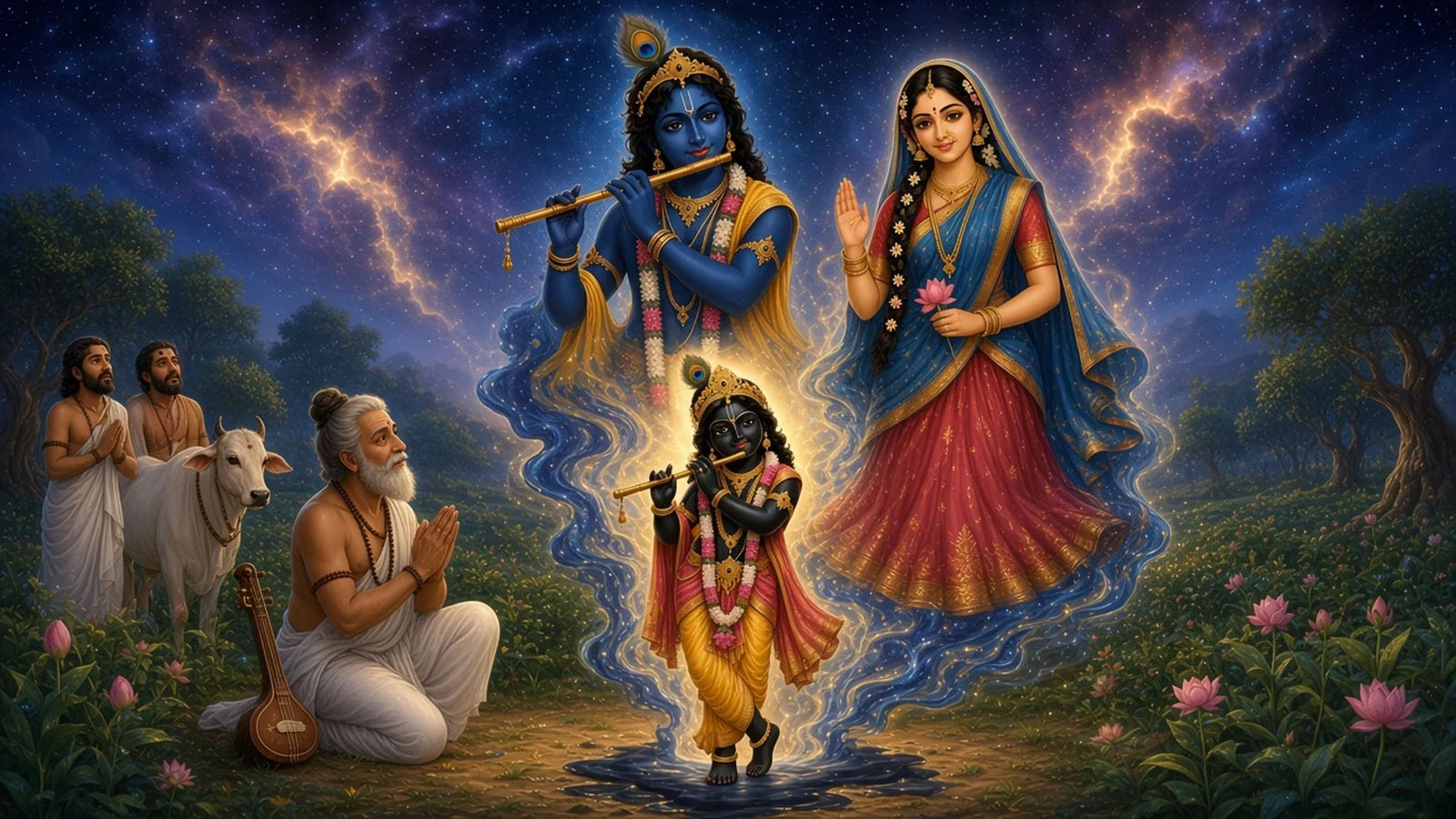
"My lord, my lady," he said, "I have one more thing to ask. Be one. Be as the cloud is with the lightning inside it, one dark form with the light held within. And stay. Stay where I can see you, always."
The Goswamis, who keep this story, say the pair granted it. The two drew together and became one, and where they had stood there was a single dark image, small and lovely, bent at the neck, the waist and the knee. The light went out of the bower, the disciples could move again, and the image was still there.
Haridas called him Kunj Bihari, the one who plays in the groves. His disciples, looking at the three easy bends of his body, called him Banke Bihari, the one who stands bent.
"Who will look after him?" a disciple asked.
"Jagannath," said Haridas.
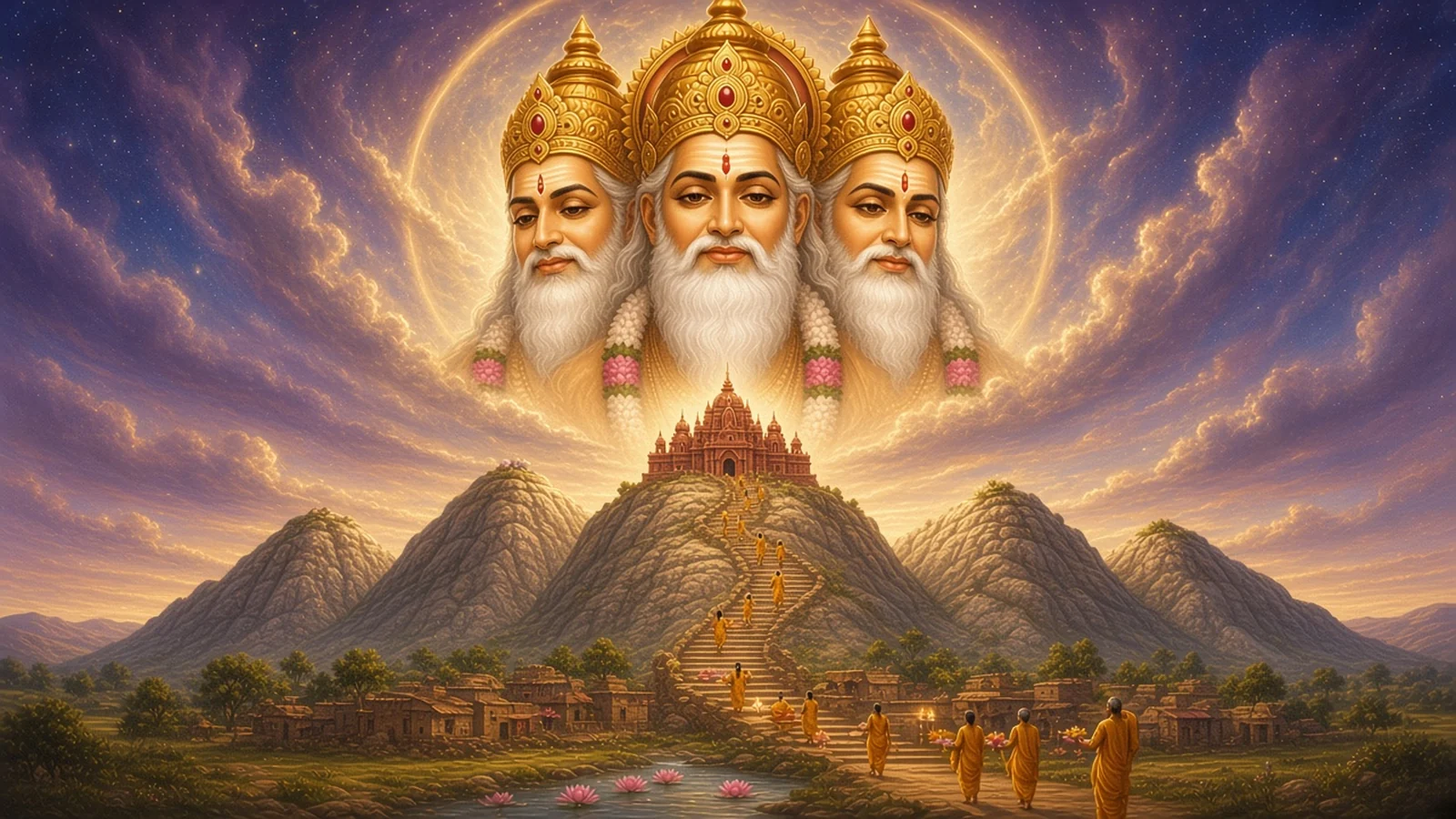
Jagannath was his chief disciple and, in the Goswamis' telling, his younger brother. The image was set in a shrine near the place where it had appeared, and Jagannath's descendants serve it still. In 1862, the temple says, they built the present temple with their own money and carried him into it.
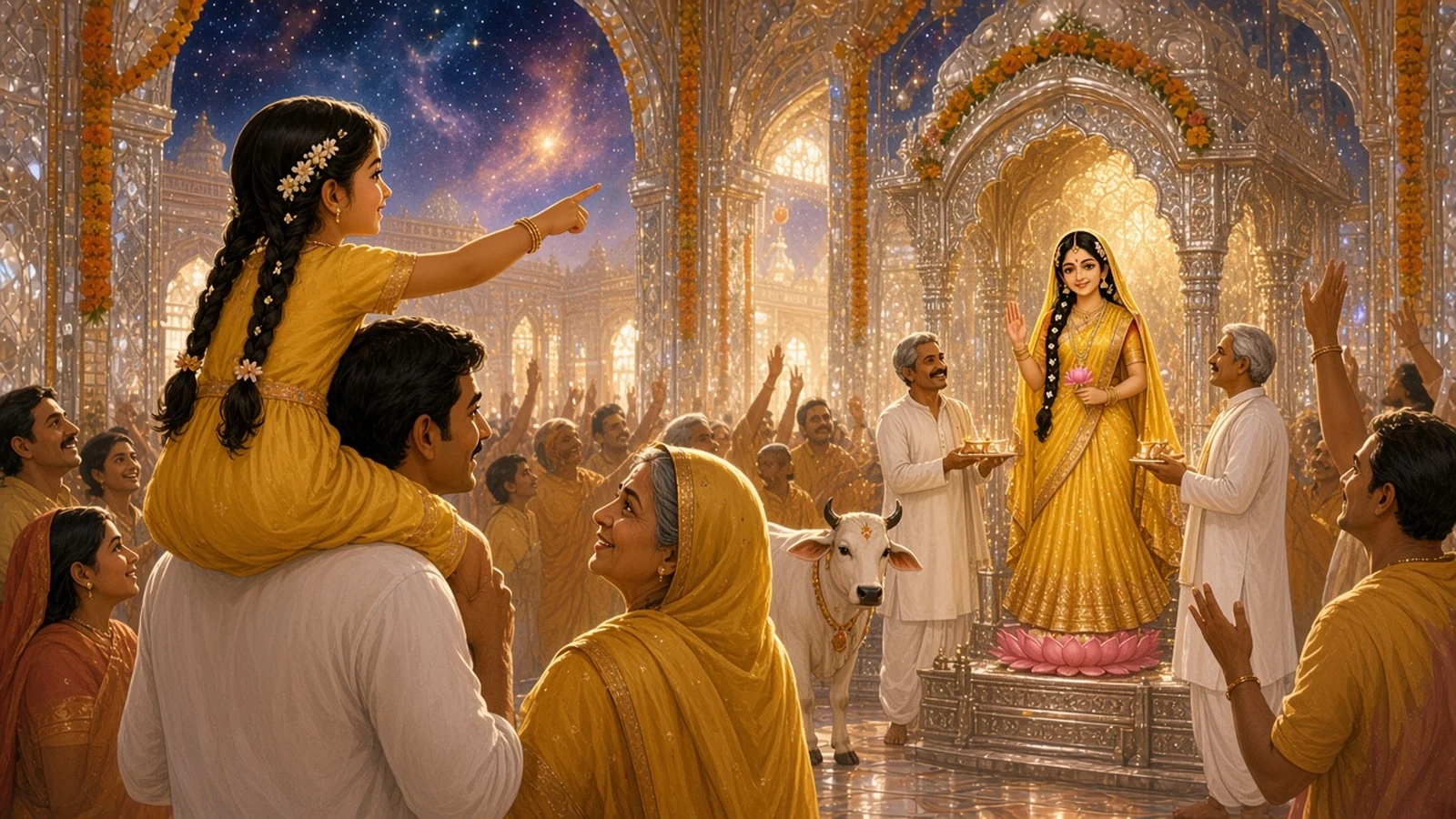
Every year on the fifth day of the bright half of Margashirsha, the day he appeared, Vrindavan walks behind the chariots of Haridas, his disciple Vitthal and Jagannath from Nidhivan to the temple. When the noon meal is offered, devotees say, Bihari takes it with Haridas seated in his lap.
As the Rajpur telling has it
the Hindi encyclopedia's article on the temple · Rajpur and Nidhivan · 2 min read
In the telling the Hindi encyclopedia gives, Haridas was born not near Aligarh but at Rajpur, a village beside Vrindavan, to Gangadhar and his wife Chitra Devi. Ashudhir, whom the temple's Goswamis remember as his father, is here his teacher. The old man knew the child the moment he saw him: this was Lalita, Radha's companion, come down to see the feast of Radha's birthday.
The boy had no taste for the world. In his youth he took the mantra of the divine pair from Ashudhir and went to sit alone in a bower near the Yamuna. At twenty-five his teacher gave him the dress of a renouncer, and after that he did nothing but dwell on the endless play of the lord of the bowers.
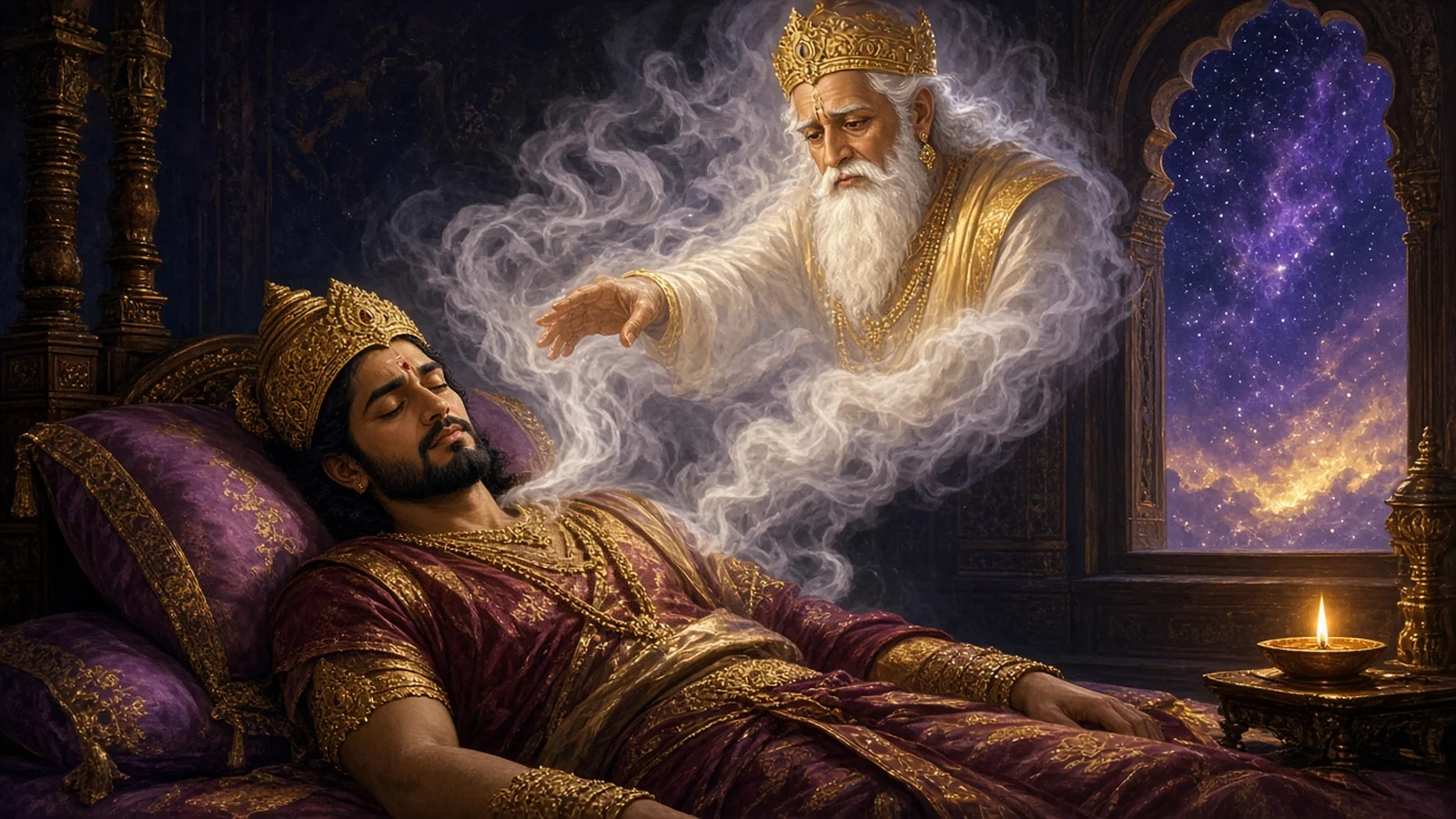
There, in the forest of bowers, a command came to him in a dream. The lord's image lay in the ground, and he was to bring it out.
He told his people where to dig.
"Here," he said. "Dig here, and dig gently."
They dug where he showed them, and out of the lap of the earth came a dark image, lovely to look at. It was the fifth day of the bright half of Margashirsha, and that is why Vrindavan keeps the day as Vihar Panchami, the feast of his coming.
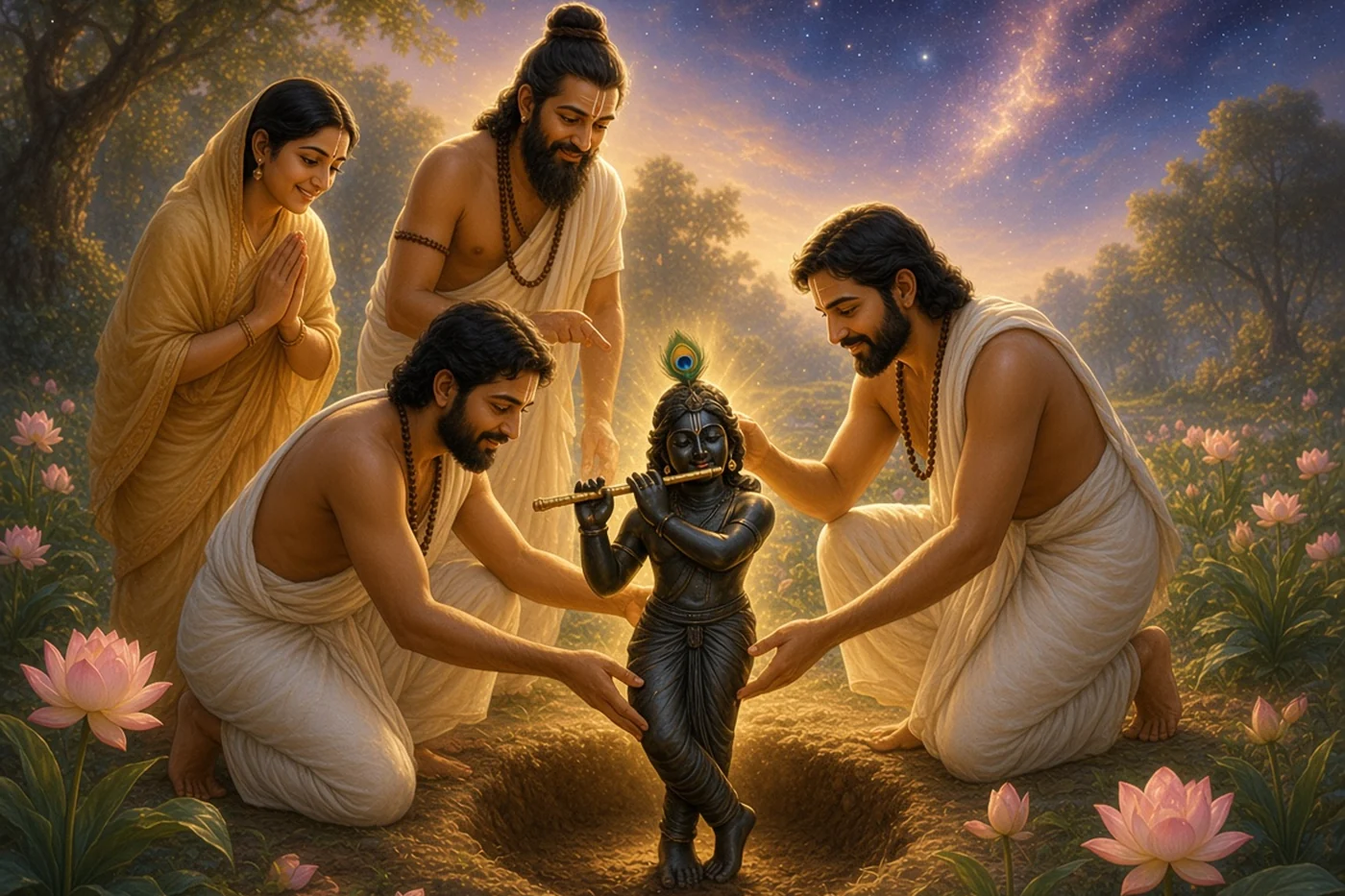
The image, this telling says, is Radha and Krishna in one form, and the glow that devotees feel in the middle of the dark stone is Radha, held inside him.
Haridas served him in Nidhivan for a long time. Only when a temple had been built, around 1864 and with no rich patron's money, was he carried into it. And when fear of the raider Kala Pahar sent many of the images of Braj away to safety, Banke Bihari was not moved. He stayed where he had come out of the ground, and his worship has gone on there, the encyclopedia says, ever since.