Who Vaishno Devi is
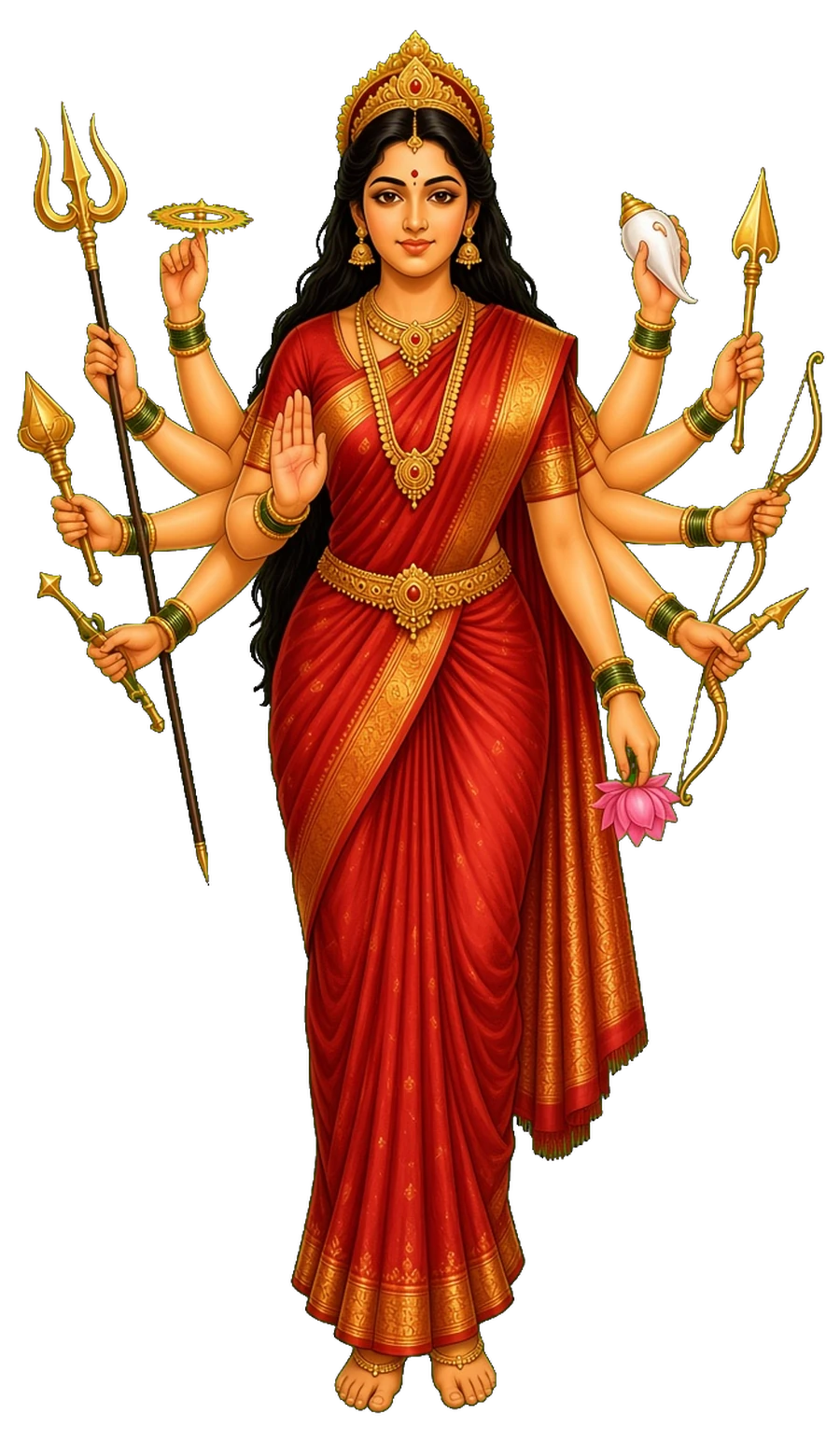
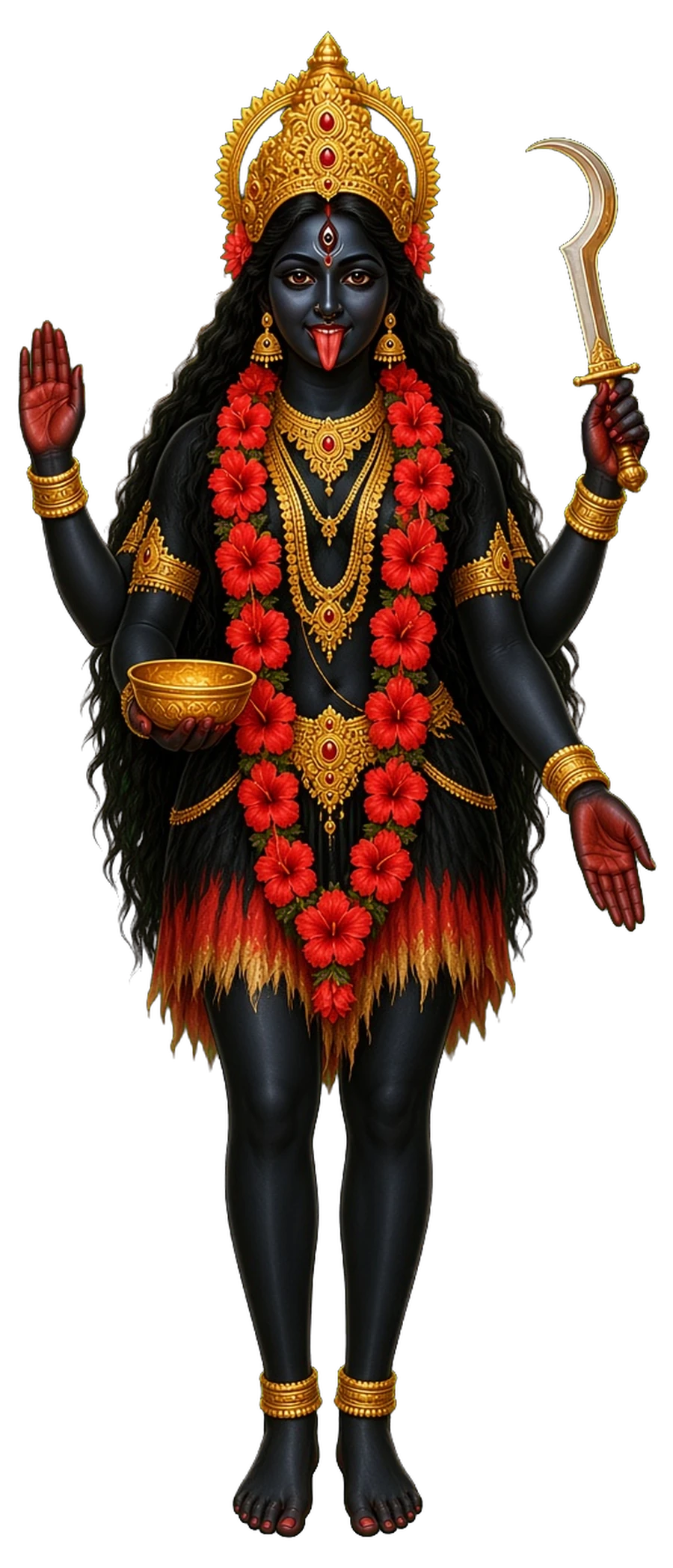
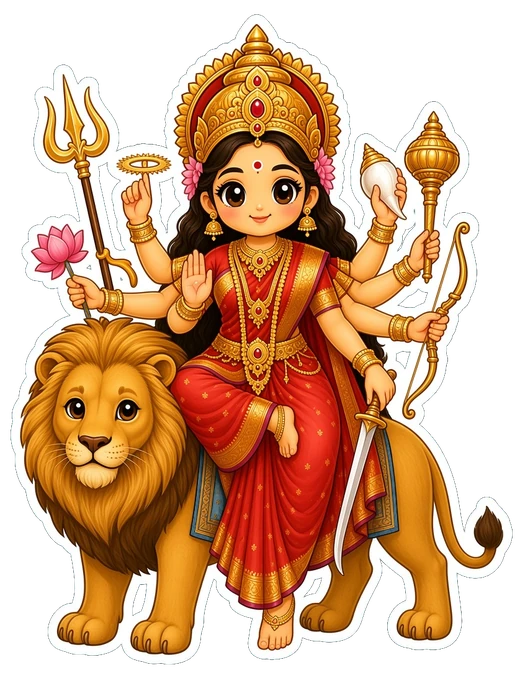
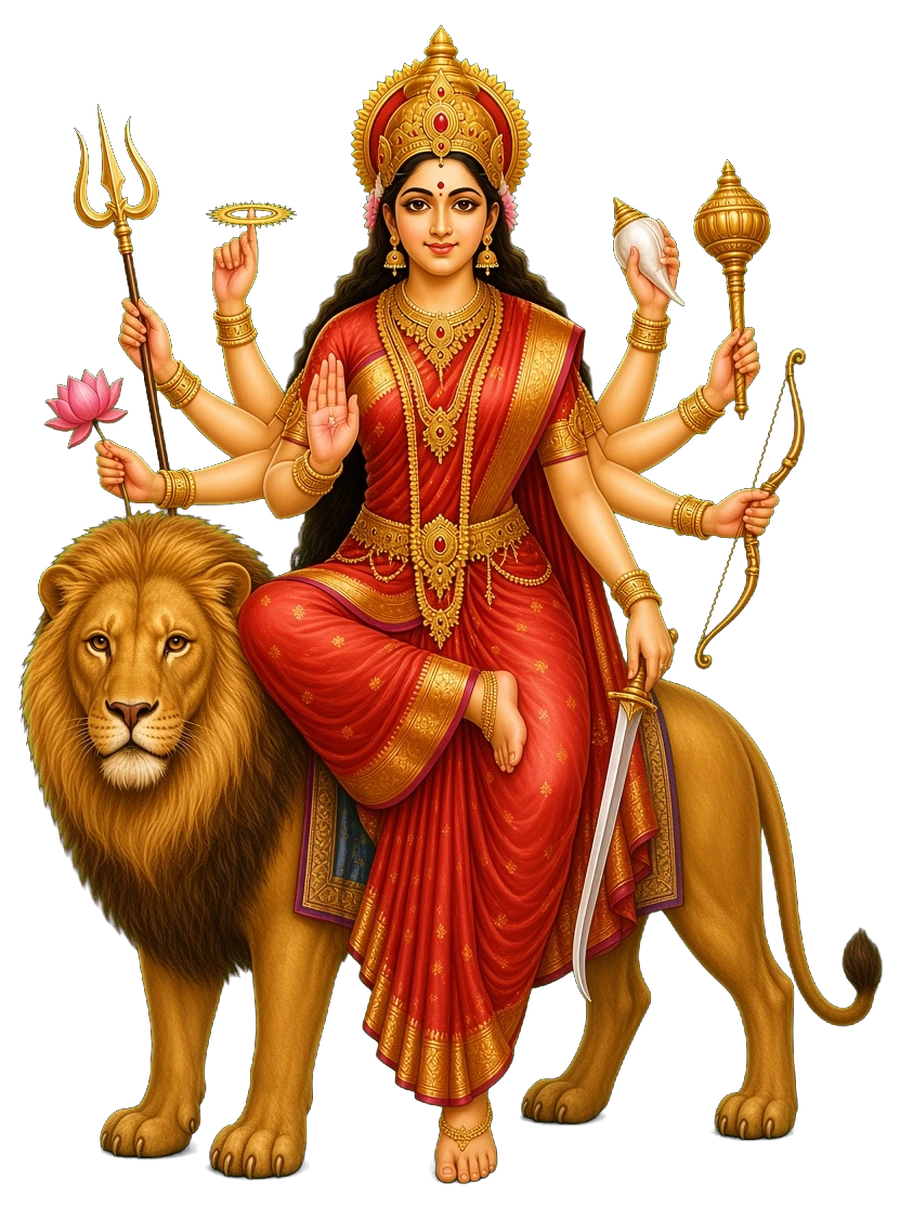
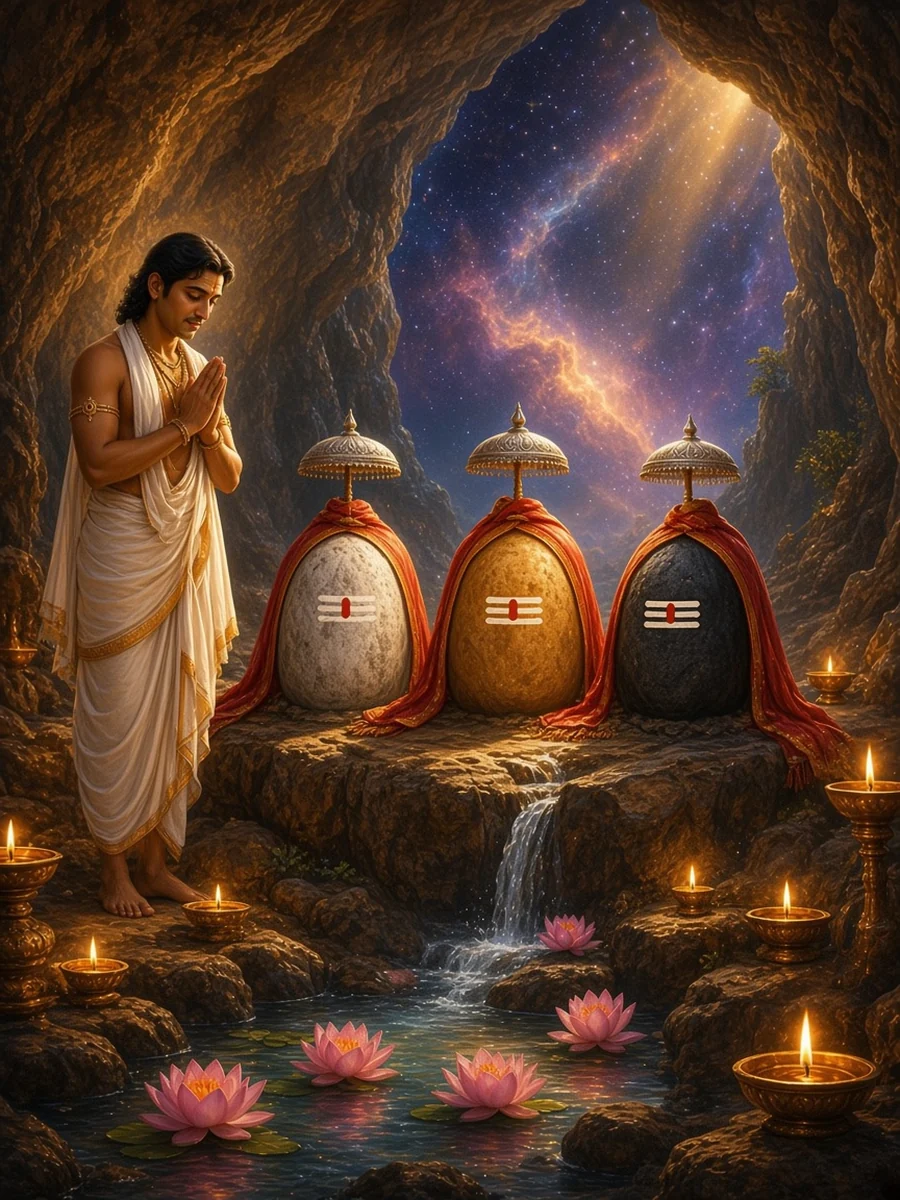
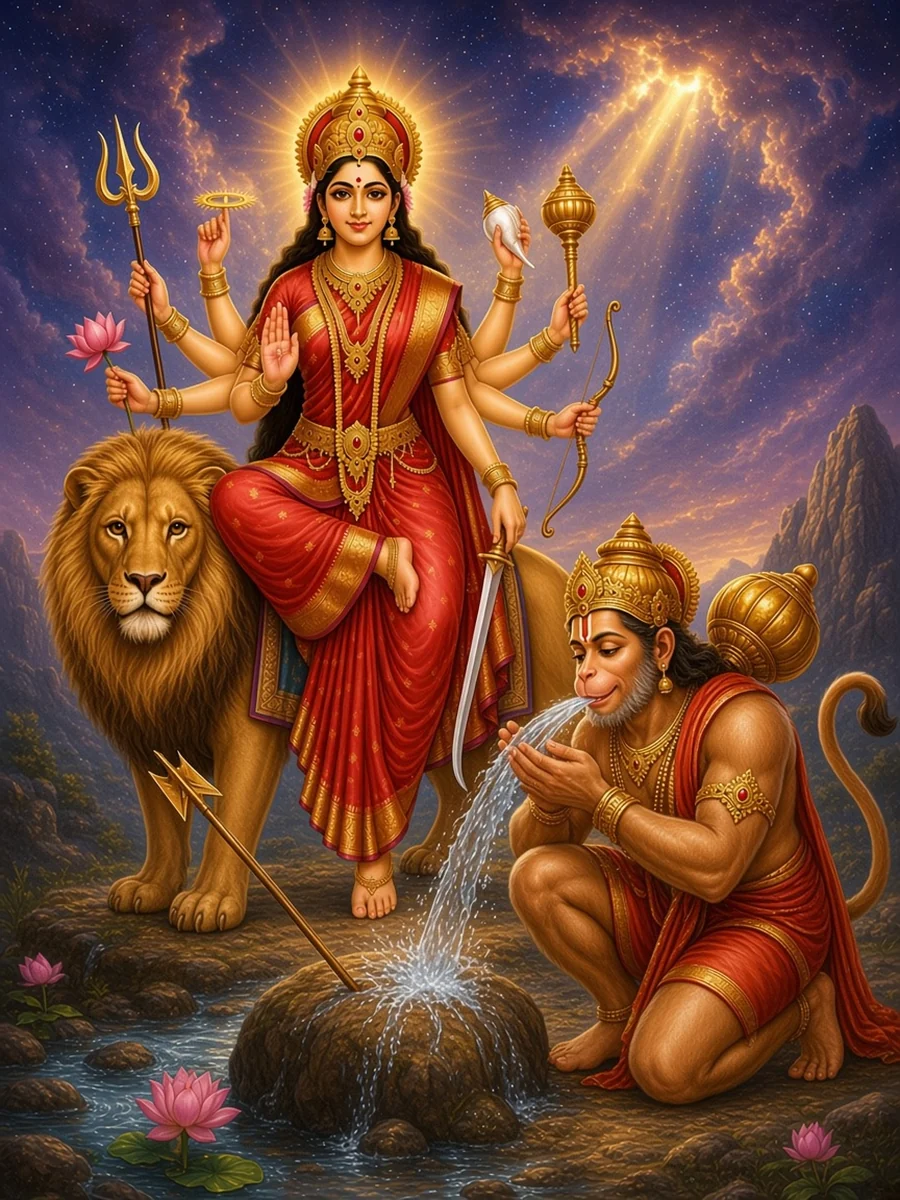
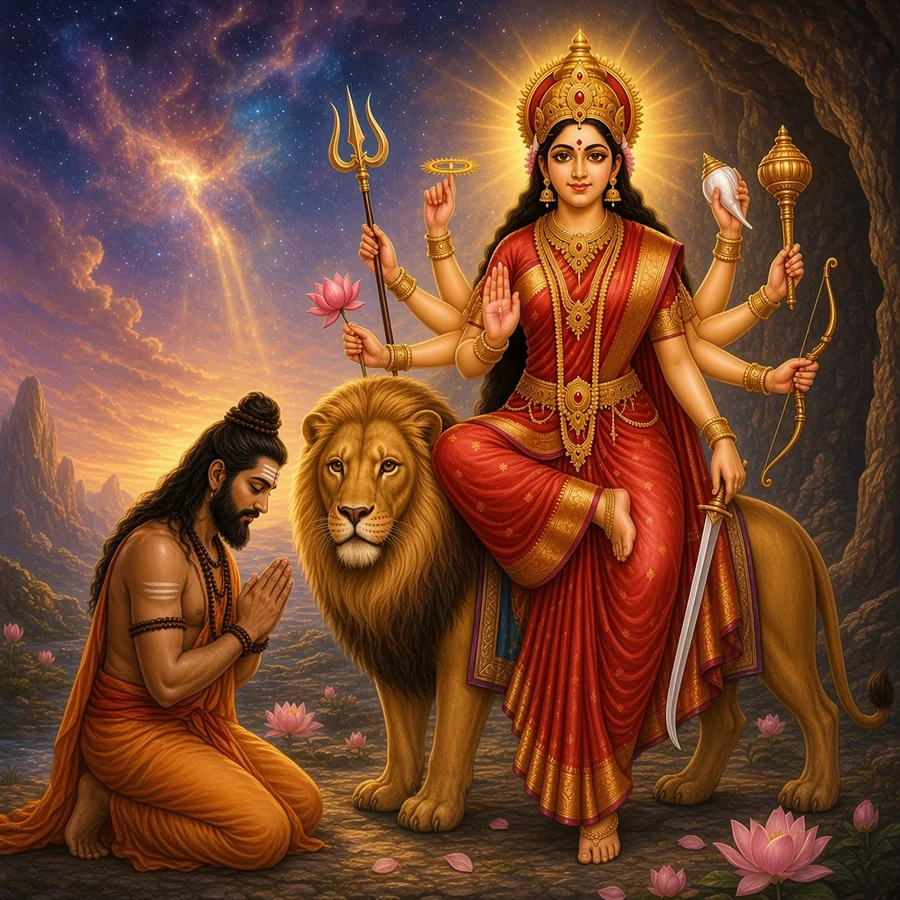
Vaishno Devi is the goddess of a cave high on Trikuta, the three-peaked mountain above the town of Katra in Jammu. Her pilgrims call her Mata Rani, the Mother Queen, and Sherawali, she who rides the lion. In her cave there is no statue. There is one rock with three heads on it, the holy pindis, and they are worshipped as the three great goddesses together: Mahakali, Mahalakshmi and Mahasaraswati. Her name, Vaishnavi, means the power of Vishnu, and she is a goddess of Vishnu's side: young, unmarried, and offered no meat.
Jambukataka chaityeshu nityam sannihitalaye: You who dwell for ever in the shrines on the slopes of Jambu (Arjuna's hymn to Durga, Mahabharata, Bhishma Parva 23).
Her pilgrims read that line, from the hymn Arjuna sang before the great war, as a word about her mountain, and the Shrine Board tells how the Pandavas built her first temples. How Arjuna sang it is told in The Goddess on the Slopes of Jambu.
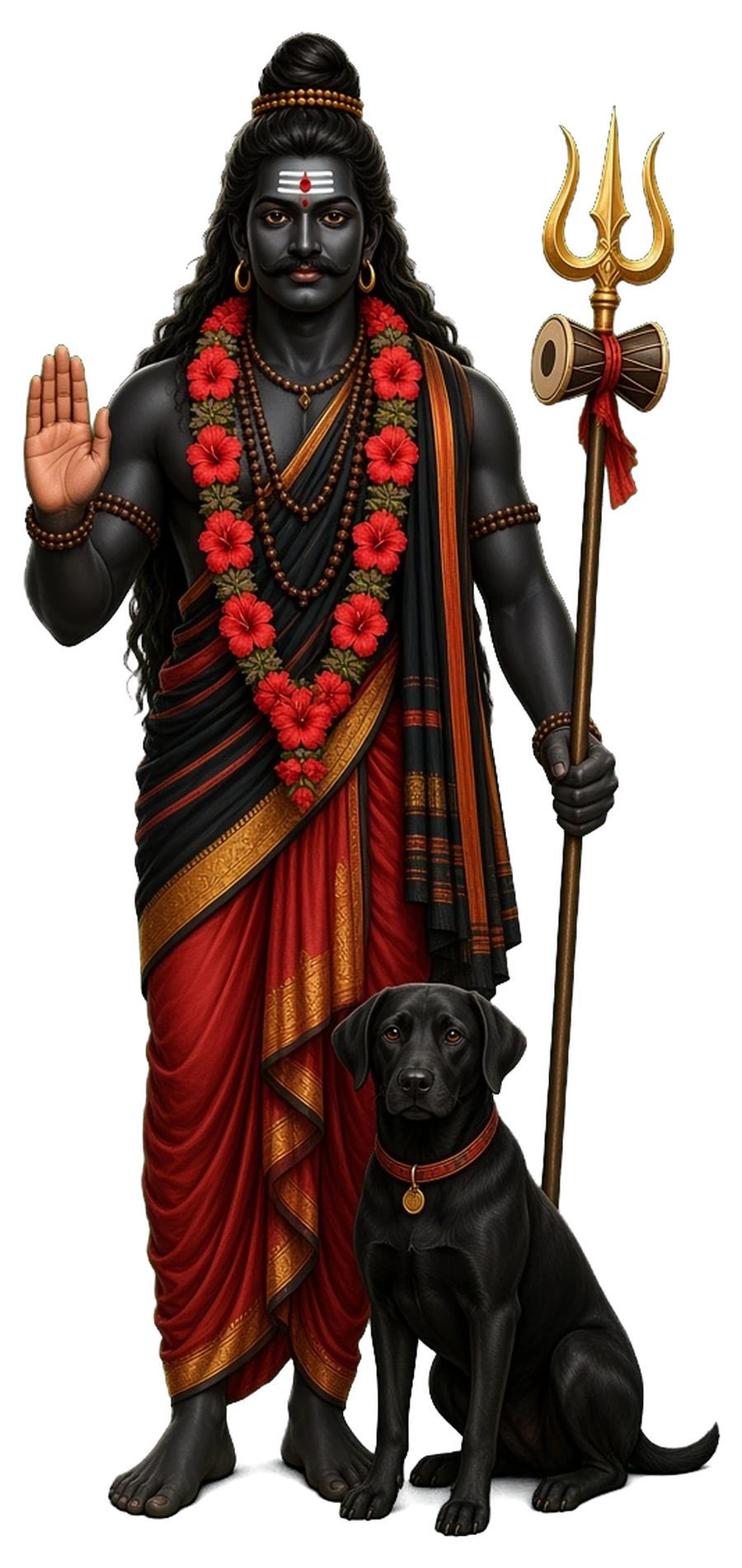
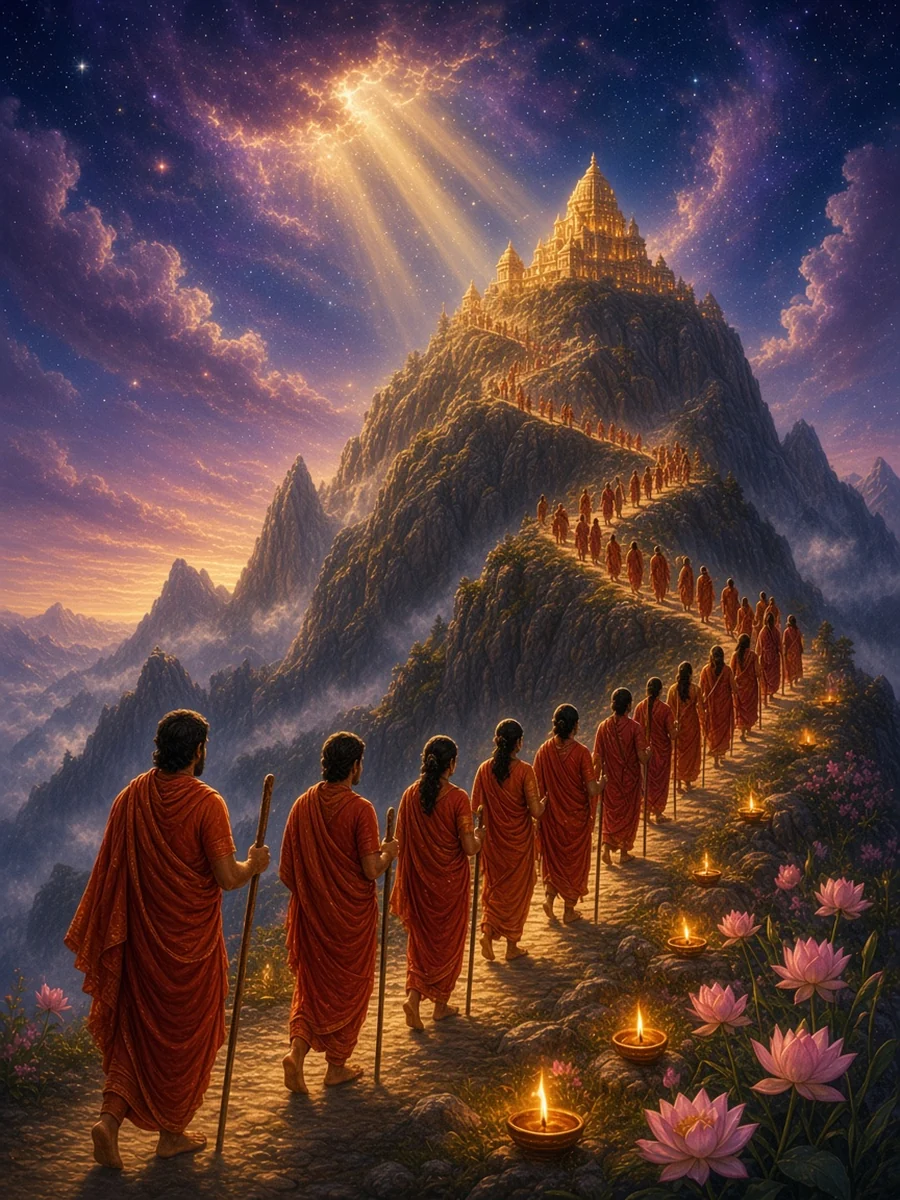
The great legend of the shrine is told in The Girl on Trikuta Mountain: the girl born of the three goddesses who asked Rama to marry her and was sent north to wait for him, the feast she gave in a poor brahmin's house, and her flight up the mountain from Bhairon Nath, who chased her to the mouth of her cave and was struck down there and forgiven. The climb follows that flight, from Banganga to Charan Paduka and the narrow womb cave at Adhkuwari, and ends, as she promised him, at Bhairon's own temple above hers.
How the brahmin Shridhar found the cave again is told in The Brahmin Who Would Not Eat. His descendants kept her worship for centuries, and her priests tell how she was once born as the daughter of one of them, in The Girl Born in the Priest's House.
Her devotees say nobody reaches her unless she calls them, and they speak of her bulava, the call. In 2023 the Shrine Board counted more than nine and a half million pilgrims. They climb day and night, in every season, and most of all in the nine nights of Navaratri.