As the Mahabharata tells it
Mahabharata, Bhishma Parva 23 · Kurukshetra · 2 min read
Sanjaya, who could see the whole field of Kurukshetra, told the blind king Dhritarashtra what happened on the morning of the battle.
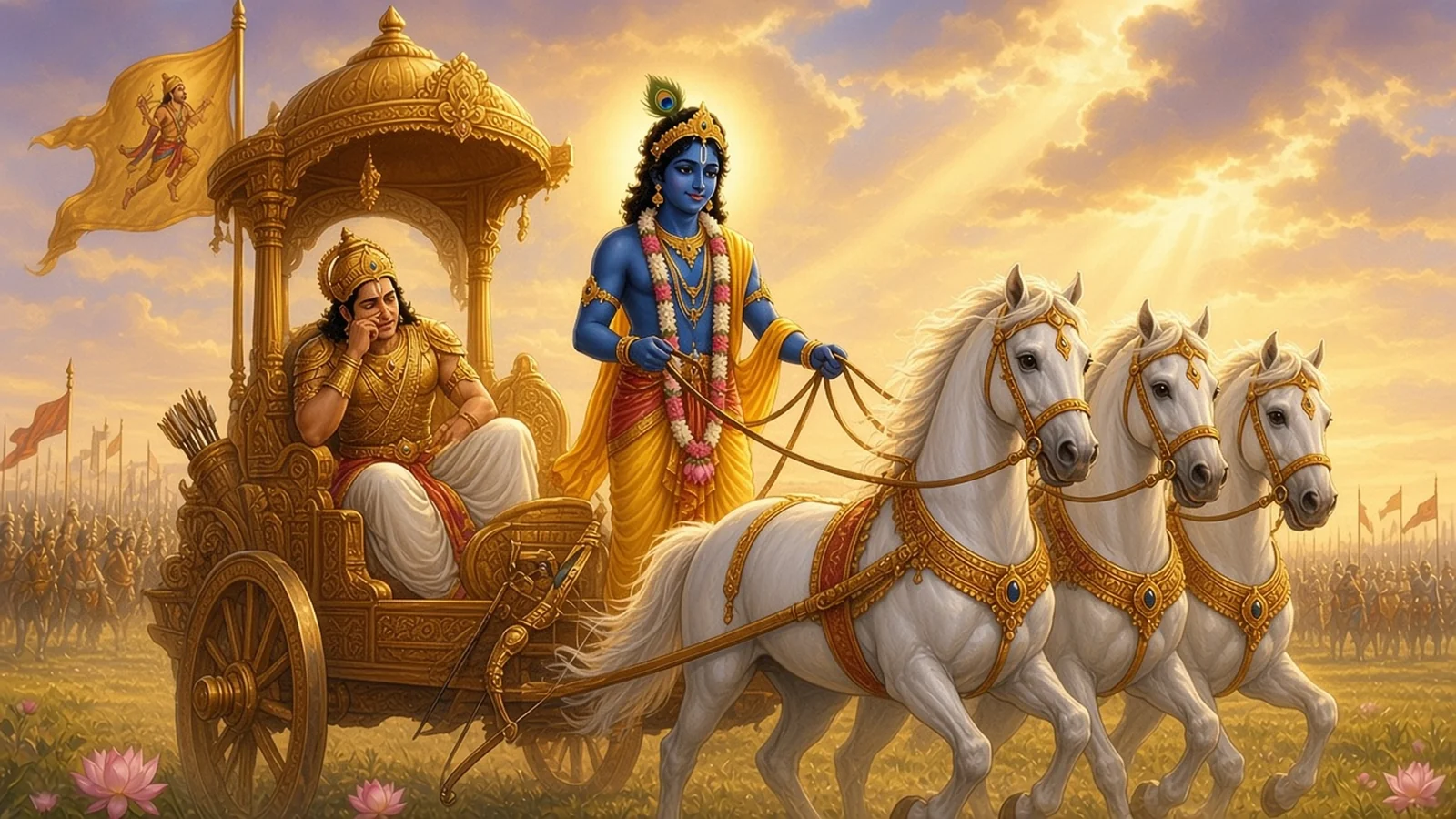
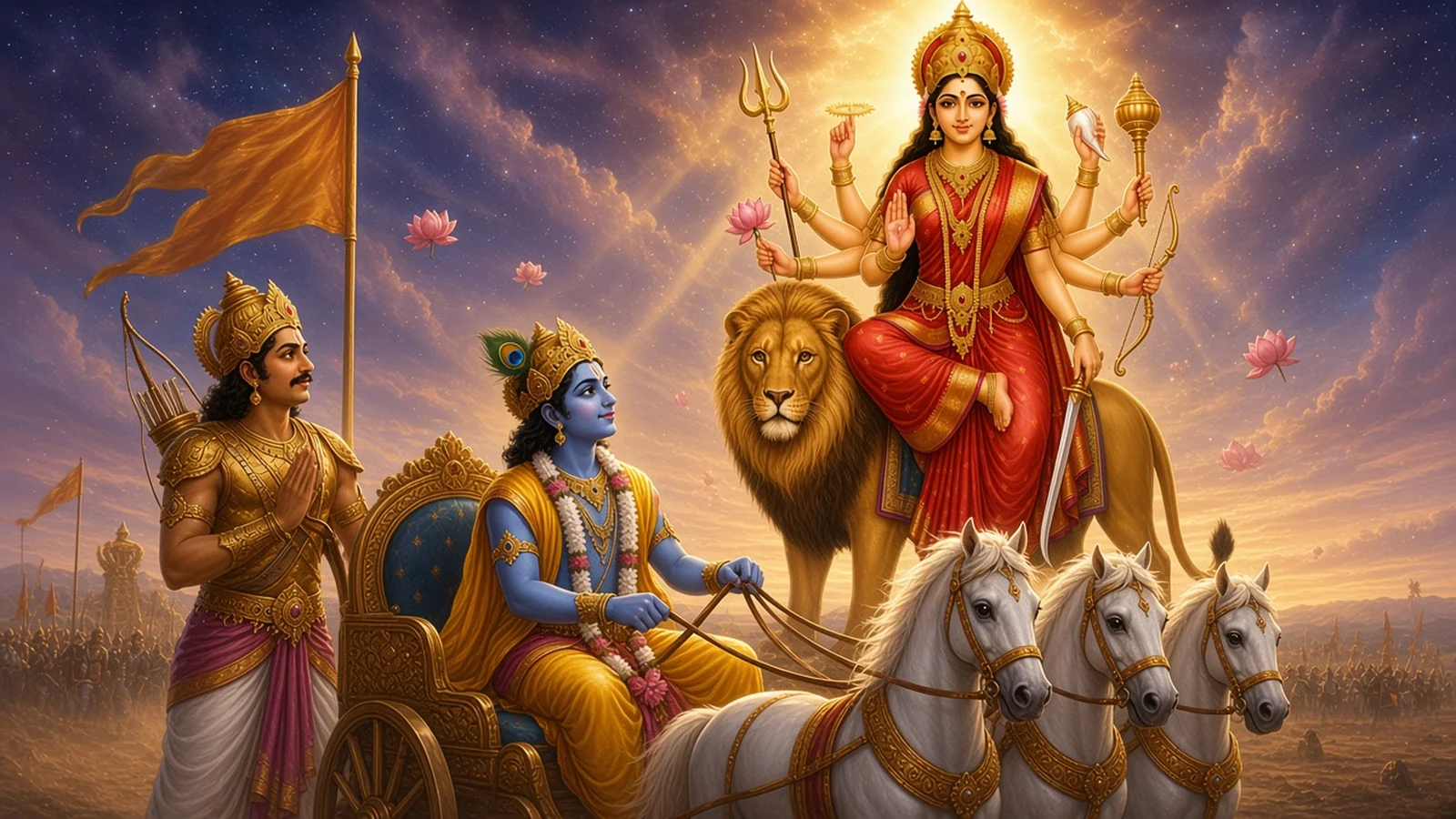
Duryodhana's army had come out and stood ready to fight, rank on rank, as far as the eye could see. Krishna, who held the reins of Arjuna's chariot, saw it, and turned round to Arjuna.
"Purify yourself, mighty-armed," he said. "Before the fighting starts, sing a hymn to Durga, for the defeat of your enemies."
Arjuna did not argue. He got down from the chariot, stood on the ground before the two armies, joined his palms and began.
"I bow to you, leader of yogis, you who are one with Brahman, you who live in the forest of Mandara and never grow old," he said. "Kali, and great Kali, dark and tawny, kind to those who love you. You who carry people out of danger. You who give victory, and are victory itself."
He praised her banner of peacock feathers, her spear, her sword and her shield. He called her the younger sister of the chief of the cowherds, born in the house of Nanda. He called her Uma and Shakambhari, the slayer of Kaitabha, white and dark, with eyes the colour of smoke.
"You are the Vedas," he said, "and the scriptures, and the highest good. You are always there in the shrines raised to you in Jambu. You are the knowledge of Brahman among all knowledge, and the sleep from which no creature wakes. Mother of Skanda, Durga, you who live in the wild places. You are Swaha and Swadha. You are Saraswati, and Savitri, the mother of the Vedas."
He asked her, at the end, for one thing.
"Let victory be mine on this field, by your grace."
The Goddess heard how much he meant it. She appeared in the sky above them, in front of Krishna, and spoke.
"In a short time you will conquer your enemies, Pandava," she said. "Narayana himself is beside you. Nobody can defeat you, not your enemies, not even Indra with his thunderbolt."
Then she was gone.
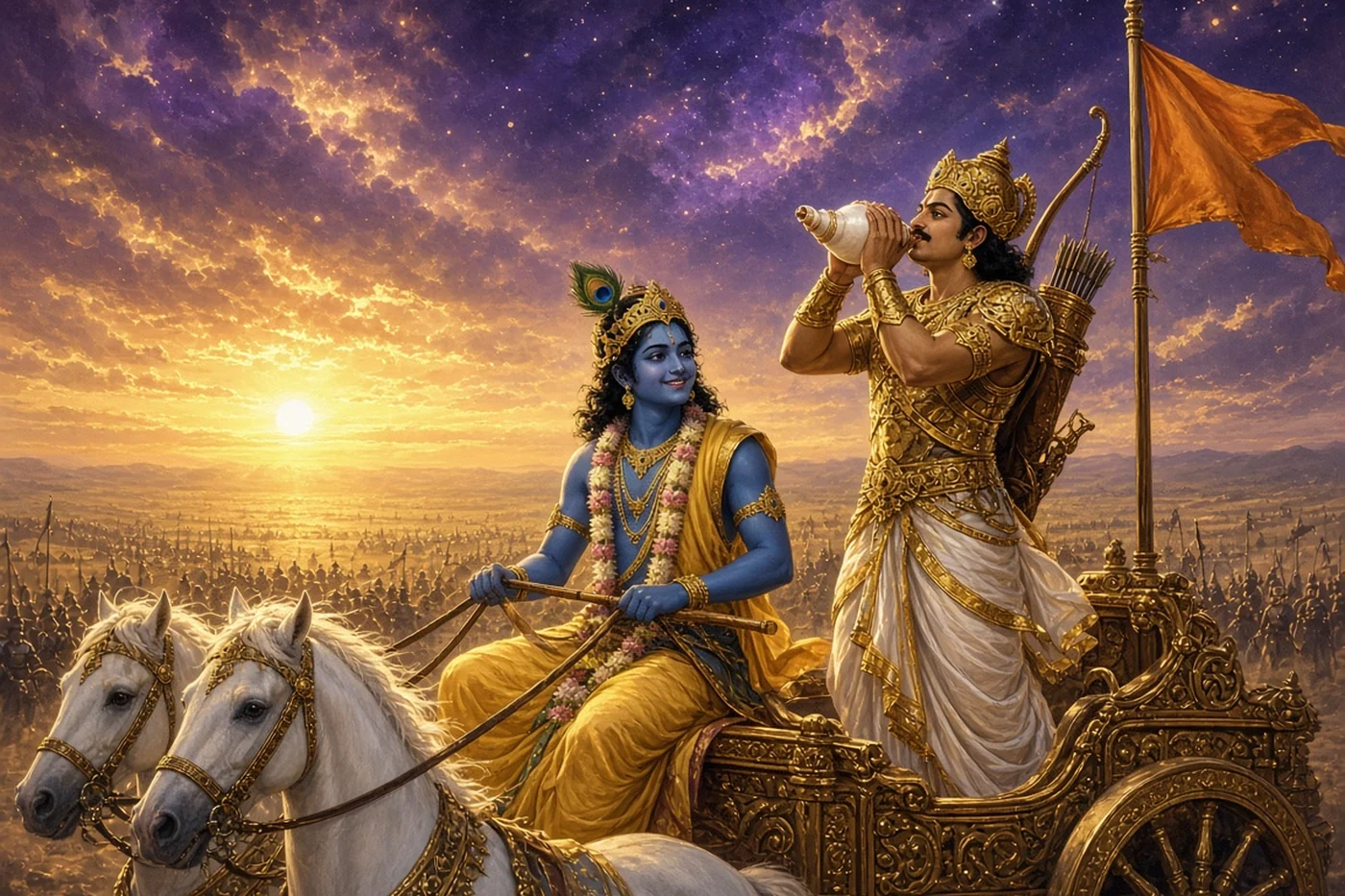
Arjuna took it as a sign of what was coming. He climbed back into the chariot, and he and Krishna lifted their great conches and blew them, and the sound went out over both armies.
Whoever sings this hymn at dawn, Sanjaya told the king, need not fear yakshas or rakshasas or ghosts, snakes or wild beasts or angry kings. He will win his quarrels, come out of prison and through every hardship, and live a hundred years.
As Jammu tells it: the Pandavas and the girl of Kol Kandoli
Nagrota and Trikuta, Jammu · the Shrine Board's legend · 2 min read
In Jammu they hear one line of Arjuna's hymn with special love: the goddess who is always present in the shrines on the slopes of Jambu. Jambu, they say, is Jammu, and the goddess on the slope is theirs. The Shrine Board's guide calls the hymn the first time she is mentioned anywhere.
The pilgrims also tell how she knew the Pandavas long before the war.
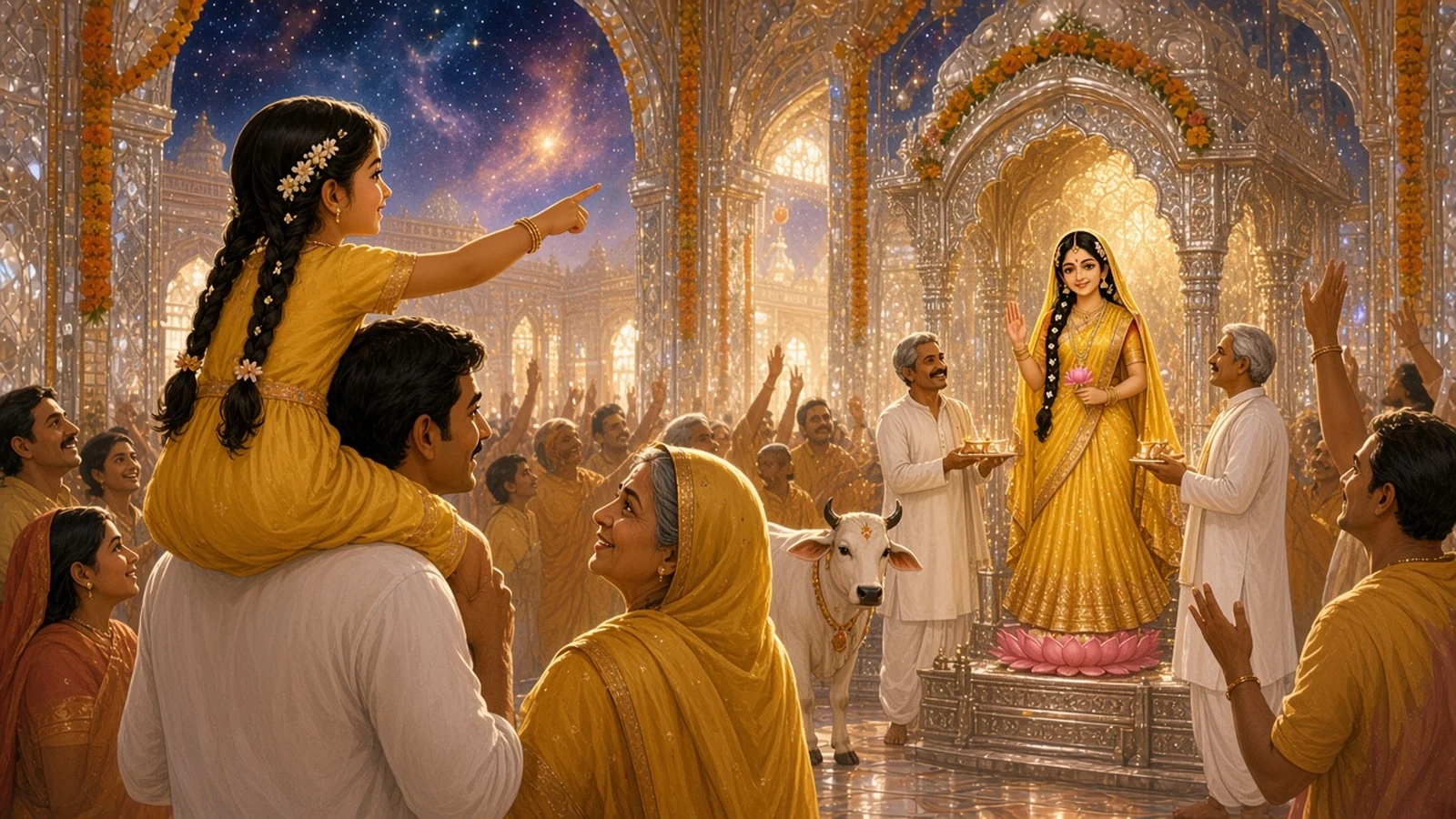
Before she climbed Trikuta, the goddess stayed a long time at Nagrota, below the hills, as a little girl. Some say she was five years old and stayed twelve years, in tapas. But she played as well. She swung with the village girls on a swing in a tree, and she gave each of them a bowl, a kol. When they were thirsty she showed them what to do: shake the bowl over the dry ground. They shook their bowls, and water came gushing up out of the earth. The place is still called Kol Kandoli, the shaking of the bowls, and the well that was made that day has never once run dry.
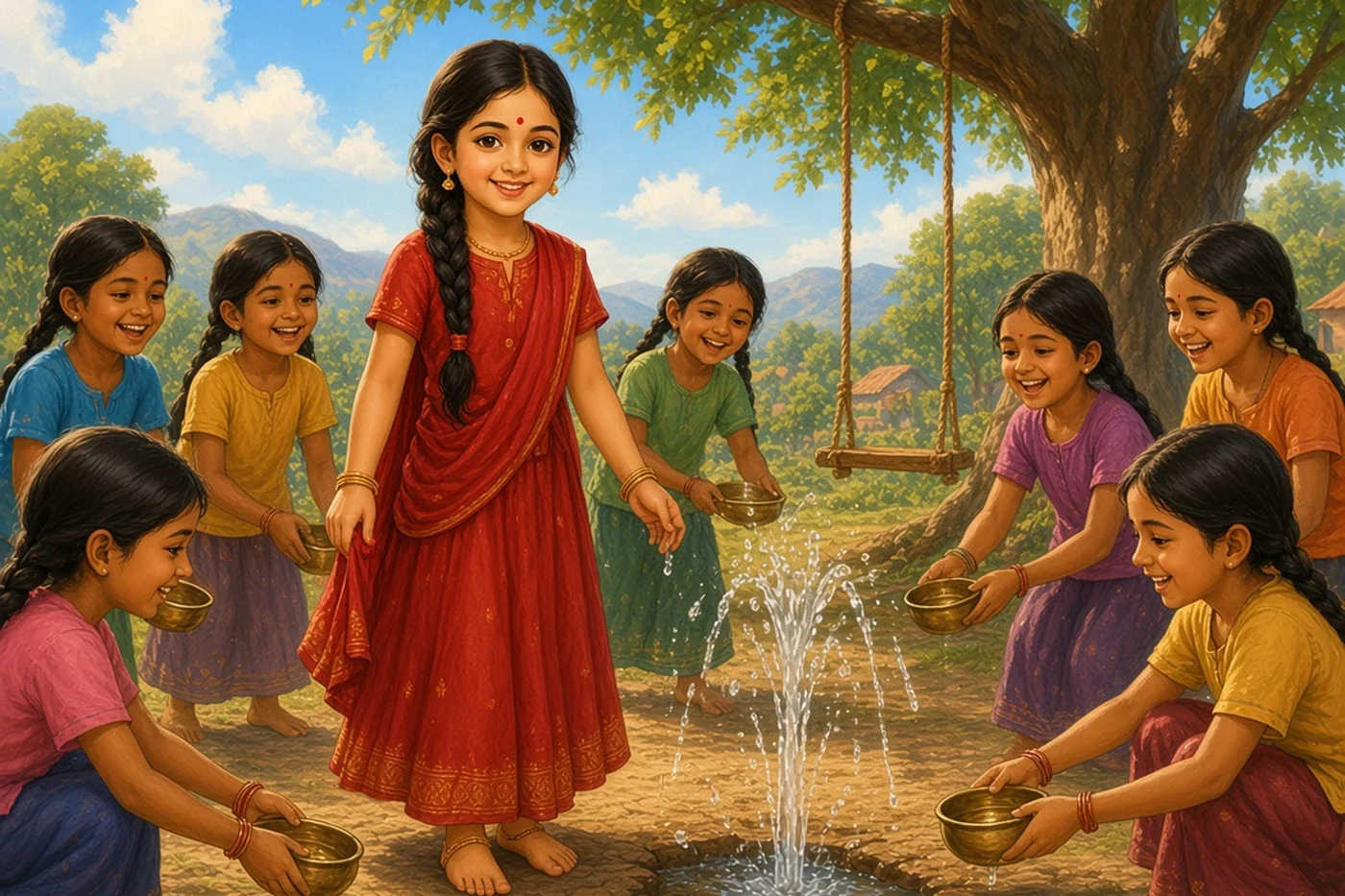
Close by, in a hermitage, lived the Pandavas as boys, with their mothers Kunti and Madri. The five had been born, the pilgrims say, through her blessing on their parents. As children they served her, first at Kol Kandoli and then, when she went up the mountain, at her cave. When she left Nagrota for Trikuta, a rock pindi rose out of the ground where she had been, and she is worshipped in it there.
It was the Pandavas, people say, who built her first temples, at Kol Kandoli and at the Bhawan, the Holy Cave, to thank her. And they stayed. On a mountain beside Trikuta, looking down on the cave, there are five shapes of stone. Those are the five brothers.
That is why Kol Kandoli is the first darshan. Pilgrims stop there before Katra, as travellers on foot once stopped for the night, and only then go up the mountain to her.