As the bhakta books tell it
The Bhakta Mala tradition · Chitor and Dwaraka · 2 min read
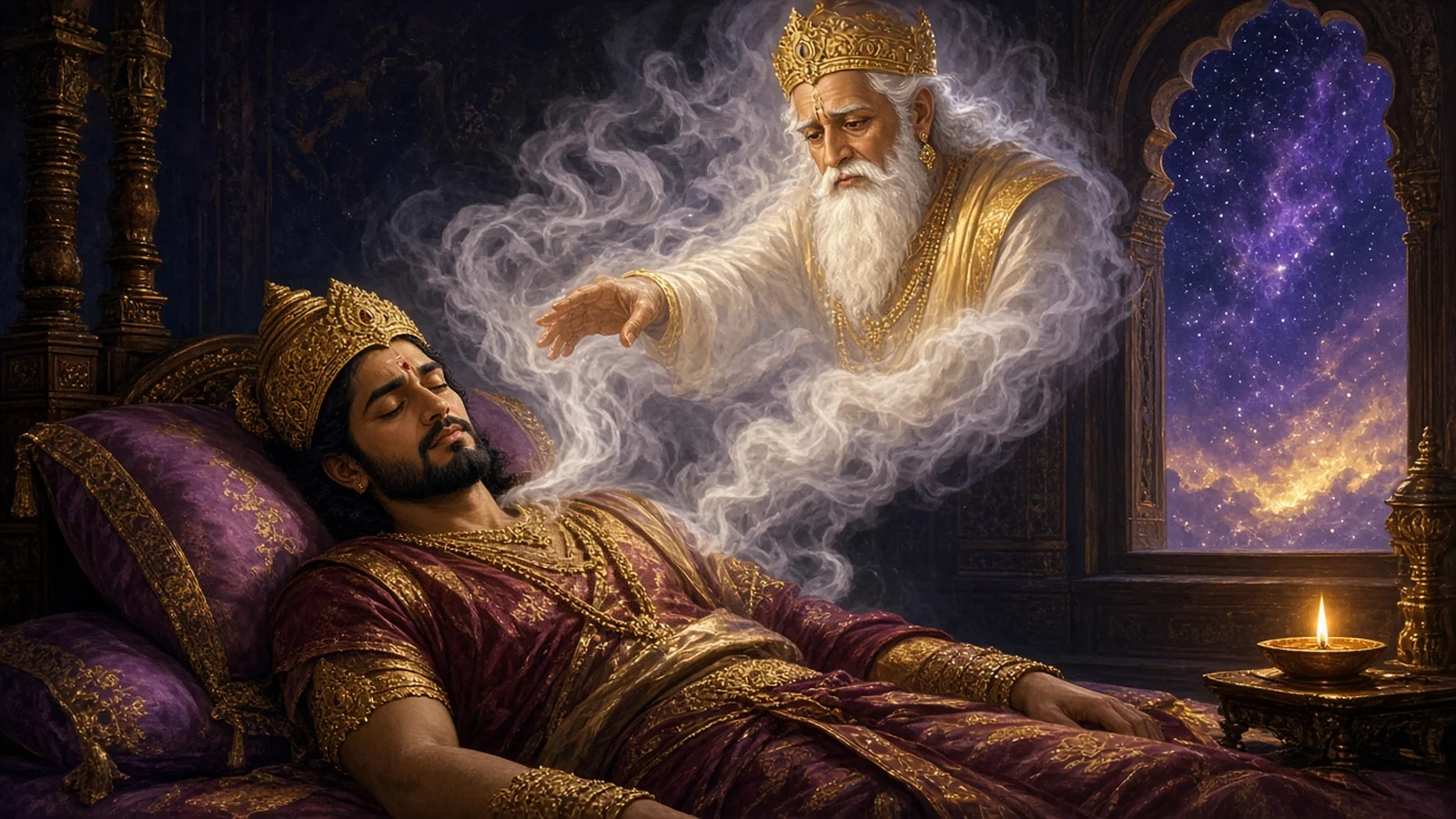
Mira had loved Krishna since she was a small child. Devotees say she once asked her mother who her bridegroom would be, and her mother pointed to his image, Girdhar Lal, the mountain lifter. She was married all the same into the royal house of Mewar, and widowed young, and her husband's family never forgave her devotion. They tried more than once to be rid of her. She went away to Vrindavan, came back to Chitor, and found the Rana as hard as ever.
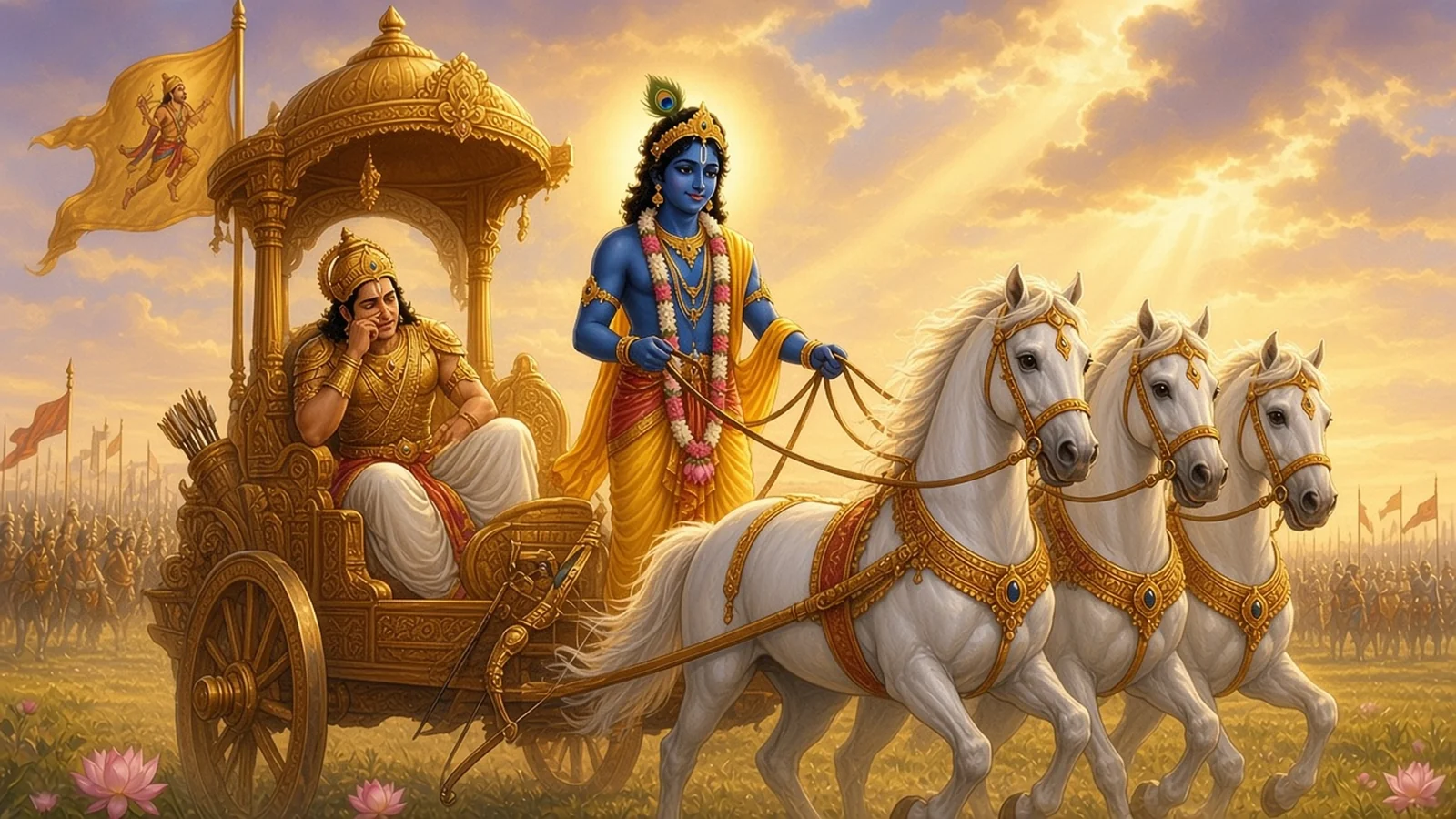
So she went west, as far as she could go, to Dwaraka on the sea, where Krishna had once been king. There she gave her days to the god. She dressed him and garlanded him, and sang to him, and asked for nothing else.
At Chitor, things began to go wrong. The holy men who had come to the city because of her stopped coming. Quarrels broke out in the kingdom, one after another. And the Rana understood, too late, what he had driven away.
He sent Brahmins to Dwaraka with a message. "Come back," it said. "I cannot live unless you come."
Mira heard them out. "I will not put myself in his power again," she said.
The Brahmins had been told not to come home without her. They sat down at her door. "Then we will not eat," they said, "and we will not drink, until you come with us."
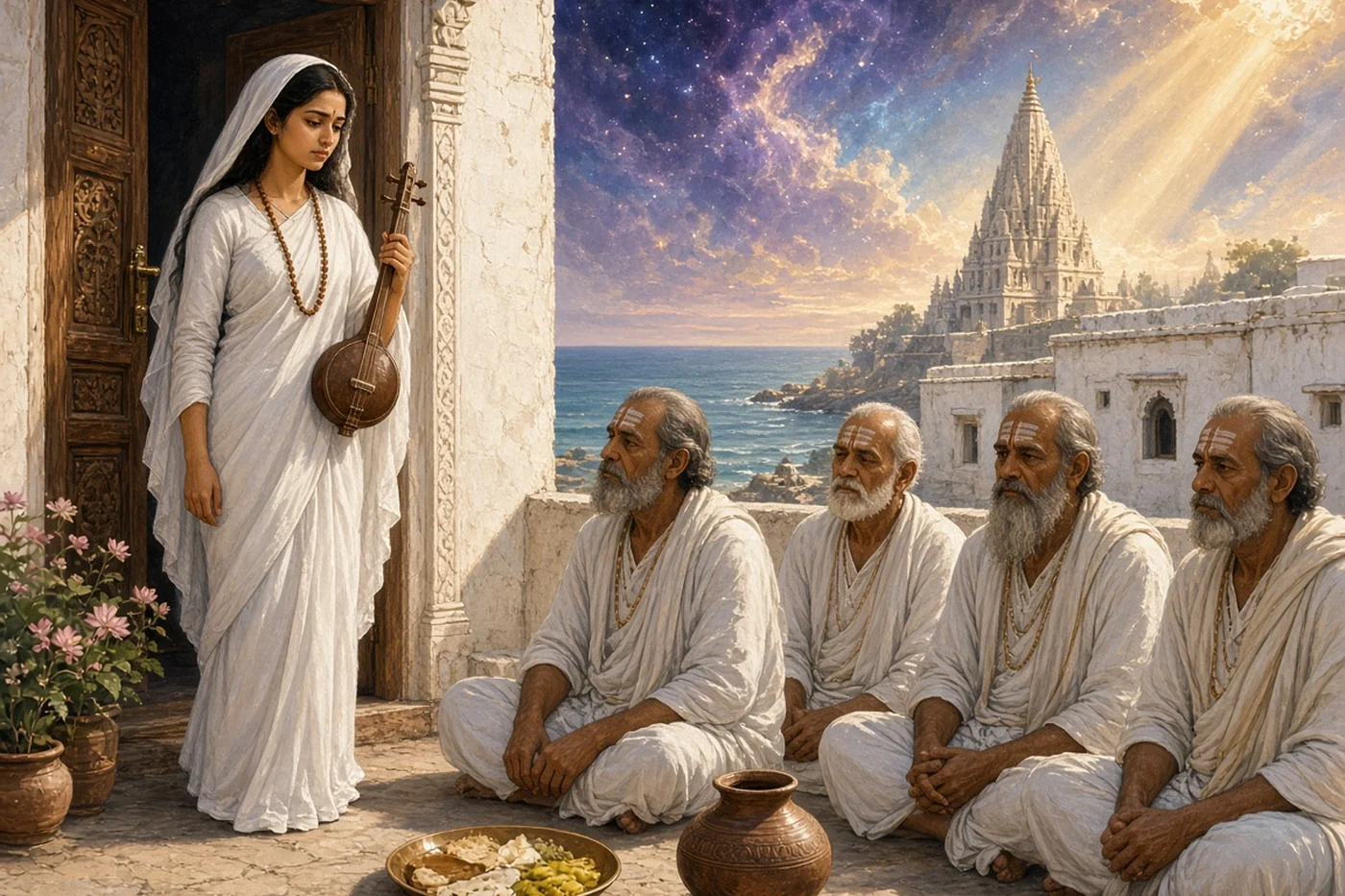
It was a hard thing they had done. If they died there, it would be on her account. Mira looked at them a long while.
"I live in Dwaraka only by Krishna's favour," she said at last. "I cannot go anywhere without his leave. Let me go and ask him."
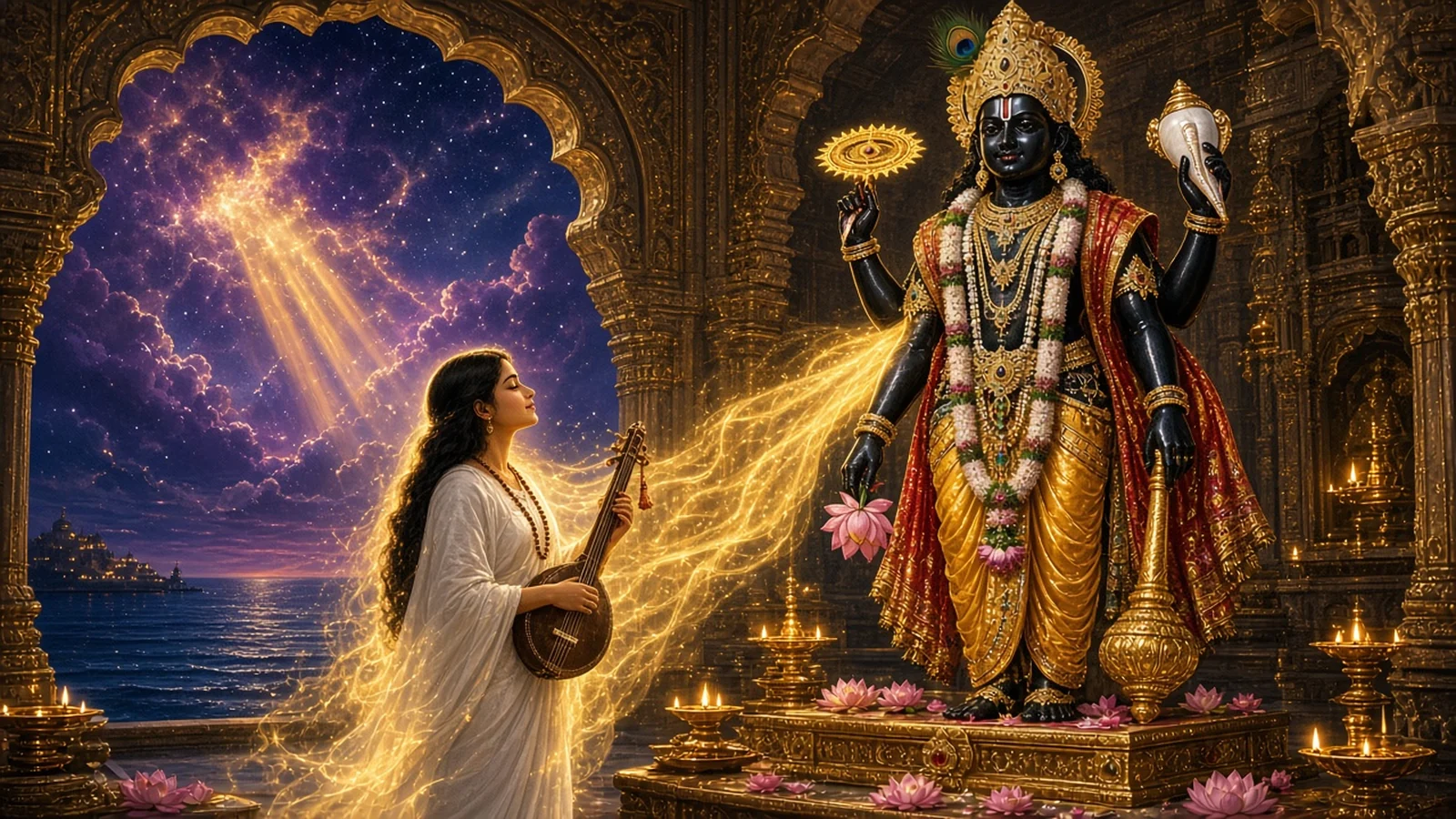
She went into the temple, to Ranchhod, the god of that place, and stood before him and sang. She sang to him as a servant sings to a master in trouble. He had taken away Draupadi's shame, she reminded him, and saved the boy Prahlada, and pulled the elephant out of the crocodile's jaws. Would he not take away his servant's pain as well?
She did not come out.
The Brahmins waited, and then they went in to look for her. They searched the shrine and the courts and every corner of the temple. Mira was not there. She was nowhere in Dwaraka. All they found was her garment, wrapped round the image of the god.
They went home to the Rana with that and nothing more.
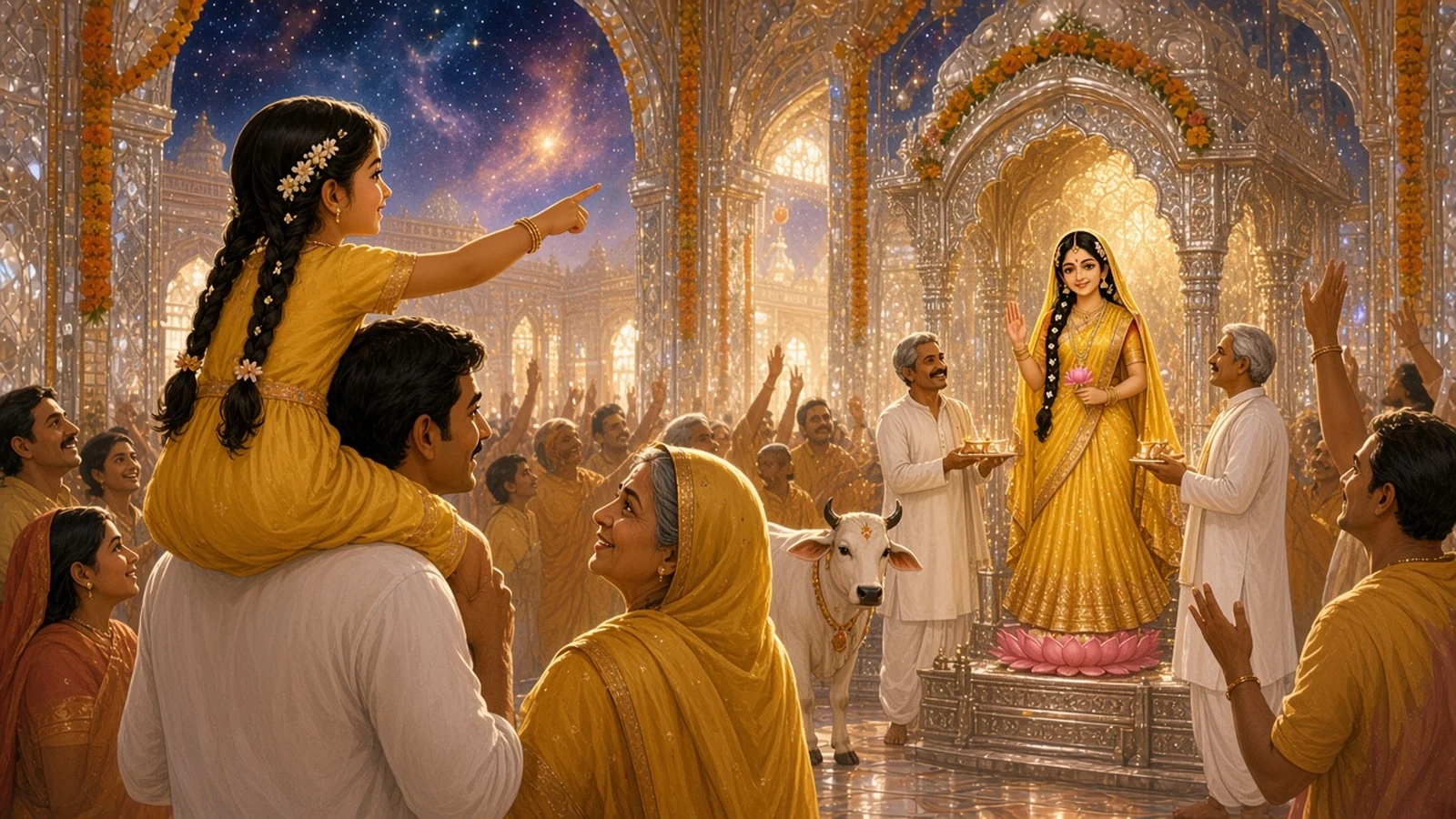
The bhakta books say she had become one with the god she loved, lost to human sight. And at Udaipur, Macauliffe was told, her image is worshipped beside Ranchhod's to this day.
As Dwarka remembers it, and as the historians ask
Dwarka, Gujarat · and the records of her life · 1 min read
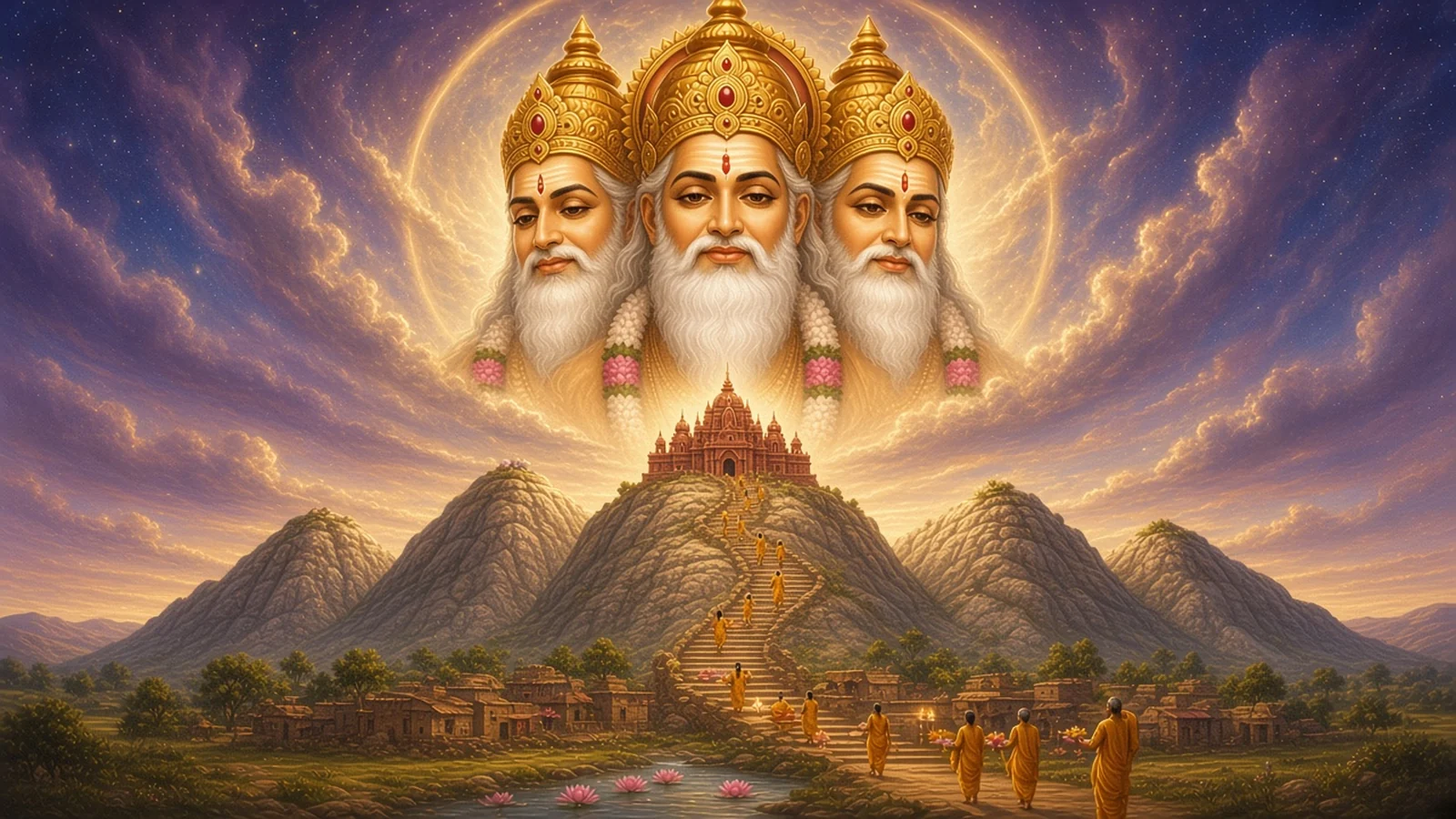
In Dwarka the story is told more simply, and without the Brahmins at the door. Mira lived the last years of her life in the town, people say, singing her songs of Krishna in his temple, the songs that are sung all over India now. One day she crossed the threshold of the Dwarkadhish temple and did not cross it again. As she went in, her soul merged with the god. Only her sari was found, draped round the image.
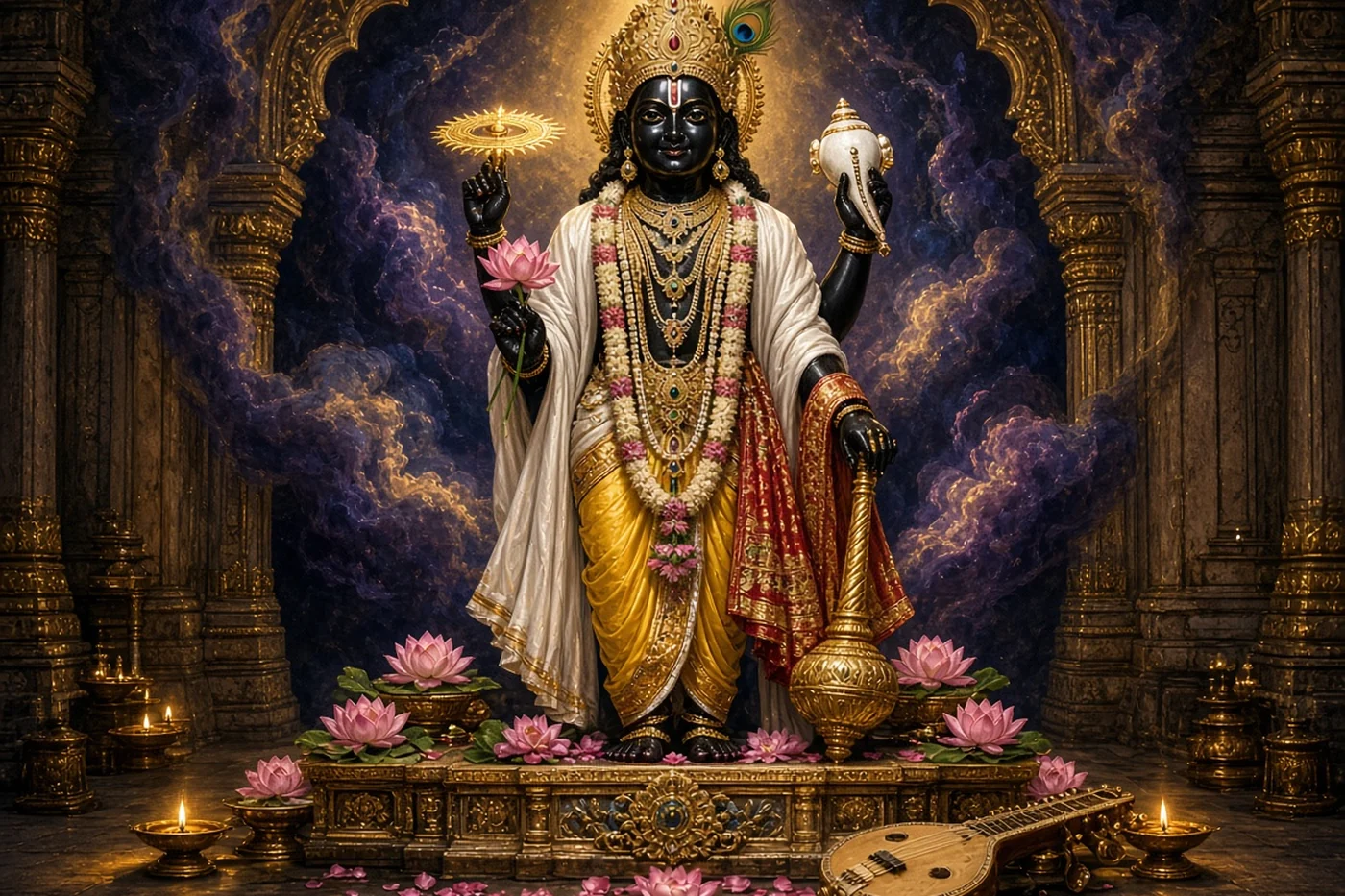
The encyclopedias call it the most famous story of her death. In one account she asks first to consult Krishna, and the god lets her pass completely into his statue. The Gale encyclopedia gives the year as 1547.
Historians ask how much of it can be known, and the honest answer is very little. No record from her own lifetime survives. The three oldest that mention her are of the seventeenth century, the earliest of them Nabhadas's Bhaktamal of about 1600, and none of them says anything of her childhood, her marriage or who it was that persecuted her. The first life to tell of her merging into the image is dated 1712. Scholars treat the miracle as legend while agreeing that she gave her life to Krishna.
Some of them go further. Parita Mukta argued that Mira's marital family worked to wipe out her memory. John Stratton Hawley warns that there must always be a question over which of the many songs in her name are hers.
None of that has moved the town. At Dwarka they still tell it the short way: she walked in singing, and the god kept her.