As the Mahabharata tells it
Mahabharata, Mausala Parva 7 · Dvaraka · 3 min read
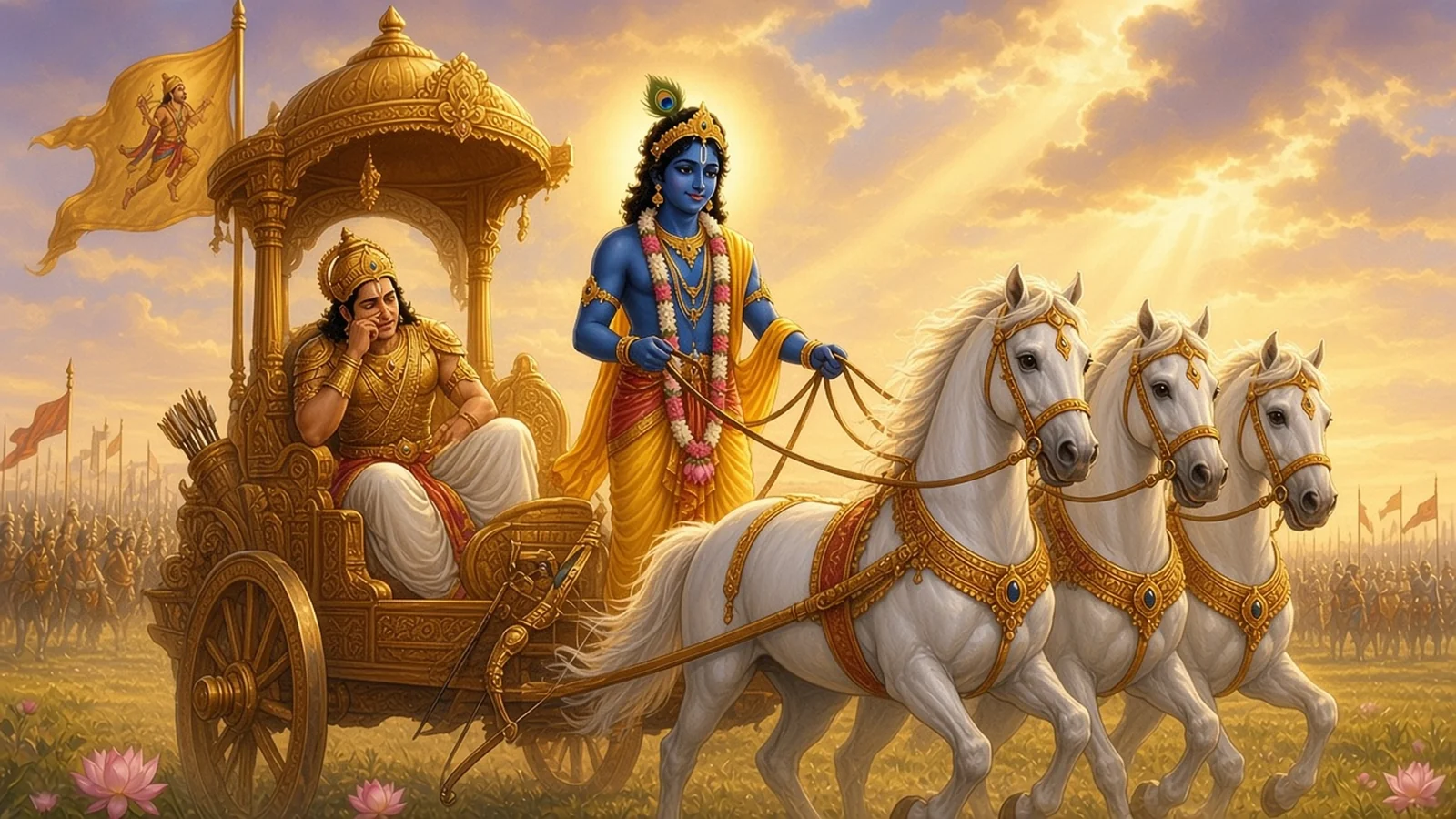
Daruka the charioteer had gone to fetch Arjuna, and Arjuna came back with him to Dvaraka at once. He found the great city without its lord. Krishna was gone, and Balarama, and almost every man of the Yadava clan had fallen in one terrible quarrel by the sea. In the houses there were only women, children and the old.
Krishna's father, Vasudeva, was waiting for him. Arjuna sat with the old man and could hardly speak for grief.
"I cannot look at the earth without him," he said at last. "My brothers feel the same, and so does Draupadi. Our own time to go is near. But first I will take his people to Indraprastha, the women and the children and the old. I will not leave them here."
He turned to Daruka. "Call the ministers," he said. "Call everyone who is left."
They gathered in Sudharma, the hall of assembly where the Yadava kings had once sat in council. Arjuna stood before the citizens, the Brahmins and the ministers, and they waited for him to speak.
"Load your wealth on your carts," he told them. "Take the last of the Vrishnis and Andhakas with you. Vajra, Krishna's grandson, will be your king, and he will rule from Indraprastha. On the seventh day, at sunrise, we leave this city."
They stared at him. These were their homes.
"Do not wait," said Arjuna. "The sea will soon swallow Dvaraka. Make ready quickly."
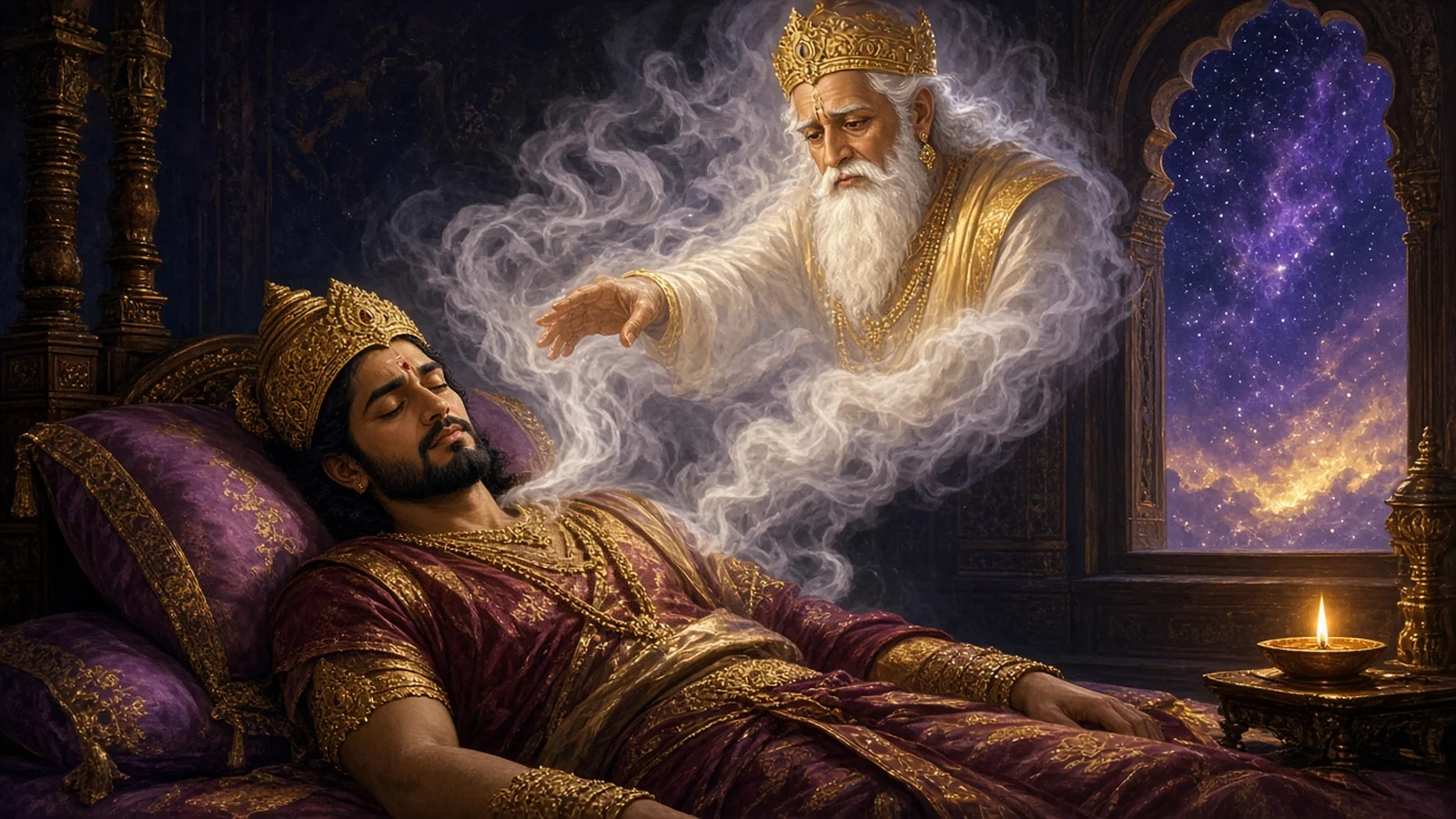
That night he slept in Krishna's own house, and wept there. At dawn old Vasudeva, who had waited only to see him, gave up his life by yoga, and the women of the household mourned him. Arjuna had him carried out in state, with his umbrella and his sacred fires, as he had lived. Then he went to the shore where the Yadavas had died, and gave each of them the last rites in order of age, and burned the bodies of Balarama and Krishna, and made the offerings for them all.
On the seventh day the people left.
It was a column that seemed to have no end. There were carts drawn by bullocks, by mules and by camels, and the widows riding in them. There were horsemen and chariots, men on elephants and men on foot, the servants and the people of the countryside, the children, the old, all of Krishna's household, and the young prince Vajra among them. Arjuna rode at their head, the only archer left to guard them.
Behind them was a city still full of riches, its halls empty. And as they went, the sea came in.
It did not wait for them to be gone. Wherever the last of the column had just passed, the water rose over the ground behind them: over the roads they had walked a moment before, the courtyards, the steps of the palaces. The ocean, the home of sharks and crocodiles, poured into Dvaraka and covered it.
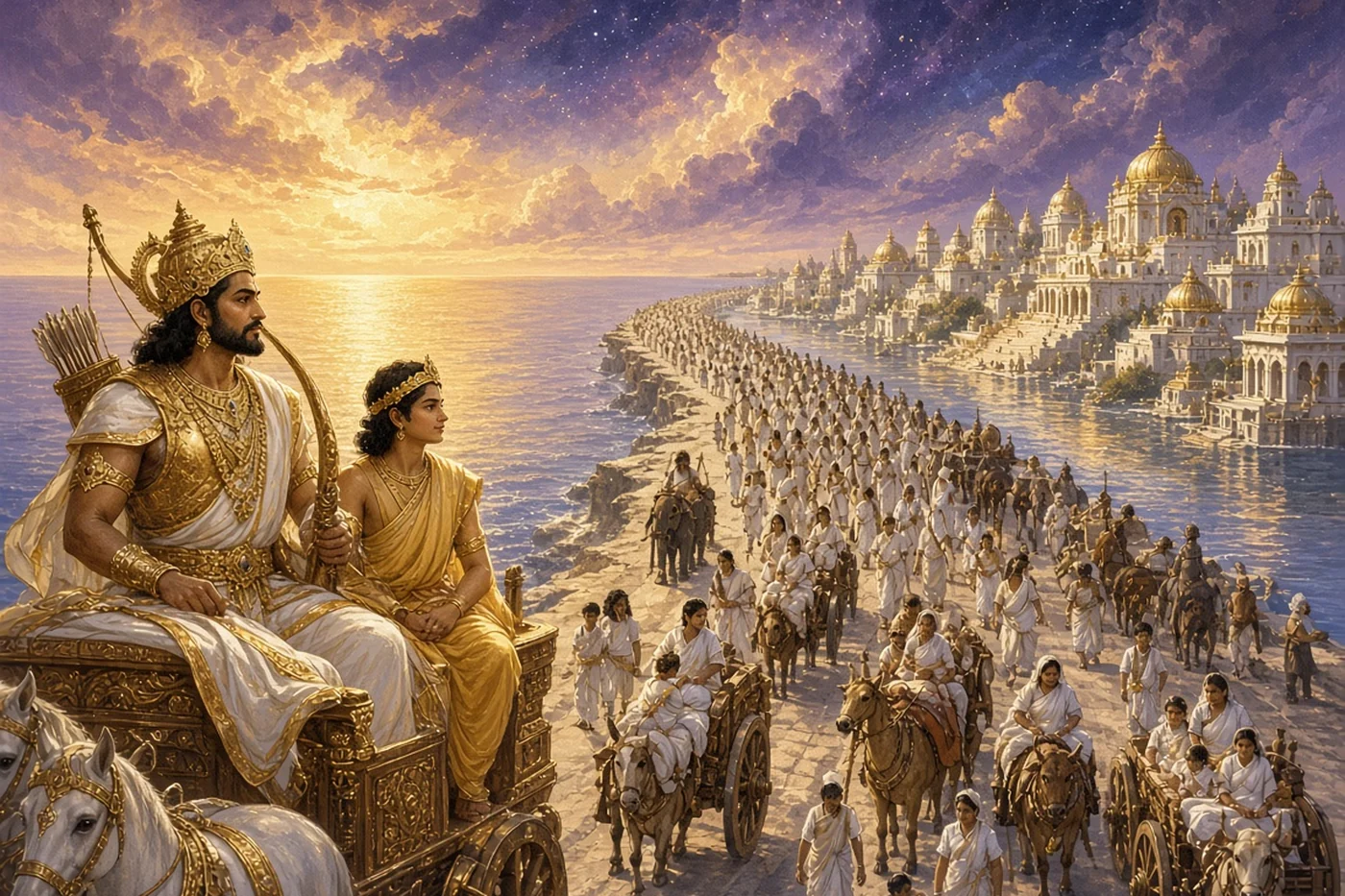
The people looked back and saw it, and walked faster.
"How strange are the ways of fate," they said to one another, and did not look back again.
Arjuna led them on, slowly, through the forests and past the rivers, towards Indraprastha, and there, when the long road was over, he gave Vajra his kingdom.
As the Bhagavata and Dwarka tell it
Bhagavata Purana 11.30 and 11.31, and the temple of Dwarka · 1 min read
The Bhagavata begins the warning earlier, with Krishna himself. As he left the world, his chariot rose into the sky with its banner of Garuda, and the charioteer Daruka stood below and stared. Krishna sent him home with a message. Tell my people what has happened, he said, and tell them not to stay. When I have gone, the ocean will flood Dvaraka. Let them take my father and mother and go to Indraprastha, where Arjuna will protect them.
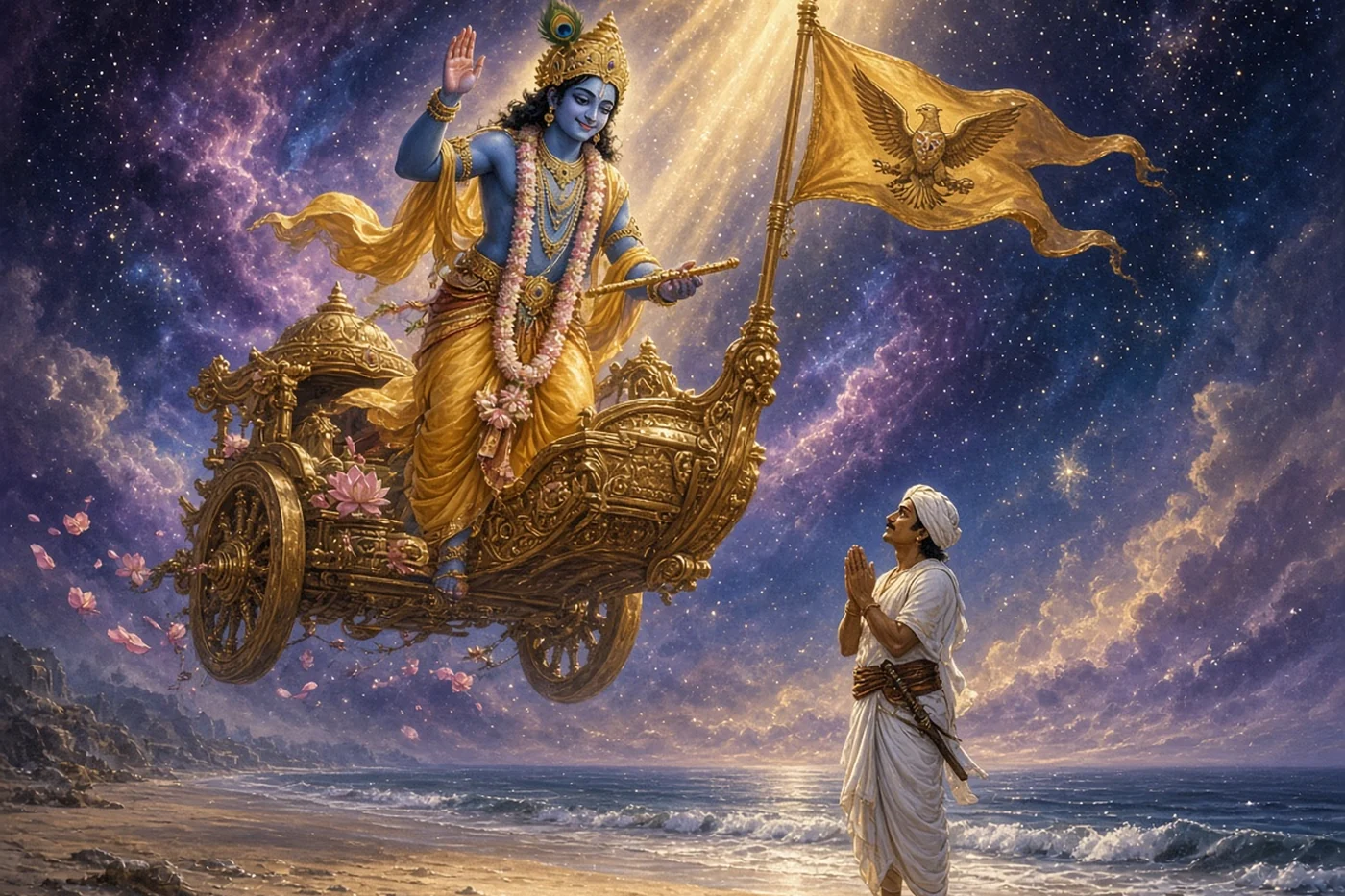
Daruka carried the news, and the city wept, and Arjuna came and did what had to be done for the dead. Then the ocean rose and flooded Dvaraka in a moment, on every side.
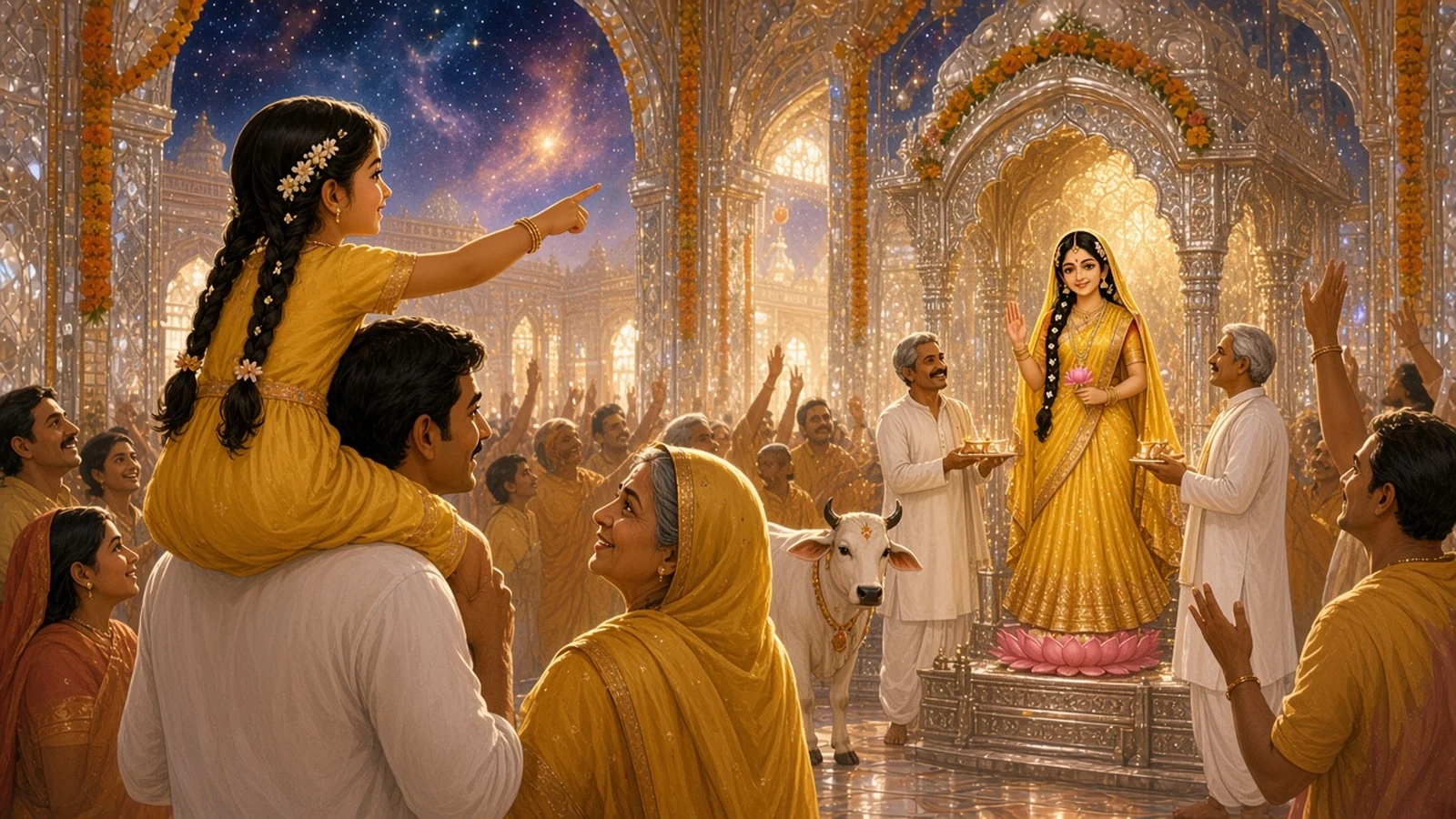
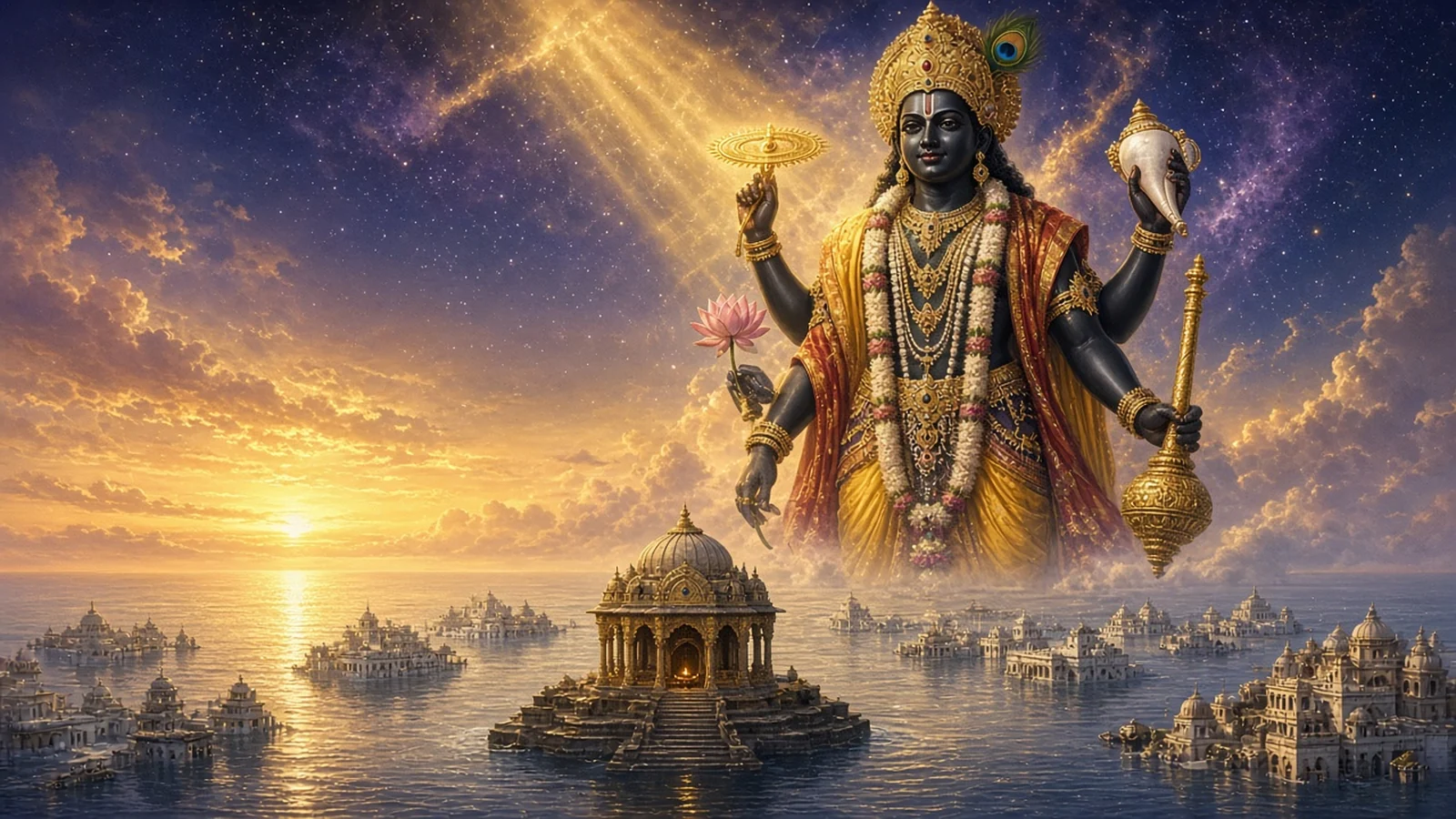
But not quite all of it. The Bhagavata says the sea spared one house: the Lord's own. And it adds a line that Dwarka has never forgotten. The Lord Madhusudana, it says, is always present there, and only to remember the place is to be free of everything unlucky.
Arjuna took the survivors to Indraprastha and made Vajra king of the Yadus there, the Bhagavata says. Dwarka adds what came after. The house the sea had spared was not left alone, its priests say. Vajra, Krishna's great-grandson, built a shrine over it, and that was the first temple of the king of Dwarka.
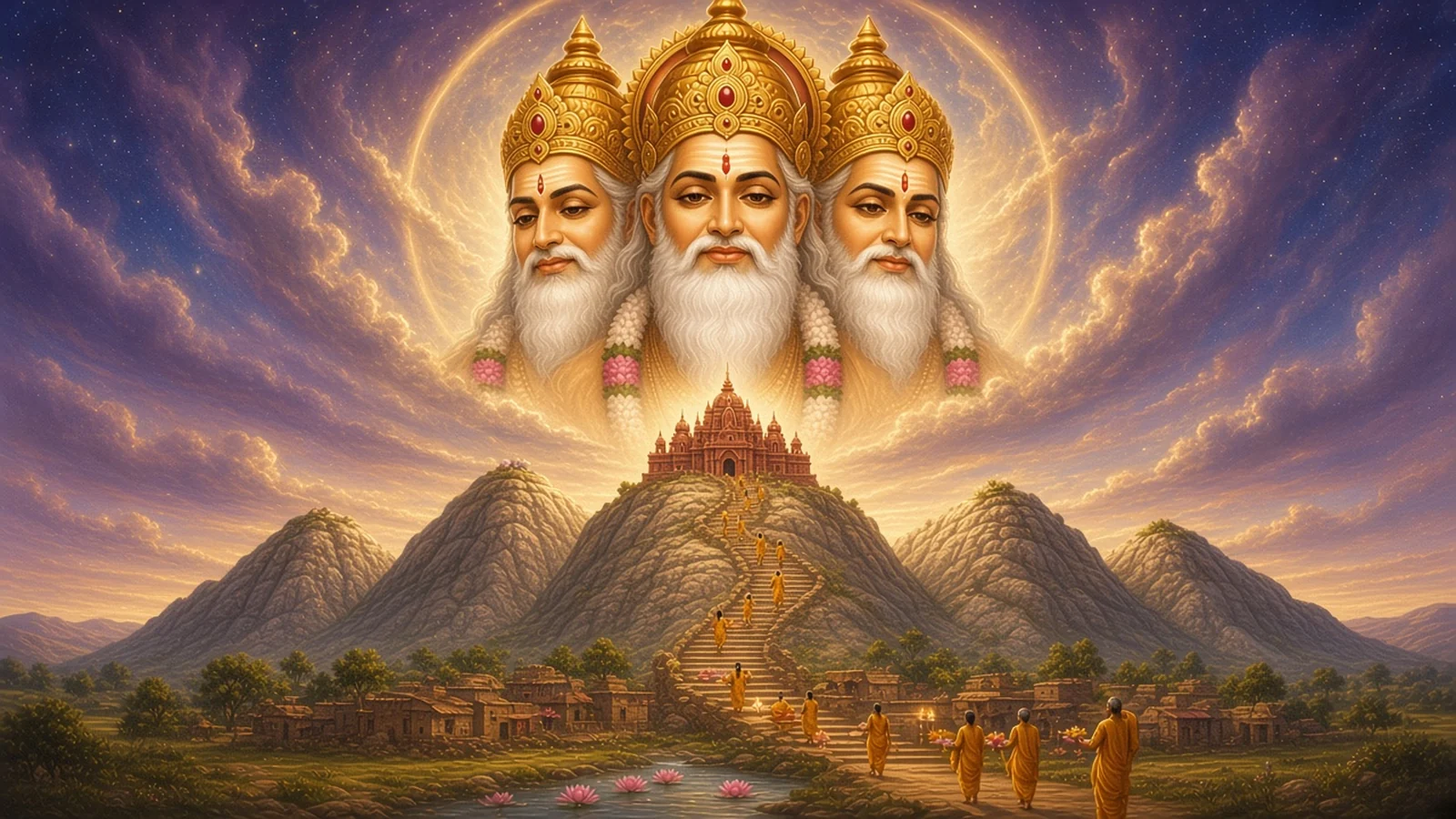
The priests of Dwarka still show it. They say the Jagat Mandir stands on that house, the Hari-griha, and the innermost room of the temple is still called by that name. The temple's chronicle remembers a memorial Vajra raised to his forefather beside it, and counts its first date from him. And the god inside, they point out, faces west, out over the sea that took everything else.