As a Meghwal family walks it
West India · from north Gujarat to Runicha for the Beej of Bhadrapada · 3 min read
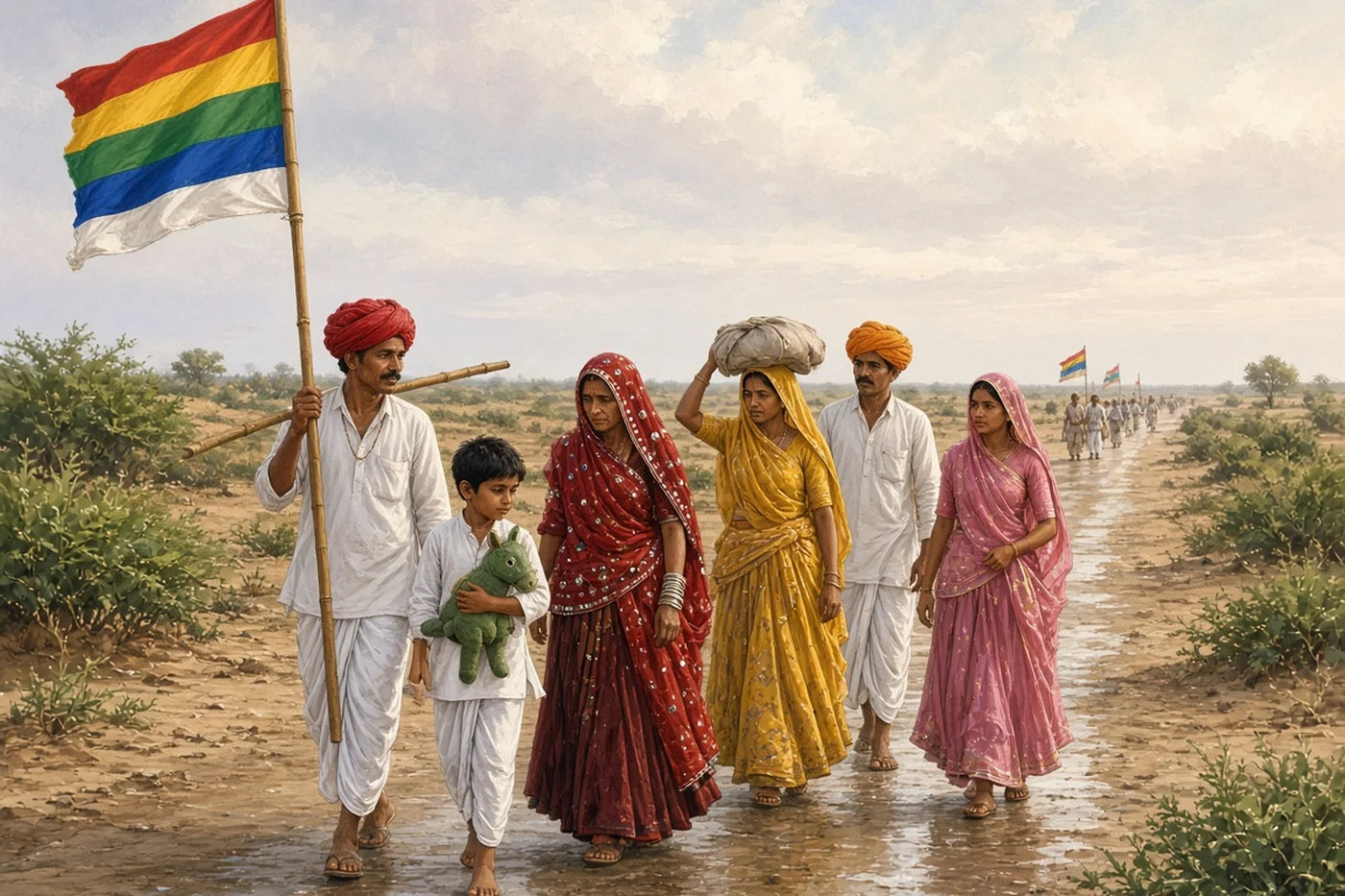
The horse was made of green cloth and stuffed with cotton, and Kanji carried it himself, because it was his. In the spring he had lain for a week with a fever that would not break, and his grandmother had promised Baba a horse if he got up again. He got up. So now, at the end of the rains, they were walking to Runicha to pay.
"How far?" he asked on the first morning.
"Far enough that Baba will know we meant it," said Raniben.
His father carried the flag, five colours on a long bamboo pole, and rolled it up when the wind was strong. There were six of them from their village and more every day, families from Gujarat and Marwar walking the same road in their own small groups, and when one group passed another everyone called out the same three words. Jai Baba Ri.
Nobody cooked. At every few kilometres a village had put up an awning with cauldrons of dal and rotis and water in clay pots, and a man with a ladle waved the walkers in. Kanji's father reached for the coins in his waistcloth the first time, and the man laughed at him.
"These are the Ram Rasaude," he said. "Baba's kitchens. Sit."
Nobody asked their caste, at that kitchen or any other. Raniben noticed it every time and said nothing.
On the fifth night they slept in a schoolyard, and Kanji asked who the second shrine was for, the small one his grandmother always talked about.
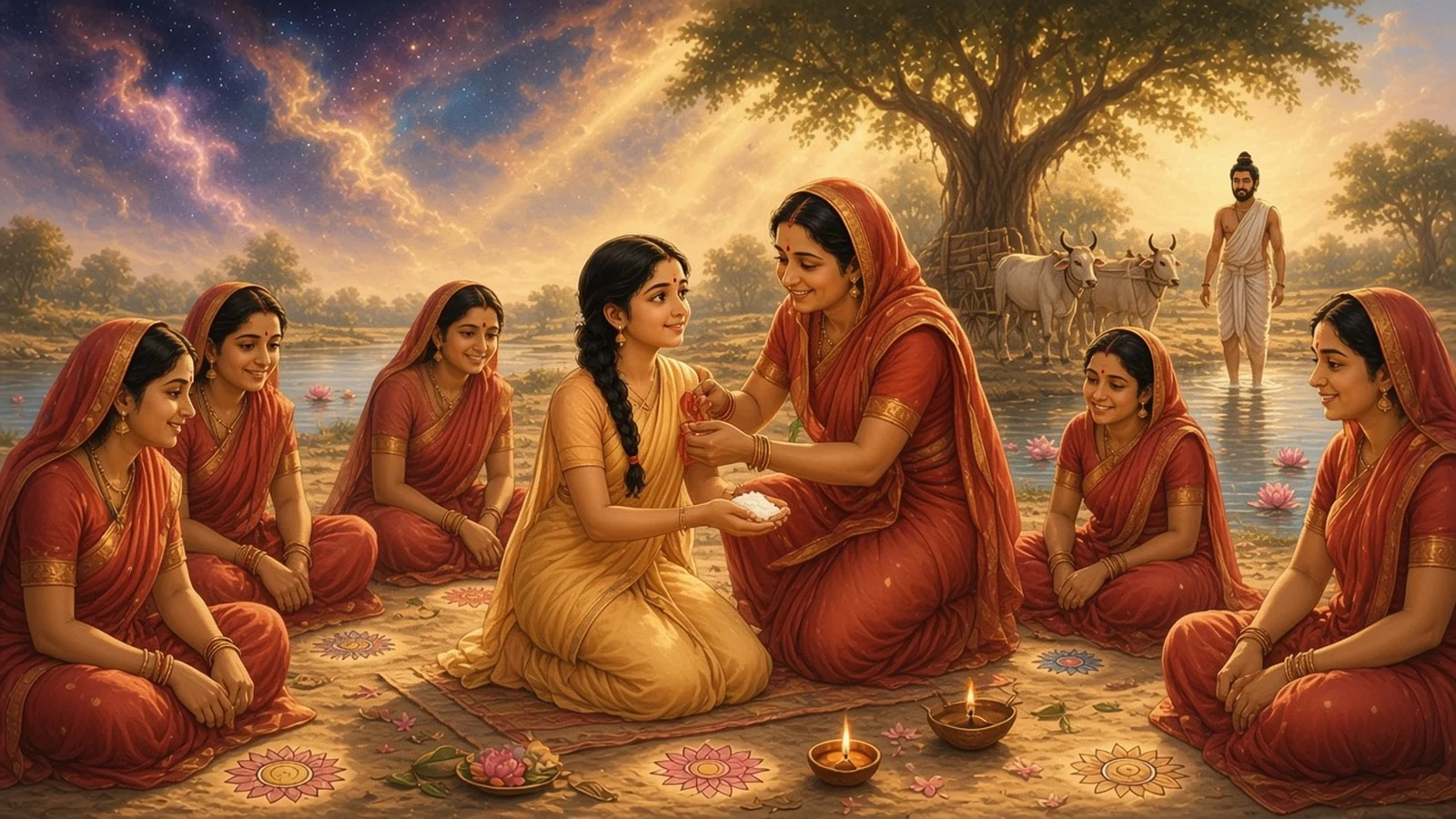
"Dali Bai," said Raniben. "Ours. She was a Meghwal like us." She settled her shawl. "Baba was only a boy when he found her. A newborn girl, lying under a jal tree near Runicha, all alone. He picked her up and named her Dali, for the branch, and said, this is my sister. The tree is still there by the road. You will see it."
"Did she live in the palace?"
"She lived with Baba's people and sang his songs with him, and when the high people said Baba should not sit with Meghwals, he sat with us anyway. Then, when he was a man, he said he would go into the earth alive, and had the ground dug for it. And Dali Bai said, that place is mine."
"Was it?"
"She said, dig, and if you find a woman's things in the earth, it is mine. They dug, and there were bangles and a comb. So she went into it first, and he made his own beside it. She went a day before him. Some say three."
On the twelfth day the road ran past a big jal tree where the walkers stopped to pray, and Raniben stopped and touched it, and then they could see the temple.
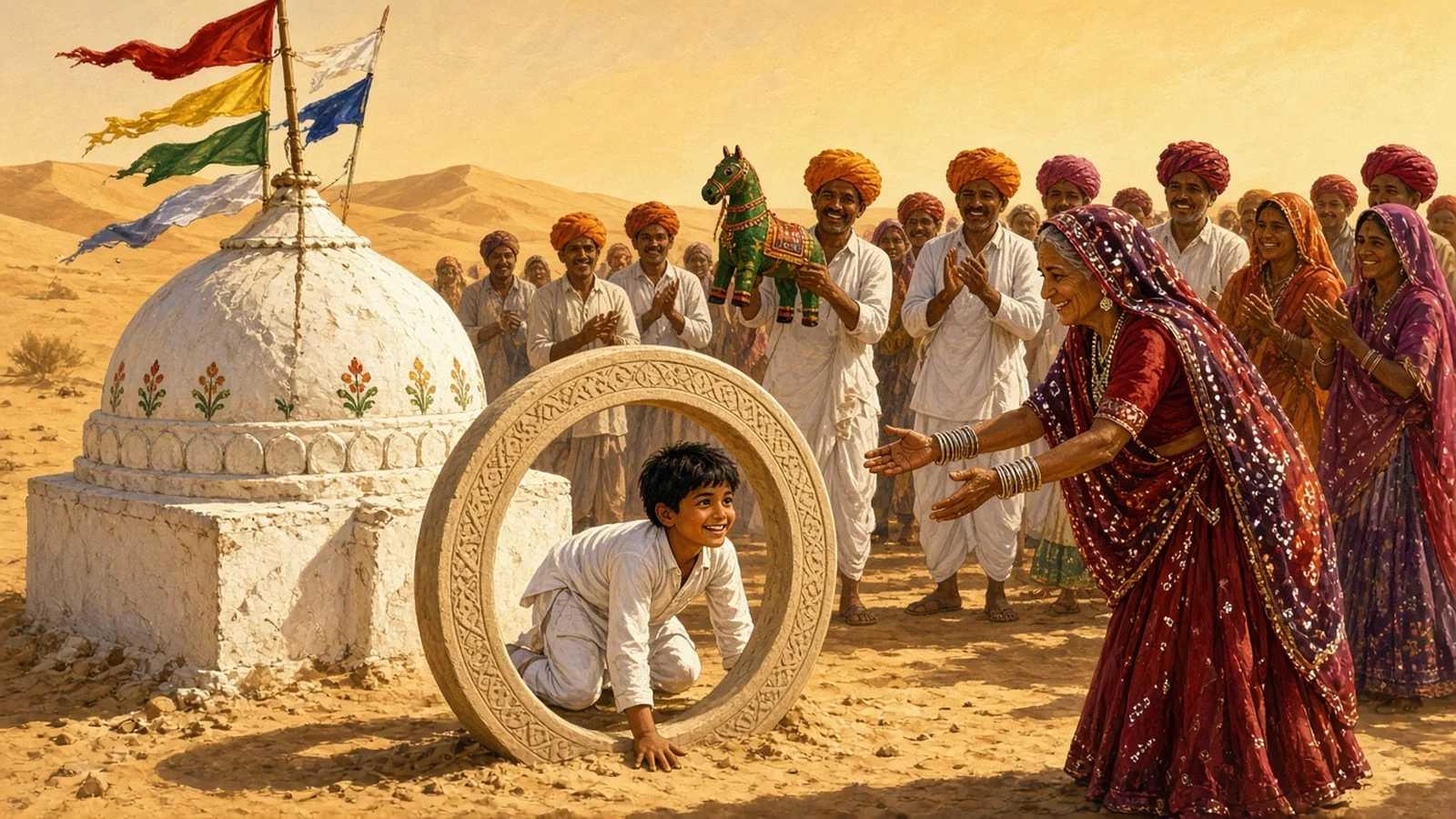
Ramdevra was more people than Kanji had known there were in the world. They bathed in Ram Sarovar, the great tank Baba had dug himself, then went to Dali Bai's samadhi, and there by it was the bangle. It was stone, and much smaller than he had expected.
"I will never fit."
"Fat men fit," said his grandmother. "Go."
He bent and went through it, and came out the other side, and everyone behind clapped.
The queue for the samadhi took four hours. They offered the horse at the samadhi, and his father's flag went up with the rest, to be offered on the dome. That night they sat on a carpet in a lane until dawn with a ring of Meghwal singers playing the tandoora and the manjira, and sang the jamma for the Beej, and Kanji fell asleep halfway with his head in his grandmother's lap.
As the shrine and the Meghwal histories keep her
Ramdevra, Jaisalmer district · Dali Bai's samadhi beside Baba's · 2 min read
Dali Bai's samadhi stands a few metres from Ramdev's at Ramdevra, and it is small. Her image is simple, more like a doll of cloth or wood than a carved goddess, and the Meghwals keep her as their kuldevi, the guardian of their families against sickness and evil. Meghwals of the Jaipal clan perform her puja.
Her story is told in more than one way, and the historian Rajshree Dhali has written down three. In the history of the Meghwals compiled by Swami Gokul Das she is a girl of their own community whose father, Adsi, died young, so that her uncle Sayer raised her; she became Ramdev's disciple and sang the bhajans with him.
In another telling a rishi's child came out of a cleft in a jal branch, was set adrift in a basket on a river, and was drawn out by Sayer, who travelled with Ramdev; Ramdev said the god had sent Sayer a daughter, and she was called Dali after the branch. A third, recent version makes her a forced convert brought back to the fold, which Dhali reads as a late and communal addition. Patrika gives the Runicha form: Ramdev as a boy found the baby under a tree, three kilometres from the temple on the highway, which is shown as Dali Bai ki Jaal.
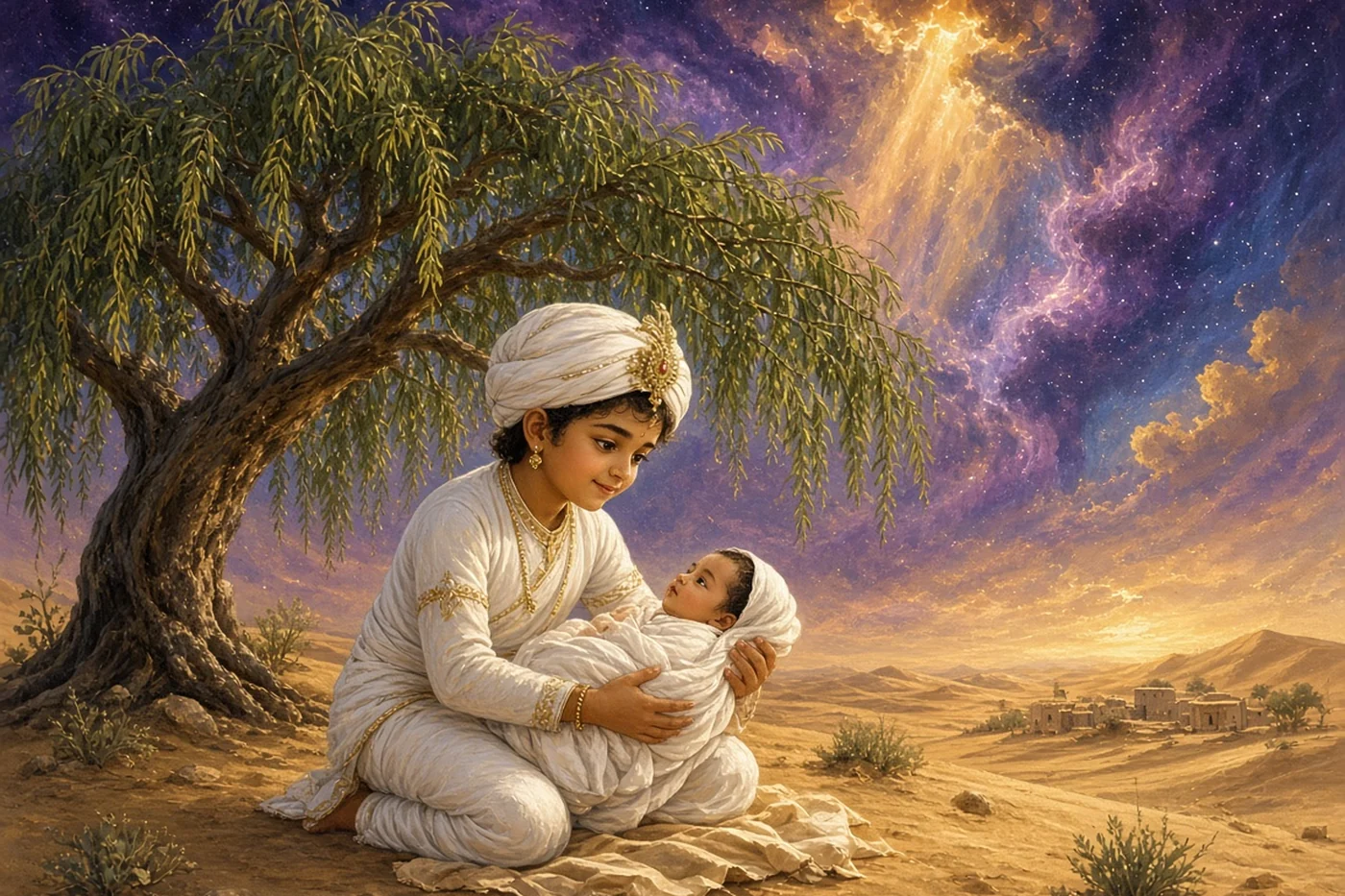
The samadhi is told most often. In Gokul Das's version she and Ramdev argue over who will enter the earth first, the ground is dug, a comb and bangles come up, and she goes in, telling him to follow after three days, which he spends singing beside her. The parchas name the proofs as three ornaments of a woman and put her samadhi one day before his, and the Rajasthani handbooks give the day as the tenth of bright Bhadrapada.
The stone bangle by her samadhi, which pilgrims pass through to be free of disease and trouble, draws a crowd of its own all through the fair. The temple round Ramdev's samadhi was built in 1931 by Maharaja Ganga Singh of Bikaner. Dhali notes that he did not rebuild Dali Bai's shrine, and that most of the people who pray at it come from the communities that were once kept outside the temple door.