Devalok ← All gods
Also calledBaba RamdevRamdevjiRamsa PirRamsha PirRamshah PirRamapirRama PirRunicha ra DhaniPiron ke PirHindwa PirBaba Ramdev Pir

In short

Who is Ramdev Pir?
A saint of the Thar desert, by tradition a Tanwar Rajput of the Pokaran country who lived in the fourteenth century, worshipped as a god in Rajasthan, Gujarat, Madhya Pradesh and Sindh. Hindus hold him to be an avatar of Krishna.
Why do Muslims call him Ramshah Pir?
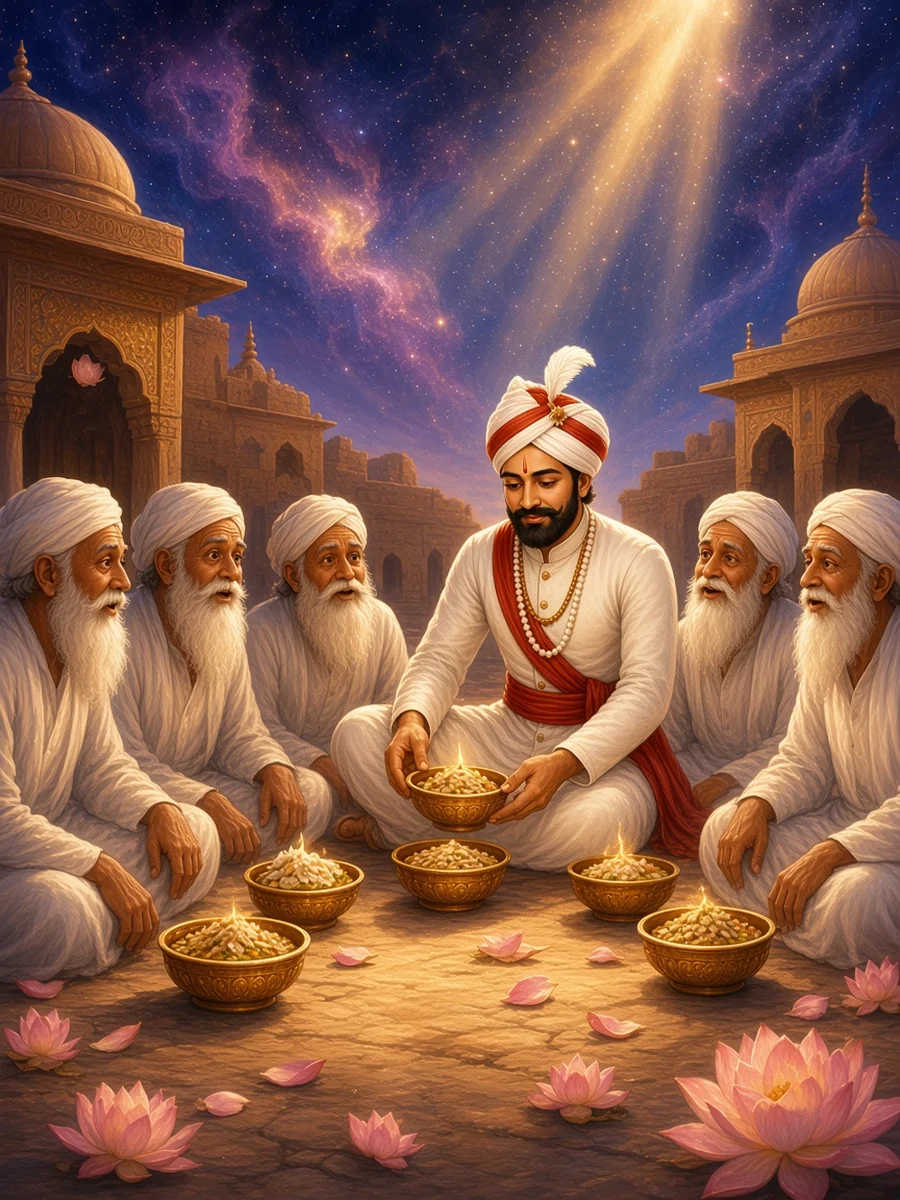
The tradition says five pirs came from Mecca to test him and would eat only from their own bowls, which they had left behind; he set their bowls before them, and they called him Ramshah Pir and Piron ke Pir, the pir of pirs. Their tombs are beside his samadhi.
Where is his samadhi?
At Ramdevra, the old Runicha, about twelve kilometres north of Pokaran in Jaisalmer district, on the bank of the tank Ram Sarovar. His fair there runs from the second to the eleventh of the bright half of Bhadrapada.
Why do his devotees offer cloth horses?
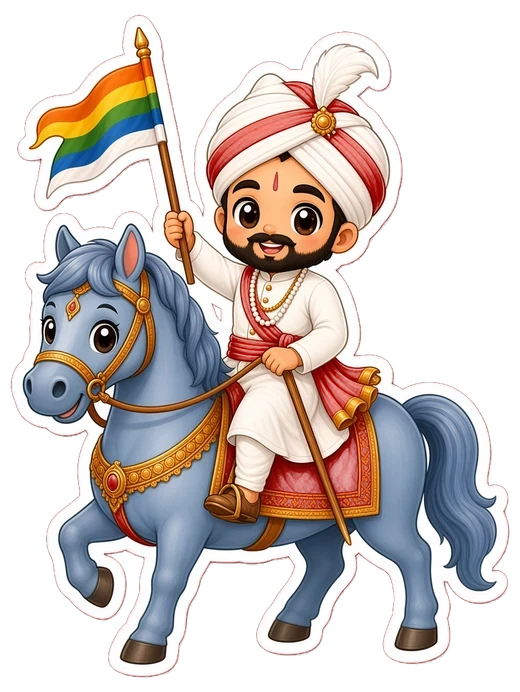
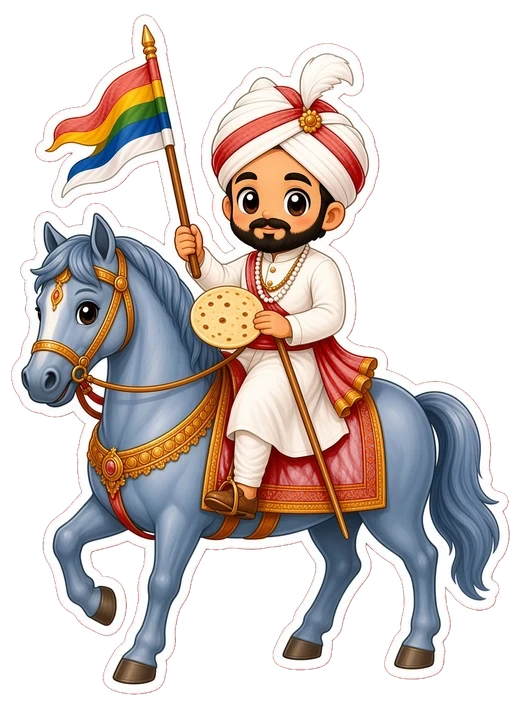
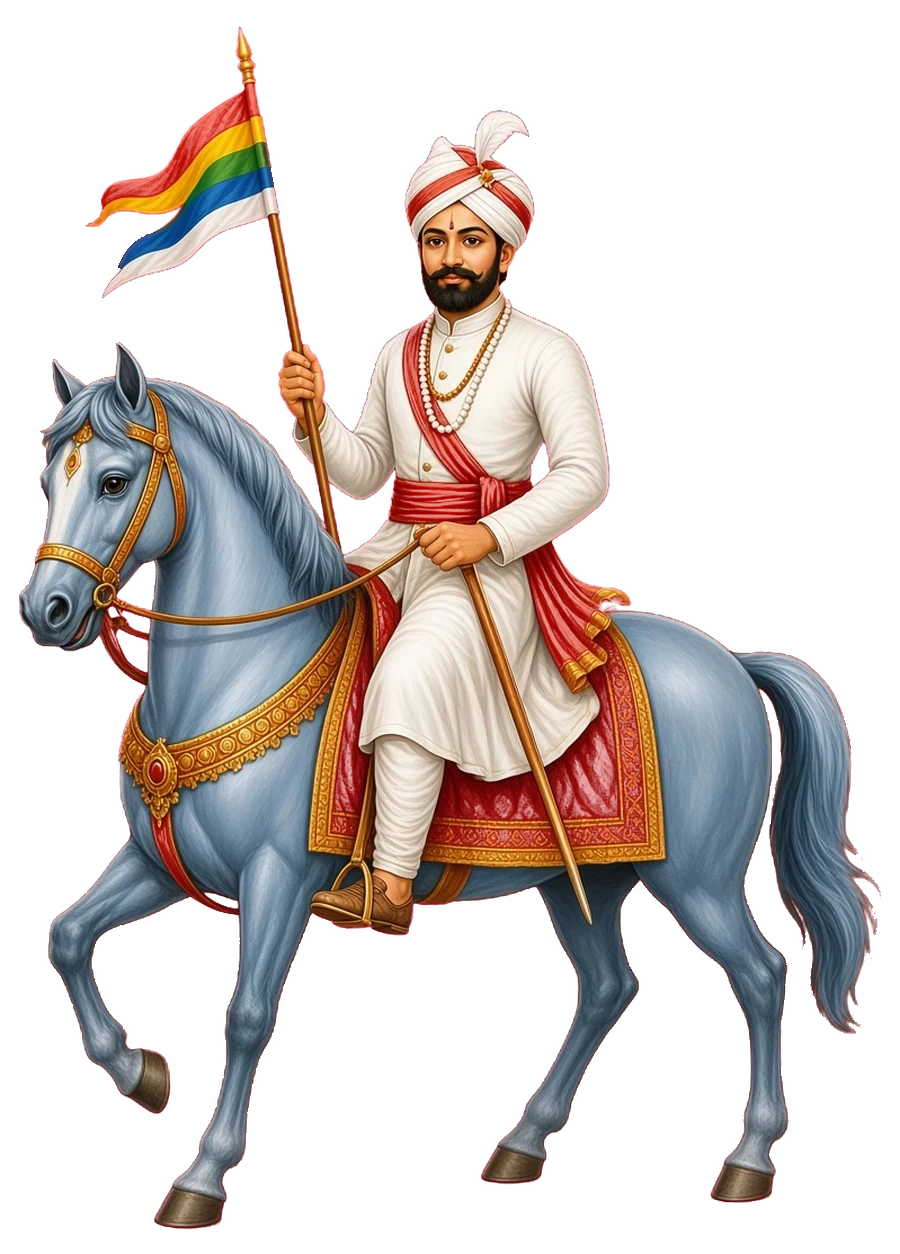
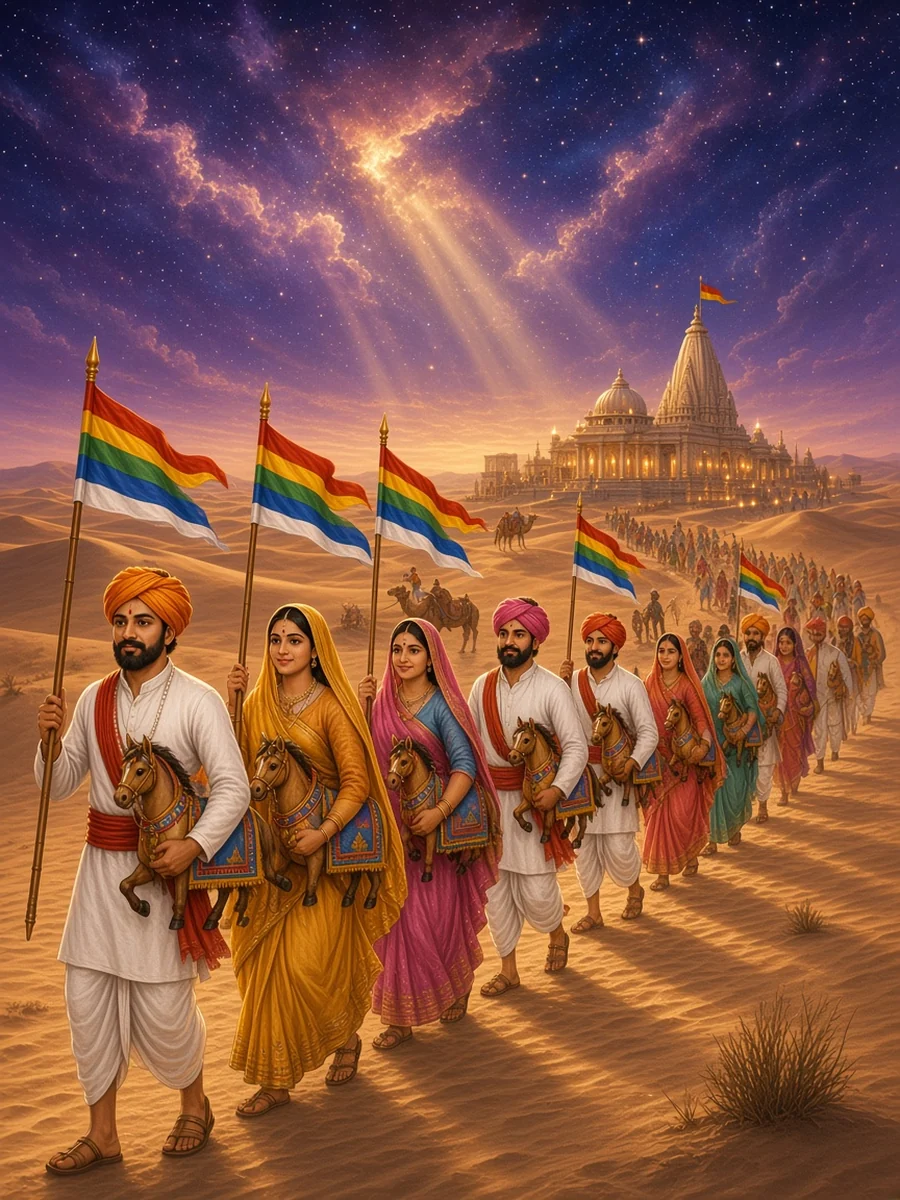
As a boy he asked for a horse, and the tailor's horse of cloth flew with him over the roofs. Families who have had a vow answered bring him a horse of cloth, and a five-coloured flag.

Artwork ›

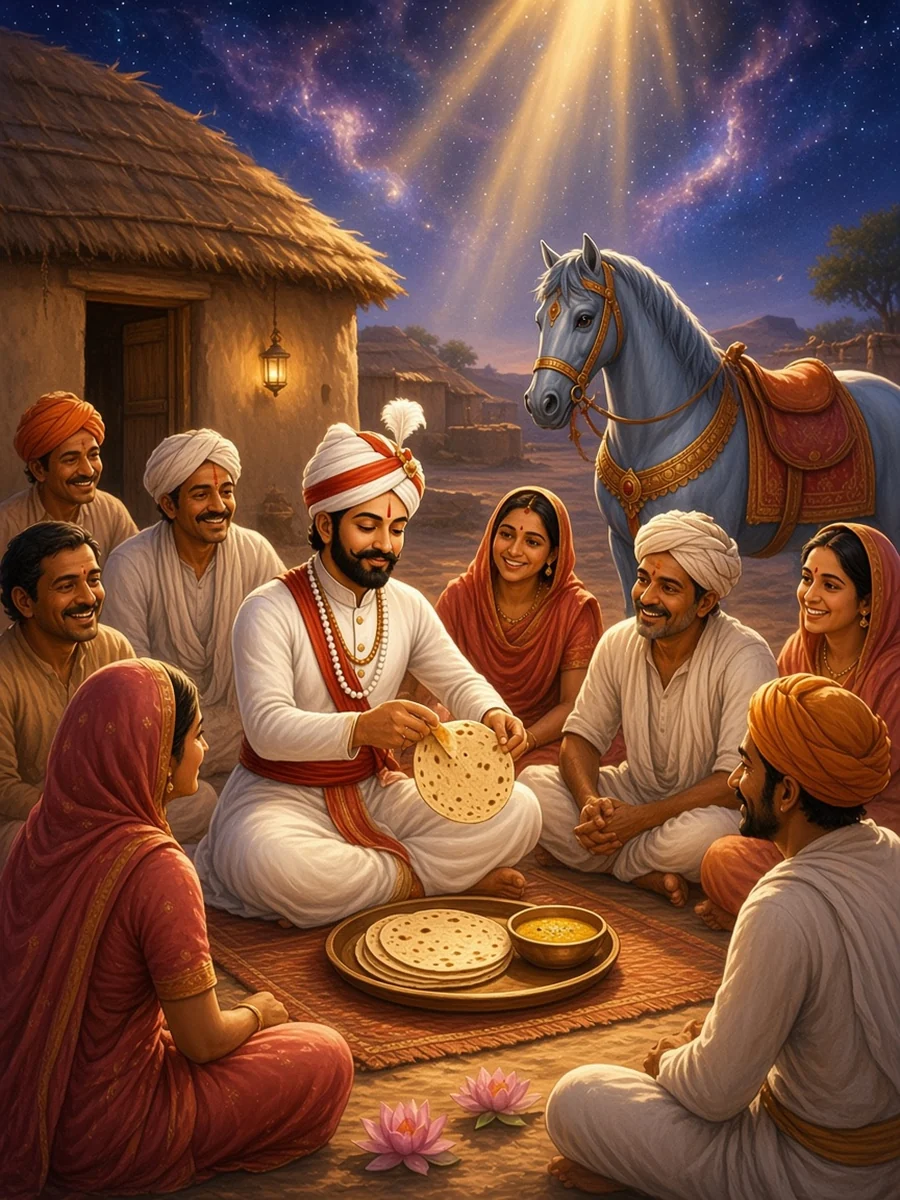
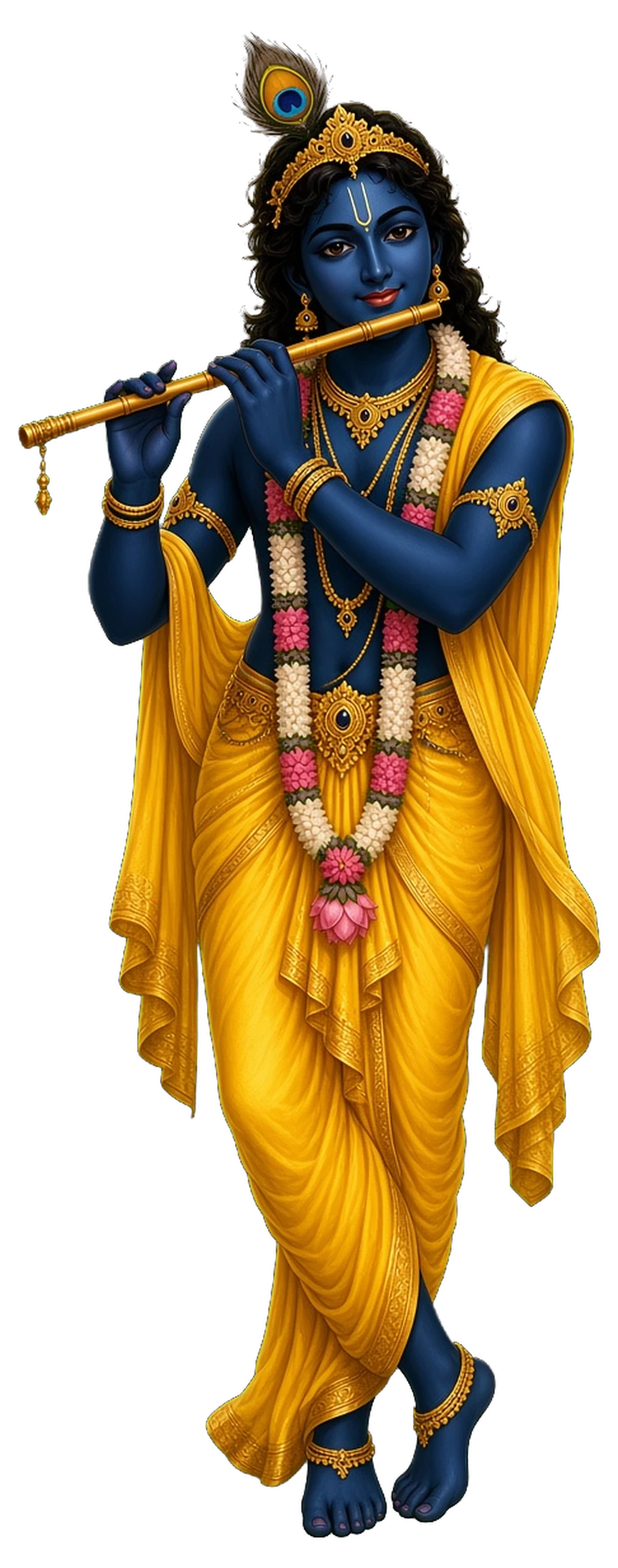
He sat and ate with those the villages kept outside He set the five pirs' own bowls before them

For kids

Everyone's welcome at Runicha
Pull up a mat, there's enough

At a glance

TraditionFolk and Vaishnava
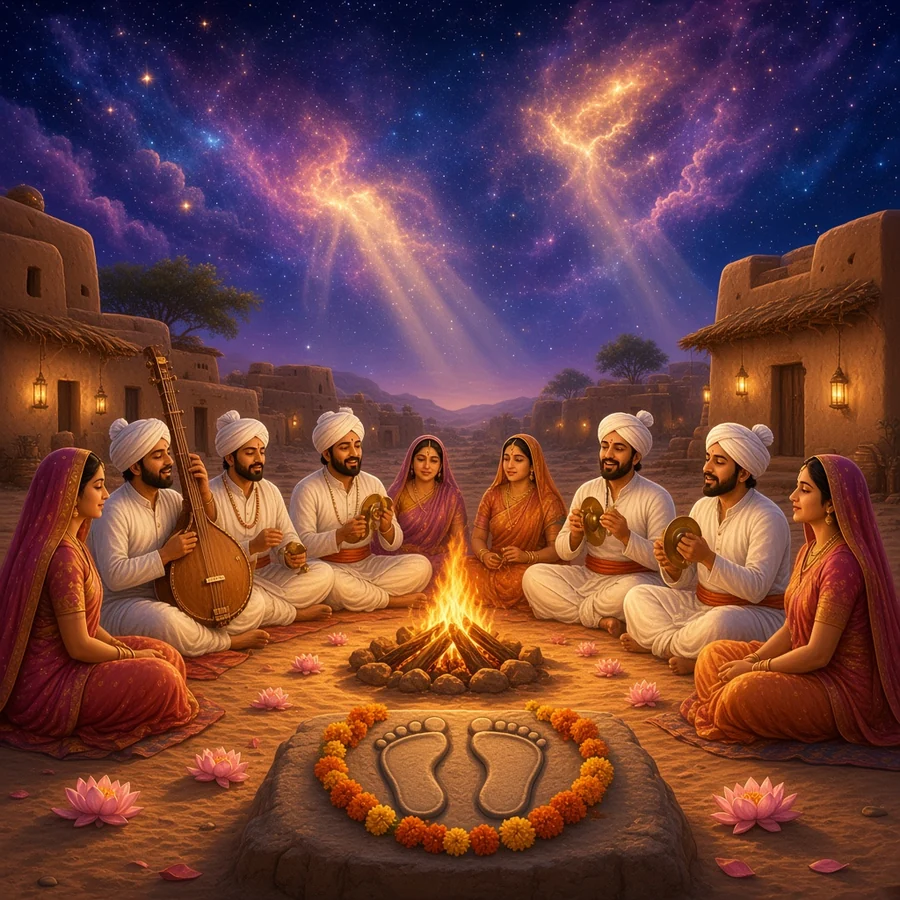
FormFootprints carved in stone

the pagalya, in his shrines; in pictures a young rider on a horse, his flag beside him

MountLila (Leela)

black and green in the Rajasthani handbooks, which also call it Revant; a blue horse in the Runicha and Raika tellings

Who Ramdev Pir is

Ramdev Pir, Baba Ramdev to most of the people who pray to him, is a saint of the Thar desert worshipped as a god from Rajasthan and Gujarat to Sindh. The tradition makes him a Tanwar Rajput, the second son of Ajmal, chief of the Pokaran country, in the fourteenth century, and holds that he was Krishna come again: promised to his childless father under the sea at Dwarka, and found in the cradle at the end of a trail of red footprints. At thirty-three, it says, he went alive into the earth at Runicha, now Ramdevra, and his samadhi there draws lakhs of walkers every Bhadrapada.

He is worshipped as a pair of footprints and as a rider on a horse. To Muslims he is Ramshah Pir, the name that five pirs from Mecca gave him after he set their own bowls before them; in Gujarat he is Ramapir. Above all he belongs to the Meghwals and the other Dalit communities of the desert, who remember that he sat and sang and ate with them when the villages kept them outside, and that he took a Meghwal girl, Dali Bai, as his sister. Their singers keep his twenty-four banis through the night at the jamma.

Jai Ajmal sut, jai sukhdhama, bhavsagar hit boit nama: Victory to Ajmal's son, victory to the home of joy, whose name is a boat across the ocean of the world (Ramdev Chalisa).

He is known by his parchas, the miracle stories told and sung about him, which his devotees count as twenty-four. His birth, the flying horse of cloth, the demon Bhairav and the five pirs are told in The Boy Who Came in a Cradle, and Dali Bai's story, with the walk to his fair, in The Bangle at Runicha. Three more are told here. Lakha, a Banjara trader, calls his sugar salt to escape a toll and finds that salt is what he carries. Boyta, a merchant caught in a storm at sea, calls on Baba, and at Runicha Ramdev's hand comes back wet from the middle of a game of chaupar. And his camel-man Ratna Raika rides to the fort of Pugal to bring home his sister Sugna for his wedding, and is thrown into prison by her husband's proud family.

His promise in every one of them is the same: whoever calls him, he comes.
Before the Puranas

The Vedic roots of Ramdev Pir

The Vedas do not know Ramdev Pir. He belongs to the folk religion of the Thar desert in the late Middle Ages, and nothing written about him is older than the songs and stories of his followers. The tradition places his life between 1352 and 1385; other accounts carry his samadhi on to 1458 or 1459, and the historian Laxmidutt Barhath, as Bhanwar Meghwanshi cites him, gives his birth in Vikram Samvat 1405.

His bridge to the Puranas is Krishna. In the Hindu telling Ajmal goes to Dwarka, the image of Dwarkadhish will not answer him, and he walks into the sea to find the god in the drowned city, where Krishna promises to be born as his younger son. The Rajasthan government's panorama of his life at Ramdevra, opened in 2017, tells it that way, and the handbooks make his elder brother Viramdev Balarama, as Krishna's brother was. His wife Netalde of Amarkot is held to be Rukmini.

His own words survive as the Chaubis Praman, twenty-four banis, compiled by his disciple Swami Gokuldas by one account and counted as his own poems in the Rajasthani handbooks, which call him the only folk god who was also a poet. Harji Bhati, the singer, wrote the Shri Ramdev ji ri Veli; Meghwanshi holds that Harji lived some three centuries after Ramdev. The Chalisa sung today counts his parchas one by one.

Scholars read him in more than one way, and their readings are theirs. Dominique-Sila Khan argued in 1997 that the followers of Ramdev, like those of Jambha, Jasnath and Ai Mata, were brought into Nizari Ismailism by missionaries from the Multan region in the thirteenth and fourteenth centuries, broke away after its central authority faded, and still keep traces of it. Meghwanshi, whose family served a Ramdev temple for five generations, reads him as a saint who stood against caste, links his night vigils with the older Mahadharma or Beej Margi gatherings of Malwa, Kutch and Sindh, and records three accounts of his birth: Krishna's avatar, a Tanwar Kshatriya, and the son of a Meghwal rikhiya. The temple over his samadhi was built by Maharaja Ganga Singh of Bikaner in 1931.

See how the Vedic gods became the Puranic ones →

Related gods