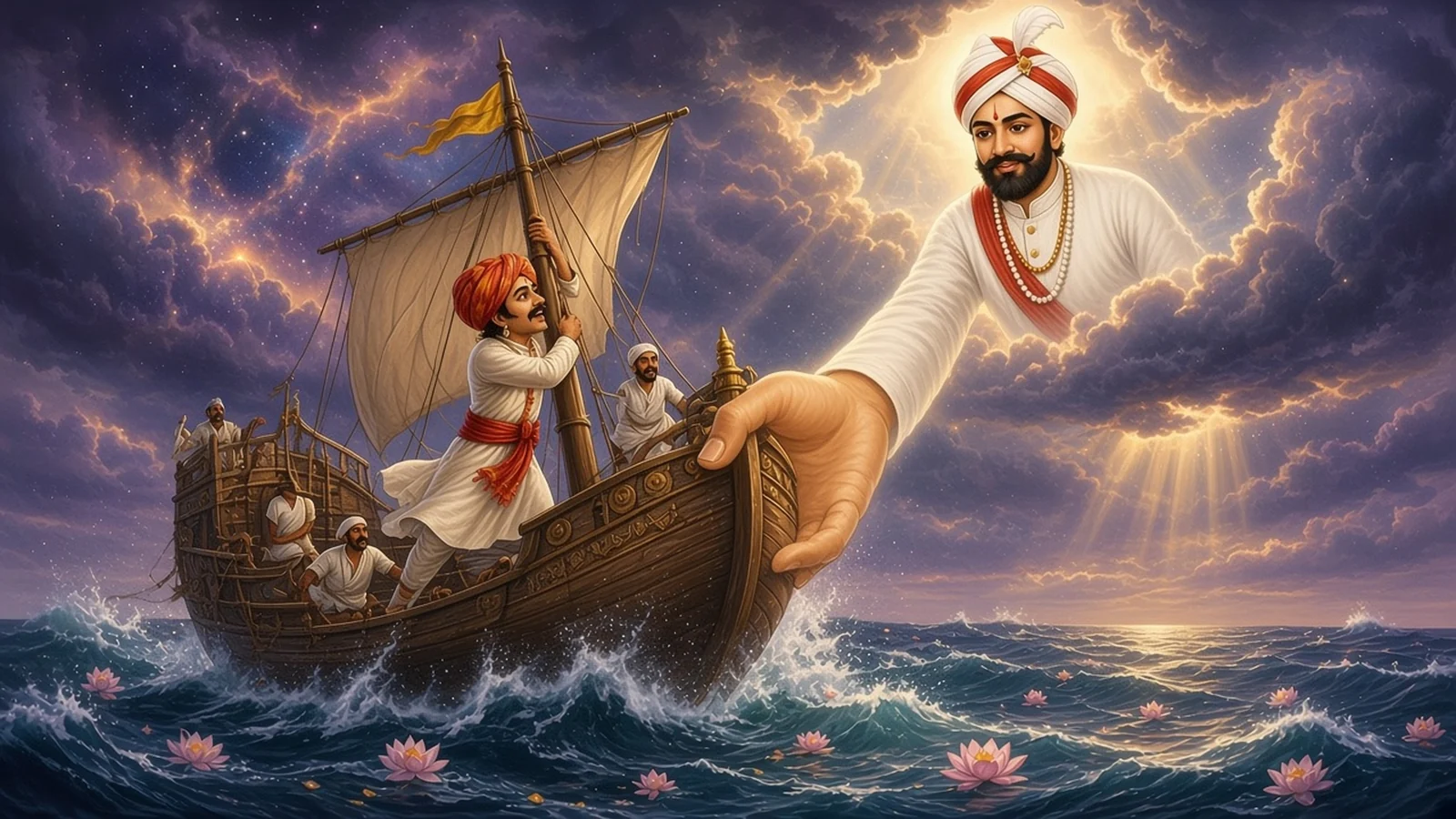
As Runicha tells it
West India · the toll road into the Pokaran country, and Runicha · 2 min read
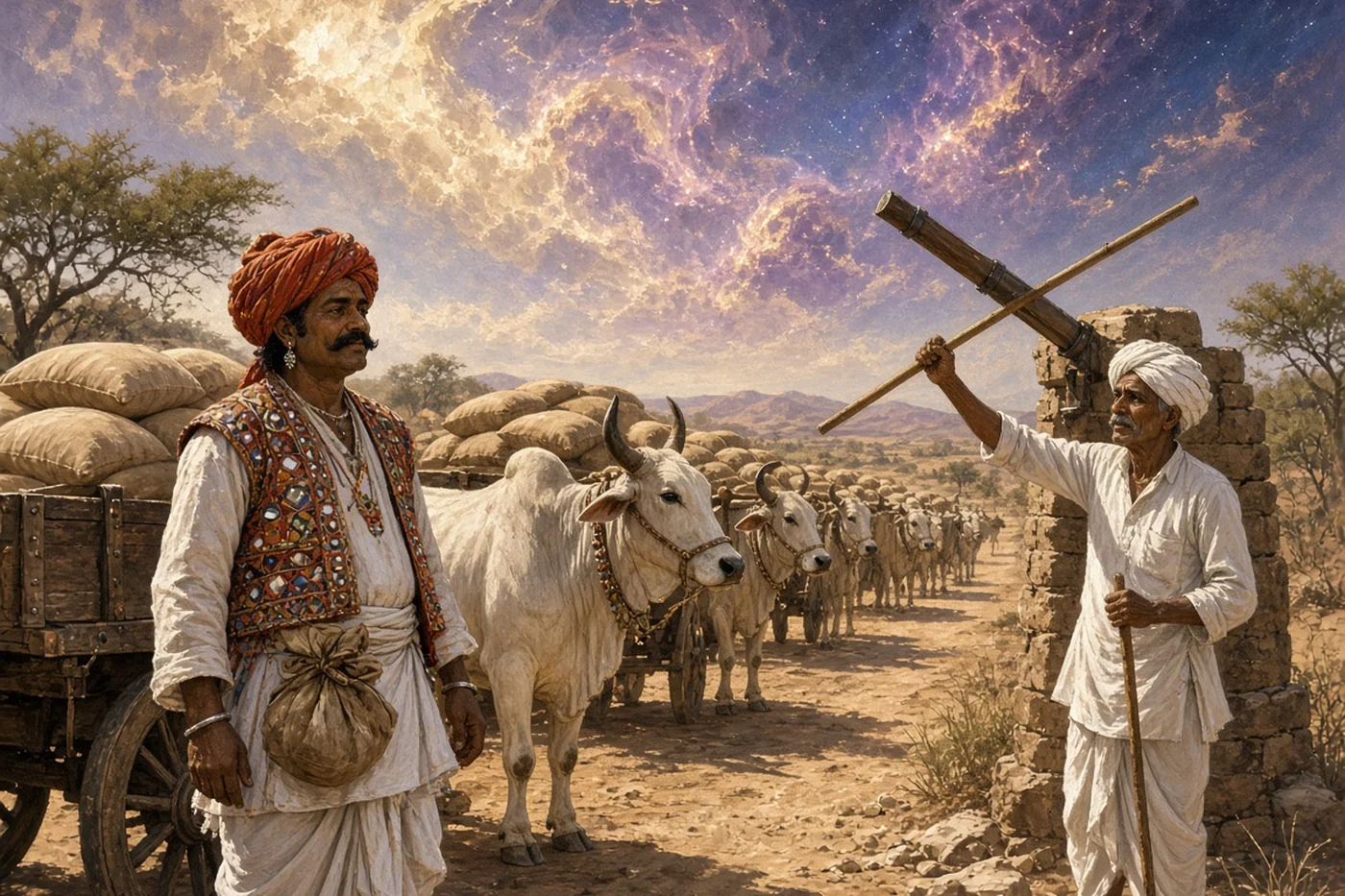
The Banjaras crossed the desert with long strings of bullocks and carts, carrying what one country had and another country wanted. Lakha was one of them, and that season his carts were loaded with mishri, the hard white crystals of sugar that the towns paid well for.
On the road into the Tanwars' country there was a toll. Every load paid something, except salt, which went through free.
The toll-keeper walked down the line of carts and slapped the side of a sack. "What is in these?"
"Salt," said Lakha.
"All of them?"
"Every sack. Salt and nothing else."
The man looked at the loads, at the dust on them, at the trader's honest face, and waved him through. Lakha drove on into the country with his toll money still tied in his waistcloth, and thought well of himself for most of the afternoon.
In Runicha, the tellers say, Baba Ramdev knew what had been said at the toll. He did nothing that anyone could see. But a word spoken in his country was a word he would hold a man to.
At the next market Lakha called the buyers to his carts, cut a sack open and scooped out a handful to show them. A buyer took a crystal and put it on his tongue, and spat.
"This is salt."
"It is mishri," said Lakha. "The best."
The buyer held out his palm. Lakha tasted it. It was salt. He cut a second sack, and a third, and every one of them was full of salt, white and coarse, the cheapest thing in the market. The buyers who had come for sugar shouted that he had cheated them, and some of them did more than shout. When they had done with him, Lakha sat in the dust among his ruined loads and understood. Salt was what he had said, and salt was what he had.
He did not go back to the toll. He went to Runicha, as fast as he could go, and fell at Baba's feet.
"I lied at your toll," he said. "I said salt to save a few coins, and now I have nothing but salt. Forgive me."
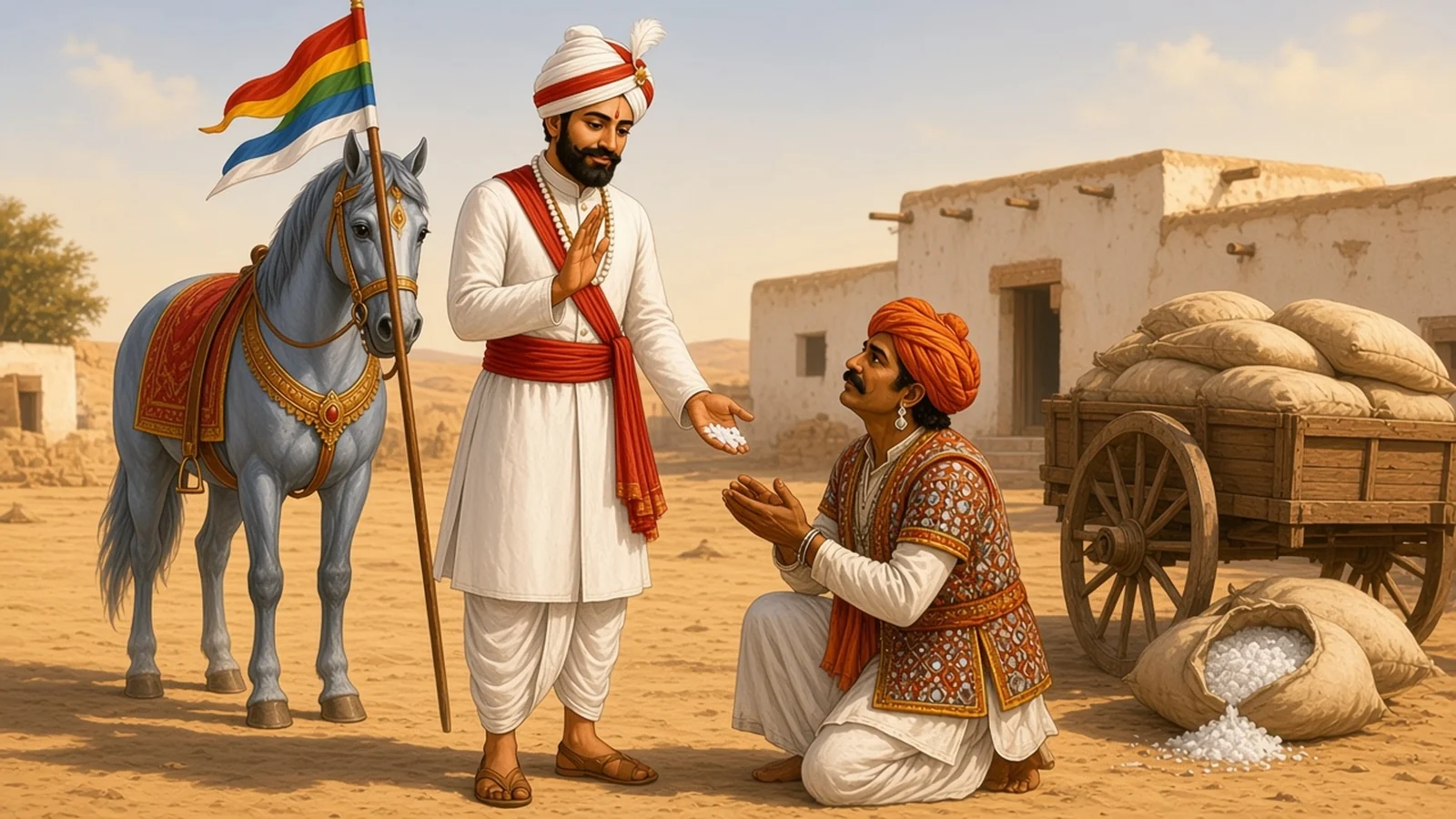
Ramdev looked down at him without anger. "Your sacks only held what you told the man they held. Did they not?"
"They did."
"Then pay what you owe on the road, and say what is true. That is all I ask of you."
"I will pay," said Lakha. "Every coin, on every road, as long as I live."
He walked back to his carts with his heart in his mouth and cut open the first sack he came to. The crystals that spilled into his hand were white and hard and sweet. So was the next sack, and every sack after it. The Ramdev Chalisa sings both turns of the parcha in two lines: the mishri made salt, and the salt made mishri again, for the Banjara who ran to his lord for shelter.
As Dinta Vaghela's parchas tell it
West India · the outskirts of Pokaran · 2 min read
In this telling there is no toll-keeper. Ramdev himself asks the question, and he is still a boy.
He was playing with his friends on the edge of Pokaran when a merchant came along the road with his loads, a man named Laakho Vanjaro. The boy stopped him.
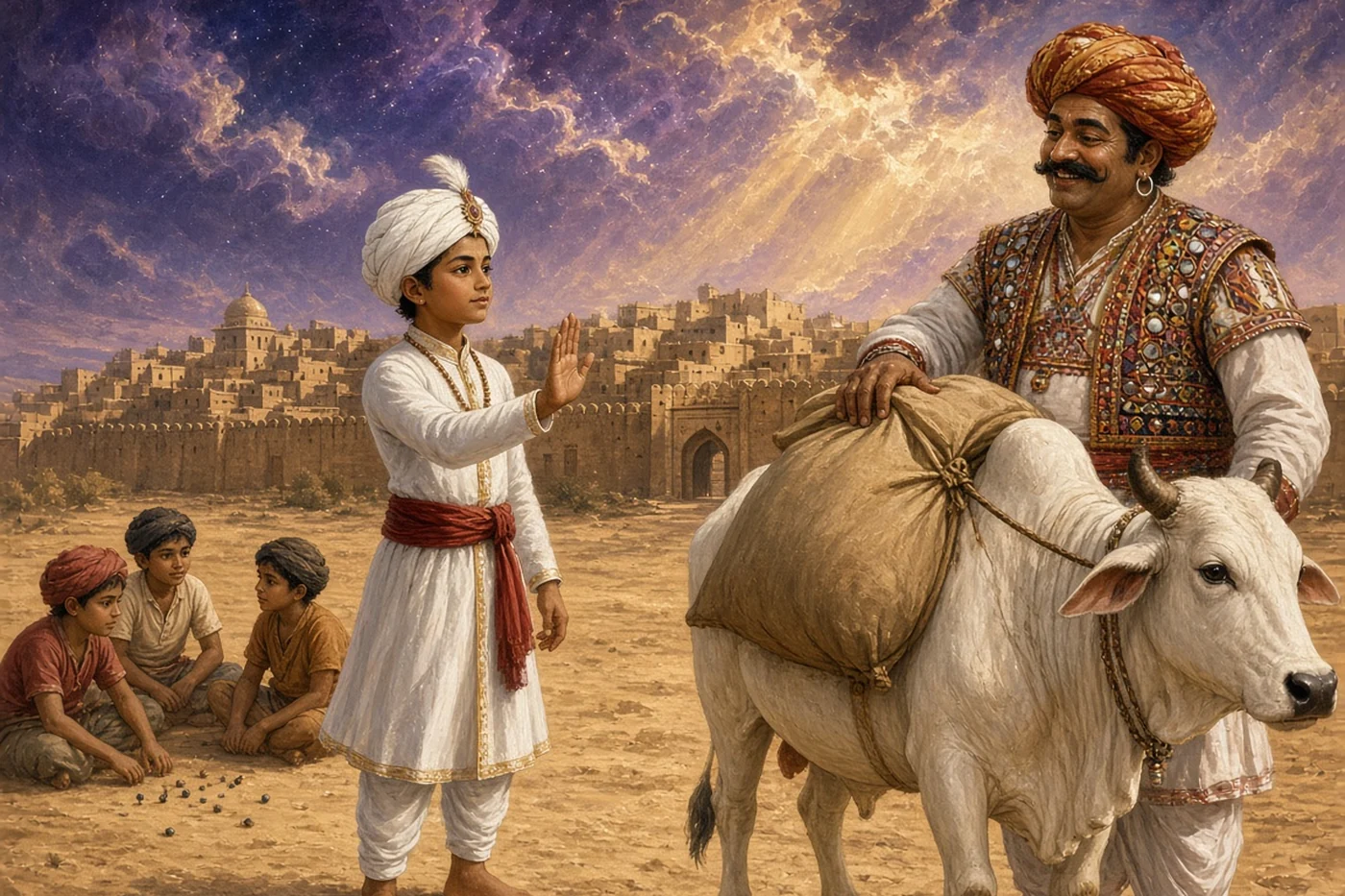
"What is in your sacks?"
The merchant gave the answer he gave the tax men. "Salt," he said. "Salt from Sambhar. I am taking it to sell in the streets of Pokaran." It was sugar. He said salt so that no one would tax it.
The boy let him go, and went back to his game.
At midday Lakha stopped in the shade to eat. He washed his hands first, as a careful man does before he touches his food, then untied one of his sacks and took a handful of sugar to sweeten the meal. He put a little on his tongue. It was salt. He untied another sack and tasted again. Salt, every grain of it, from the top of the sack to the bottom, exactly as he had told the child.
He sat very still. Then he got up and went back the way he had come, until he found the boy among his friends.
"I lied to you," he said. "The sacks held sugar, and I called it salt. I ask your forgiveness."
"Then walk the path of truth from now on," said Ramdev. "That is all."
Lakha promised, and the boy forgave him, and went back to his friends and their game as though nothing much had happened.
The merchant went on into Pokaran with his loads, a quieter man than the one who had come along the road that morning. And when he drove them out of the town again and opened the first sack on the road, he found that every sack of salt had turned back into sugar.