Who Dwarkadhish is
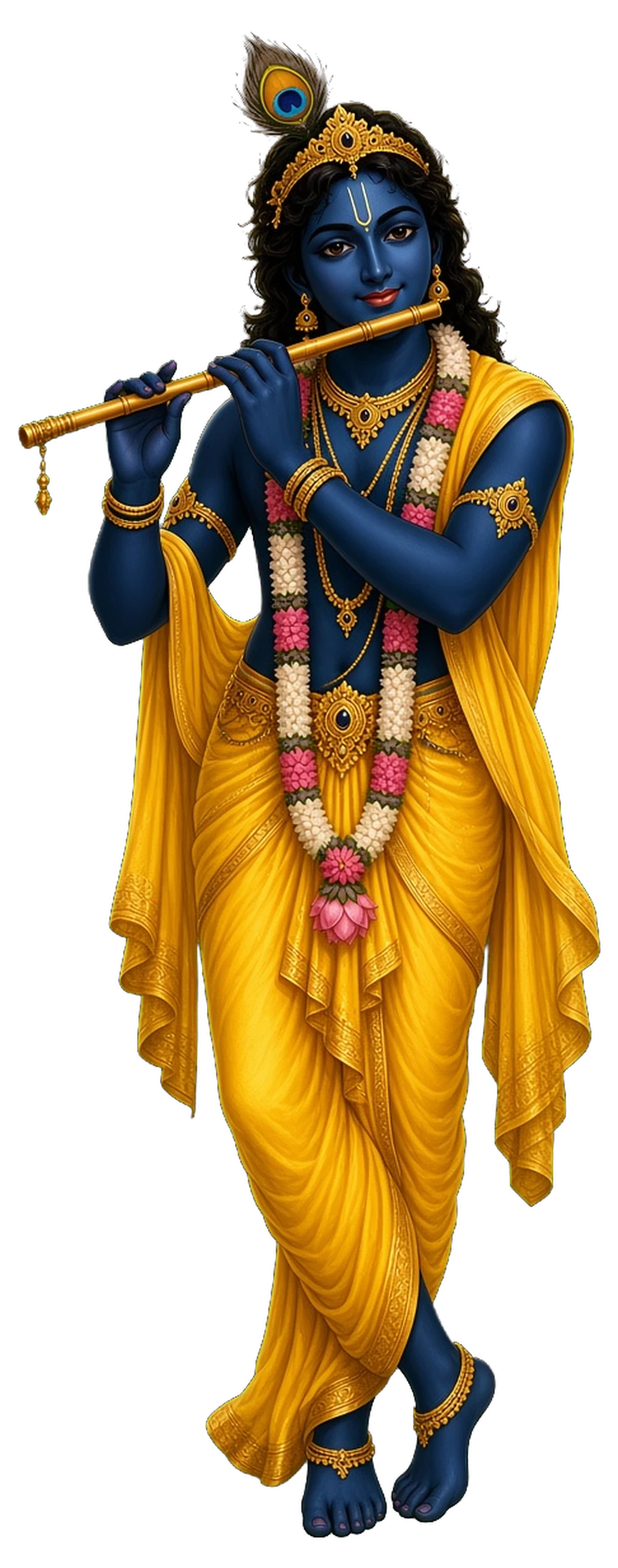
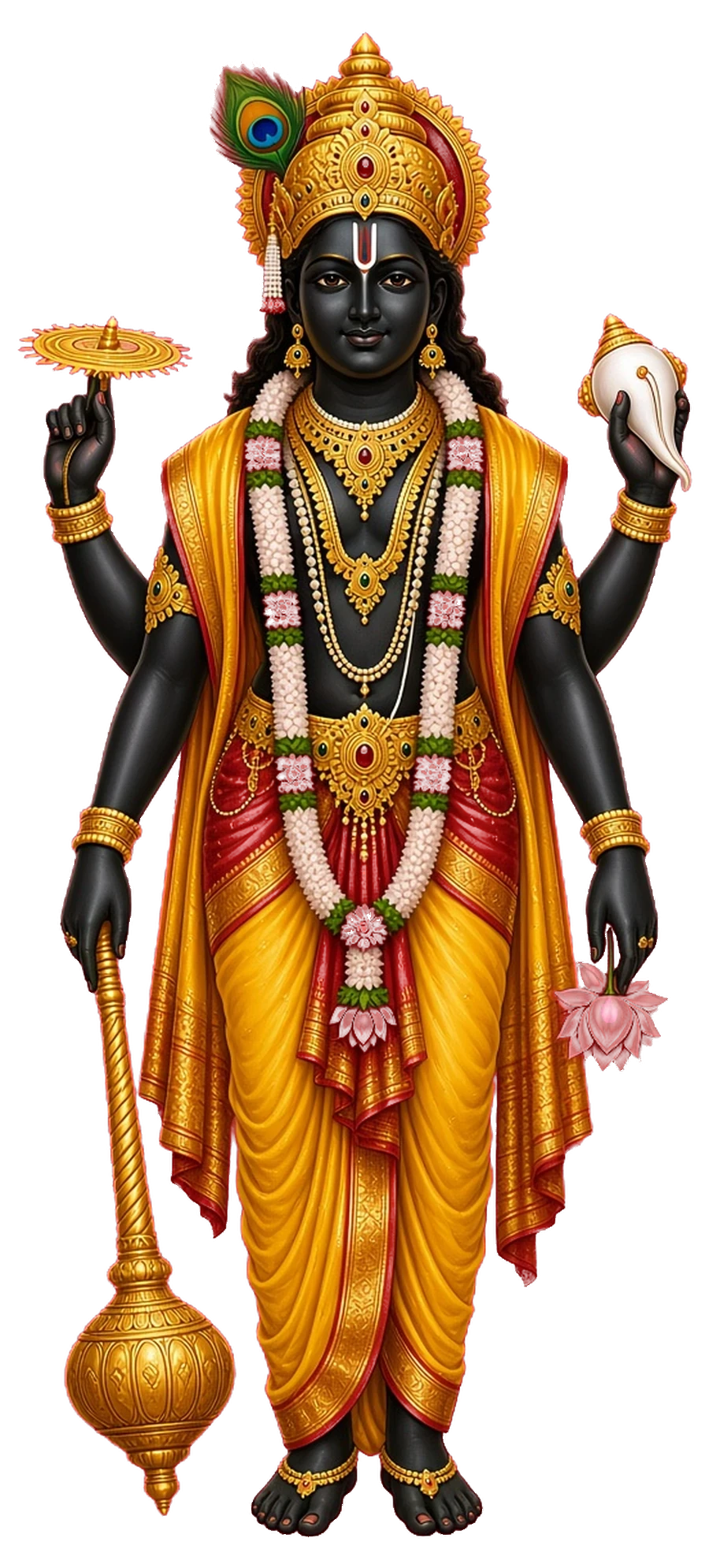
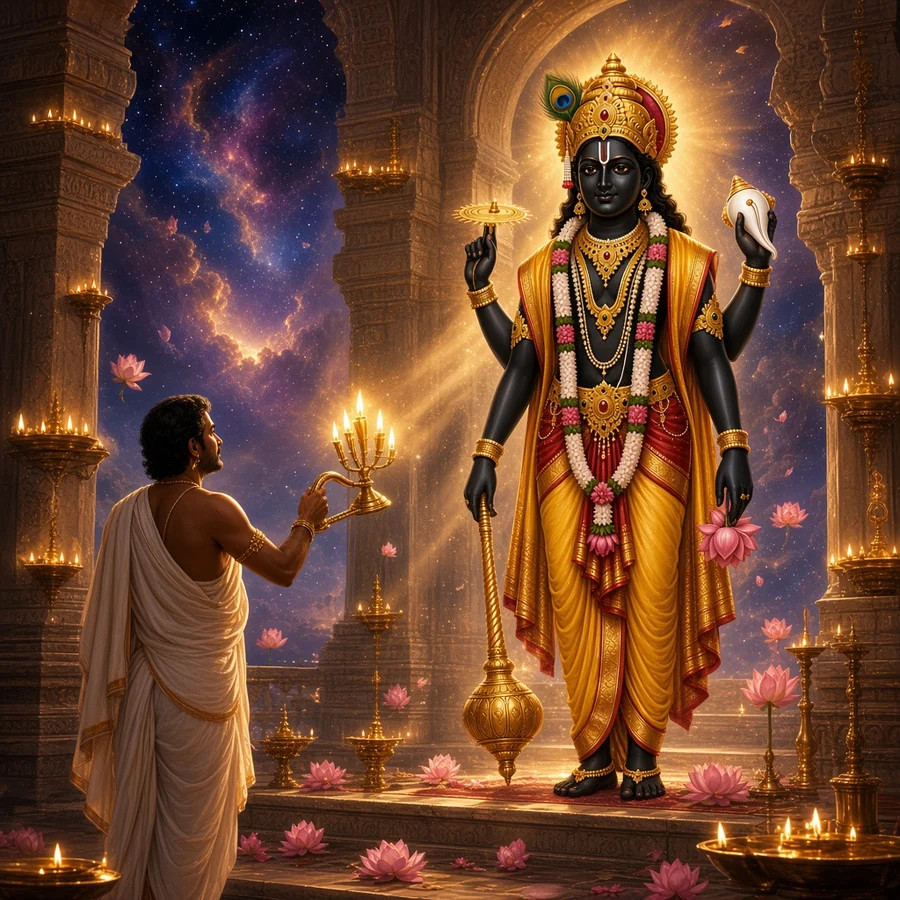
Dwarkadhish is Krishna as the king of Dwarka, the god of the great temple at the mouth of the Gomti river on the westernmost coast of Gujarat. His name means the lord of Dwarka. Gujarat also calls him Dwarkanath, and Ranchhodrai, the one who left the battlefield.
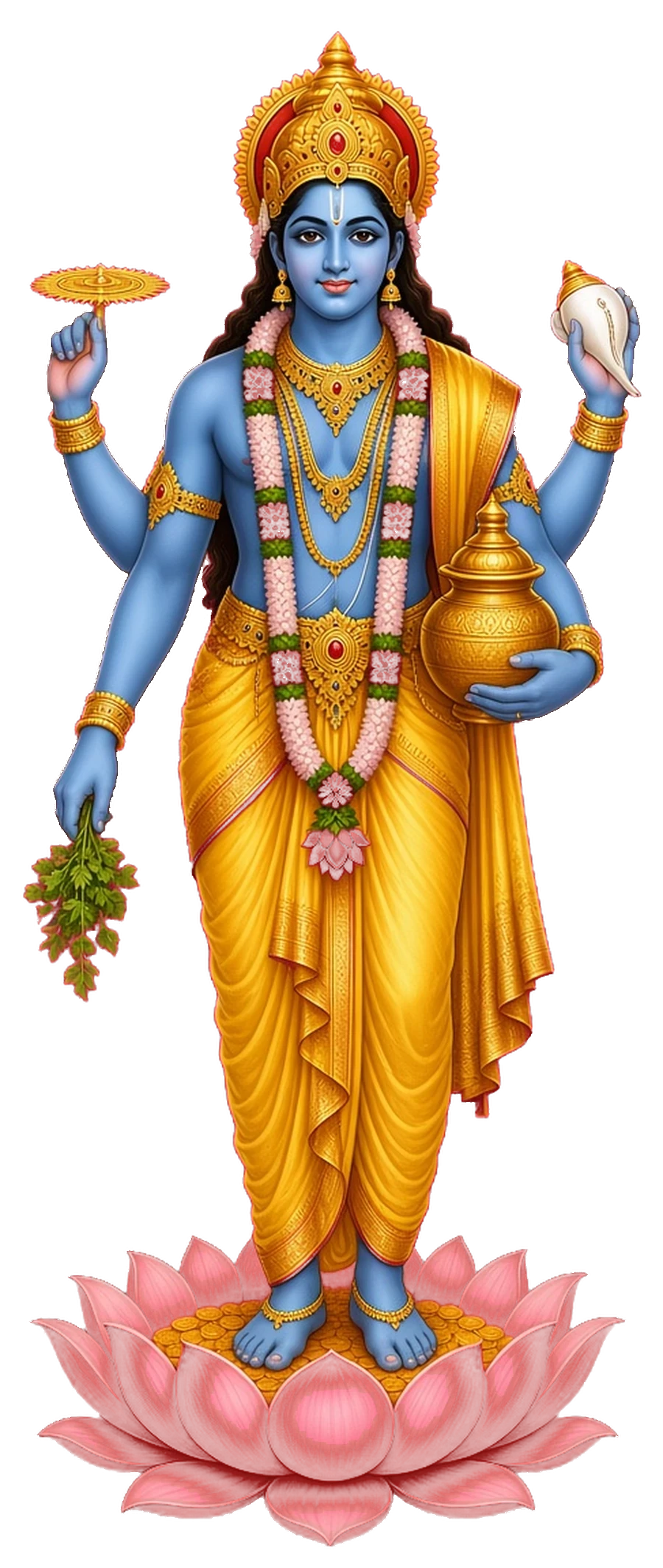
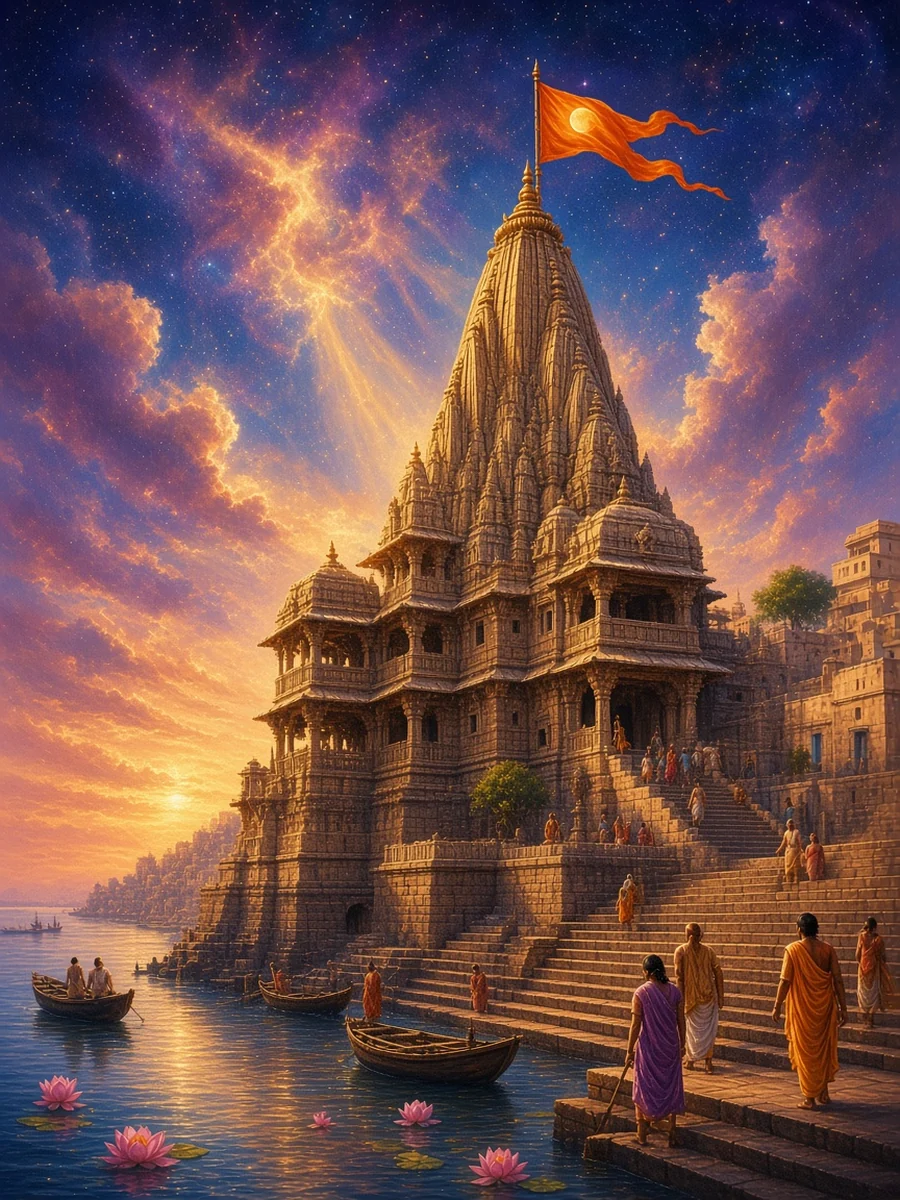
He stands in the inner shrine of the Jagat Mandir, the temple of the world: a black stone image about two and a quarter feet tall, with four arms, dressed and garlanded so fully that his eyes are hidden. He faces west, towards the sea, which the old books say swallowed Krishna's city. The Bhagavata Purana says the ocean spared one house, his own, and that he never left it.
Nityam sannihitas tatra bhagavan madhusudanah: the Lord Madhusudana is always present there (Bhagavata Purana 11.31.24, of Dwarka).
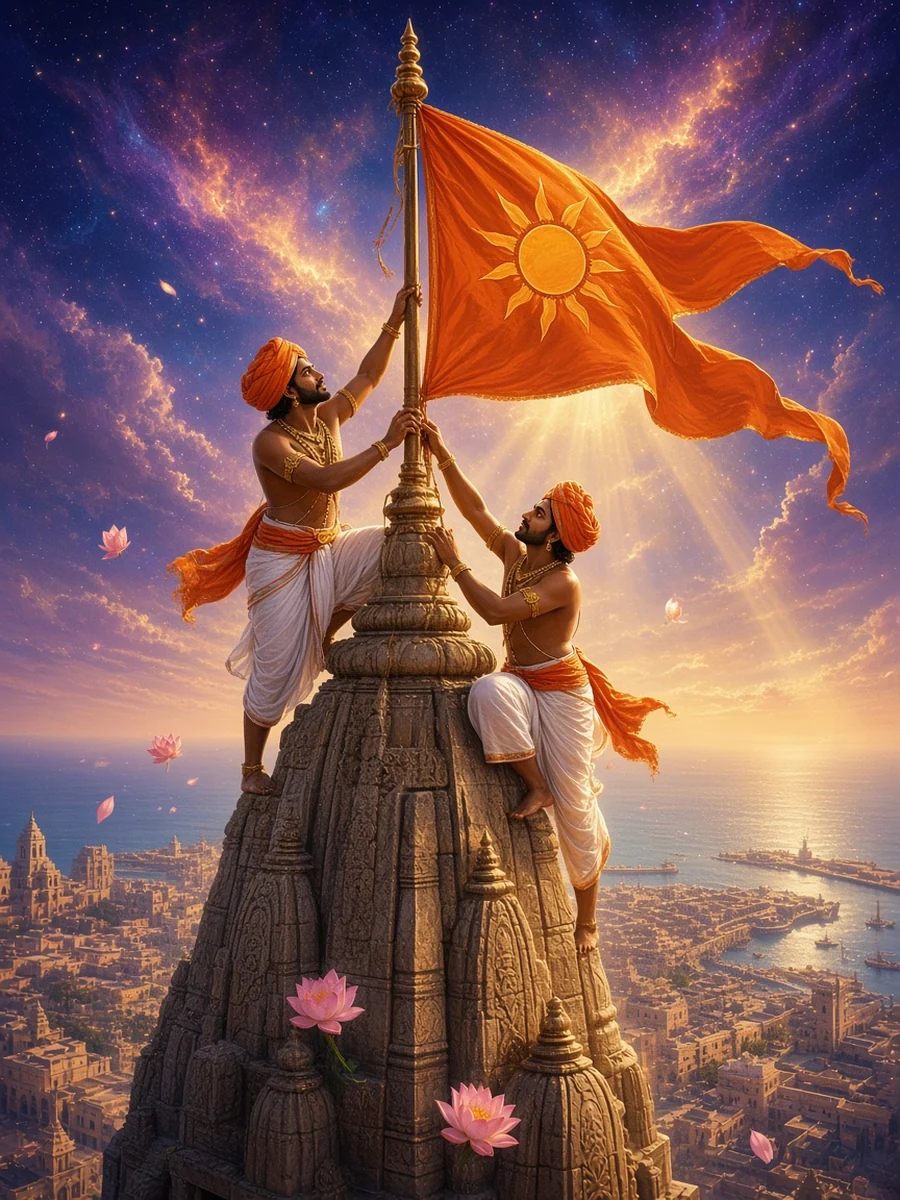
The temple rises five storeys on 72 pillars to a spire of 78 metres. Pilgrims come up 56 steps from the Gomti ghat through the Swarga Dwar, the gate of heaven, and leave by the Moksha Dwar, the gate of release. On the spire flies a flag of 52 yards with the sun and the moon on it, a sign, devotees say, that he will stay as long as they shine. It is changed five times a day. A family that has waited its turn, often for years, brings the new flag, offers it to the god, and a Brahmin climbs the spire to raise it.
His day runs in the round of the Vallabha temples, from the Mangla arti in the early morning to Shayan at night, with his meals, the bhog, in between. The Gugali Brahmins, Dwarka's hereditary priests, serve him. Dwarka is one of the four Char Dham at the corners of India and one of the seven cities that give release, and the Sharada Peeth, the western seat of Adi Shankara's order, is in the temple's own precinct.
Three stories here are his own: how his house survived the sea, how an old man from Dakor took him home in a cart, and how the singer Mira was lost in him. Krishna's life in Dwarka is told in other stories on this site: Sudama's flattened rice in The Rice Tied in a Cloth, the queens' room in The Sister at the Door, and the childless chief who prayed in this very temple for a son in The Boy Who Came in a Cradle.