As the Dakor-mahatmya tells it
Dakor, Kheda, Gujarat · the temple's own book · 3 min read
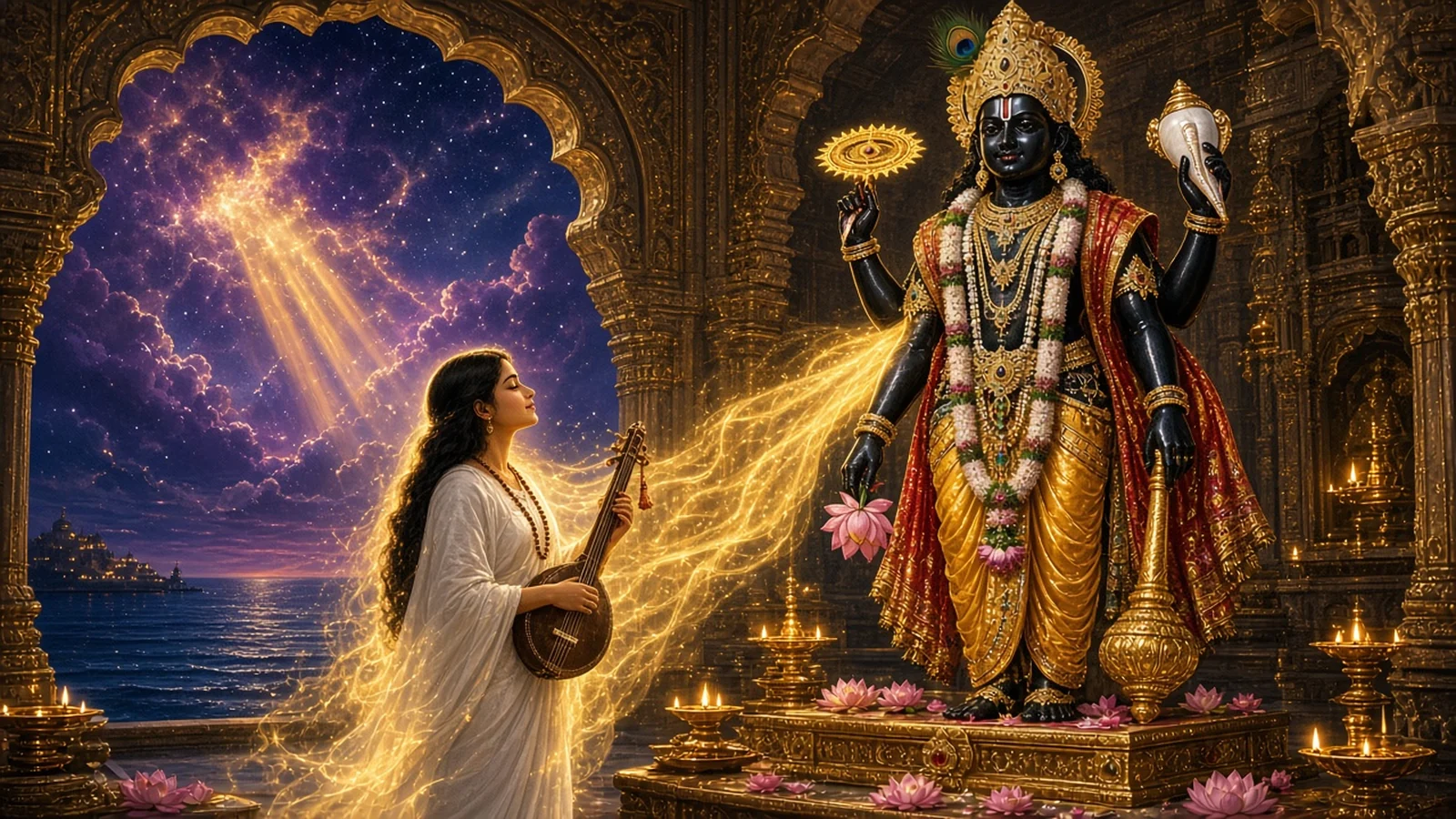
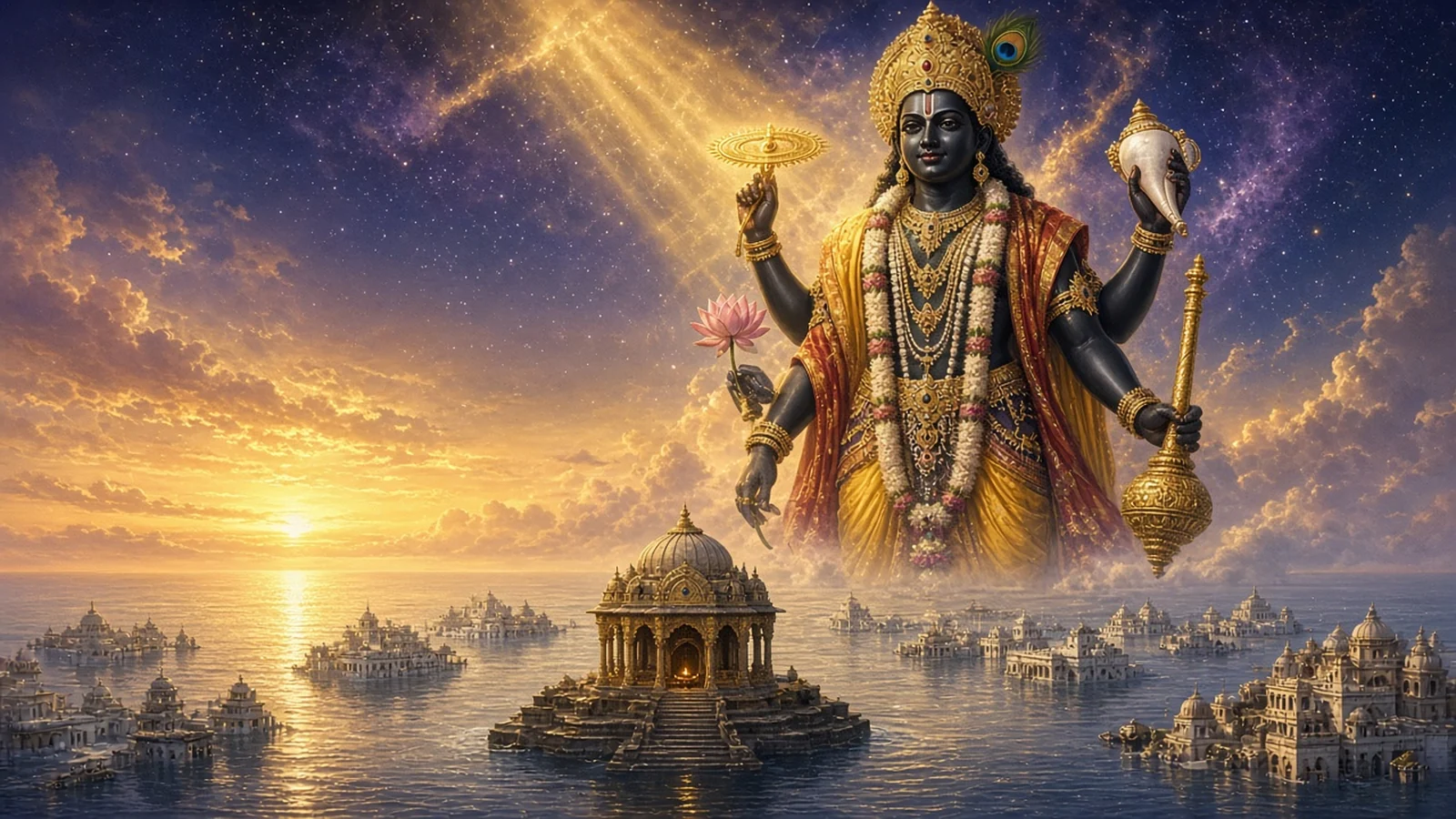
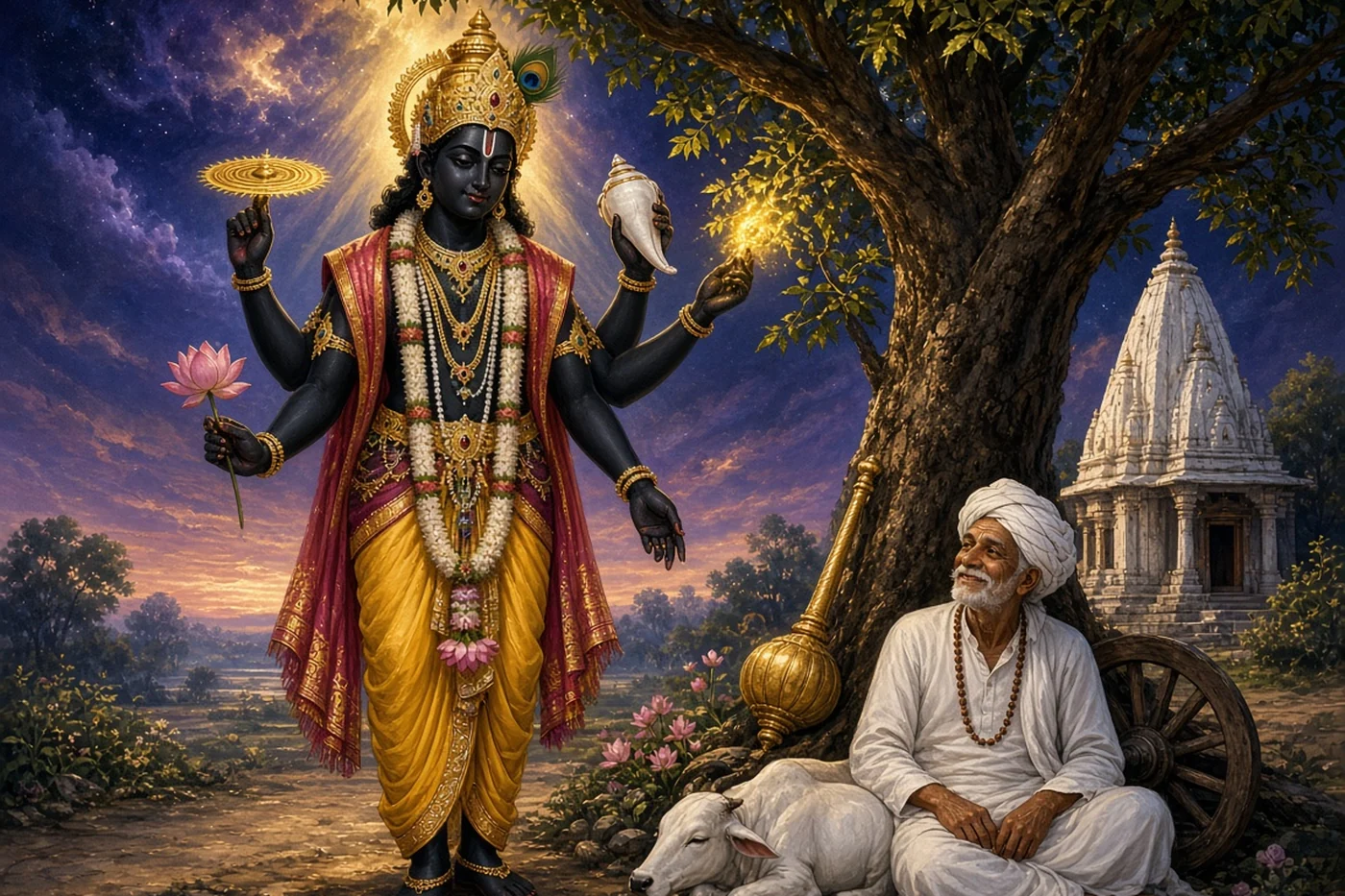
Bodana was a Rajput of Dakor, a village in the middle of Gujarat, and the god he loved lived far away to the west, in the temple at Dwarka by the sea. Year after year he went there to worship him, and year after year he came home again.
When he was eighty years old the god spoke to him. "You have come to me long enough," he said. "Now I will come and live with you at Dakor."
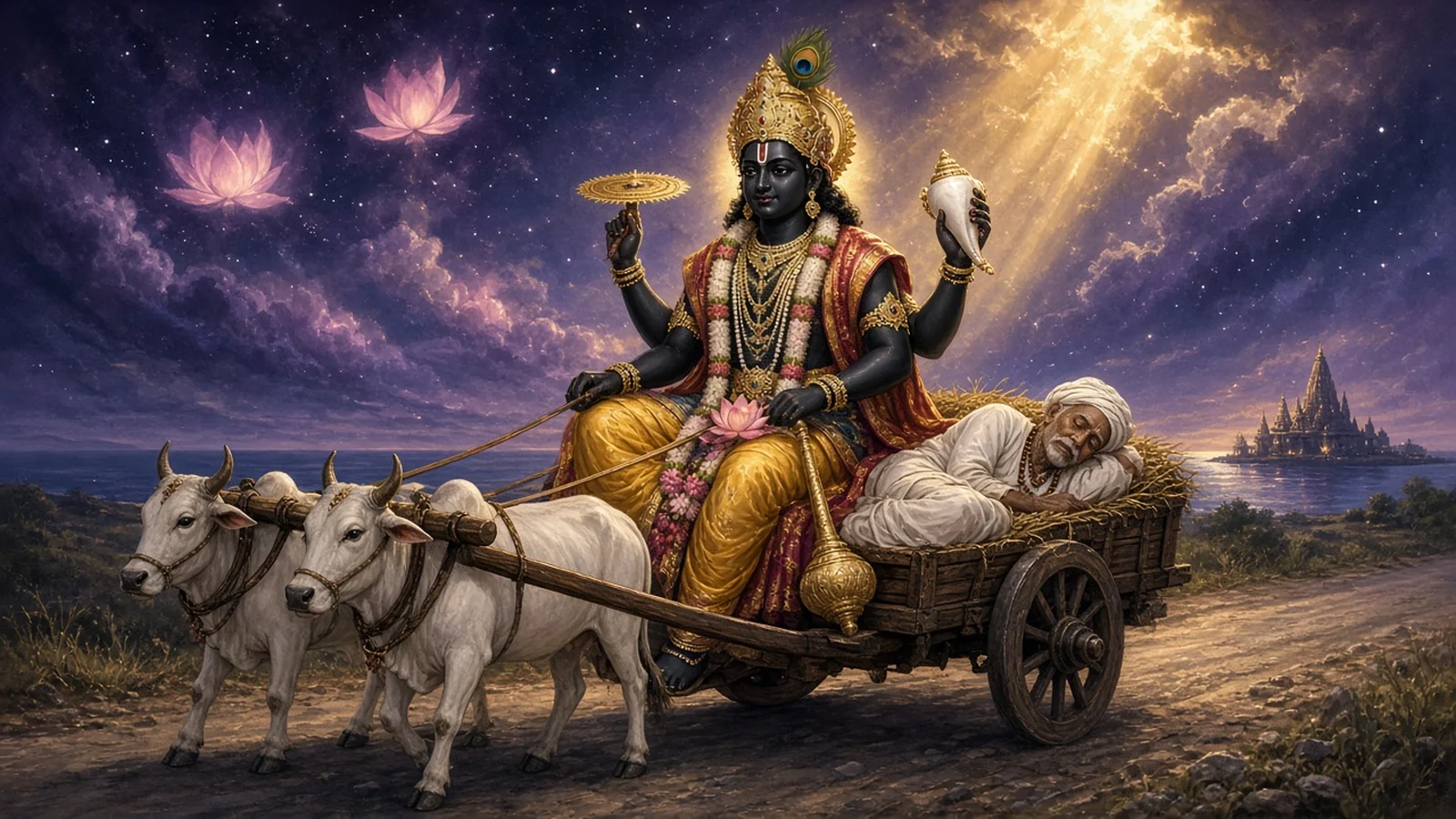
Bodana had nothing to carry a god in. He borrowed a cart and a pair of bullocks from a cowherd, and to feed the animals on the long road he sold the pots and pans from his own kitchen. Then he set out for Dwarka once more.
The Gugali Brahmins, the priests of the temple, knew him well, and they did not like the look of an old man arriving with an empty cart. That night they put extra locks on the doors of the shrine.
Locks made no difference. In the dark the image of the god, Ranchhod, slipped out of the shrine by himself and came to Bodana. "Get up," he said. "We are going."
So they went. And because Bodana was very old and very tired, it was the god who took the reins and drove the bullocks east through the night, while his devotee slept in the back of the cart.
In the morning the priests opened the shrine and found it empty. They did not need to ask who had done it. They set off after the cart, and they followed it all the way to Dakor.
Bodana saw them coming. He took the image down to the Gomati, the pond at the edge of the village, and hid it under the water.
"Go and meet them," the god told him. "Take them a gift of curds."
Bodana did as he was told. But the priests had not come for curds. One of them threw a lance into the water, and it struck the hidden image, and blood spread through the pond and showed them where their god lay. They waded in to lift him out, and could not move him at all.
Then they were ashamed. They sat down by the water and fasted, and would not go home.
Bodana's wife, Ganga, went to the god herself. "Have mercy on them," she said, "and I will make you laddus."
"They do not want me," said the god. "They want gold. Let them have my weight in gold."
He ate her laddus. Then a scale was brought. On one side they set the god, and on the other Ganga laid all the gold she had in the world, which was one gold ring from her nose. The scale went down on Ganga's side. The little nose-ring weighed more than the god.
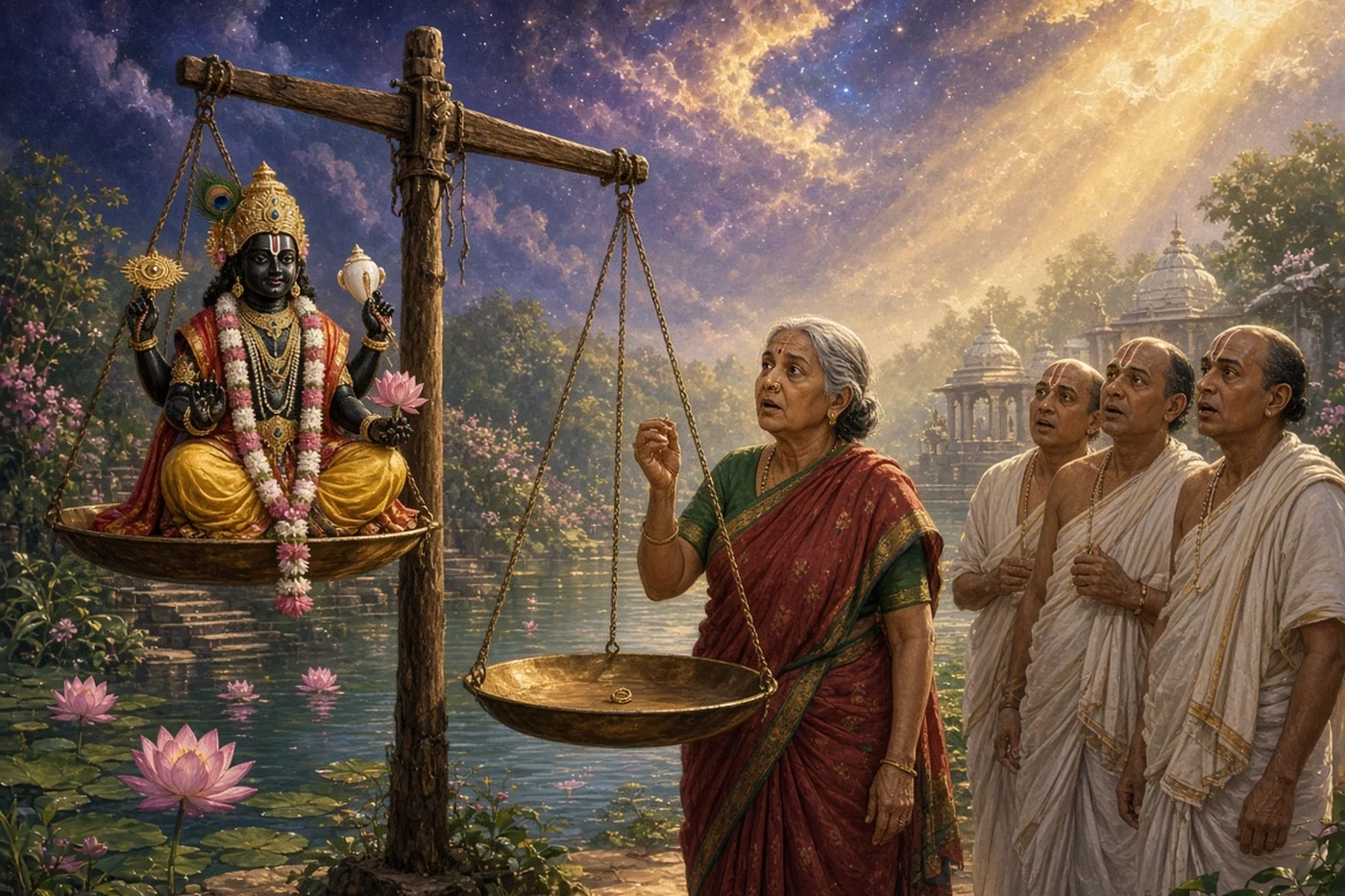
The priests had agreed to the bargain. They took the ring and went back to Dwarka, and there, the book says, the god gave them another image in his place.
As the pilgrims of Dakor tell it
Dakor and the Nadiad road · the full-moon walk · 2 min read
The pilgrims who walk to Dakor tell it with more of the road in it. Vijayanand Bodana, they say, walked to Dwarka every six months, and each time he carried tulsi leaves for the god. He kept it up until he was seventy-two and his legs would not take him so far any more.
Then the god came to him in a dream. "You need not come to me again," he said. "I will come to you. Bring a bullock cart next time."
Bodana brought the cart. The priests locked the sanctum for the night, and at midnight the god broke the doors open, woke the old man and climbed in beside him. On the way home they rested near the temple of Bileshwar Mahadev on the road from Nadiad, and the god touched a branch of a neem tree there. The neem is bitter, but that one branch, the pilgrims say, has tasted sweet ever since.
The Gugali priests came after them, and in the chase Bodana was killed. His widow, Gangabai, was left alone with the god hidden in the Gomati lake and the priests at her door, and they would not go home without him.
The god told her what to do: offer them his weight in gold. She was poor and had only a gold nose-ring. On the bank of the lake she put it on the scale, with her tulsi leaves, and the god on the other side grew light, as light as the ring. The place where they weighed him is still called the Tula ka sthan, the place of the scale.
To the priests he made a promise. "In six months," he said, "you will find an image just like me in the stepwell at Dwarka." They could not wait so long. They dug early and found an image like him, but smaller, and that is the image they worship at Dwarka now.
The god stayed at Dakor as Ranchhodrai, and on every full moon people walk there to see him, as Bodana once walked to Dwarka.