Devalok ← All gods
Also calledNatesaAdavallanKuttanSabhapatiAmbalavananLord of the Dance

In short

Who is Nataraja?
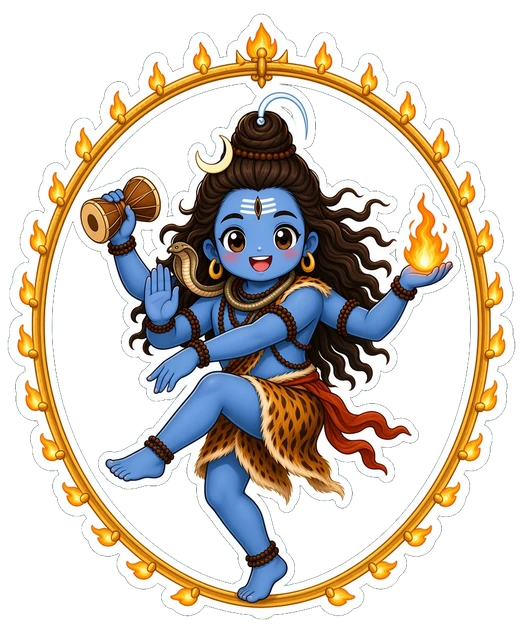
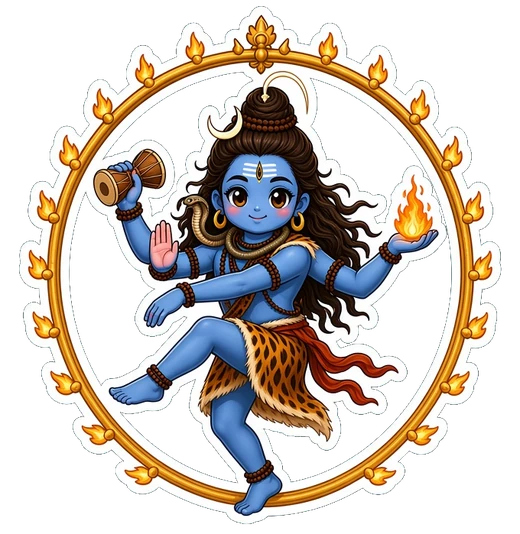
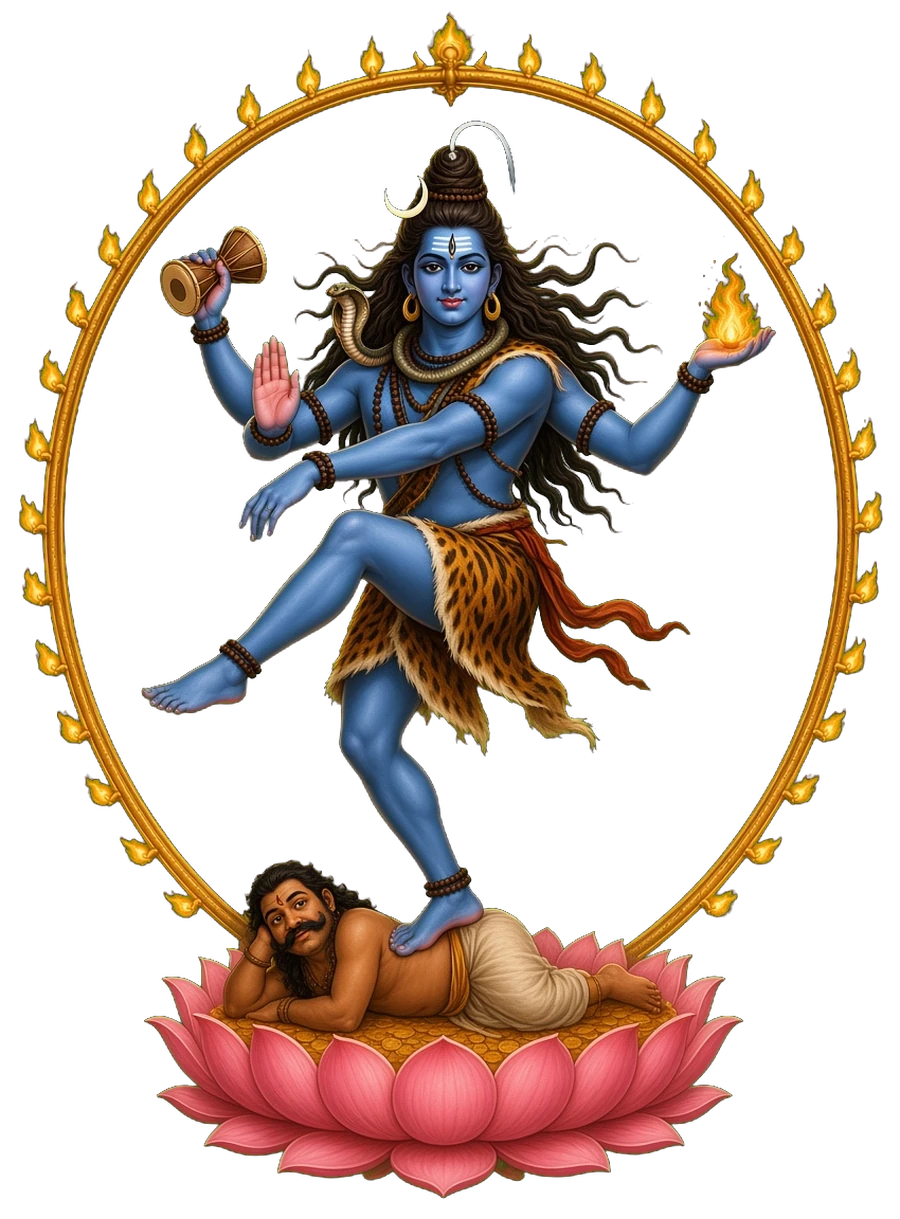
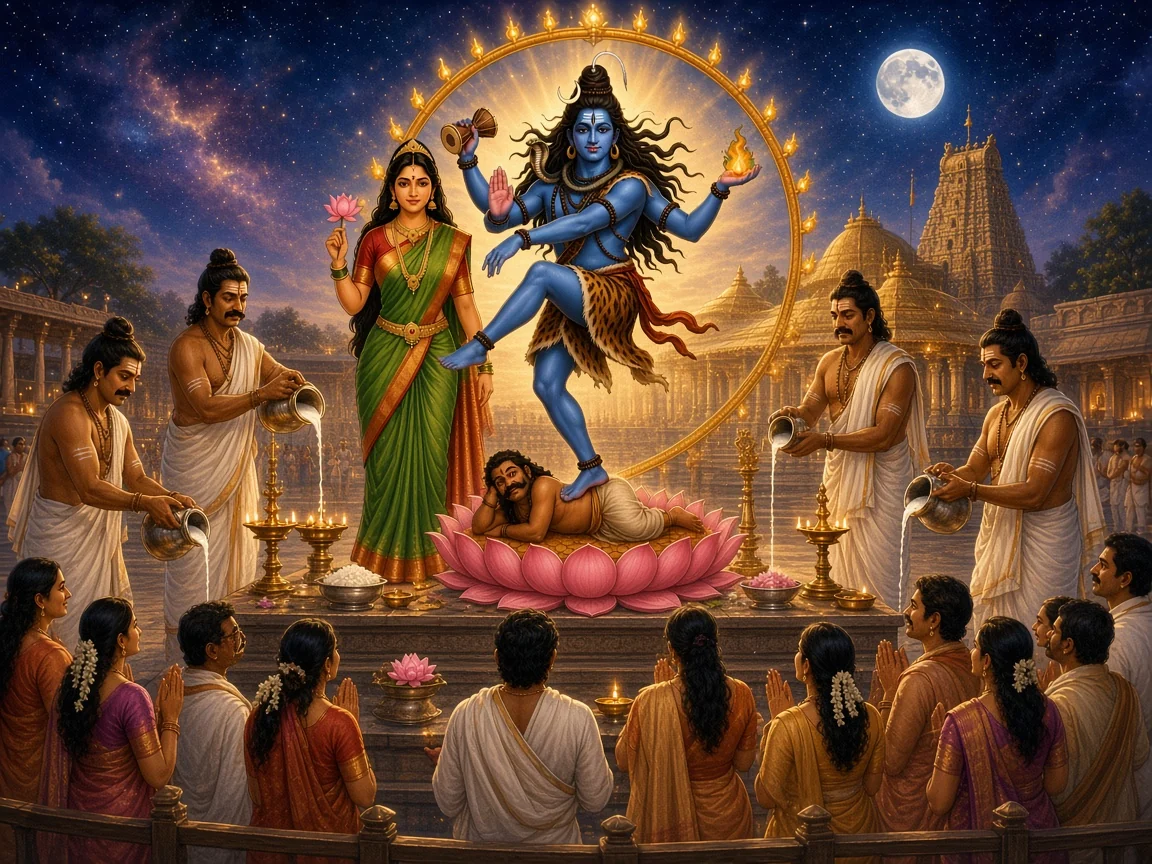
Shiva as the king of dancers. He is shown dancing inside a ring of fire, a drum in one hand and fire in another, with one foot on a dwarf and the other raised.
Who is the dwarf under his foot?
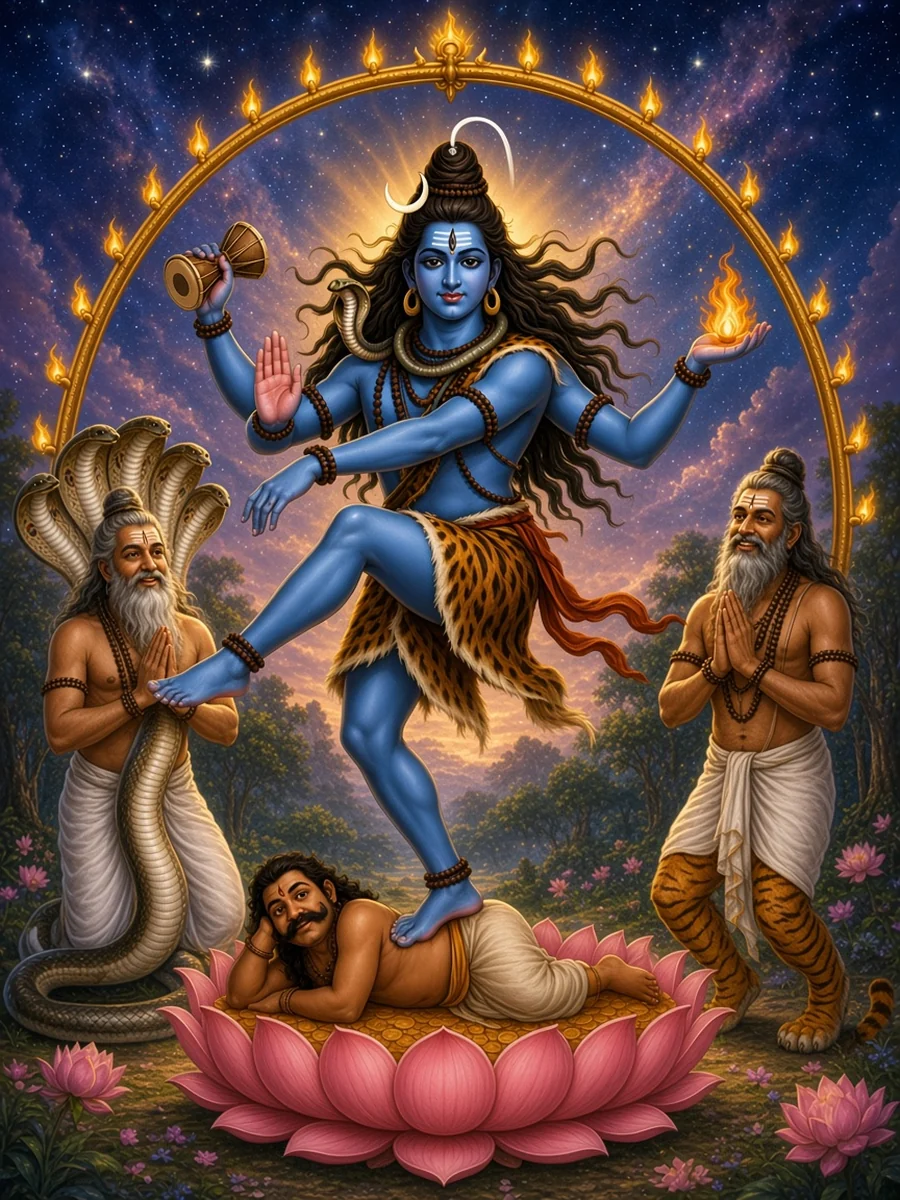
Apasmara, forgetting, whom the Tamil texts call Muyalaka. The sages of a proud forest sent him against Shiva, and Shiva holds him down without killing him.
Where does Nataraja dance?
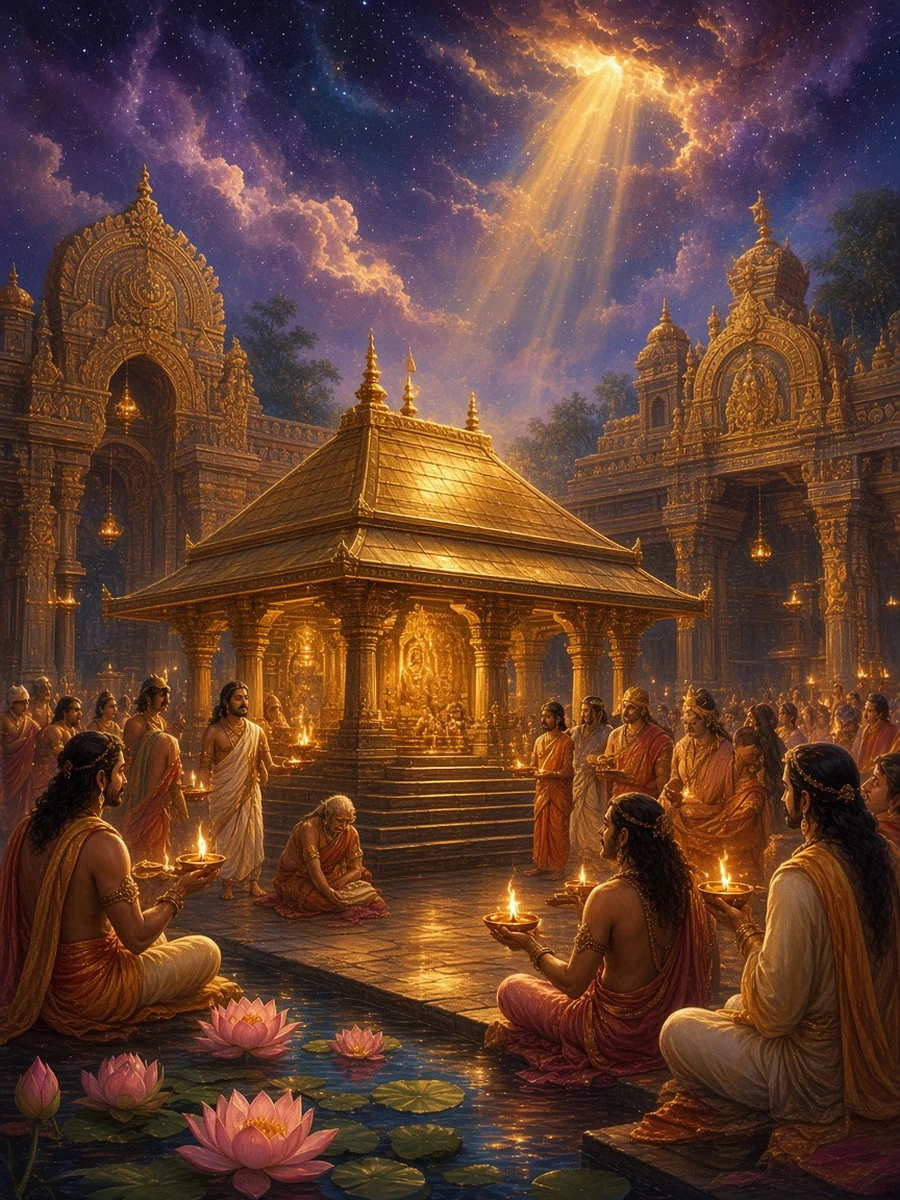
In the golden hall of Chidambaram, once the Thillai forest in Tamil Nadu, where the temple says he first danced the dance of bliss for two sages.
What do his hands mean?
The Tamil Shaiva texts read them as the work of God. Creation comes from the drum, protection from the raised hand, destruction from the fire, and the lifted foot gives release.

Artwork ›

The golden hall of Chidambaram Danced first for Patanjali and Vyaghrapada

For kids

Damaru drop
Damaru drop
Dance like the cosmos is watching

At a glance

TraditionShaiva
FormShiva dancing

four-armed, inside a ring of flame, his matted locks flying out on both sides

HandsA drum in the upper right

fire in the upper left, the lower right raised to say do not fear, the lower left pointing to the lifted foot

Who Nataraja is

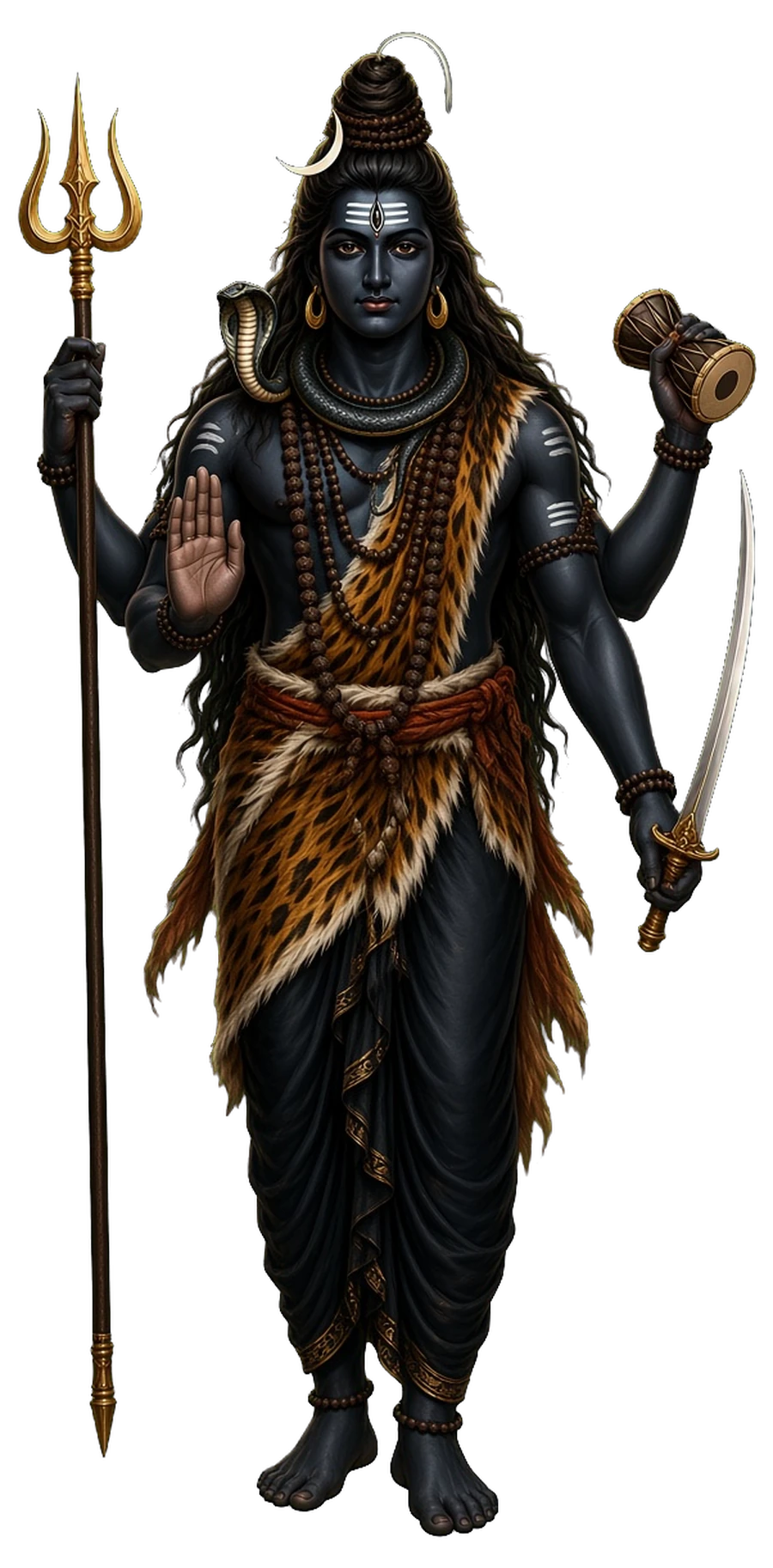
Nataraja is Shiva dancing. The name means the king of dancers, and in Tamil he is Adavallan, the one who is good at dancing, or simply Kuttan, the dancer. Most people know him from a single image: a four-armed figure inside a ring of fire, his locks flying, one foot on a dwarf and the other lifted across his body, his face perfectly calm.

The dance is the dance of bliss, the ananda tandava. The Tamil Shaiva teachers read every part of the image as one of God's five works. The drum in his upper right hand beats out creation. The lower right hand, raised, says do not be afraid, and protects. The fire in his upper left hand is destruction. The foot planted on the dwarf gives the tired soul a place to rest, and the lifted foot, at which his fourth hand points, gives release. The dwarf is Apasmara, forgetting, and he is held down, not killed.

His home is Chidambaram, once the Thillai forest of mangroves near the sea. There, the temple says, he danced for two sages who had waited years to see it, the tiger-footed Vyaghrapada and Patanjali, who was the serpent Shesha born on earth. The sages of the Daruka forest had first tried to destroy him with a tiger, a serpent and the dwarf, and he wore the first two and danced on the third. The poet saint Karaikkal Ammaiyar gave up her beauty to sing at his feet on the burning ground. His contest with Kali, which he won by lifting his foot to the sky, is told in The Dance in the Banyan Forest.

Para chidambara natam hridi bhaja: worship in your heart the supreme dancer of Chidambaram.

That is the refrain of the Nataraja stotra that the tradition gives to Patanjali. The bronze dancers of the Chola country, cast by the lost-wax method, are among the best-loved works of Indian art, and one stands today outside the laboratory of CERN in Geneva.
Before the Puranas

The Vedic roots of Nataraja

The Vedas do not know Shiva as a dancer. Rudra, the Vedic god from whom Shiva grew, is an archer, a healer and the father of the storm gods in the hymns of the Rigveda, and none of those hymns shows him dancing. The dancing god arrives later, and the image of Nataraja that stands in Shaiva temples today was made in the Tamil country in the first millennium of our era.

The first text to make Shiva the master of dance is the Natya Shastra, the old treatise on drama. Its fourth chapter tells how Bharata's company performed the Burning of Tripura before Shiva in the Himalaya, and how Shiva gave his own dance steps, the karanas and angaharas, to his attendant Tandu, so that the dance came to be called tandava. It also says that Shiva danced in the evening after Daksha's sacrifice was broken, and that Parvati answered him with a gentle dance. The hundred and eight karanas are carved on the east tower at Chidambaram.

In stone, the dancing Shiva appears by about the sixth century in the caves of Badami, Ellora and Elephanta. In poetry, one of the earliest voices is Karaikkal Ammaiyar's, who sang him dancing among the ghosts in the burning ground of Tiruvalangadu. The hymns of Appar, Sambandar and Manikkavachakar sing the dancer of Thillai's hall. The archaeologist Sharada Srinivasan argues that the bronze form was a Pallava creation of the seventh to ninth centuries; it reached its classic shape in Chola bronzes of about the tenth. The Chola king Parantaka I, who ruled from about 907 to 955, is praised in a copper plate for covering the hall at Chidambaram with gold.

The meanings were written down later still. Tamil Shaiva Siddhanta works from the twelfth century on, among them the Unmai Vilakkam, explain the drum, the fire, the raised hand and the lifted foot. The temple's own story of the sages is told in the Sanskrit Chidambara Mahatmya and in its Tamil version, the Koyil Puranam of Umapati Shivacharya. The historian Hermann Kulke reads the Mahatmya as bringing northern sages into a Tamil temple's story; that is his reading. In 1918 Ananda Coomaraswamy's essay The Dance of Shiva carried the image to readers in the West.

See how the Vedic gods became the Puranic ones →

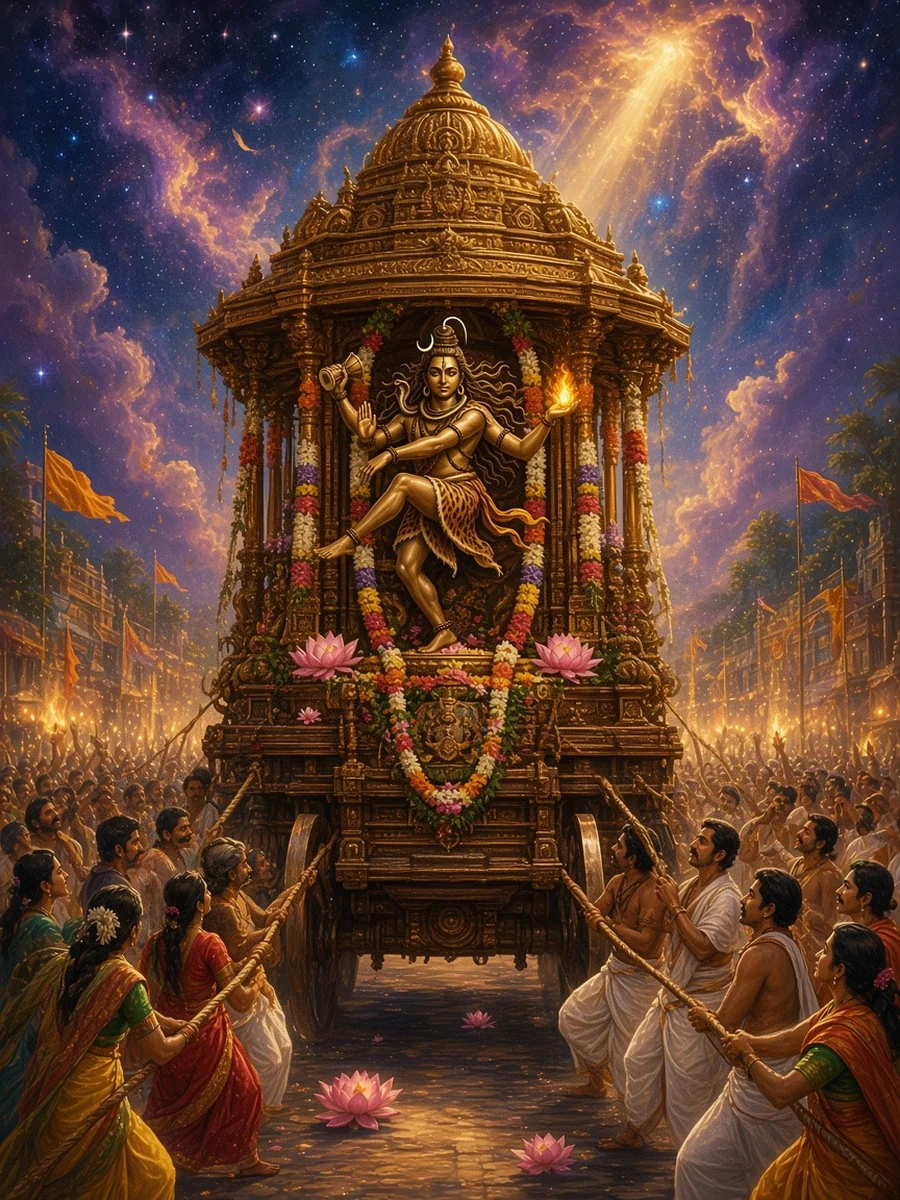
Festivals of Nataraja

Related gods