The horses, the jackals and the flood
The Tiruvilaiyadal Puranam's life of Manikkavacakar, as told in Tamil and in English · 3 min read
Vadavurar came from Tiruvadavur, a village on the Vaigai not far from Madurai, and he was so clever that the Pandya king Arimarthana made him chief minister while he was still young. One day the grooms came to the king with bad news.
"The horses are old, lord, and half of them are sick."
At the same time word came that fine horses had landed on the east coast. The king had the treasury loaded on camels and sent his minister to buy them. Vadavurar bowed to the god in the Madurai temple and set out.
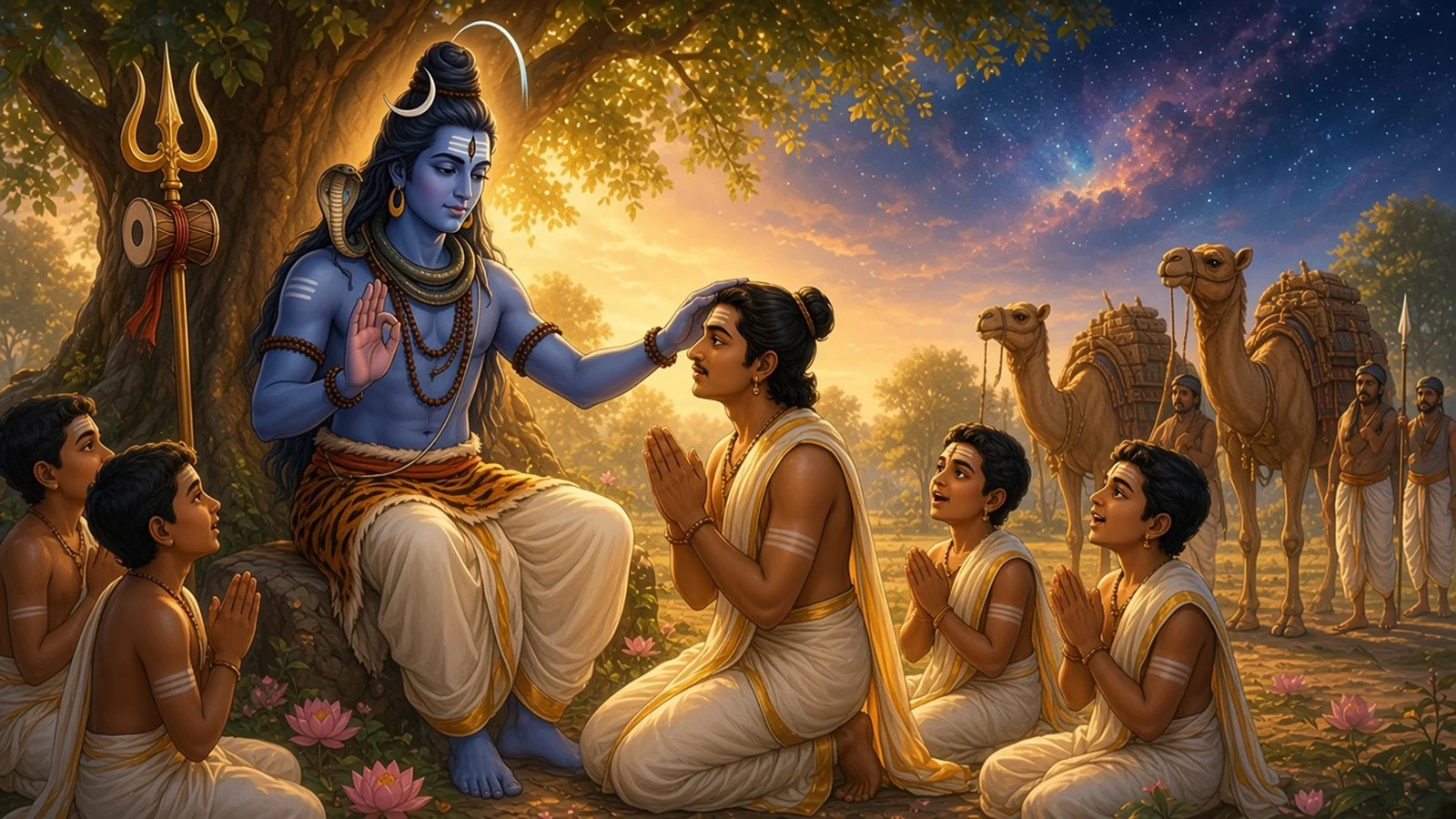
At Tirupperunturai he heard the name of Shiva being sung. Under a kuruntha tree sat a teacher among his pupils, one hand raised with the thumb and finger joined. The minister looked at him and could not move on. The teacher looked back, touched him, gave him the five syllables, and named him Manikkavacakar, the one whose words are gems.
"The king's money?" the minister asked.
"Spend it on Shiva's work."
He spent it, all of it, and the escort rode home to tell the king. A letter came back in a fury. The teacher only said, "Do not be afraid. Tell him the horses will come on the day of Avani Mulam," and gave him a gem to take to the king. The king was pleased with the gem and waited.
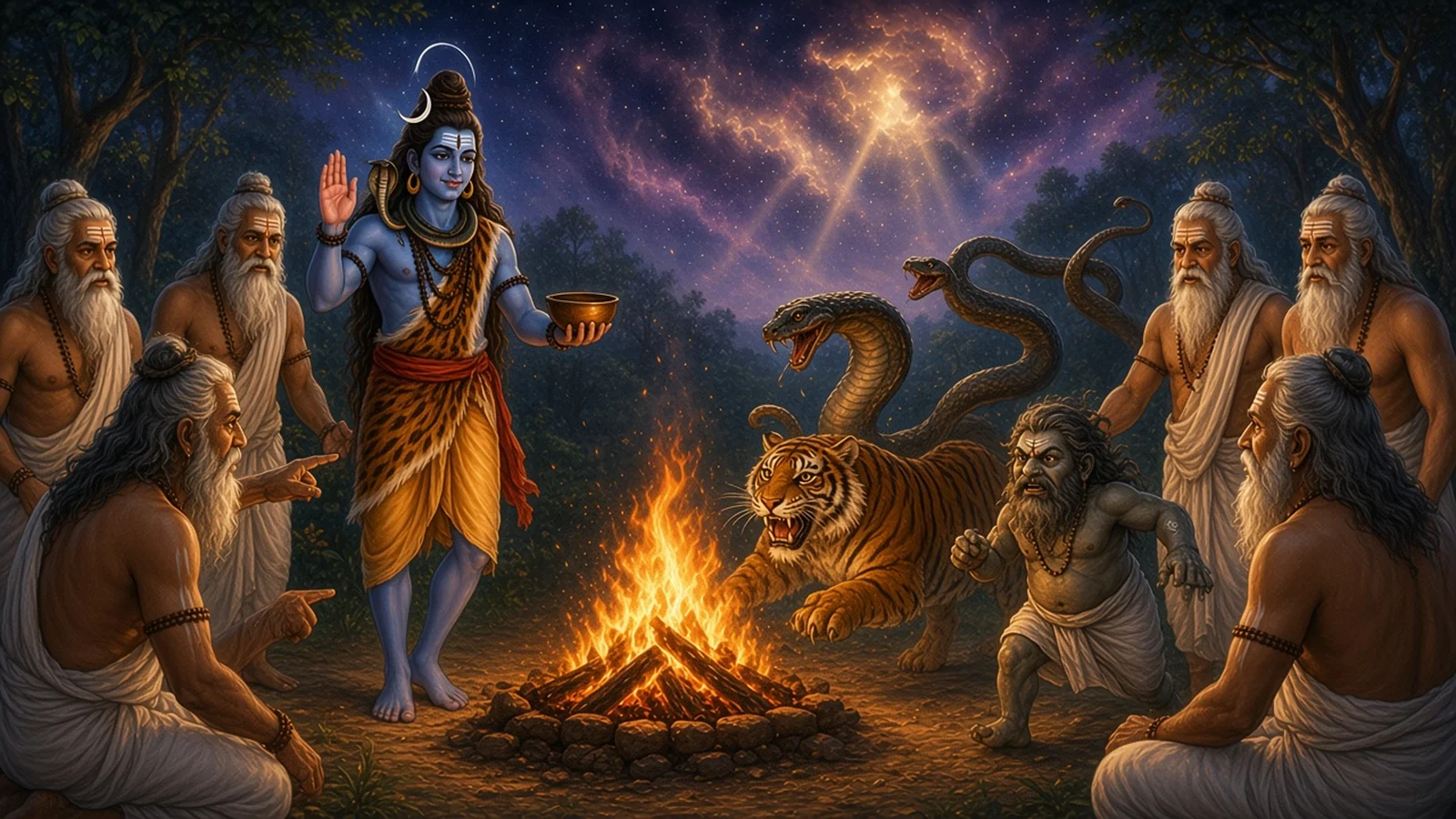
On Avani Mulam Shiva went into the forest and turned the jackals into horses. The gods came along as grooms, and Shiva rode at their head as the dealer, so that the dust of them hid the sky over Madurai. The king's horse masters had never seen better. The king gave the dealer a silk cloth, and the dealer took it on the end of his cane, which made the king frown.
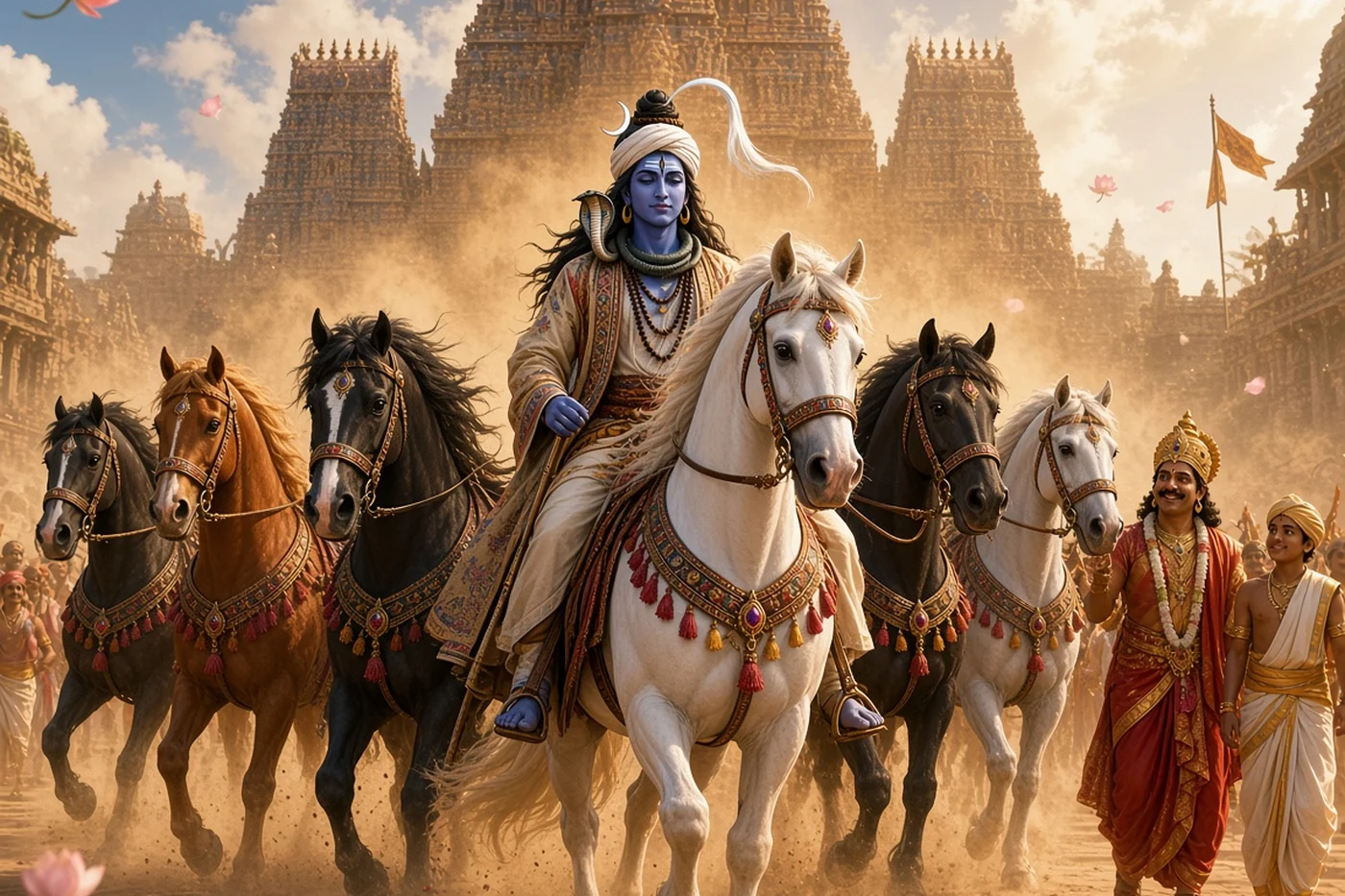
"It is the custom of their country," the minister said quickly.
That night the horses turned back into jackals. They howled about the weight they had carried and the whips and the gram, killed the king's old horses and ate them, and ran out of the stables over walls and through drains. In the morning the king had his minister stood in the sun with a stone on his head until the money was paid back.
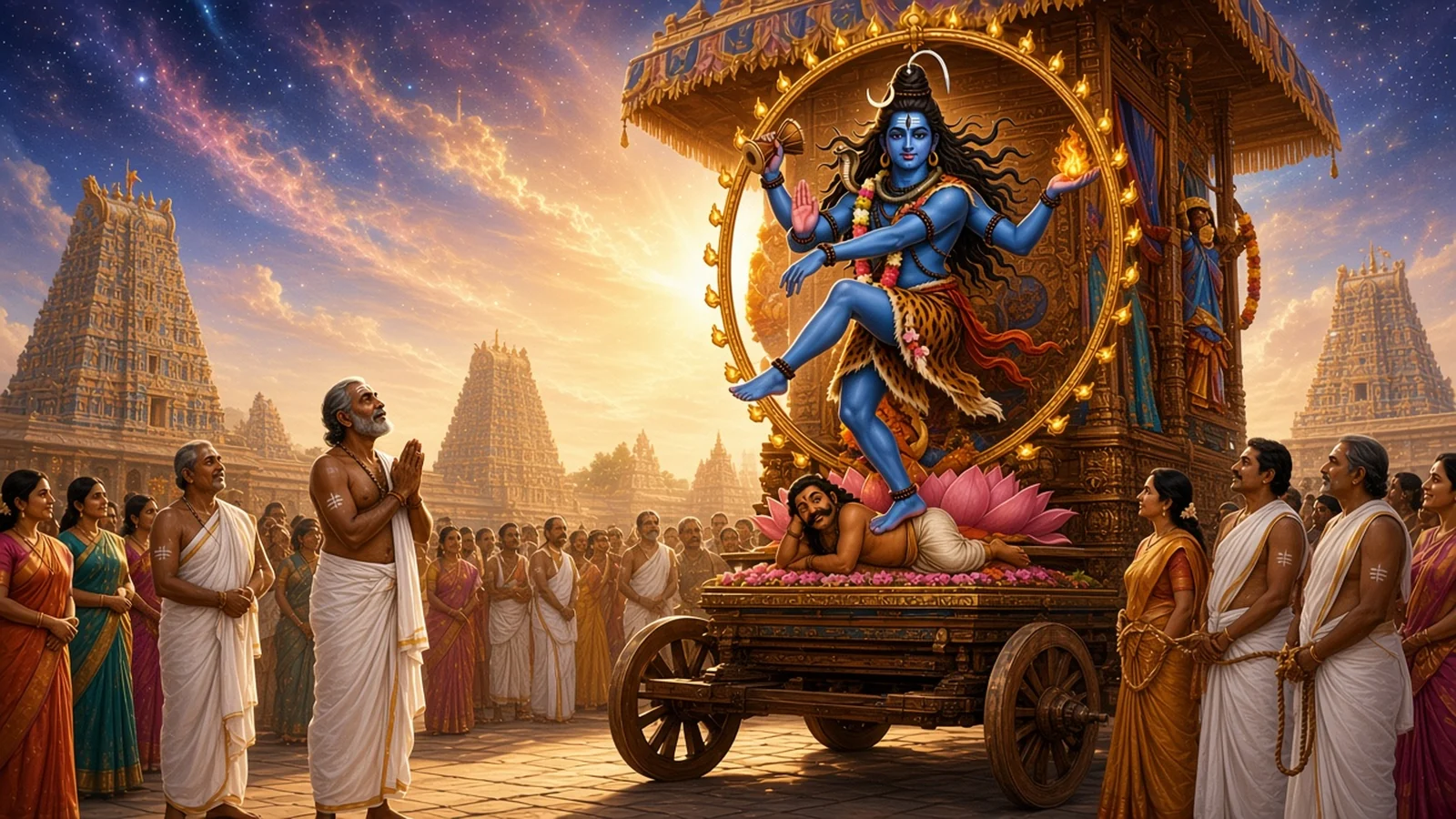
Then Shiva looked at the Vaigai, and the river rose. It came over the banks and up to people's waists and shoulders, and the guards ran off to save their own families. The king threw flowers and gold and silk into the water, and when that did nothing he had the bank divided into lengths and gave every household a length to raise.
There was one old woman, Vandi, who made rice cakes for a living and had nobody to send. A labourer came down the road calling, "Who will hire me?" She hired him and paid him in cakes.
"Mother," he said when he had eaten, "my hunger is gone."
He carried a little earth, sat down, ate again, danced, sang, and went to sleep with his basket under his head. Hers was the only length still open, and the guards fetched the king. The king struck the labourer across the back with his cane. The labourer tipped one basket into the breach and vanished, and the flood went down.
The blow fell on everyone. It fell on the king and the queen, on the guards, on every creature there was. A voice said that all of it had been done to show the world the greatness of his servant Manikkavacakar. The king begged his pardon and offered him the kingdom, and the minister said that to serve at Shiva's feet was worth as much.
He went back to Tirupperunturai and then wandered from shrine to shrine. At Tiruvannamalai in Margazhi he watched the girls of the town wake each other before dawn and go down to bathe, in the ten days before Thiruvathirai, and he made the Tiruvempavai in their voices. Then he came at last to Chidambaram.
The book the Lord wrote
Chidambaram's account, in the shaivam.org life, Venkataramiah and Sivananda · 1 min read
When Manikkavacakar first came to Chidambaram he bathed in the temple tank and went in to the golden hall, and when he saw the dance he sang ten verses that keep coming back to one cry: I have seen him in Tillai. After that he lived in a hermitage east of the town. Every day he went to the hall and watched the dance, and the songs kept coming.
One day a Brahmin arrived who said he came from the Pandya country. He had heard the songs, he said, and he wanted them all.
"Recite them from the beginning," he asked, "and I will write."
So Manikkavacakar recited and the Brahmin wrote, day after day, until there was nothing left. Then the Brahmin put down his stylus.
"You sang a Pavai with that mouth. Now sing me a Kovai."
A Kovai is a long poem of love, and Manikkavacakar made one with the Lord of Tillai as its hero. The Brahmin wrote that down too. Then he was gone, and nobody had seen him leave.
In the morning the priests of the temple found a bundle of palm leaves lying on the step of the five syllables before the hall. At the end of it was written: "As Manikkavacakar said it, in the hand of the Lord of the Tiruchitrambalam."
They took the leaves to the hermitage. "What do these verses mean?" they asked him.
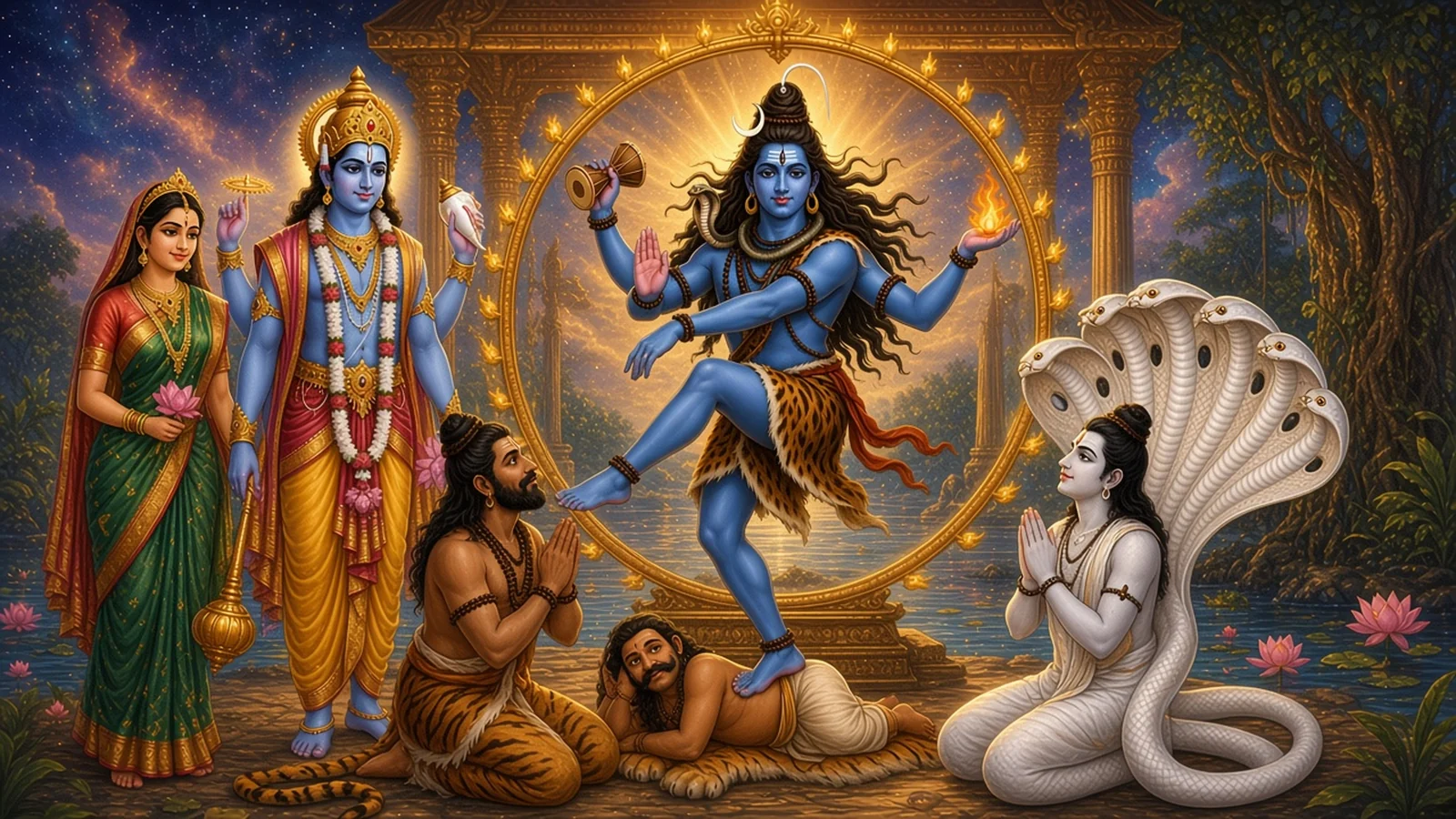
He walked with them into the golden hall and pointed to the dancer.
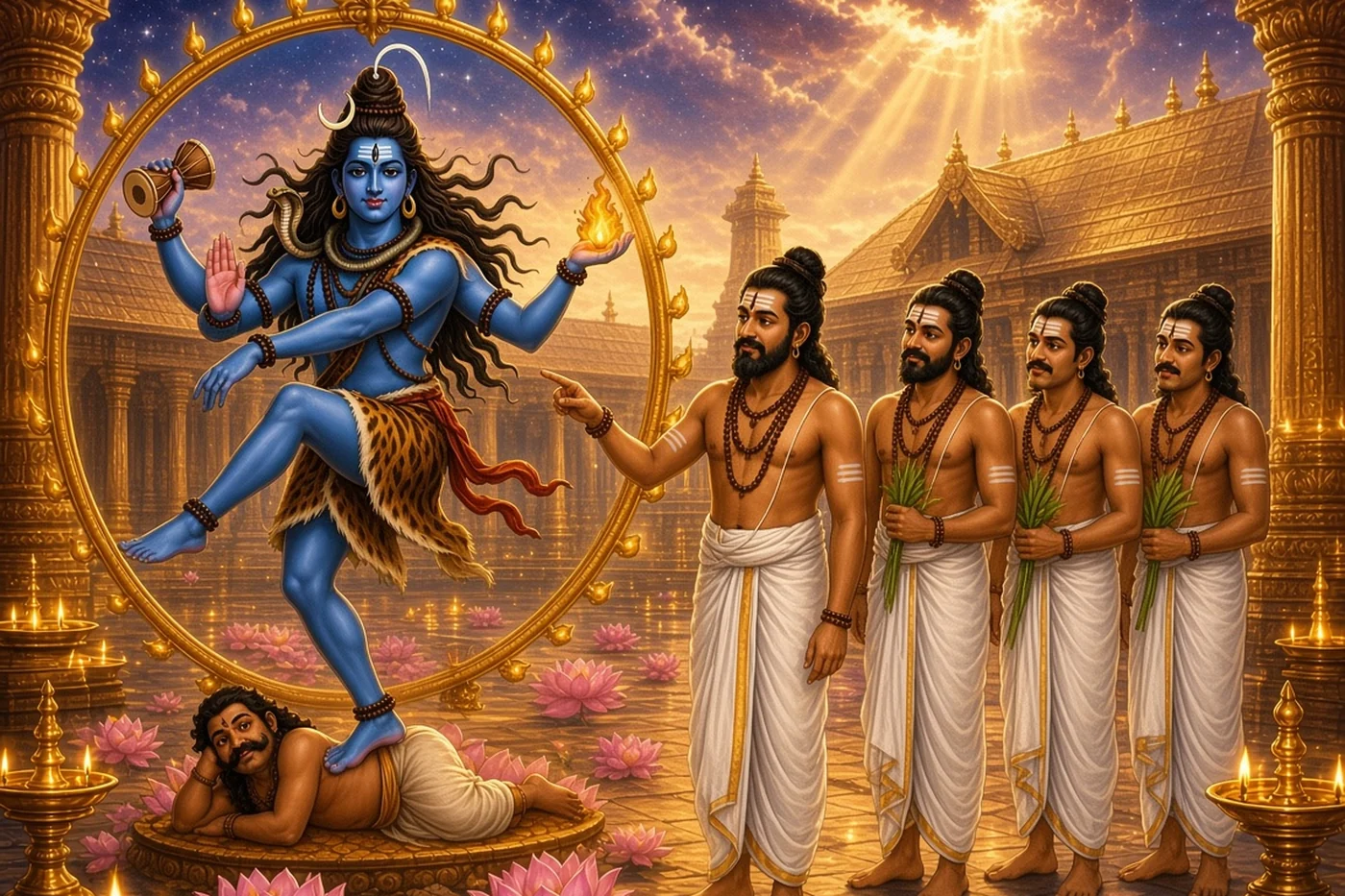
"That is what they mean."
And as they watched he was no longer there. He had gone into the dancer's feet. Sivananda's life adds that he was thirty-two years old.