Chidambaram's telling
The lives of the Tirumurai poets, the Tillai temple history, and a discourse at Chennai · 3 min read
Sendanar kept the accounts for Pattinathar, a merchant of the Chola country rich enough to need a head clerk over his treasury. Then the merchant turned his back on all of it and became an ascetic.
"Open the treasury," he told his clerk, "and let the poor carry it away."
Sendanar opened it, and the wealth went out of the doors to the poor. When the king heard, he was furious, because he had wanted that money for his own treasury. Sendanar was put in chains. Pattinathar prayed, and the chains broke, and the clerk walked out of the prison a free man and a poor one.
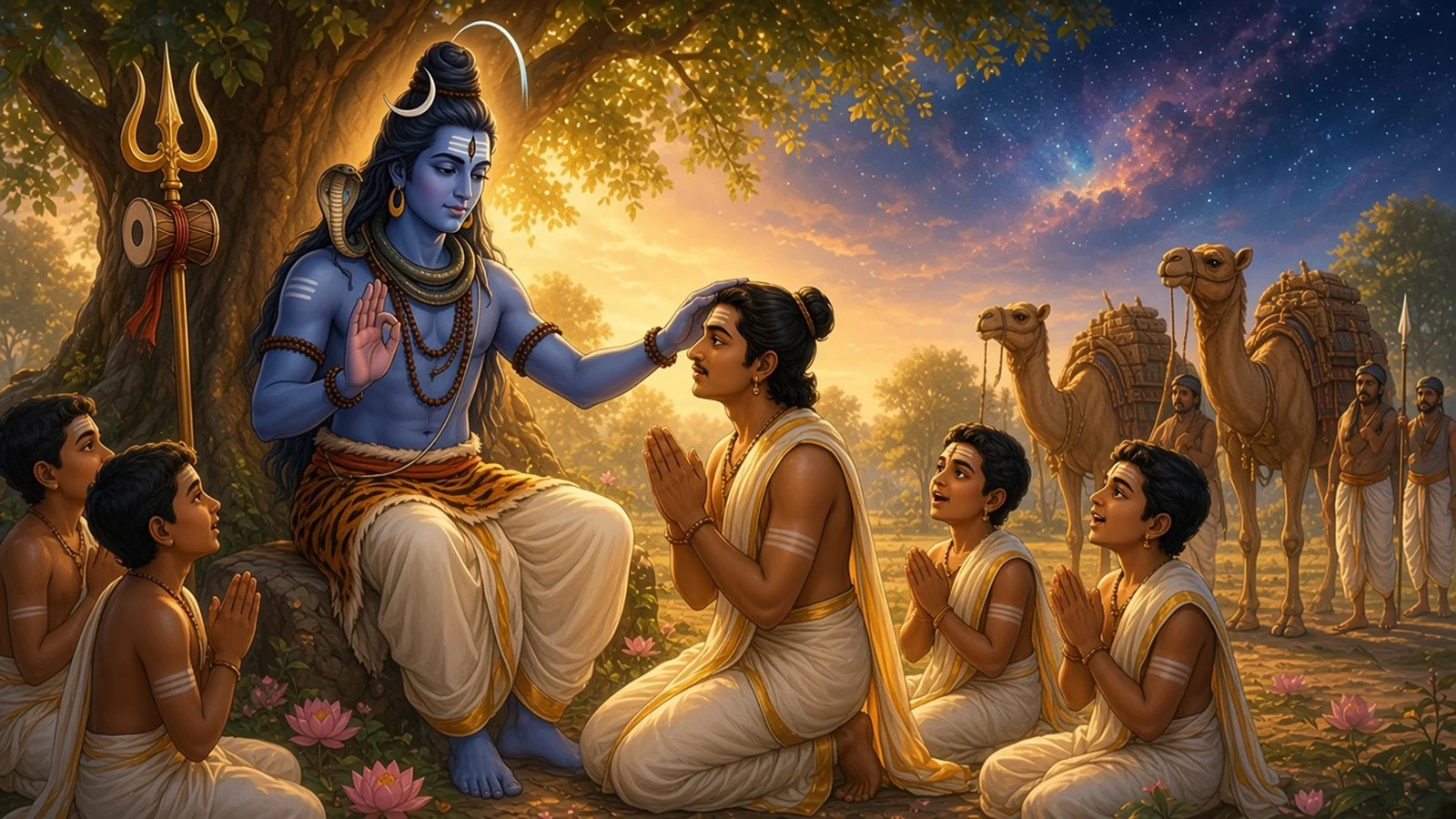
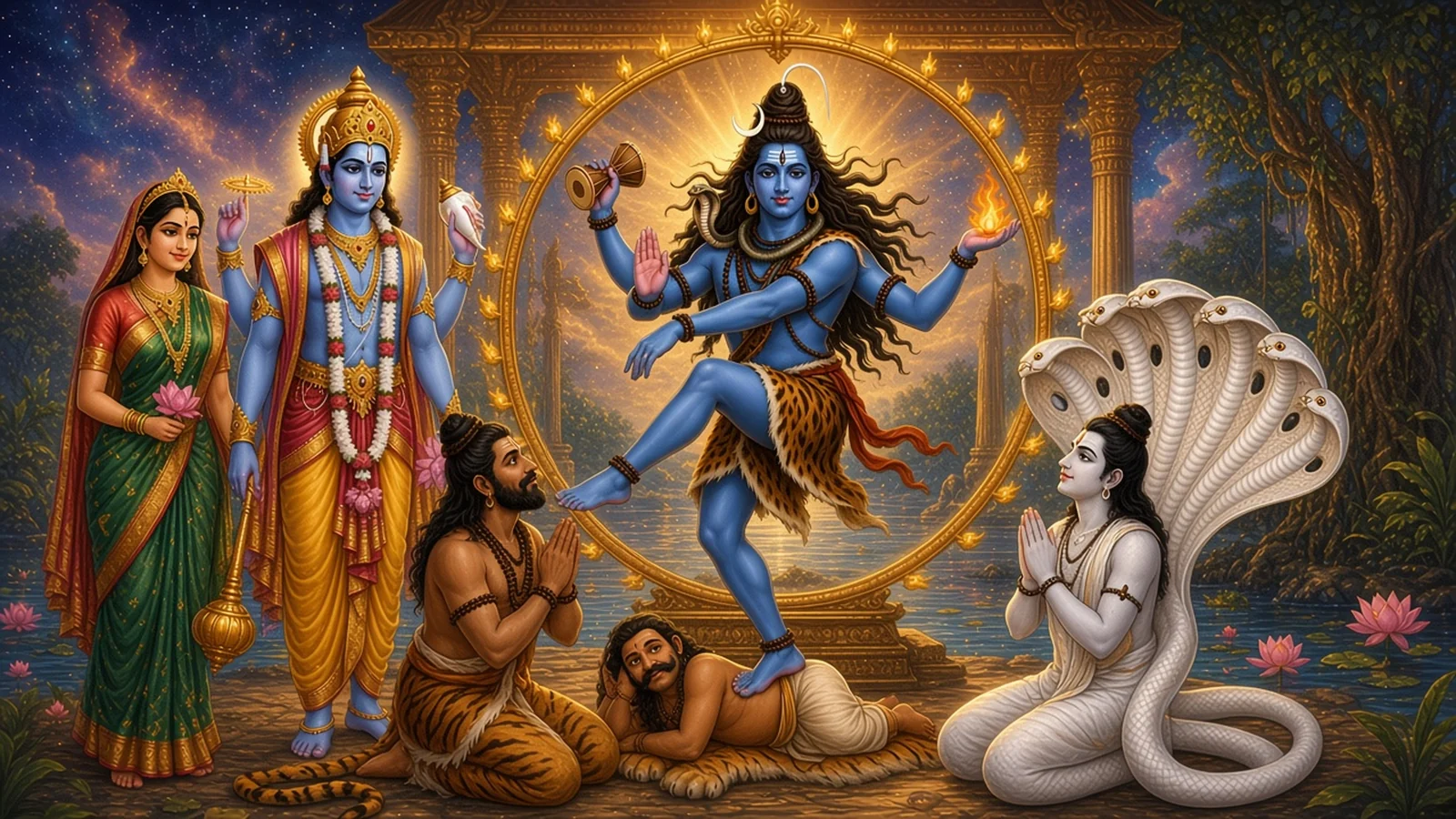
He went with his wife and children to Chidambaram, where the god dances in the golden hall. There he cut wood. Every morning he went out with an axe, every afternoon he sold what he had cut in the streets, and with what it fetched he kept one rule. Before his own family ate, one devotee of Shiva was fed at his door.
One day nobody bought his wood. He came home with the bundle still on his head and found nothing in the house but a handful of rice broken into bits. That day the devotee who came to the door was an old man.
Sendanar would not send him off hungry. He boiled the broken grains into a thick porridge, a kali, and set it before him.
"It is all we have," he said. "Eat."
The old man ate some of it, slowly, and then looked up. "May I take the rest with me?"
"Take it all."
The guest spread out a cloth, gathered the porridge into it, and went off towards the temple. Sendanar did not see what came next. The old man walked in through the gates, scattering porridge as he went, and passed into the sanctum, and was not seen again.
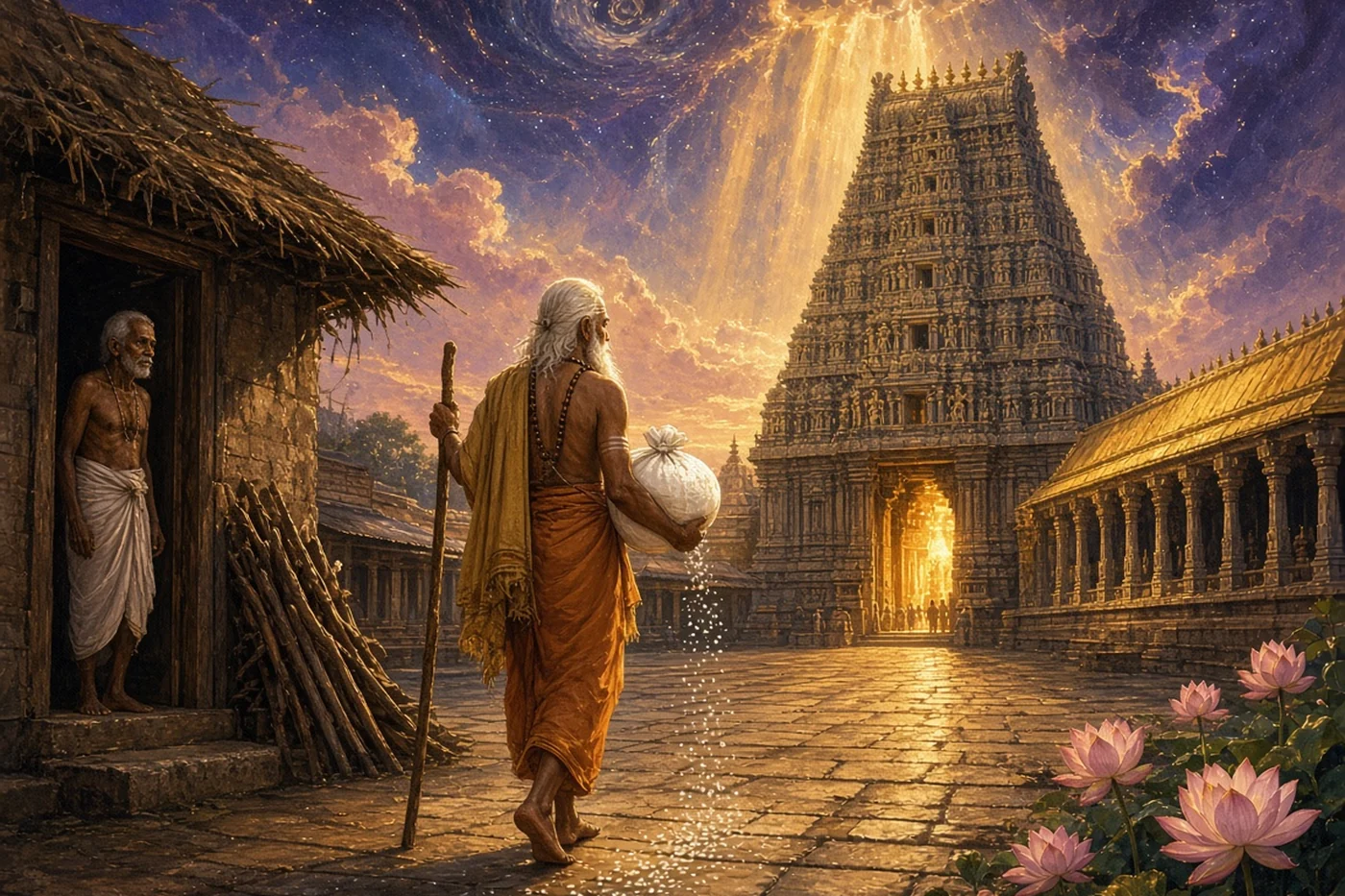
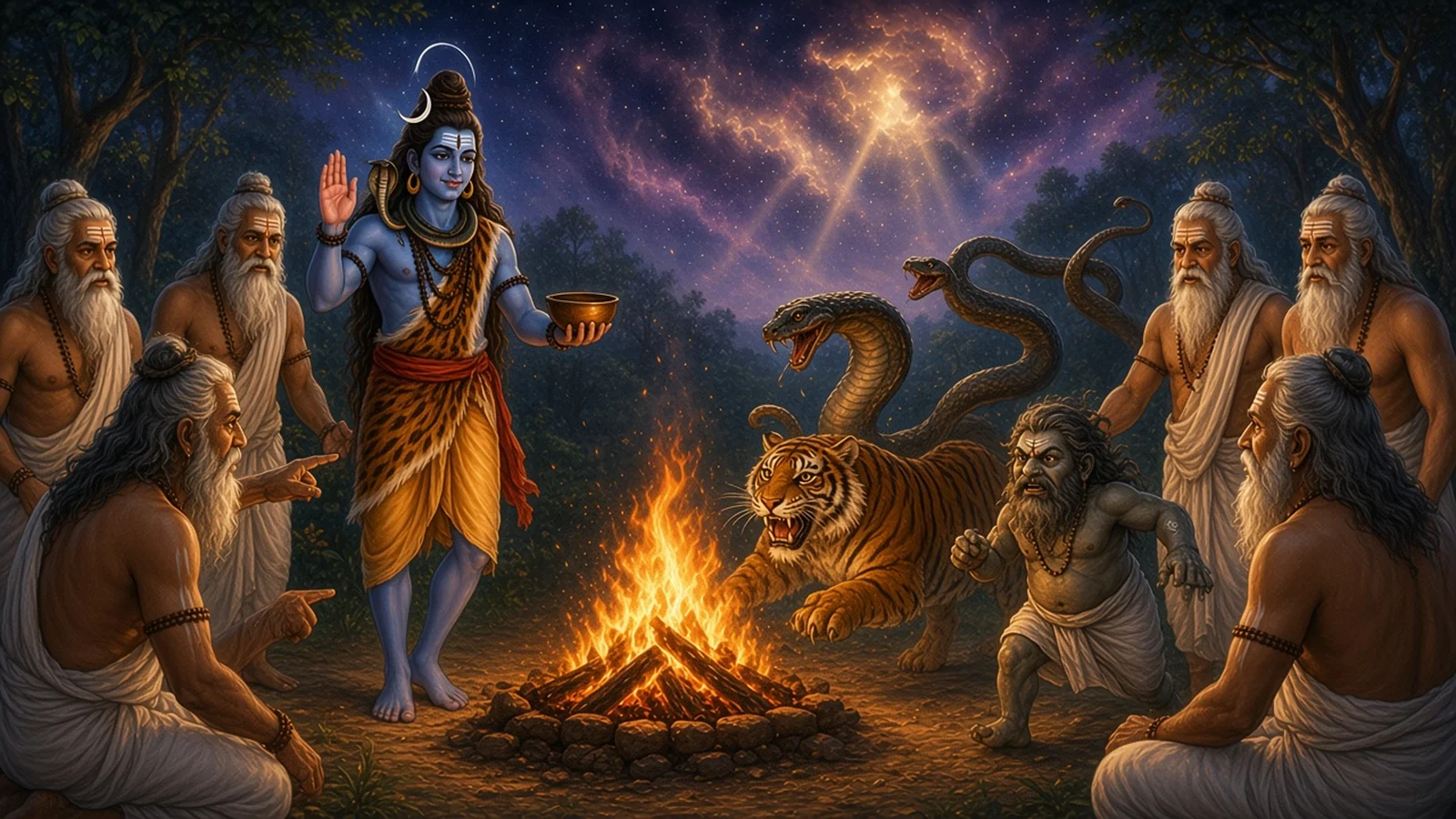
The next day was Arudra. When the priests came in, they stopped in the doorway. There was porridge scattered through the temple, and traces of it clung to the god himself.
"Who has been in here?" they asked each other. Nobody had.
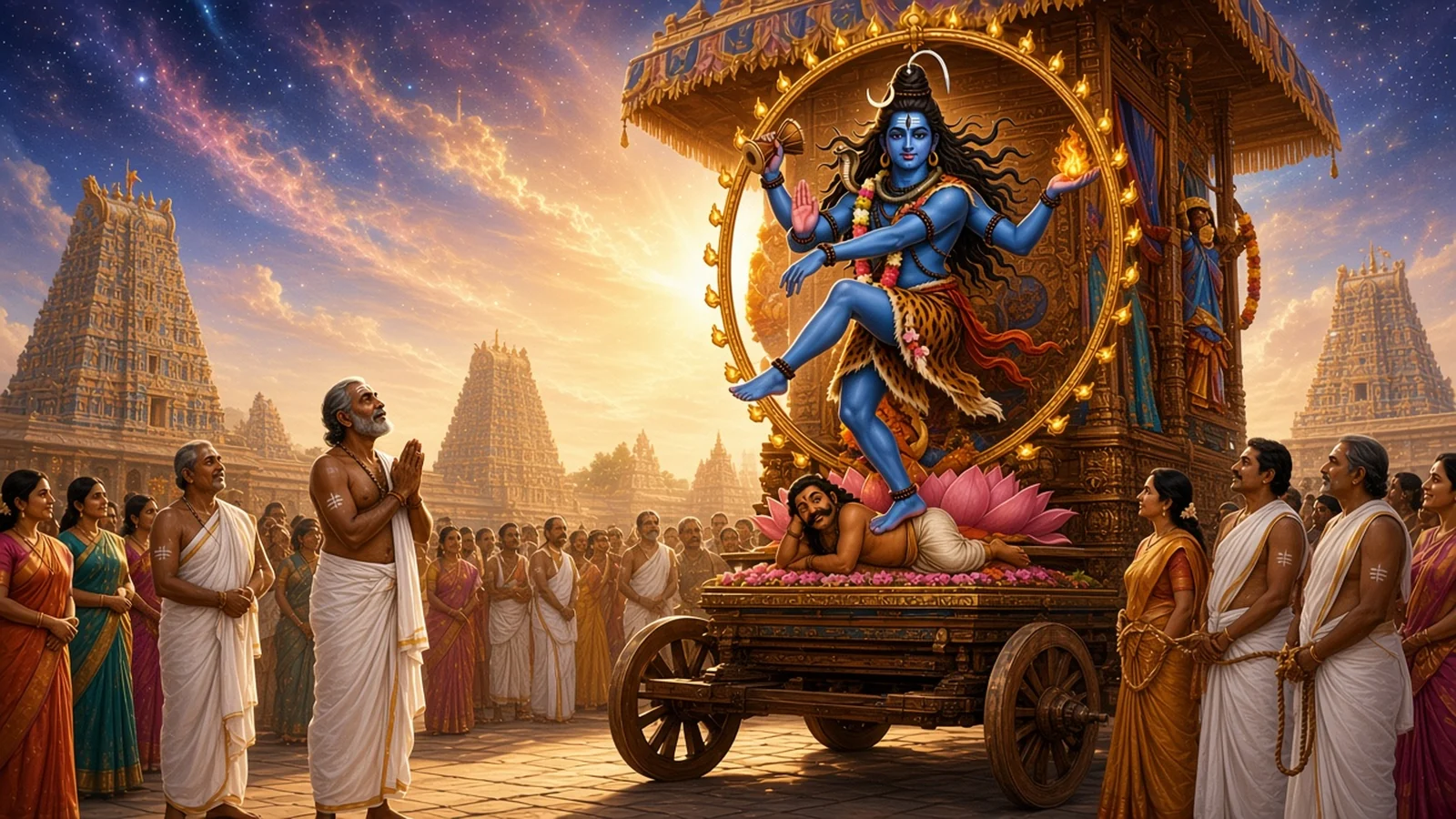
Later that morning the god was carried out and set on the great car, and the crowd took hold of the ropes and pulled. The car did not move. They pulled harder, and the wheels stood where they were, not an inch gained. Then a voice was heard over the square.
"This car will not go until Sendanar sings."
The priests went looking through the streets, and at last they found the woodcutter and brought him to the car.
"Sing," they told him. "The Lord is waiting for you."
He stood before the god and began. He did not ask the car to move. He asked that Tillai should last, and the devotees in it, and the Lord of the hall, for many years and many years again. His verses were thirteen, and each one came back to the same words, pallandu, many years.
As he sang the car began to roll. One telling says it moved with no one pulling at all, and went on until it reached its shed.
That is why, on Arudra, the god at Chidambaram is given kali.
The rain on Tiruvadirai
A telling in DT Next, Chennai, by a writer who lectures on spirituality · 2 min read
In this telling the trouble starts in the merchant's family. When Pattinathar gave away everything he owned, his relatives decided that the clerk must have talked him into it. They complained to the king's court, and the court sent Sendanar to prison.
When he had served his time, he and his wife went to Chidambaram. Sendanar could find no work there, so he took an axe and became a woodcutter. His wife cooked with whatever the day's wood had fetched, and the house kept a fixed order. The food was offered first to Nataraja, then to a devotee of Shiva, and only after that did the two of them eat.
Nataraja watched this for a long time. Then he made up his mind to try it.
On the day of Tiruvadirai he sent rain, a downpour that went on and on. Sendanar could not go to the forest, so there was no wood and no money.
"We have nothing to give the Lord today," he said to his wife.
"There is a little broken rice," she said.
"Then make kali of it, with jaggery."
She made it, and they sat and listened to the rain and doubted that anyone would come to the door in such weather. Someone did. A devotee came in out of the wet, ate the kali, and held out the leaf for more. They gave it to him. When he had finished he said, "Can you pack me a little for the road?"
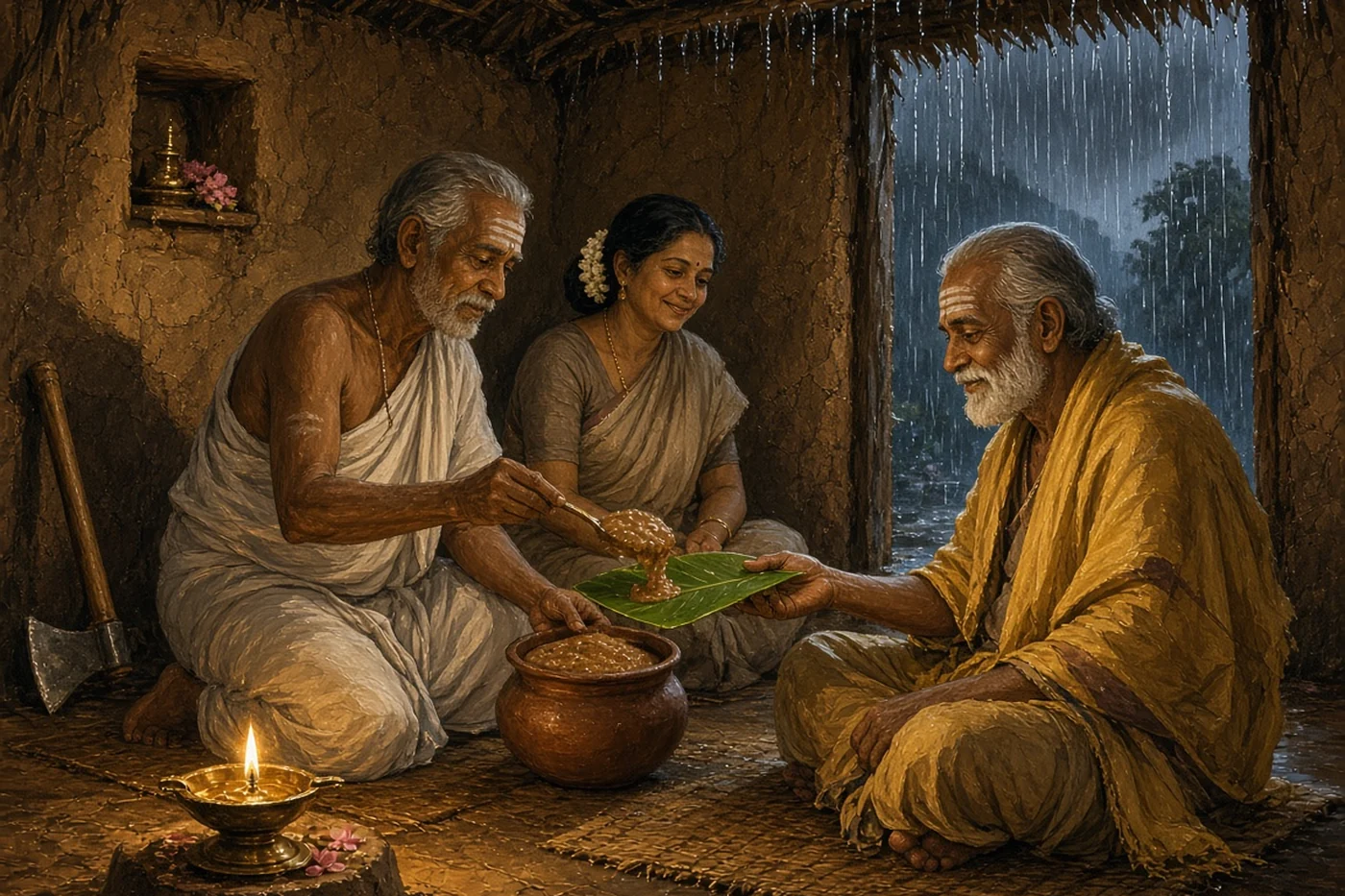
What was left was their own dinner. They wrapped it up for him, sent him off, drank some water and went to bed hungry.
Next morning the Dikshitars opened the shrine of Nataraja and stopped in alarm. There were bits of kali on the god's shoulder and on his chest. Someone, they decided, had got in and defiled the image, and they meant to take the matter to the king. Before they could, the god made it known to everyone that he had been the guest in the woodcutter's house.