Devalok ← All gods
Also calledDattaDattaguruGurudev DattaAvadhutaAtreya

Artwork ›

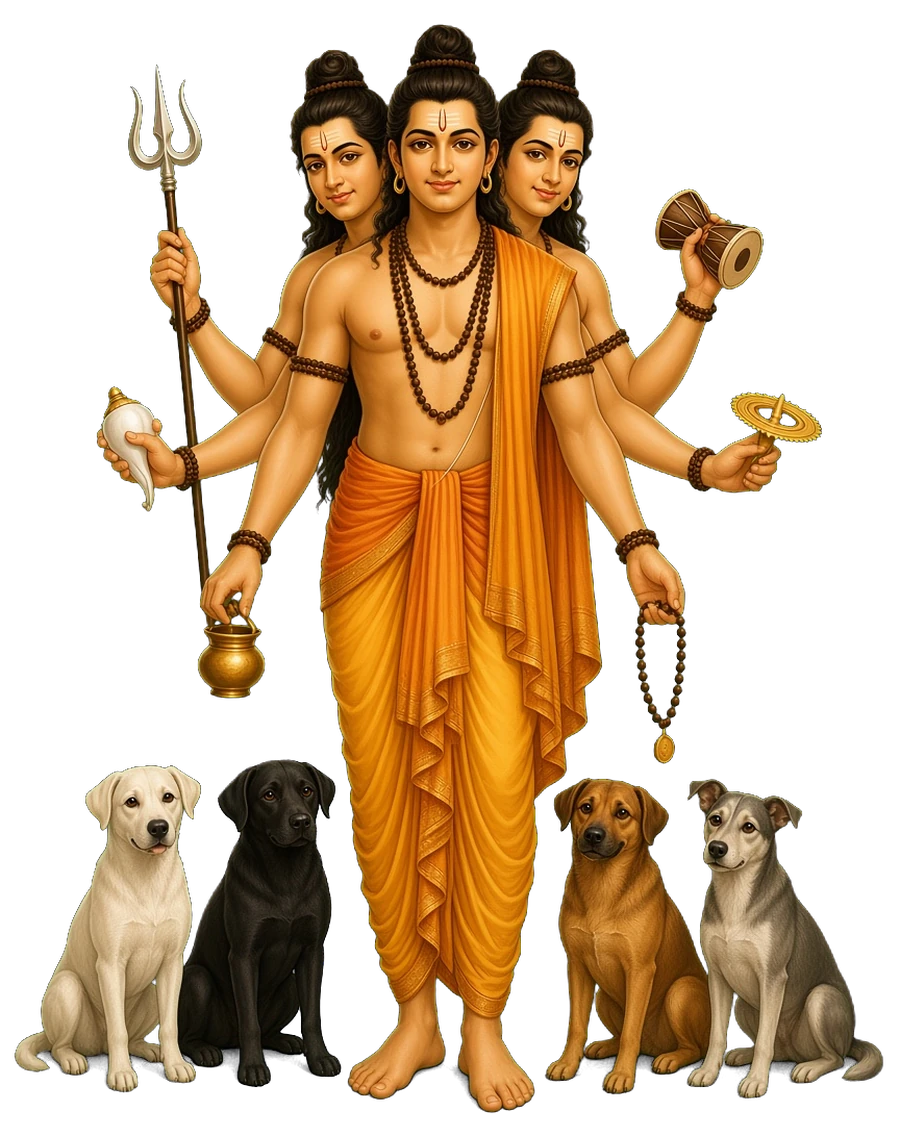
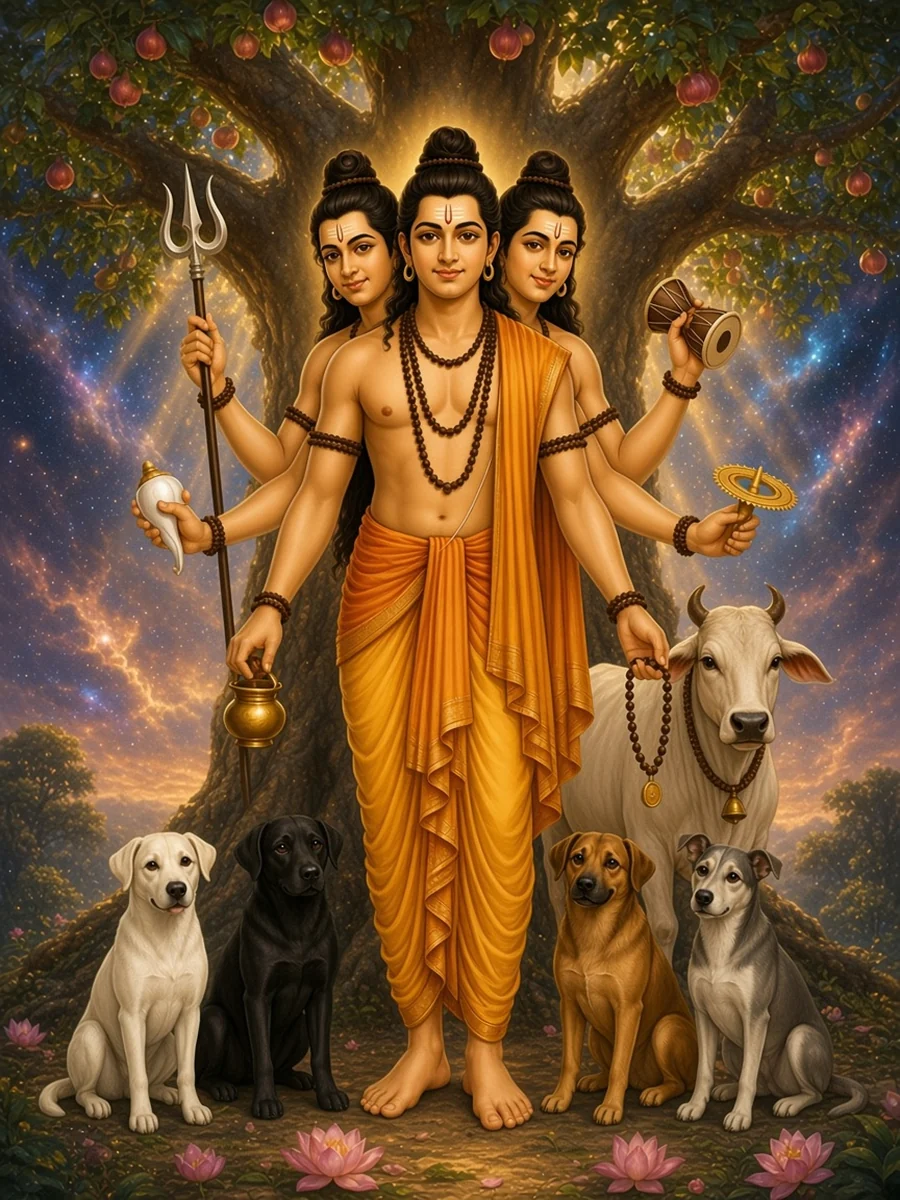
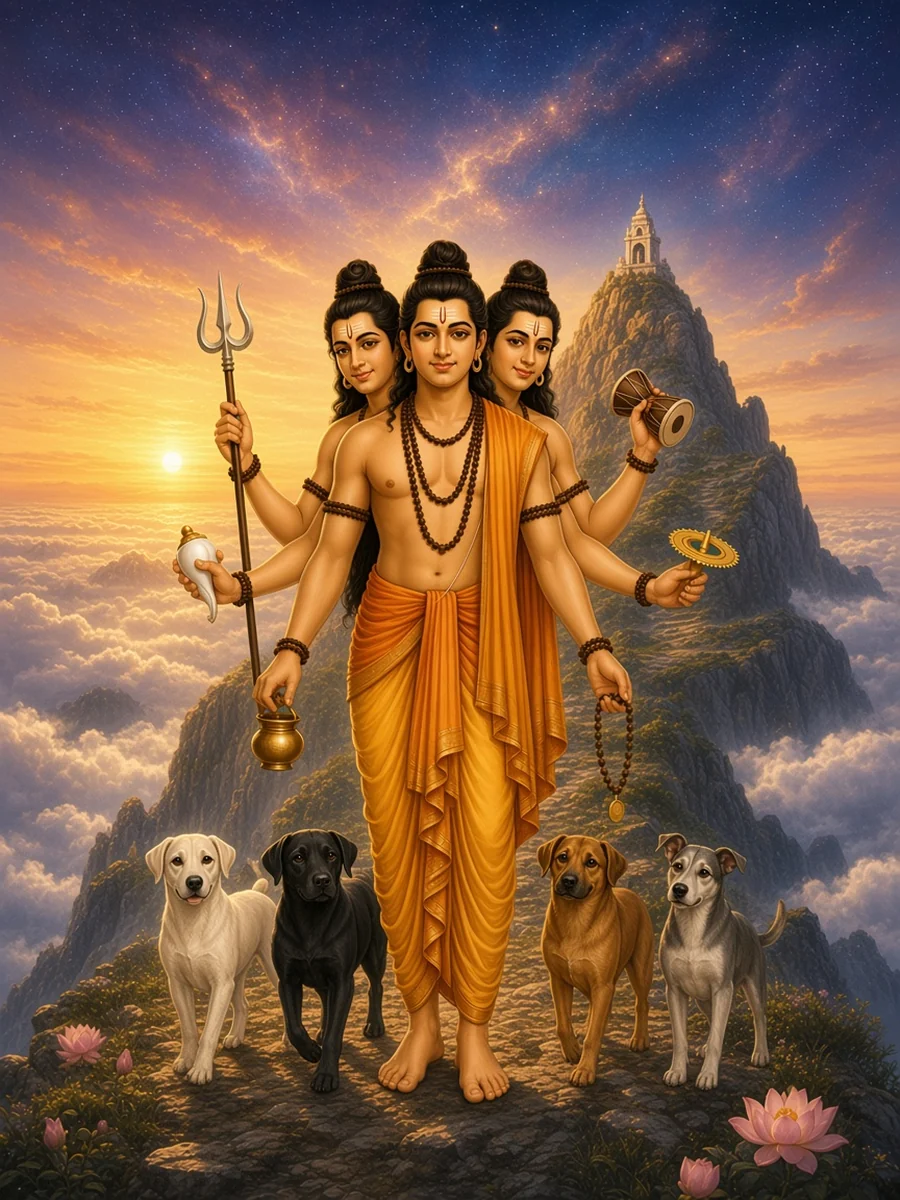
Dattatreya under the audumbar tree, with four dogs at his feet and a cow behind him The wandering Datta walks the summit of Girnar at sunrise with his four dogs

For kids

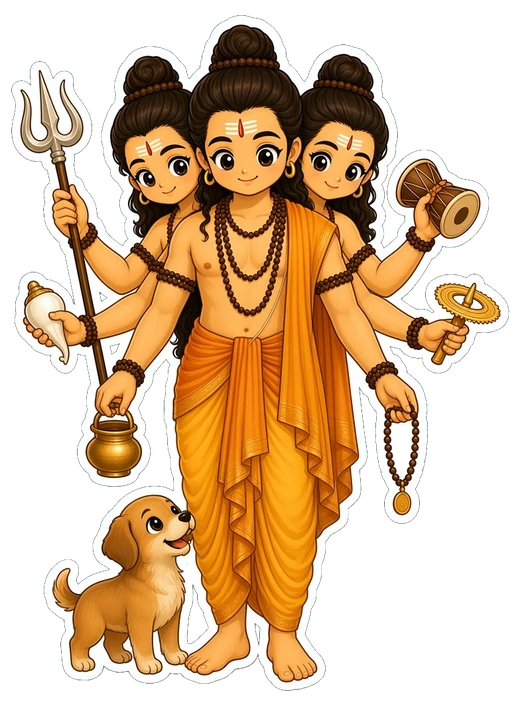
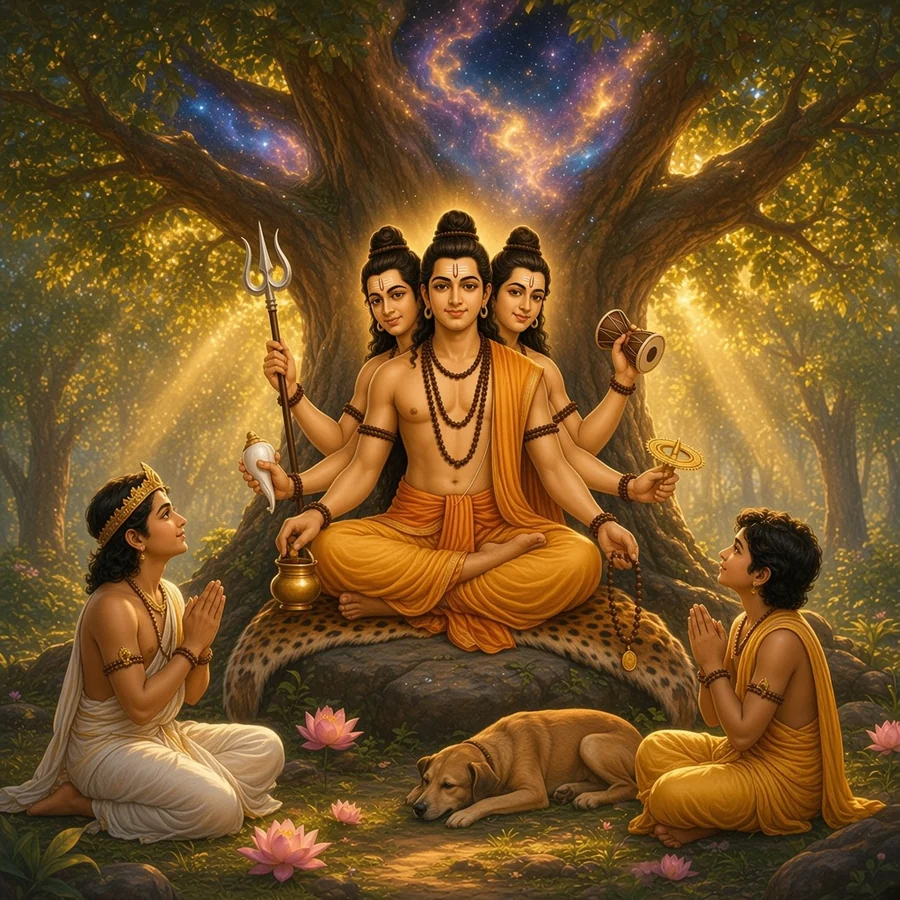
Little Datta smiles down at a puppy with all three faces
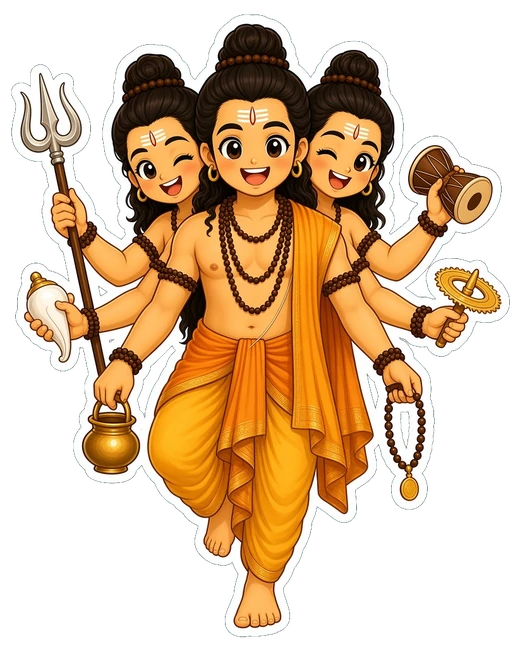
Little Datta shakes his tiny drum and dances

At a glance

TraditionSmarta and Nath
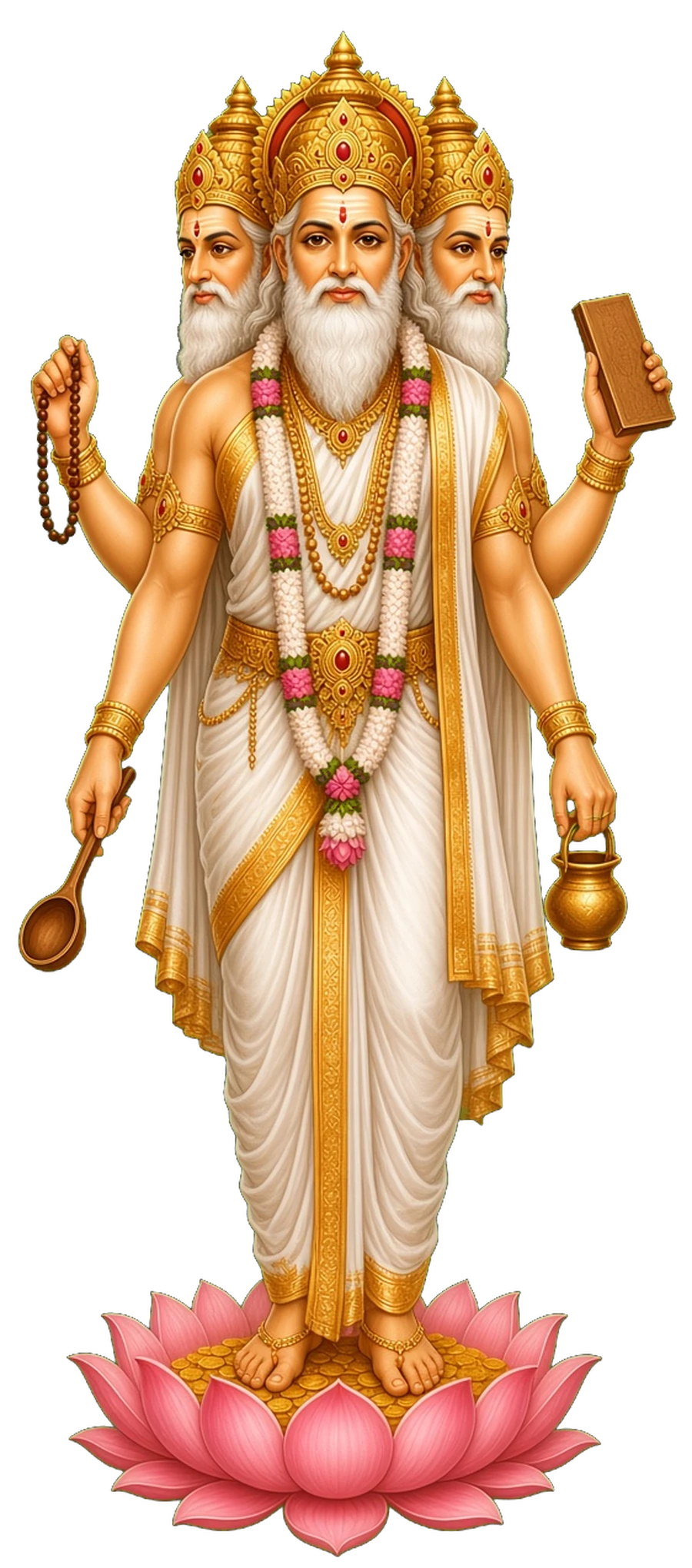
FormA young ascetic with three heads and six arms, standing under a tree
In his handsThe emblems of the three gods

among them a water pot and rosary, a conch and discus, a trident and drum

Who Dattatreya is

Dattatreya is the god who is a teacher. He is the son of the sage Atri and his wife Anasuya, and in the form most people know he has three heads and six arms, because in him Brahma, Vishnu and Shiva are one.

The best-known story of his birth says the three goddesses grew jealous of Anasuya's purity and sent their husbands to test her, and she turned the three gods into babies. When she let them go, she asked them to be born as her son, and they came to her as one child.

Digambara Digambara Shripada Vallabha Digambara: the chant of the Datta devotees, naming him the one clothed in the sky, Shripada the beloved.

He grew up to be the greatest of yogis, a wanderer who owned nothing. The Bhagavata Purana's story of the young sage who learned from twenty-four teachers, the earth, a pigeon, a python, a courtesan and a spider among them, is told by the tradition as his.

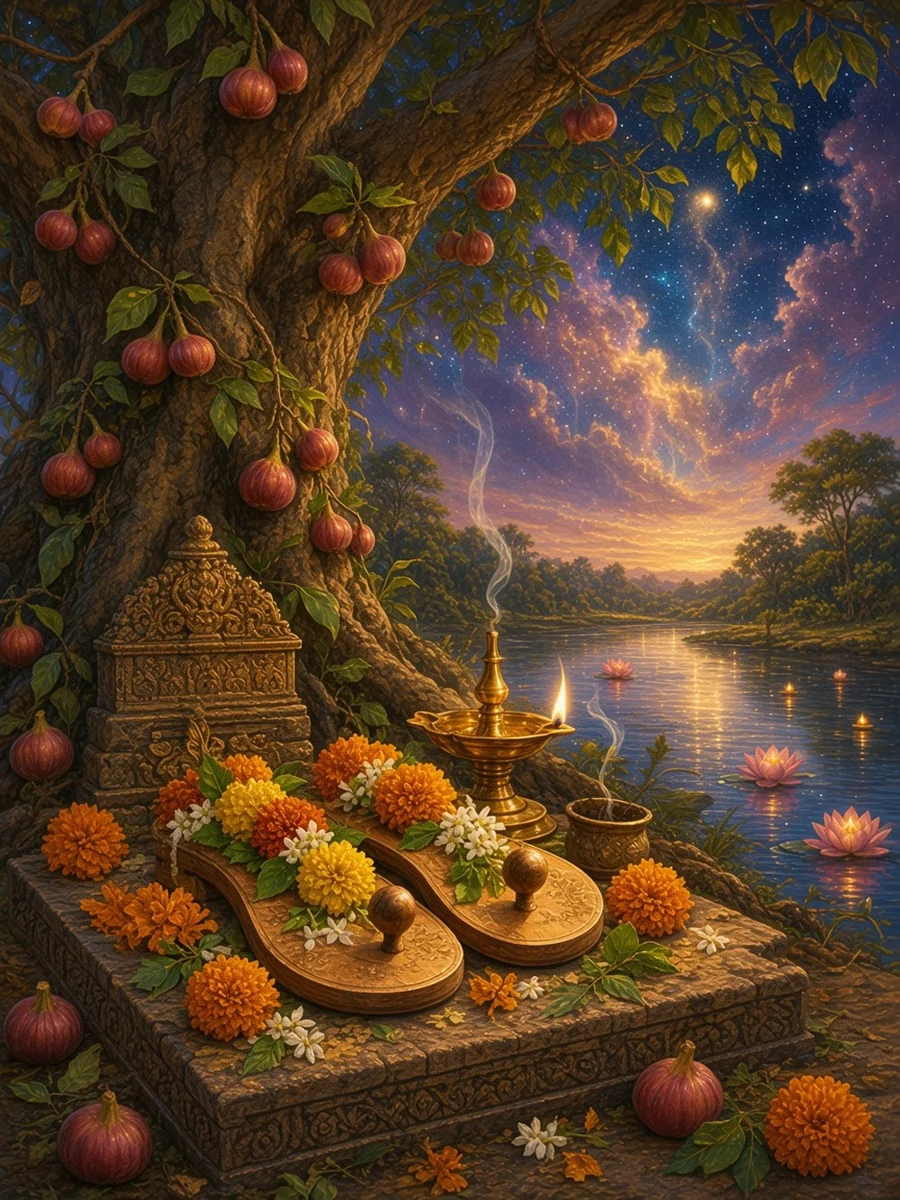
He is usually shown with four dogs at his feet and a cow behind him. The dogs are read as the four Vedas, and the cow as the earth, or as dharma. He is worshipped most in Maharashtra, Karnataka, Andhra Pradesh and Gujarat, where his followers keep his sandals, the padukas, rather than an image, and believe he still walks the world. Many sects claim him: the Nath yogis count him as their first guru, the Mahanubhavas honour him, and the Datta sampradaya of the Deccan worships his later incarnations.
Before the Puranas

The Vedic roots of Dattatreya

In the older Puranas Dattatreya is a sage and one of Vishnu's avatars. The Bhagavata names him in its list of incarnations, and tells that Atri prayed for a son and that the three gods came and promised three sons, each a portion of one of them: Soma from Brahma, Dattatreya from Vishnu, Durvasa from Shiva. The Markandeya Purana tells of him as a yogi who teaches kings.

The combined form, one body with three heads, is later and belongs above all to the Deccan.

The Bhagavata's eleventh book has Krishna tell of an avadhuta, a wanderer who has shaken everything off, who learned from twenty-four teachers in nature. The text does not name him; tradition says he was Dattatreya. The Nath yogis, as Devdutt Pattanaik retells their legend, make Datta their first guru, the one who had no human teacher, and the Avadhuta Gita, a song of non-duality, is attributed to him.

The Datta tradition there rests on the Guru Charitra, a Marathi work of fifty-three chapters by Saraswati Gangadhar, written in the sixteenth century. It tells of two men its followers revere as later incarnations of Datta: Shripada Shrivallabha of Pithapuram in Andhra, and Narasimha Saraswati, who spent about twenty-four years at Ganagapur in Karnataka, where the Bhima and Amarja rivers meet. At Ganagapur the Nirguna Paduka, his sandals, are worshipped under an audumbar tree. Narsobawadi, where he stayed twelve years, became another centre.

Mahur in Nanded district is held to be Datta's birthplace, and the summit of Girnar in Gujarat holds his footprints.

See how the Vedic gods became the Puranic ones →

Related gods