As the Markandeya telling has it
Narada and the iron beans · 2 min read
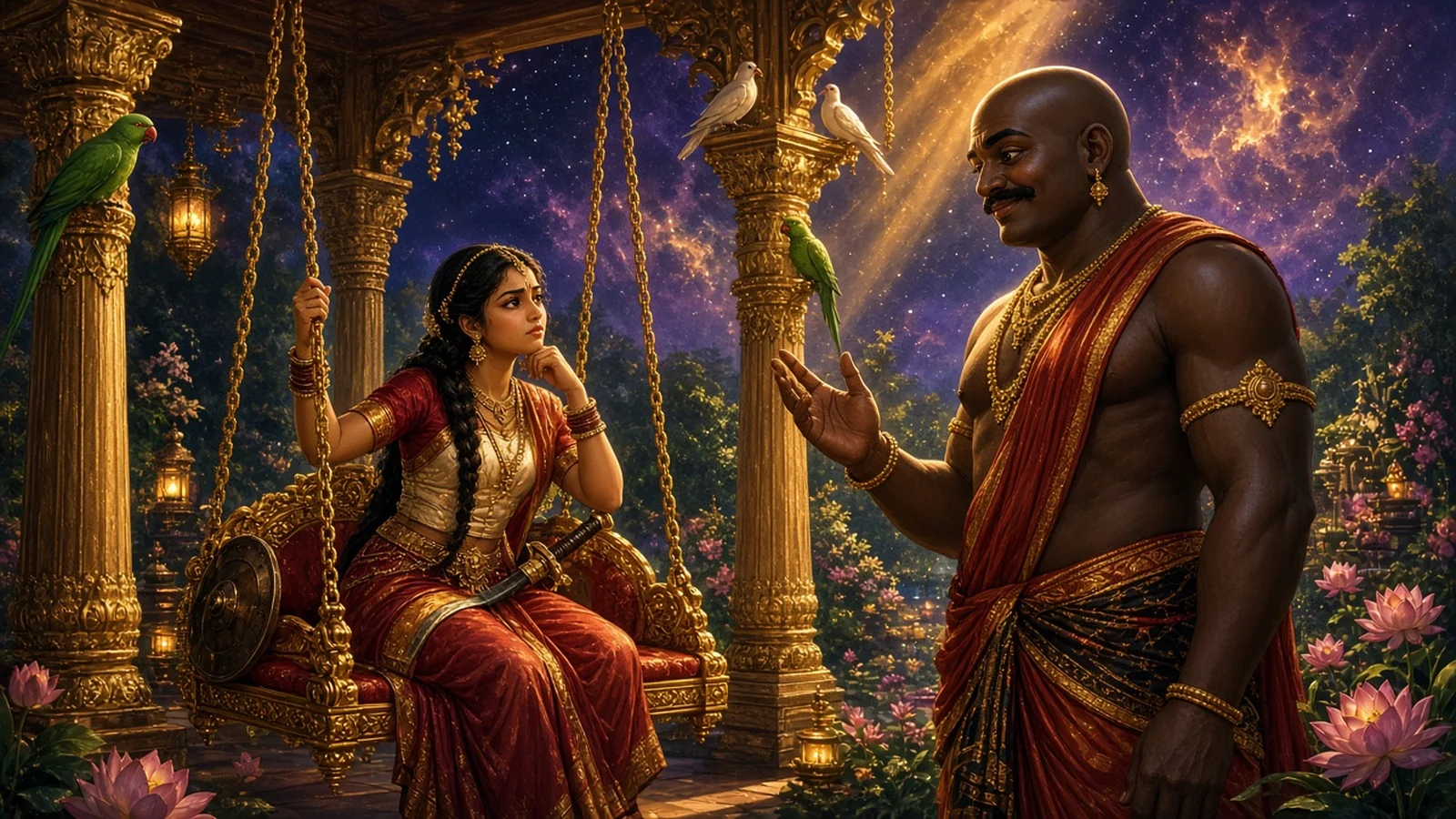
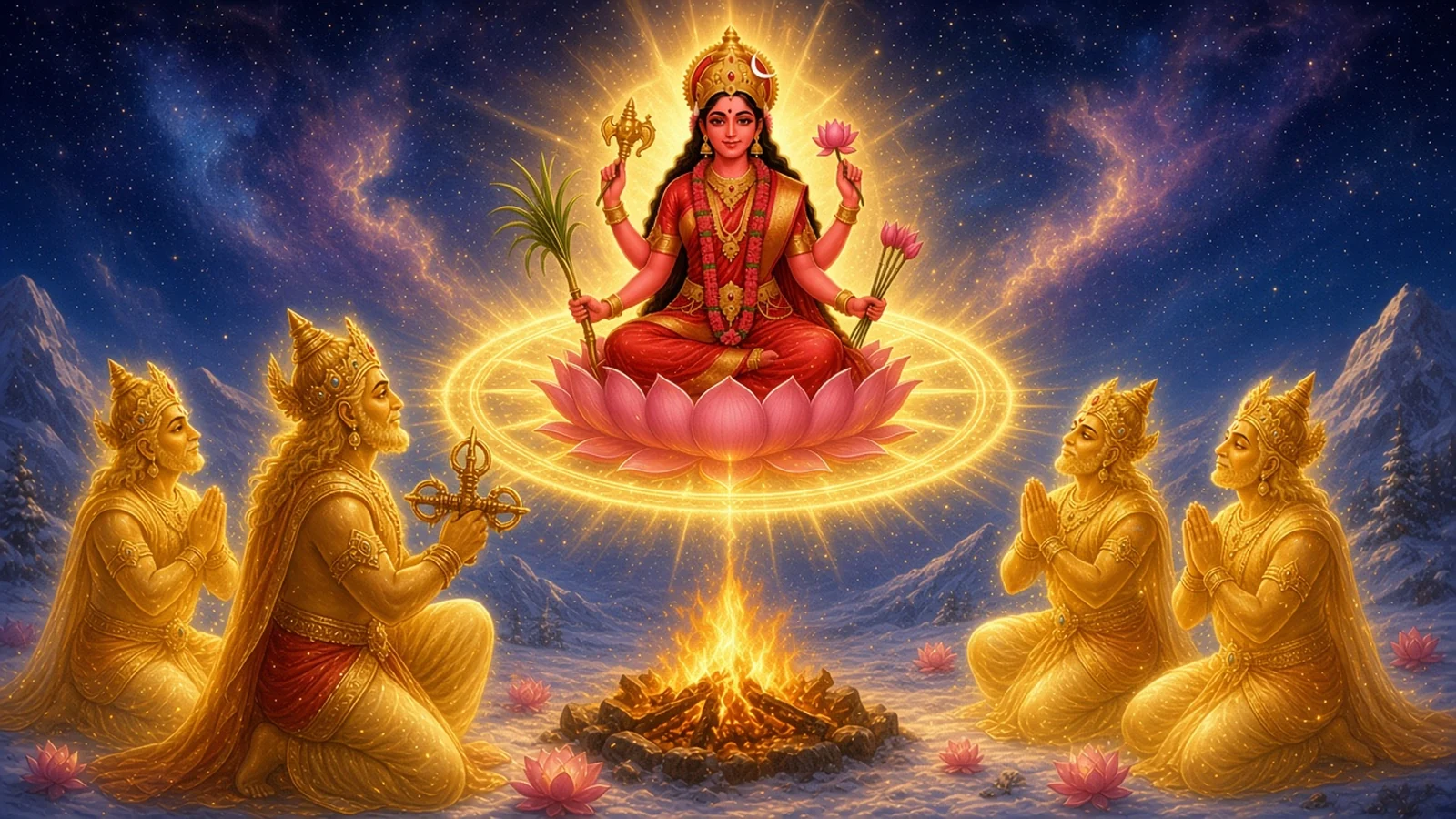
Narada, who goes everywhere and stirs everything, came one day to Saraswati, Lakshmi and Parvati, the wives of the three great gods.
"Tell us, Narada," they said, "which of us is the most devoted wife in all the worlds?"
"None of you," said Narada cheerfully. "The most devoted wife in the worlds is Anasuya, the wife of the sage Atri. She is so pure that she could cook beans made of iron and make them soft."
And he held out a handful of iron beans, as if to prove it, and went on his way.
The three goddesses were not pleased. They went to their husbands.
"Go and test this Anasuya," they said. "Let us see how pure she is."
So Brahma, Vishnu and Shiva went down to Atri's hermitage, disguised as three young ascetics. Atri was away. Anasuya came out to greet them, and bowed, and asked how she could serve them.
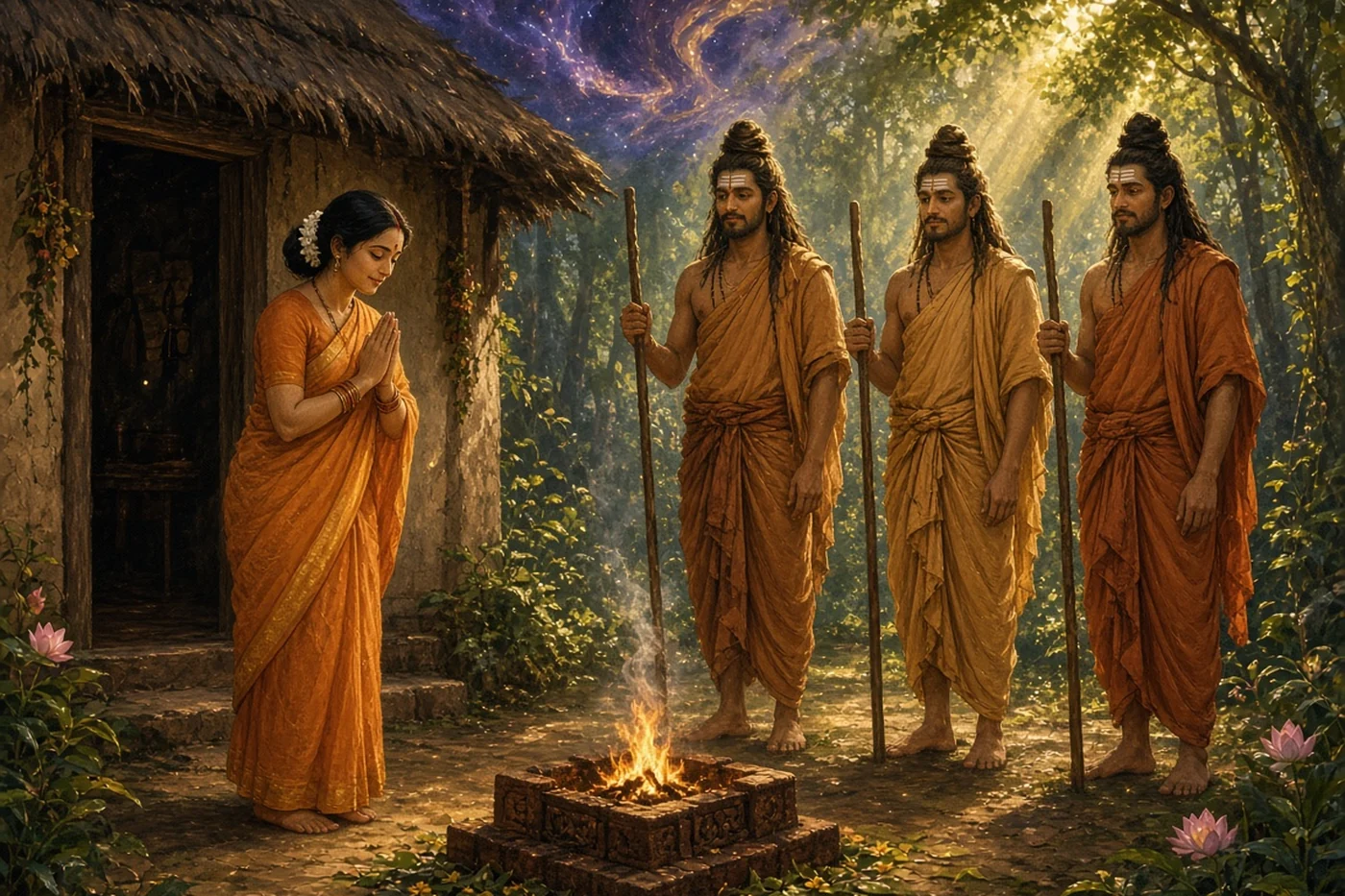
"We are hungry," they said. "Feed us. But we have a vow. We will eat only if you serve us without your clothes."
Anasuya stood very still. To refuse a guest was a sin. To do what they asked was impossible. She looked at the three young men for a long moment, and she understood who they were.
She went inside and came back with water, and sprinkled a little of it on them, thinking of her husband. And the three gods shrank. They became three babies, lying on the ground of the hermitage, kicking their legs.
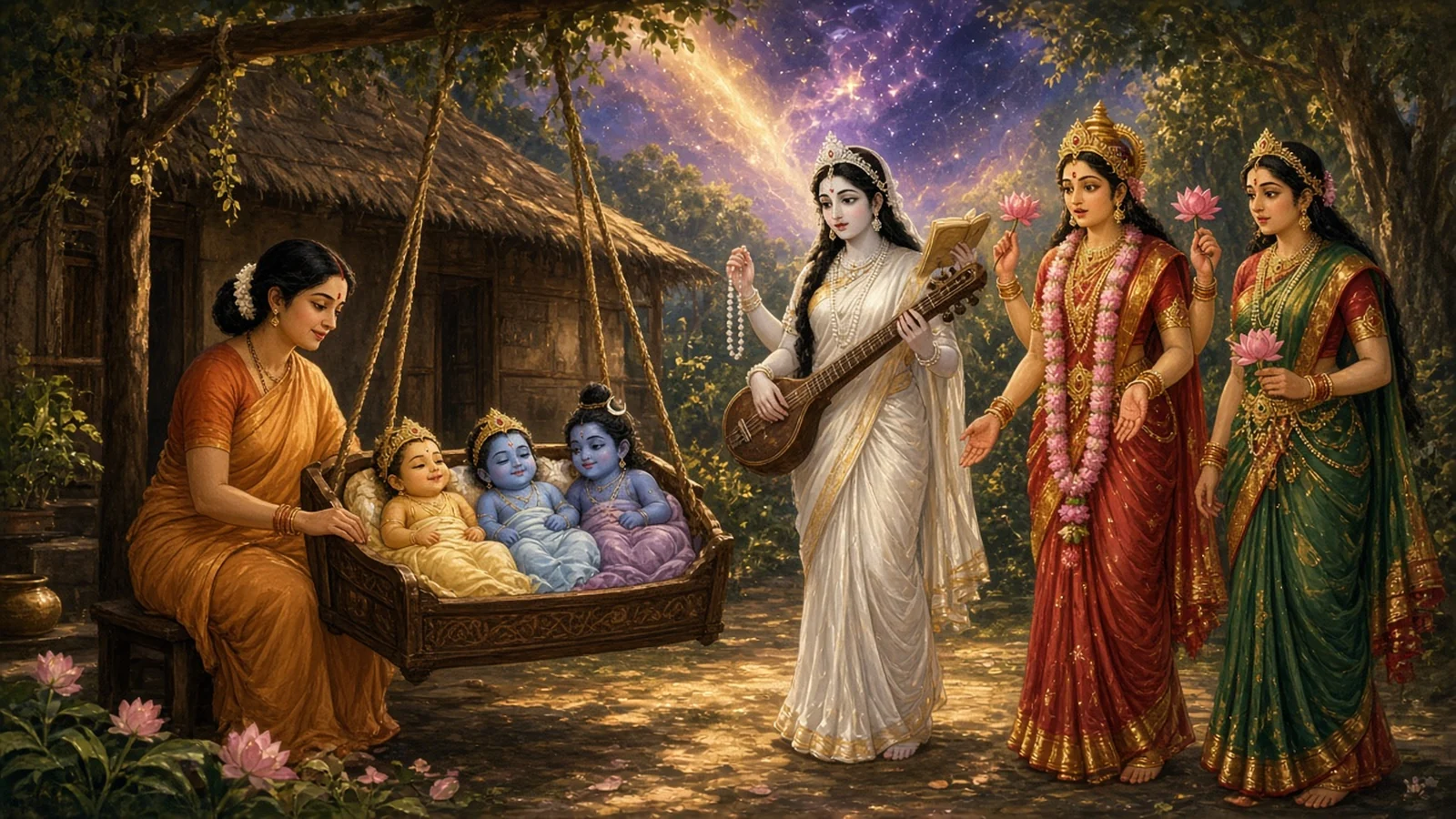
Then Anasuya fed them as a mother feeds her children, and there was nothing wrong in it at all. She put them in a cradle and rocked them and sang to them, and they slept.
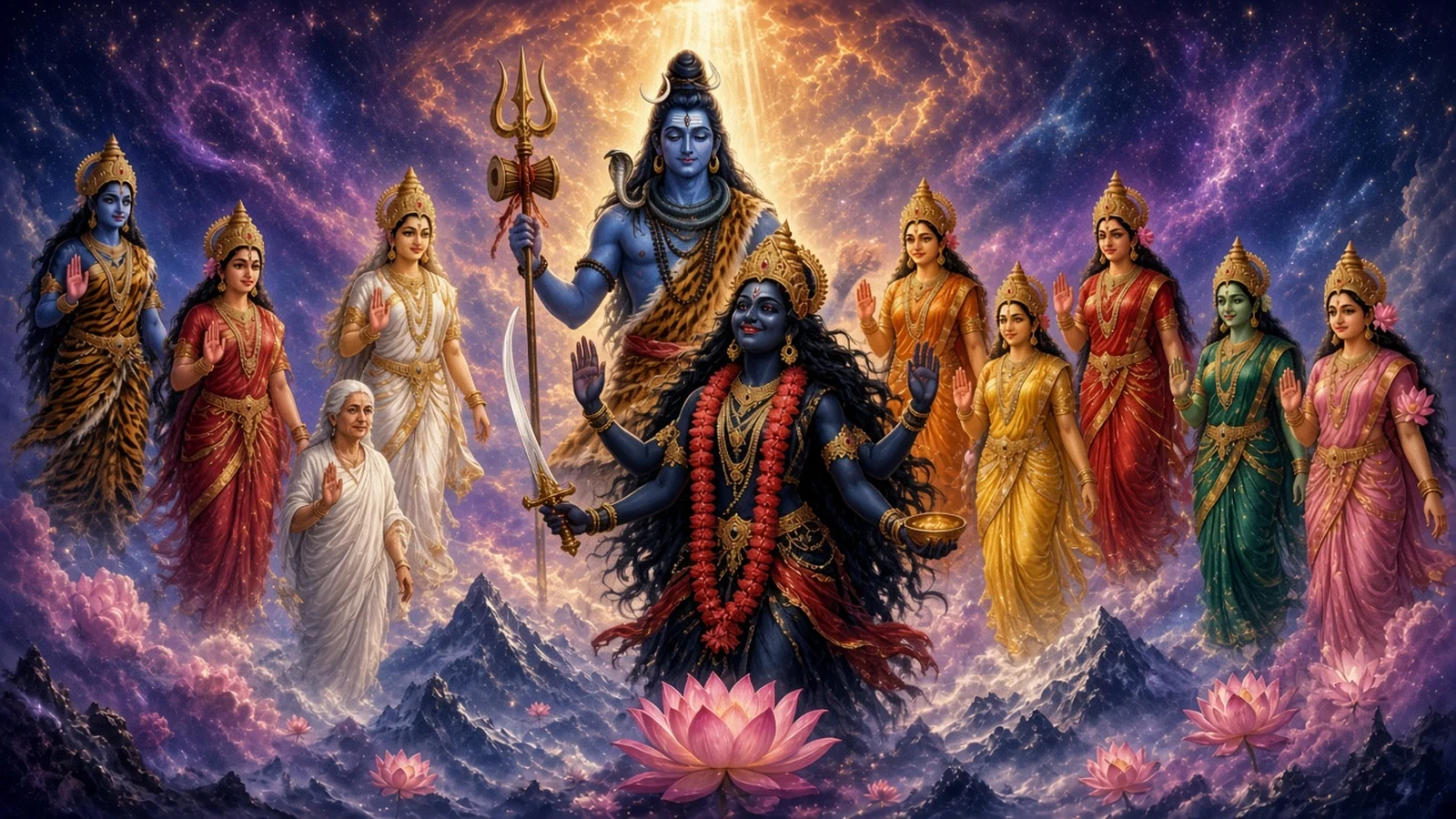
Up in heaven, the goddesses waited for their husbands, and waited, and their husbands did not come back. At last they went down to the hermitage themselves. There they found Anasuya rocking a cradle with three babies in it.
"Give us back our husbands," they begged her. "We were wrong to doubt you."
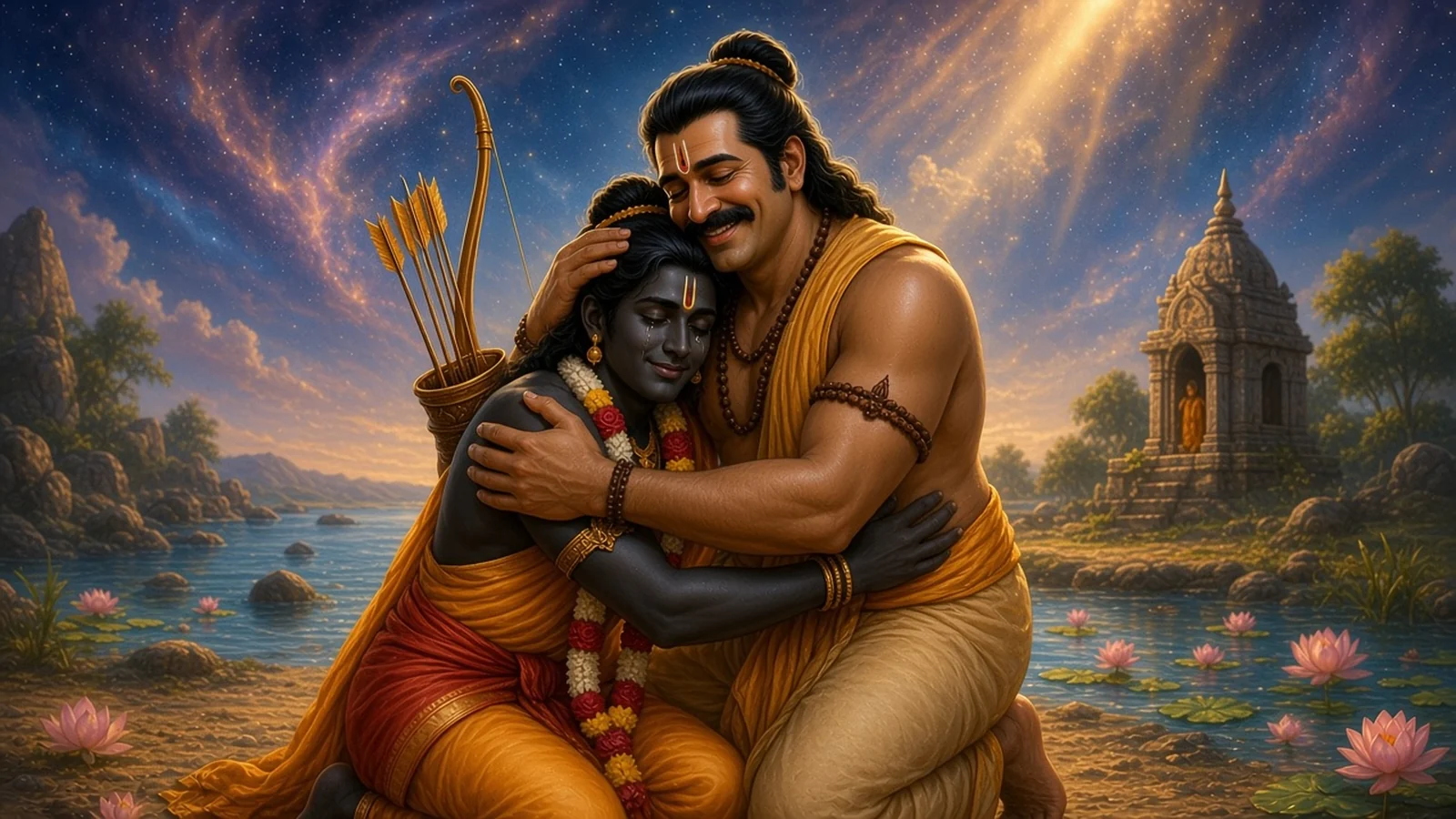
Atri had come home by then, and saw it all. Anasuya sprinkled the water again, and the three gods stood there in their own forms, laughing, and asked her to choose a boon.
"Be born as my son," said Anasuya.
So it was. In this telling the three gods came to her together, as one child, Dattatreya, with three heads and six arms, carrying Brahma's and Vishnu's and Shiva's natures all in one body. He grew up in the hermitage and became the teacher of teachers.
As the Bhagavata tells it
Bhagavata Purana 4.1.15 to 33 · 1 min read
The Bhagavata Purana tells the birth without any test.
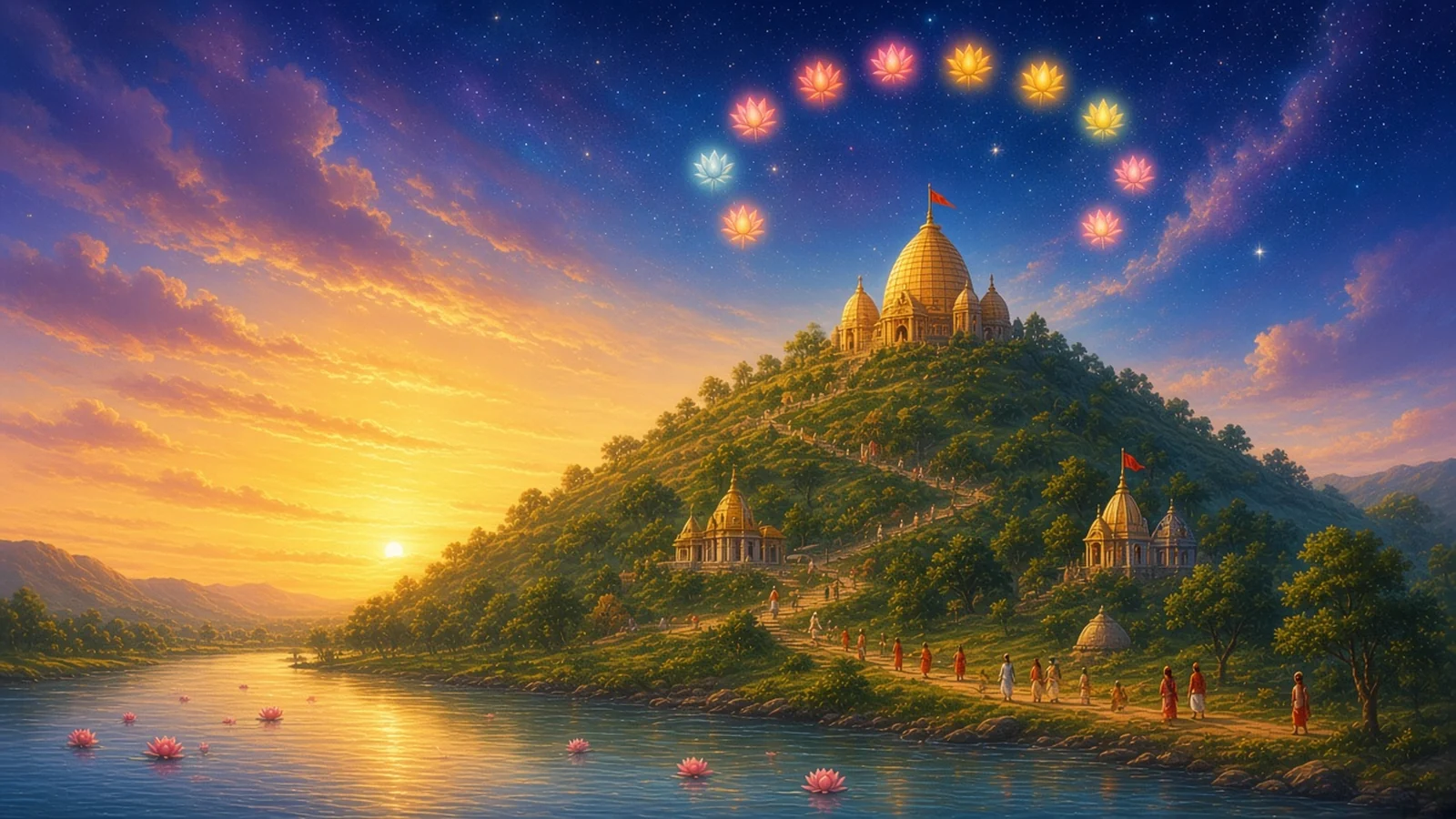
Brahma had told the sage Atri to have children, so Atri went with his wife Anasuya to the mountain called Riksha, and there, beside a river, he began a long, hard penance. He stood on one leg and lived on air, and he prayed to the lord of the universe.
"Give me a son like yourself," he prayed.
The heat of his penance rose up through the worlds, and three gods came down to him together, Brahma on his swan, Vishnu on Garuda and Shiva on his bull.
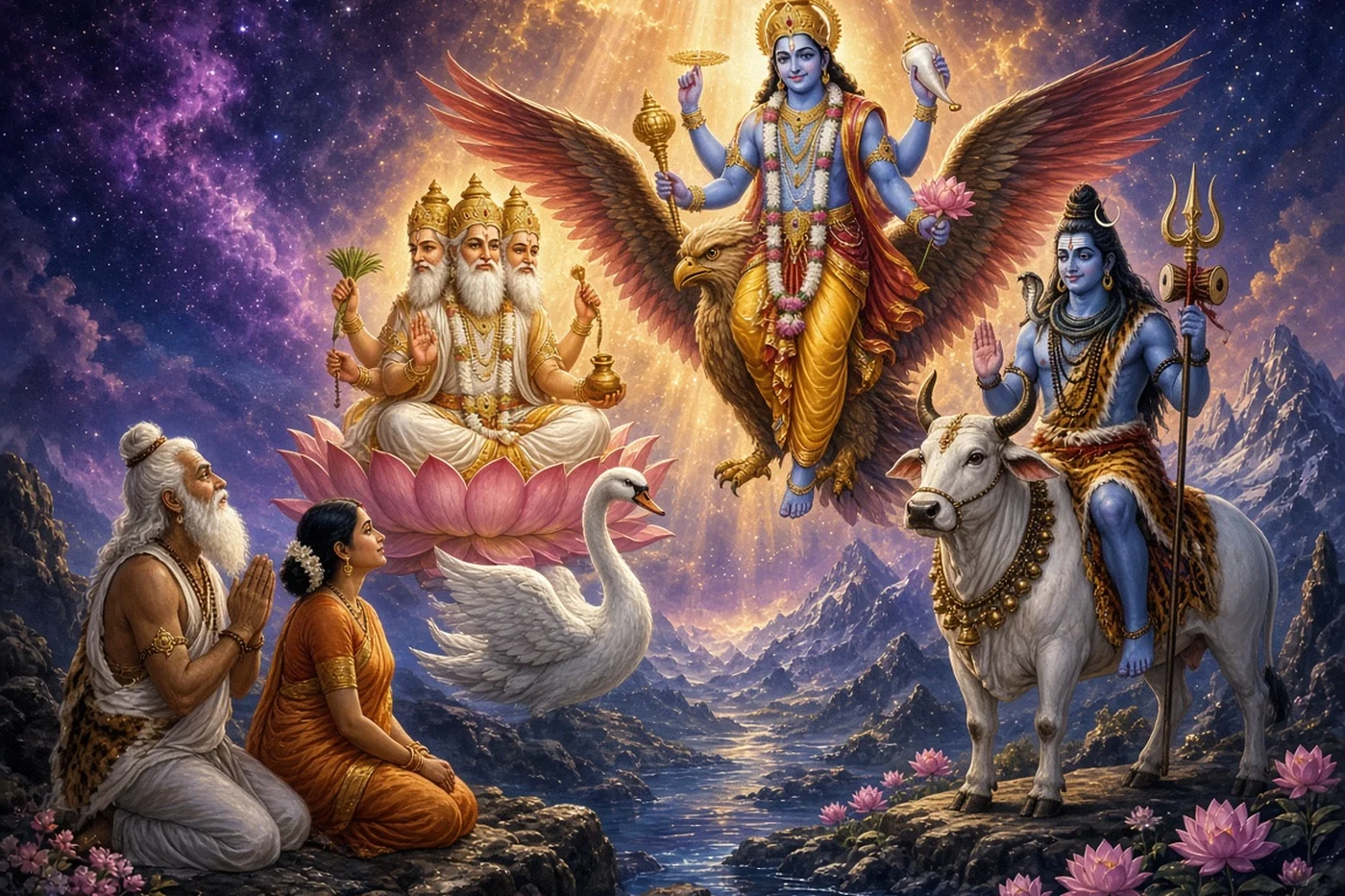
Atri was bewildered, and joyful, and bowed to all three.
"I prayed to one lord," he said. "Why have three of you come?"
The three gods smiled.
"What you prayed for will come true," they said. "We are not three, the way you think. You meditated on the one lord, and all three of us are part of him. Each of us will give you a son."
So Anasuya bore three sons. Soma, the moon, was a portion of Brahma. Dattatreya, the great yogi, was a portion of Vishnu. And Durvasa, the sage whose temper all the worlds feared, was a portion of Shiva.
In the Bhagavata, Dattatreya is one of Vishnu's own incarnations, and the three gods remain three. The same Purana lists him among Vishnu's avatars in its first book, and says that he taught the knowledge of the self to Alarka and to Prahlada. He is a teacher from the start, a sage whom kings and even the demon king's son came to for instruction.