Devalok ← All gods
Also calledSammakka SarakkaSammakka SaralammaSarakkathe mothers of MedaramVana Devatalu

In short

Who are Sammakka and Saralamma?
A mother and daughter of the Koya people of the Godavari forests who, in the legend, stood against the army of the Kakatiya kings of Warangal and became the goddesses of Medaram. They have no image; each is kept as vermilion and turmeric in a small box.
Where are they worshipped?
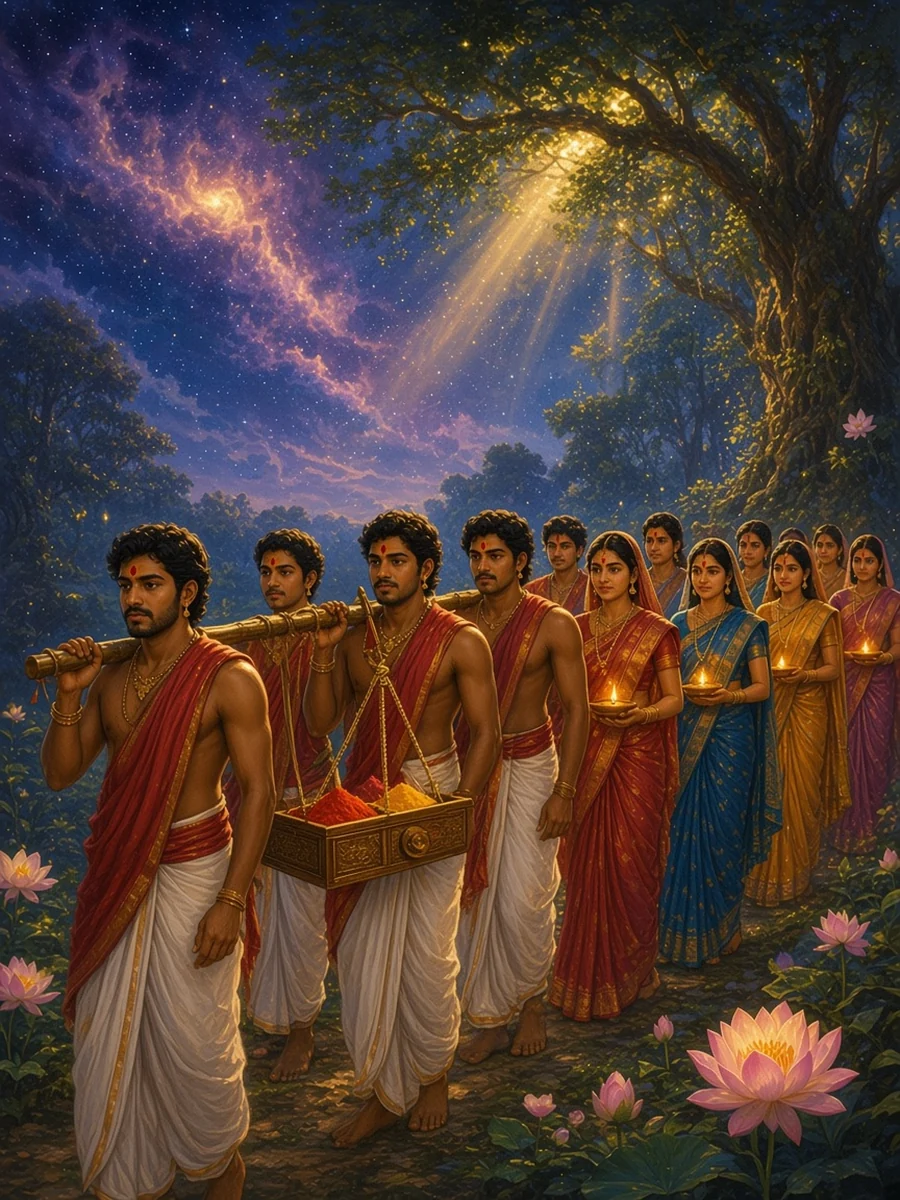
At Medaram in Mulugu district, Telangana, where Koya pujaris carry them to raised earth platforms under trees for four days at the full moon of Magha, every second year. Between festivals Sammakka is kept on the hill of Chilakalagutta and Saralamma at Kannepalli nearby.
Are they forms of Durga?
Many pilgrims from the plains call them forms of the great Goddess. The Koyas, whose pujaris alone may carry them, speak of them as women of their own people.
Who was Sammakka's father?
The tellings differ. She is a foundling raised by a Koya chief, or by Medaraju of Polavasa, or the daughter of a chief named Rayibandani Raju of Bhupalapatnam.

Artwork ›

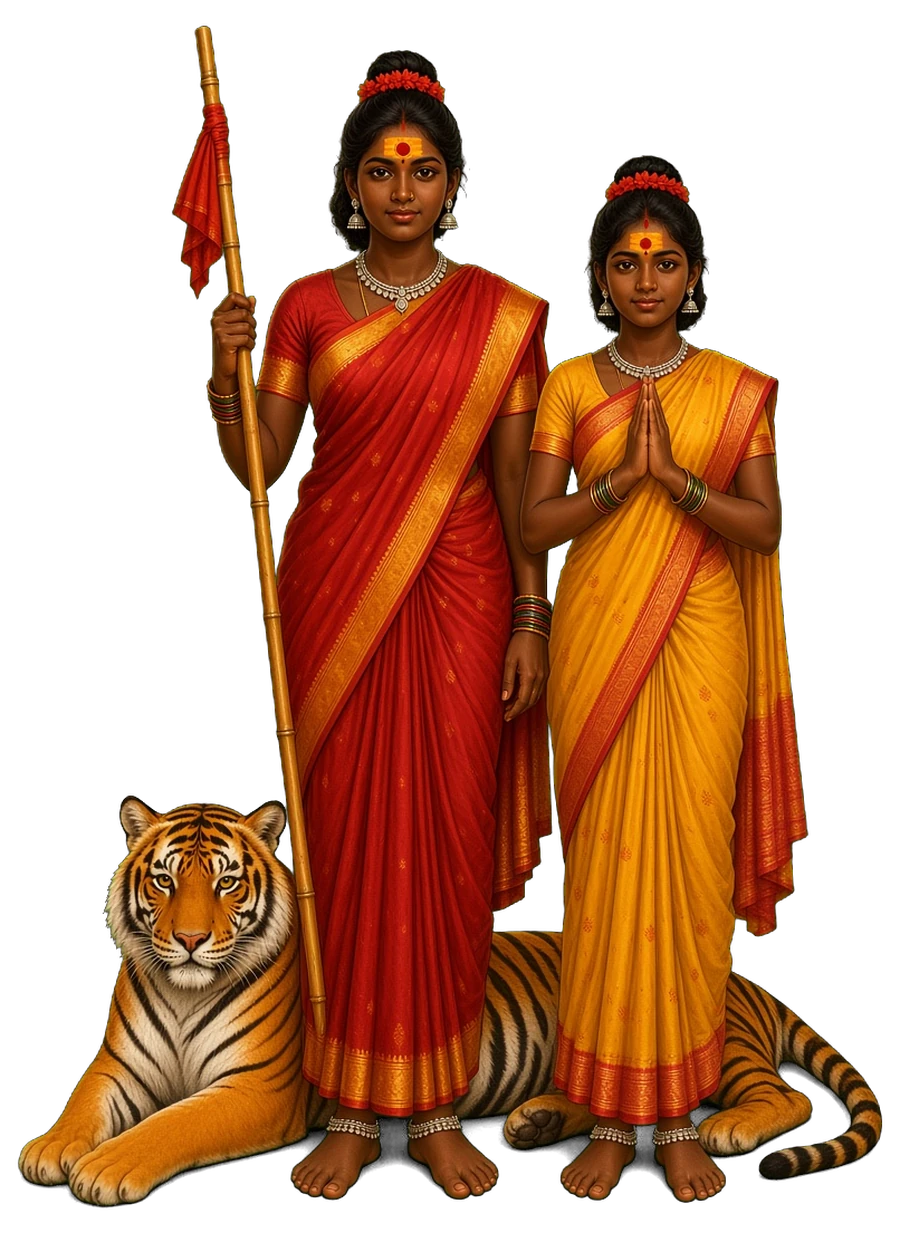
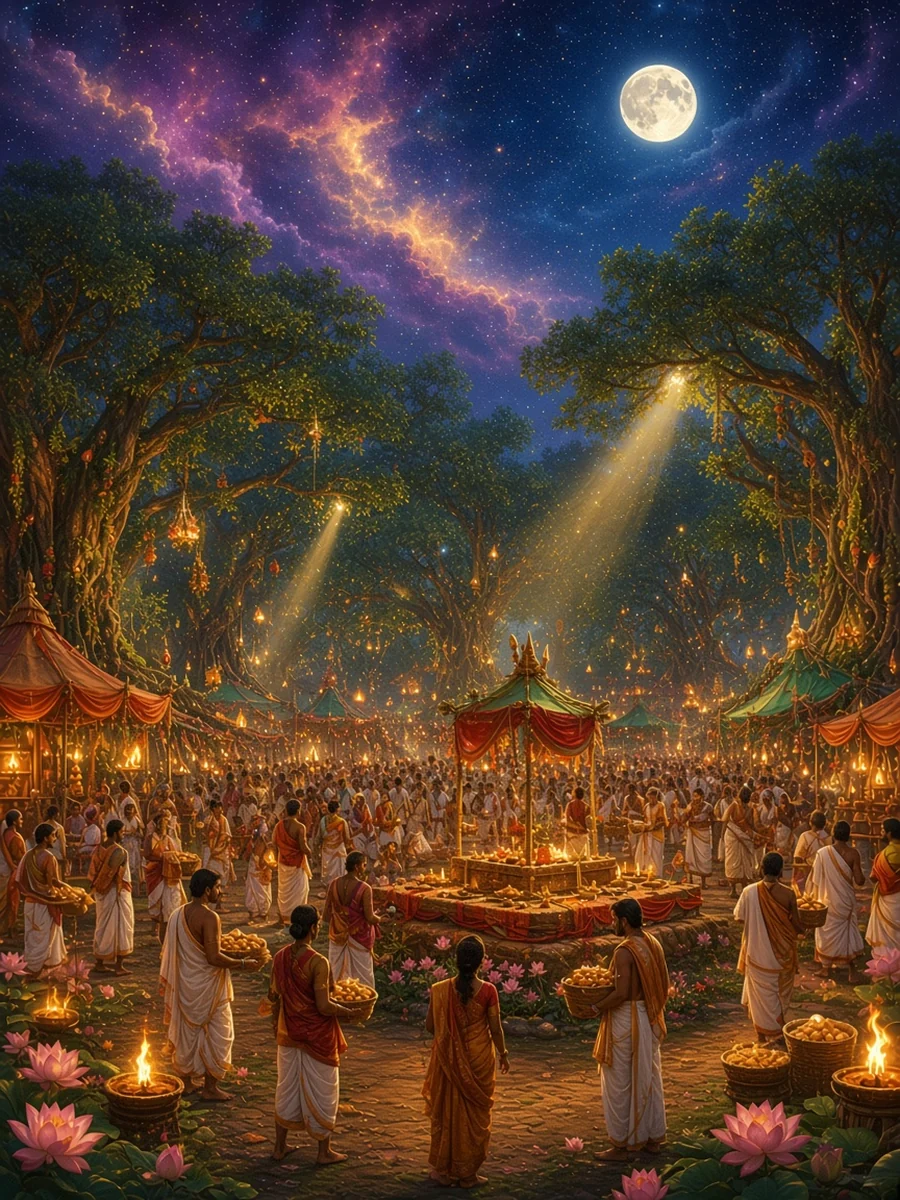
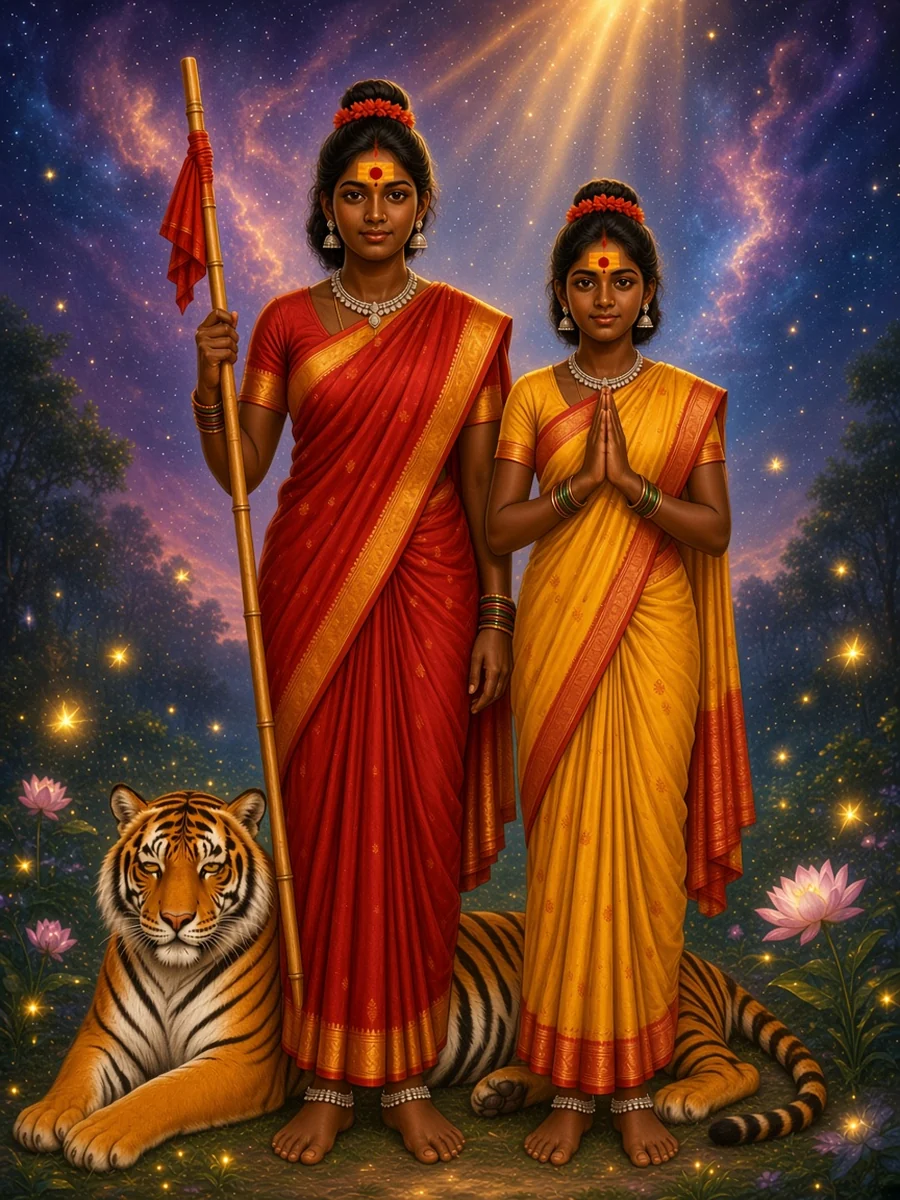
The full moon of Magha at Medaram Sammakka and Saralamma, the mothers of Medaram

For kids

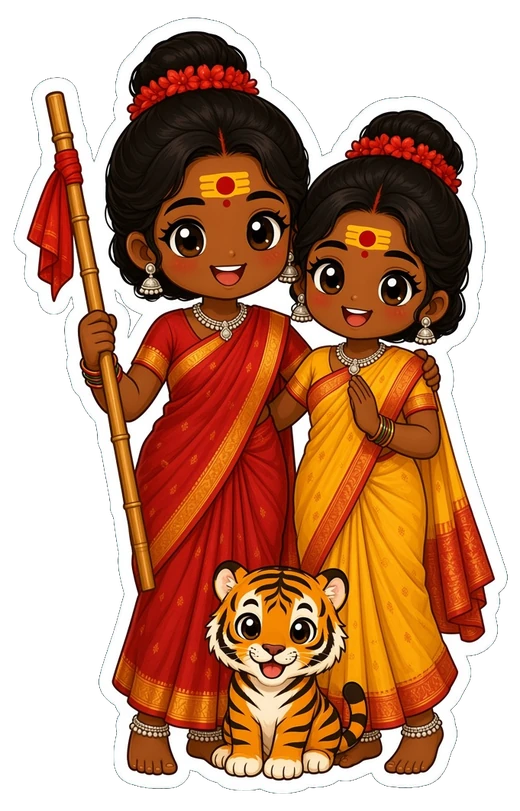
Mother and daughter
Mother and daughter
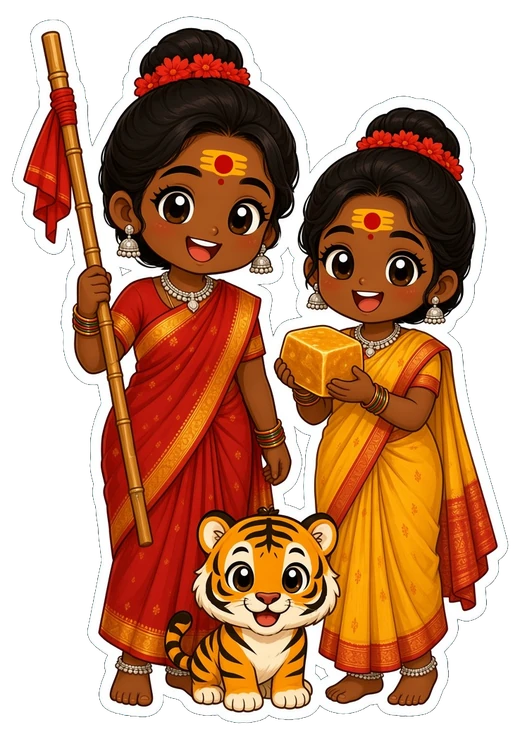
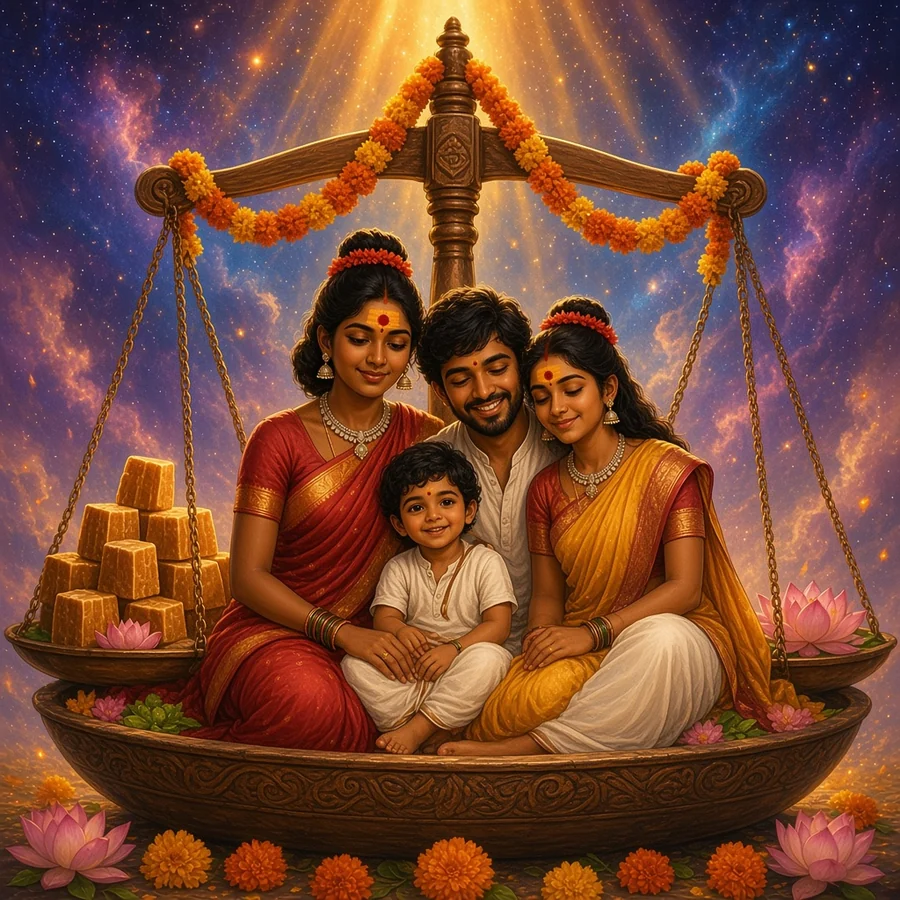
Bangaram for Amma
Bangaram for Amma

At a glance

TraditionTribal (Koya)
FormNo image

each goddess is a small box of vermilion and turmeric, carried with bamboo wrapped in red cloth

SeatsRaised earth platforms

the gaddes, under trees at Medaram, beside the seats of Pagididda Raju and Govinda Raju

Who Sammakka and Saralamma is

Sammakka and Saralamma are a mother and daughter, the goddesses of the Koya people of the forests along the Godavari, and the reason the village of Medaram, sixteen hundred people in a wildlife sanctuary in Mulugu district, holds a crowd counted in crores every second year. Sammakka is the mother, Saralamma, also called Sarakka, the daughter. Their story is told in many ways. In the best known, Koya hunters find Sammakka as a newborn lying among tigers; she marries Pagididda Raju, the chief of Medaram; and when a drought leaves nothing to pay the Kakatiya king of Warangal, his army comes, her husband and children fall, and she fights on, curses the king's line and walks wounded into the forest, where her people find only a box of vermilion.

They have no image and no Brahmin priest. Each is a little vermilion and turmeric, carried by hereditary Koya pujaris out of the forest to a raised earth seat under a tree, Saralamma from Kannepalli on the Wednesday and Sammakka down from Chilakalagutta on the Thursday night. Pilgrims weigh themselves against jaggery and give it to them as gold. The Koyas know them as women of their own people who died for them; many of the pilgrims from the plains call them forms of the great Goddess, Durga.

The oldest written words about them may be a line two historians read on an undated stone at Pakala, in the Warangal country, which names their festival and its offerings:

Sammakka devatala utsava: the festival of the goddess Sammakka (the Pakala inscription, as Buchi Reddy Avala and Guduru Yugander read it).

The tellings do not agree on much else: who found Sammakka and who raised her, whether Govinda Raju was Saralamma's husband or a kinsman, which Kakatiya king and which century. A priest at her shrine has said the Koya songs know no queen and no war with the Kakatiyas at all, only a woman who stood against the lords, the doralu, who took from her people. Both tellings stand at Medaram.

Their stories on this site: The Exile from Polavasa, where an old forest lord flees the Kakatiyas to his son-in-law's country; The Order from Warangal, where a king gives his enemy her festival; and The Snakebite at the Wedding, where the bride leaves her own wedding to save a guest. The legend itself is The Girl Found Among the Tigers, and the four days at Medaram are The Box of Vermilion.

Before the Puranas

The Vedic roots of Sammakka and Saralamma

The Vedas do not know Sammakka and Saralamma, and no Purana tells their story. They belong to the Koya people, and their tradition is oral first: the songs of Koya singers, the words of the pujari families who alone may carry them, and the rites on Chilakalagutta that nobody else may see. They became goddesses, in every telling, by dying for their people, and for the Koyas that is what they remain, a mother and daughter of the forest who come home every second year.

Writing caught up with them late, and the dates it gives do not agree. Two historians, Buchi Reddy Avala and Guduru Yugander, read the Kakatiya inscriptions of the twelfth century as the record of a real quarrel between the Kakatiya Rudra and Medaraju II of Polavasa, whose daughter, they think, was Sammakka, and an undated inscription at Pakala as the court's own order for her festival. The state's account and most popular ones put the war under Prataparudra in the thirteenth century; the assistant curator of the tribal museum at Medaram says there is no proof a war was fought and that the jatara can be traced back about five hundred years.

The Koya singers kept the story longest. The retired professor Jayadheer Tirumala Rao spent years recording the oral histories of the Koyas, among them the narrations of Sakini Ramachandraiah, a Koya singer of the Kanchumelam-Kanchuthalam tradition who was the last who could tell the whole history of the jatara in both Telugu and Koya, and who was given the Padma Shri in 2022. A priest of the Sammakka shrine said in 2026 that the popular legend was put together by writers who were not Koya, and that the songs tell it differently.

The Telugu Wikipedia says that until 1940 the jatara was kept on the hill by the hill people alone. Then the plains came. The government of Andhra Pradesh declared it a state festival in 1996, and Telangana did so again in 2014. The Ministry of Culture's page calls the mothers forms of Adi Parashakti, the Goddess, and the pilgrims who give them their weight in jaggery mostly agree. The rites themselves are still the Koya pujaris' alone.

See how the Vedic gods became the Puranic ones →