As the folk tradition remembers her
The Koya country · the wedding of Sammakka and Pagididda Raju · 2 min read
The Chanda people, the folk tradition says, were Sammakka's ancestors, and they kept their own goddess, Bandichikka. Her father was Rayibandani Raju, who ruled the country round Bhupalapatnam, and when she was of age he gave her in marriage to Pagididda Raju, the son of Samudra, a lord of the Naga clan who ruled Kottapalli in the Bastar forests.
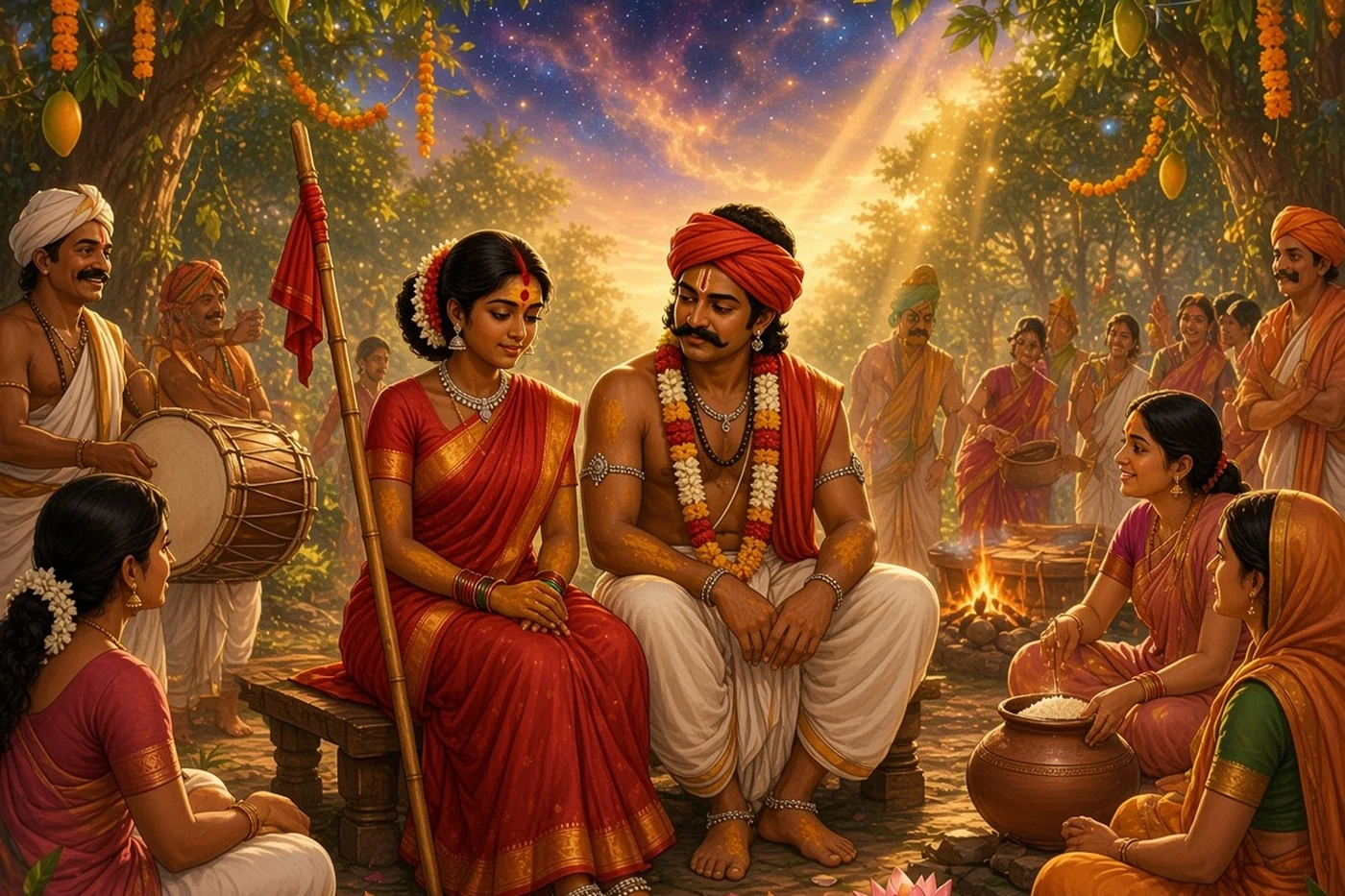
It was a forest wedding. The drums had been going since morning, the rice was cooking in the big pots, and the guests had come from both sides of the river. Sammakka sat in her wedding clothes with turmeric on her arms, and everyone who passed her stopped to look.
Then a shout came from the edge of the clearing, and the drums stopped one by one.
"A snake! He has been bitten!"
A man had gone out among the trees and come back stumbling, holding his leg. By the time they laid him down, his face had gone grey and his eyes would not stay open.
"Fetch the elders," somebody said.
"There is no time to fetch anyone," said another. "Look at him."
Sammakka stood up.
"It is my wedding," she said, "but it is his life." And she went.
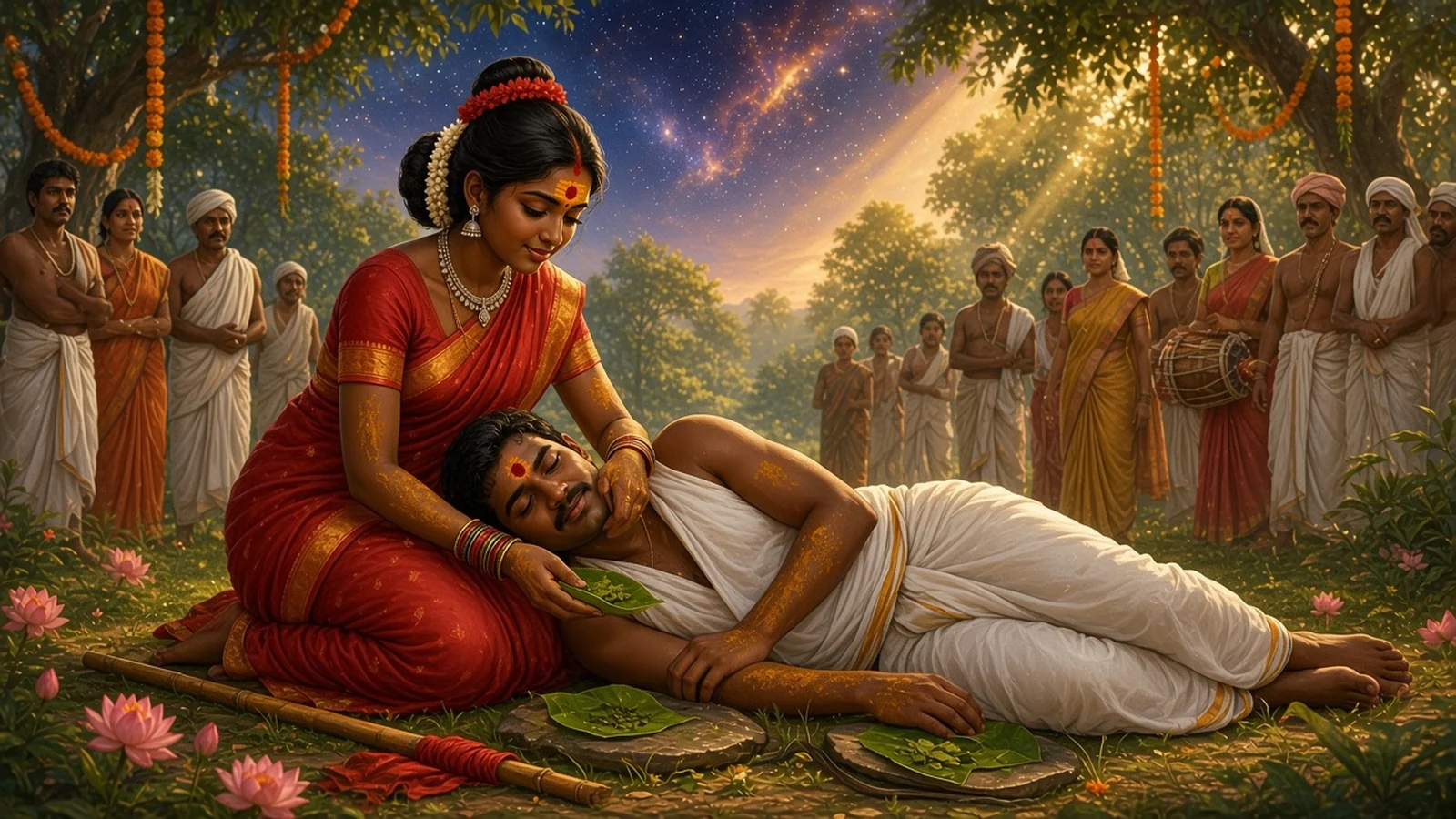
She did not go to the bitten man first. She went into the trees, and came back with leaves in her hands, and knelt beside him in her wedding clothes. She crushed the leaves between two stones and pressed out the juice, and gave it to him drop by drop, and put more on the bite. Then she sat with his head on her knee and waited.
Nobody went back to the pots. The bridegroom's people and the bride's people stood round in one crowd and watched. After a long while the man's breathing changed. Colour came back into his face. He opened his eyes and looked up at the bride above him, and could not think where he was.
"You will live," Sammakka told him.
Then she washed her hands and went back to her wedding, and the drums began again louder than before.
Nobody at that wedding forgot it. After that the sick came to her, and not only for bites. People with illnesses that had lasted for years walked a long way to her door, and she treated them.
There was more of that kind of work in her family. The tellers say a daughter-in-law of the Chanda house built a pond for everybody's use, which they called Burrikunta, and a well was dug the same way, the Jalakam Bavi, whose stones can still be seen at Bayyakkapeta. People remembered the pond and the well, and the healing, and they say that is why, when the bad years came and the mother and her daughter stood against the king, the forest people stood with them.
As the Telugu telling and the fair keep it
Polavasa to Medaram · the healers at the jatara · 2 min read
In the Telugu telling there is no wedding-day bite. There is a child found on an anthill by Medaraju, the forest lord of Polavasa, with tigers and lions standing round her, and a girl who grows up in a drought so long and so bitter that even tears dried up. Her people came to believe she had been sent to stand with them through it, and her hand kept proving them right. A sick person had only to take a leaf juice from her hand, the telling says, and whatever the illness, it went. Her hand was lucky, they said, which is how they put it in Telugu: she had the healer's touch.
Feminism in India, retelling the legend in 2020, says the same in a line: she was said to have had healing powers.
The healing has not left Medaram. At the festival in January 2026 a reporter for the Deccan Chronicle walked among the stalls of the Koya Doras, forest healers in peacock feathers and bead necklaces, with marks of turmeric on them, selling remedies they call vana moolikalu. They gather the herbs from deep in the forest on Sunday nights at the new moon, when they hold them to be strongest. There were cures for the stomach, for long pains, for women's ailments. There was tella usuri, they said, for snakebites and scorpion stings, and talismans to tie at the waist or hang at the door against the evil eye.
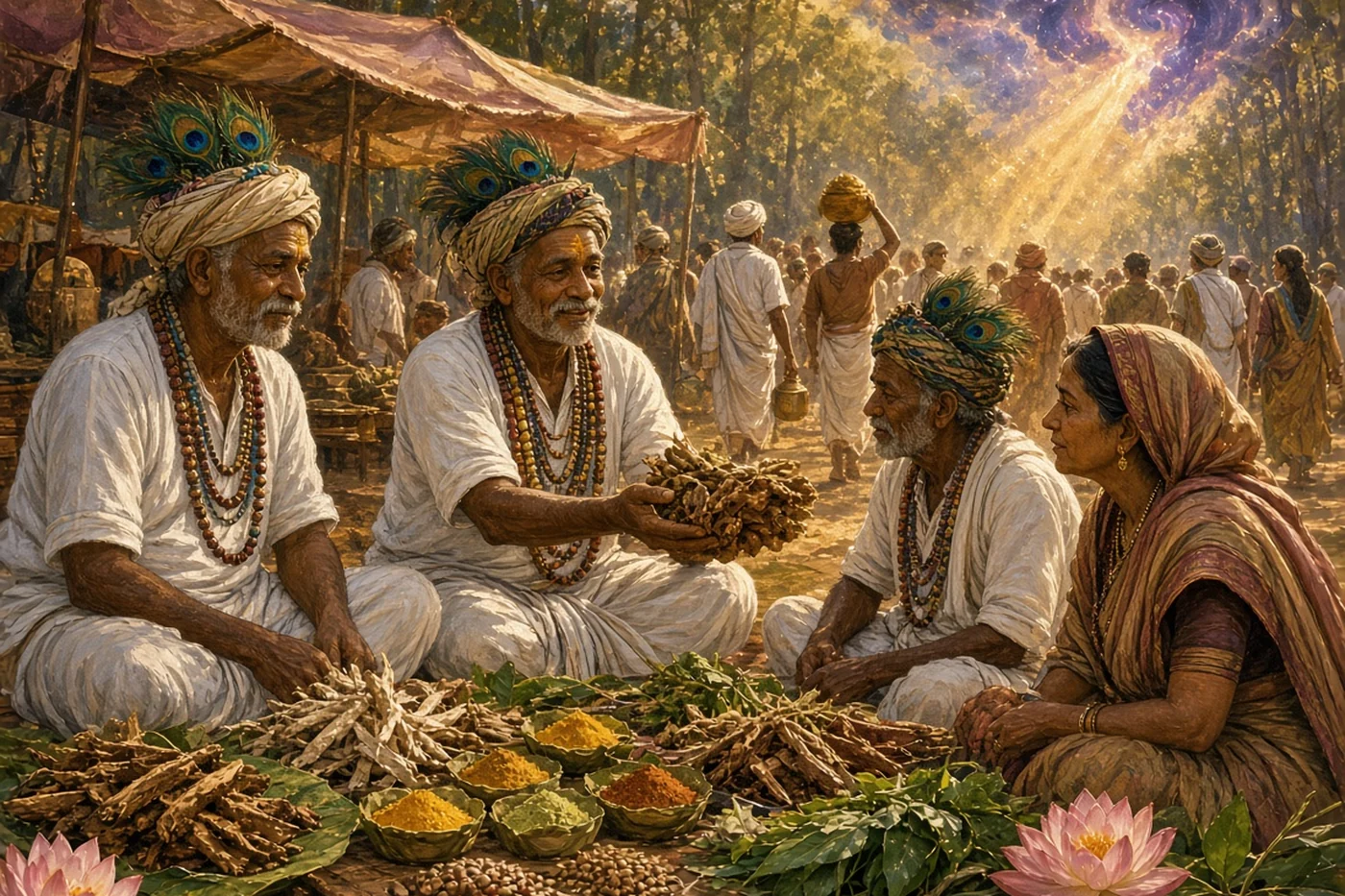
They credit their knowledge to the forest goddesses, not to any book. One of them, a Dora named Lachaiah, told the reporter that the knowledge had come down to him through the generations. A Koya elder named Shankar worried that the young were leaving it for schools and towns. Around them the pilgrims of the plains went past in their crores towards the mother on her raised earth.