Devalok ← All gods
Also calledChinnamastaChhinnamastikaChinnamastikaPrachanda ChandikaVajra VairochaniChintpurnithe goddess with the severed head

In short

Who is Chhinnamasta?
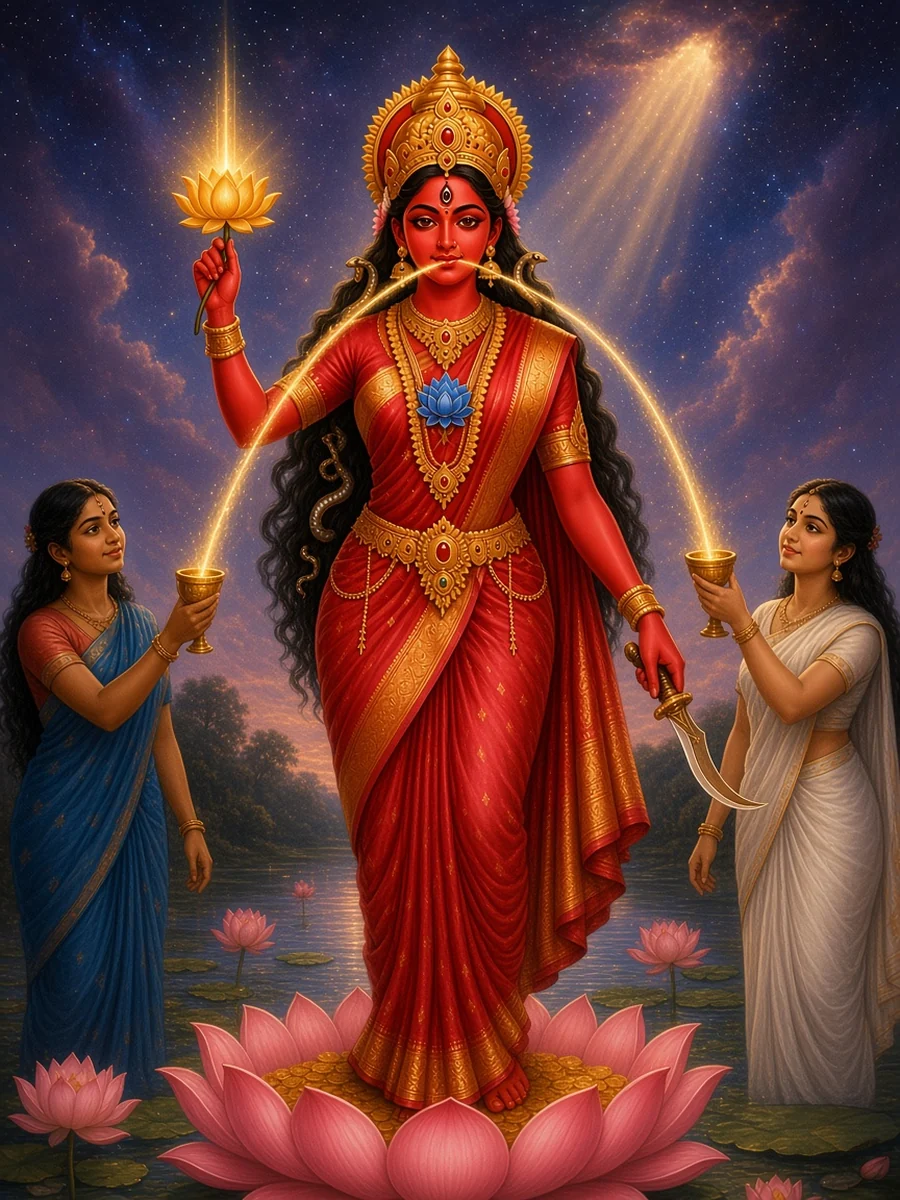
One of the ten Mahavidyas, the forms of the one Goddess. She is shown holding her own cut-off head, feeding herself and her two companions with three streams of blood.
Why did she cut off her own head?
In the oldest written telling her two companions were starving by the river and begged her for food, and she fed them with her own life. Scholars read the image as self-sacrifice, or as spiritual energy rising.
Where is she worshipped?
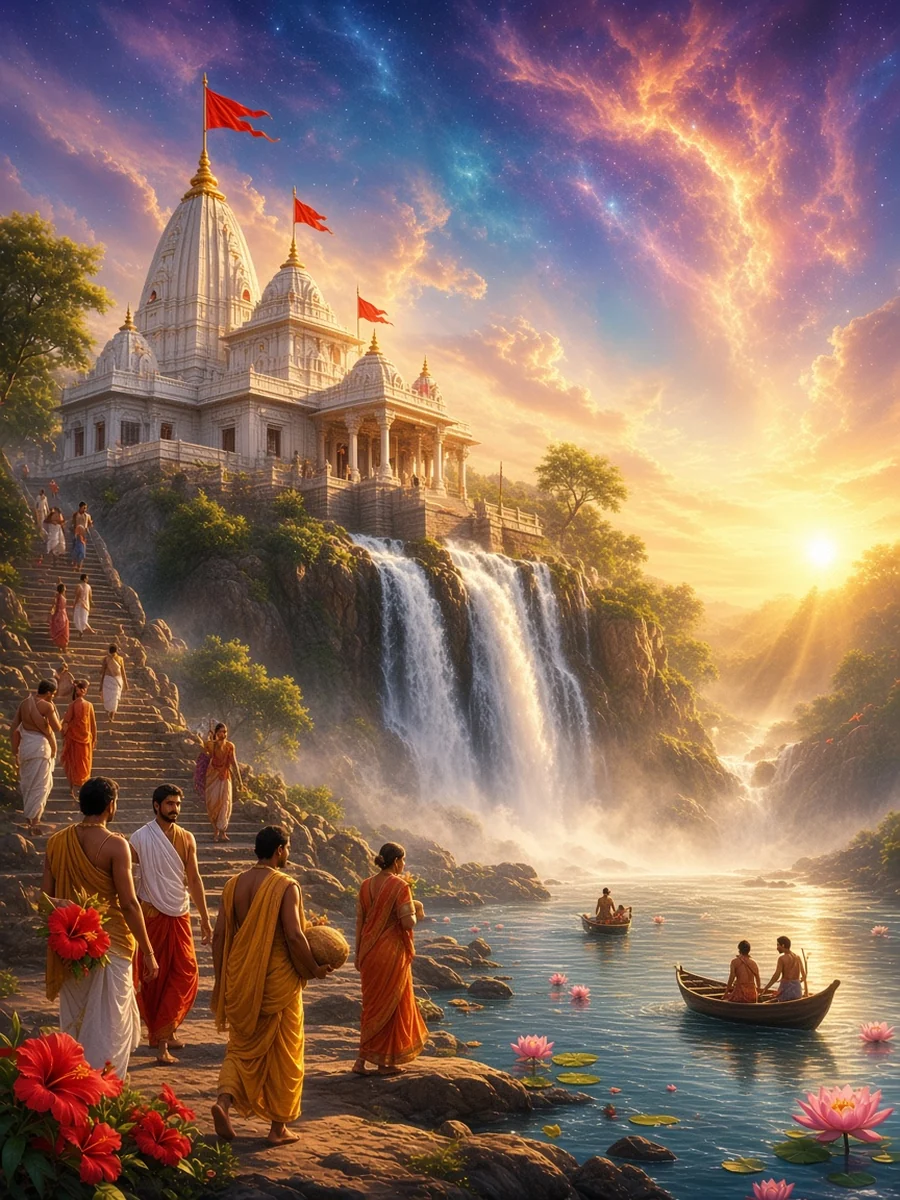
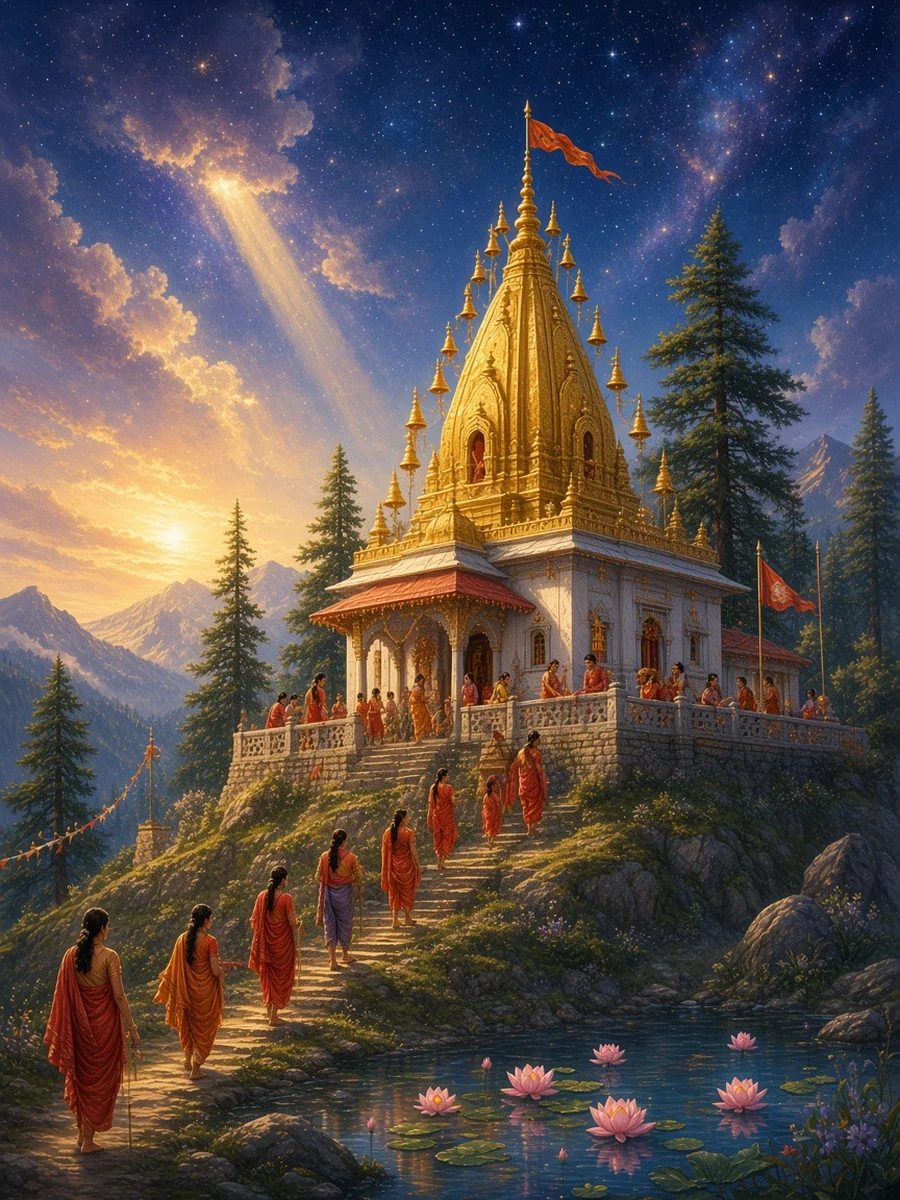
At Rajrappa in Jharkhand, where the Bhera falls into the Damodar, and at Chintpurni in Himachal Pradesh, where she is a gentle goddess who takes away worries.

Artwork ›

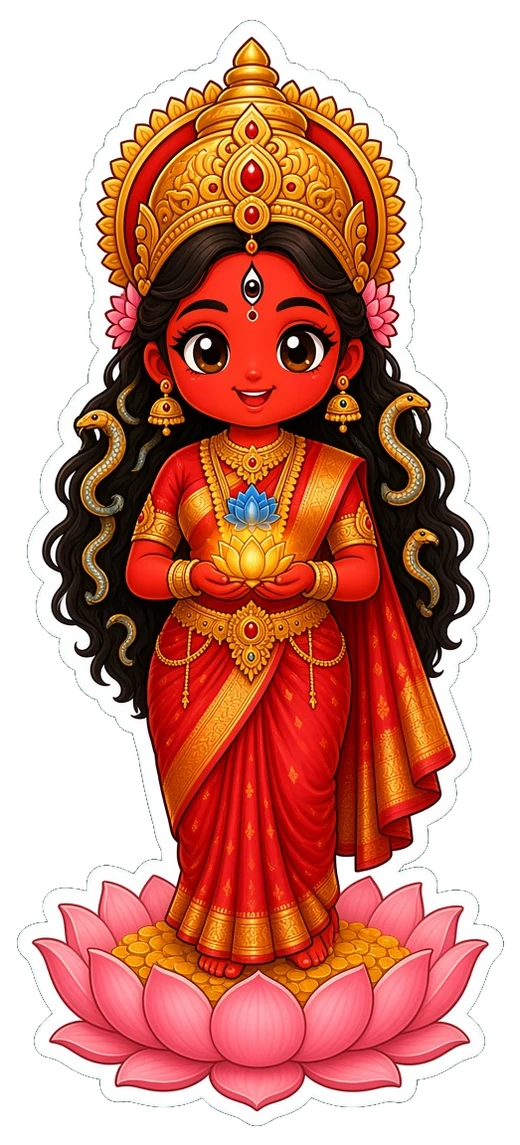
Three streams of light, one for herself and two for her friends Rajrappa, where the Bhera falls into the Damodar

For kids

Sharing is caring
Sharing is caring
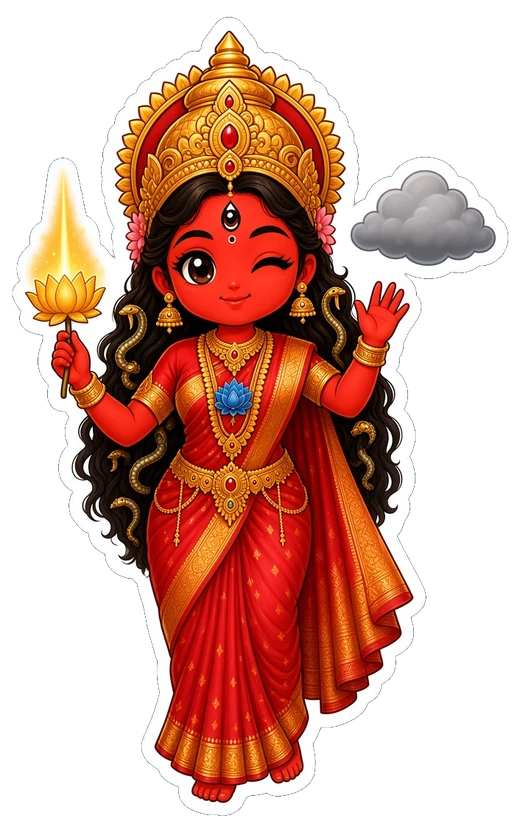
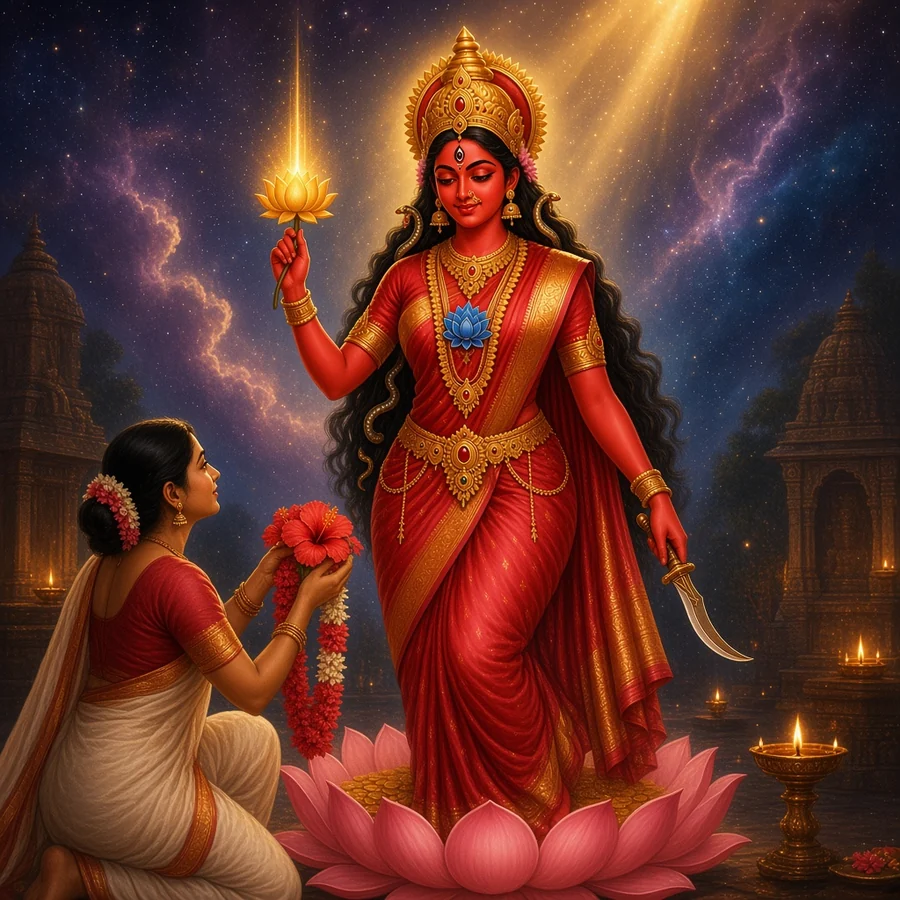
Worries? Not on my watch

At a glance

TraditionShakta
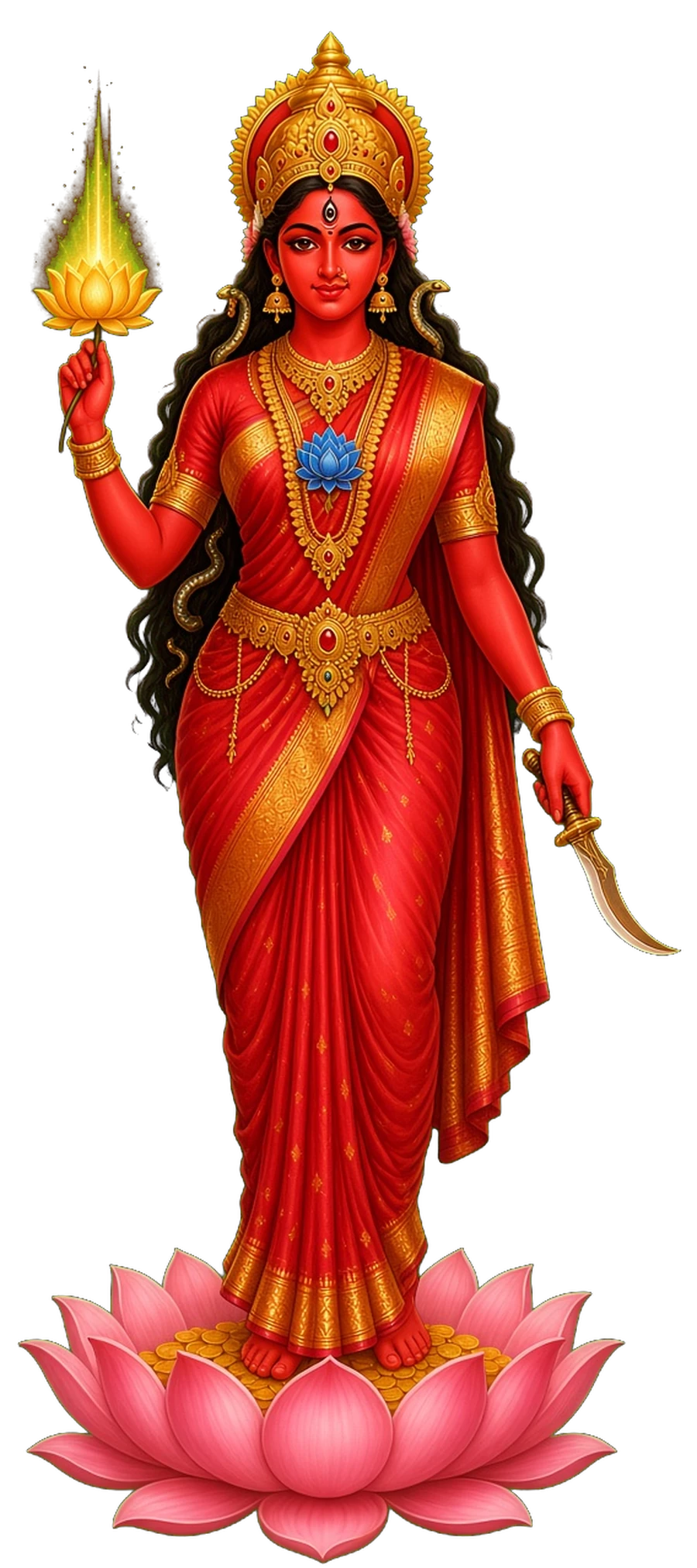
FormA young goddess

red as a hibiscus flower, standing in the archer's stance

In her handsHer own cut head in the left

held up like an offering; a curved knife in the right

Who Chhinnamasta is

Chhinnamasta is the goddess with the severed head. She is one of the ten Mahavidyas, the ten forms of the one Goddess, and the most startling of them to look at. She stands young and red, holding her own head in her left hand and a knife in her right. Three streams of blood rise from her neck. One falls into her own mouth, and the other two into the mouths of her companions, Dakini and Varnini, who stand on either side. She stands on a pair of lovers, which her devotees read as desire mastered.

Pratyalidhapadam sadaiva dadhatim chhinnam shirah kartrikam: Always standing like an archer, she holds a cut head and a knife (the meditation verse on Chhinnamasta).

Her name means "she whose head is cut off". The tantras quoted in the Pranatoshini Tantra say she is Parvati. One day by the river her two companions were so hungry that they begged her for food, and she fed them from her own body and then put her head back on. Tellers in Varanasi call her Prachanda Chandika, the fierce one sent to win a war for the gods, who could not calm down after the battle. The scholar David Kinsley reads her as the goddess of a mother's self-sacrifice, and Elisabeth Benard, who wrote a whole book about her, sees in her the whole sacrifice at once: the giver, the gift and the one who receives it. Kinsley also records a yogic reading, in which the blood is spiritual energy rising through the body and the cut head is a mind set free.

When Sati stood round Shiva in ten forms, the Mahabhagavata Purana put Chhinnamasta on his right, the frightening goddess with her head cut off. That story is told on the site as The Goddess in Every Direction, and her shrine on Kamakhya's hill in The Hill of Ten Goddesses.

She is not often worshipped, and people say only the brave approach her. Her best known temple is at Rajrappa in Jharkhand, on a rock above the place where the Bhera falls into the Damodar, where goats are still offered to her. At Chintpurni in the hills of Himachal she is a round stone under a red cloth and a gentle, Durga-like mother who takes away worries; her name is still carved on the gate, and the priests say a part of Sati fell on that hill, as told in Sati and the Sacrifice. Buddhists know a goddess very like her, Chinnamunda, the severed-head form of Vajrayogini.
Before the Puranas

The Vedic roots of Chhinnamasta

Chhinnamasta is not in the Vedas. Elisabeth Benard says plainly that she has no Vedic antecedents, and David Kinsley found no early references to her and no sign of an early cult. Some writers have pointed to the Vedic goddess Nirriti, or to the dawn Ushas, but these are comparisons, not ancestors. She first appears in Hindu writing around the tenth century, in the goddess literature of eastern India, and her few stories are later still.

Benard takes the Shakta Mahabhagavata Purana, which she dates to about 950, as the earliest Hindu mention: Chhinnamasta stands among Sati's ten forms on Shiva's right. Other scholars date that Purana after the fourteenth century. The Devi Bhagavata names her among the powers that come out of the Goddess to fight the demon Durgama. Her birth stories are later still. Both are quoted in the Pranatoshini Tantra, a Bengali collection printed in 1928, which gives one from the Narada Pancharatra and one from the Svatantra Tantra; the Shaktisamgama Tantra, of about the sixteenth century, retells the second.

She is older in Buddhism, or seems to be. The scholar Benoytosh Bhattacharyya compared the Buddhist and Hindu meditations and mantras and argued that the Hindu goddess came from the Buddhist Chinnamunda, the severed-head form of Vajrayogini, worshipped by the seventh century. Benard is more careful. She shows that both traditions knew her by the ninth century and will not say which borrowed from which.

The tantras that pair the ten Mahavidyas with the avatars of Vishnu cannot agree on her. The Guhyatiguhya Tantra says Narasimha came from Chhinnamasta, and the Mundamala Tantra pairs her with Parashurama. Benard sees the likeness with Narasimha in the in-between: he is neither man nor lion, she is alive without her head.

Her temples are few, and all that Benard found are in the north and the east of India and in Nepal. Rajrappa was well established as her centre by the eighteenth century and was a place of tribal worship long before. A temple at Vishnupur in Bengal, built in 1643, keeps an image of her. Nepal has a thirteenth-century image at Changu Narayan. At Chintpurni the priests say the hill is a Shakti Peetha, though the old lists of the Peethas do not name it.

See how the Vedic gods became the Puranic ones →

Related gods