As the Chhinnamasta Jayanti katha tells it
Rajrappa · the meeting of the Bhairavi and the Damodar · 2 min read
There was once a king called Damodara who ruled his country well. He was fair to his people and he looked after them, and they loved him for it. His queen was Rupama. The palace had everything a palace can have, except the sound of a child, and as the years went by the king and queen grew quiet with waiting.
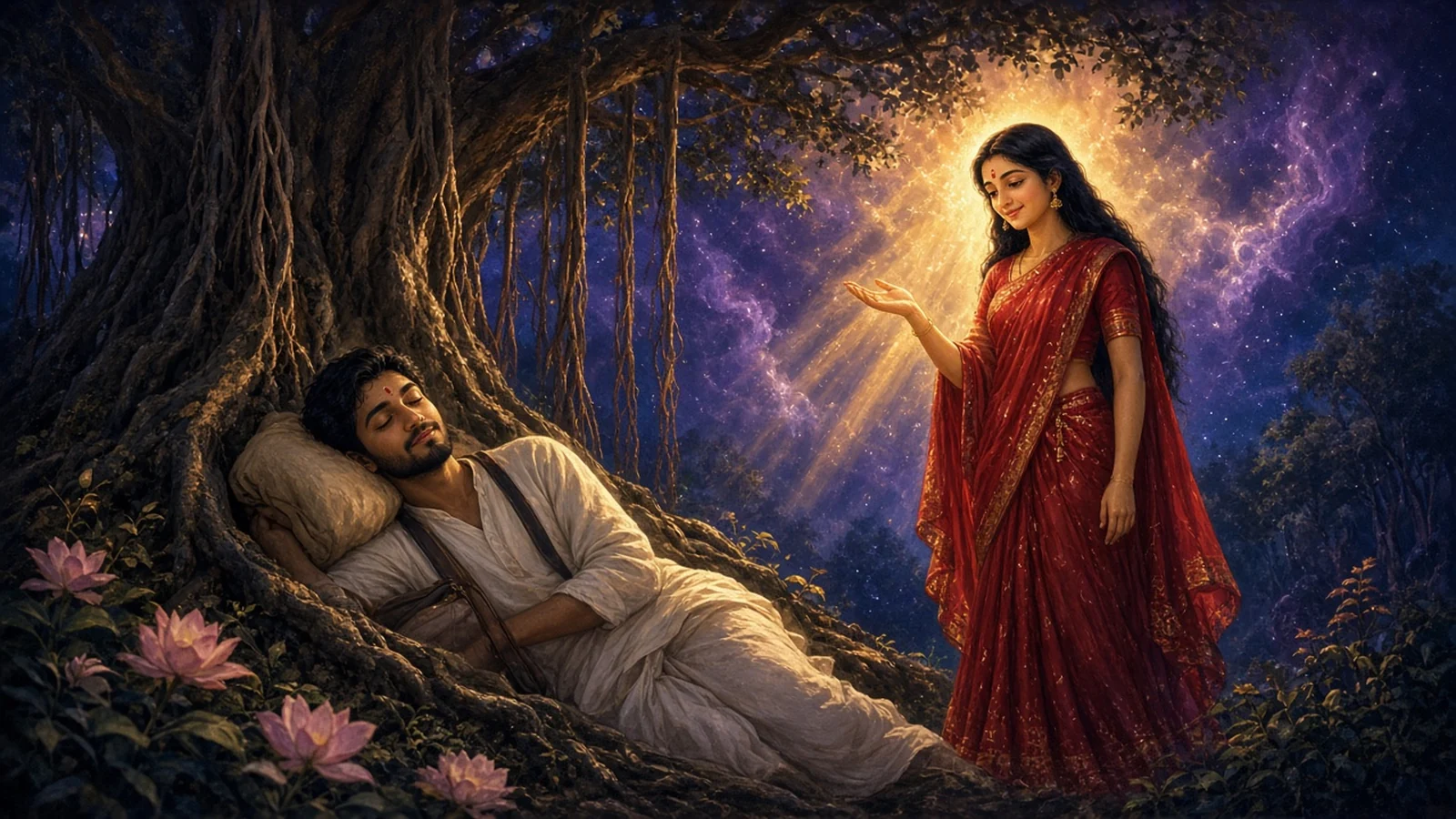
One night when the moon was full, Damodara rode out to hunt. He went further than he meant to, deep into the forest, and he came at last to a place where a small river leapt over the rocks and fell into a broad one. The small river was the Bhairavi, and the broad one the Damodar. It was late, so he made his camp beside the falling water and lay down to sleep.
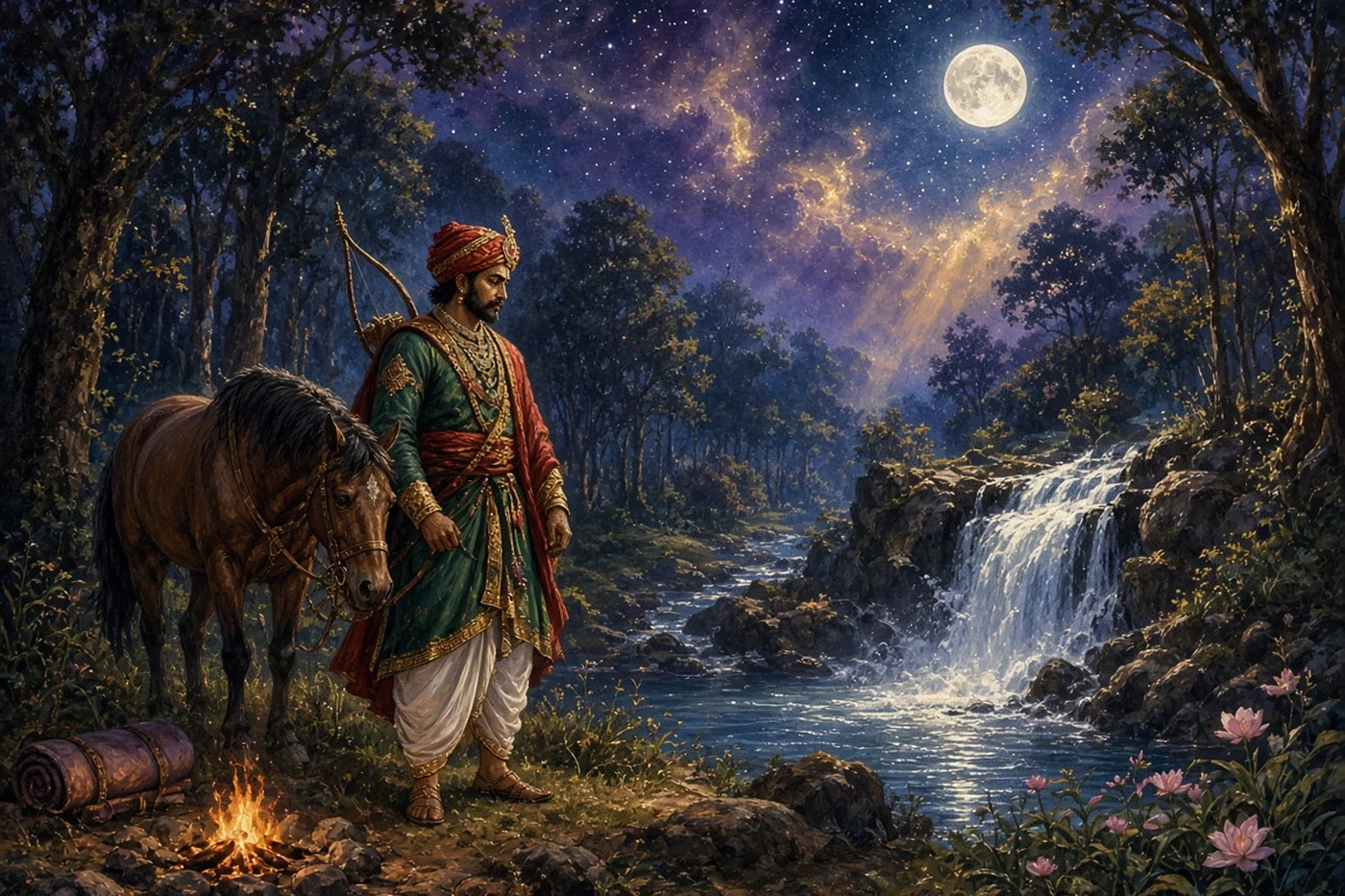
In his sleep a girl came and stood beside him. She wore red, and her face shone.
"King," she said, "you have a kingdom and a crown and a good wife, and still your life is empty, because you have no child."
"It is true," said the king in his dream.
"Then do what I tell you," she said, "and the queen will carry a son."
Then she was gone.
Damodara woke with the moonlight on his face and the noise of the falls in his ears. He could not lie still. He got up and wandered along the bank, looking at the dark trees, half afraid and half hoping.
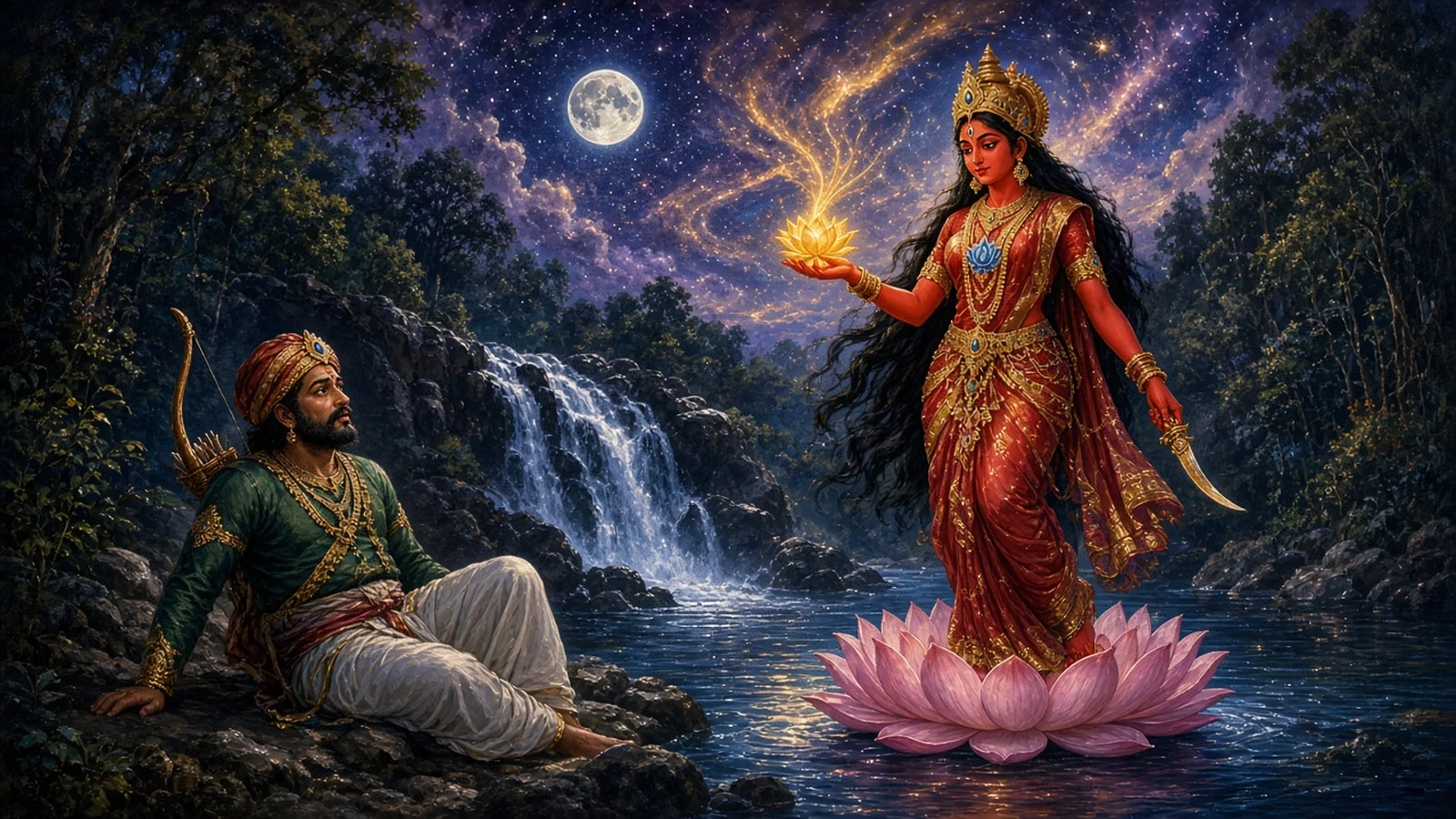
Then the water in the pool below the falls began to stir, and out of the river rose the girl from his dream, in her red clothes, with the water running from her hair.
The king was terrified. He fell back on the stones and could only stare.
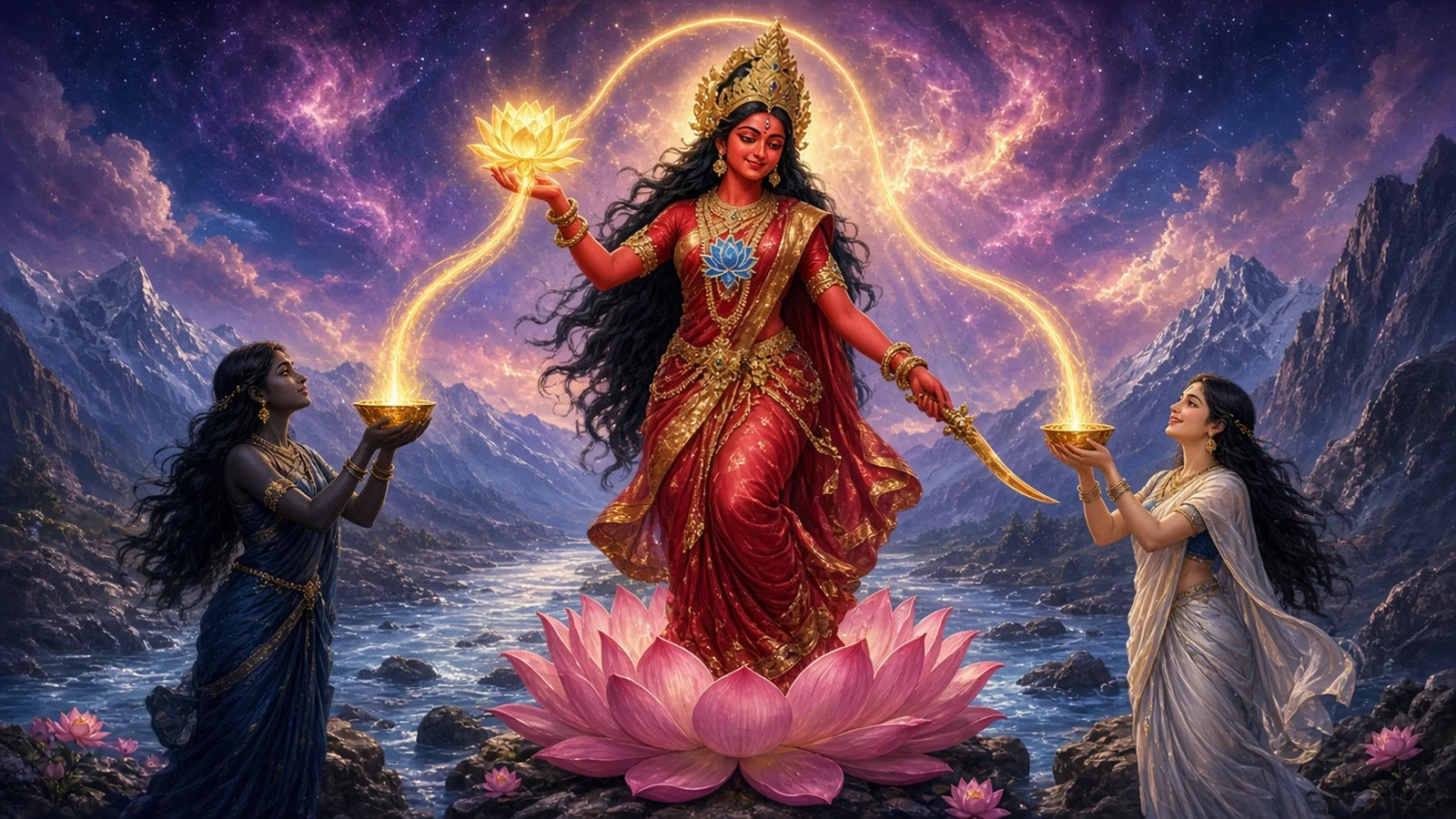
"Do not be afraid," she said. "I am Chhinnamasta. The people of this age cannot see me as I truly am, and so I have lived hidden in this forest since the oldest times. No one comes to me."
"Mother," said Damodara, "what must I do?"
"Nine months from today," she said, "your queen will give you a son. Near the place where the Bhairavi meets the Damodar there is a shrine, and my image is carved there in the rock. Find it. Come to me there in the mornings, and worship me."
Then she sank back into the water, and the pool was still.
The place by the two rivers was named after them, the king and his queen together, Raja and Rupama: Rajarupama. In time the name was worn down by many mouths, the way a step is worn by many feet, until it became Rajrappa, and the meeting of the rivers became a place of pilgrimage.
The story does not say what the son was called, or what kind of king he grew up to be. It says only that the goddess had been waiting there, and that a childless king was the one who found her.
As the shrine's older lore tells it: where the head fell
Rajrappa, Ramgarh district · recorded in Chotanagpur · 1 min read
K. N. Sahay, who wrote a book on the Hindu shrines of Chotanagpur, heard a different reason for the goddess being at Rajrappa, and Elisabeth Benard quotes him in her book on Chhinnamasta.
Long ago, he was told, the goddess fought a battle with an asura. In that battle her body was cut into twelve pieces, and the pieces fell far apart. Her head fell here, beside the Damodar, at the place where the Bhairavi comes down to meet it. And so this is the shrine of the head, and the goddess is Chhinnamastika, the one whose head was cut away.
The goddess Sahay saw was a stone image of a woman without her head, holding the head in her left hand and a sword in her right. Today the goddess is a rock in the shrine, dressed in a cover of eight metals. The present image, the temple's own tradition says, was set up in the eighteenth century by a devotee named Rudranarayan Ghoshal. Some say the first temple was built by Vishwakarma, the gods' own builder, and that an ancient king, Surath, sat in meditation here until the goddess gave him his powers, so that the place is also called Siddhastal, the place of attainment.
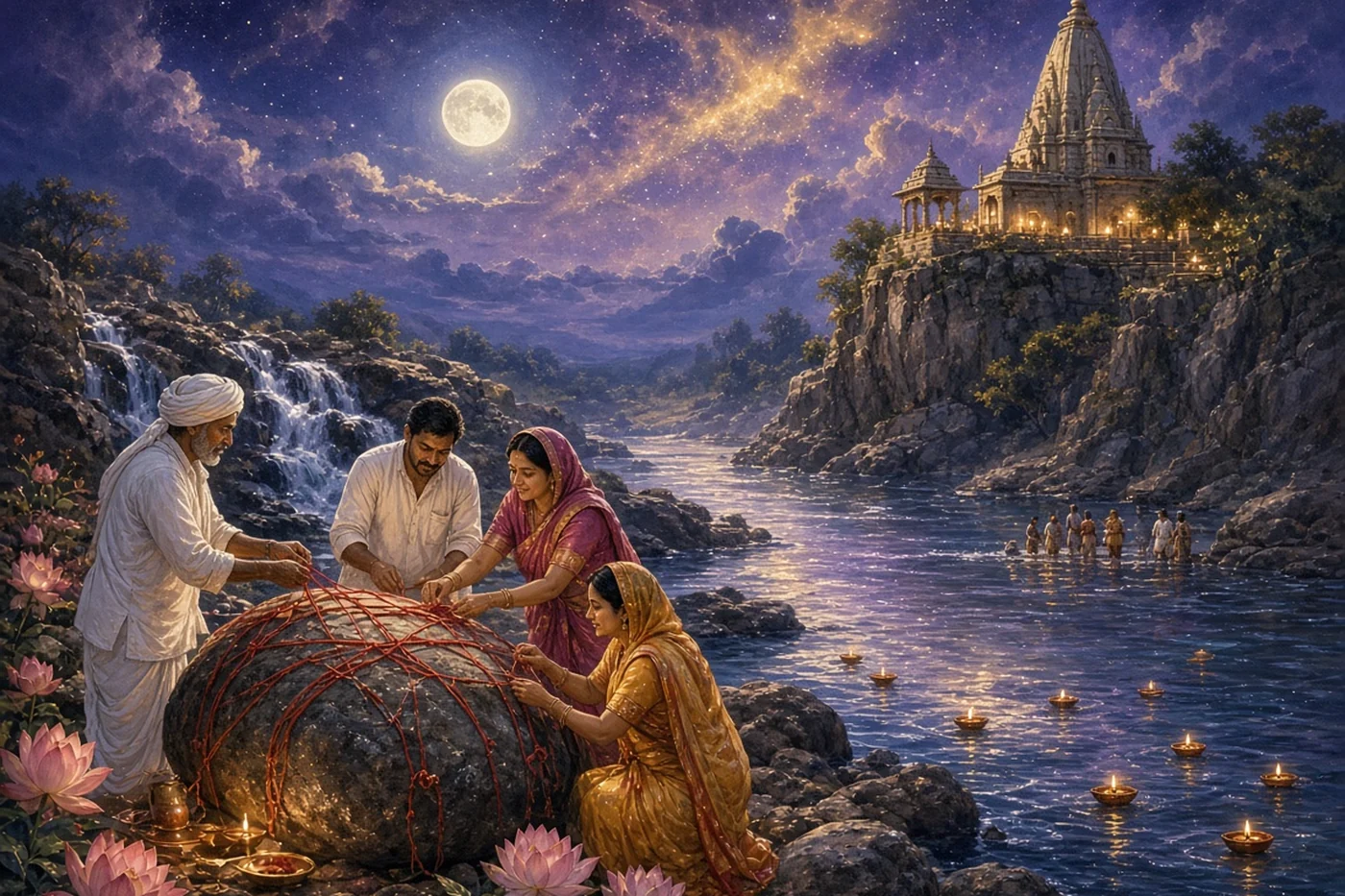
People who come with a wish make a promise here. If the goddess grants it, they say, they will come back with an offering. Others tie a red thread round a rock and leave it there until the wish comes true. They come on the nights of the new moon and the full moon, and in January thousands bathe at the meeting of the two rivers.