As the Kalia family tells it
Chhaproh, now Chintpurni · Una, Himachal Pradesh · 3 min read
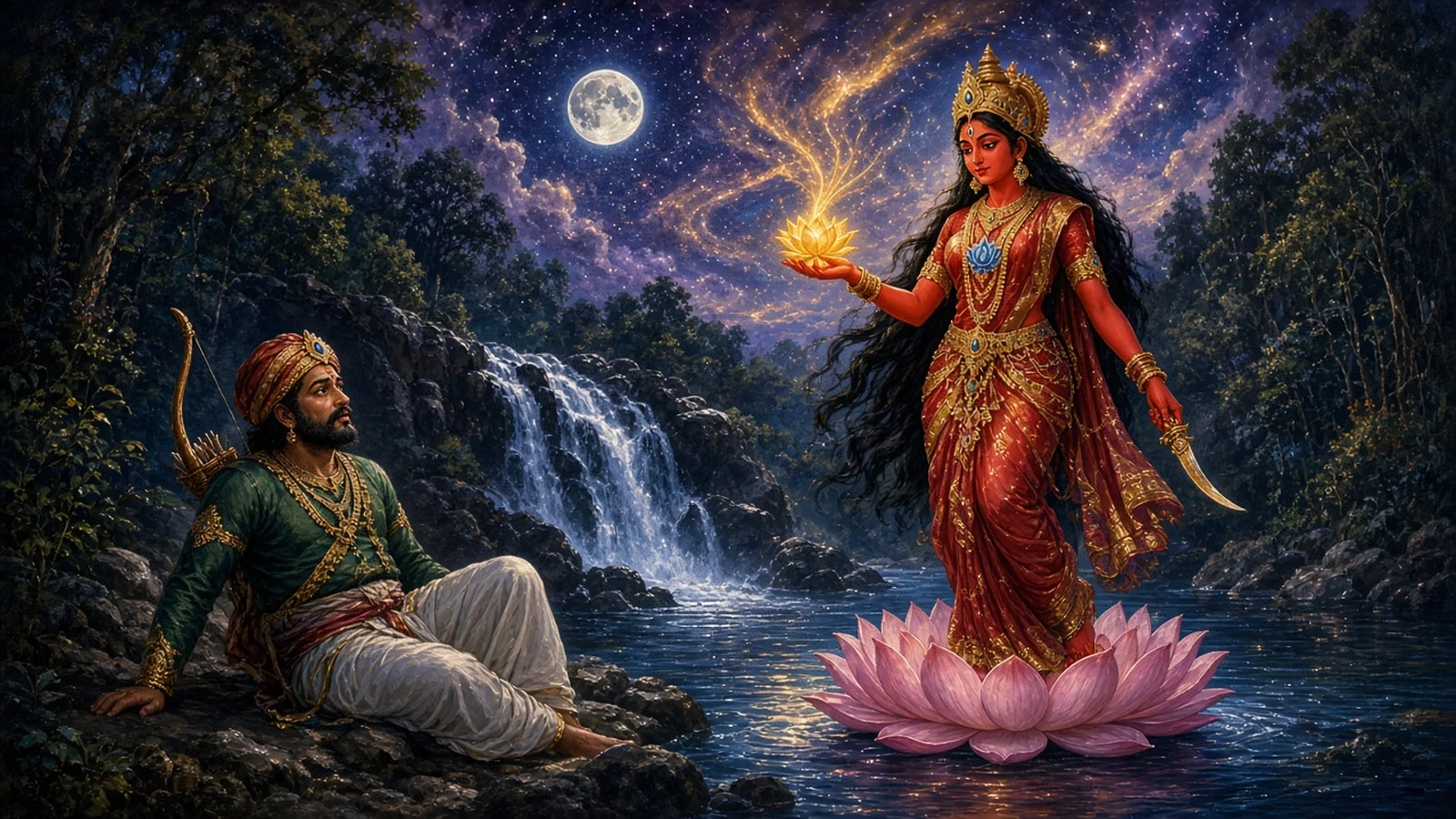
Mai Das was the youngest of three brothers. Their father had loved the goddess Durga all his life, and of his sons only the youngest took after him. Mai Das sang her songs and sat in her worship from morning to night, and his elder brothers, Devi Das and Durga Das, had no patience with it.
While the old man lived, he kept his youngest son fed and asked no more of him. When he died, the two elder brothers sat Mai Das down.
"We will not carry you," said the eldest. "Sing if you like. But a man who sings all day can find his own bread."
So Mai Das went his own way, and he was poor, and his worship did not change.
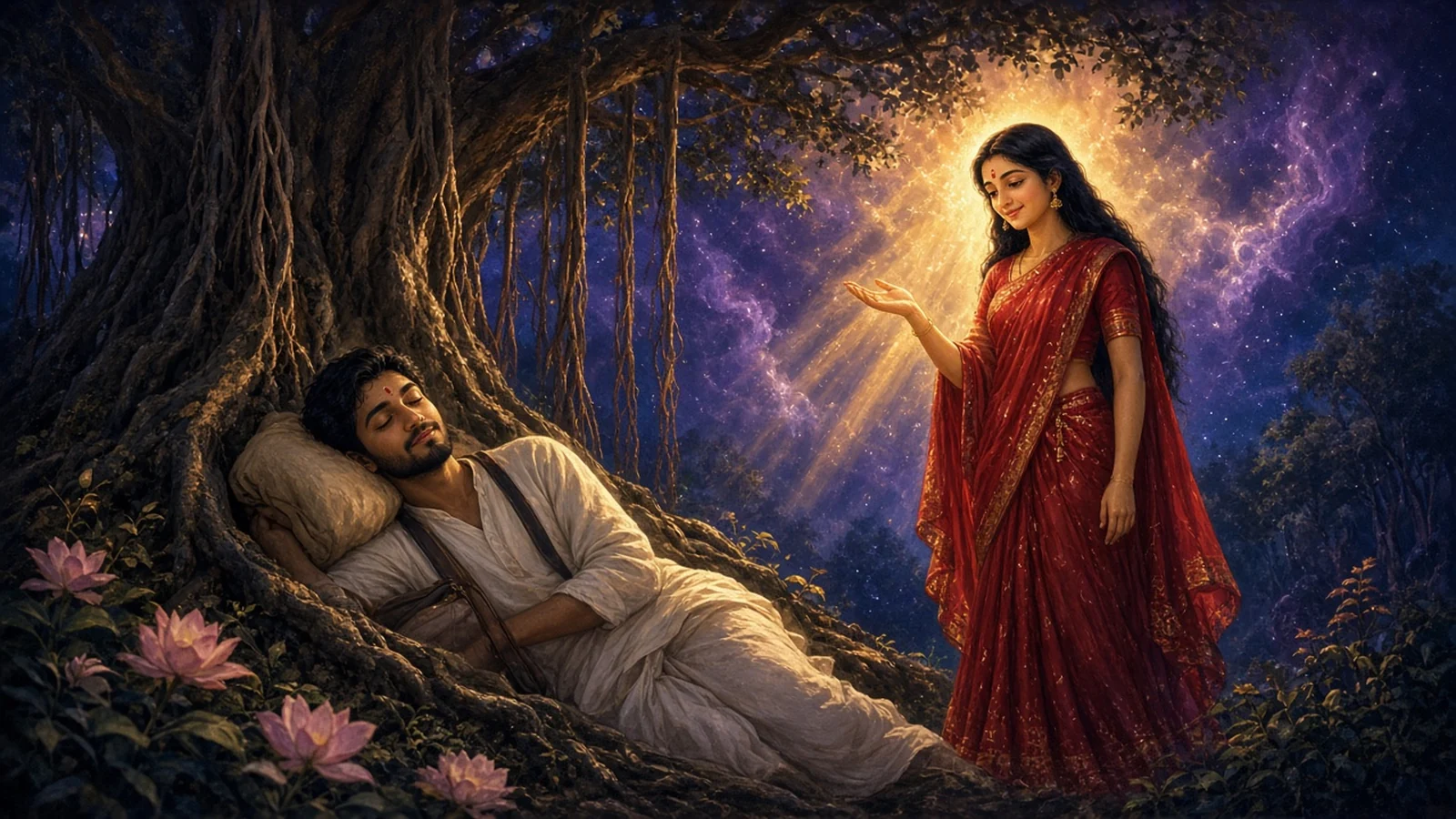
One day he set out for his wife's village. The road climbed through thick forest over the hills of the Sola Singhi range, and at the top of one hill there stood a great banyan tree. He sat down in its shade to rest, and he fell asleep.
In his sleep a girl came to him. She was young and she shone, as if the light came from inside her.
"Mai Das," she said, "stay in this place, and serve me."
He woke under the empty tree. He went on to his wife's family, but he could not settle there. The dream would not leave him. So on his way home he stopped at the banyan again, and sat down, and closed his eyes, and prayed.
"Mother," he said, "if it was you, show me what you want."
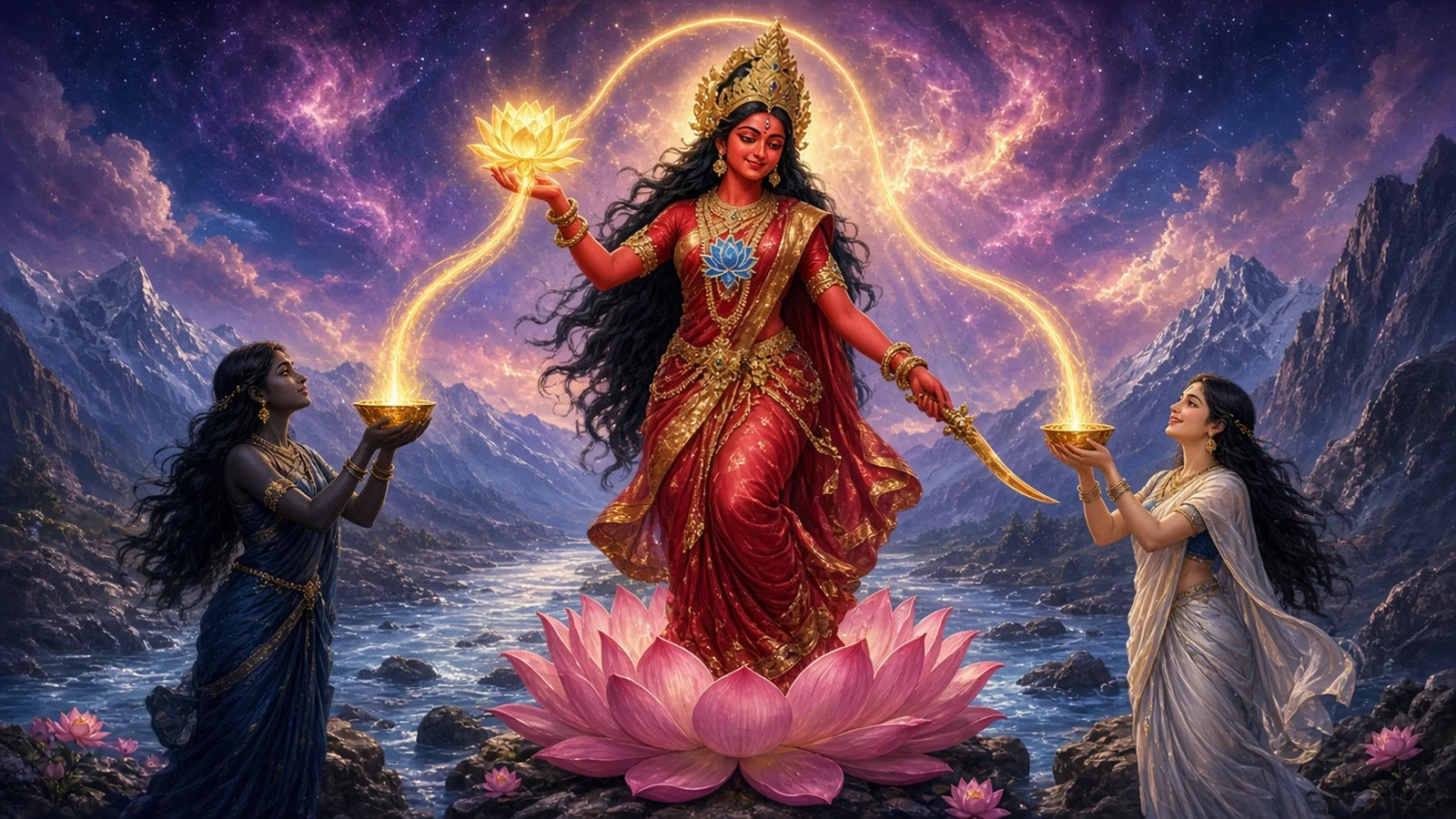
When he opened his eyes the goddess stood before him on her lion, with four arms, as he had always pictured her.
"I have lived on this hill for a very long time," she said. "In this age people have forgotten me. Now I will show myself here again, under this tree, as a round stone, a pindi. Stay, and worship me."
Mai Das looked round at the forest.
"Mother, how can I stay?" he said. "There are panthers in these woods, and wild animals of every kind. And there is no water up here. Not a drop."
"Go down the northern side of the hill," said the goddess, "and lift the stone I will show you. You will find water under it." Then she taught him two mantras, one to greet her and one to call on her, so that he would never be afraid.
"Here they have known me as Chhinnamastika," she said. "From now on they will call me Chintpurni, because I have taken away your worries. People will come and build me a temple, and what they bring will keep you and your children."
Mai Das went down the northern slope and found the stone. He pulled it aside, and clear, sweet water ran out of the hillside.
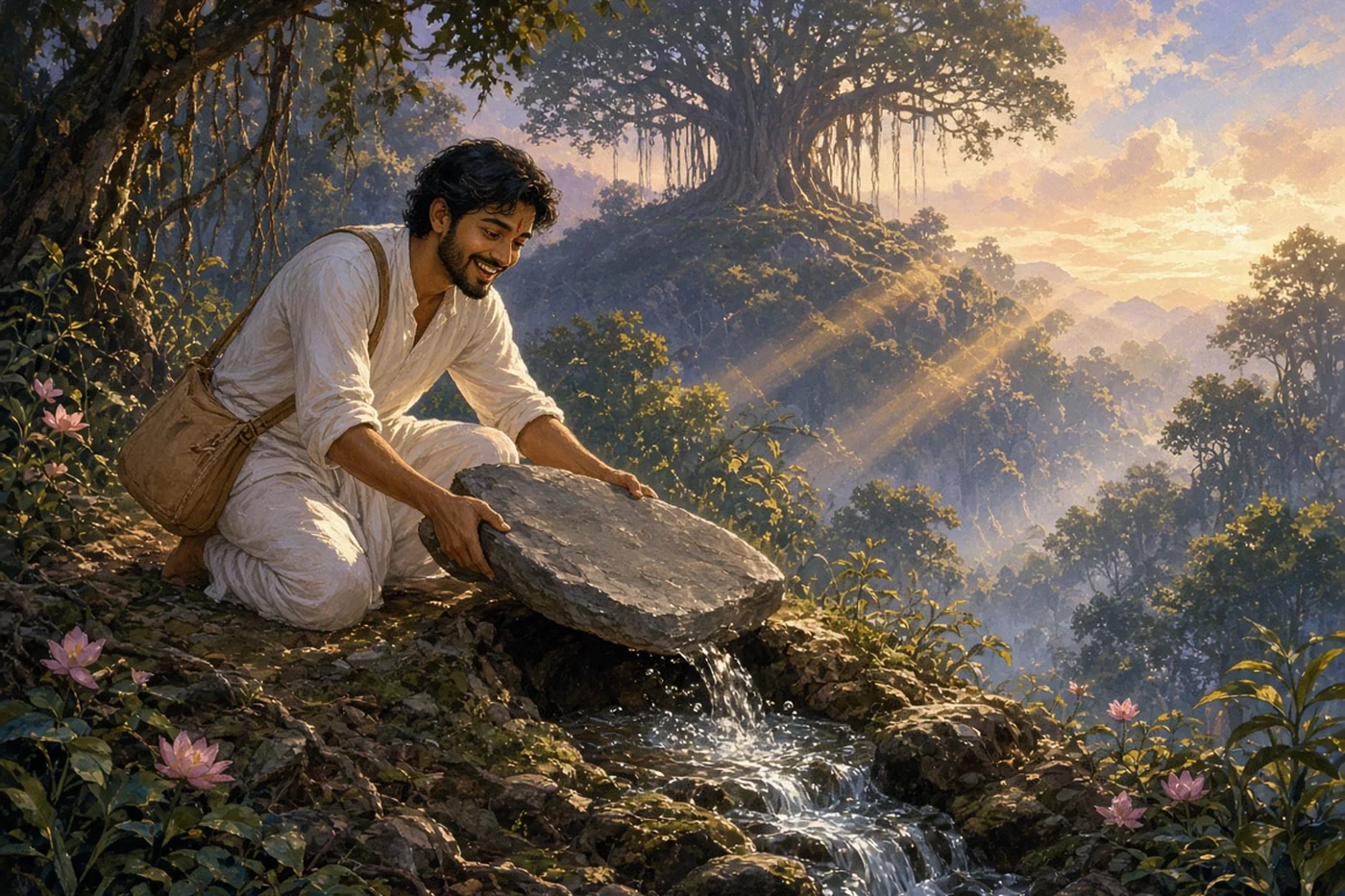
He built a hut beside the water and worshipped the pindi under the banyan every day for the rest of his life. People came, as she had said, and built a small temple, and then a larger one. The water was kept for the goddess. His children served her after him, and their children after them, and the family says that twenty-six generations later his descendants still do.
As the temple tells it: the Peetha on the hill
Chintpurni, Una district · the priests' account · 2 min read
The priests of Chintpurni tell how the goddess came to the hill in another way, and it begins far away, at the sacrifice of Daksha. That story is told on the site as Sati and the Sacrifice: Sati gave up her life there, and Shiva carried her body across the world in his grief until it was scattered, piece by piece, over the land. Wherever a piece fell, the goddess stayed, and each of those places is a Shakti Peetha, a seat of the goddess.
When the scholar Elisabeth Benard came to Chintpurni, the priests told her that this hill is the Peetha where Sati's forehead fell. The word for the forehead is mastaka, and so the goddess here is Chhinnamastaka, the one whose head was cut away. The devotees believe it, Benard wrote, though she found no text to prove it, and the old lists of the Peethas do not name the hill. Others who tell the story say it was Sati's head that fell here, or her feet.
The goddess's old name is still on the gate. The carved plate over the entrance reads Chinnamastaka Mandir, and paintings of her two companions stand on either side of it. One priest said that Chinnamasta is the hill's first name and Chintpurni the newer one.
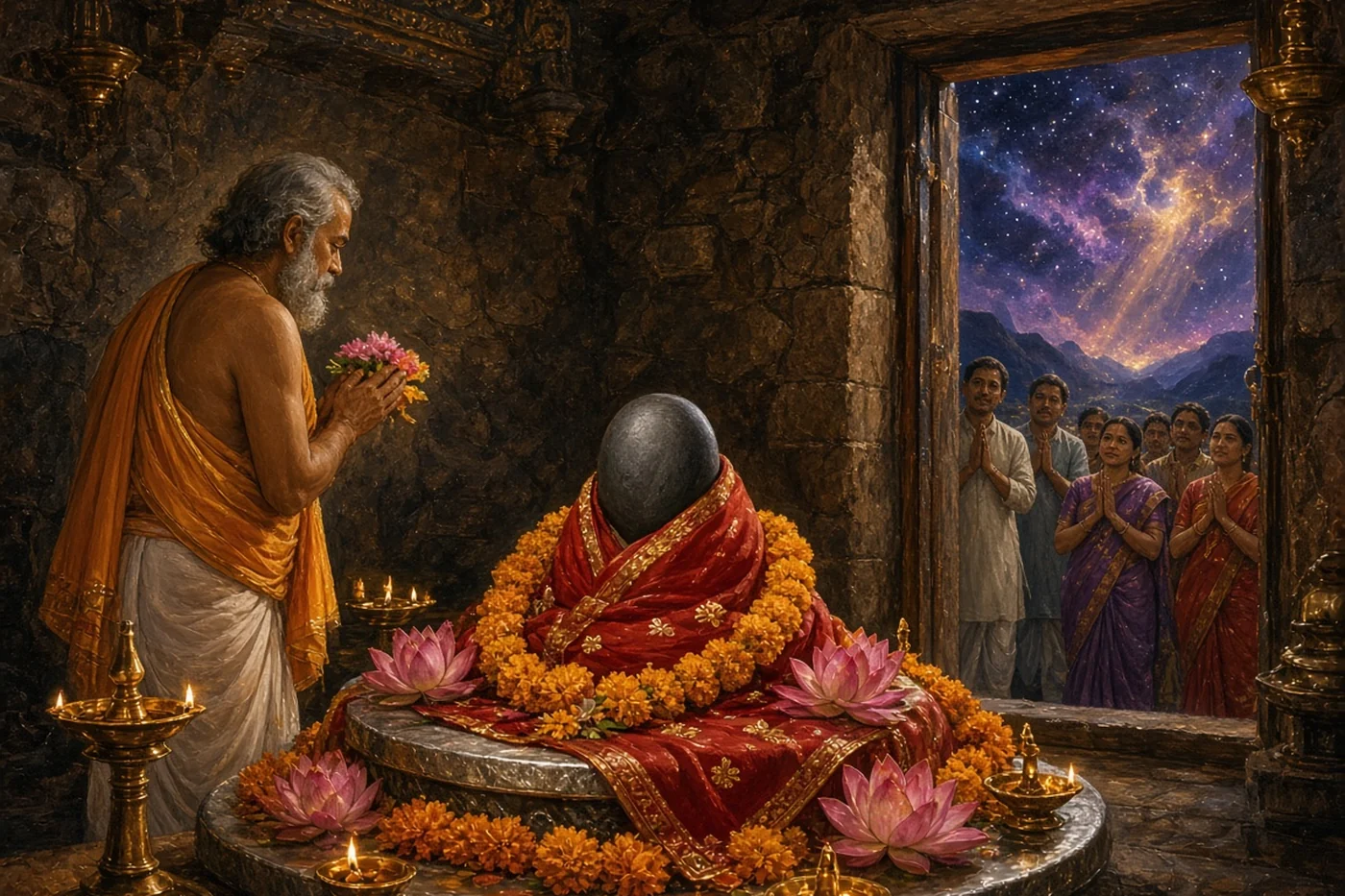
Yet inside there is no severed head. The goddess is the round stone in the sanctum, covered in red cloth. The worship is gentle and vegetarian, and the priests told Benard that a householder should picture her at home as Mother Durga; only those who have left the world picture her in her severed-head form.
Four shrines of Shiva stand round her at an equal distance, one on each side of the hill, like guards: Kaleshwar Mahadev in the east, Narayan Mahadev in the west, Muchkund Mahadev in the north and Shiv Bari in the south.