Devalok ← All gods
Also calledKalkinKalki AvatarVishnuyasha's sonthe White Horse avatar

Artwork ›

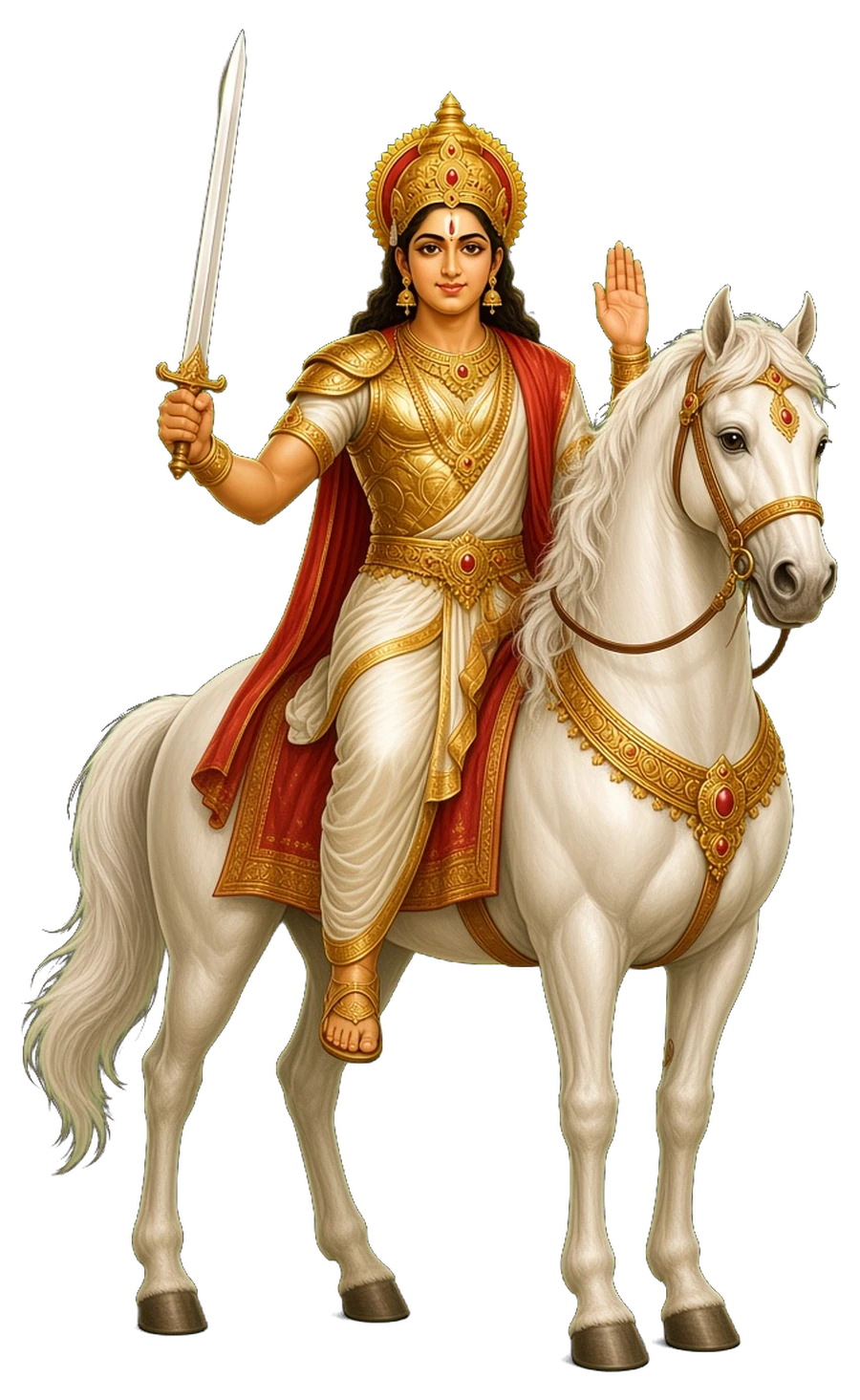
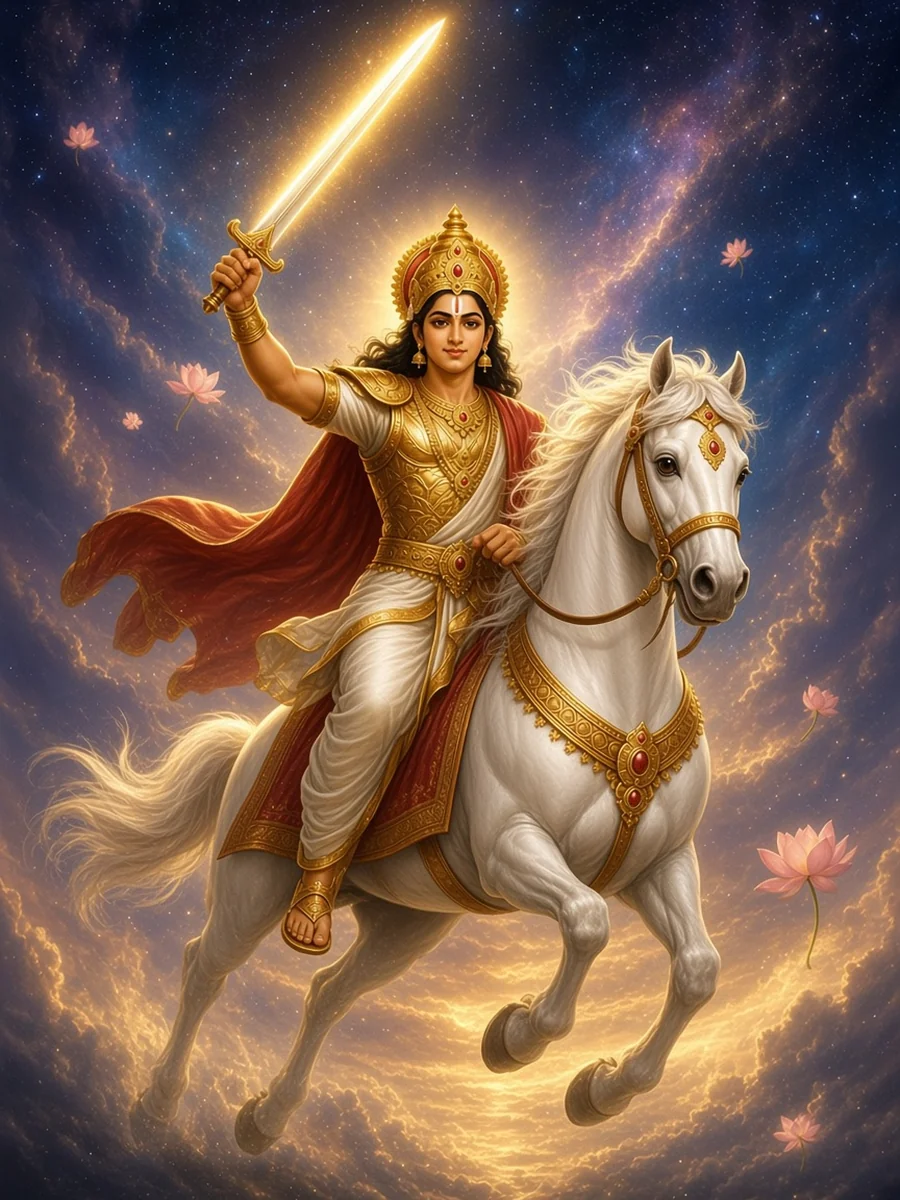
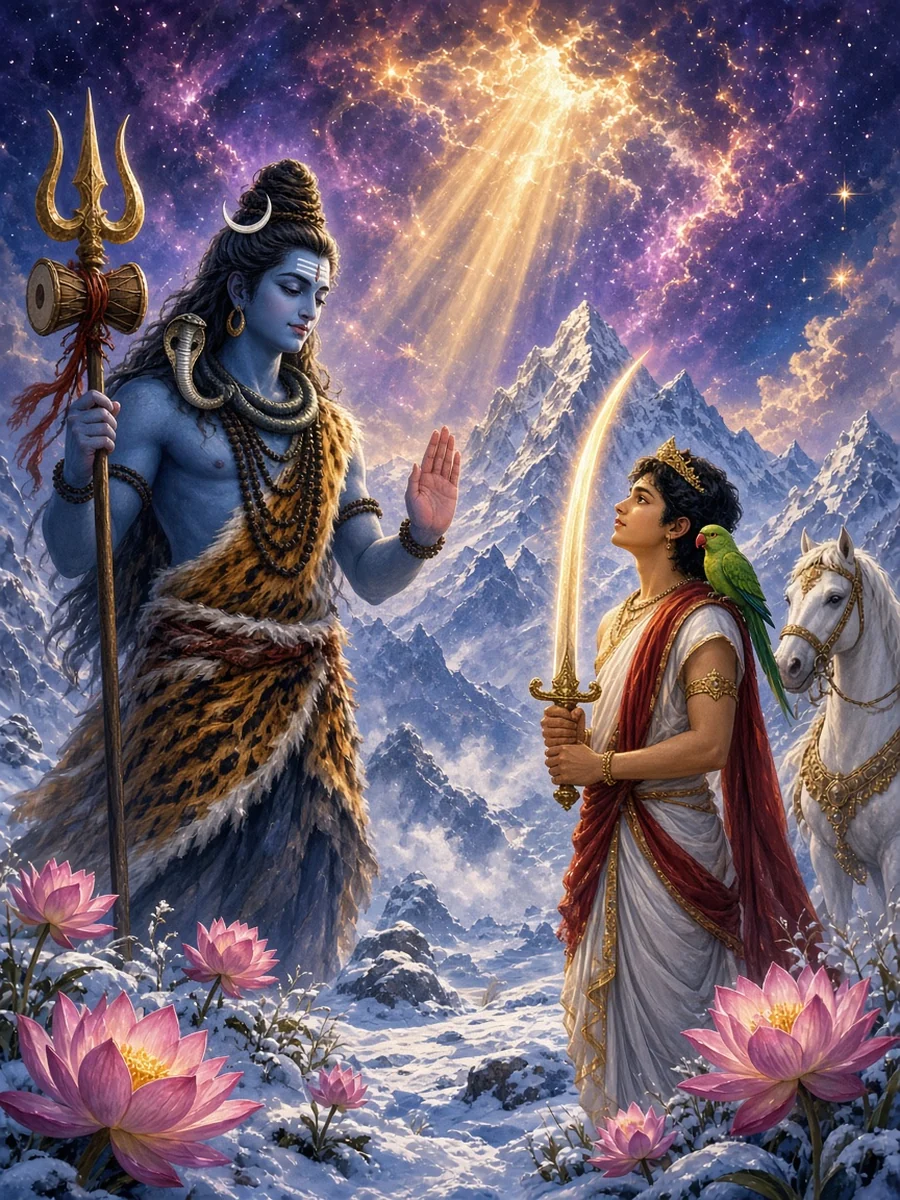
Kalki rides out on Devadatta with his sword blazing like a comet as the dark clouds part Shiva gives young Kalki a jewelled sword, a white horse and a green parrot

For kids

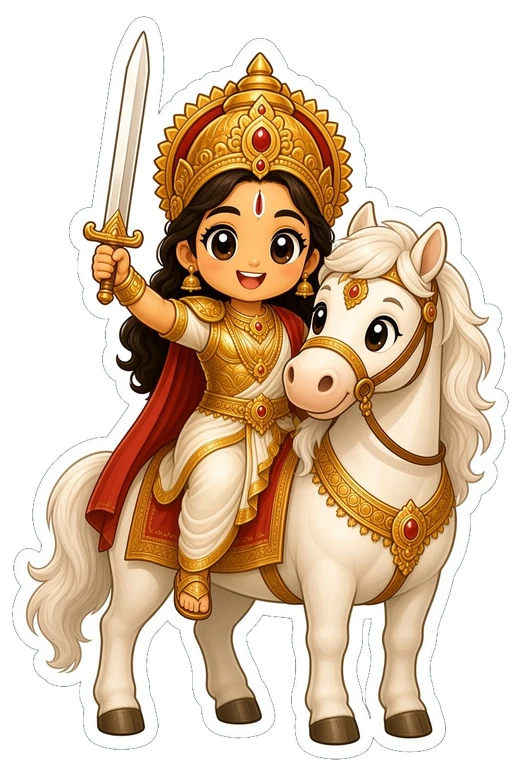
Little Kalki holds his glowing sword up high
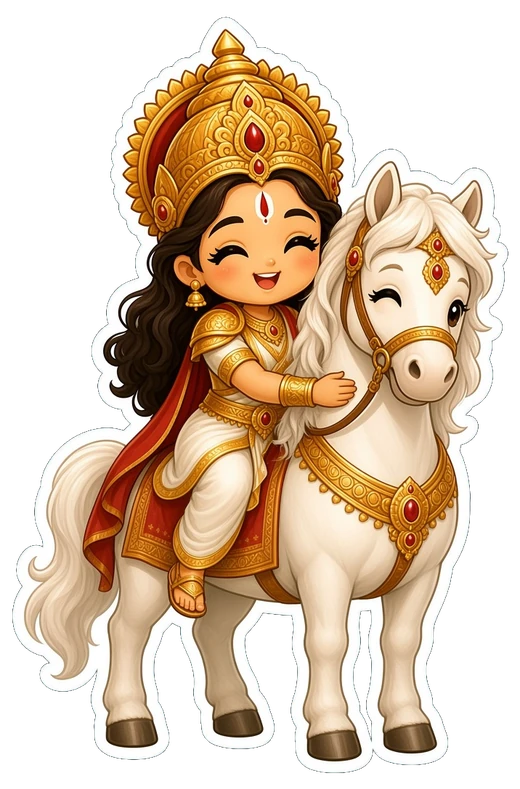
Little Kalki gives his white horse Devadatta a big hug

At a glance

TraditionVaishnava
FormA young warrior on horseback

armoured and crowned

His horseDevadatta

white, sometimes winged

Who Kalki is

Kalki is the avatar who has not happened yet. Of the ten forms of Vishnu that the tradition counts, nine have come and gone, from the fish to the Buddha or Balarama. The tenth is waiting at the end of time.

The Puranas say that the age we live in, the Kali Yuga, will grow steadily worse. Kings will rob their people, the learned will sell their learning, families will break apart and the rains will fail. When the dark age is at its darkest, Vishnu will be born once more, as the son of a brahmin named Vishnuyasha in a village called Shambhala.

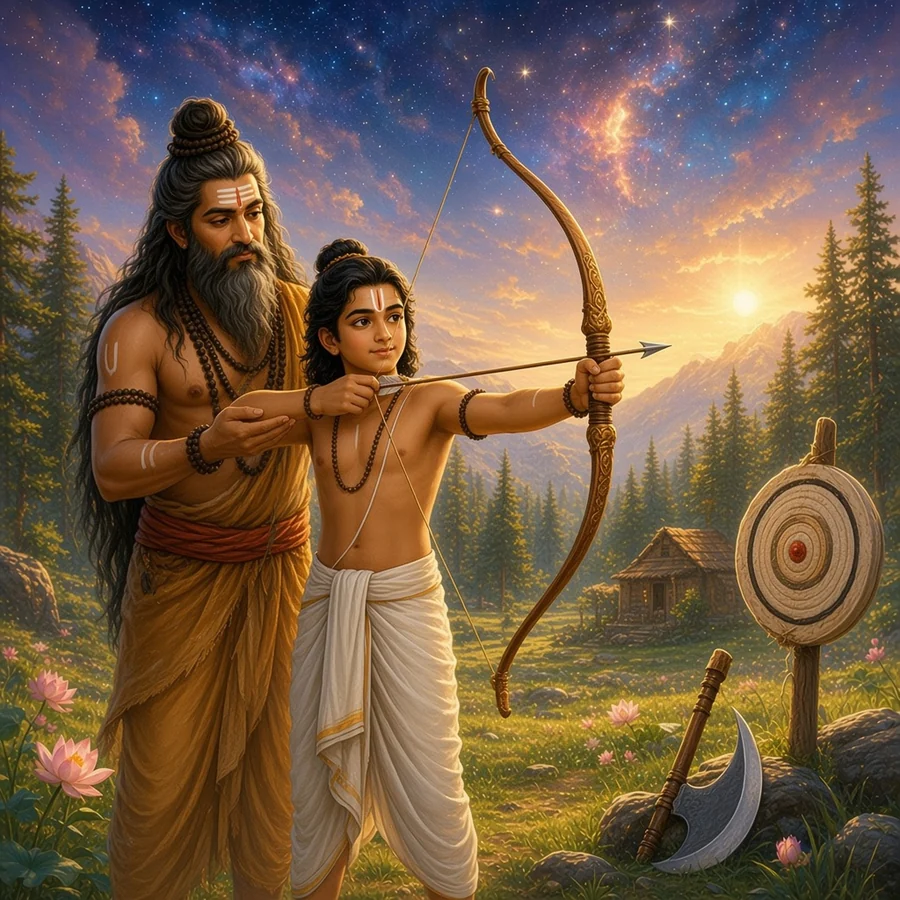
He will be called Kalki. He will learn the arts of war from Parashurama, the avatar who never died. He will be given a white horse, Devadatta, and a sword, and he will ride out across the earth and destroy the wicked, and when he has finished the age of truth, the Satya Yuga, will begin again.

Mleccha nivaha nidhane kalayasi karavalam, dhumaketum iva kim api karalam, Keshava dhrita Kalki sharira, jaya Jagadisha Hare: Jayadeva's verse for the tenth avatar in the Gita Govinda, raising a sword like a comet.

The Kalki Purana, a late text, gives him a whole life story, with a wife, Padmavati, a princess of Simhala, whom he wins with the help of a talking parrot.

Kalki is one of the few gods who is worshipped mostly in hope. His temples are few, and most are recent. But his white horse is in every set of Dashavatara paintings, the last panel, galloping out of the frame.

Before the Puranas

The Vedic roots of Kalki

The idea of a last avatar is older than the name. The Mahabharata's Vana Parva has the sage Markandeya describe the end of the age and a brahmin named Kalki Vishnuyasha, born at Shambhala, who will set the world right. The Vishnu Purana and the Bhagavata Purana take him into their lists of avatars, the Bhagavata naming him in its first book among Vishnu's incarnations. Its twelfth book describes him riding the swift horse Devadatta, sword in hand, across the earth, and says that when he comes the minds of the people will become clear again.

The Kalki Purana, probably composed in Bengal well after the main Puranas, turns the few lines into a full romance: his birth, his training under Parashurama, Shiva's gift of the horse and the sword, the parrot Shuka who carries messages to Padmavati, and the wars against the forces of Kali.

Kalki travelled beyond the Hindu texts. The Buddhist Kalachakra Tantra, of the eleventh century, has a line of Kalki kings ruling the hidden kingdom of Shambhala, the last of whom will defeat the enemies of the dharma in a final battle. The Dasam Granth of the Sikh tradition includes a long Kalki Avatar among its tellings of the avatars.

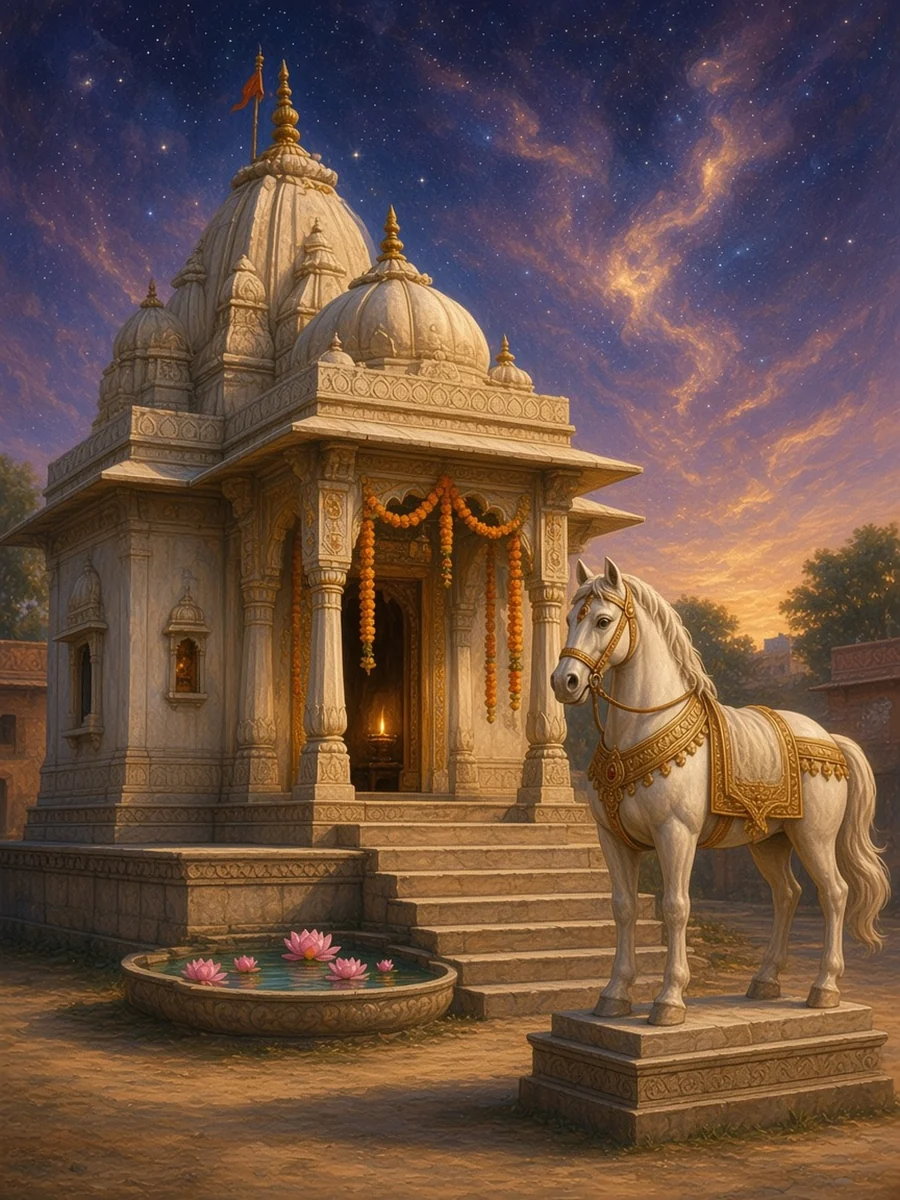
In Jaipur, Sawai Jai Singh II built a temple to Kalki in 1739, and named his grandson Kalki Prasada. A temple of Kalki stands outside Jaipur's City Palace with a stone horse waiting before it. In February 2024 the foundation stone of a large Kalki Dham was laid at Sambhal in Uttar Pradesh, which many identify with the Shambhala of the Puranas.

See how the Vedic gods became the Puranic ones →

Related gods