Devalok ← All gods
Also calledGogaGogoGugaGuggaGugga PirGoga PirJahar VeerJaharveer GogaZahir PirJahar PirZahir DiwanGoga ChauhanBagarwalaGogga Veer

In short

Who is Gogaji?
The snake-bite god of north-western India, by tradition a Chauhan prince of the Bagar country born at Dadrewa in Rajasthan by the grace of the yogi Gorakhnath. Hindus call him Goga Veer, Muslims Zahir Pir or Jahar Pir, and Sikhs honour him too.
Why do people pray to him about snakes?
The snakes obey him. He saves those who call on him from snakebite, his shrines carry snakes carved in stone or painted on the wall, and the bitten are brought to them for healing.
Where is his samadhi?
At Gogamedi in Hanumangarh district, Rajasthan, where the tellings say the earth took him alive with his horse. Pilgrims bow first at Gorakhnath's mound and then at the samadhi.
When is his festival?
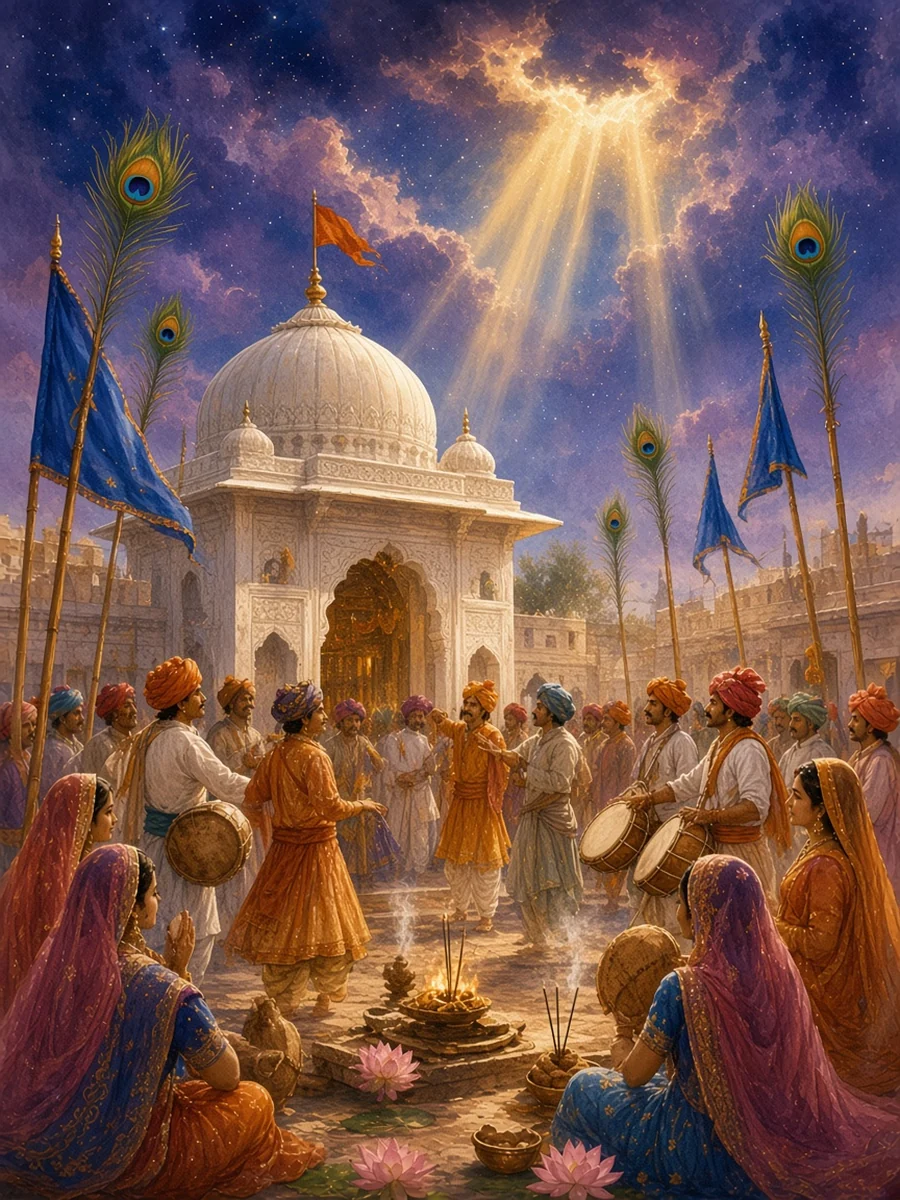
Goga Navami, the ninth of the dark half of Bhadrapada, in August or September, when his fair runs at Gogamedi for three days and his standard with peacock feathers is carried from door to door.

Artwork ›

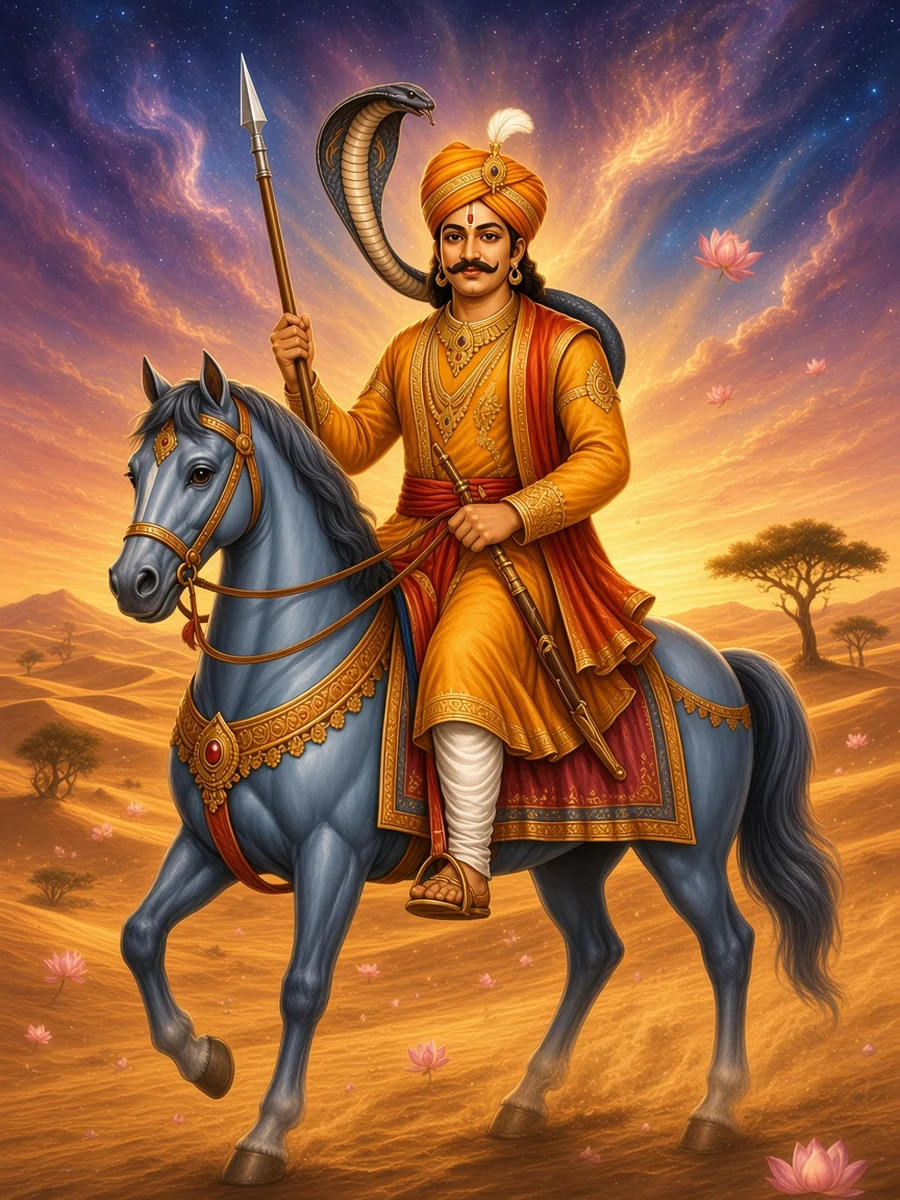
Riding across the Thar The Goga Navami fair at Gogamedi

For kids

Jai Goga Veer
Jai Goga Veer
My snake has my back

At a glance

TraditionFolk
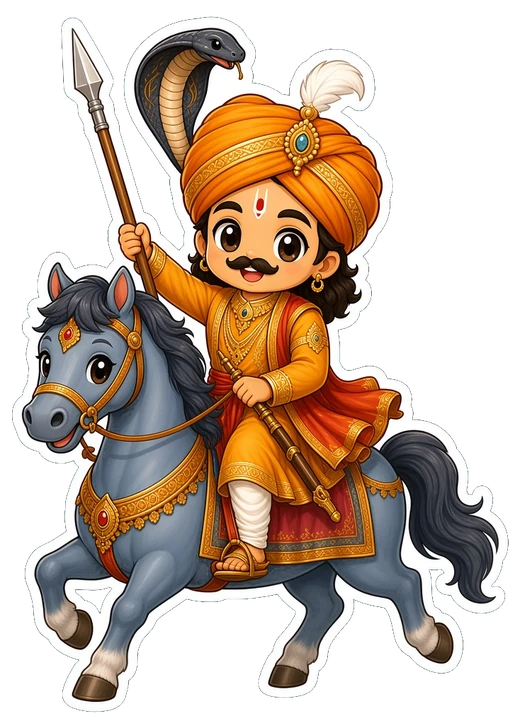
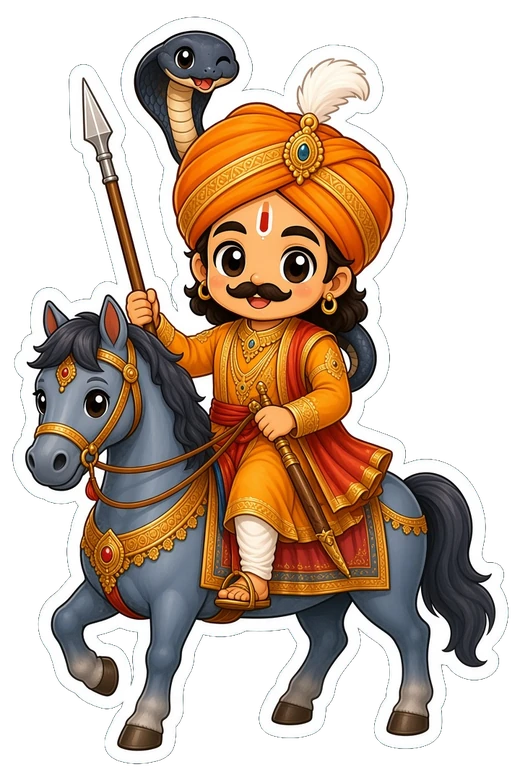
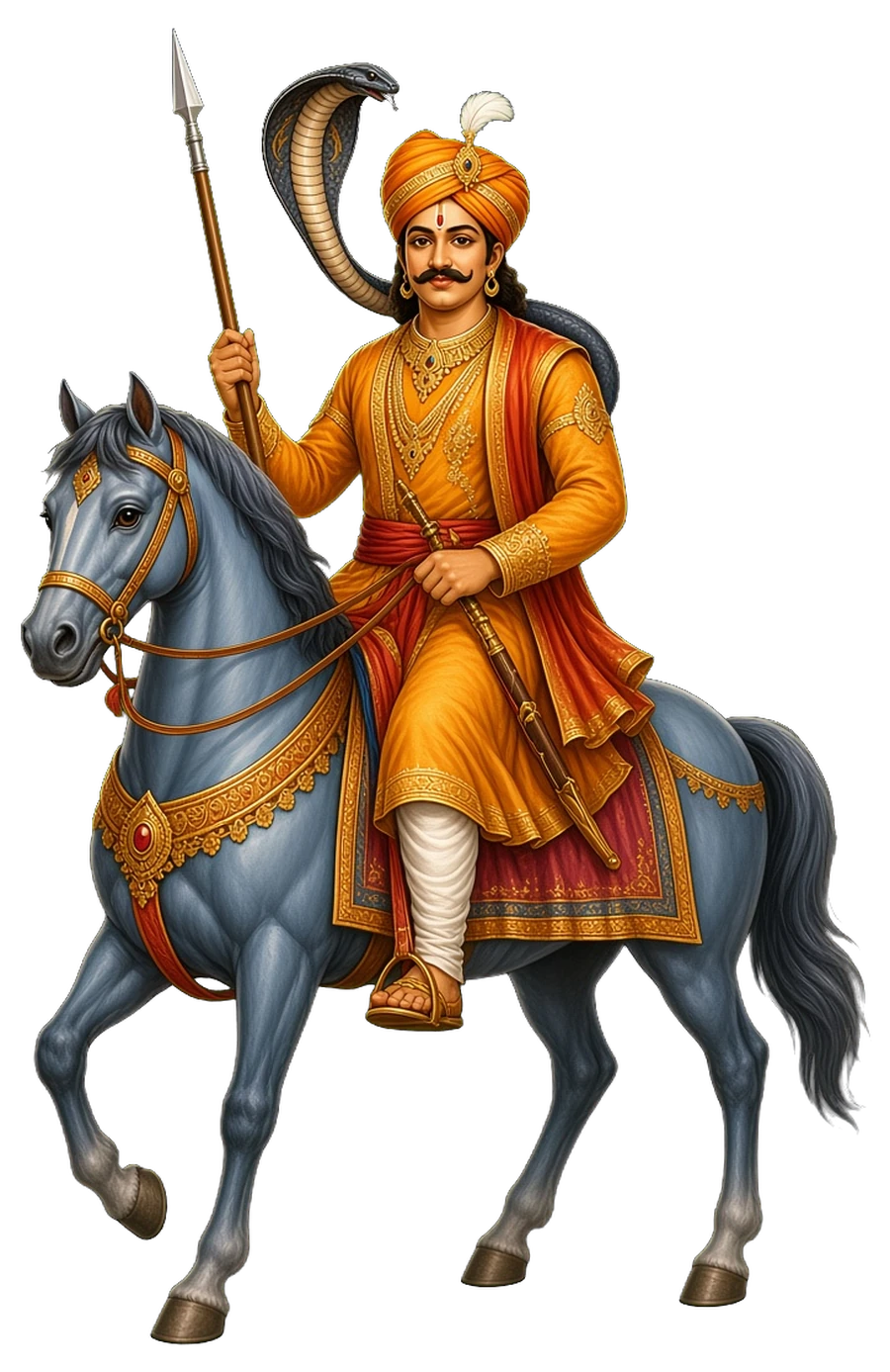
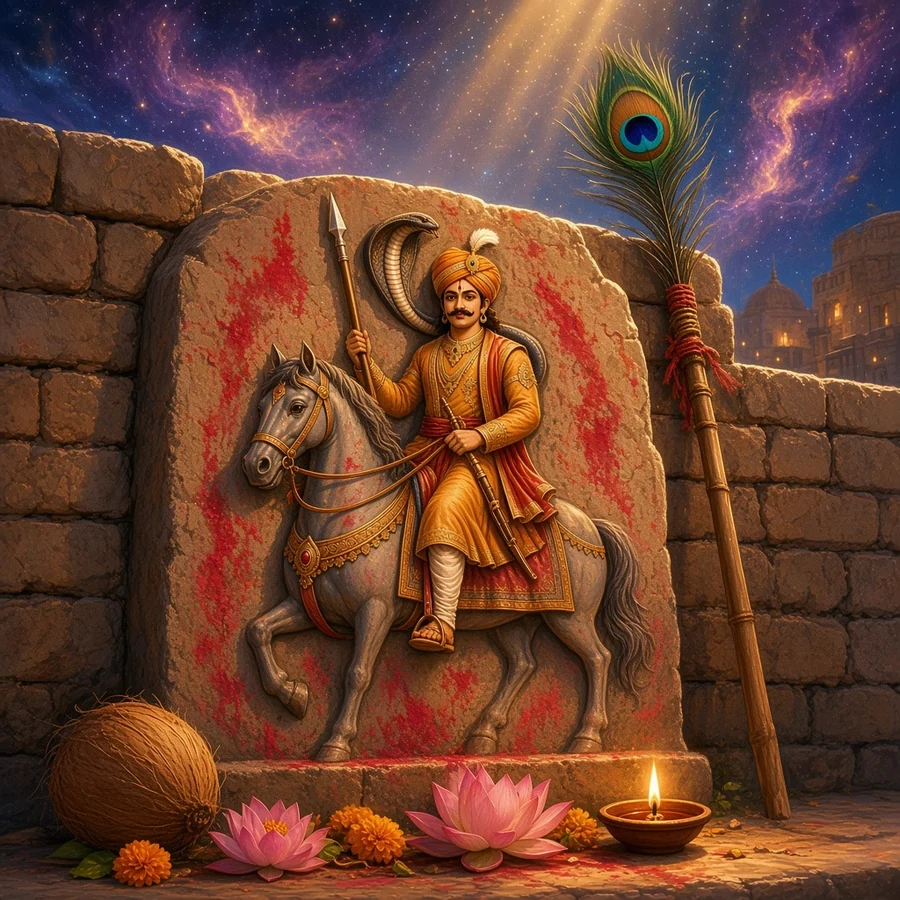
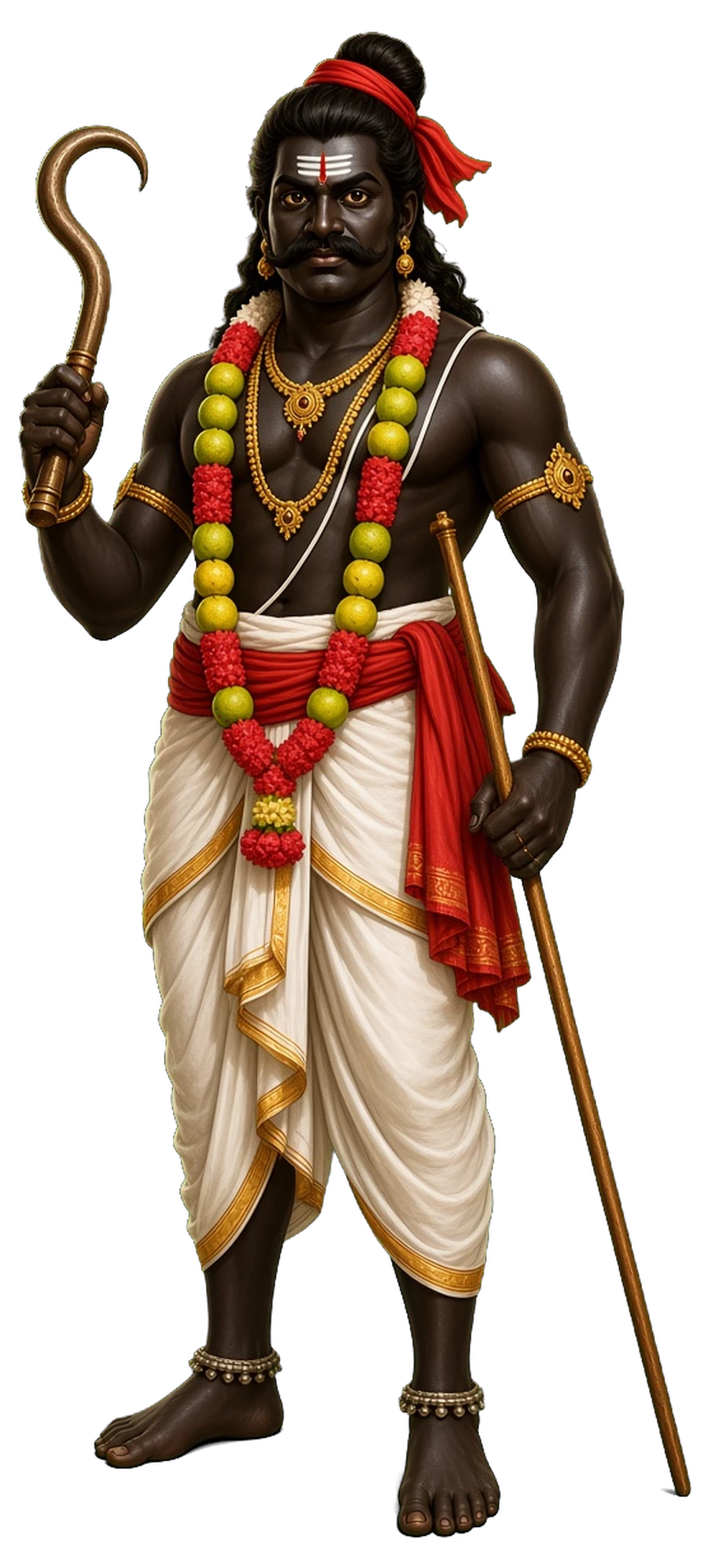
FormA rider on a blue horse with a lance or a long staff, two snakes meeting over his head or one coiled round his neck
Without an imageA snake carved on a stone slab or painted black on a village wall; his chhari or nishan, a bamboo pole with peacock feathers, a coconut, coloured threads and a blue flag

Who Gogaji is

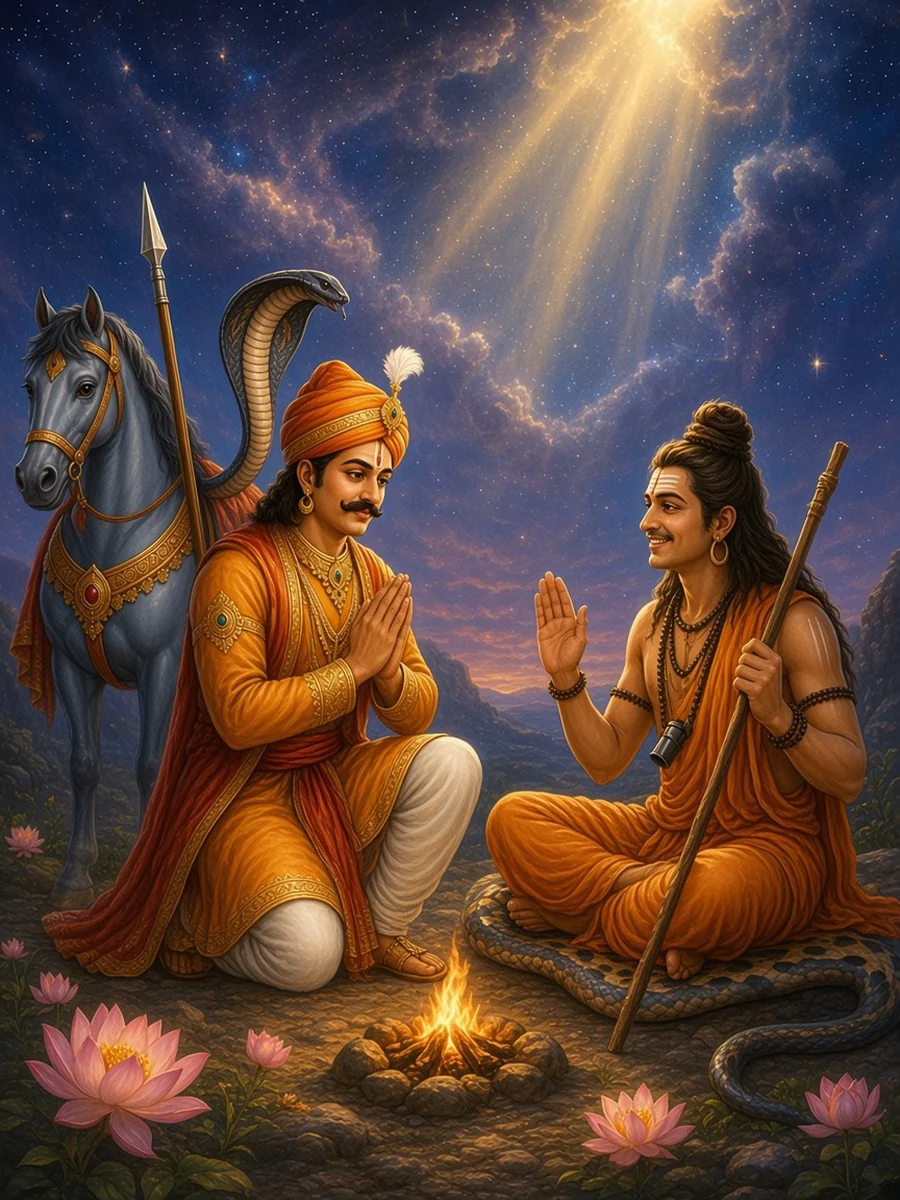
Gogaji, Goga to the villages that keep him, is the god of snakebite in the dry north-west of India. A saying of the Rajasthan countryside puts him beside the khejri tree: every village has one, and every village has its Goga. He is remembered as a Chauhan prince of the Bagar, the sandy plain of the old Bikaner country, son of Raja Jewar and Queen Bachhal, born at Dadrewa in Churu district after the yogi Gorakhnath answered his childless mother. He rides a blue horse, a lance in his hand, and snakes meet over his head.

He belongs to more than one community at once. Hindus call him Goga Veer, the hero; Muslims call him Zahir Pir or Jahar Pir; Sikhs bow at his shrines too. The play sung in the Panjab says that before the earth would take him he learned the Muslim creed; in Rajasthan it is Gorakhnath, his guru, who opens the ground for him. Pilgrims at Gogamedi bow first at Gorakhnath's mound and then at Goga's samadhi, and a hereditary line of Muslim Chauhans has long kept it. William Crooke, writing in 1896, found him adored by Hindus and Muslims alike and by every caste.

In the play sung at Jagadhri every Holi, Goga tells the snake sent to serve him who he is:

Guga mera nam: Gorakhnath ne yeh hi tahraya: Guga is my name, the name that Gorakhnath gave me (The Legend of Guru Gugga, as R. C. Temple recorded it at Jagadhri, 1884).

Farmers tie a Goga thread to the plough before they sow, and a man bitten by a snake is carried to his shrine. On Goga Navami, the ninth of the dark half of Bhadrapada, his fair fills Gogamedi for three days, and his standard of peacock feathers goes from door to door.

His stories on this site: The Flowers Her Sister Took, where Bachhal's sister takes Gorakhnath's gift in her place and the unborn Goga saves his mother on the road; The Bride Across Seven Rivers, where a snake in the princess's garden wins him the wife her father refused; and The Earth That Would Not Open, where he kills the twin cousins who tried to kill him and asks the earth to take him from his mother's curse.
Before the Puranas

The Vedic roots of Gogaji

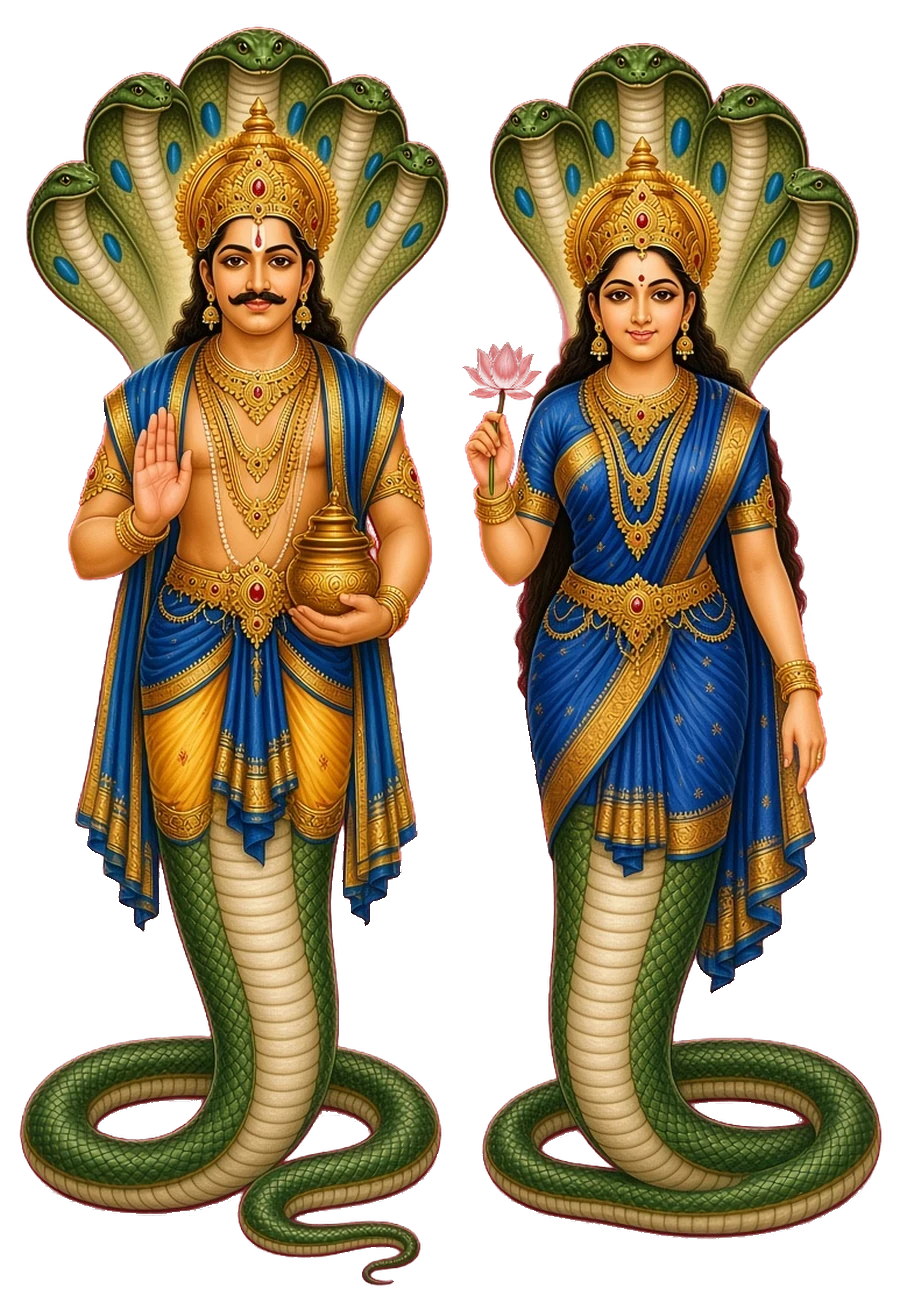
The Vedas do not know Gogaji, and no Purana names him. He belongs to the folk religion of the north-western plains, and everything known of him comes from ballads, plays, shrine traditions and the notes of nineteenth-century collectors. He is a snake god in a land where snakes kill, and his line back to the older gods runs through the Nagas, the serpent people the Puranas set below the earth, and through Gorakhnath and the Nath yogis, who were held to have power over snakes.

His date is unknown. R. C. Temple, who printed the Jagadhri play in The Legends of the Panjab in 1884, thought him a Chauhan leader against Mahmud of Ghazni about the year 1000, and H. M. Elliot, in the Memoirs on the Races of the North Western Provinces (1869), records ballads in which he falls with his forty-five sons and sixty nephews fighting Mahmud on the Garra. Elliot also reports the view that he was a contemporary of Prithviraj, and Crooke concludes that nothing is known for certain. The Hindi Wikipedia gives his birth as Vikram Samvat 1003, and the Rajasthani handbooks keep him a contemporary of Mahmud; those are their readings, and the earliest written tellings do not settle it.

The stories grew in two languages of worship at once. In the play, the earth will not take a Hindu, so Goga learns the creed from Ratan Haji at Ajmer; in Crooke's second legend he goes to Mecca; in Elliot a voice from heaven asks him for the Kalma. In the Rajasthani telling kept at Gogamedi it is Gorakhnath who opens the ground. Elliot found Muslim Chauhans and the Gogawats claiming him as an ancestor and Chahils managing his tomb, and Maharaja Ganga Singh of Bikaner rebuilt the shrine in 1911 in a style with minarets at its corners.

He also entered the great Rajasthani epics: in the epic of Pabuji, as John D. Smith edits it, Gogo the snake god saves Pabuji from drowning at Pushkar and marries his niece.

See how the Vedic gods became the Puranic ones →

Related gods