As the Jagadhri play tells it
North India · the Bagar, the wild forest, Ajmer and Darera · 3 min read
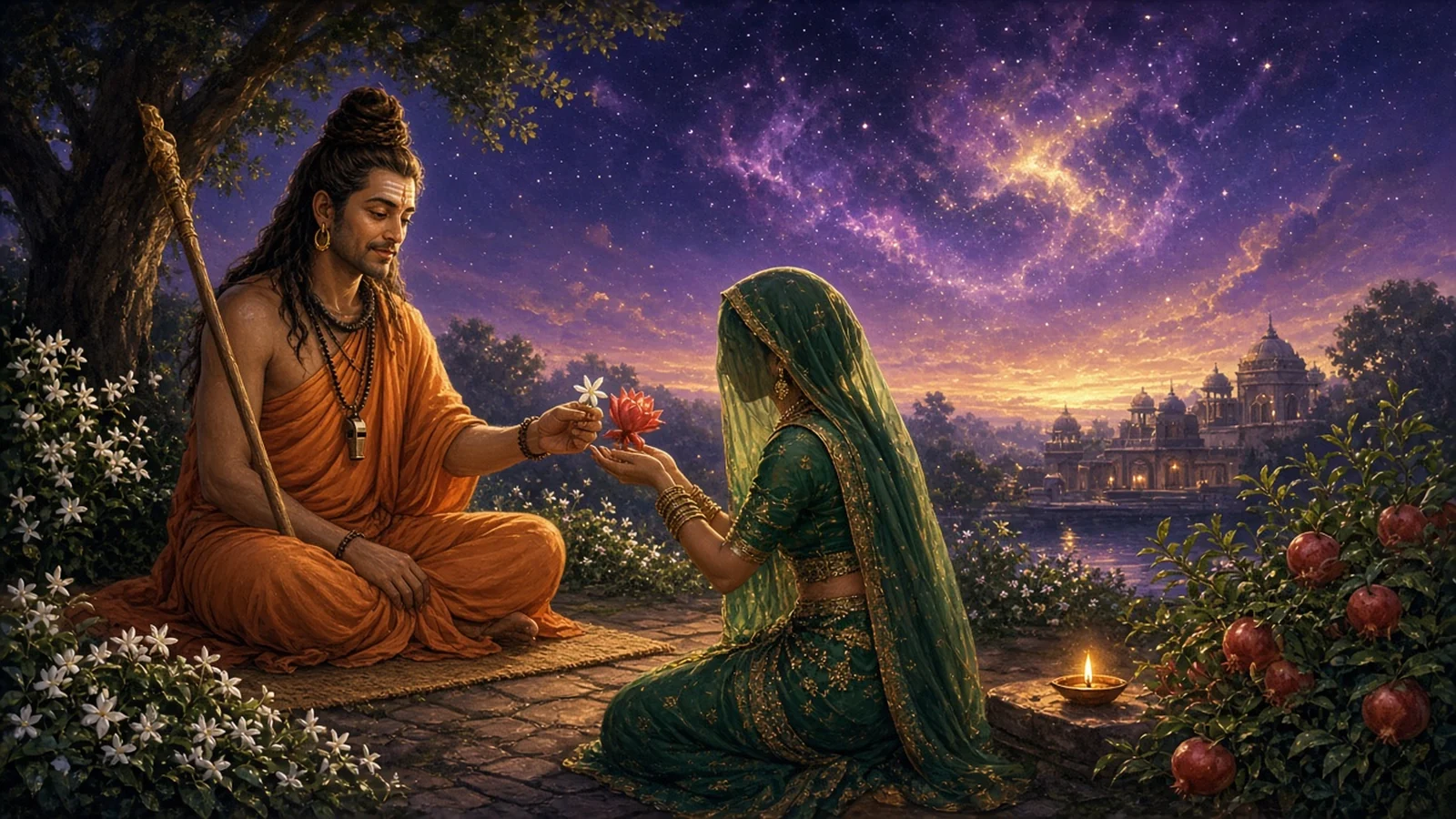
Goga had married and come home, and still something pulled at him. "Mother," he said to Bachhal, "I want to see the twins. They are my aunt's sons. I have not forgotten them for one moment since I was born."
So Arjan and Sarjan, the sons Kachhal had won from Gorakhnath by her trick, came to the palace, and their mother took Goga on her knee and made much of him. But Sarjan had come for something. "Brother, give me what is fair. Half the kingdom, as my share."
"Who has put that into your head?" said Goga. "I have told you a thousand times." He went to Bachhal, angry. "Sarjan has said a bitter thing to me. Call them, and make them listen, so that brothers do not fall out."
Bachhal called the twins and spoke to them kindly. "This world is false, my son. Husband, son and wife, all of it passes. Keep a brave heart and do not grieve."
"You always lecture us," said Sarjan, "and never Goga."
Then he came to Goga with folded hands and a smile. "Come, brother, let us go hunting today, you and I. We are Rajputs. Hunting is our law."
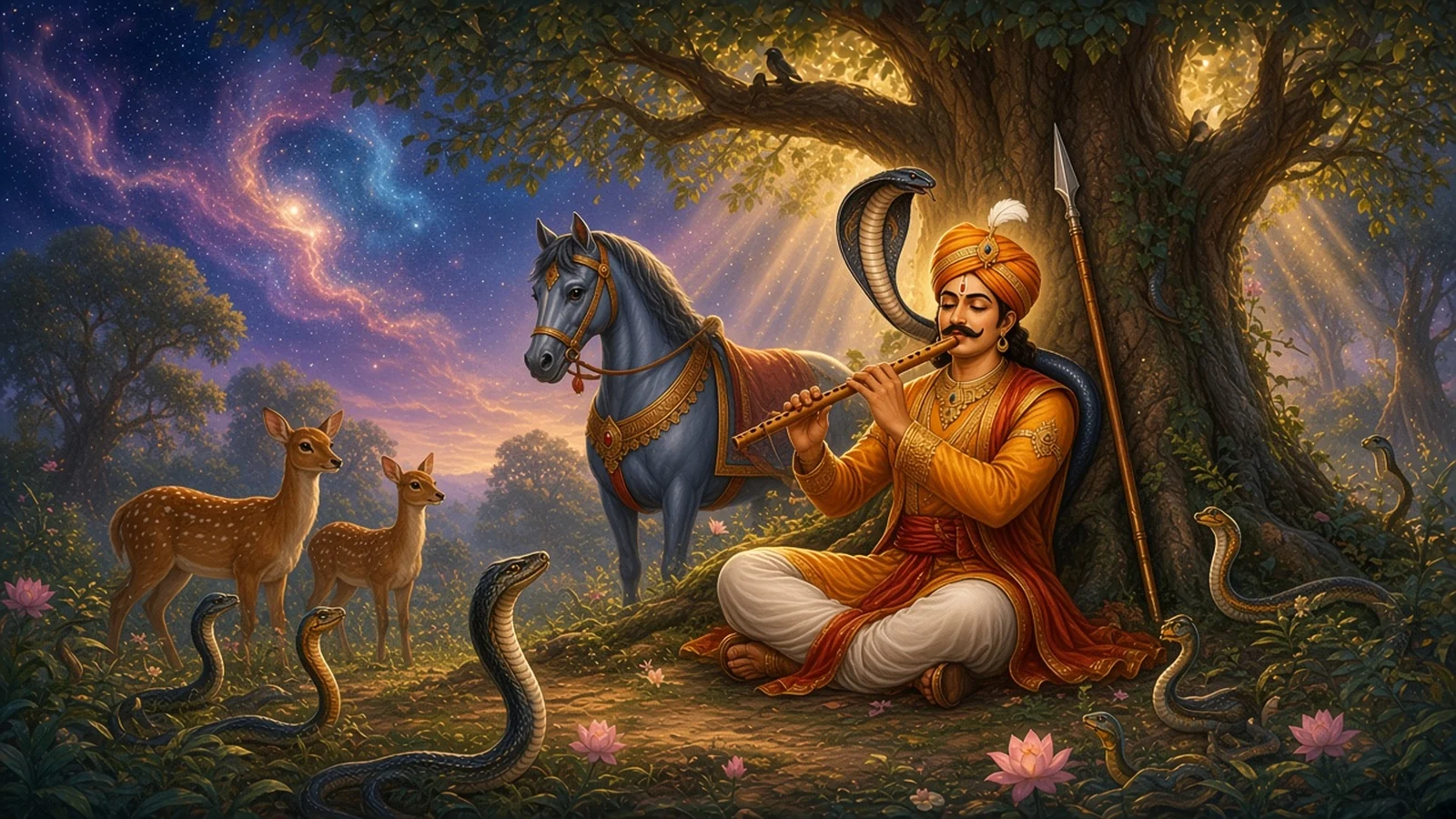
The three rode out into a forest so wild that nothing could be seen in it. Death was already circling overhead, and none of them knew it. The sun burned, and Goga's throat was dry. "Brother, I am so thirsty I cannot think. Who will help us here?"
Arjan came close and talked to him gently, asking what troubled him. While Goga listened, Sarjan drew his sword and struck.
Fate turned the blade. Sarjan struck again, and again nothing happened to Goga. "We will not leave you alive," the twins shouted.
"Gorakhnath," Goga cried, "have you forgotten me? Have you gone to sleep?" Then he drew his own sword. "Now it is my turn."
When it was over he tied the twins' heads to his saddle and rode home, and laid them before his mother. "Look, mother. Do you know these faces?"
Bachhal knew them, and fell to the ground. When she could speak she called him a sinner and a killer. "Do not show me your face again. I never want to see you." She called down Gorakhnath's curse on him if he came back, and wished him the grief she now felt for her sister's sons.
Goga swore three times that she would never see him again. Then he went out and spoke to the ground itself. "Mother Earth, take me into you. I have no one left in the world."
The earth answered him. "Do you not know, my son? The Musalmans are laid in the earth and the Hindus go to the pyre. Go to Ratan Haji at Ajmer and learn the creed. When you have done that, I will take you."
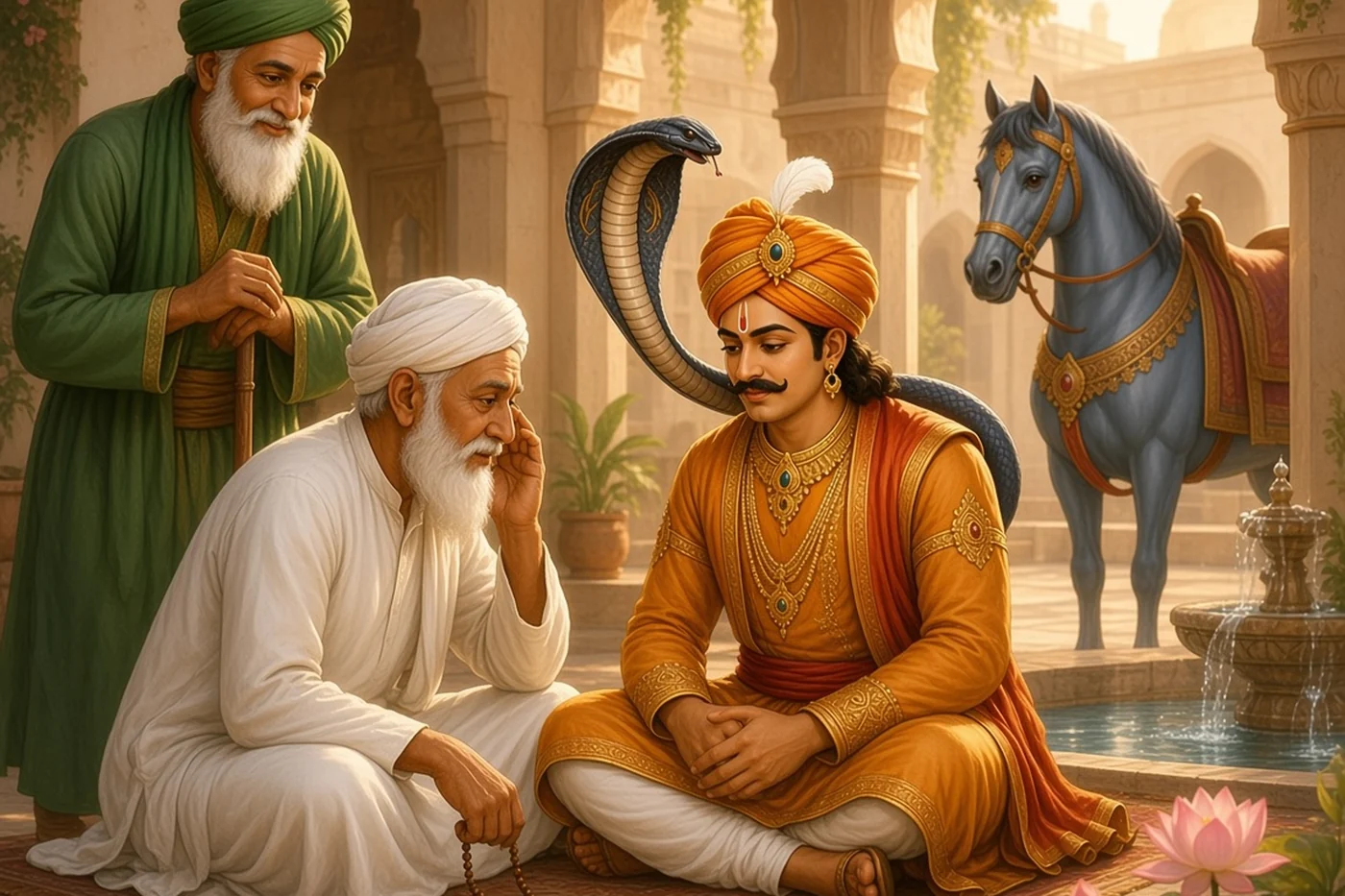
So Goga rode to Ajmer. He found Ratan Haji there, and with him Khwaja Khizar, and he stood before them with folded hands. "Teach me the creed. My mother's words have killed me."
"Who are you, friend? What is your name and your caste?"
"I am Gorakhnath's disciple, and the Bagar is my home. Goga is my name." And he told them everything: the twins, the forest, the heads, his mother's curse.
Ratan Haji was moved. "Sit down here, my son." He taught Goga the creed and spoke the call to prayer into his ears. "Hindu or Musalman, I teach it to you. Now go home to Darera. The earth will receive you."
Goga went back to his own village. "Mother Earth, I have done what you asked." And the earth opened and took him in.
As Gogamedi tells it
West India · the Bagar and the samadhi at Gogamedi, Hanumangarh district · 1 min read
At Gogamedi, on the sandy plain of Hanumangarh district, the story is told another way. Arjan and Sarjan wanted Goga's land, and they found an ally for it in Anangpal, the king of Delhi. Together they marched on the Bagar.
Goga rode out to meet them. He killed his cousins in the fighting. The king of Delhi he spared, when the king asked him for his life.
But the dead were his mother's sister's sons, and Bachhal would not forgive him. She swore that she would never again look on his face.
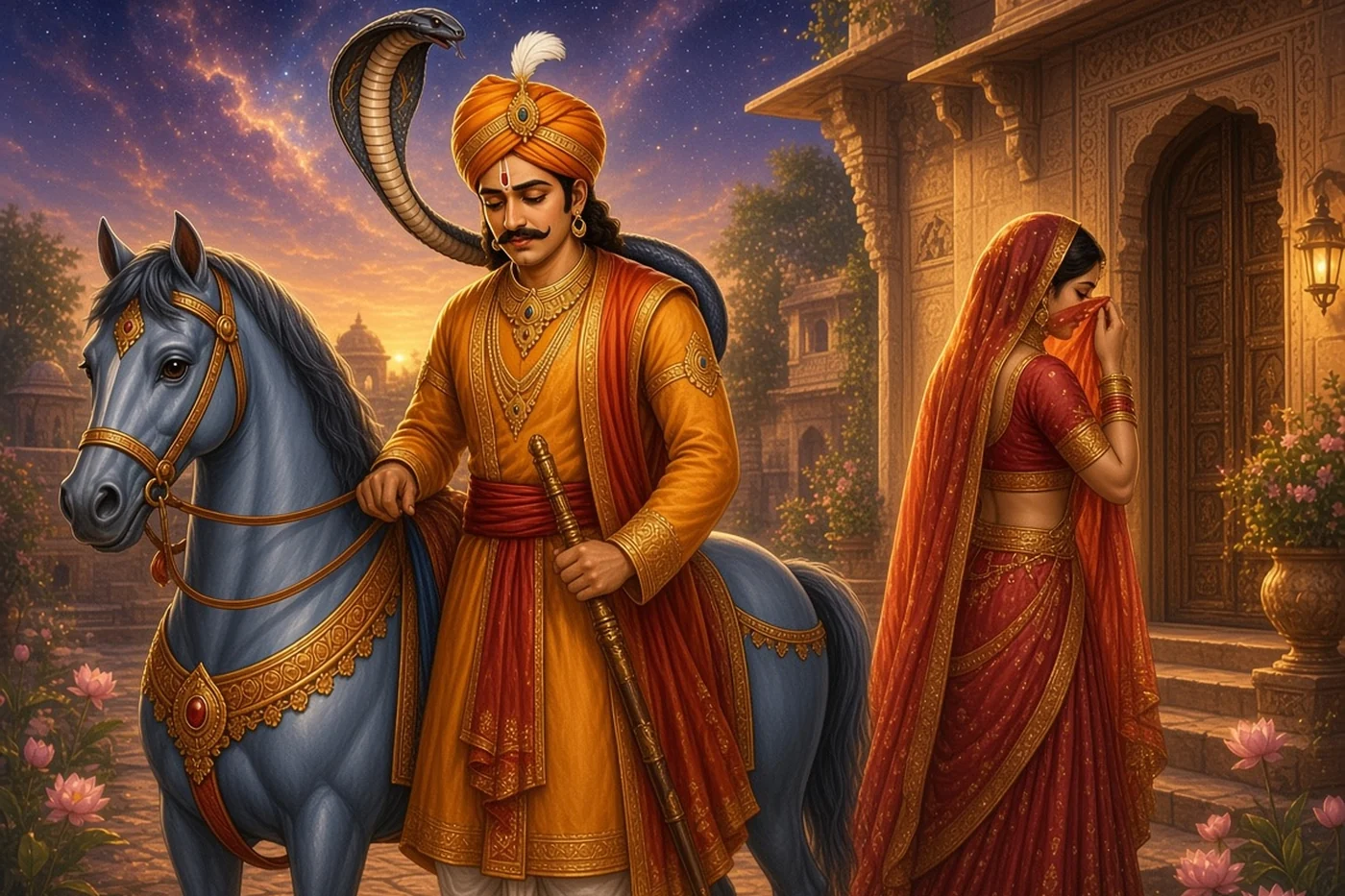
So Goga went to his guru. "Gorakhnath, my mother has turned me away, and I have nowhere to go."
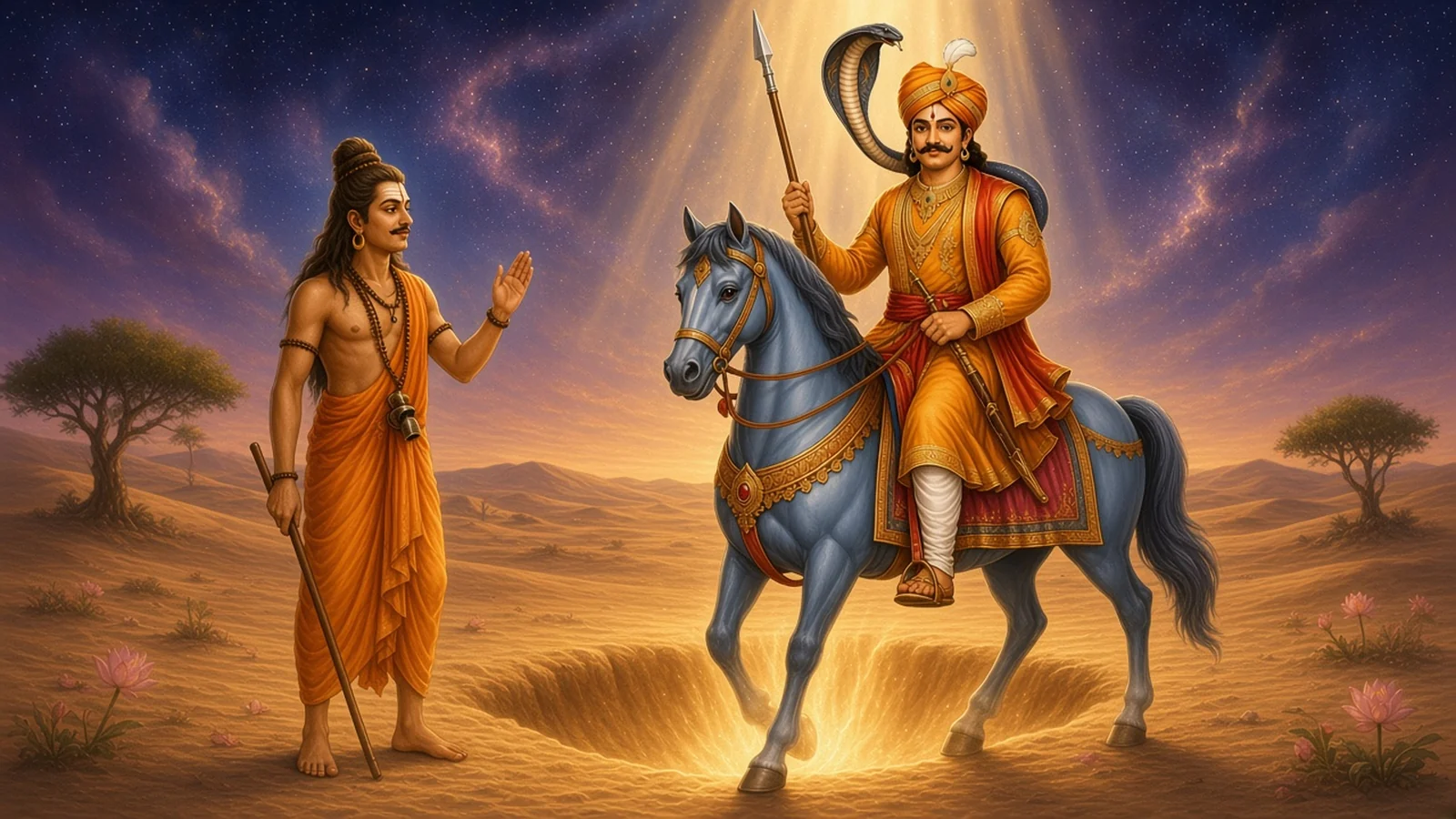
Gorakhnath struck the ground with his tongs, and the earth split open. Goga, still on his horse, rode down into it, and the ground closed over rider and horse together. That place is Gogamedi, and his samadhi is there.
Other tellers, as Wikipedia records them, say that after his mother sent him away he came back to his wife by night, until his wife let it slip and his mother taunted him; and that when he asked the earth for a grave, she would take only a Muslim, so he became one, and rode into her on his horse.
Pilgrims who come to Gogamedi today bow first at Gorakhnath's mound and only then at Goga's samadhi, and Hindus who call him Goga Veer stand there beside Muslims who call him Jahar Pir. On Goga Navami, the ninth of the dark half of Bhadrapada, the fair begins, and for three days the village fills with drums, cymbals and singers telling this story again.