
Devalok ← All gods
Also calledKuveraVaishravanaDhanadaDhanapatiYaksharajaEkakshipingalaEkapingaNaravahanathe lord of wealth

In short

Who is Kubera?
The lord of wealth and treasurer of the gods, king of the yakshas and guardian of the north, who lives in the city of Alaka in the Himalaya beside Shiva's Kailasa.
How did Kubera become the god of wealth?
In the Ramayana he was the son of the sage Vishravas and kept his vows for a thousand years, and Brahma made him the fourth guardian of the world and lord of all treasure and gave him the flying chariot Pushpaka.
Why does Kubera have a yellow eye?
He glanced at the goddess Uma, Shiva's wife, and lost the light of his left eye. The Ramayana says it turned yellow and the Shiva Purana that it burst, and he was named Ekakshipingala, the one with a yellow eye.
How are Kubera and Ravana related?
They are half-brothers, sons of the same sage. Ravana took Lanka from him and later the Pushpaka, which Rama sent back to Kubera after the war.

Artwork ›

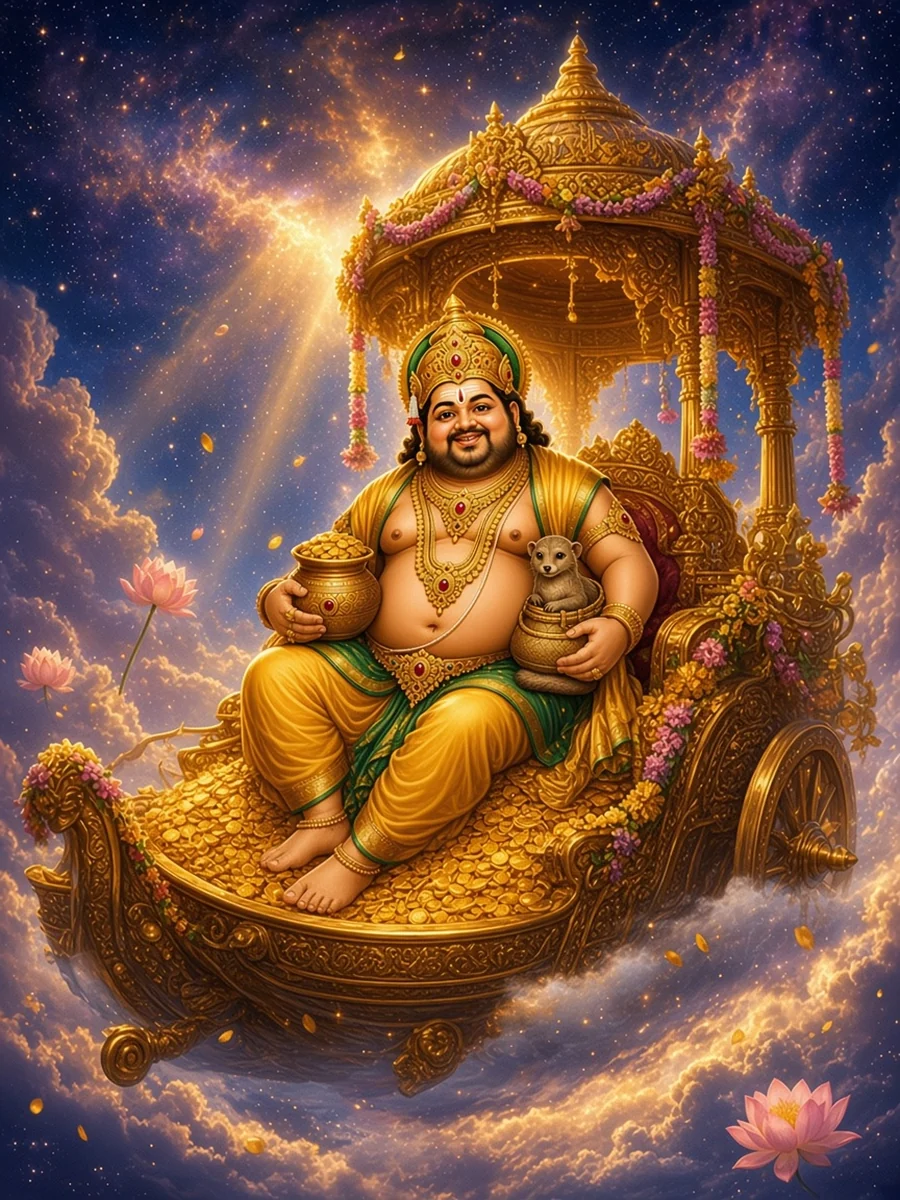
Alaka, his golden city beside Kailasa The Pushpaka, the chariot that flies, Brahma's gift

For kids

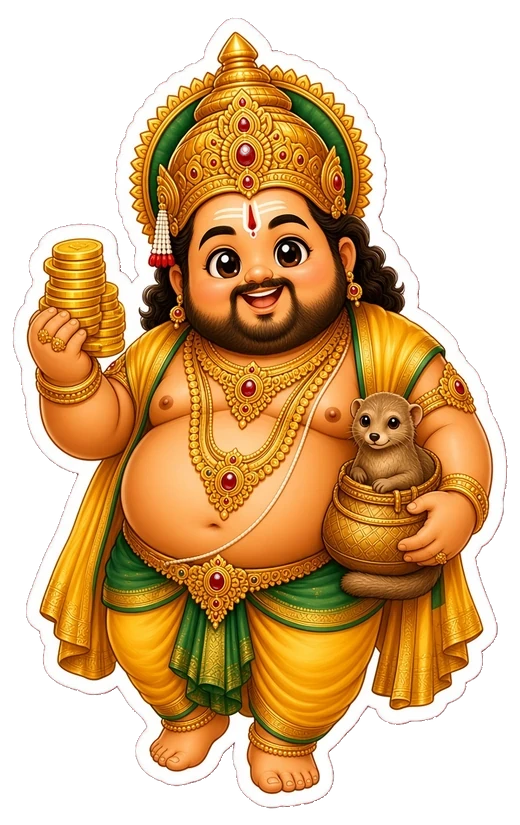
Just checking the accounts
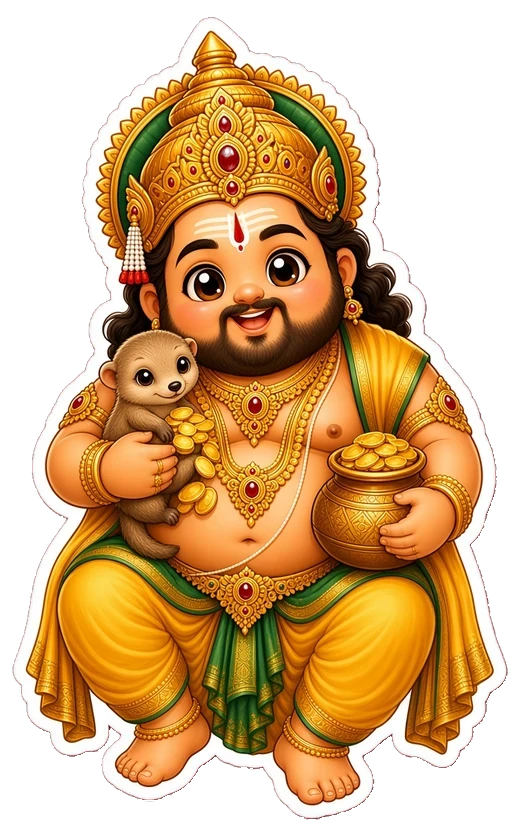
My purse, my rules
My purse, my rules

At a glance

TraditionHindu, Buddhist and Jain
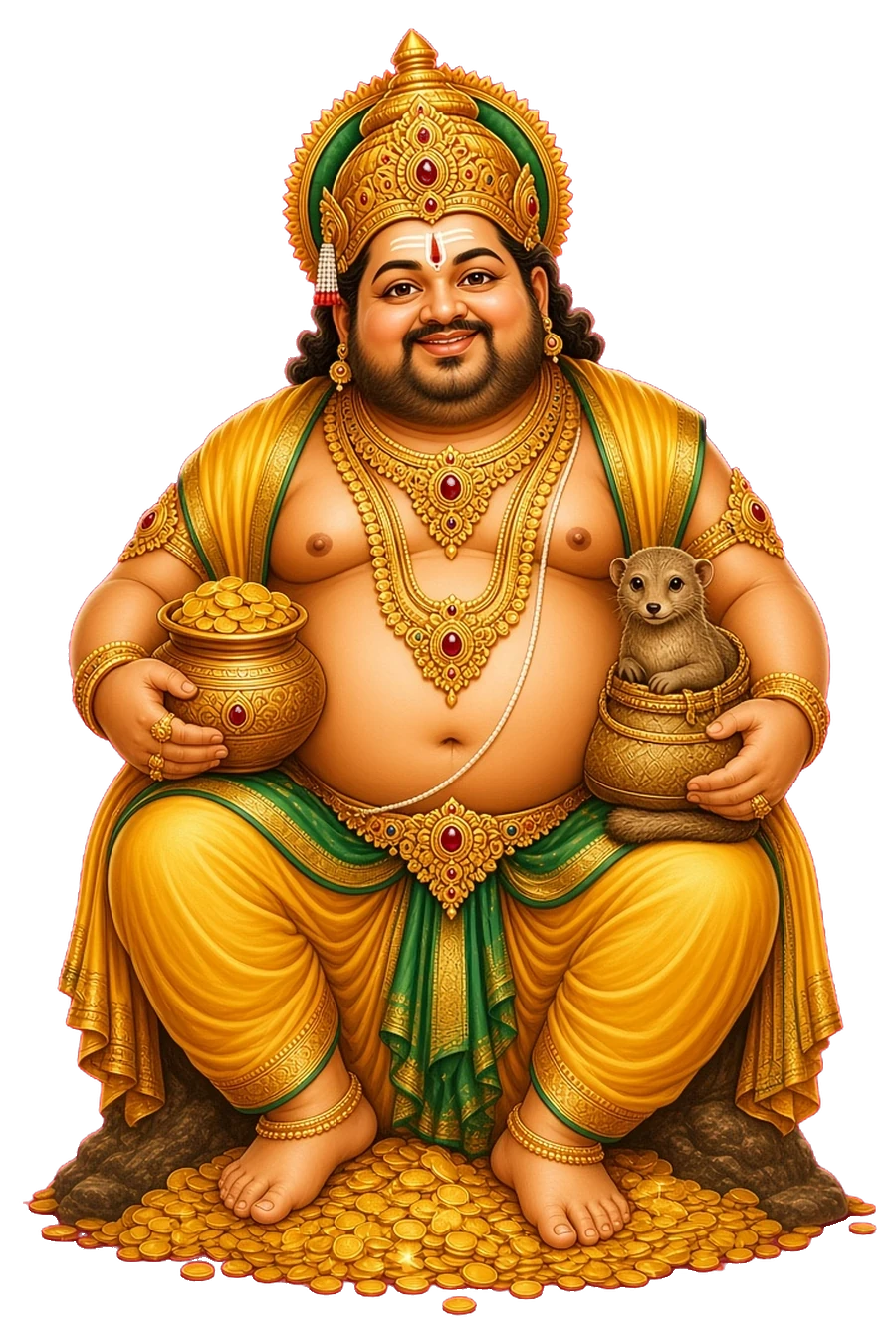
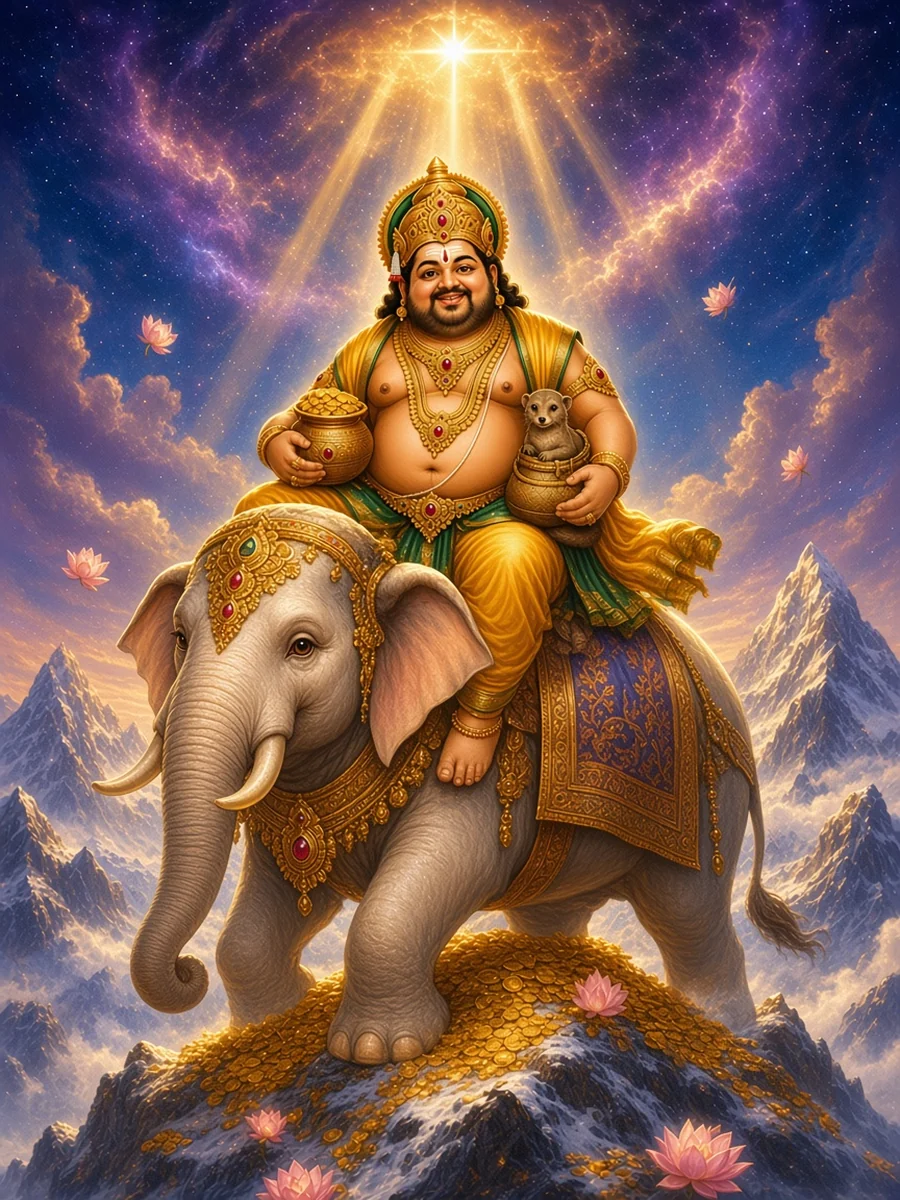
FormA short

stout, pot-bellied man heavy with jewels; the texts give him a yellow left eye and call him ill-formed

In his handsA purse of money

a mace, sometimes a pomegranate or a mongoose

Who Kubera is

Kubera is the lord of wealth: the treasurer of the gods, the keeper of what lies buried in the earth, and the king of the yakshas, the spirits of trees, pools and hidden treasure. He guards the north, as Indra guards the east, Yama the south and Varuna the west, and he lives in the Himalaya in his city of Alaka, close beside Kailasa, because Shiva is his friend.

He is not handsome, and the stories do not pretend he is. He is short and pot-bellied and heavy with jewels, and the books give him a yellow eye. The Ramayana says the goddess Uma burned it when he glanced at her; the Shiva Purana says it burst. In both he came away with a name, Ekakshipingala or Ekapinga, and with Shiva's friendship. That is told here as the eye that turned yellow.

He began as a sage's son who kept his vows for a thousand years and asked Brahma only to guard the world. Brahma made him the fourth guardian and the lord of all treasure and gave him the Pushpaka, the chariot that flies, which is told as the fourth guardian. His father settled him in golden Lanka, and his half-brother Ravana took it from him, as The City Paid as a Fee tells. The Shiva Purana gives him an earlier life as a thief who brightened a temple lamp.

Rajadhirajaya prasahya-sahine namo vayam vaishravanaya kurmahe: To the king of kings, who overcomes by force, to Vaishravana we bow.

His wealth is for giving. He lets Bhima take the lotuses of his own lake for Draupadi, he rains gold on Ayodhya so that King Raghu can give a poor student his teacher's fee, and at Tirumala he lends Srinivasa the cost of his wedding, a debt the hill is still repaying. His sons Nalakuvara and Manigriva were the twin trees the child Krishna pulled down with the mortar, and one of his yakshas, sent away for a year, asked Kalidasa's cloud to carry a message home to Alaka.

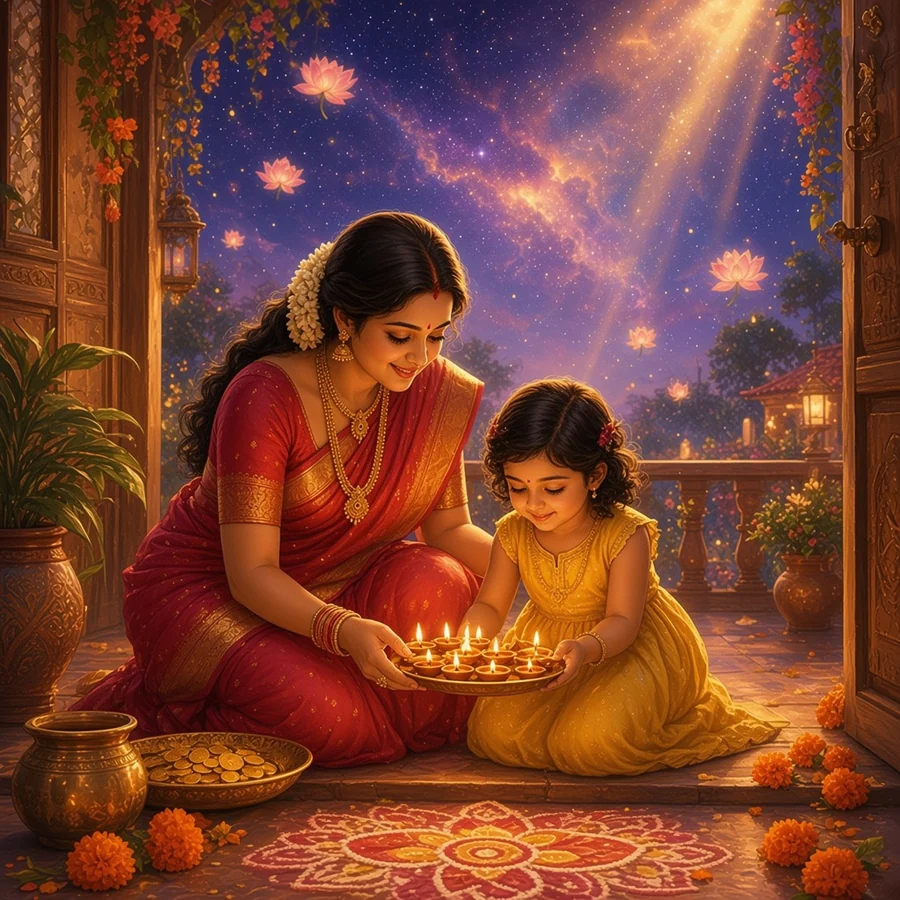
In the Gita Krishna counts him among his glories: of the yakshas and rakshasas, the lord of wealth. Households worship him with Lakshmi at dusk on Dhanteras and Diwali. Buddhists know him as Vaishravana, one of the four great kings who guard the quarters, and Jain temples set a yaksha with his money bag beside the Tirthankara Mallinatha.
Before the Puranas

The Vedic roots of Kubera

Kubera is in the Vedas, but as a lord of hidden things and night folk, not yet of wealth. The Atharvaveda names Kubera Vaishravana once, in its hymn to Viraj, the cow of the cosmos (8.10.28): when she goes to the "other people", Kubera Vaishravana is her calf, and what is milked from her is tirodha, the power to vanish, by which those people live. The Shatapatha Brahmana (13.4.3.10) names him among the kings told over at the horse sacrifice: King Kubera Vaishravana, whose people are the rakshasas, whose hearers are evil-doers and robbers, and whose Veda is the lore of spirits.

The Taittiriya Aranyaka has a rite for him in its first book (1.31). Its verses say the vanishing born of the waters is always Vaishravana's, ask him to come to the offering in a chariot of a thousand wheels, and end with the lines still sung at the close of the Mantrapushpam, to Kubera Vaishravana, king of kings, the great king, lord of desires. Hopkins found him called a god and given offerings in the Shankhayana and Hiranyakeshin Grihya Sutras, while older law books still speak of him as a man.

The epics brought him into the household of heaven. Valmiki gives him a father, Vishravas, a long penance, Brahma's gift of the Pushpaka, and a place as the fourth guardian of the world beside Yama, Indra and Varuna. The Mahabharata makes him Pulastya's son, Shiva's friend and the king of the yakshas, and in the Gita (10.23) Krishna calls himself the lord of wealth among yakshas and rakshasas. His old tie to the rakshasas stayed in the family: Ravana is his half-brother.

Where the name comes from is not known. Later writers read it as "ill-formed", and the Shiva Purana says Uma gave it to him because he looked at her with envy. Buddhism kept him as Vaishravana, king of the north and of the yakshas. In Hindu worship much of his place as the bringer of good fortune passed in time to Ganesha, and he is now most often met beside Lakshmi.

See how the Vedic gods became the Puranic ones →

Related gods