As Valmiki's Uttara Kanda tells it
Uttara Kanda 3 · a forest hermitage, and a city by the southern sea · 3 min read
The sage Vishravas, son of Pulastya, lived for the Vedas and his vows, and his name for goodness travelled so far that the sage Bharadvaja gave him his own daughter for a wife. She shone like a goddess, and in time she gave him a son.
The boy was everything a brahmin's son is meant to be: steady, clean in his ways, slow to anger and quick at his lessons. His grandfather Pulastya came to see him and could not stop smiling.
"Look at him," Pulastya said. "He has his father's face. Call him Vaishravana, the son of Vishravas. And remember what I tell you now. This child will keep the wealth of the world."
When he was grown, Vaishravana went off into the forest by himself.
"I will do what is right," he said, "and nothing else."
For a thousand years he kept the hardest vows there are. Towards the end he lived on water alone, then on air, then on nothing at all, and the ages went over him as lightly as a single year.
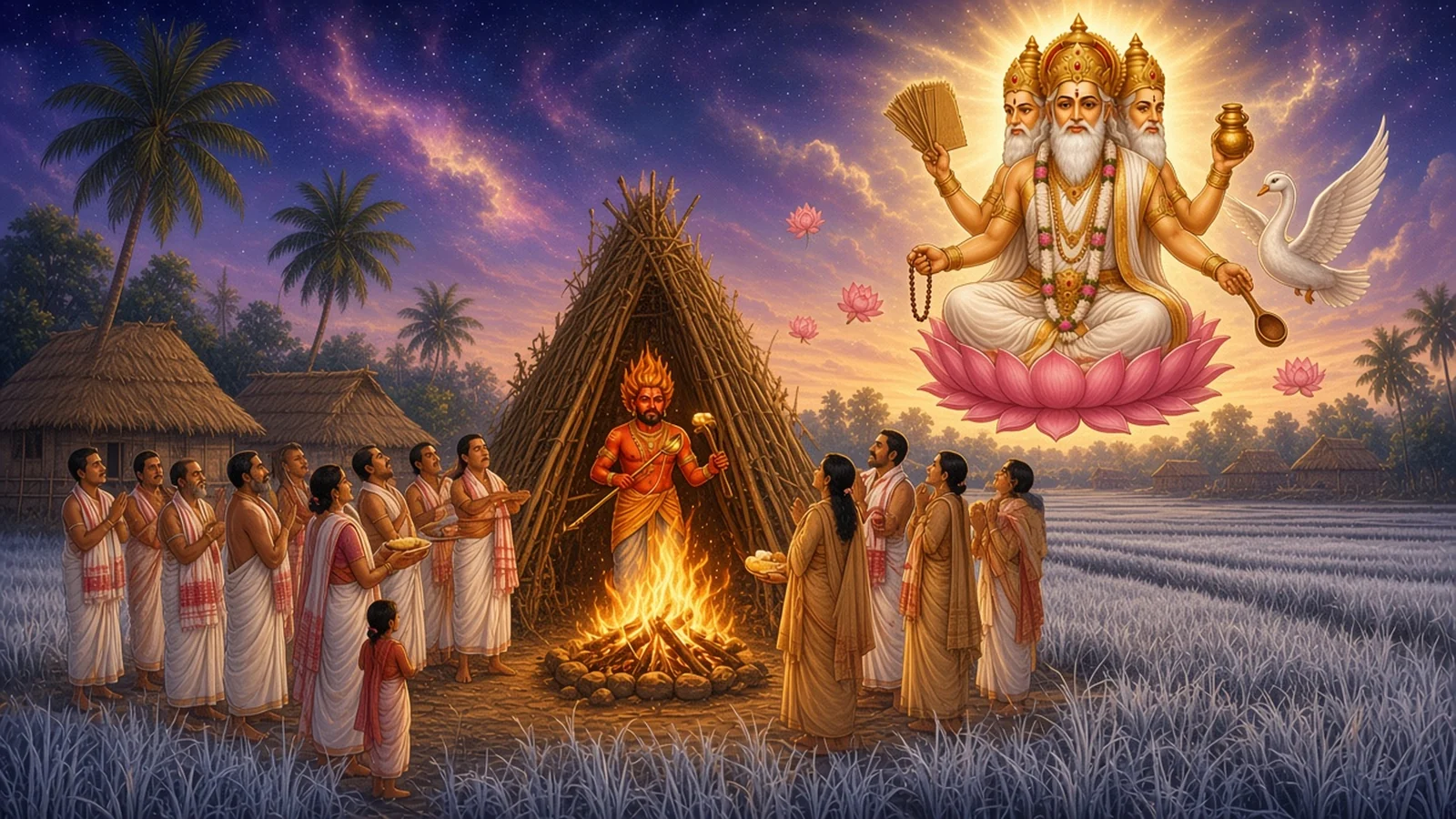
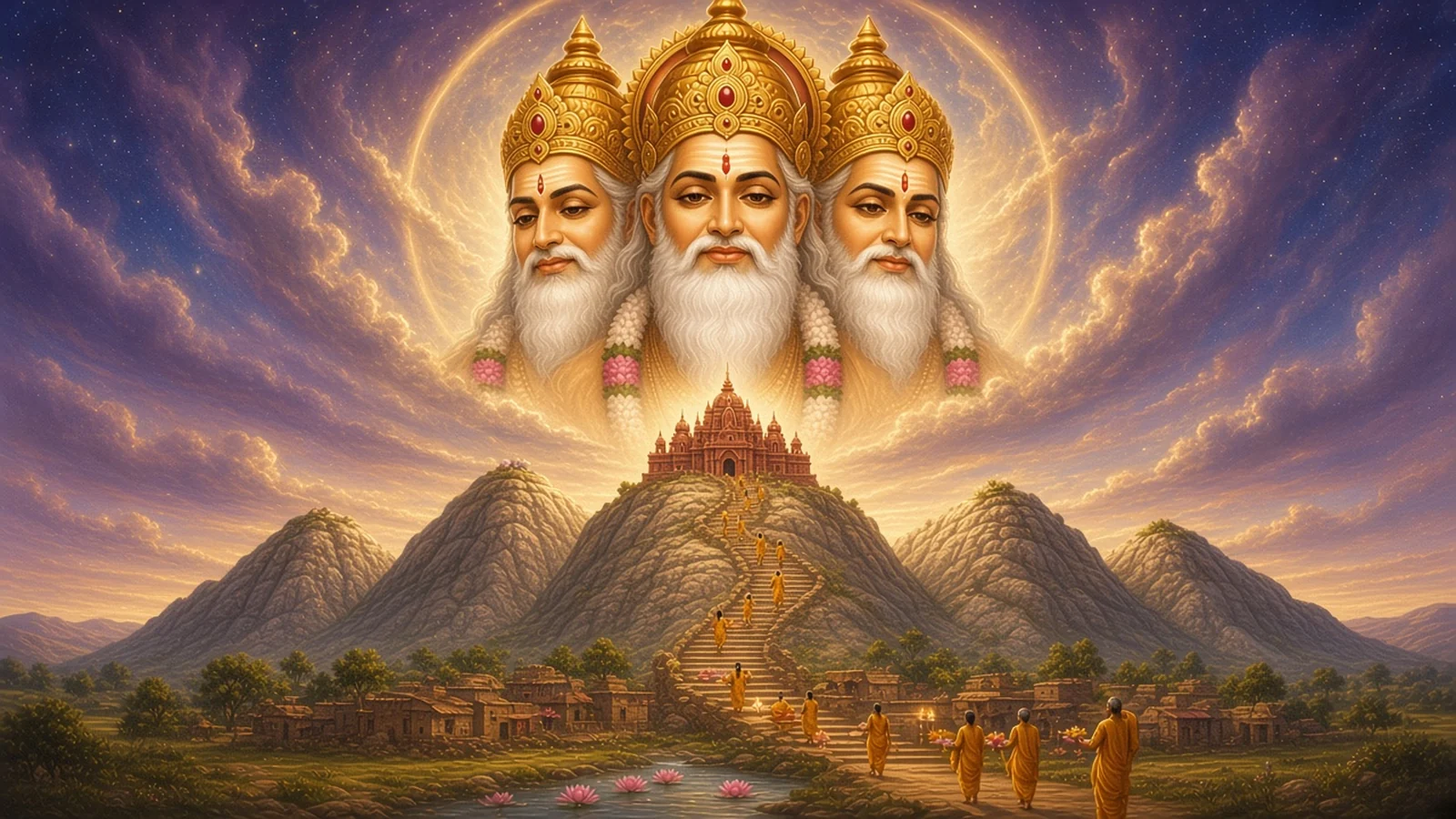
Then the forest filled with light. Brahma had come, with Indra and all the hosts of heaven behind him.
"Child," said the creator, "I am pleased with you. Choose a boon. Anything."
Vaishravana did not ask for a long life, or for gold.
"Let me guard the world," he said. "Let me be the one who keeps it safe."
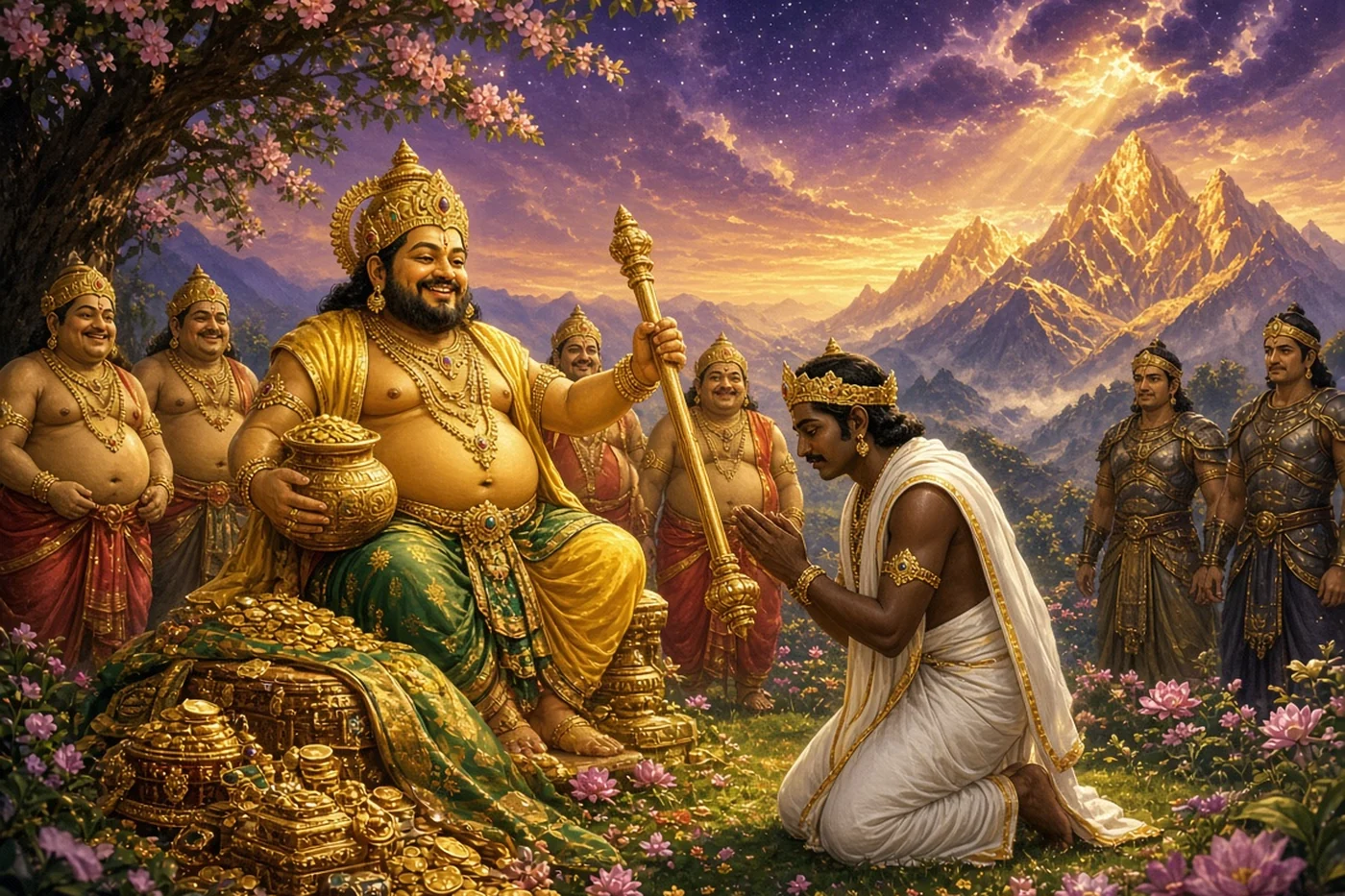
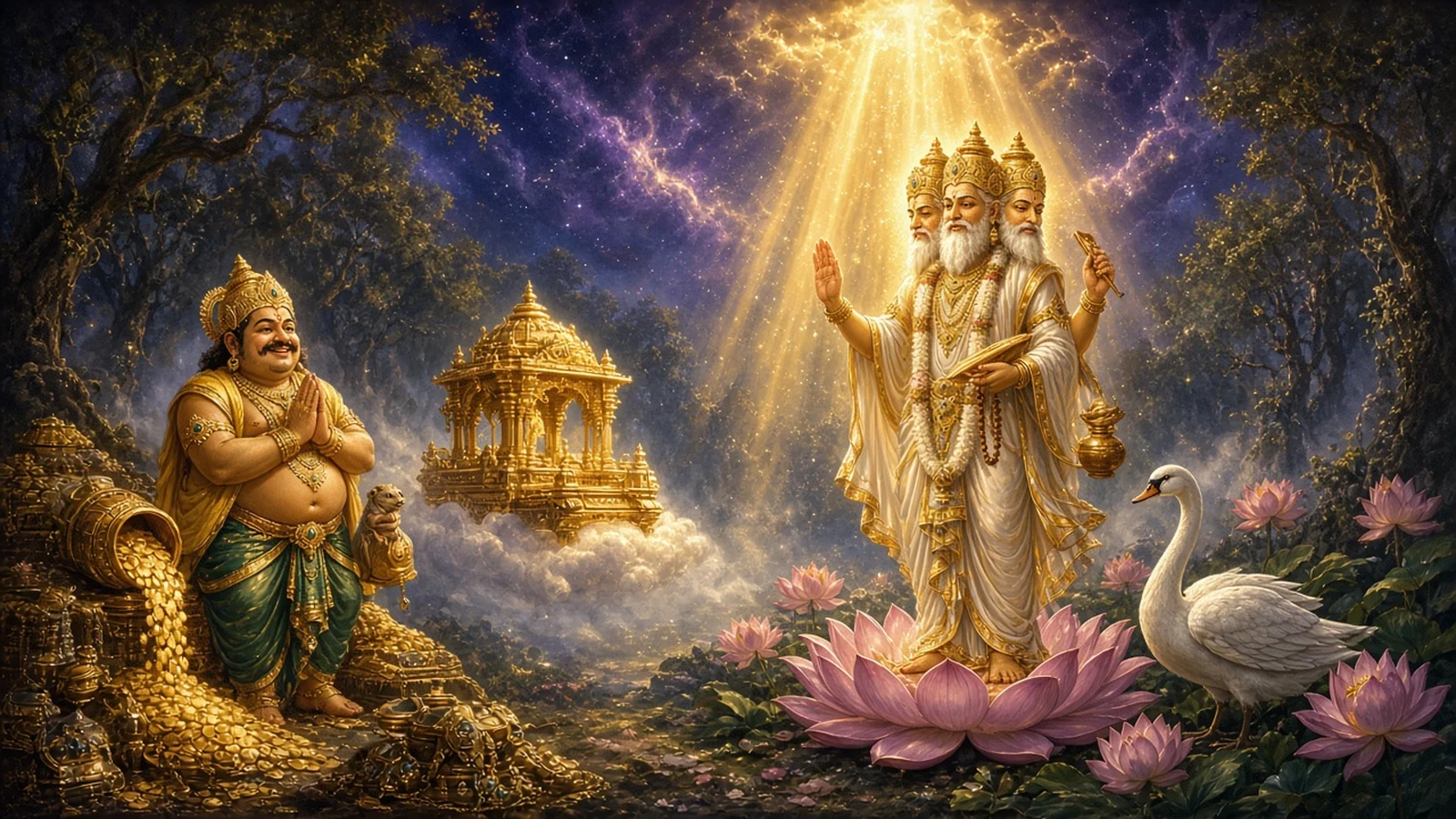
"Then you shall," said Brahma. "Yama keeps one quarter of the world, Indra another and Varuna a third. You will be the fourth guardian, and the lord of all its treasure. Take this as well, so that you can go where you please, as the gods do."
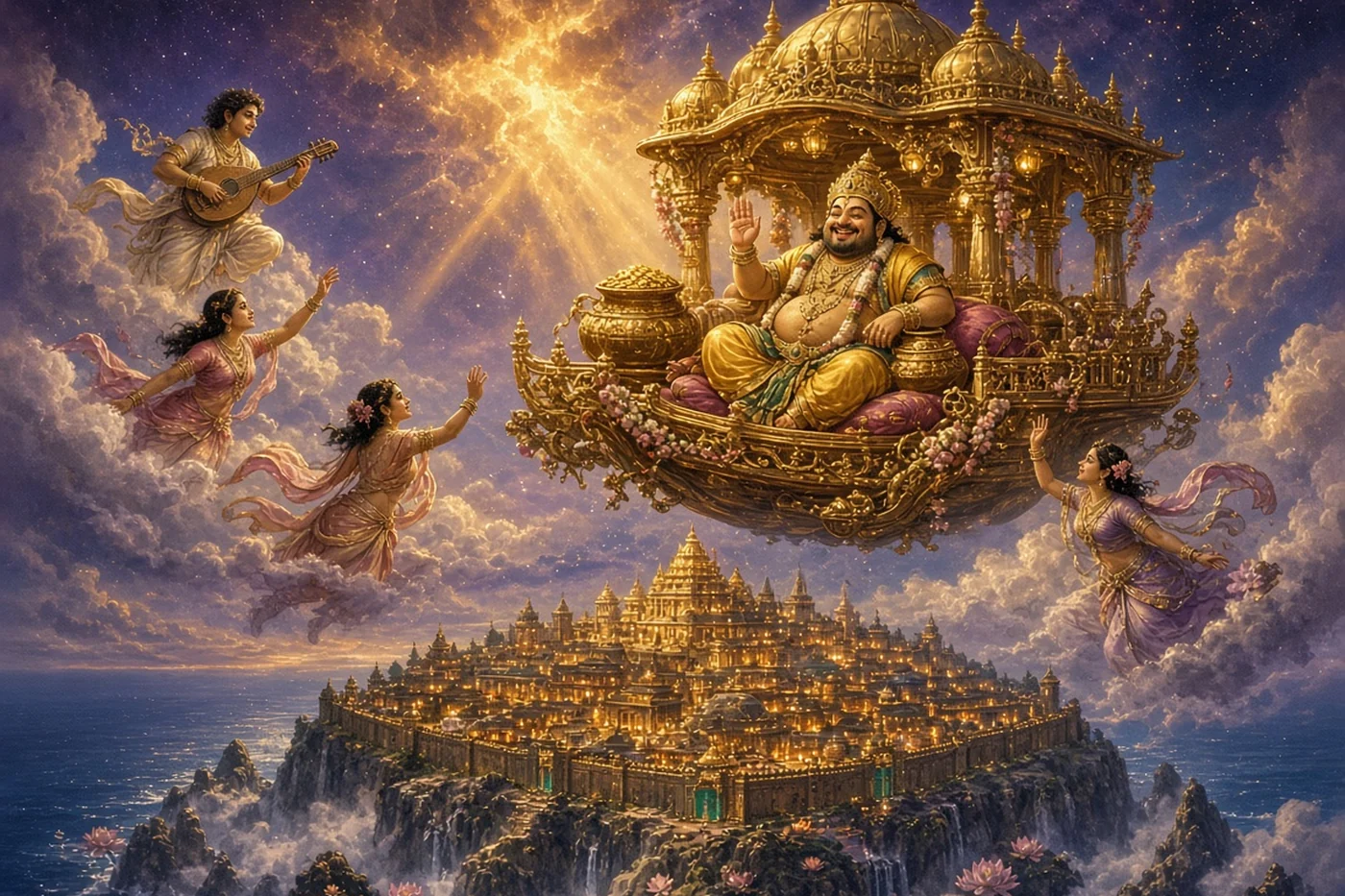
He gave him the Pushpaka, a chariot bright as the sun that flew wherever it was sent. Then the gods went home to heaven, and the new guardian of the world stood alone in the forest beside his chariot.
It was only then that he noticed what had been left out. He had the treasure of the world to keep and a chariot to carry it, and nowhere at all to live.
He went home and folded his hands before his father.
"Brahma has given me everything but a house," he said. "Where should I go? I want a quiet place, where nobody will suffer because I am there."
Vishravas thought about it.
"Go south," he said, "to the shore of the southern sea. There is a mountain there called Trikuta, and on its top stands Lanka, a city Vishvakarma built for the rakshasas, as fine as Indra's Amaravati. It has deep moats and golden walls and gates of gold and emerald. The rakshasas ran from it in fear of Vishnu and went down under the earth, and it stands empty. Go and live there. Nothing will harm you."
So Vaishravana went to Lanka. It filled again, this time with people who were glad of him, and he ruled them justly. Whenever he liked he climbed into the Pushpaka and flew north to see his father and mother, and gods, gandharvas and apsaras came out to honour him as he passed overhead.
Not everyone who saw that chariot go by was glad of it. How the old masters of the city came back for it is told in The City Paid as a Fee.
As the Mahabharata tells it
Vana Parva 272 to 273 · Mount Gandhamadana and Lanka · 2 min read
In the forest book the sage Markandeya tells this story to the exiled Yudhishthira, and in his telling the family runs the other way.
Vaishravana was the son of Pulastya himself, one of Brahma's own mind-born sons, and he walked out on his father. He went to serve his grandfather Brahma instead. Brahma was so pleased with him that he gave him more than any son could ask for: he would never die; he would be lord of all the wealth in the world and guardian of one of its quarters; Ishana, who is Shiva, would be his friend; he would have a son, Nalakuvara; Lanka would be his capital, guarded by rakshasas; the Pushpaka would carry him anywhere he wished; and he would be king of the yakshas and a king over kings.
Pulastya was furious. Out of half of his own being he made another self, and that half was born as the sage Vishrava, made to punish the son who had left.
Vishrava was angry with Vaishravana from the start, and Vaishravana wanted peace with this new father. He sent him three rakshasa women from Lanka to wait on him, Pushpotkata, Raka and Malini. They served the old sage so well that he granted each of them sons. Pushpotkata bore Ravana and Kumbhakarna, Malini bore Vibhishana, and Raka the twins Khara and Shurpanakha.
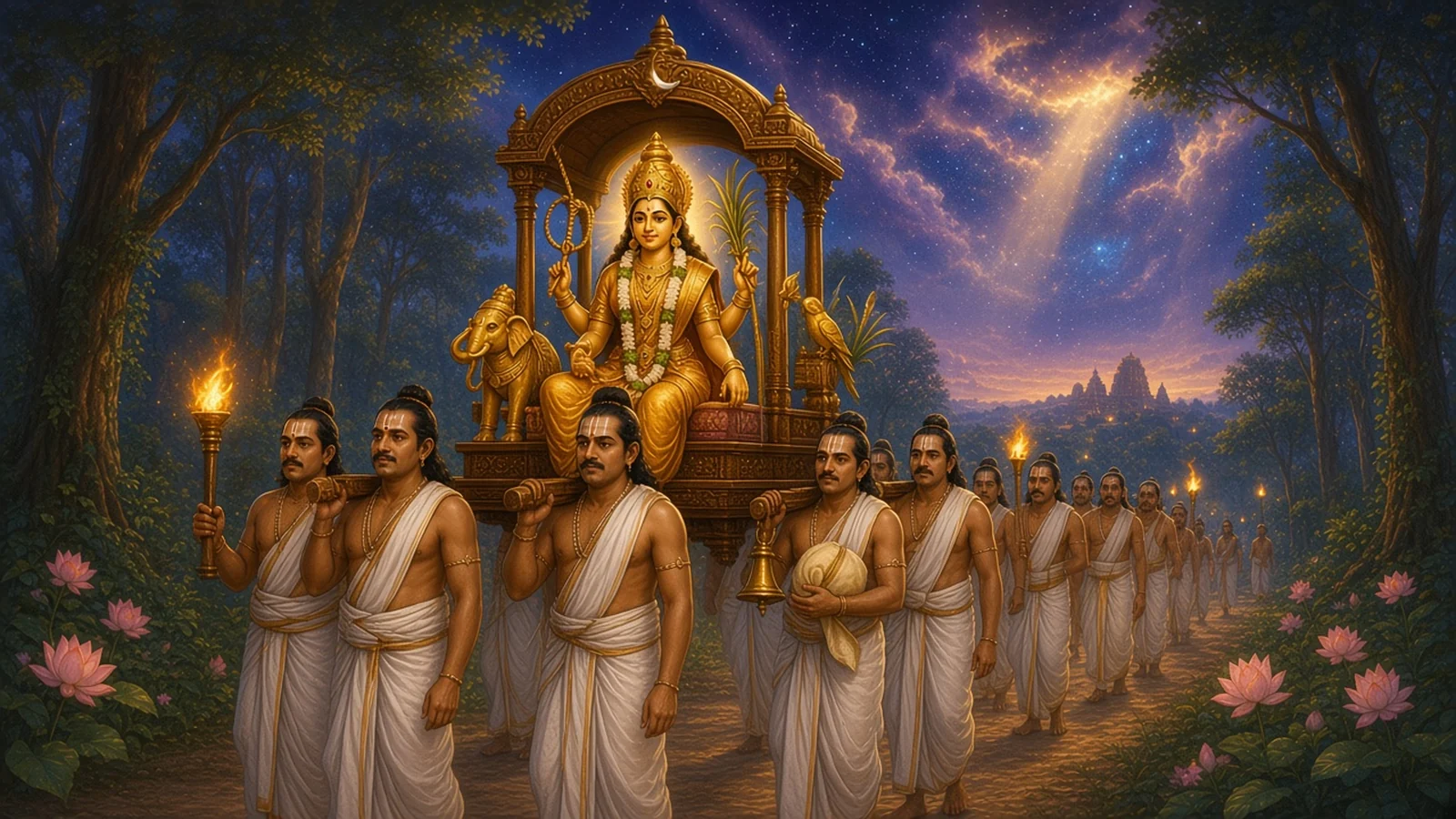
The children grew up beside their father on Mount Gandhamadana. One day they watched Vaishravana come to visit him, carried on the shoulders of men and glittering with riches, and envy took hold of them. They went into the forest for a thousand years of penance, and Ravana won a boon from Brahma that no being but a man could beat him.
Then he went to Lanka, defeated his half-brother in battle, drove him out and took the Pushpaka.
Vaishravana left for Gandhamadana with his followers. Before he went he turned to the chariot's new master.
"It will never carry you," he said. "It will carry the one who kills you in battle. You have shamed your elder brother, and you will not live long."
Only one of the brothers went after him. Vibhishana had chosen the right path, and Vaishravana, glad of his youngest brother, made him commander of the yakshas and the rakshasas.