As the Mahabharata tells it
Vana Parva 152 to 154 and 159 to 161 · Gandhamadana · 3 min read
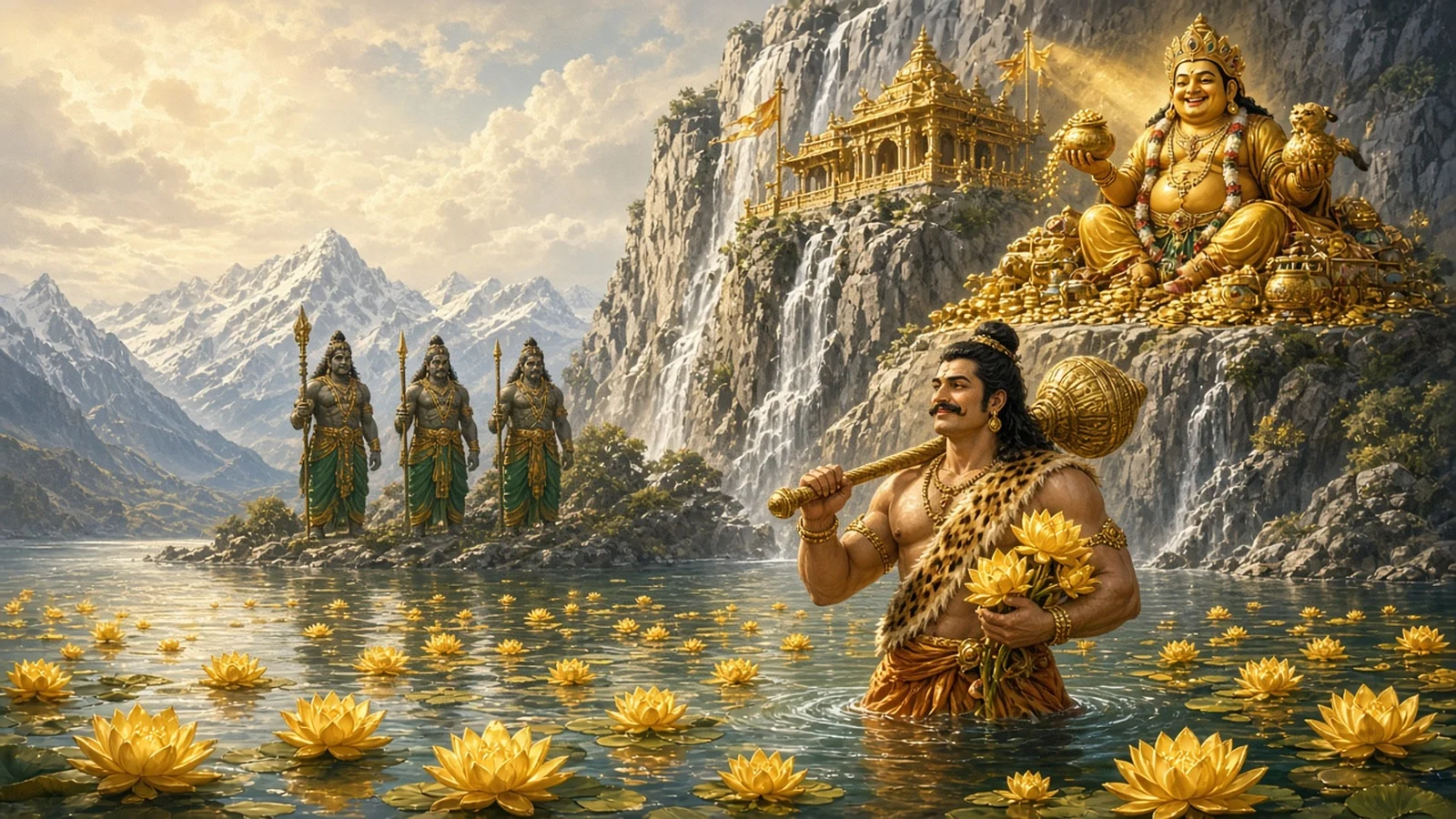
Hanuman had shown Bhima the way, and he went on up the mountain towards Draupadi's flower. Below a cliff of Kailasa, near the house of Kubera, he found it: a lake fed by mountain streams, covered in golden saugandhika lotuses whose scent carried for miles. It was Kubera's pleasure ground, and Kubera kept it.
Bhima drank, and the water tasted like nectar.
Round the lake stood its guards, the Krodhavasas, rakshasas in their master's livery, hundreds and thousands of them. They watched a man in deerskin and golden armlets walk towards the lotuses with a sword at his side.
"Who are you?" they called. "You are dressed like a hermit and armed like a warrior. Tell us why you are here."
"I am Bhima, the son of Pandu," he said. "My wife wants these flowers, and I have come for them."
"This lake is Kubera's," said the guards. "Nobody bathes here or picks a flower without his leave."
"I do not see Kubera," said Bhima. "And if I did, I would not beg. A warrior does not beg. This water runs down off the mountain by itself, and it belongs to everyone."
He walked into the lake. The guards rushed him, and he met them with his golden mace until more than a hundred lay on the shore and the rest ran for Kailasa.
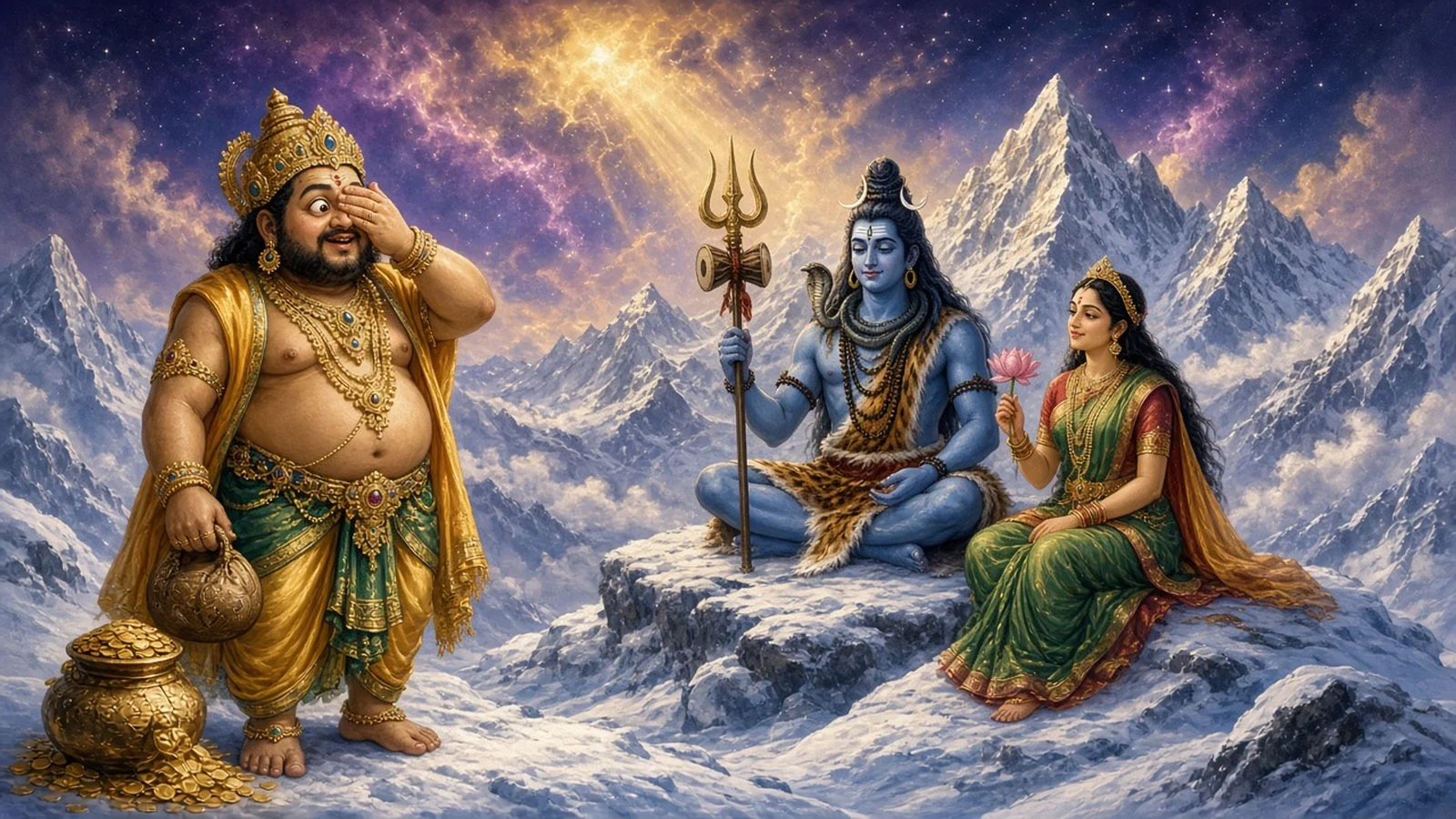
They burst in on Kubera with the story. The lord of wealth only smiled.
"Let Bhima take as many as he likes for Draupadi," he said. "I knew already."
So the guards went back without anger, and found Bhima alone in the water, picking lotuses.
Down below, the sky went dark, a gritty wind blew and the ground shook, and Yudhishthira, finding Bhima gone, asked Draupadi where.
"I asked him for saugandhika lotuses," she said. "He will have gone north-east."
Bhima's son Ghatotkacha took Draupadi up, his rakshasas carried the brahmins, and they flew to the lake. They found Bhima on the shore, mace raised.
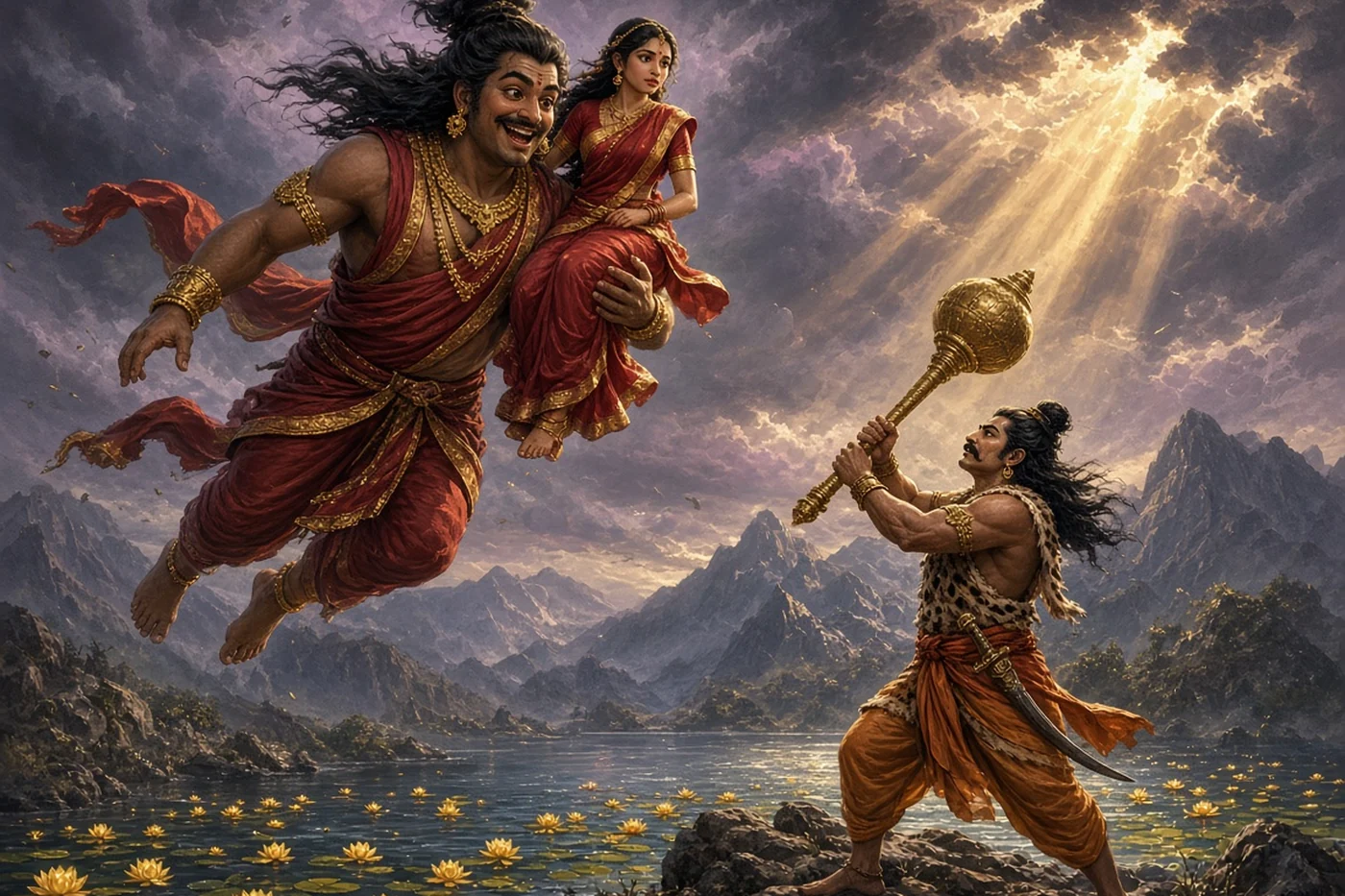
"What have you done?" said Yudhishthira, holding him. "Never act so rashly again. Do not offend the gods."
The giant gardeners came out with rocks in their hands, saw Yudhishthira and bowed, and he soothed them. The Pandavas stayed on Gandhamadana, waiting for Arjuna.
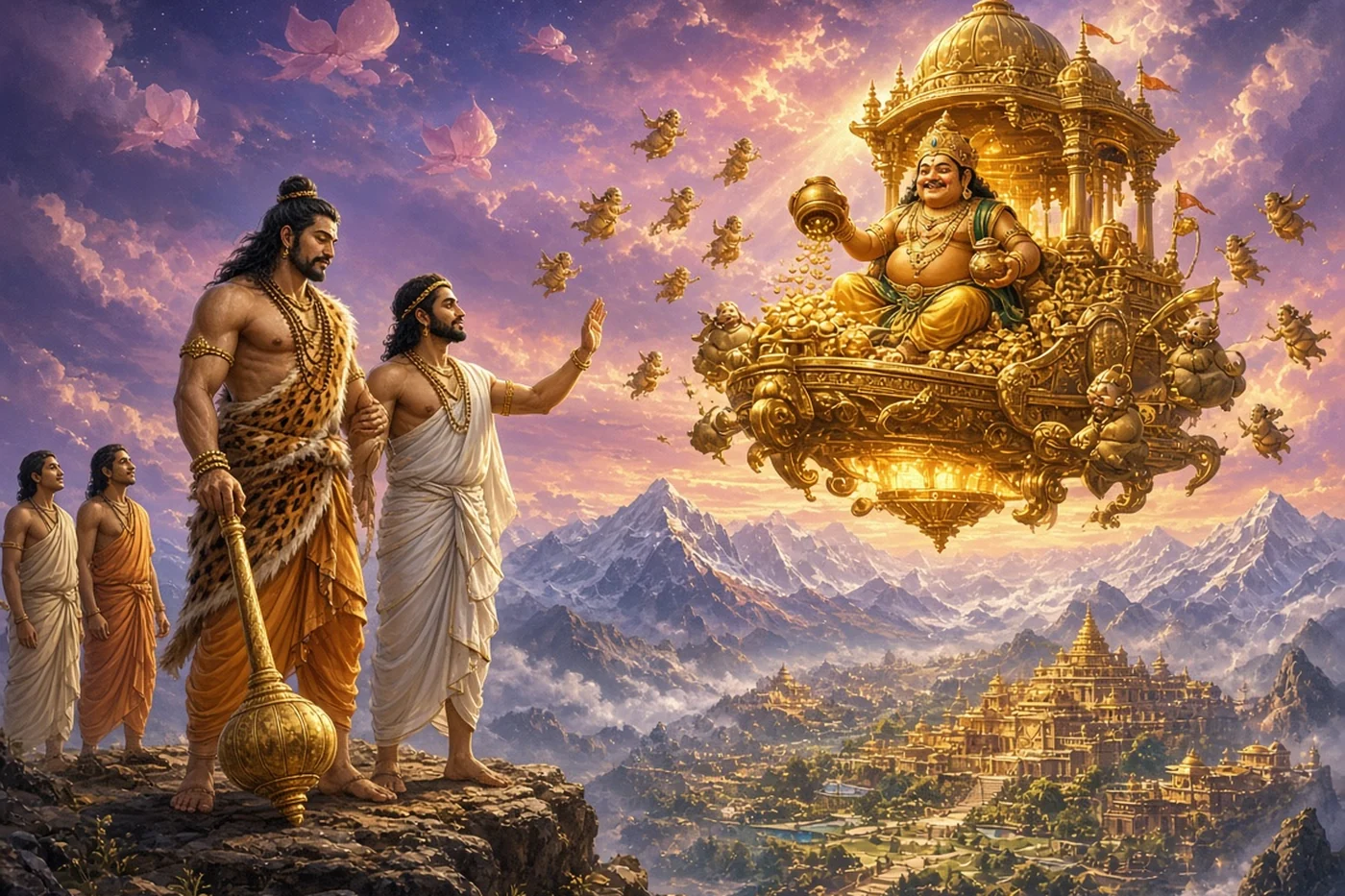
It happened again. One day the wind blew flowers of five colours down from the peak, and Draupadi told Bhima she had long wished to see its summit, if only he would drive the rakshasas off it. He took his bow, sword and mace and climbed. From the top he looked down on Kubera's city, its golden palaces, walls, gardens and banners, and he blew his conch and twanged his bowstring until the yakshas and rakshasas poured out at him.
He broke them and they fled. Then Maniman, Kubera's friend, stopped the rout.
"One man!" he shouted. "You are running from one man?"
He came at Bhima with a mace, then with an iron club that cut his right arm, then with a blazing dart. Bhima leapt into the air and threw his mace, and Maniman fell dead.
Soon the other Pandavas had climbed after him, and Yudhishthira was scolding his brother for killing without cause when Kubera came, riding the Pushpaka with a thousand yakshas behind him.
"Do not be angry with him," said Kubera. "They were doomed already. Long ago I was going to a council of the gods at Kushasthali, and on the bank of the Yamuna we passed the sage Agastya at his penance. Maniman, in his pride and folly, fouled the sage's head from the air. Agastya cursed him and my army to die at a man's hands, and said I would be free of the sin when I saw that man. Bhima has freed me. I am pleased with him."
He told Yudhishthira to keep his brother in hand, promised that his own servants would bring them food, and flew home. The Pandavas stayed on the mountain as the yakshas' guests.