Devalok ← All gods
Also calledSatyaSatrajitiBhama

In short

Who is Satyabhama?
The daughter of Satrajit, the Yadava lord who owned the Syamantaka jewel, and one of Krishna's chief queens at Dwaraka. The Puranas remember her as proud, quick and brave, the queen who rode with him to war.
Why did she want the Parijata tree?
In the Vishnu Purana she sees the tree of heaven in Indra's garden and asks Krishna to take it home; in the Harivamsha she is hurt because a flower from it went to Rukmini. Either way Krishna fights Indra for it and brings it to her palace.
Did Satyabhama kill Narakasura?
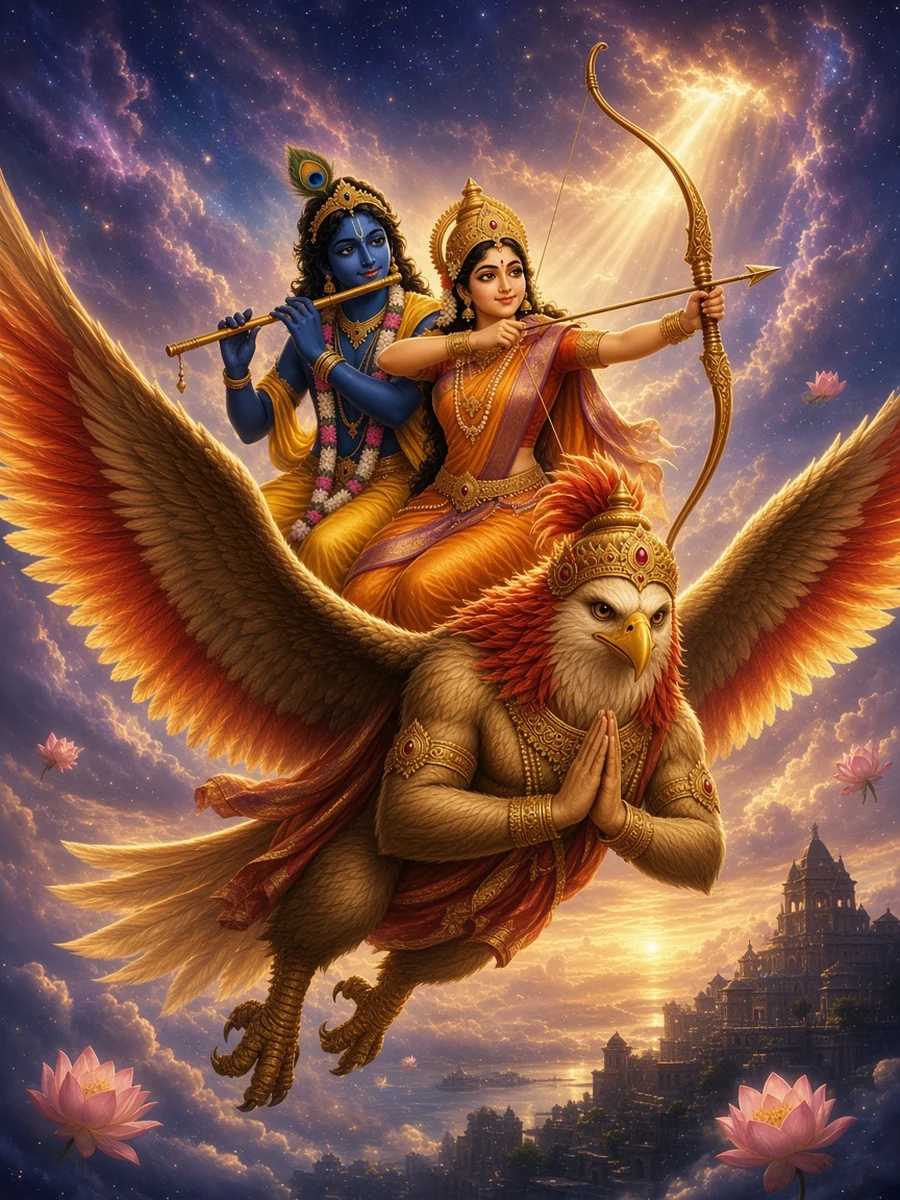
Not in the Puranas read for this site, where Krishna kills him with her beside him on Garuda. The Deepavali telling of South and West India gives her the bow and the last blow, and says she was the Earth born again.
What is Bhama Kalapam?
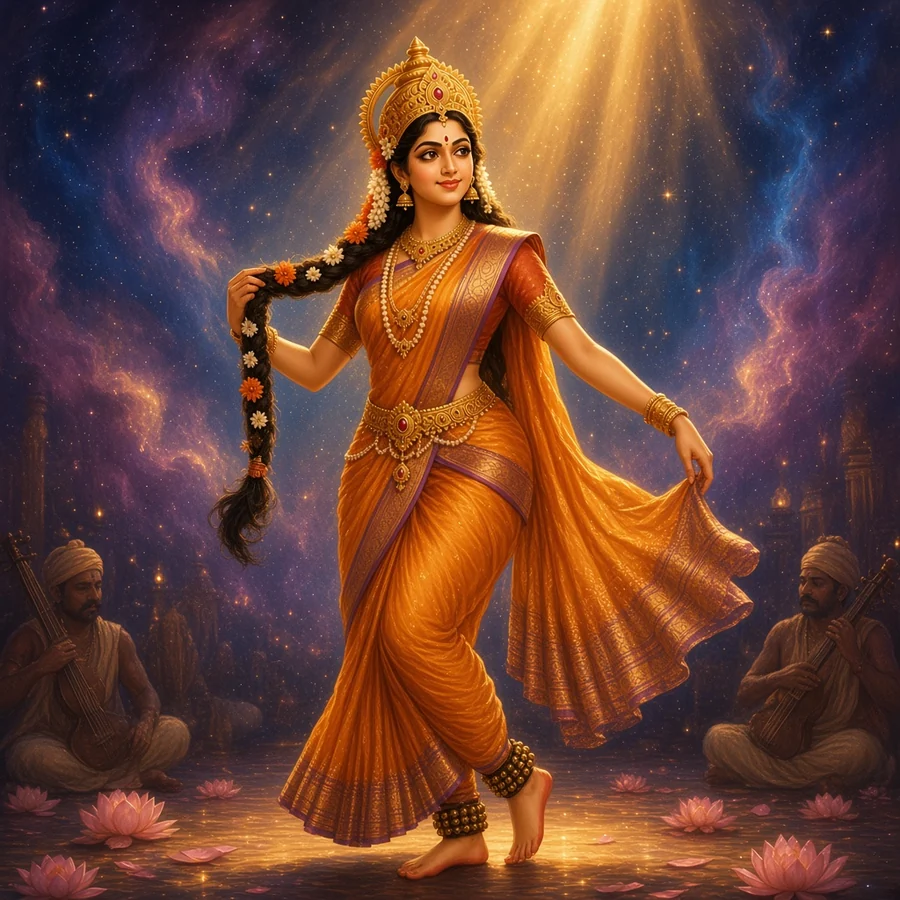
The Kuchipudi dance-drama of Andhra, credited to Siddhendra Yogi, in which Satyabhama, sulking over the Parijata flower, pines for Krishna and sends him a letter until he comes back to her.

Artwork ›

Riding Garuda behind Krishna into battle The Parijata from Indra's garden, by her palace

For kids

Watch this
Watch this
Mine. All mine
Mine. All mine

At a glance

TraditionVaishnava
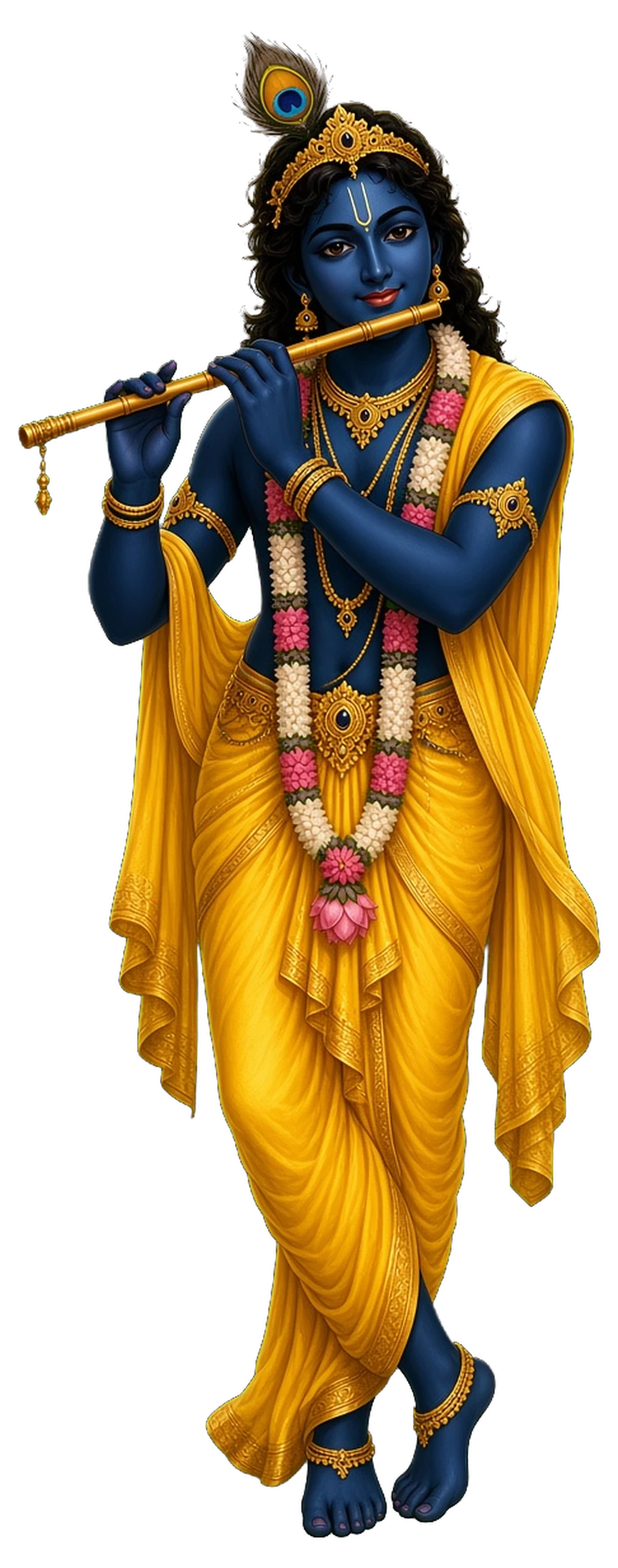
FormA queen at Krishna's side

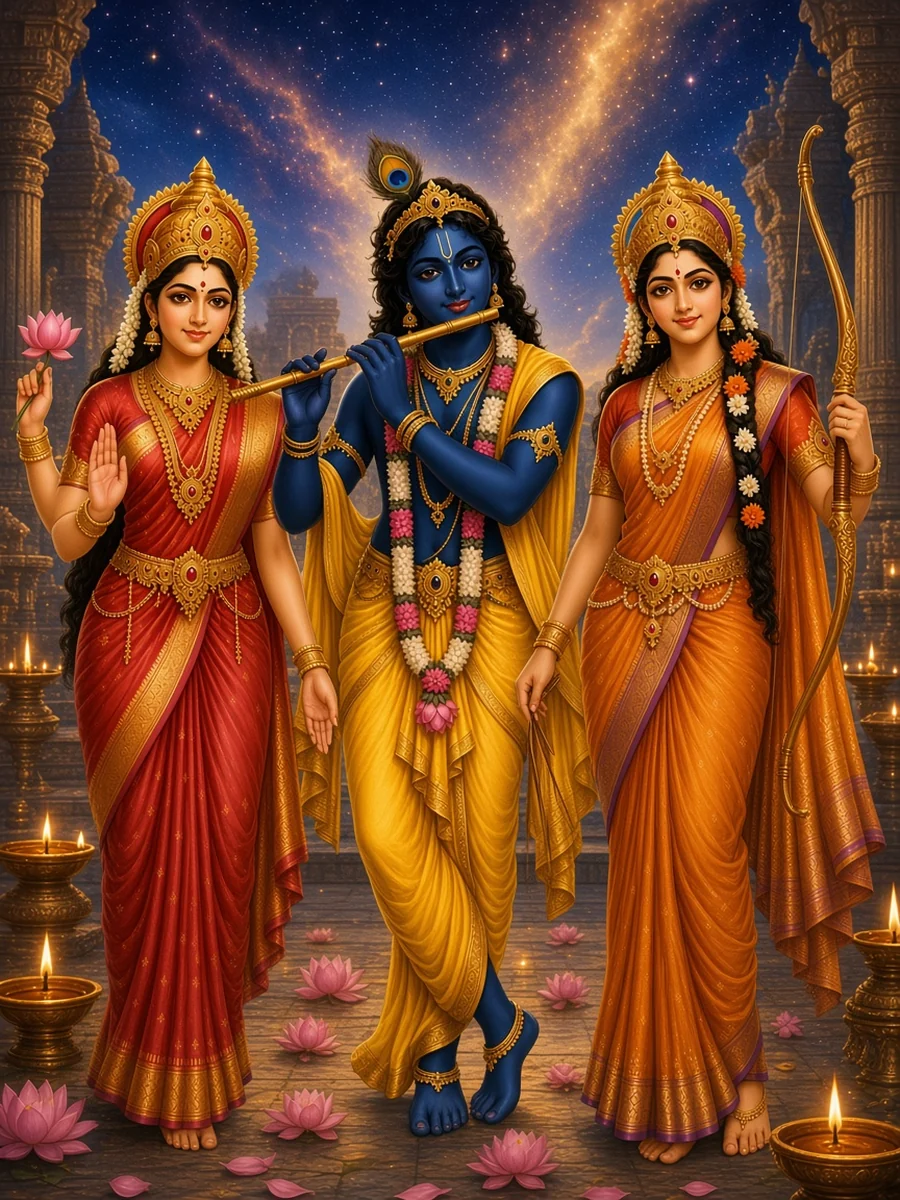
in South Indian temples, one of the two consorts seated beside him with Rukmini

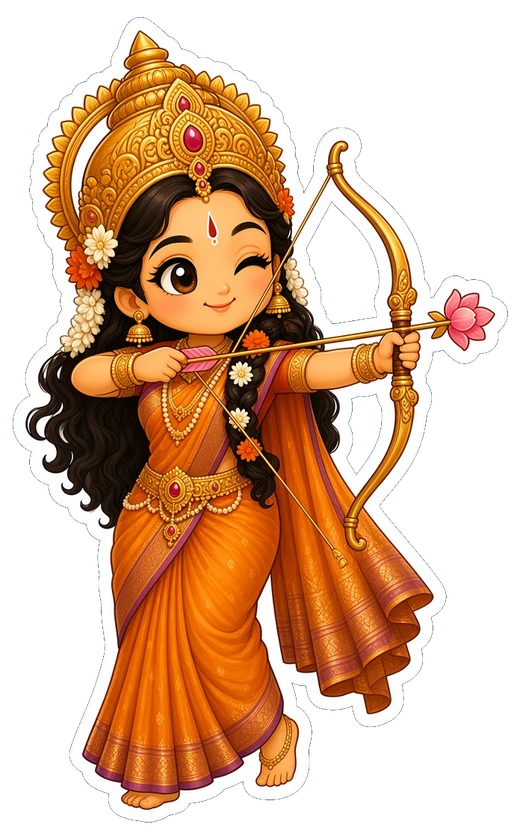
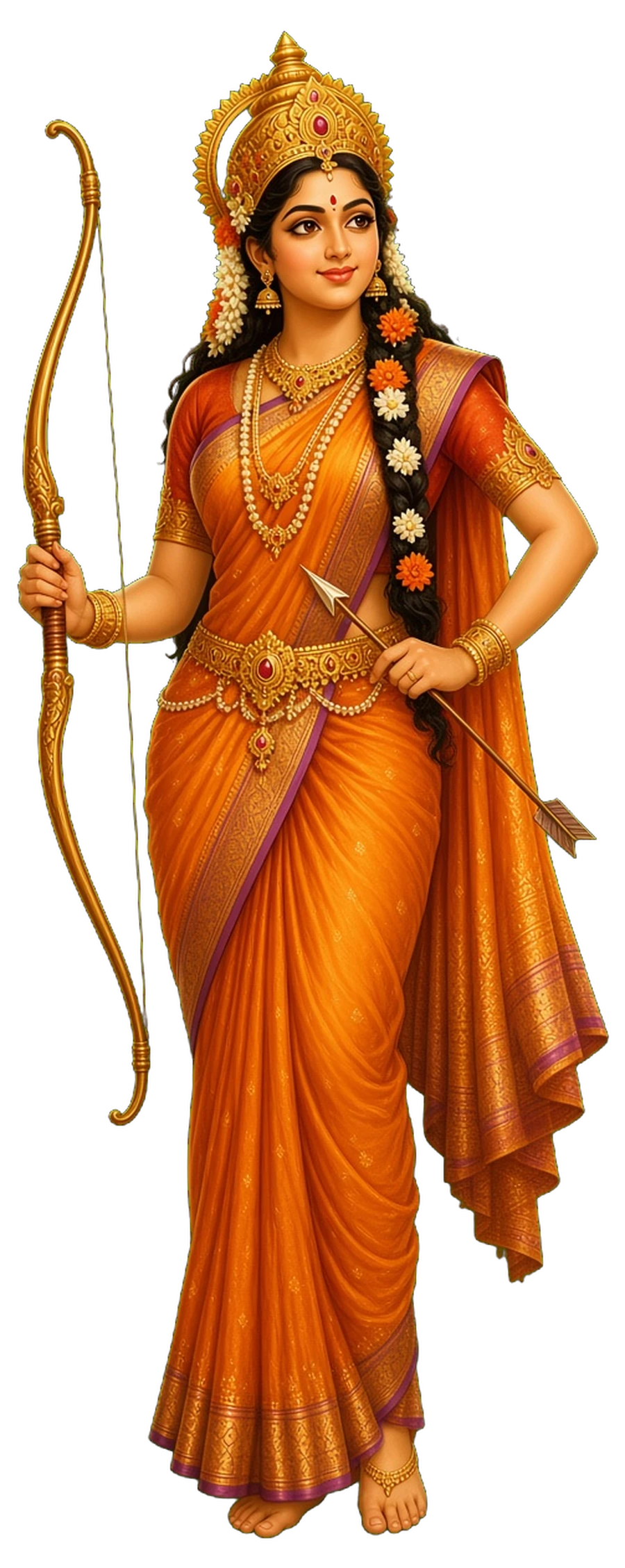
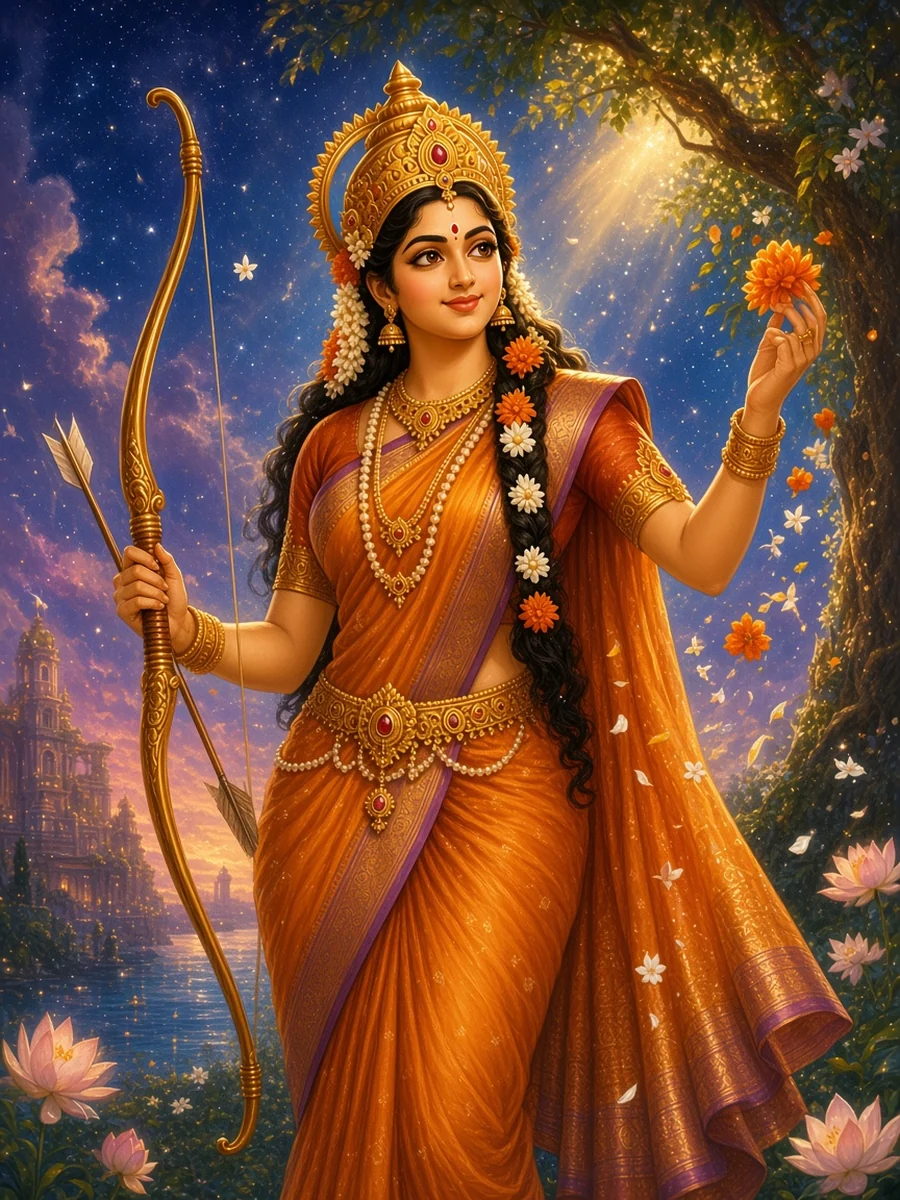
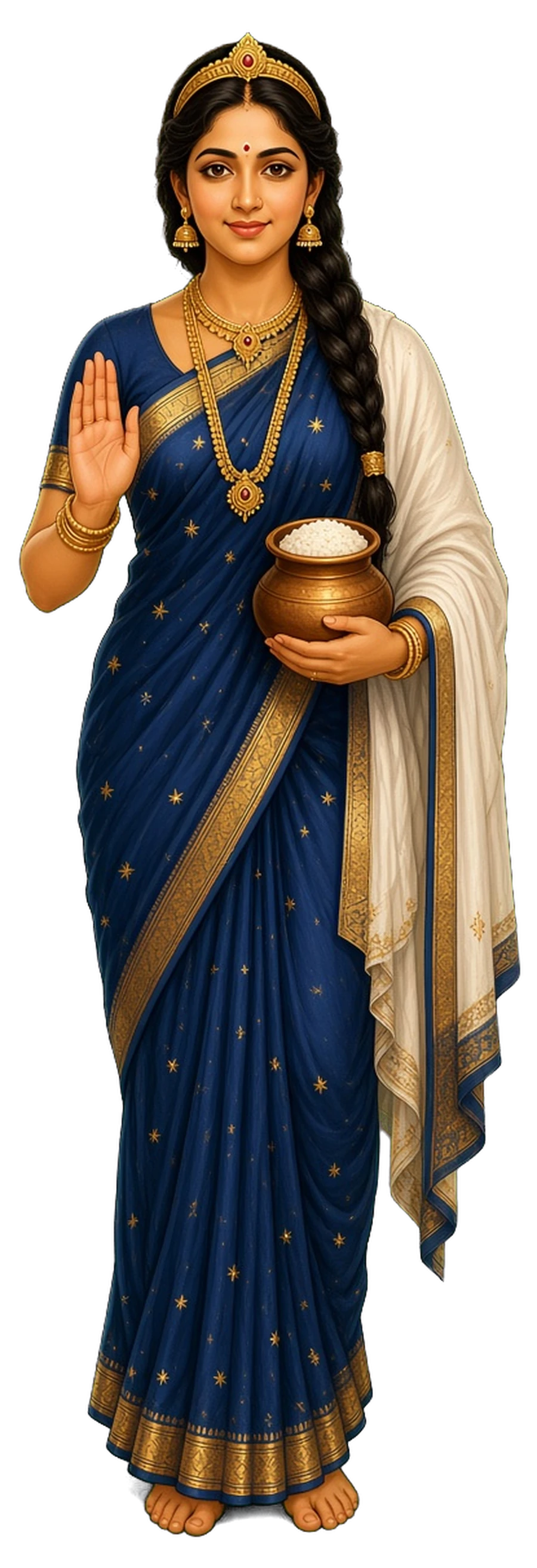
Best known asThe queen riding Garuda behind Krishna; in the Deepavali pictures, with a bow in her hands

Who Satyabhama is

Satyabhama is the queen of Dwaraka who would not be second. She was the daughter of Satrajit, the Yadava lord who wore the Syamantaka, the jewel the Sun gave him, and she came to Krishna as an apology: when Krishna brought the lost jewel back from the bears' cave and cleared his name, her ashamed father gave him his daughter. Her name joins satya, truth, to bha, brilliance, and the Puranas give her a temper to match.

She is the queen who went to war. When Indra asked Krishna to deal with Naraka, Krishna set Satyabhama on Garuda beside him and flew to Pragjyotisha, and Aditi, given back her stolen earrings, blessed her never to grow old. On the way out of heaven Satyabhama saw the Parijata, the tree that rose from the churned ocean, and asked for it, and Krishna fought Indra and the gods for it and planted it in her garden. The Bhagavata Purana tells the whole affair in one verse:

Codito bharyayotpatya parijatam garutmati, aropya sendran vibudhan nirjityopanayat puram: Urged on by his wife, he pulled up the Parijata, set it on Garuda, overcame the gods with Indra at their head, and brought it to his city (Bhagavata Purana 10.59.39).

She knew grief as well. While Krishna was away, a man who had wanted to marry her killed her father in his sleep for the jewel, and she went herself to bring her husband home. In the Mahabharata she sits with Draupadi in the forest of exile and asks, half teasing, how one woman keeps five husbands content.

Popular tradition gives her more. In the South and West, Naraka Chaturdashi is her day: the Earth, people say, was born again as Satyabhama, and she took up the bow against Naraka, her son of another life. At Dwaraka she weighed Krishna against her gold, and one tulsi leaf of Rukmini's outweighed it. In Andhra the Kuchipudi dancers made her their heroine in Bhama Kalapam. At Mannargudi in Tamil Nadu Krishna sits between his two queens, Rukmini and Satyabhama.

Her stories on this site: The Tree from Indra's Garden, The Ride to Hastinapura and What Draupadi Told Her. She also rides through Aditi's Earrings and The Oil Bath Before Dawn, marries Krishna at the end of The Jewel That Shamed Krishna, and learns humility in One Leaf on the Scale.
Before the Puranas

The Vedic roots of Satyabhama

The Vedas do not know Satyabhama. She belongs to the stories of Krishna's life at Dwaraka, which were told in the Mahabharata, in its appendix the Harivamsha, and in the Puranas. The Mahabharata knows her as Krishna's dear wife, the daughter of Satrajit, who comes with him to the Pandavas' forest and talks with Draupadi there.

Her family story is the Syamantaka jewel. H. H. Wilson, translating the Vishnu Purana, found it in the Bhagavata, Vayu, Matsya and Brahma Puranas and in the Harivamsha as well. Its shape holds steady from text to text: the Sun's gift, Prasena's death in the forest, Jambavan's cave, the marriage, and Satrajit murdered for the jewel. The endings differ. The Bhagavata leaves the jewel with Akrura and gives Satrajit's estate to Satyabhama's sons; the Vishnu Purana lets her claim the jewel for herself in open assembly, and lose it to a rule of self-restraint that nobody in the family can keep.

The Parijata grew in the same way. The Bhagavata gives it two verses at the end of the Naraka war. The Vishnu Purana gives it two chapters and lets Satyabhama speak, sending a taunt to Indra's queen and another to Indra himself. The Harivamsha makes it a long book of its own that begins with a flower handed to Rukmini, a difference Wilson noted. The Telugu poet Nandi Timmana retold the Harivamsha's version in his Parijatapaharanamu, and the Kuchipudi dance-drama Bhama Kalapam, credited to Siddhendra Yogi, took the same quarrel onto the stage.

Her identity with the Earth came last. Neither the Vishnu Purana nor the Bhagavata chapters read for this page call her the Earth: there Naraka's mother, the Earth, meets Krishna as a separate figure, pleads for her son's children and hands back the earrings. The Deepavali telling, in which Satyabhama is the Earth reborn and brings down her son of an earlier life, is recorded by the encyclopedias from popular tradition.

See how the Vedic gods became the Puranic ones →

Related gods