As the Mahabharata tells it
Mahabharata, Vana Parva 182 and 231 to 233 · the Kamyaka forest · 4 min read
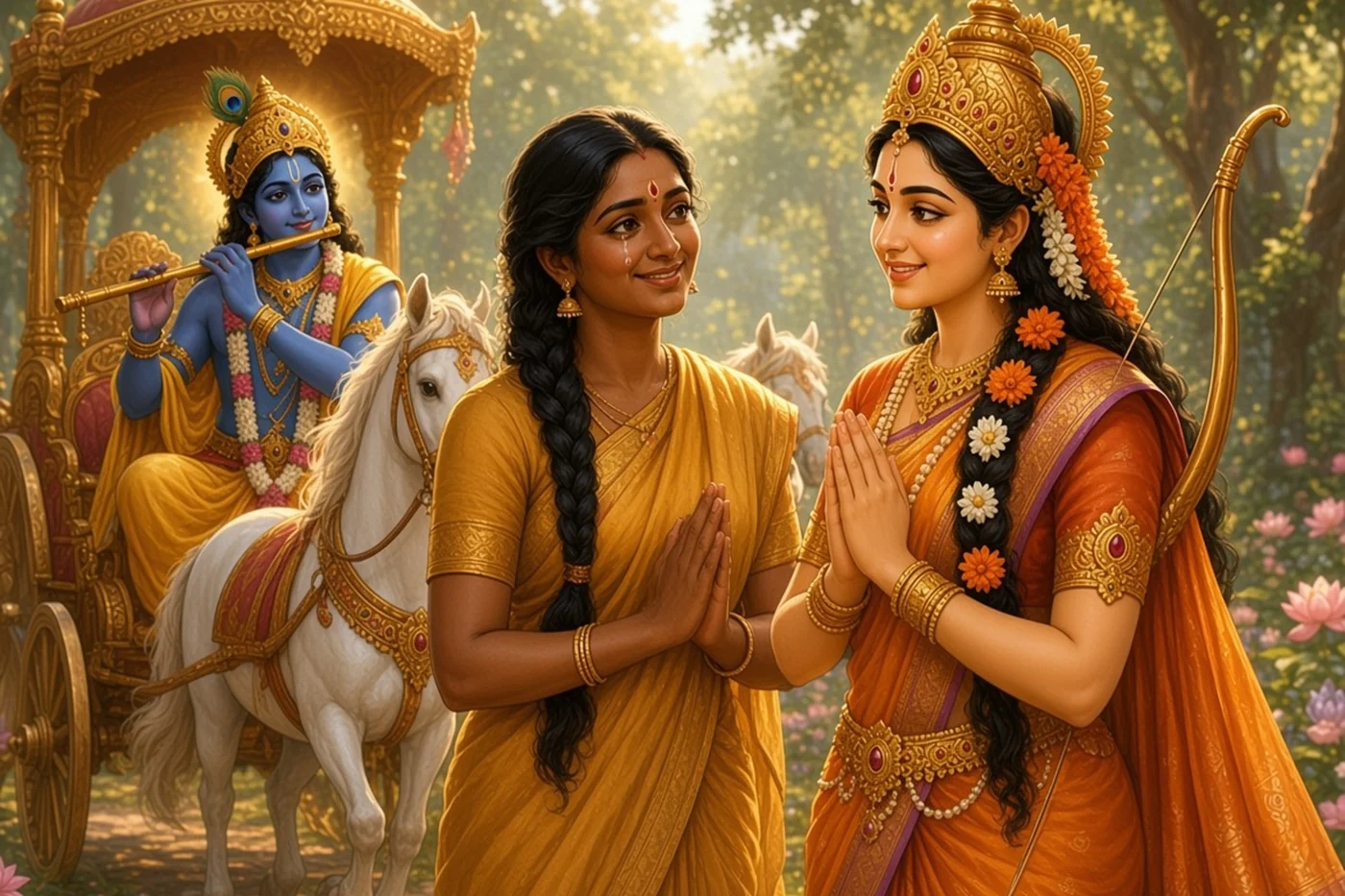
The Pandavas were in the years of their exile, living in the Kamyaka forest, when a chariot came through the trees and Krishna stepped down from it with Satyabhama. He embraced his cousins, and Satyabhama took Draupadi in her arms. Soon the old sage Markandeya came too, and for a long while the hermitage was full of his stories of ages past.
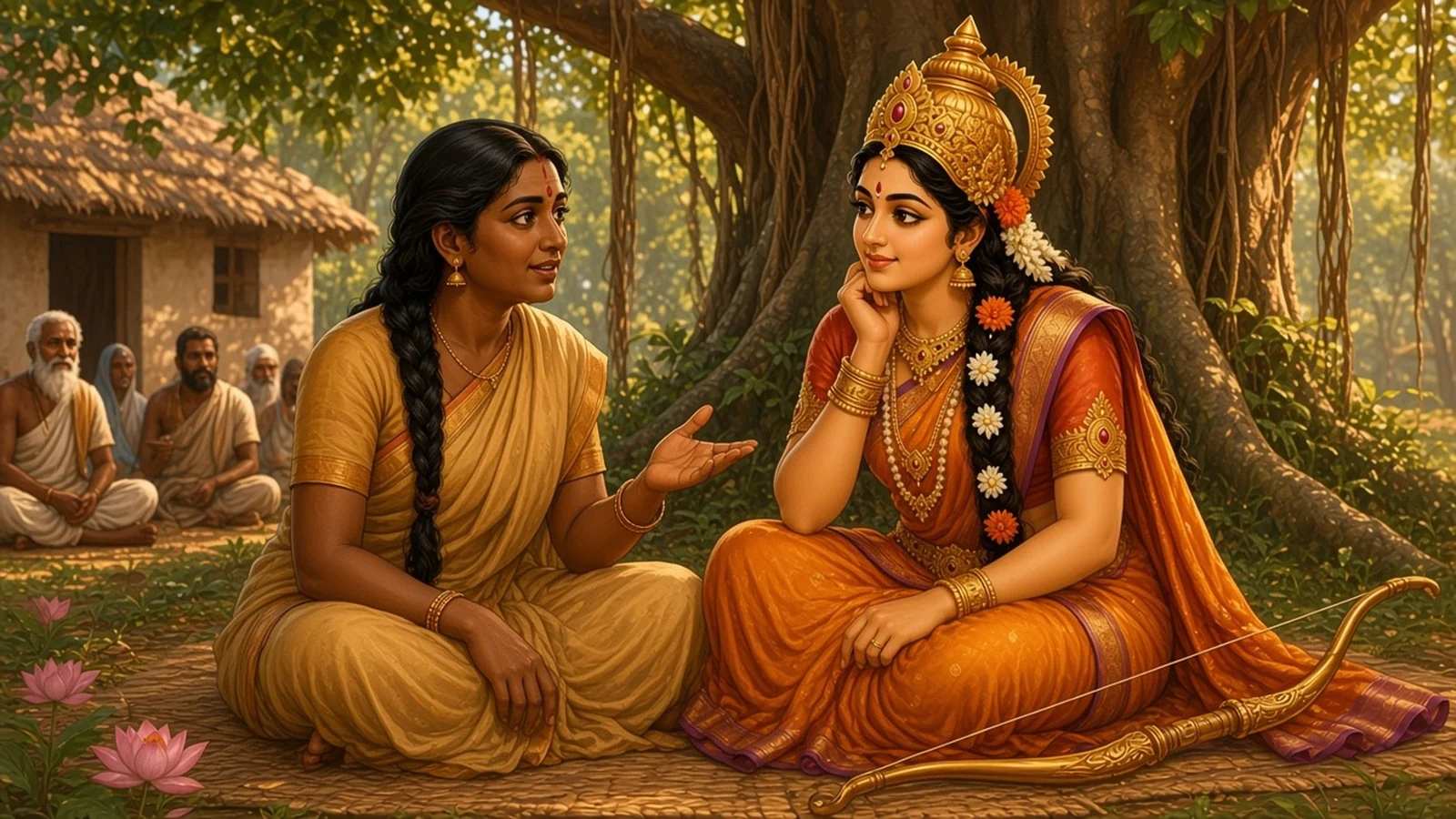
While the men listened, the two queens went off by themselves and sat together. They laughed over the news of the Kurus and the Yadus. Then Satyabhama lowered her voice.
"Tell me something," she said. "You have five husbands, every one of them a hero, and not one of them is ever angry with you. They do what you want. How do you do it? Is it a vow, or a penance? A mantra? Something in the bath water, a root, a powder for the eyes? Tell me, so that I can use it on Krishna."
Draupadi did not laugh.
"You are asking about the tricks of women who mean harm," she said. "And they do not work. A husband who finds out his wife is giving him charms and herbs begins to fear her as he would fear a snake in his bedroom, and a frightened man is never at peace. Some of those mixtures make men ill. A wife should never do her husband harm."
"Then what do you do?" asked Satyabhama.
"I will tell you plainly," said Draupadi. "I put away my pride, and my temper. I serve the Pandavas, and their other wives too, without jealousy. I do not eat before they have eaten, or bathe before they have bathed, or sleep before they sleep. When one of them comes in, I get up and bring him water and a seat myself. I keep the house clean and the meals on time. I do not linger at the door or idle in the gardens. When one of them is away on family business, I put away flowers and scent until he comes home."
She went on. "Their mother Kunti taught me the household rites, the alms and the offerings and the feeding of guests, and I look after her myself, her food and her clothes. I have never set myself above her."
"And it was never only the house," she said. "When Yudhishthira was king, thousands of Brahmins ate from gold plates at our table every day, and there were thousands of serving women, and horses and elephants past counting. I knew their numbers, what came in and what went out, and I kept the treasury. The brothers left all of it to me. I was first up in the morning and last asleep at night. That is my charm, Satyabhama. Work, and care, and no pride."
Satyabhama took her hands. "Forgive me," she said. "Friends tease each other. I only spoke in fun."
"Then here is something for Krishna," said Draupadi, and her voice was kind. "For a wife like me, a husband is her god and her shelter. Love him as a friend as well as a husband. When you hear him at the gate, get up and be ready. If he tells a maid to do something, do it yourself, and he will know your heart. Keep what he tells you in private. Be good to those who love him, and keep away from those who wish him ill, and from women who are proud and wasteful. And dress beautifully, with garlands and perfume, so that he can see how much you want to please him."
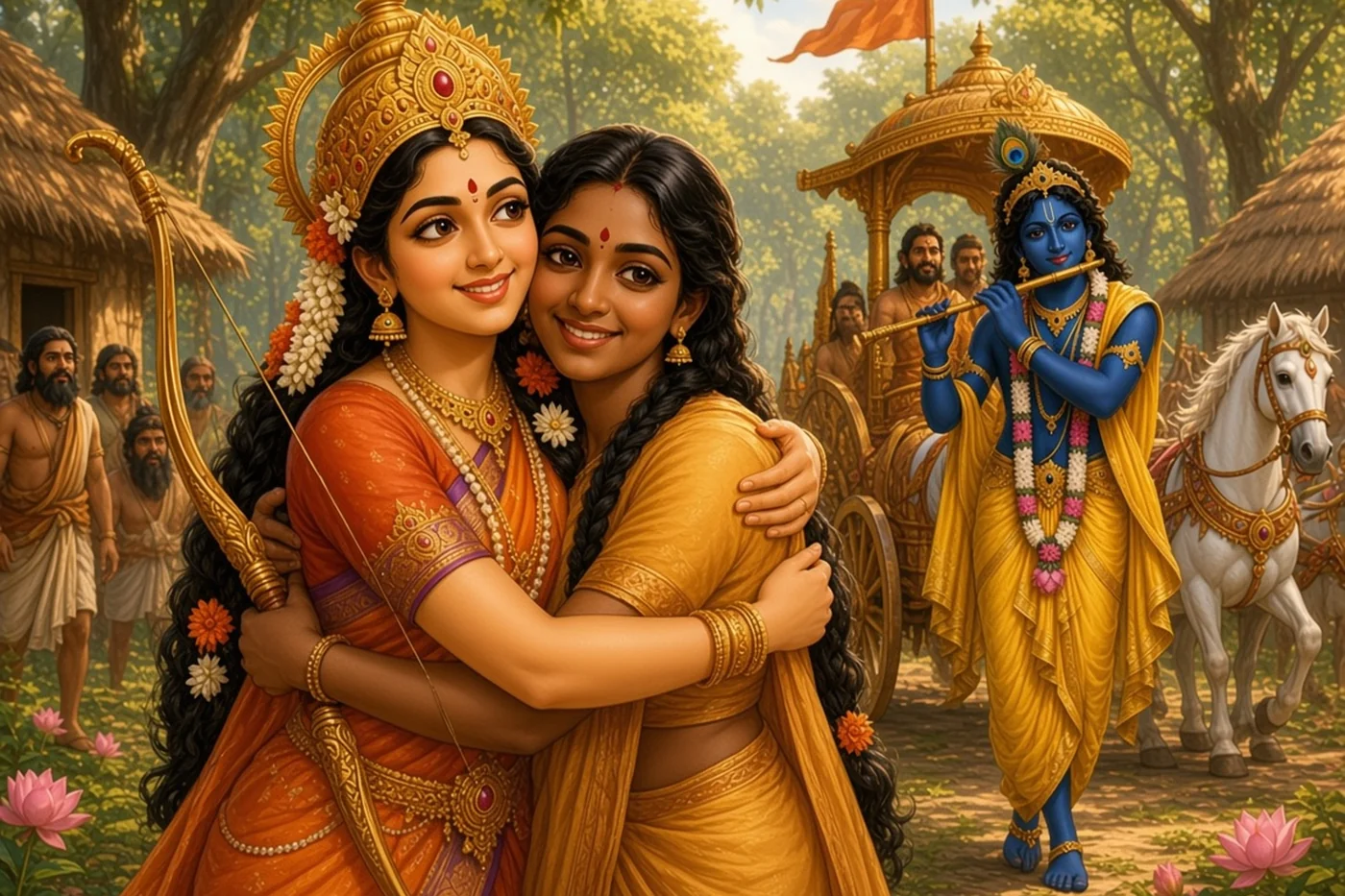
When Krishna was ready to leave, Satyabhama held Draupadi close.
"Do not grieve," she said. "Women like you do not suffer for long. You will see the earth your husbands won come back to them. You will see the proud wives of the Kauravas in tears. And your sons are safe in Dwaraka. Subhadra looks after them like her own, and they are learning to use their weapons well."
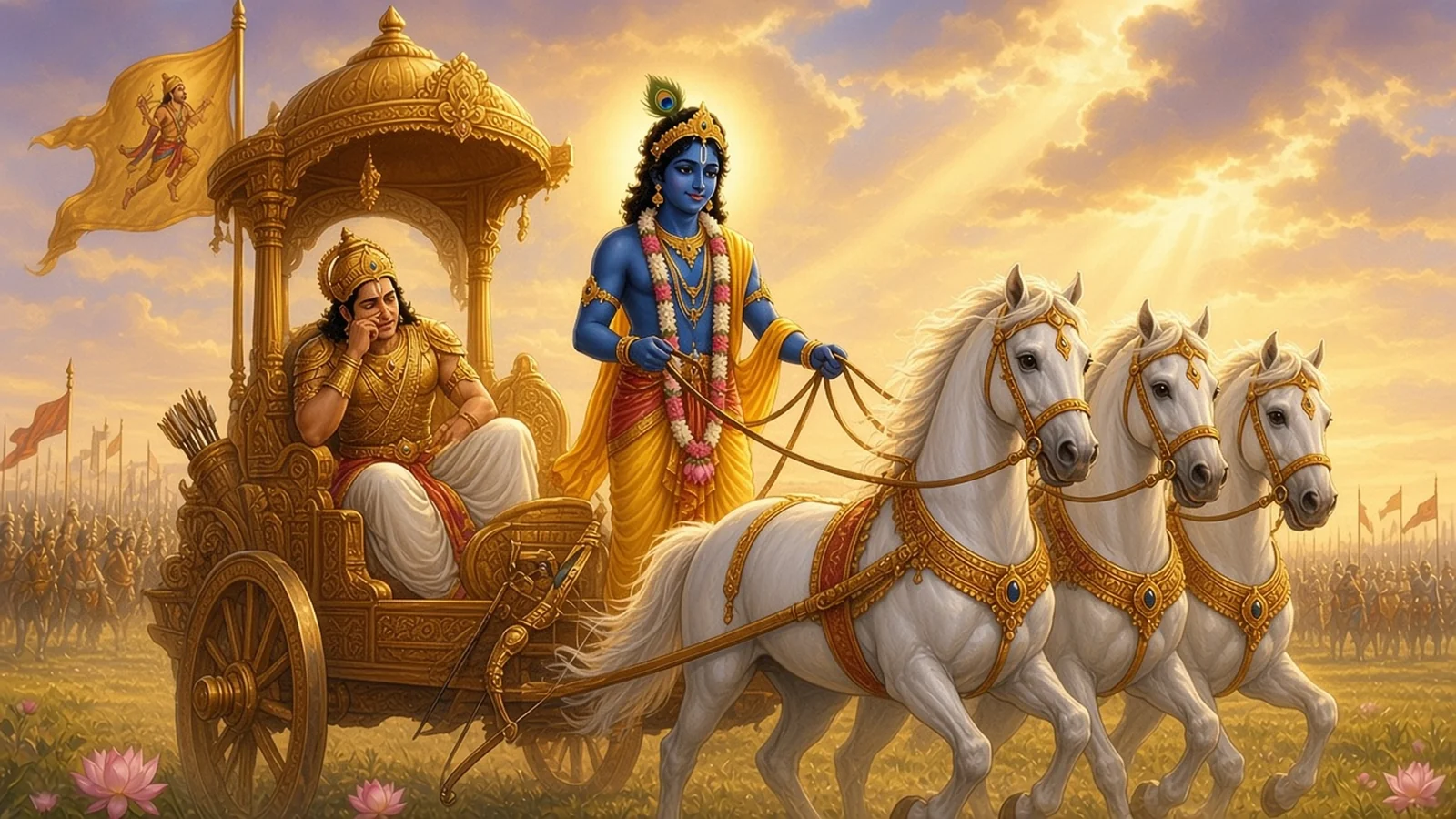
She walked round Draupadi once, as one does to honour someone, and climbed into Krishna's chariot. Krishna smiled at Draupadi to comfort her, sent the brothers back, and the chariot rolled away through the trees.