Devalok ← All gods
Also calledBhagirathiJahnaviMandakiniTripathagaVishnupadi

In short

Who is Ganga?
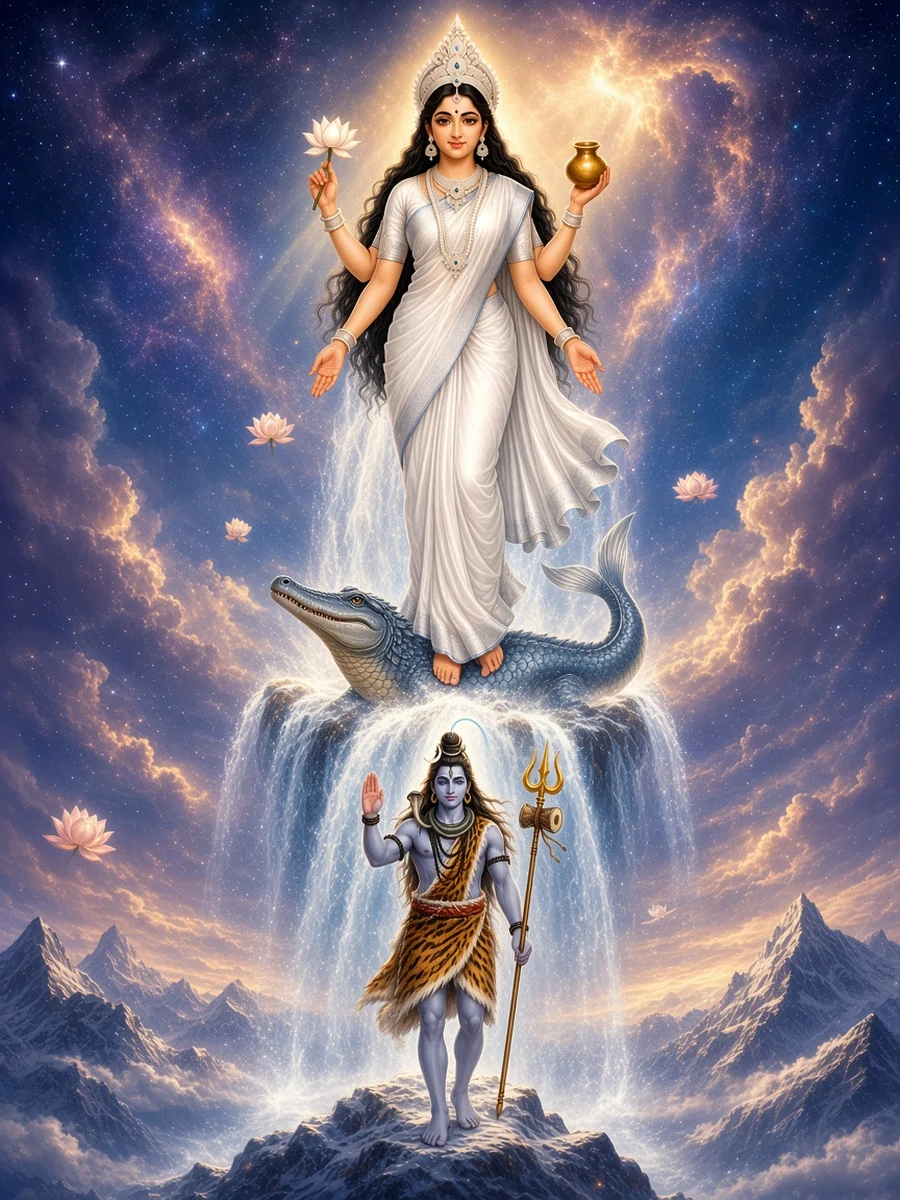
The goddess who is the river Ganga. She flowed in heaven until King Bhagiratha's penance brought her down, and Shiva caught her in his hair so that her fall would not break the earth.
Where did Ganga come from?
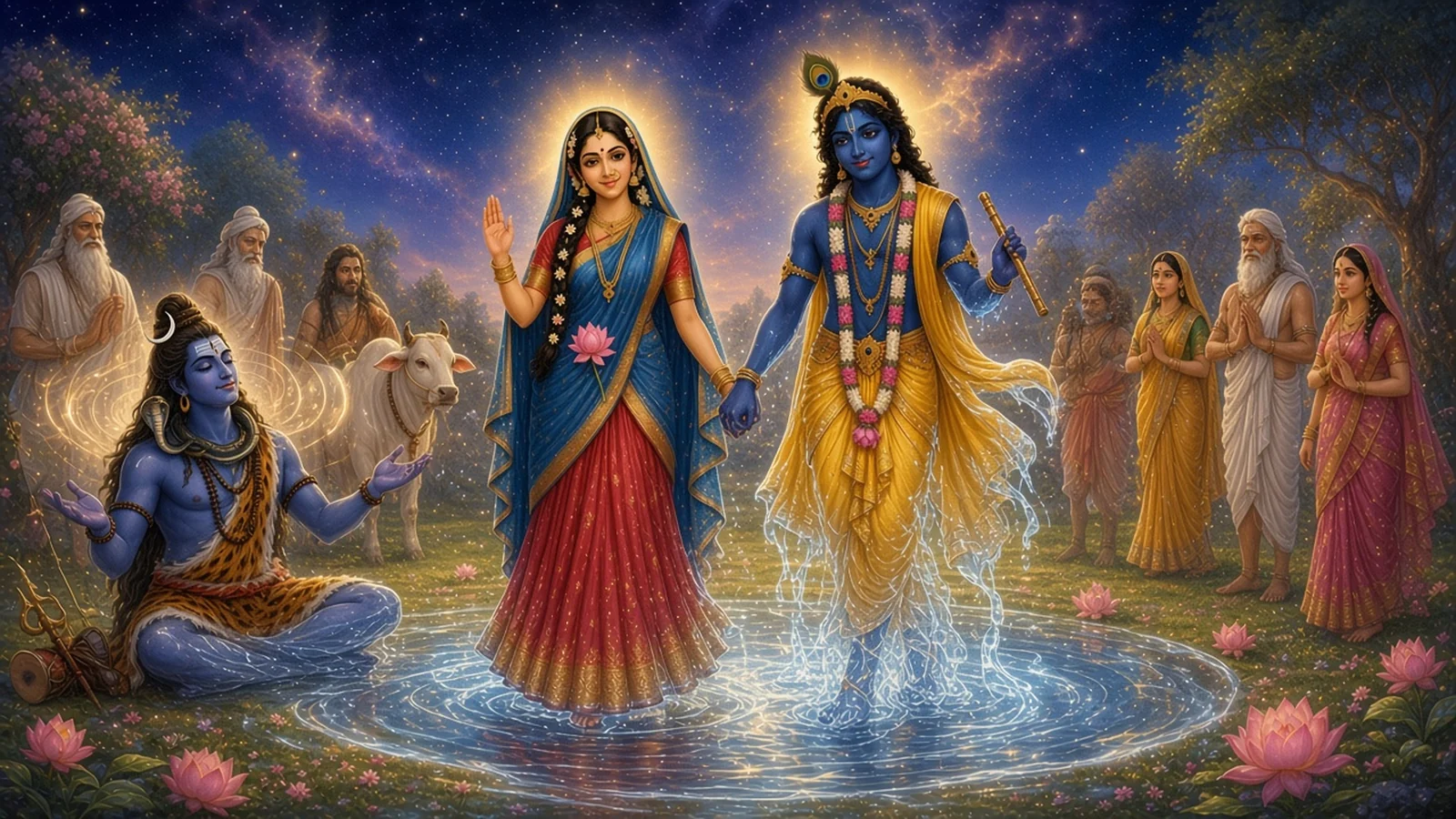
The texts disagree. The Ramayana makes her the elder daughter of Himavat, the mountain king; the Bhagavata, water that came in over Vishnu's foot; the Devi Bhagavata, Radha and Krishna themselves, turned to water by Shiva's song.
Why is Bhishma called Ganga's son?
In the Mahabharata she married King Shantanu on condition that he never question her, and Bhishma was the eighth of their sons, the only one she did not return to heaven.
What is Ganga Dussehra?
Her festival on the tenth day of the bright half of Jyeshtha, in May or June. Devotees say it is the day she came down to earth, and a bath in her that day is said to take away ten sins.

Artwork ›

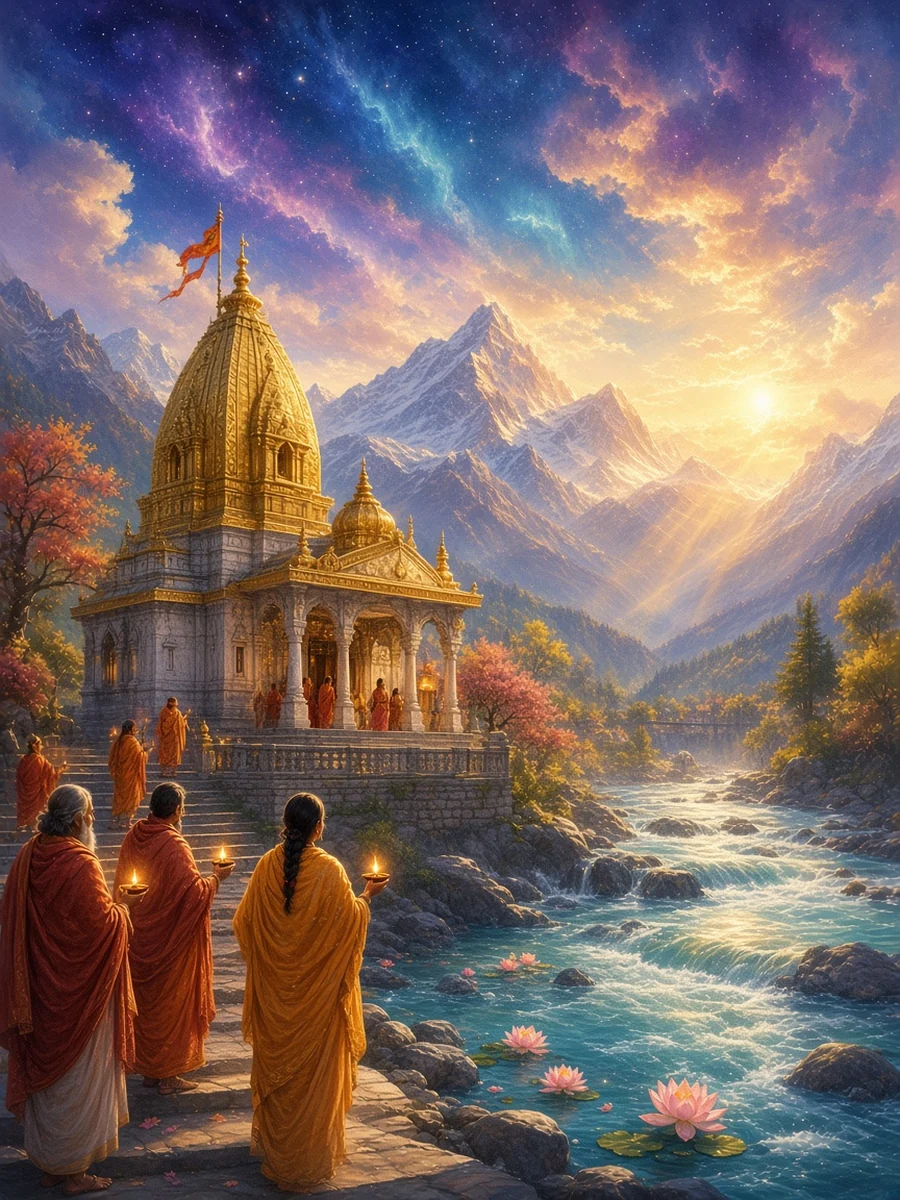
Coming down into Shiva's hair Gangotri, her temple in the mountains

For kids

Going with the flow
Going with the flow
Holy water, coming up

At a glance

TraditionPan-Hindu (Shaiva, Vaishnava and Shakta)
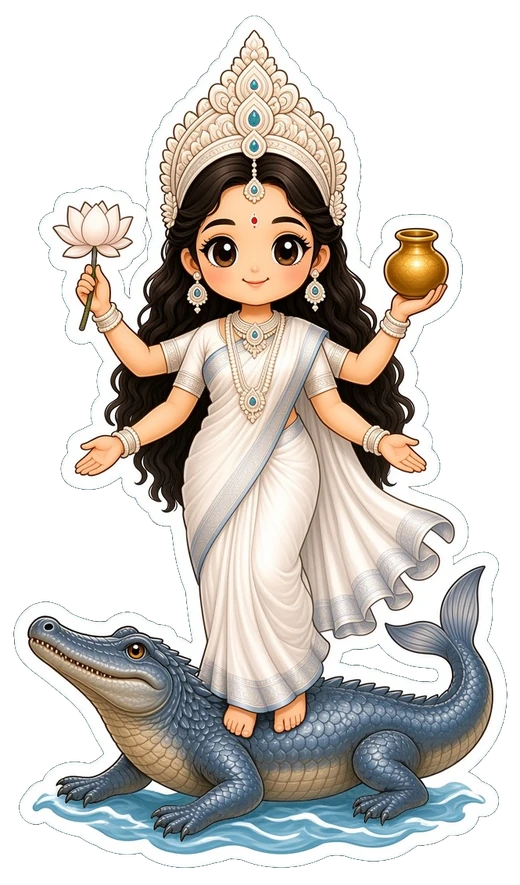
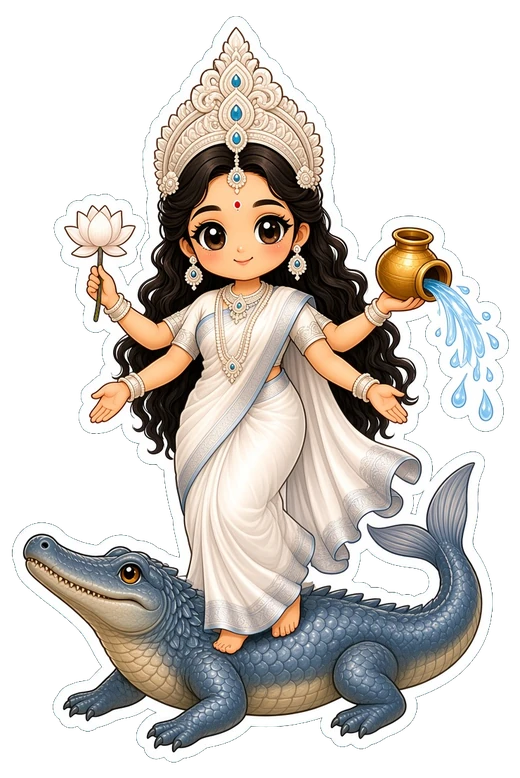
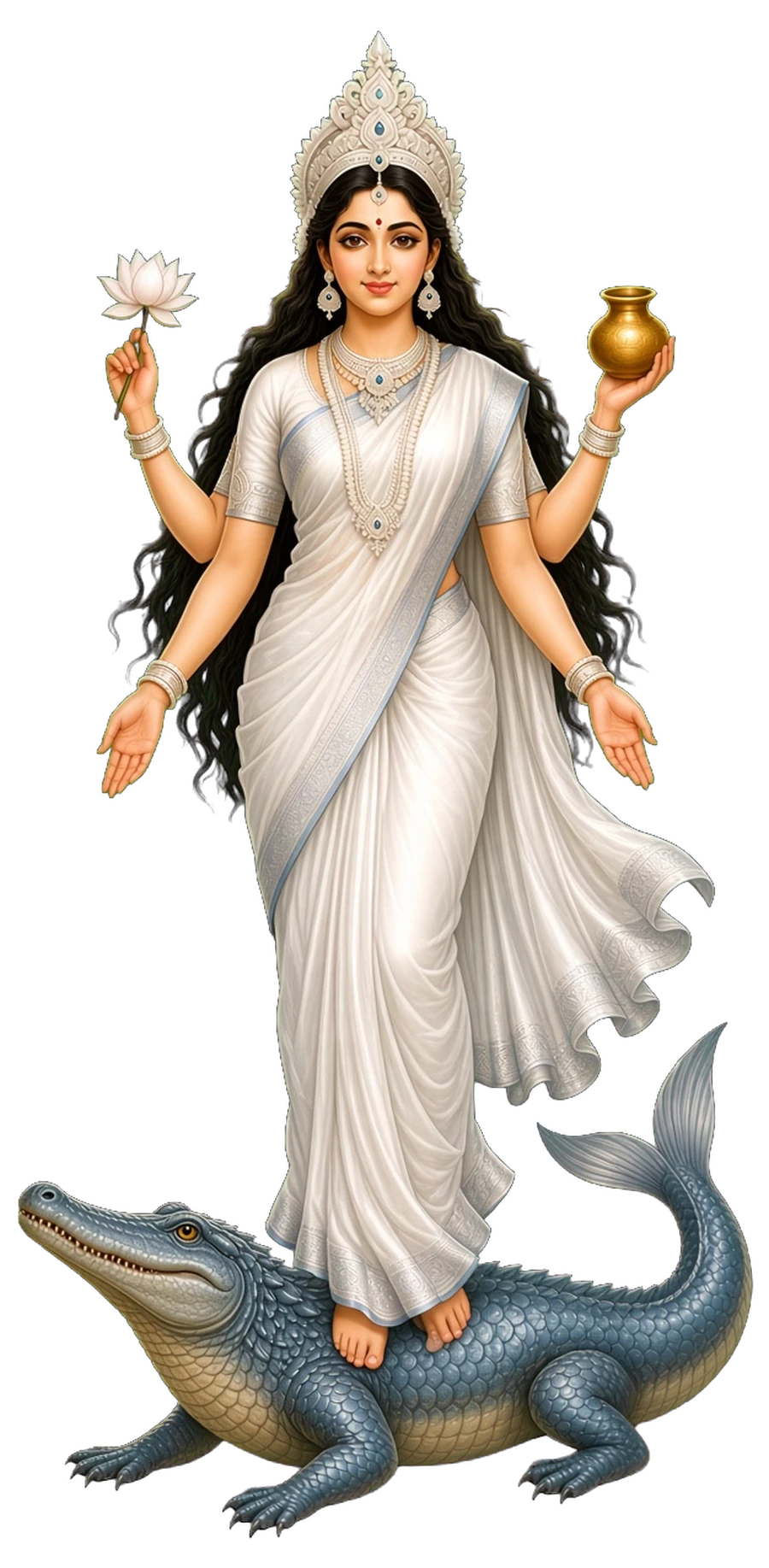
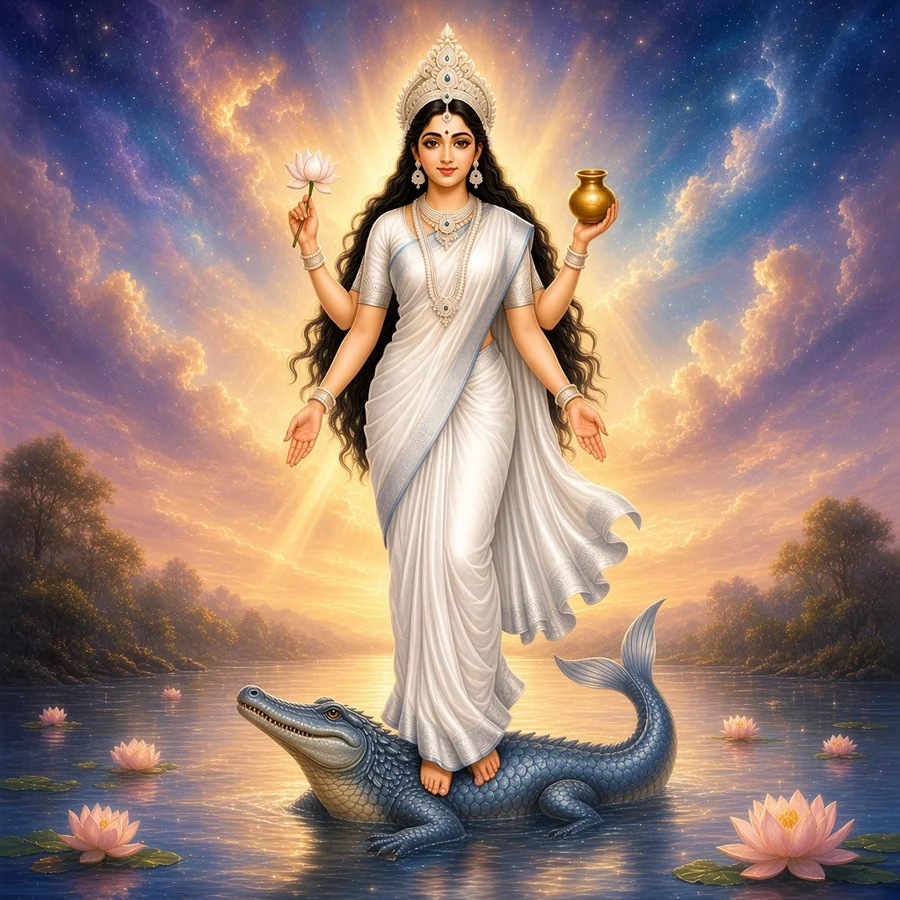
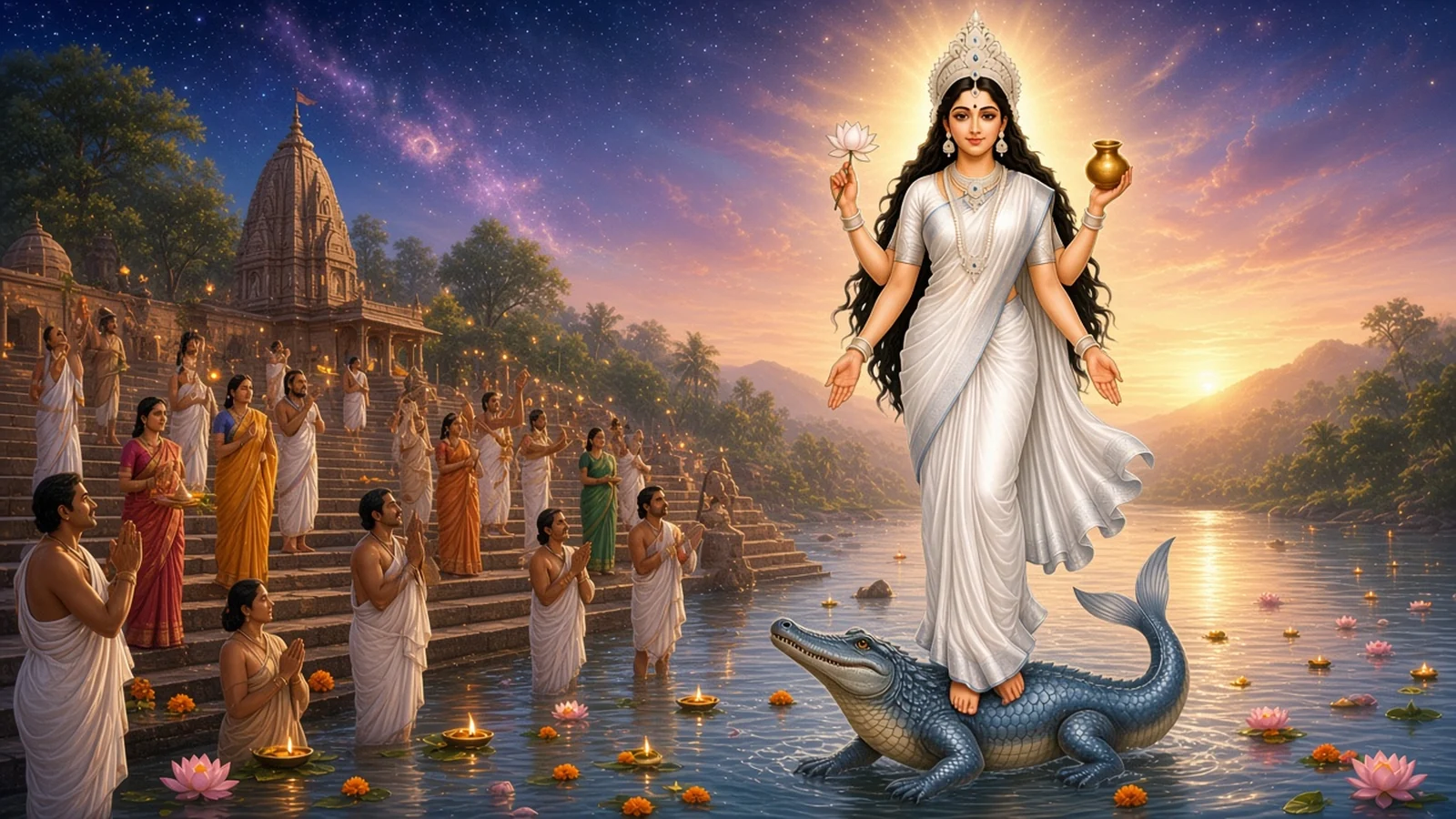
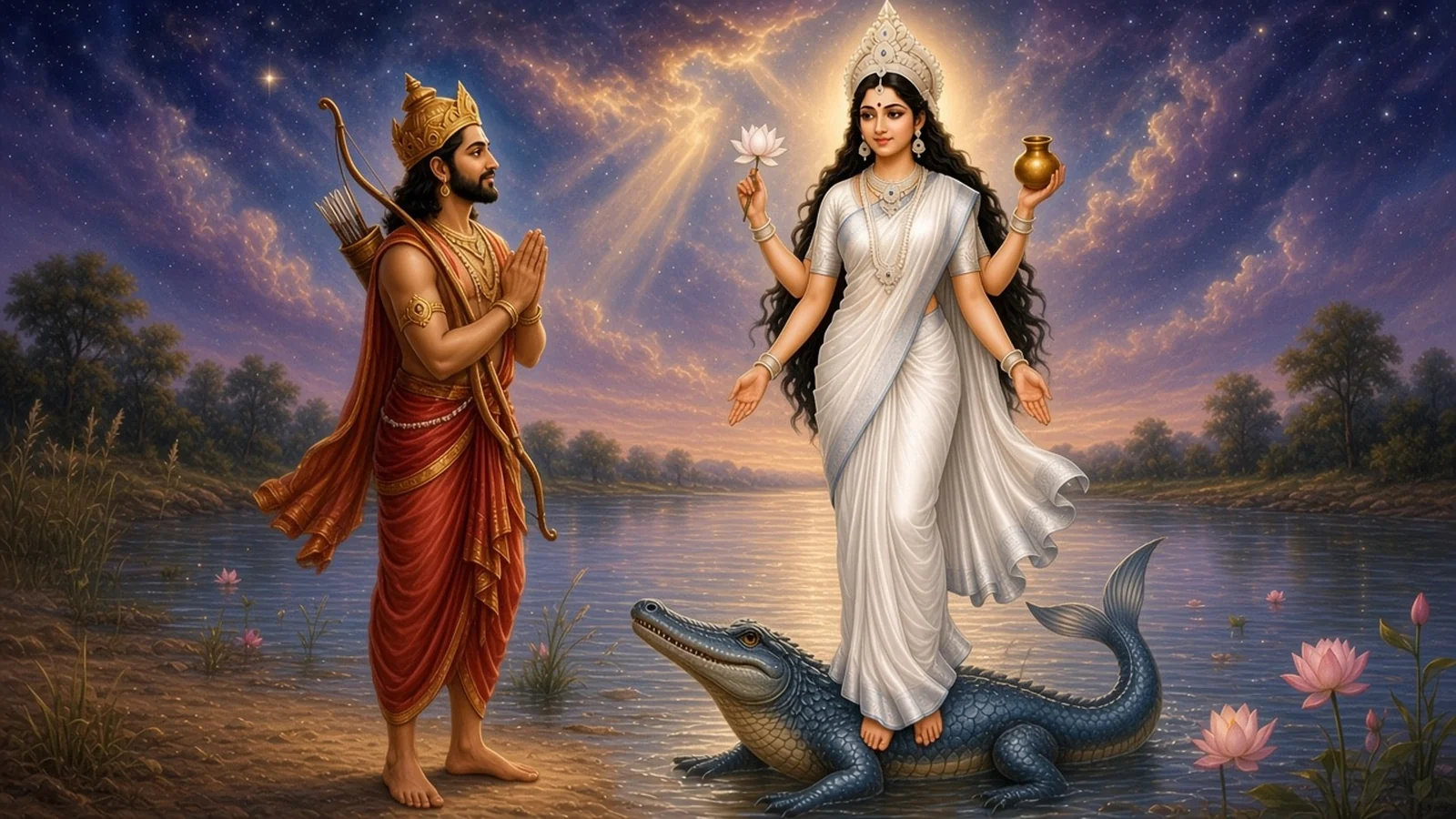
FormA fair woman crowned in white

standing or seated on a makara, a beast part crocodile and part fish

HoldsA full water pot and a white lotus

the other hands giving boons and taking away fear, as the Kashi Khanda describes her image

Who Ganga is

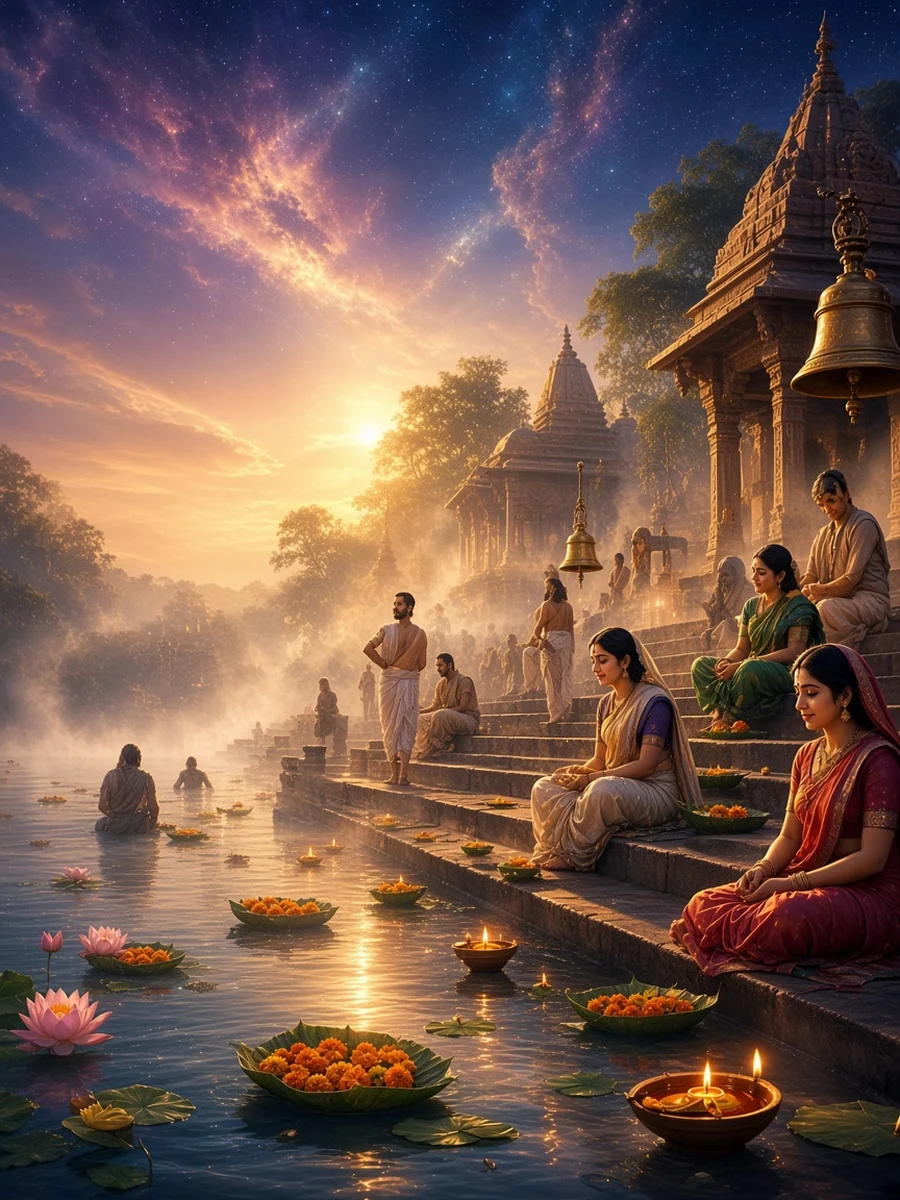
Ganga is the river and the goddess who is the river. She rises in the Himalaya above Gangotri, comes out of the hills at Haridwar, meets the Yamuna at Prayagraj, passes Kashi and reaches the sea at Gangasagar in Bengal, and along the whole of that road the water is the goddess herself: bathed in at dawn, worshipped with lamps at dusk, and carried home in sealed pots to be poured on Shiva.

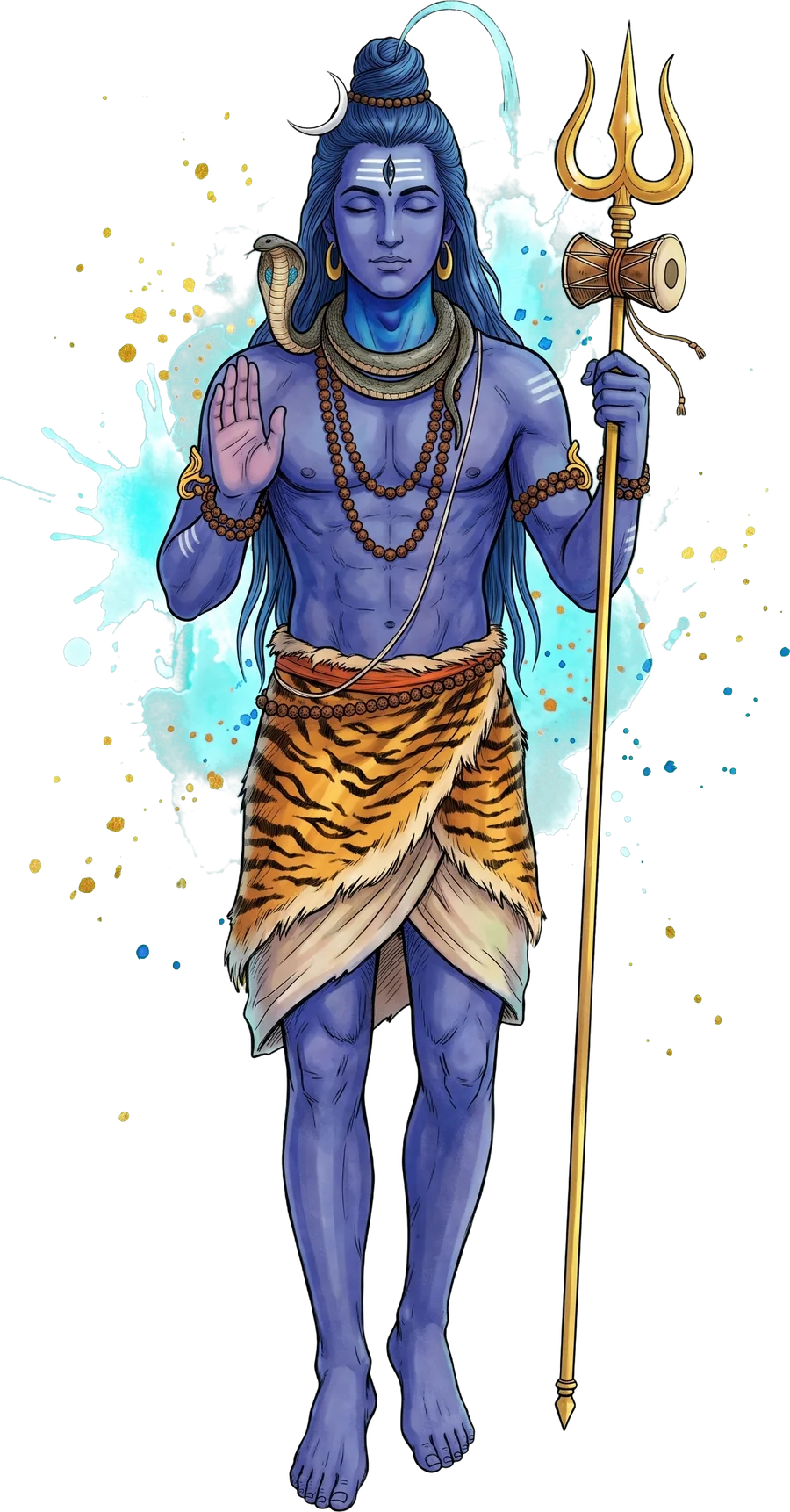
Her best-known story is her coming down. King Bhagiratha stood in penance for years to bring her to the ashes of his sixty thousand ancestors, and when she fell from the sky Shiva took the blow on his head and held her in his hair until she ran gently. The sage Jahnu drank her and let her go again, which is why she is Jahnavi.

How she came to be in heaven at all, the texts tell three ways. The Ramayana makes her the elder daughter of Himavat, the mountain king, and Parvati's sister, given to the gods. The Bhagavata makes her the water beyond the shell of the world, which came in over Vishnu's toe. The Devi Bhagavata makes her Radha and Krishna themselves, turned to water by Shiva's song.

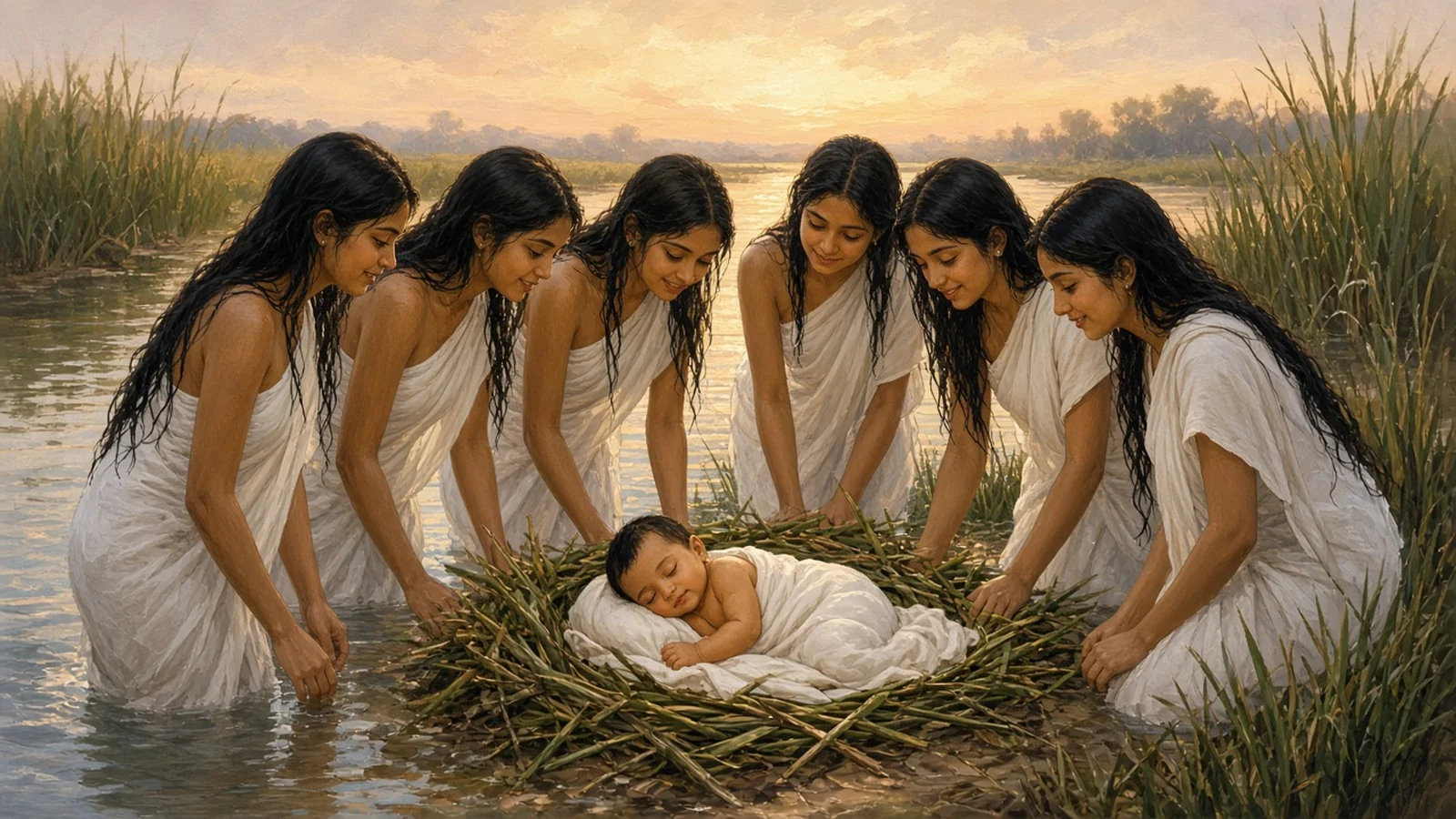
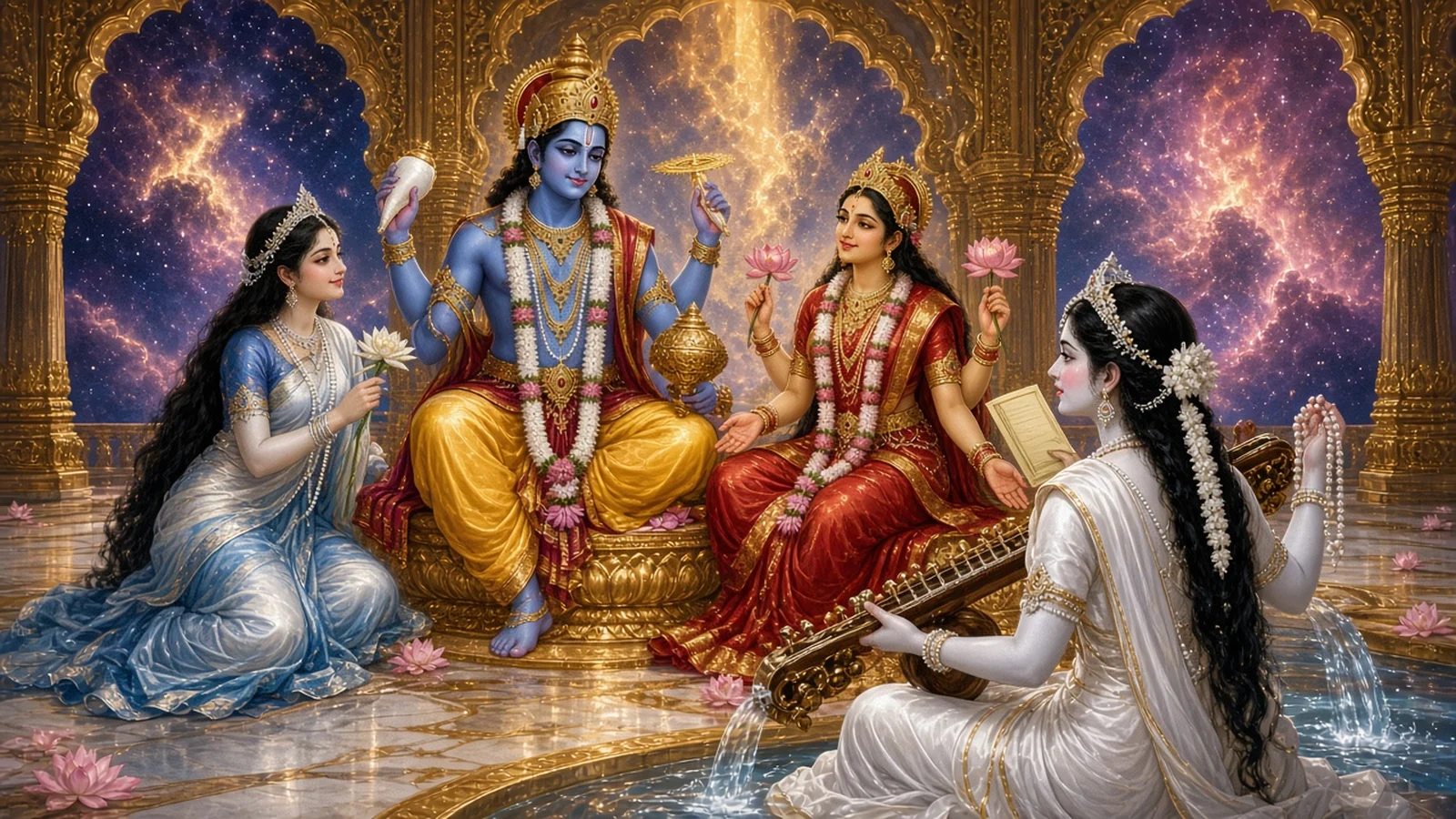
In the Mahabharata she is a wife and a mother. She married King Shantanu on condition that he never question her, gave seven sons back to heaven in her water, and kept the eighth, Bhishma. She carried Shiva's fiery seed to the reeds where Kartikeya was born, and rose weeping from the river at Bhishma's funeral. The Shakta Puranas add that she was once one of Vishnu's three wives, until a quarrel in Vaikuntha sent her down.

The oldest words about her are a line in the Rigveda's hymn of the rivers.

Imam me gange yamune sarasvati shutudri stomam sachata parushnya: Favour ye this my laud, O Ganga, Yamuna, O Sutudri, Parusni and Sarasvati (Rigveda 10.75.5, in Griffith's translation).

Her stories on this site: The Song That Became a River, Ask Me Nothing and Ten of Everything. Her descent is told in Ganga in His Hair, the quarrel in The Three Wives of Vaikuntha, the drowned sons in The Vasu Who Stole the Cow, Kartikeya's birth in The Child with Six Mothers and Bhishma's death in The Bed of Arrows. The water carried to Shiva is in The First Kanwariya.
Before the Puranas

The Vedic roots of Ganga

Ganga is in the Rigveda, but only by name. The river hymn of the tenth book (10.75) praises the Sindhu, the Indus, and in its fifth verse calls on the rivers one by one from east to west, and the first name it calls is Ganga. A hymn to Indra in the sixth book (6.45.31) compares a generous patron to a tall bush on Ganga's bank, though readers do not agree that the word there means the river. Neither hymn gives her a face or a story. The holy water of the Rigveda is the Waters, the Apas, mothers who cleanse and heal, and the goddess Ganga grew out of that old worship of water.

The epics give her a family and a road. Valmiki's Ramayana makes her Himavat's elder daughter, carried up to heaven by the gods, and brings her down again through Bhagiratha's penance and Shiva's hair; it calls her the river of three paths, through heaven, earth and the world below. The Mahabharata tells the same descent and, in its first book, marries her to King Shantanu so that she can be the mother of Bhishma.

The Puranas set her at the top of the universe. The Bhagavata (5.17) has her enter the world through the hole Vamana's toe made in its shell, rest on the head of Dhruva at the pole star and in the hair of the seven sages, flood the moon, and divide on Mount Meru into four rivers, of which the Alakananda falls to India. The ninth book of the Devi Bhagavata makes her Krishna himself in the form of water, born in Goloka, and Narayana's wife. The Kashi Khanda of the Skanda Purana calls her Shiva's own self as water, gives her a thousand names, and fixes her day in the month of Jyeshtha.

Art kept pace with the texts. By the Gupta centuries Ganga on her makara and Yamuna on her tortoise were carved at the doorways of temples, so that every worshipper entering the shrine passed between the two rivers, as the art historians read it, washed clean on the way in.

See how the Vedic gods became the Puranic ones →

Every story about Ganga

Related gods