As the Mahabharata tells it
Mahabharata, Adi Parva 96 to 98 and 100 · Brahma's court and the Ganga · 4 min read
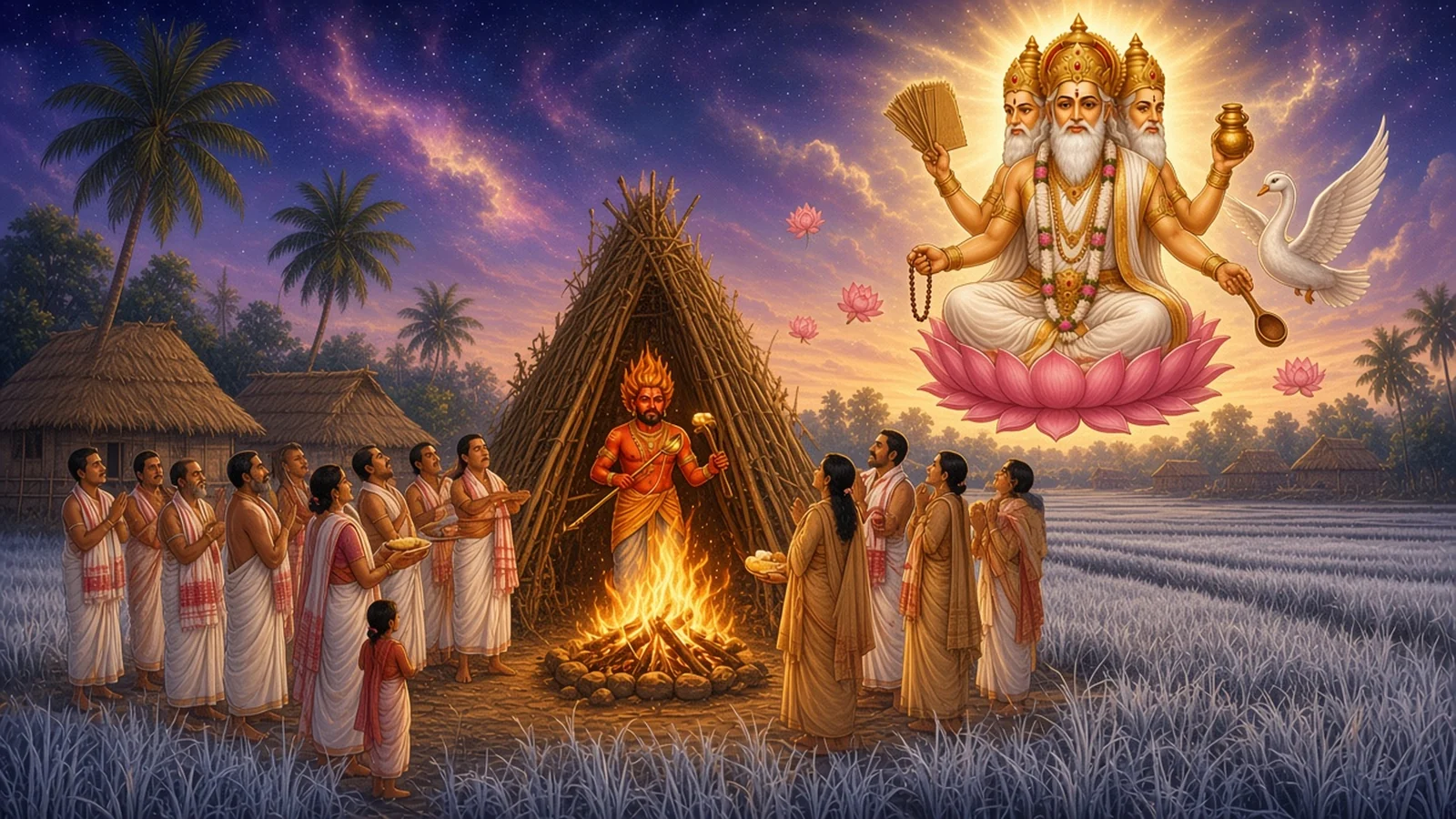
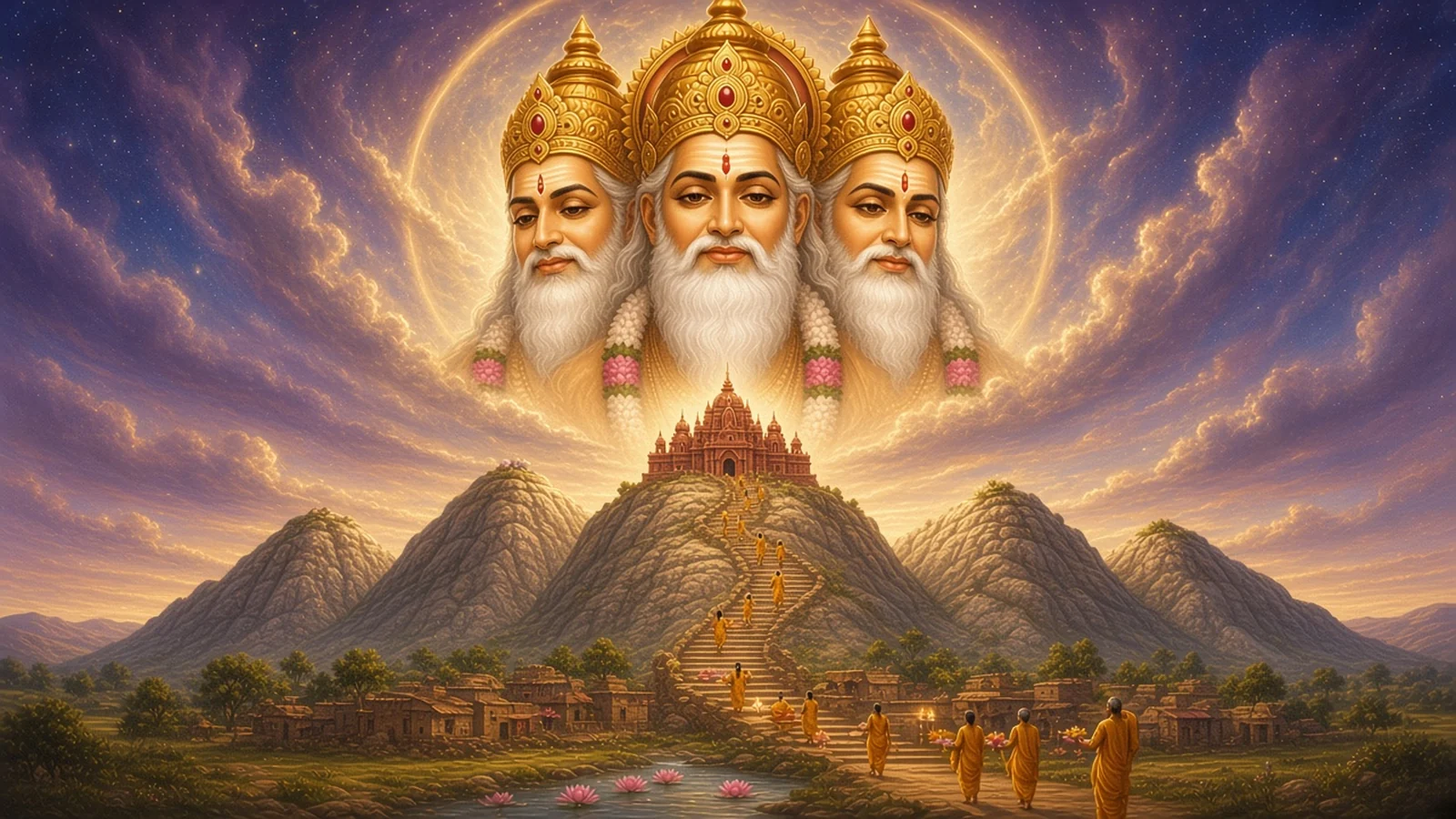
The gods were gathered round Brahma in his hall, and among them sat Mahabhisha, a king of Ikshvaku's line who had won heaven with a thousand horse sacrifices.
Ganga came into the hall to pay her respects to the grandfather of the worlds. As she came, a wind lifted her robe, white as moonlight, and blew it aside. Every god in the hall lowered his eyes. Mahabhisha did not. He went on looking at the queen of rivers.
Brahma saw it.
"You forgot yourself at the sight of Ganga," he said. "Then go and be born on earth. You will come back to these worlds in time. She will be born among men as well, and she will do things that hurt you. On the day you lose your temper with her, you will be free."
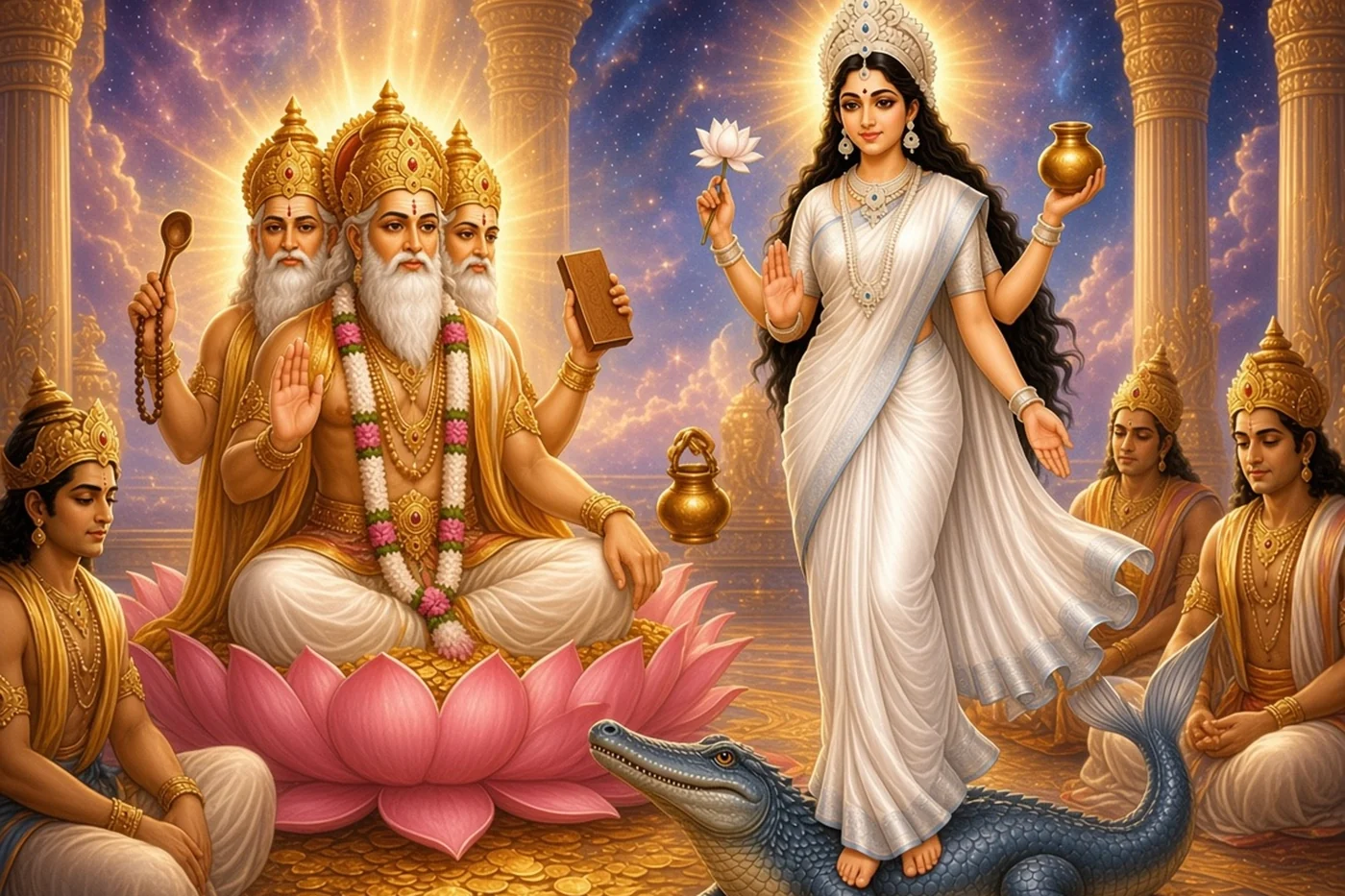
Mahabhisha chose his father from all the kings of the earth: Pratipa of the Kurus. And Ganga went out of the hall thinking of the king who had not looked away. On her road she promised the eight cursed Vasus to be their mother, as The Vasu Who Stole the Cow tells.
Pratipa, old and sonless, sat in penance near the source of the Ganga. One day a woman of great beauty rose out of the water and sat down on his right thigh.
"What do you want of me?" asked the king.
"I want you for my husband," she said.
"I have a vow," said Pratipa. "I do not go to the wives of other men, or to women outside my order. And see where you have sat. The right side is the seat of a daughter, or of a son's wife. A wife sits on the left. Be my son's wife, then. I accept you for him."
"Let it be so," she said. "But your son must not judge what I do. I will do him good, and he will reach heaven through the sons I give him." And she was gone.
In their old age Pratipa and his queen had a son, Mahabhisha come again, and they named him Shantanu. When he was grown, his father called him.
"A heavenly woman once came to me for your sake," said Pratipa. "If you meet her alone and she asks you for sons, take her as your wife. Do not ask who she is, or whose, or where she comes from." Then he crowned Shantanu and went away into the forest.
Shantanu loved to hunt. One day on the bank of the Ganga he saw a woman so lovely that he could not look enough, and she looked back and could not either.
"Goddess or Danava, Gandharva or Apsara, Yaksha or Naga or daughter of men," he said, "whoever you are, be my wife."
She remembered her promise to the Vasus. "I will be your wife," she said, "and do as you ask. But you must never stop me in anything I do, whether it pleases you or not, and never speak a harsh word to me. The day you do, I leave."
"So be it," said the king.
The years went by uncounted. She carried seven newborn sons to the river, and the king, bound by his word, said nothing. When she lifted the eighth, he spoke at last, in grief and anger. Brahma's word had come true: he had lost his temper with her, and he was free. She told him that she was Ganga, the daughter of Jahnu, and she went, and she took the child.
Many years later, following a wounded deer along the river, Shantanu saw the Ganga running shallow. On the bank stood a young man, splendid as Indra, who had held the river back with a heavenly weapon. He knew his father. The father did not know his son, and the youth clouded his sight and vanished.
"Show me that child," Shantanu said to the river.
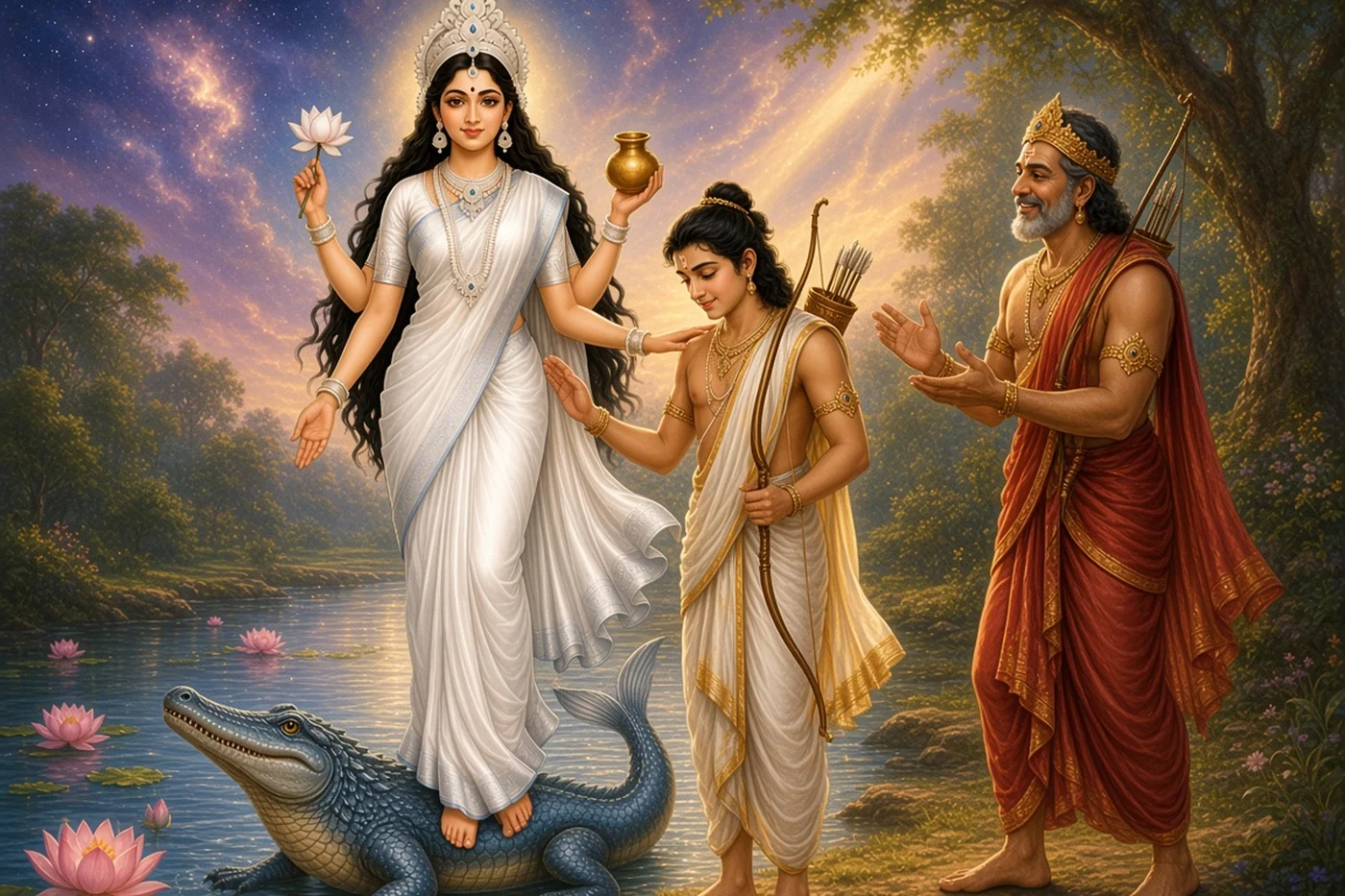
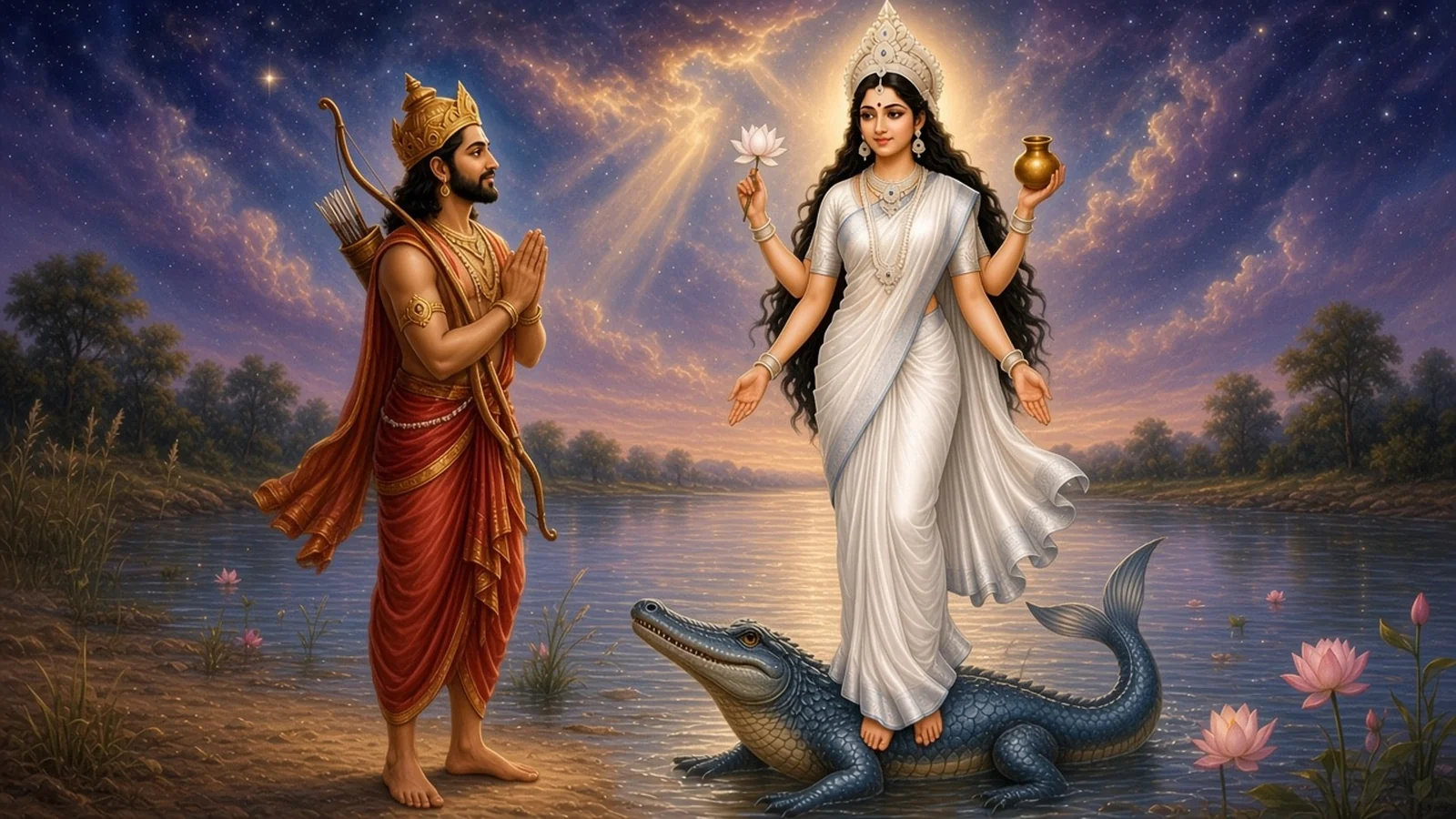
Ganga rose in white and jewels with the boy on her right arm, and the king did not know her.
"This is your eighth son," she said. "He learned the Vedas from Vasishtha, and every weapon that Parashurama knows. Take him home."
Shantanu took Devavrata home and made him his heir.
As the Devi Bhagavata tells it
Devi Bhagavata Purana 2.3 and 2.4 · 2 min read
In the Devi Bhagavata the sage Suta tells this story, and Brahma's anger falls on two.
Mahabhisha has won heaven with a thousand horse sacrifices and a hundred Vajapeyas, and he is in Brahma's hall when Ganga comes in to serve the grandfather. A strong wind takes her clothing. The gods lower their faces; Mahabhisha goes on looking; and Ganga sees that he is looking, and is drawn to him in turn. Brahma sees them both.
To the king he says: be born among men, do good there, and come back. To Ganga he says: go down to the world of men and be his wife. They leave the hall, and both of them are grieving.
On their way the Vasus, cursed by Vasishtha for stealing his cow, meet Ganga, who is cursed and unhappy too. They bow to her and ask her to marry Shantanu and drown each of them at birth. "Well," she says. "It will be so."
Pratipa is worshipping the Sun beside the river when she comes out of the water and sits on his right thigh.
"Why have you sat there without being asked?"
"Because I am drawn to you. Accept me."
He will not. The right thigh, he tells her, belongs to sons and to sons' wives; when he has a son, she shall be that son's wife. Before he dies in the forest he warns Shantanu never to ask her who she is.
When Shantanu meets her hunting on the bank, it is Ganga who knows him: she sees the king from Brahma's hall. "You are Pratipa's son," she reminds him, and sets her terms. With each drowned child he argues with himself, afraid of losing her if he speaks and his line if he does not. At the eighth he speaks. She takes the boy to raise in the forest, calls him Gangeya, Ganga's son, and promises to bring him back.
Years later Shantanu, hunting, sees a boy shooting with marvellous skill and asks whose son he is. The boy goes away without a word. The king prays to Ganga, and she comes, and gives him his son.