As the Kashi Khanda tells it
Skanda Purana, Kashi Khanda 27 · Kashi · 3 min read
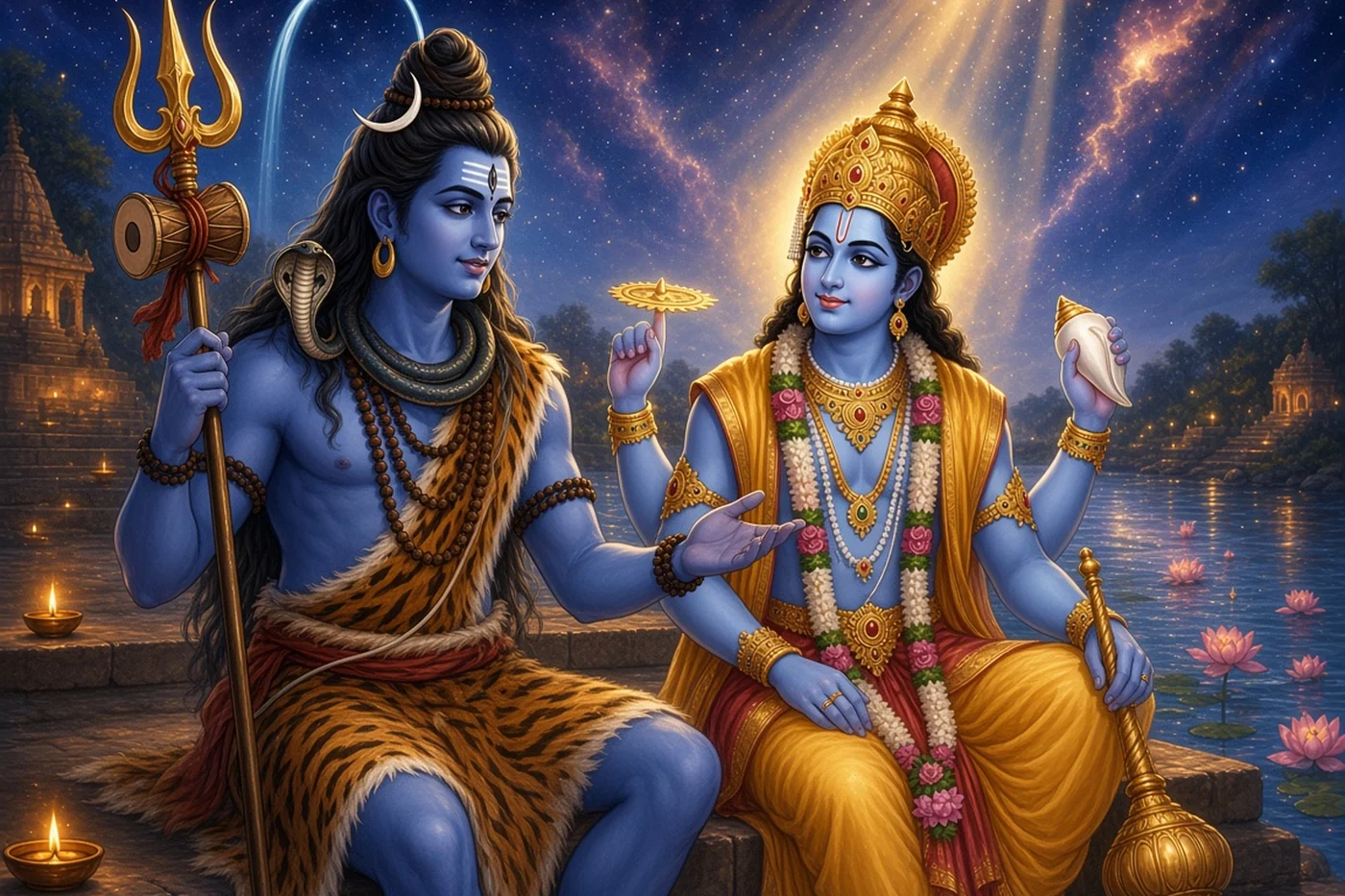
Skanda told this to the sage Agastya, and the words in it are Shiva's, spoken to Vishnu.
Shiva began with what the river is. "Ganga is my own self, Hari, in the form of water. Every holy river and every holy place is in her, every sacrifice and every penance, the Vedas, and the gods, you among them. Think of a coconut. Water outside the shell is only water. Inside, it turns sweet. The water beyond the shell of the world came inside it, and became Jahnavi."
"In the first age," he went on, "every place was holy. In the second age it was Pushkara, in the third Kurukshetra. In this last age, there is Ganga."
Then he told Vishnu how she is to be worshipped.
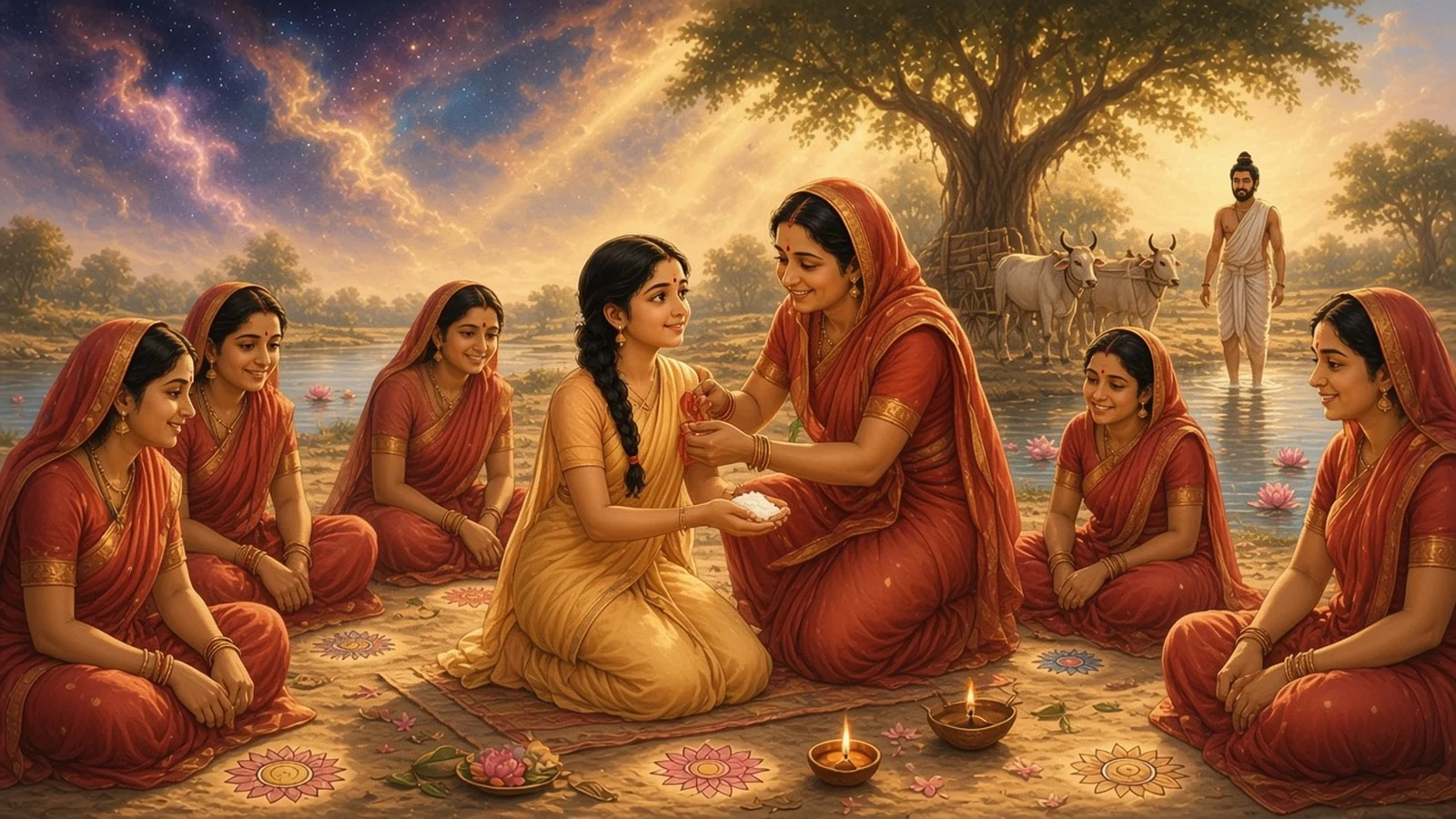
"There is one night in the year," he said. "The tenth of the bright half of Jyeshtha, when the moon is in Hasta. On that night let a man or a woman stay awake on her bank."
He gave the night its shape, and every part of it came in tens. She was to be worshipped ten times, with ten kinds of fragrant flowers, ten fruits and an incense of ten things. Sesame smeared with ghee went into the water, then ten handfuls of water, then ten balls of fried flour sweetened with jaggery, each with a mantra of twenty syllables that calls her Shiva's, Narayana's, Dashahara and Ganga.
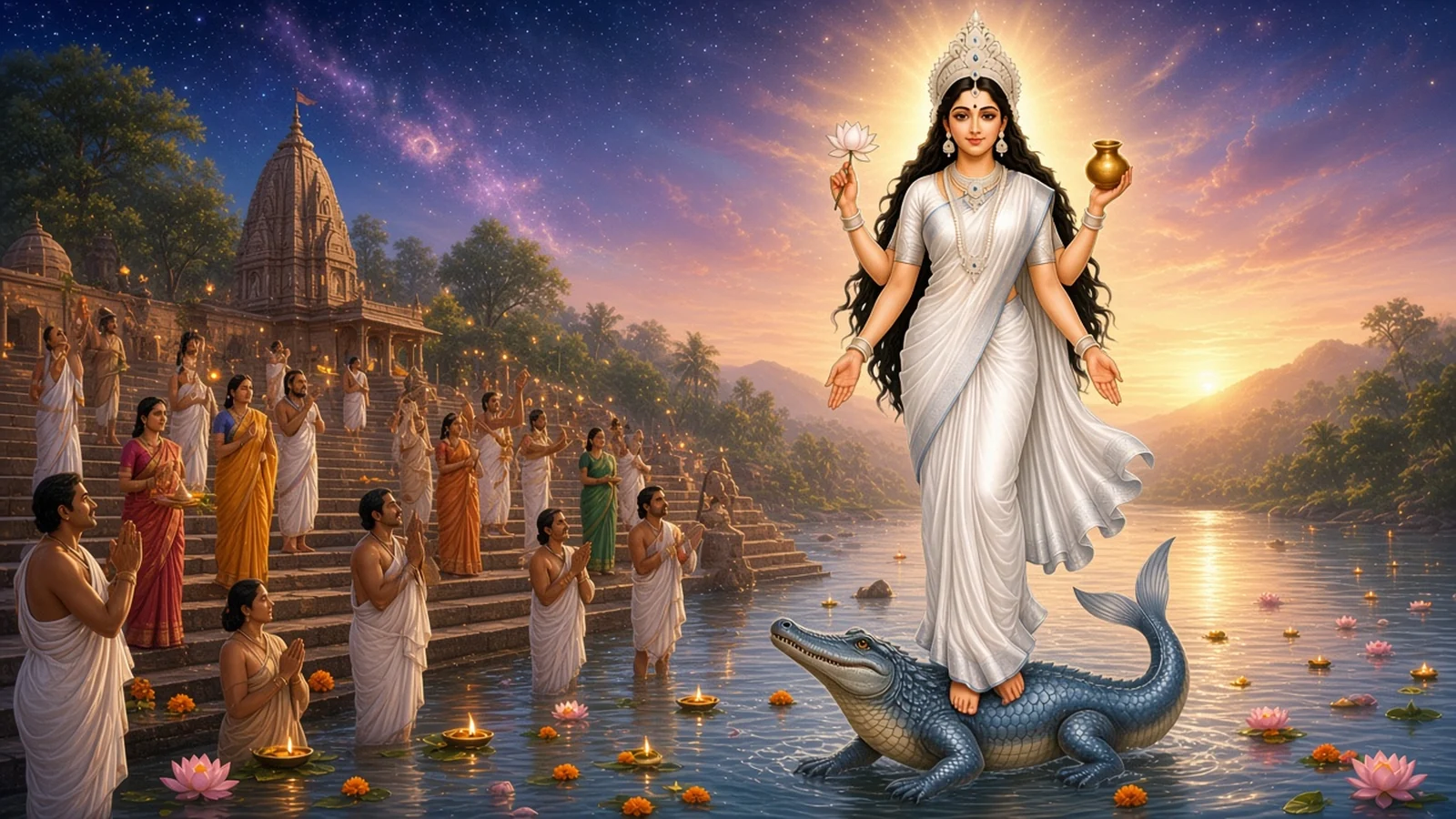
For those who could afford it there was an image, of gold or of silver, set on a full pot: Ganga with four arms and three eyes, a full pot in one hand and a white lotus in another, the other two giving boons and taking away fear, fanned with whisks under a white umbrella. Before her went small figures of Shiva, of Vishnu, of Brahma, of the Sun, of the mountain Himalaya and of Bhagiratha, the king who brought her down. Ten measures of sesame went to ten brahmins. Last of all came the creatures of the water, fish and tortoises, frogs and makaras, swans and cranes, shaped from flour or from metal, worshipped, and set free in the river.
Then he told him what she takes away.
"Ten sins," said Shiva. "Three of the body: taking what was not given, harming without sanction, and going to another man's wife. Four of speech: harsh words, lies, slander and idle talk. Three of the mind: wanting what belongs to another, wishing harm, and craving what is not real. She washes all ten away from ten lives, and lifts ten generations before and ten after out of hell."
"And if the tenth falls on a Wednesday, with the moon still in Hasta," Shiva added, "it destroys every kind of sin there is."
Last he thought of those who have nothing, no gold for an image and no sesame for the brahmins, the poor and the lame.
"Let such a one go down into her water on that day," said Shiva, "and stand there, and say her hymn ten times. It is the same."
The name in the mantra, Dashahara, means the one who takes away ten.
As the riverbank keeps it
North India · Haridwar, Gangotri, Varanasi, Prayagraj and Patna · 2 min read
The river towns keep the day for ten days, and the tenth is the great one. They call it Ganga Dussehra, and they give it a reason the Kashi Khanda does not: this, devotees say, is the day Ganga first came down from heaven to earth. Some say a bath in those days takes away ten sins, some the sins of ten lifetimes.
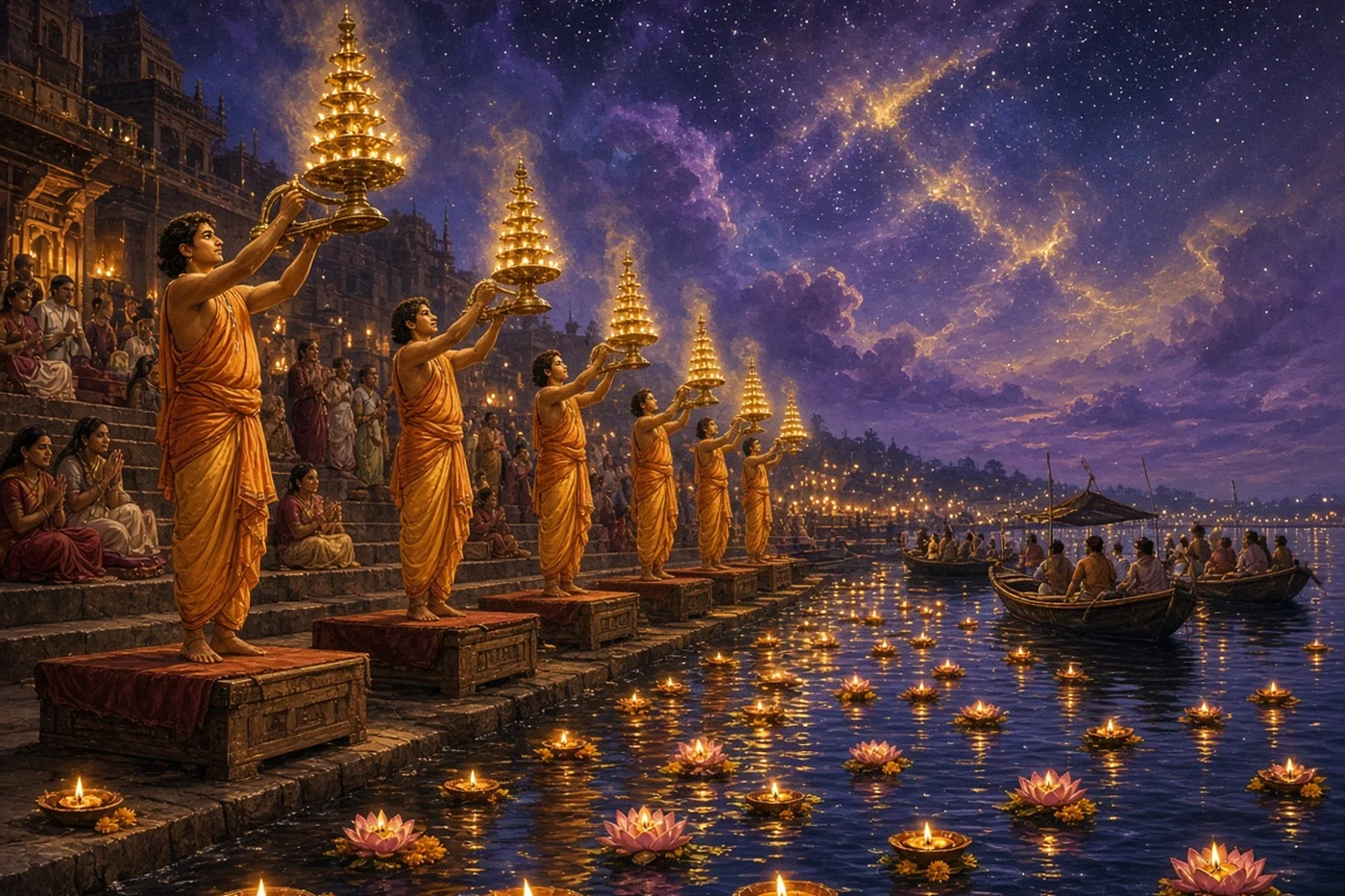
At Haridwar, where the river leaves the hills, the crowds come down to Brahmakund at Har ki Pauri from before it is light. In June 2025 the town's administration counted some twenty lakh people in the water at its ghats by evening. The roads into the city stood still with traffic, and at dusk the priests raised the Ganga aarti over the river.
Far upstream at Gangotri, where her temple stands near the stone on which Bhagiratha is said to have done his penance, the pilgrims had been coming since the gates opened on Akshaya Tritiya. By that Dussehra more than three and a half lakh had climbed to it that season. The goddess will stay until Diwali and then go down to the village of Mukhba for the winter.
At Varanasi the bathers crowd Dashashwamedh Ghat, and when the light goes, lamps are set floating on the river and the great aarti is sung. At Prayagraj they go into the water at the Triveni, where the Ganga meets the Yamuna. At Patna the priests hold an evening aarti at Gandhi Ghat, and one year the city offered the river a garland eleven hundred metres long at Adalat Ghat.
The Yamuna is not forgotten. On the same day people bathe in her at Mathura, Vrindavan and Bateshwar and give her watermelons and cucumbers, and hand out lassi and sharbat on the bank. In some towns the sky fills with kites.