Devalok ← All gods
Also calledDaksha PrajapatiPrachetasa

In short

Who is Daksha?
The great father of creatures in the Puranas, a son of Brahma whose daughters became the mothers of the gods, the demons, the animals and the stars, and the father of Sati, Shiva's first wife.
Why does Daksha have a goat's head?
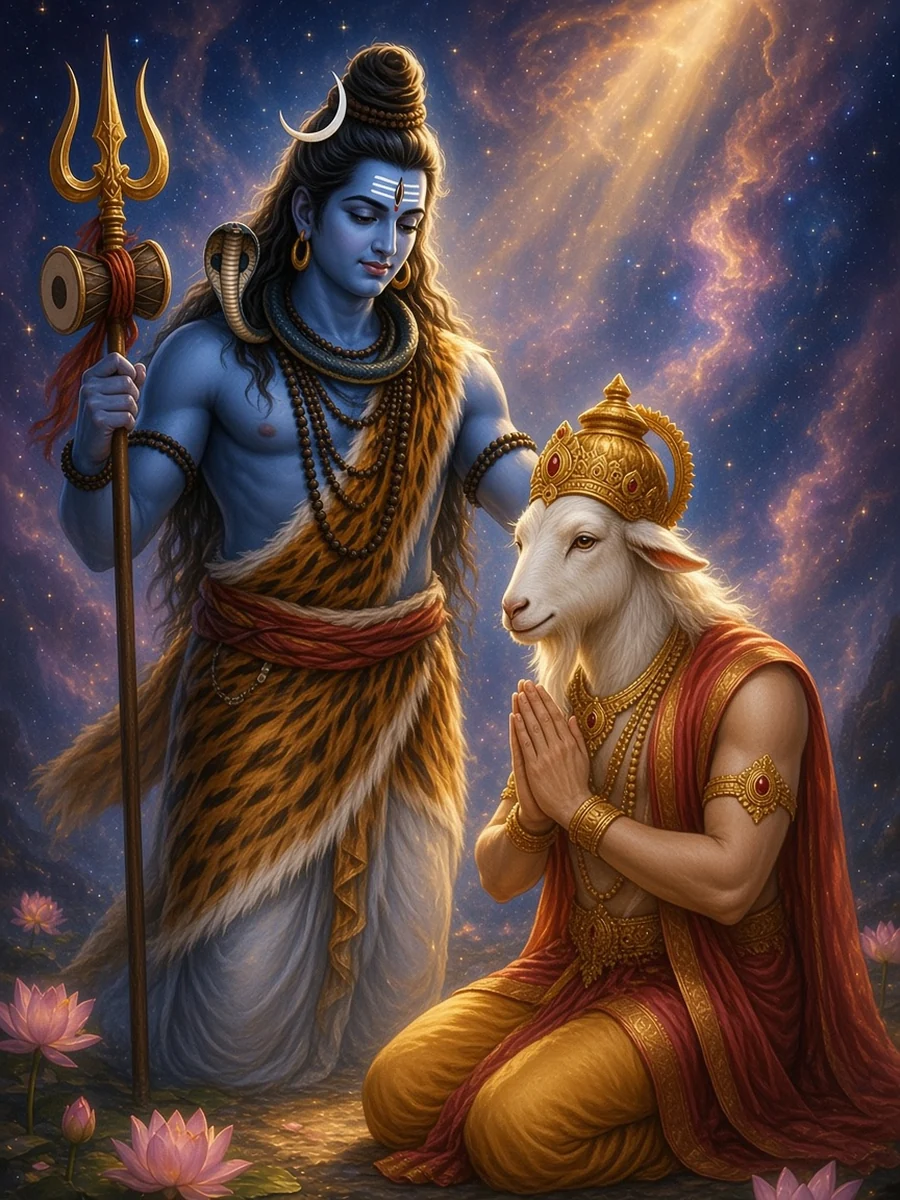
Shiva's warrior Virabhadra cut off his head when he insulted Shiva at his own sacrifice and Sati died there. When Shiva forgave him, he was brought back to life with the head of the goat meant for the sacrifice.
Why did Daksha hate Shiva?
The Puranas say it began at an assembly where everyone rose to greet Daksha except Shiva. Daksha cursed him to lose his share of the offerings, and the quarrel ended in Sati's death.
Is Daksha in the Vedas?
Yes, a little. The Rigveda names him among the Adityas, the sons of Aditi, and in one strange hymn says that Daksha was born of Aditi and Aditi of Daksha.

Artwork ›

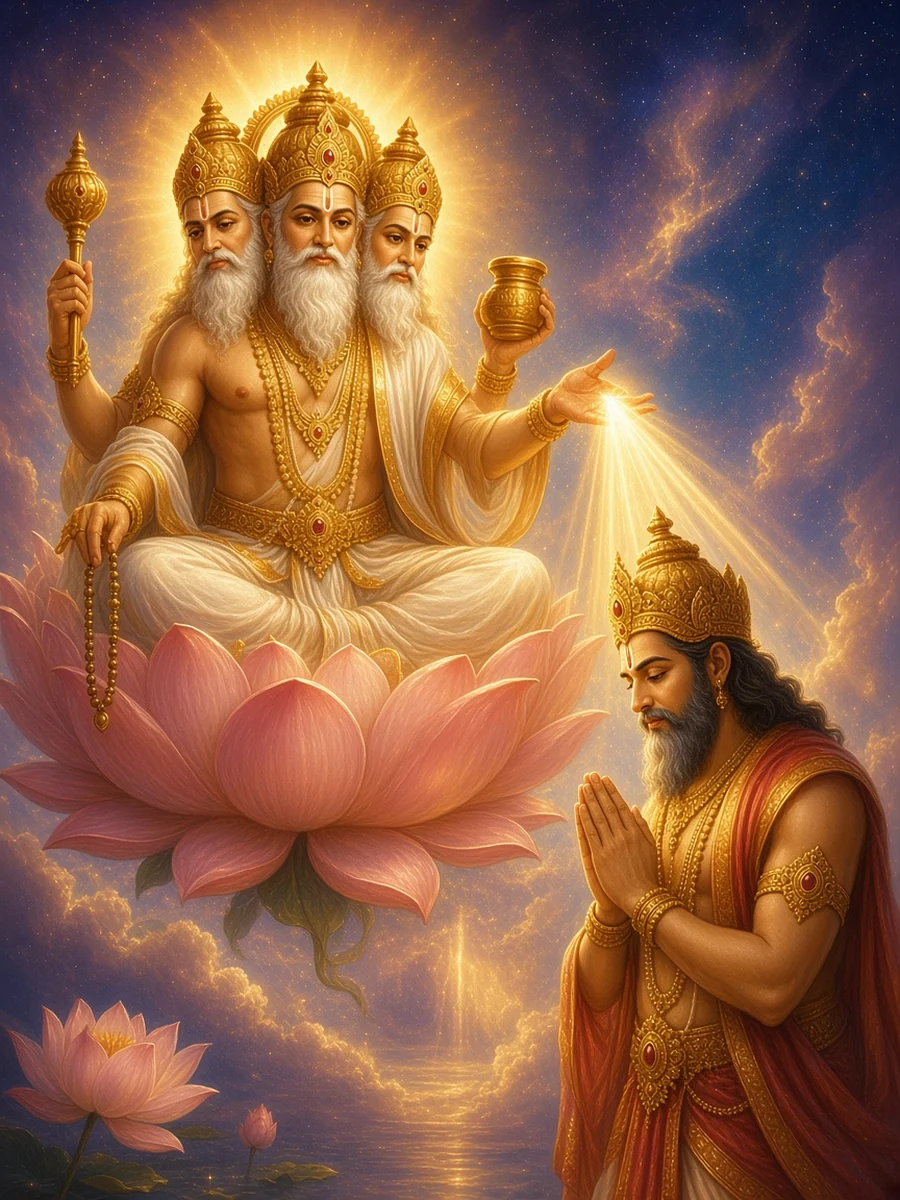
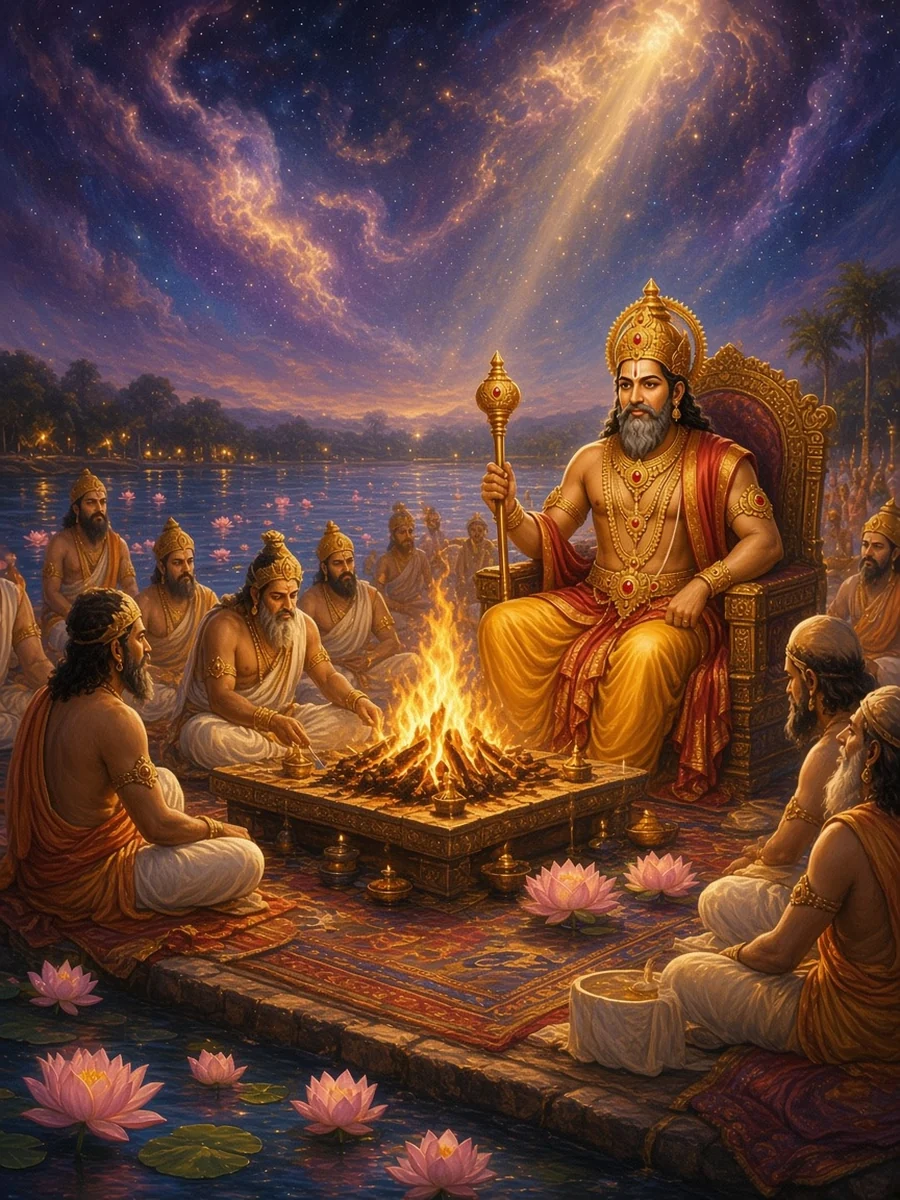
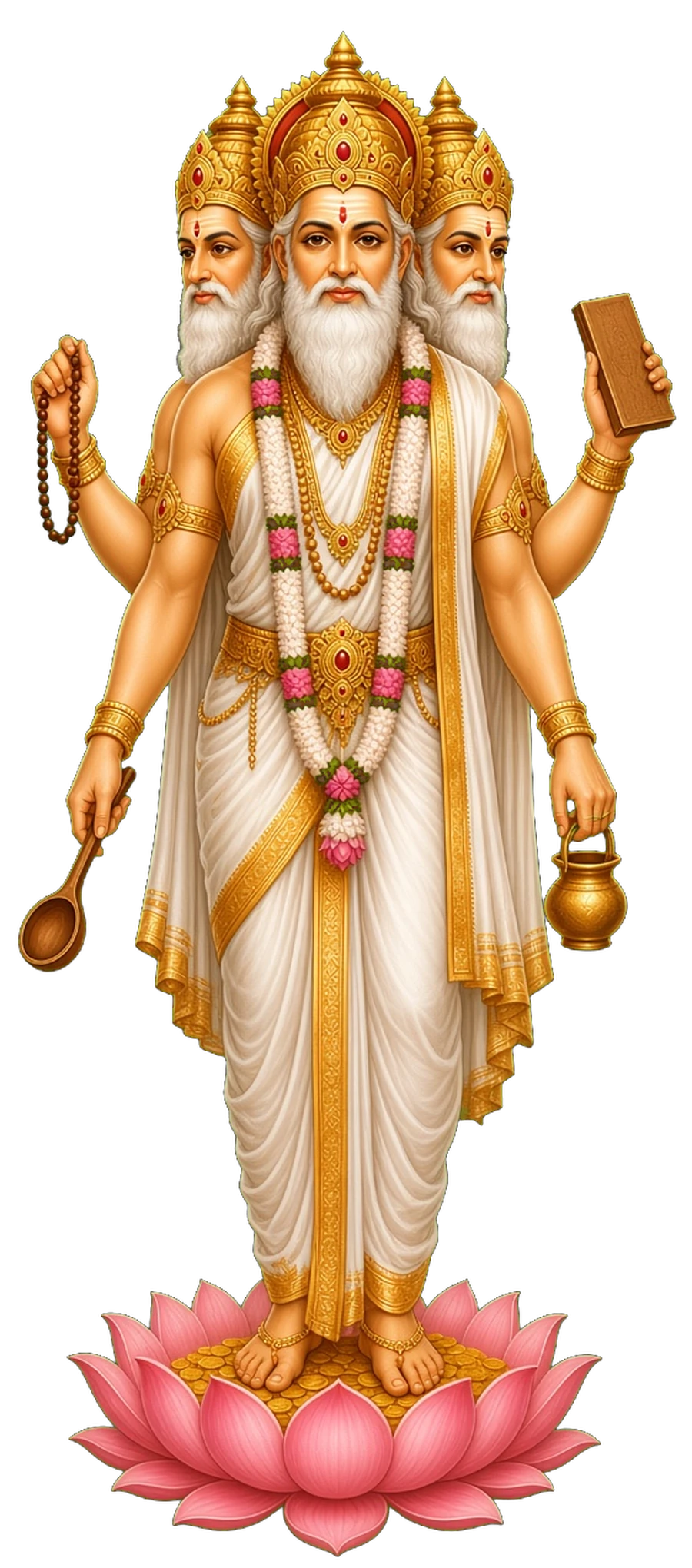
Born from Brahma's right thumb The great sacrifice at Kankhal, with no seat for Shiva

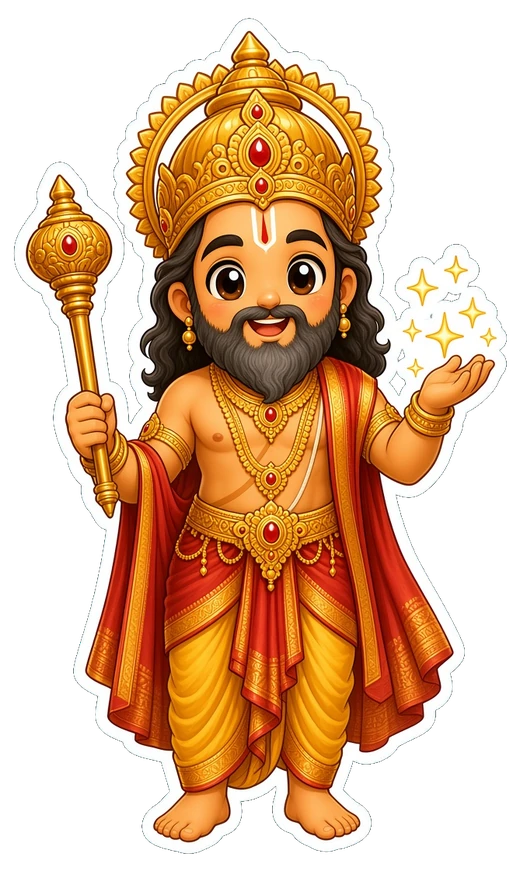
For kids

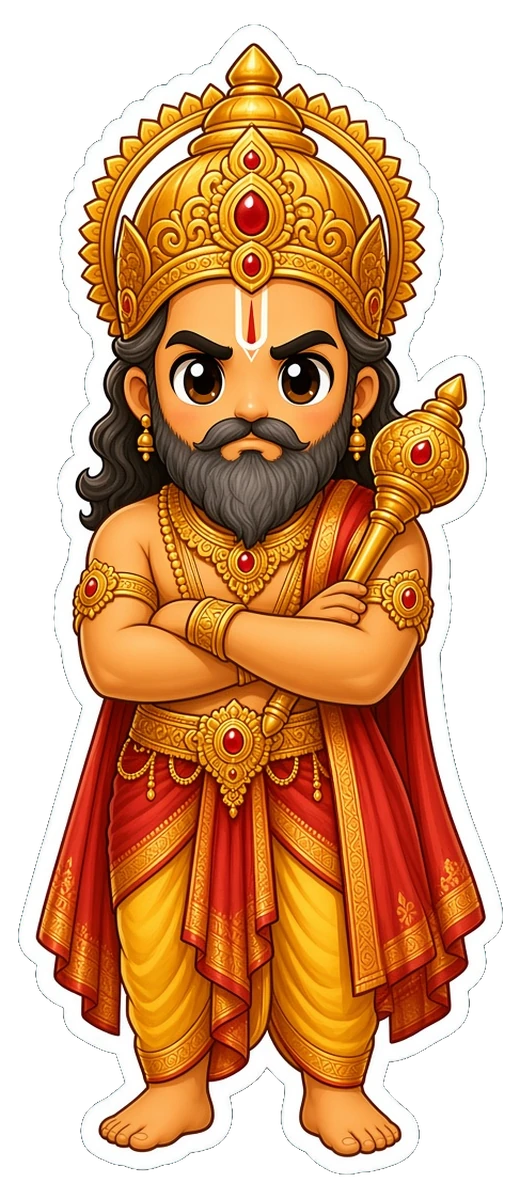
Not on the guest list
Father of the moon's stars

At a glance

TraditionSmarta
NameDaksha means skilful

able, clever; in the Rigveda the word means skill before it is a god

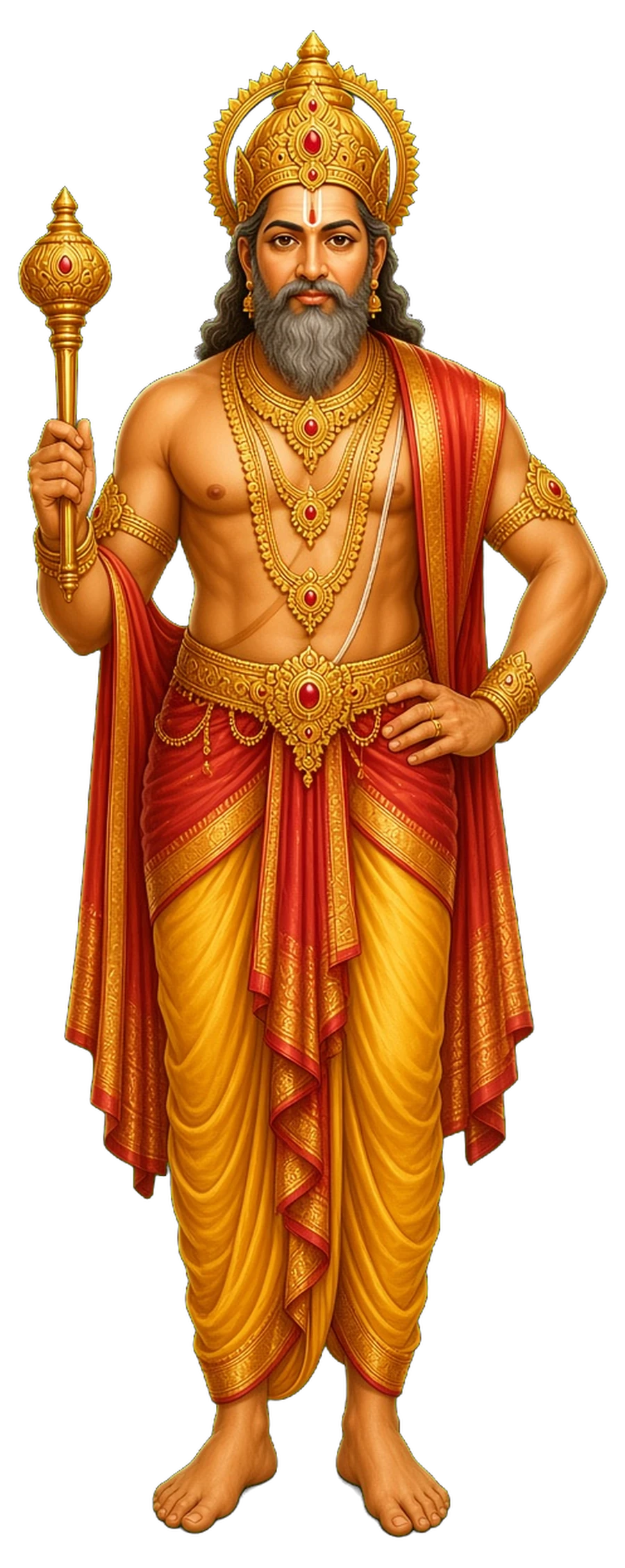
FormA stately patriarch and king of creatures; after his sacrifice, a man with the head of a goat

Who Daksha is

Daksha is the great father of creatures. In the Puranas he is a son of Brahma, one of the Prajapatis, the lords of living things, and he is given the work of filling the empty world. He tries first with his mind alone, and the creatures he thinks into being do not multiply. So, the Vishnu Purana says, he begins the way the world has worked ever since, with a mother and a father.

His sons do not stay. Twice he sends them out to people the world, and twice the sage Narada meets them on the road, sets them a question they cannot answer, and they go away for good. Daksha curses Narada, and in the Bhagavata that curse is why the sage has wandered ever since.

His daughters are the real work of his life. He gives ten to Dharma, thirteen to the sage Kashyapa and twenty-seven to the Moon. From Kashyapa's wives come the gods and the demons, the birds, the serpents and the beasts; the Moon's wives are the stars that mark his road. Aditi, mother of the gods, is Daksha's daughter. So is Sati, who married Shiva.

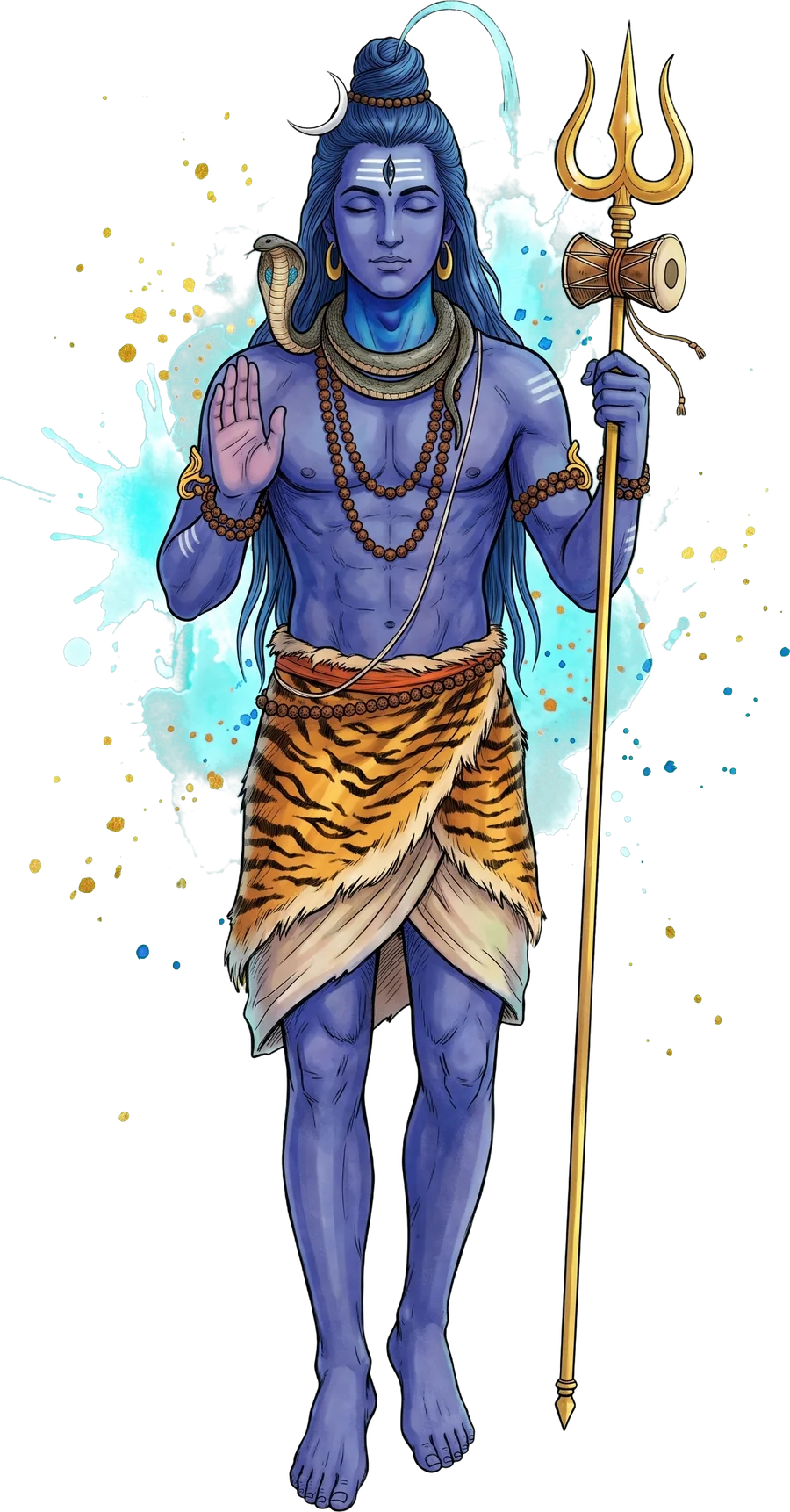
That marriage is the story everybody knows. Daksha never forgave his son-in-law for staying seated when the whole assembly stood up to greet him, and he cursed him to lose his share of every offering. At his own great sacrifice he left Shiva out. Sati went anyway, was insulted before the gods and gave up her life. Shiva's warrior Virabhadra wrecked the sacrifice and took Daksha's head, and when Shiva forgave him he lived on with the head of a goat and praised the god he had despised. That is told on this site as Sati and the Sacrifice.

He has hardly any worship of his own. His name lives at Kankhal near Haridwar, where the temple of Daksheshwar Mahadev, Shiva as the lord of Daksha, stands beside the pit in which Sati is said to have died.

Aditer daksho ajayata, dakshad u aditih pari: From Aditi Daksha was born, and from Daksha, Aditi.
Before the Puranas

The Vedic roots of Daksha

Daksha is older than the Puranas. In the Rigveda he is a small god whose name means skill, one of the Adityas, the sons of Aditi: the hymn 2.27 names six of them, Mitra, Aryaman, Bhaga, Varuna, Daksha and Amsha, the only place the Veda lists them by name. Then a hymn about the beginning of the world, 10.72, turns the family upside down. Daksha was born of Aditi, it says, and Aditi was Daksha's daughter, and after her the gods were born.

The poets never explain the riddle. Yaska, the old interpreter, asked how it could be, and answered that gods may be born from one another. A. A. Macdonell, writing in 1897, counted barely half a dozen places where Daksha is a god at all; far more often the word simply means skill or cleverness. He thought that phrases such as "having skill for their father", used of the Adityas and even of ordinary priests, slowly made Skill into a father, and that father into Aditi's partner. That is his reading; the hymns do not say it.

The priests of the Brahmanas went further. The Shatapatha Brahmana (2.4.4) tells how Prajapati, the lord of creatures, wishing for offspring, performed a certain sacrifice, "and he was indeed Daksha", so the rite is called the Dakshayana. A royal family called the Dakshayanas traced itself to him. From here Daksha is a maker of creatures, which is what the Puranas make of him.

The epics settle him as a son of Brahma and a Prajapati, sprung from Brahma's right thumb, with a wife from the left. Aditi is now only his daughter, given to Kashyapa, and her sons the Adityas are his grandsons. The Vishnu Purana adds a second birth, from the ten Prachetas and Marisha, and answers the puzzle the Rigveda first set with a rule of its own: Daksha and the great sages are born again in every age, and only the manner of their birth changes. The quarrel with Shiva has a Vedic seed too, in the Brahmana scene where the gods leave Rudra out of their sacrifice, told here as The God Who Was Left Behind.

See how the Vedic gods became the Puranic ones →

Related gods