As the Bhagavata tells it
Bhagavata Purana 6.5 · Narayana-saras, where the Sindhu meets the sea · 3 min read
Daksha had been given the work of filling the world, and he meant to do it properly. His wife Asikni bore him ten thousand sons, all alike, all gentle and obedient. They were called the Haryashvas.
"You know what you were born for," Daksha told them. "Go and have children of your own. The worlds are empty."
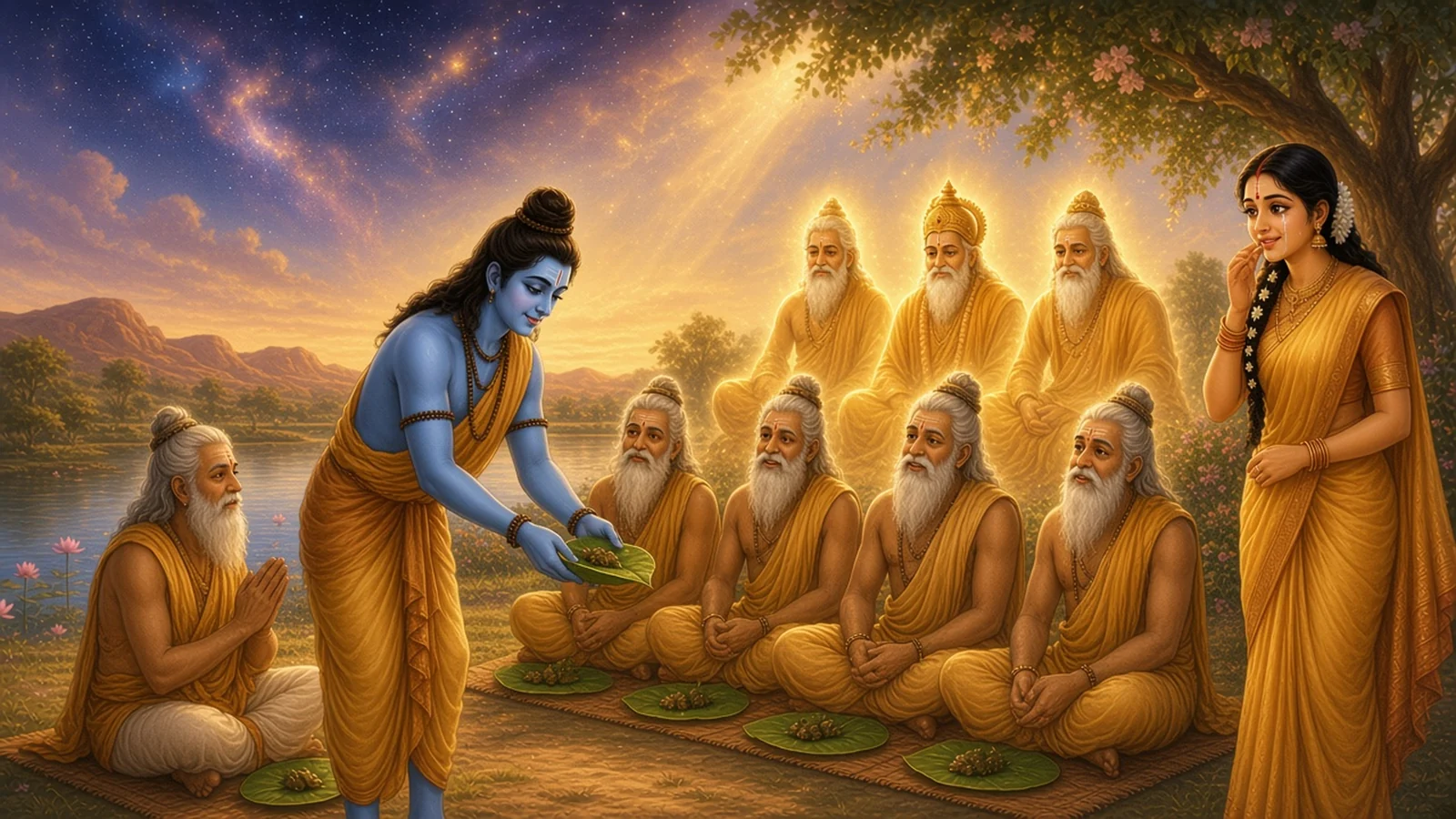
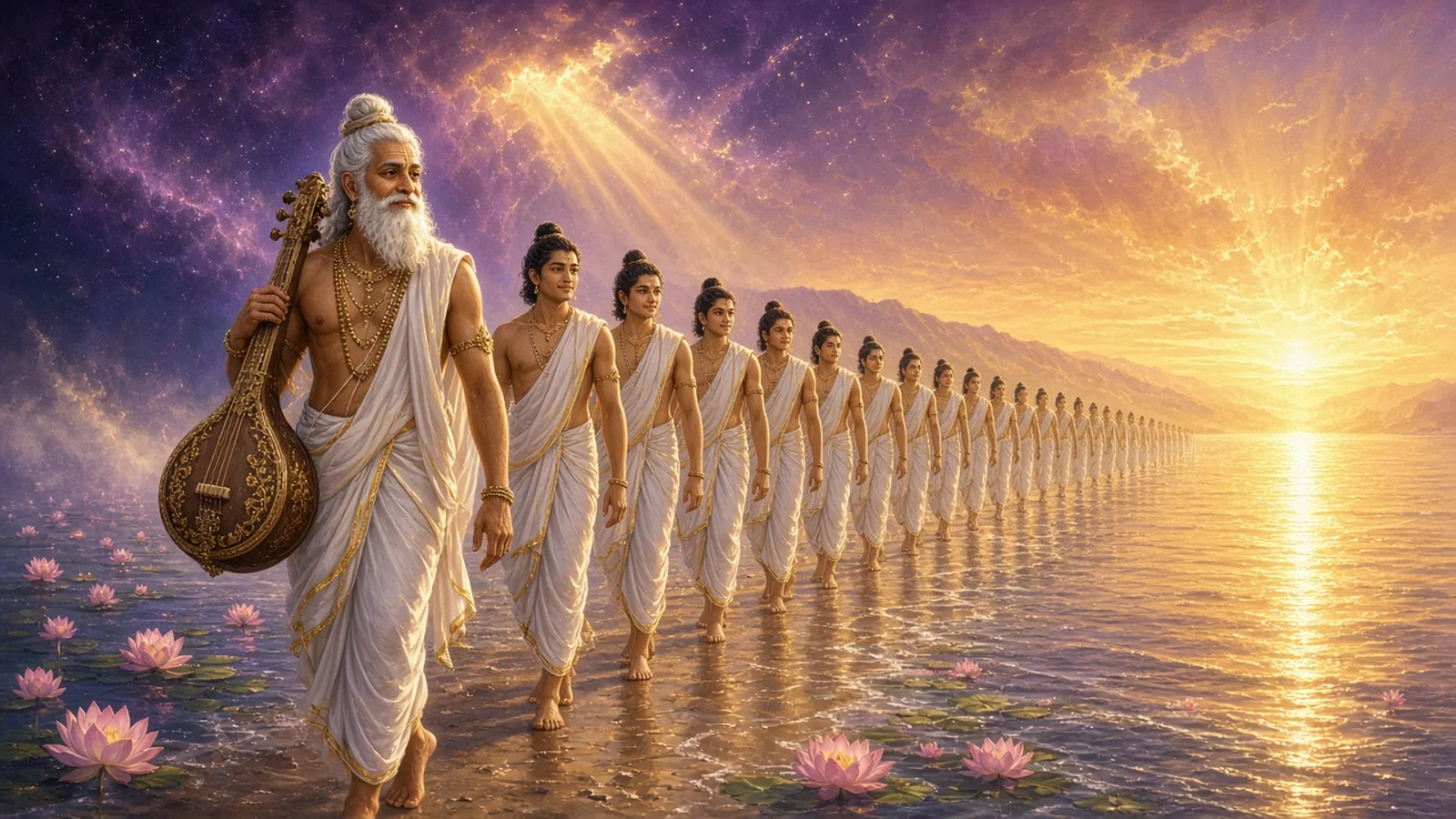
The sons bowed and set out to the west. Where the river Sindhu runs into the sea there is a holy lake called Narayana-saras, and sages live along its shore. The brothers bathed in it, and the water did something to them they had not expected. Their minds grew quiet. They stayed on and began a long penance, so that they would be strong enough for the work their father had given them.
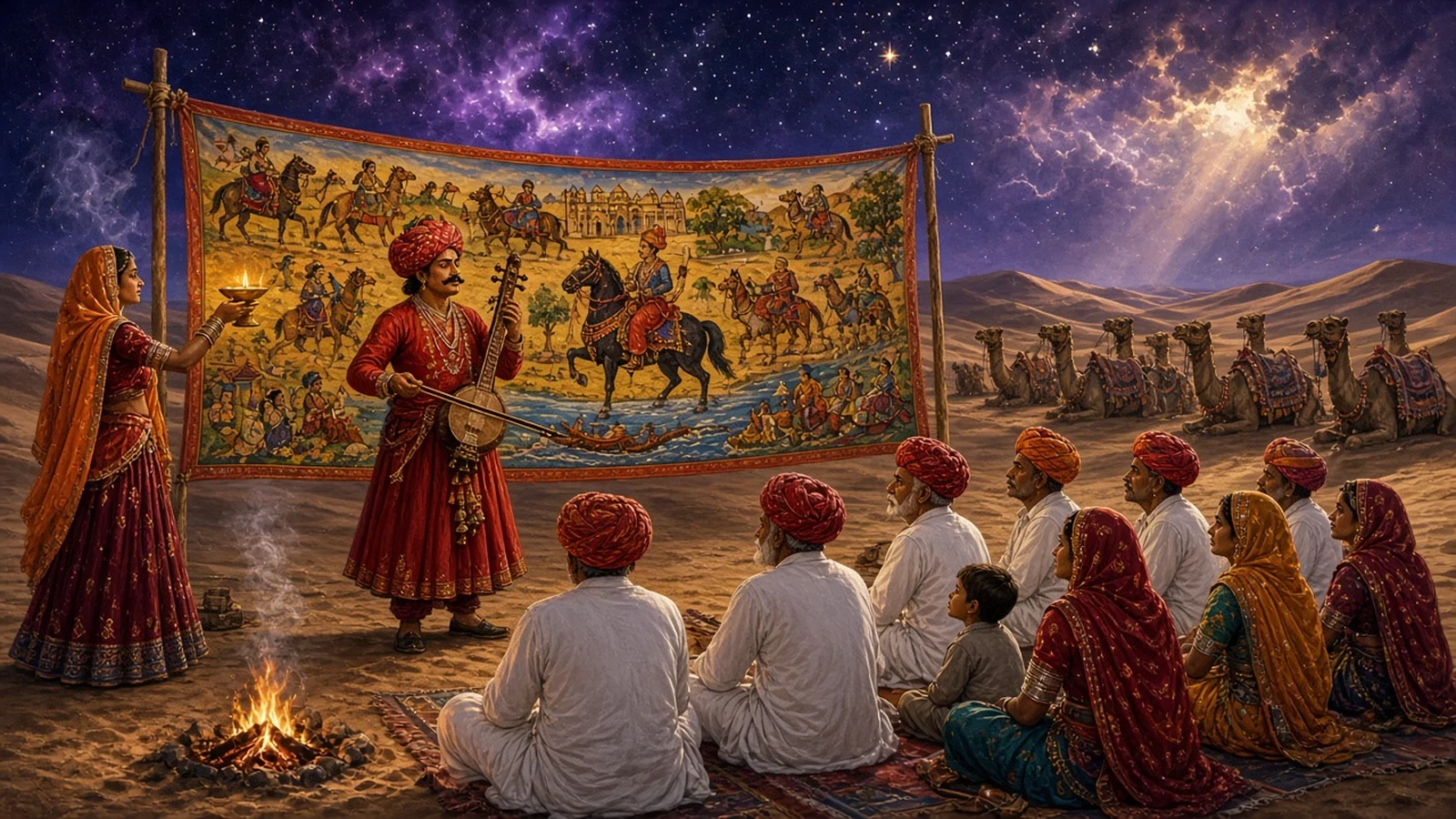
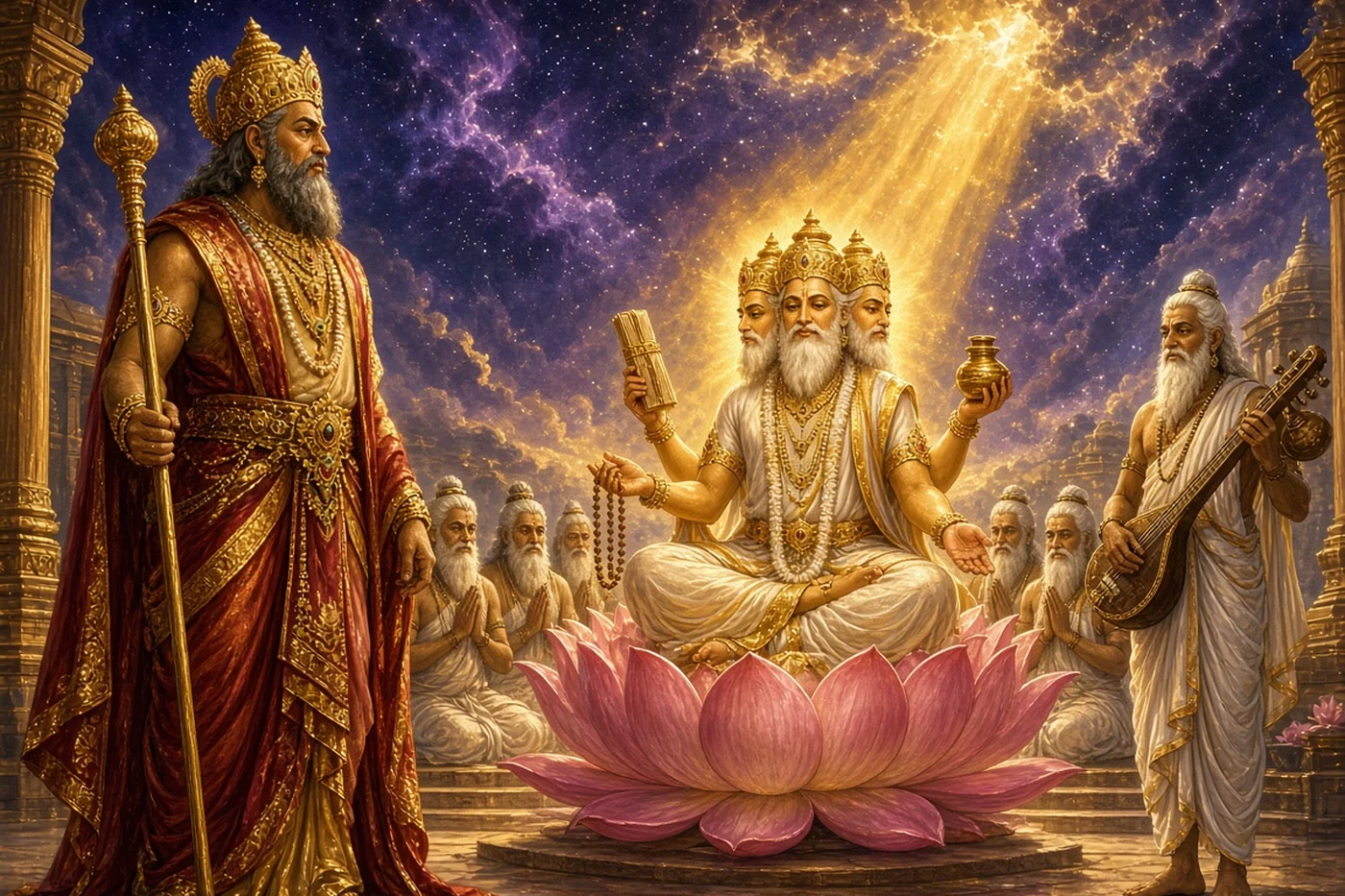
That is where Narada found them, with his vina on his shoulder.
"Children, all of you," he said, sitting down among them. "You want to rule the earth and you have not even seen it. Tell me. There is a kingdom with only one man in it. There is a hole that nobody who goes into it ever comes out of. There is a woman who keeps changing her clothes, and a man married to her. There is a river that flows both ways at once, a house made of twenty-five things, a swan that speaks in every voice, and a wheel of razors and thunderbolts that turns by itself. Do you know any of these?"
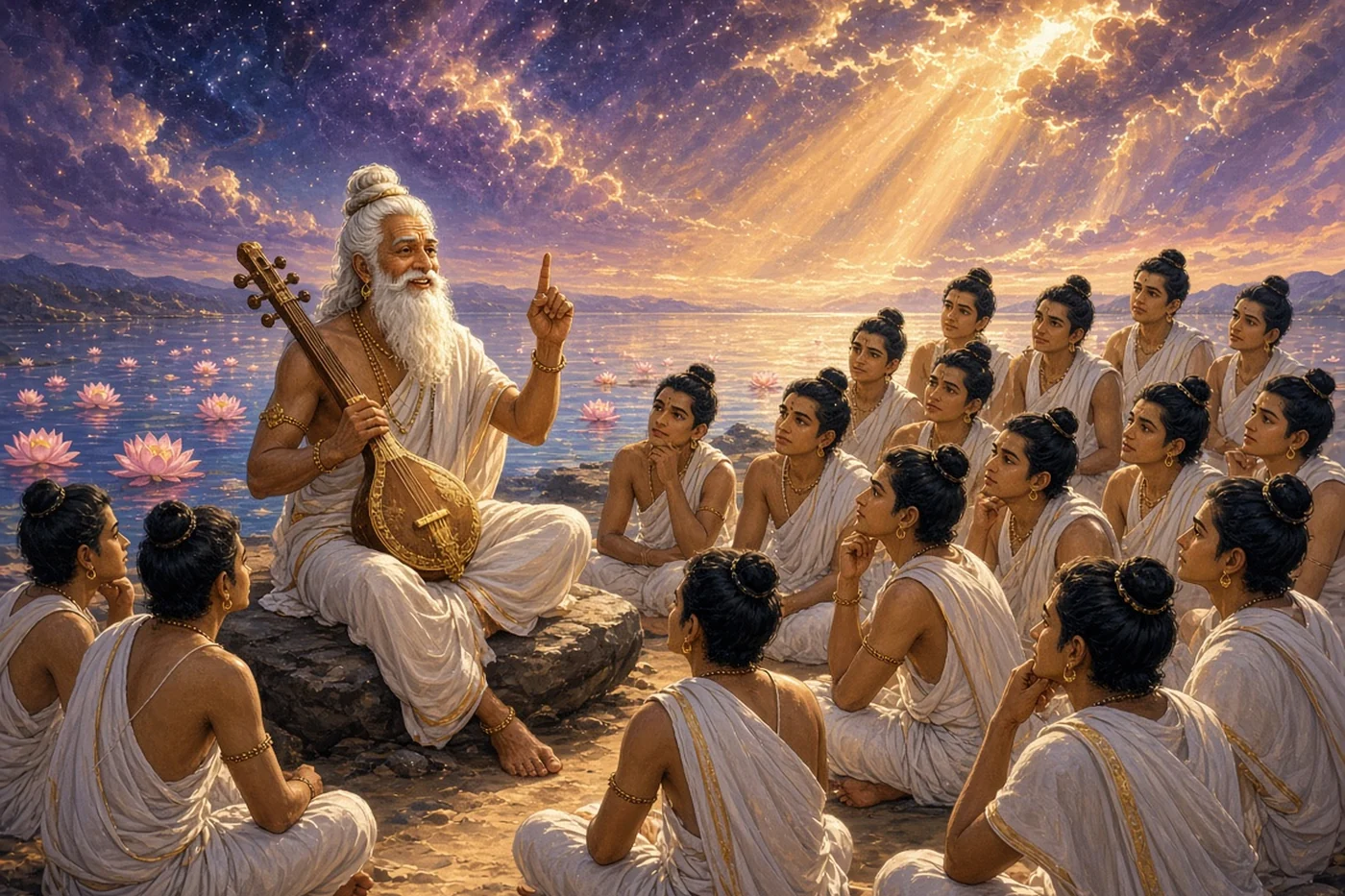
They did not.
"Then how will you make children?" said Narada. "Your father is wise. You have not understood what he is really asking of you."
He left them with that, and the brothers sat by the lake and thought.
They worked it out together. The kingdom was the body, they said, and the one man in it was the Lord who lives in every body. The hole was the place from which there is no coming back. The woman was the restless mind, and the man who married her was the soul that follows it about. The river was the world, carrying people into birth and out again. The swan was the scripture that tells the true from the false, and the wheel of razors was time.
"If all that is so," said one of them, "what is the use of filling the world with more of us before we know it?"
Nobody had an answer. So they walked round Narada, took him as their teacher, and went off on the road that has no return. They were never seen again.
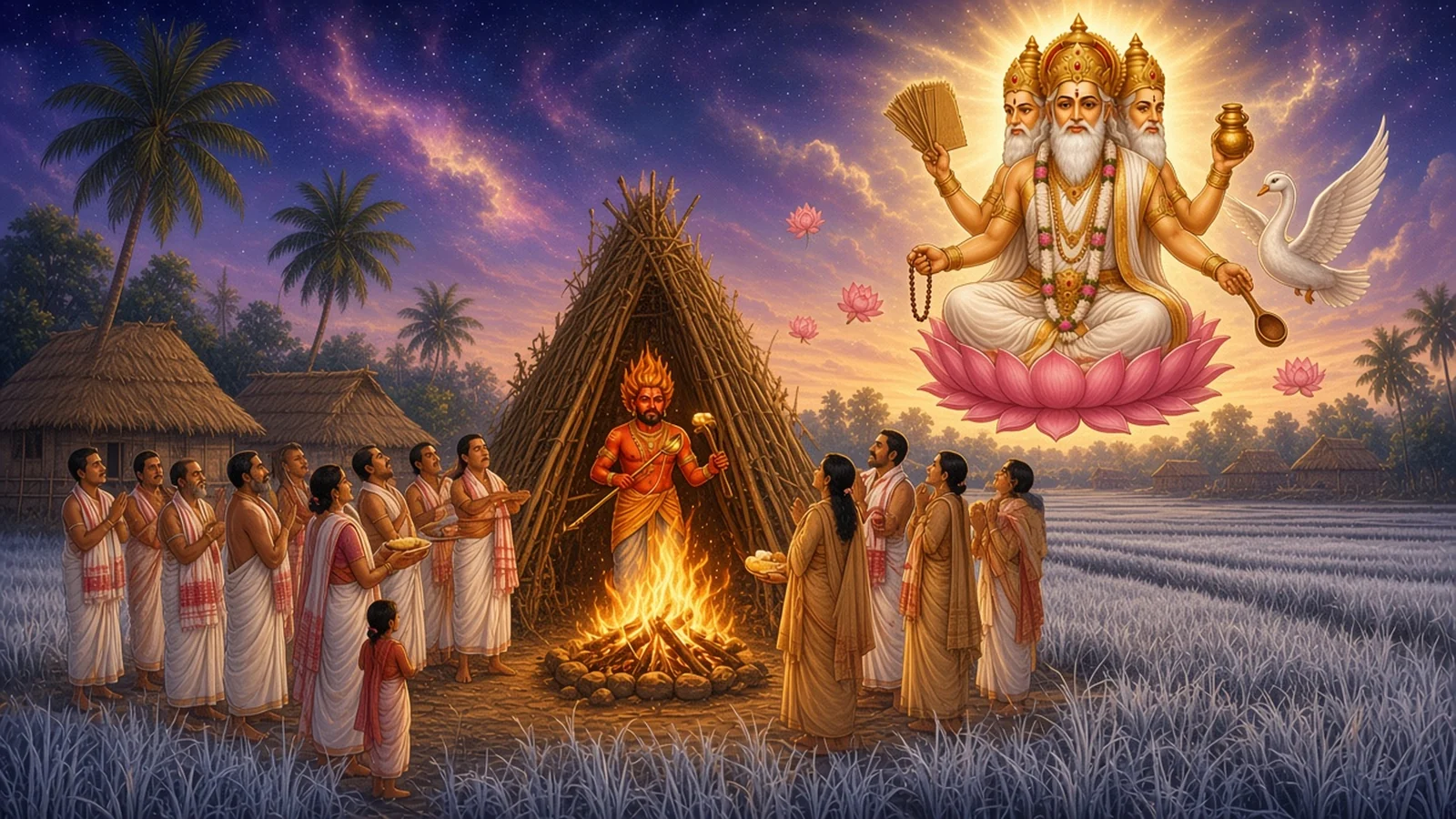
Daksha heard it from Narada himself, and he wept for his good sons. Brahma came and comforted him, and in time Asikni bore another thousand. They were called the Shabalashvas, and their father gave them the same task.
They too went to the lake. They too bathed and fasted, living for months on water and then on air. And Narada came to them as well.
"Your elder brothers found the way," was all he said. "A good brother follows."
They followed, and they did not come back either.
This time Daksha saw bad omens before the news reached him. When it came he nearly fainted, and when he found Narada his lips were trembling.
"You wear a saint's clothes," he said, "and you are no saint. Twice you have taken my sons. They owed a debt to the sages, to the gods and to their fathers, and you sent them off before they had paid it. You break up families. You turn friends into enemies. I bore it once. Not twice. From today you will have no place to rest anywhere in the worlds. Go everywhere, then, and stay nowhere."
Narada looked at him without anger.
"Very well," he said. He accepted the curse, said nothing in return, and went on his way. He has had no fixed home since.
As the Harivamsha tells it
Harivamsha Parva 3 · Told across India · 1 min read
The Harivamsha begins a little earlier, with a disappointment. Daksha had made creatures with his mind alone, sages and gods, spirits, beasts and birds, and none of them multiplied. So he married Asikni, daughter of the patriarch Virana, and she gave him five thousand sons.
Narada, who could never resist carrying news, came to them, and he was blunt.
"How foolish you are," he said. "You want to make creatures, and you do not know the cause of all things. Go and see it first."
They thought he was right. They scattered to every quarter to look for it, and they never returned, just as rivers that run into the ocean do not come back. The thousand brothers born after them heard the same words and said, "The sage has spoken justly. We will go where our brothers went." They were lost as well.
Daksha's curse in this book is harder than the Bhagavata's.
"Perish," he said to Narada, "and learn what it is to lie in a womb."
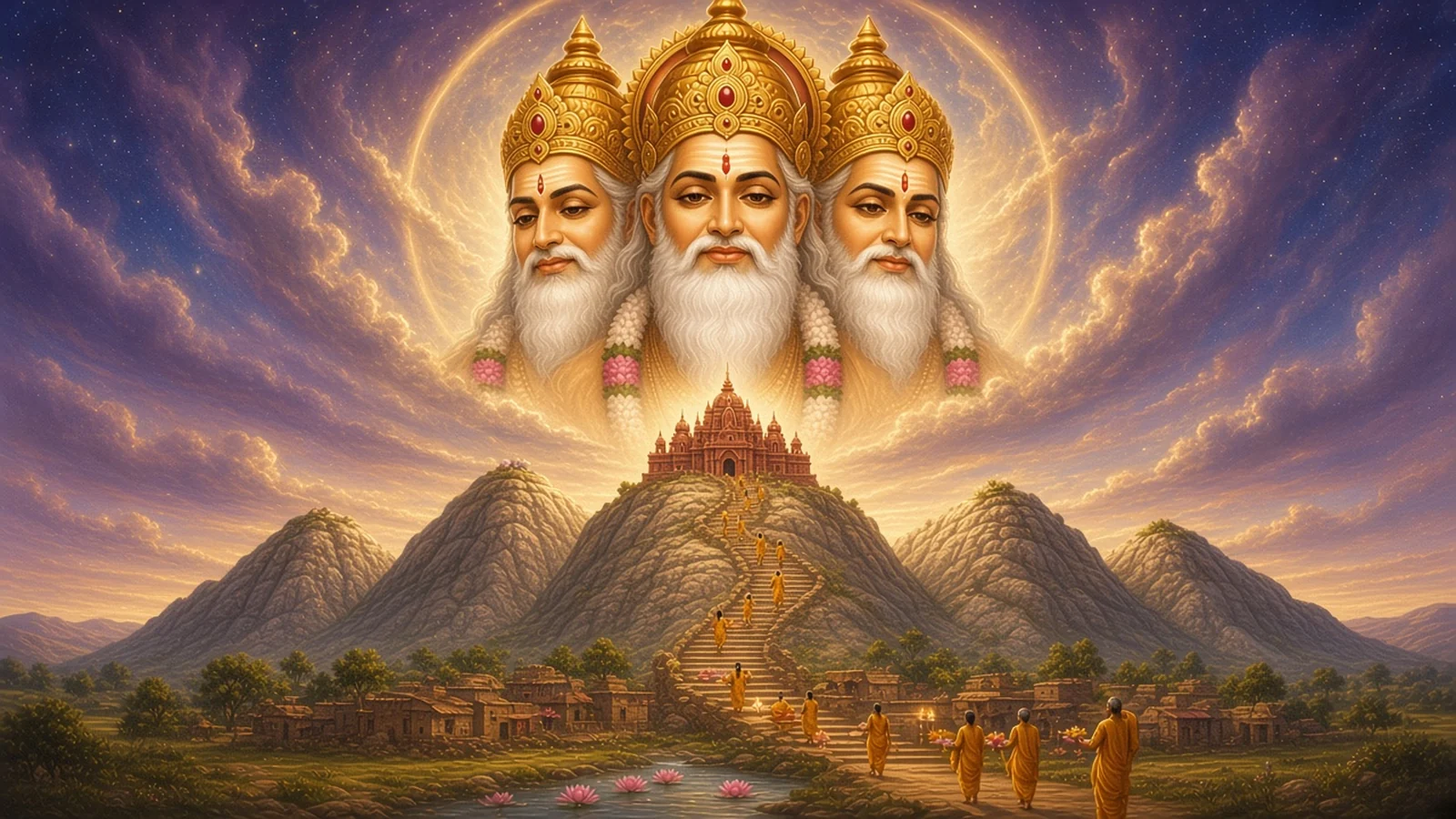
Then Brahma and the great sages came to Daksha and begged him to spare Narada. Daksha agreed, on one condition: Narada would be born again as the son of one of Daksha's own daughters. He gave a daughter to Brahma, and from her Narada was born a second time, the grandson of the man who had cursed him.
The book closes the matter with a warning. A brother who goes out in search of his brothers is lost to his family, it says, and the wise do not do it.