Festival · Water for the setting sun and the rising sun
Chhath Puja
Four days of fasting and worship of the Sun, six days after Diwali, kept above all in Bihar. Women, and many men, fast for some thirty-six hours without a drop of water, and stand waist deep in a river or a pond to offer to the setting Sun and then, at dawn, to the rising Sun. It is kept for the health of children and the good of the family, and for Chhathi Maiya, the goddess of the sixth day.
Also calledChhathSurya ShashthiDala ChhathChhathi Maiya PujaKartik ChhathChaiti Chhath (in spring)
Next, in 2026Sunday 15 November 2026
13 to 16 November 2026
Prime godsSurya and Chhathi Maiya
with 2 more
WhereBihar, Jharkhand, eastern Uttar Pradesh and the Nepal Terai, and wherever people from there have gone
How longFour days
The fourth to the seventh day of the bright fortnight of Kartika, in late October or November, six days after Diwali. A smaller Chhath is kept in Chaitra, in spring
Why it is kept
Chhath is named for the sixth, the shashthi, the sixth day of the bright fortnight of Kartika, six days after Diwali. It is the festival of the Sun in the old country of Magadha and Mithila, and for the people of Bihar it is the festival they come home for, from wherever they are, more than Diwali or Holi.
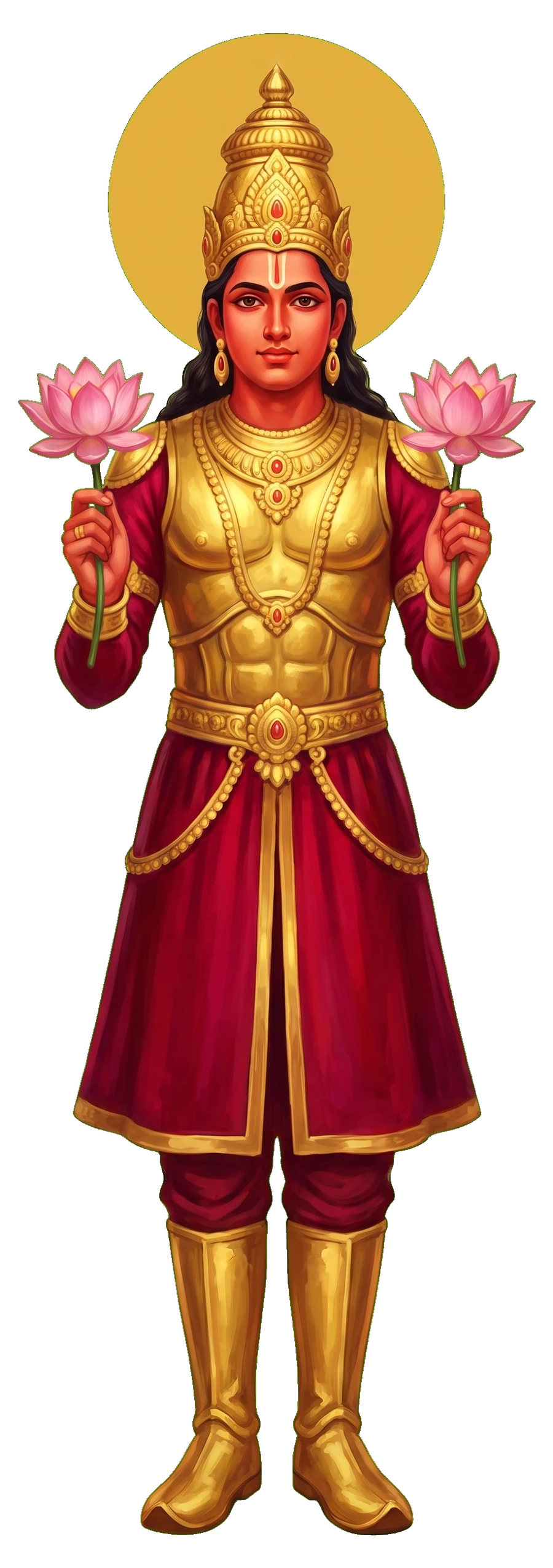
Chhath is kept for the Sun, the god whom every person can see, who gives the light, the warmth and the crops, and who in the Puranas cures the diseases of the skin. People keep it for a child to be born, for a child to be well, for a husband or a son far away, for a sickness to go, or to thank the Sun for a wish already granted. A vow made at Chhath is kept for years, often for a lifetime, and handed down from mother-in-law to daughter-in-law.
It is kept, too, for Chhathi Maiya, the mother of the sixth day. She is Shashthi, the goddess who watches over children, worshipped on the sixth day after a birth. In the Puranas she gave a childless king his son back from death. In Bihar she is called the Sun's sister, and the songs ask her for children.
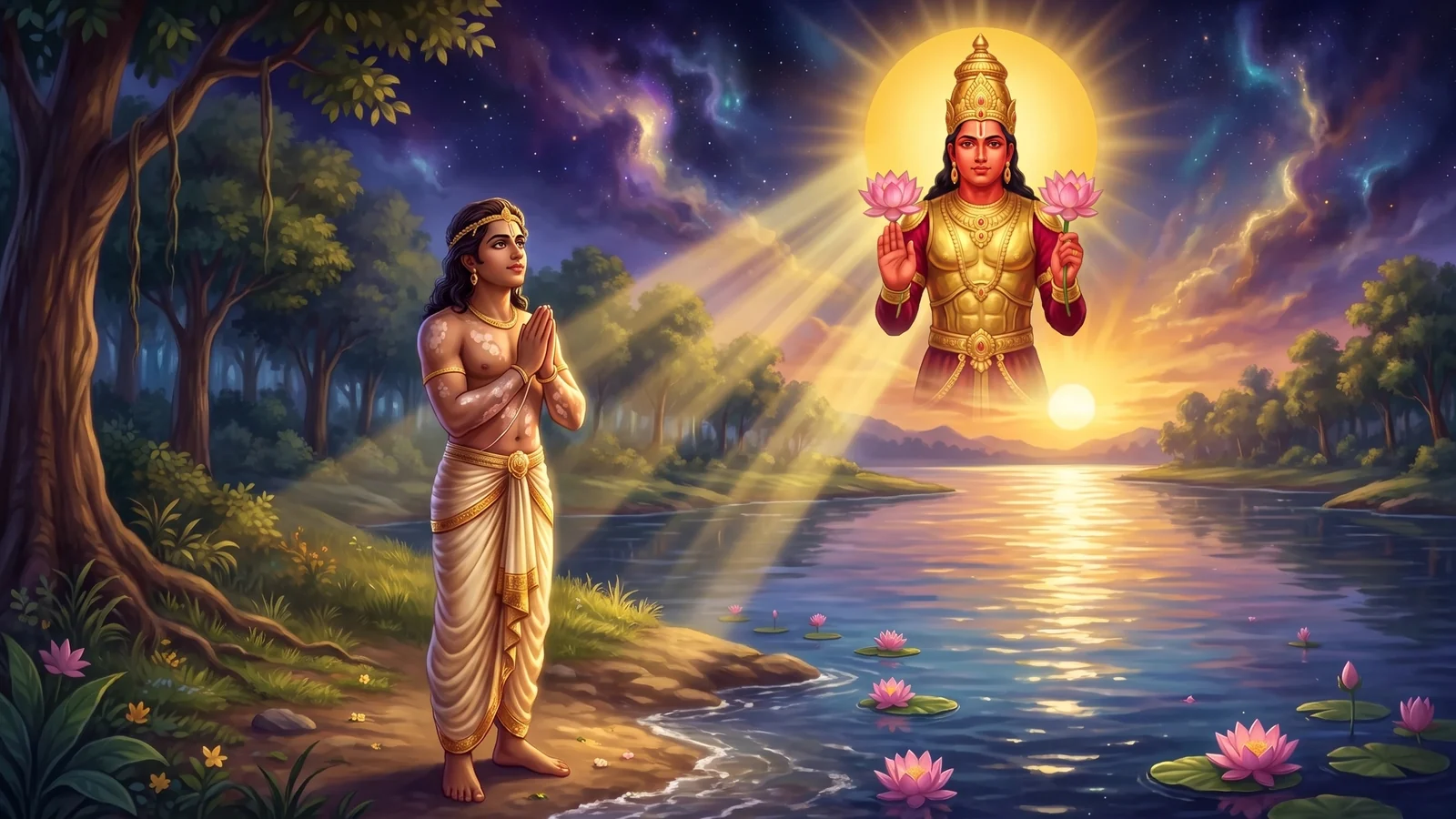
Bihar tells of the first people to keep it. Karna, the Sun's own son and king of Anga, stood in the Ganga every day to pray to his father. Sita kept the fast at Munger after the war in Lanka. Draupadi, many say, kept it in the forest with the Pandavas. And at Deo a king was cured of leprosy in a pond where the Sun's images lay.
The Sun, the one god whom everyone can see. He is given water and fruit as he sets and again as he rises, and asked for health, children and a full house.
C
Prime god
Chhathi Maiya
The mother of the sixth day, Shashthi, the goddess who protects children, said in Bihar to be the Sun's sister. The songs of the festival are sung to her.
The dawn, the Sun's first light, to whom the last offering is made on the fourth morning.
P
Pratyusha
The Sun's last light of the evening, to whom the offering at sunset is made.
The four days of Chhath
1
Nahay Khay
The fourth day of the bright fortnight of Kartika · Friday 13 November 2026
Nahaye Khayethe bath and the meal
The person keeping the fast, the vrati, bathes in a river or a pond, and the house is cleaned from end to end. A single pure meal is cooked, usually rice, gram dal and bottle gourd, without onion or garlic and in rock salt, and eaten once in the day.
2
Kharna
The fifth day of the bright fortnight · Saturday 14 November 2026
Lohanda
The vrati fasts all day without water. In the evening, after worship, she eats a kheer of rice and jaggery cooked on a fire of mango wood, with flatbread and bananas, and the family and neighbours share it. From that meal begins the fast of some thirty-six hours, without food or water, until the morning after next.
3
Sandhya Arghya
The sixth day of the bright fortnight, Shashthi · Sunday 15 November 2026
the evening offeringKosi
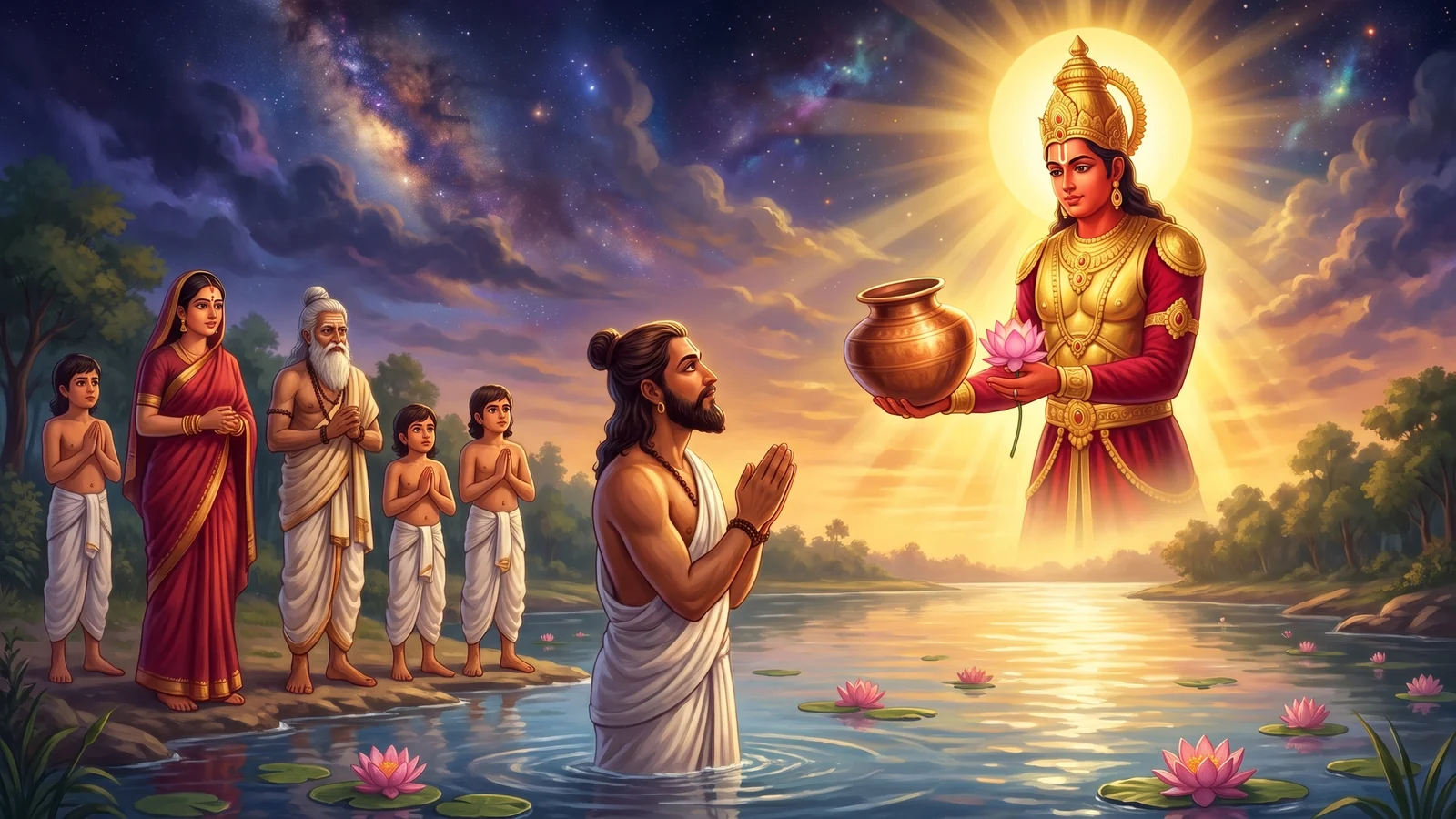
The thekua, hard sweet biscuits of wheat and jaggery, are fried at home, and the winnowing baskets, soop and daura, are filled with them and with fruit, sugarcane, coconut, radish and ginger. The family carries them on their heads to the ghat, singing. At sunset the vrati stands in the water and offers milk and water to the Sun as he goes down. At night, in many houses, a kosi is set up, a canopy of sugarcane stalks with clay lamps beneath it.
The seventh day of the bright fortnight · Monday 16 November 2026
the morning offeringParana
Before dawn the families go back to the water and wait in the dark, with lamps. When the Sun rises the vrati offers to him again, then breaks her fast with a little ginger and water, and the offerings are shared out as prasad with everyone at the ghat.
The heart of the festival. Patna's ghats along the Ganga are lined for kilometres with families, and every village pond becomes a ghat. The Sun temples of Deo, Ulaar near Patna and Baragaon near Nalanda draw the largest crowds; Munger keeps the rock of Sita's fast.
Jharkhand and eastern Uttar Pradesh
Kept as in Bihar, from Ranchi and Dhanbad to Varanasi, Ballia and Gorakhpur. In Varanasi the ghats where the Ganga turns north fill with vratis.
NepalChhath in the Madhesh
The Terai keeps Chhath as one of its greatest festivals, at Janakpur's ponds and along the rivers, and it is a public holiday in Nepal.
The cities
Workers from Bihar and eastern Uttar Pradesh have carried Chhath to Delhi, Mumbai, Kolkata and beyond, where it is kept at the Yamuna, at the sea at Juhu and in specially dug ponds, and the trains home before the festival are the most crowded of the year.
The diaspora
Descendants of the Bhojpuri-speaking labourers taken to Mauritius, Fiji, Suriname, Guyana and Trinidad still keep Chhath, and newer migrants keep it in the Gulf, Britain and North America, on beaches, lakes and riverbanks.
Chaiti Chhath
A second Chhath, kept in the same way but by fewer people, on the sixth of the bright fortnight of Chaitra, in March or April.
Muslims of BiharNeighbours of the ghat
Muslim households in Bihar have long had a share in Chhath. Many make and sell the clay stoves on which the offerings are cooked, and some Muslim women keep the fast themselves, often after a vow made for a child.
How it is kept
Nothing about Chhath needs a priest. The vrati, usually the woman of the house, keeps the fast and makes the offerings herself, and the family does the work around her. Everything must be pure. The house is cleaned, the food is cooked in new or scoured pots on a clay stove, and the wheat for the thekua is washed, dried and ground at home.
For four days she eats once, then fasts, then eats the Kharna kheer, and then takes nothing, not even water, for some thirty-six hours. On the third evening the whole family walks to the water with the baskets on their heads, the men often carrying them, while the women sing Chhath songs. Some vratis go the whole way lying down, measuring the road with their bodies. At the ghat she stands in the water facing the setting Sun with the basket raised and offers milk and water to him. At dawn she offers again. The whole festival is kept in the open, on riverbanks swept clean by the neighbourhood, and the ghats are full of people who do not know each other.
In the old texts
The worship of the Sun is as old as the Rigveda, which has hymns to Surya and to Ushas, the dawn, and in which the Gayatri is a prayer to the Sun as Savitr. The Mahabharata tells how Yudhishthira prayed to the Sun in the forest and was given a pot that never emptied, and how the Sun's son Karna worshipped his father in the water every day.
The goddess Shashthi is described in the Brahma Vaivarta Purana and the Devi Bhagavata Purana, which tell of King Priyavrata and his dead son. The Samba Purana and the Bhavishya Purana tell how Krishna's son Samba was cured by the Sun and brought priests of the Sun from Shakadvipa, the Maga Brahmins; the Shakadvipi Brahmins of Bihar trace their line to them. None of these texts describes Chhath itself. The four days, the fast without water, and the evening offering are Bihar's own, carried in its songs.
Where this page comes from. Written by Devalok from the Rigveda (1.50 and the hymns to Ushas), the Mahabharata (Vana Parva 3, and the Kundalaharana Parva), the Brahma Vaivarta Purana (Prakriti Khanda 43), the Devi Bhagavata Purana (9.46), the Samba and Bhavishya Puranas on the worship of the Sun, the Munger and Deo temple traditions, and accounts of the festival in Bihar, Nepal and the diaspora, as recorded in the Devalok Lore. Our own words throughout.