The one great Hindu festival kept by the sun and not the moon, on the day the sun enters Makara, Capricorn, in mid-January. The cold is breaking, the winter harvest is in, and the sun is starting his half-year journey north, the time Bhishma waited for on his bed of arrows. Every region keeps it differently, with bonfires, kites, sesame sweets, rice boiled over in new pots and a holy bath where the Ganga meets the sea.
Also calledSankrantiUttarayan (Gujarat)Pongal (Tamil Nadu)Lohri (Punjab)MaghiMagh Bihu (Assam)Poush Sankranti (Bengal)Khichdi (Bihar and Uttar Pradesh)Maghe Sankranti (Nepal)
Next, in 2027Friday 15 January 2027
14 to 17 January 2027
Prime godSurya
with 8 more
WhereAll of India and Nepal, under a dozen different names
How longOne day (four in Tamil Nadu and Andhra)
The day the sun enters the sign of Makara, Capricorn, on the 14th or 15th of January. The festivals around it run from the evening before to two days after
Why it is kept
Makar Sankranti is the day the sun leaves the sign of Dhanu and enters Makara, Capricorn. Every month has a sankranti, an entry of the sun into a new sign, but this is the one the whole country keeps. It is also the one great Hindu festival reckoned by the sun and not by the moon, which is why it falls on the same day of January every year.
The sun turns north. For the six months after this day, the Uttarayana, the sun climbs higher in the sky each day, and the old texts call it the bright half of the year, the time of the gods. The Gita says that a person who dies in it goes on the path of light and does not return. Bhishma, wounded at Kurukshetra, lay on his bed of arrows for fifty-eight nights waiting for it before he let himself die.
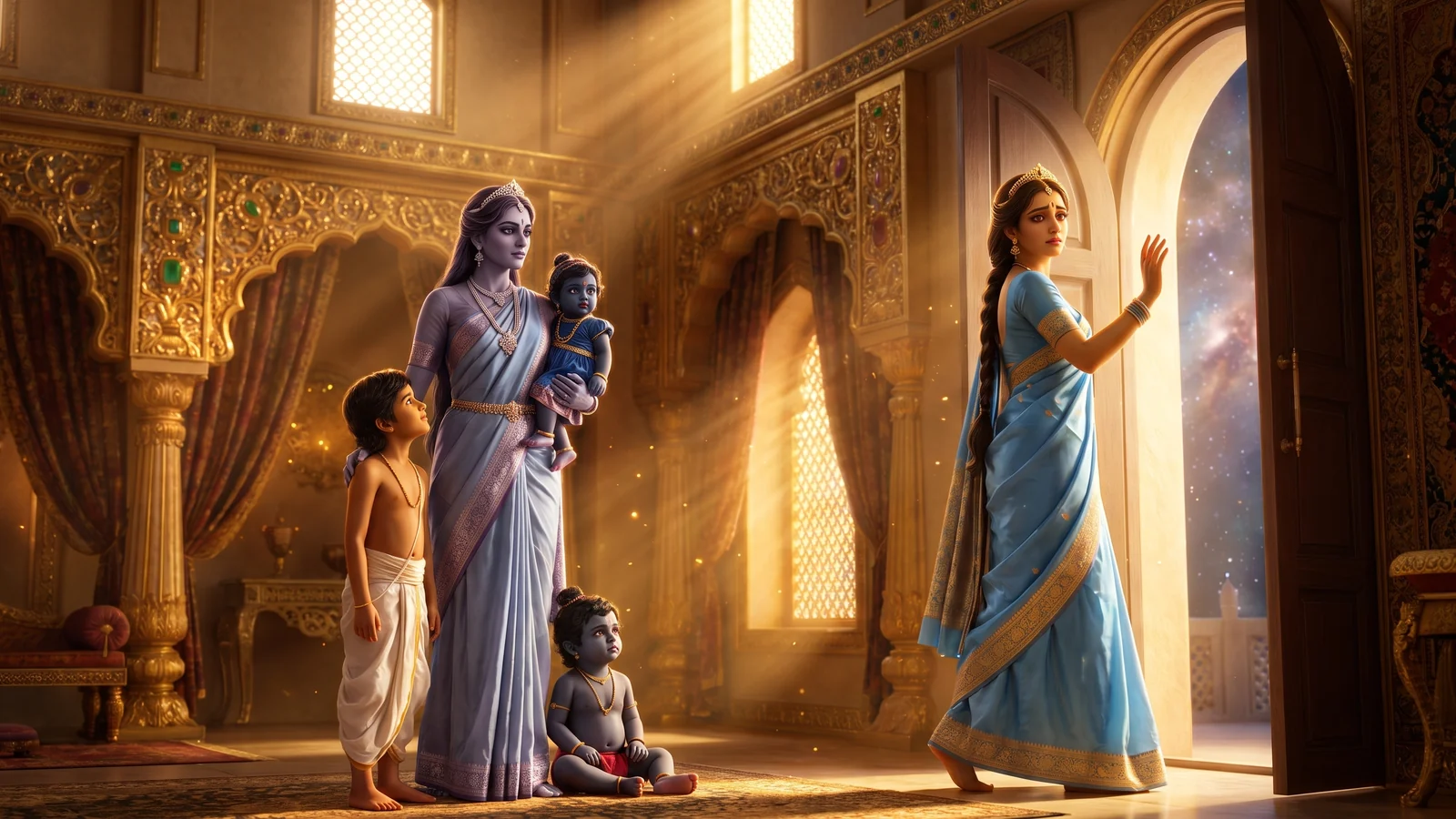
The Sun visits his son. Shani, the dark planet, is the Sun's son by Chhaya, the shadow, and the sign of Makara is Shani's house. The story is that father and son quarrelled, and the Sun burnt Shani's first house; when he came to Makara, Shani had only black sesame to give him, and the Sun was moved by it. So sesame is eaten and given away on this day, and people say to each other, eat sesame and speak sweetly.
The harvest is in. In the south and the east this is the festival of new rice, of sugarcane and turmeric, and of the cattle that did the work. In Punjab the winter sowing is up and the cold is ending.
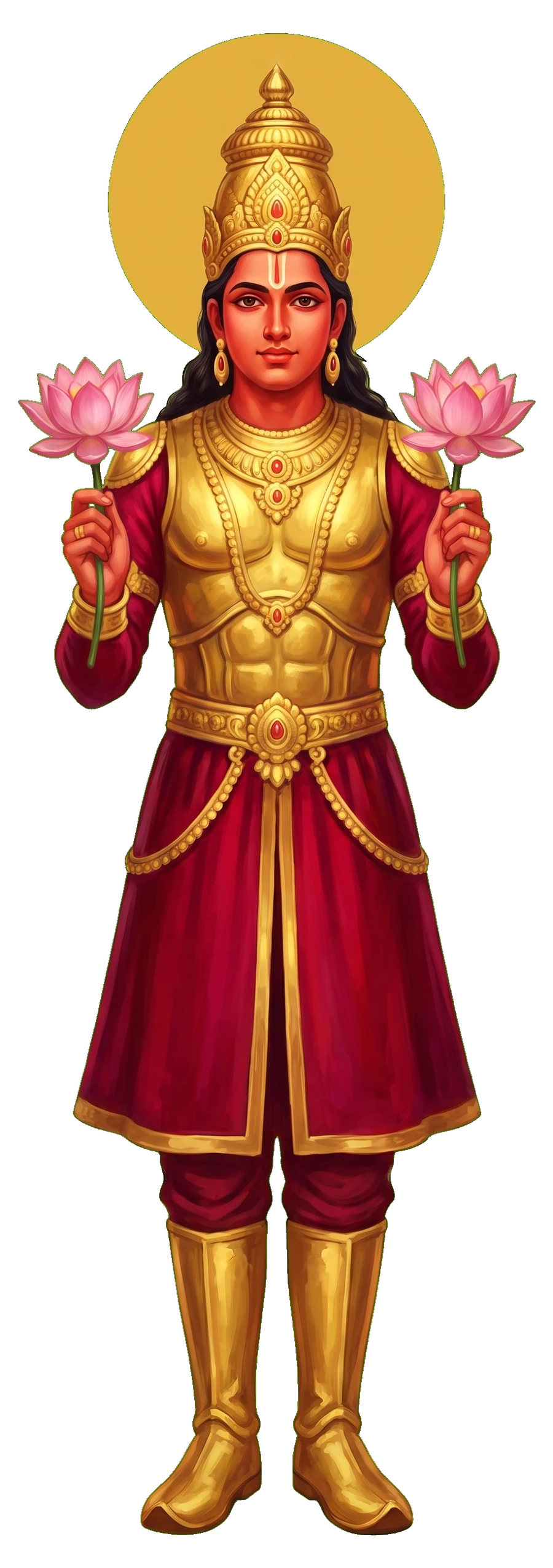
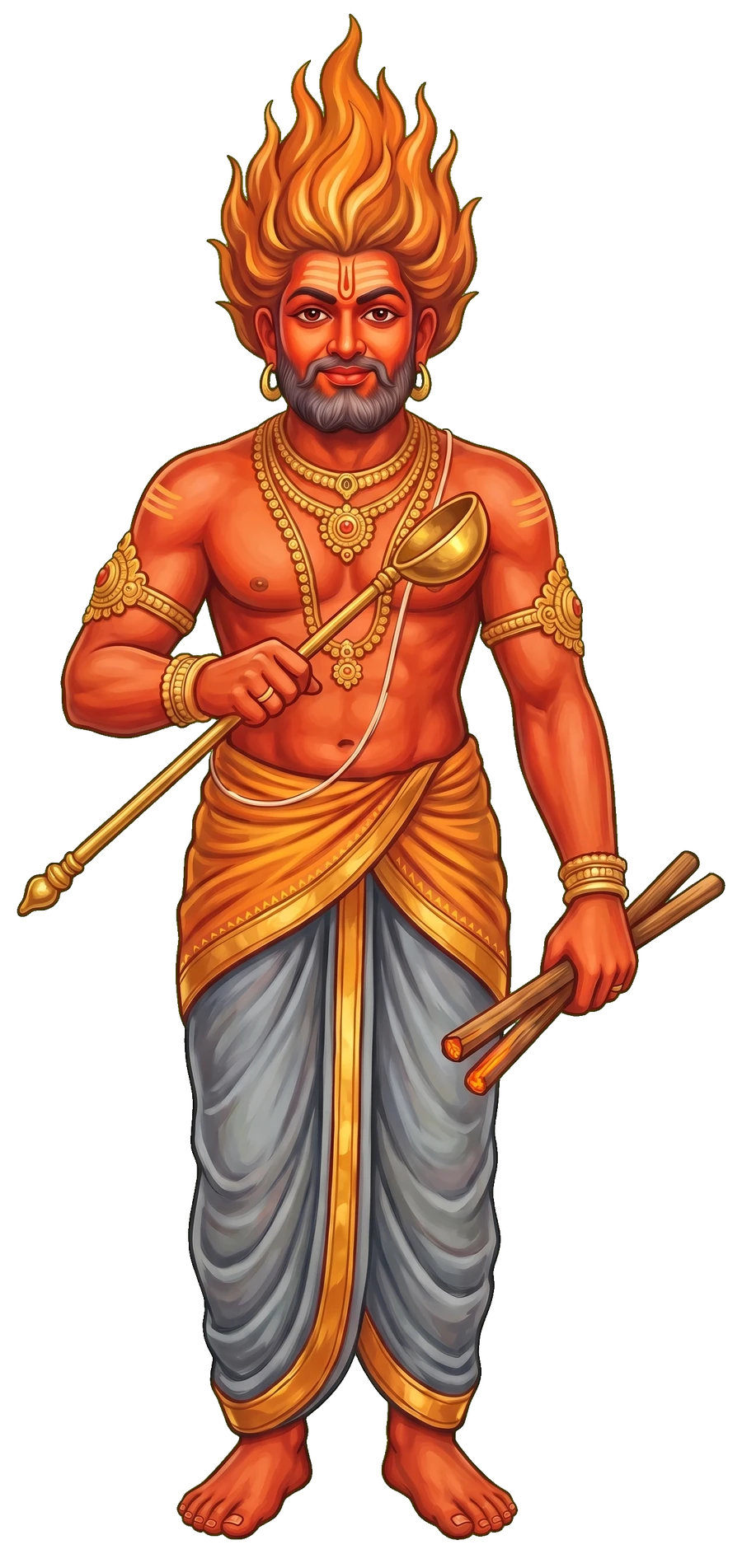
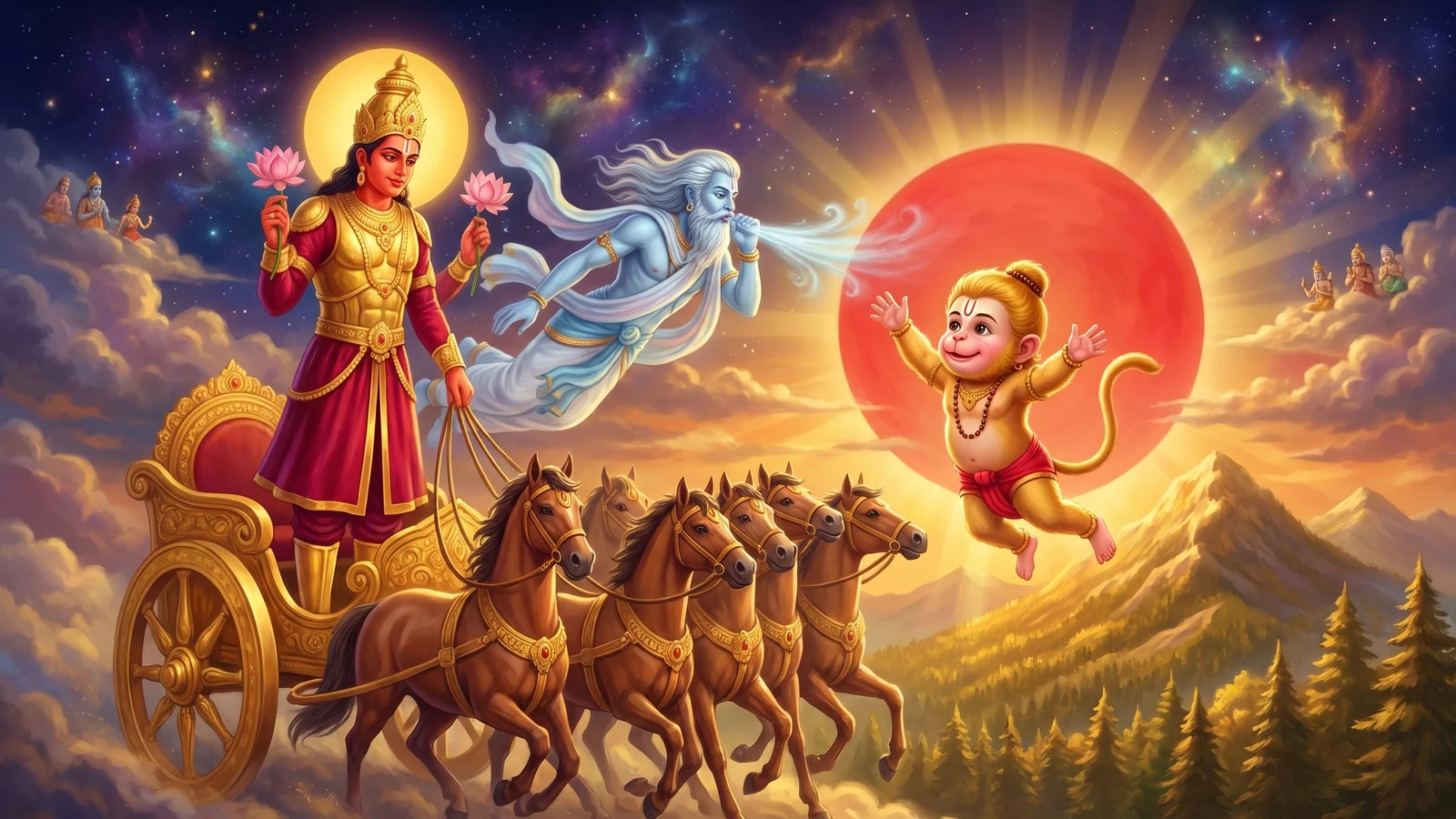
The Sun, entering Makara and turning north. Tamil Nadu boils its first rice of the harvest for him in the open courtyard, and the whole country bathes and offers water to him at dawn.
S
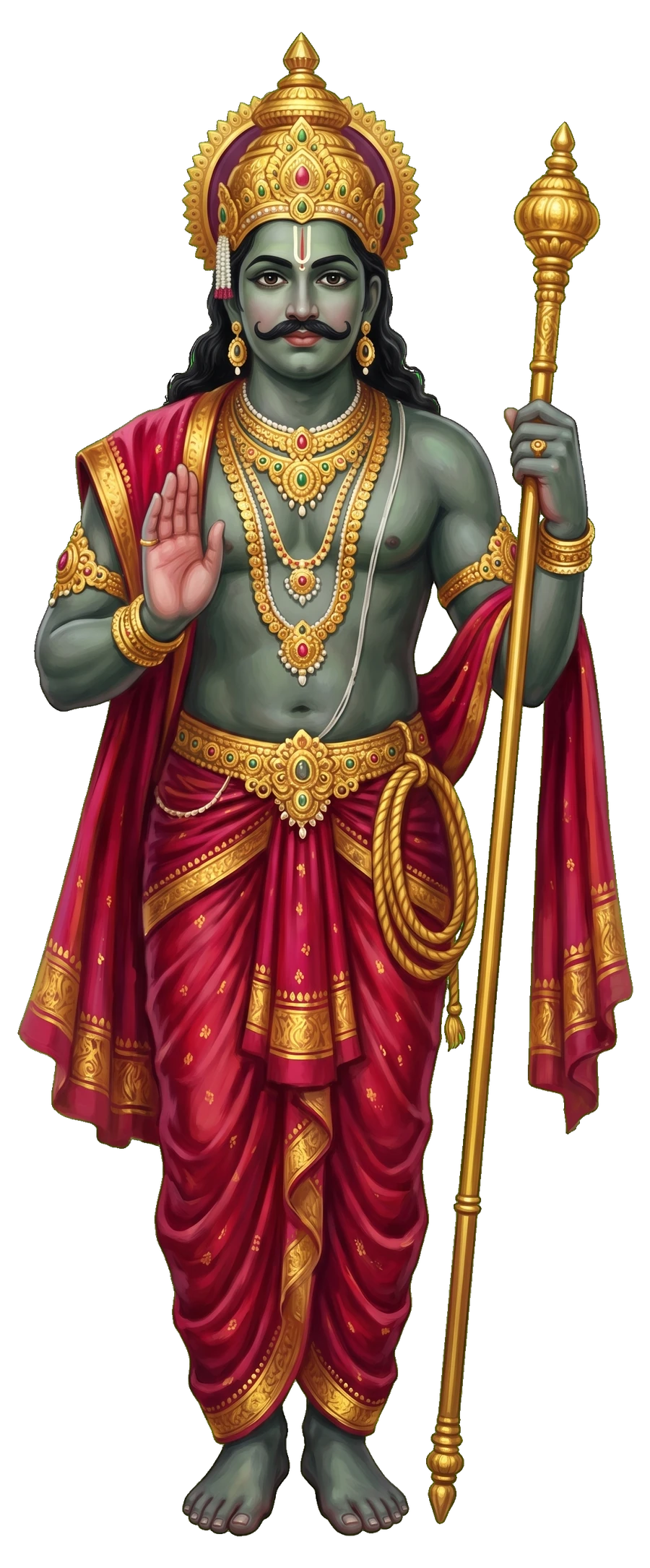
Shani
The Sun's dark son, who lives in Makara. The Sun visits him on this day, and the black sesame Shani gave him is what everyone eats.
The fire of Lohri, Bhogi and Magh Bihu, round which people sing and into which they throw sesame, peanuts and popcorn.
G
Ganga
Brought down to earth by Bhagiratha to free the sixty thousand sons of Sagara. She reached the sea at Gangasagar, where a great bath is held on this day.
K
Kapila
The sage whose anger burnt the sons of Sagara to ash. His temple stands on Sagar island where the river meets the sea.
A
Ayyappa
The god of Sabarimala, whose season ends with Makaravilakku, when the Makara Jyothi is seen on the hill across the valley.
The four days of Sankranti
1
Lohri and Bhogi
The evening before the sun enters Makara · Thursday 14 January 2027
Lohri (Punjab)Bhogi (Tamil Nadu and Andhra)Uruka (Assam)
In Punjab, Haryana and Delhi a bonfire is lit after dark and people walk round it throwing in sesame, jaggery, peanuts and popcorn, and sing the songs of Dulla Bhatti; a family's first Lohri after a wedding or a birth is a big one. In Tamil Nadu and Andhra old clothes, mats and broken things are burnt at dawn in the Bhogi fire, and houses are cleaned and newly decorated. In Assam the night of Uruka is a feast in a hut built for the purpose.
People bathe at dawn, in a river if they can, and offer water to the Sun. Sesame and jaggery are eaten and given away everywhere, as laddoos, chikki, tilgul or ellu bella. In Tamil Nadu new rice is boiled in milk in a new clay pot in the courtyard until it froths over, and the family shouts Pongalo Pongal. Gujarat fills the sky with kites. Bihar and Uttar Pradesh eat khichdi and curd with flattened rice. The Gangasagar bath and the first great bath of the Magh Mela at Prayag fall on this day.
The cattle's day. Cows and bullocks are bathed, their horns painted and capped with brass, bells and garlands hung on them, and they are fed sweet pongal. In parts of Tamil Nadu bulls are let loose for jallikattu, where young men try to hold on to a bull's hump. In Karnataka cattle are walked over a fire.
The second day after Sankranti · Sunday 17 January 2027
Kanu PidiMukkanuma (Andhra)
The day for going out and visiting. Families picnic on the beaches and riverbanks and visit relatives, and sisters leave balls of coloured rice on leaves for the birds and pray for their brothers.
Four days, Bhogi, Thai Pongal, Mattu Pongal and Kaanum Pongal, at the start of the Tamil month of Thai. Kolam drawings cover the courtyards, sugarcane and turmeric plants are tied to the pot, and the new rice boils over to show the year will be full.
Andhra Pradesh and TelanganaSankranti
Bhogi, Sankranti and Kanuma. Bhogi fires at dawn, muggulu patterns on the street with small cow dung balls, Haridasu singers going door to door, and bulls dressed as Gangireddu led round to dance. In the Godavari districts, cock fights draw huge crowds.
KarnatakaSankranti
Ellu bella, a mix of sesame, jaggery, peanuts, coconut and fried gram, is given to neighbours with a piece of sugarcane, with the words, eat sesame and jaggery and speak sweetly. Cattle are decorated and walked over a fire.
MaharashtraMakar Sankranti
Tilgul, sesame and jaggery, is given with the words tilgul ghya, god god bola, take tilgul and speak sweetly. Women hold haldi-kumkum gatherings, and black clothes, otherwise avoided, are worn for the day.
Gujarat and RajasthanUttarayan
Kite flying from every rooftop from dawn till night, with kite fights to cut the other strings, followed by sky lanterns. Undhiyu and chikki are eaten. Ahmedabad holds an international kite festival.
Punjab, Haryana and HimachalLohri and Maghi
The Lohri bonfire on the eve, with the songs of Dulla Bhatti, the Robin Hood of Punjab, who rescued girls and married them off. On Maghi, the next day, people bathe and eat kheer cooked in sugarcane juice.
AssamMagh Bihu
The harvest Bihu. On Uruka night families feast in a bhelaghar, a hut of straw and bamboo, and next morning burn it with the meji, a tall bonfire, and eat pitha and laru. Buffalo fights and other games follow.
BengalPoush Sankranti
Rice cakes, pithe and patishapta, made with new rice and date palm jaggery. Pilgrims in their lakhs bathe at Gangasagar on Sagar island, where the Ganga meets the Bay of Bengal, and visit the Kapil Muni temple.
Bihar and Uttar PradeshKhichdi
A bath, then flattened rice with curd and sugar, sesame laddoos, and khichdi in the evening. At the Gorakhnath temple in Gorakhpur khichdi is offered to the god, and the Magh Mela at Prayag holds one of its great baths at the meeting of the rivers.
KeralaMakaravilakku
The end of the Sabarimala season, when Ayyappa's ornaments arrive in procession and the Makara Jyothi is seen on Ponnambalamedu across the valley.
UttarakhandGhughutiya
In Kumaon, children make little fried sweets in the shape of birds and drums, string them round their necks and call the crows to come and eat them the next morning.
NepalMaghe Sankranti
Ghee, chaku, sweet potatoes, yam and sesame laddoos, and a bath at the river confluences. For the Tharu people of the Terai it is Maghi, the new year.
SikhsMaghi at Sri Muktsar Sahib
On Maghi Sikhs remember the Chali Mukte, the Forty Liberated, who fell at the battle of Khidrana in 1705 defending Guru Gobind Singh. A fair is held at Sri Muktsar Sahib in Punjab, where the battle was fought.
How it is kept
The day begins with a bath before sunrise, in a river or at a confluence for those who can get to one, and water offered to the rising Sun. Gifts are given, especially of sesame, blankets, grain and khichdi, which this day makes worth more than on any other.
Then each region does its own thing. The north lights fires the night before. Gujarat flies kites from first light until the sky lanterns go up at night. Tamil Nadu boils new rice over and shouts Pongalo Pongal. Maharashtra and Karnataka give out their sesame sweets with a wish to speak sweetly. Assam feasts all night and burns its straw huts in the morning. Bengal makes rice cakes and goes to the sea at Gangasagar. And on the next day, in the south, the cattle get their bath, their painted horns and their share of the pongal.
In the old texts
The idea of the two halves of the year is very old. The Upanishads speak of the path of the gods, the devayana, which runs through the light half of the year, and the Gita repeats it. The Mahabharata gives Bhishma's death on the bed of arrows as its great example, and has him die in the bright half of Magha once the sun has turned.
The astronomy came later. The Surya Siddhanta and the other Indian astronomical texts fix the twelve sankrantis by the sun's entry into each sign, measured against the stars. When the rules were set, around the fourth century, the sun's entry into Makara fell close to the winter solstice, the true turn of the sun. The stars have slowly shifted since, and the two now lie about three weeks apart. The festival has kept to the stars.
Where this page comes from. Written by Devalok from the Mahabharata (Bhishma Parva 119 to 121 and Anushasana Parva 167 and 168), the Bhagavad Gita (8.24), the Surya Siddhanta, the Ramayana's story of Bhagiratha, the Sankranti katha of Surya and Shani as told in Hindi devotional books, the Pongal story of Nandi, and accounts of the regional festivals, as recorded in the Devalok Lore. Our own words throughout.