Festival · A thread on the wrist and a promise to protect
Raksha Bandhan
On the full moon of Shravana a sister ties a rakhi, a thread of protection, on her brother's wrist, marks his forehead and feeds him a sweet, and he promises to look after her and gives her a gift. In the oldest telling the thread was tied by Indrani on Indra before a war, and the priest's verse still names the demon king Bali.
Also calledRakhiRakhi PurnimaShravana PurnimaRaksha PurnimaSalono
Next, in 2027Tuesday 17 August 2027
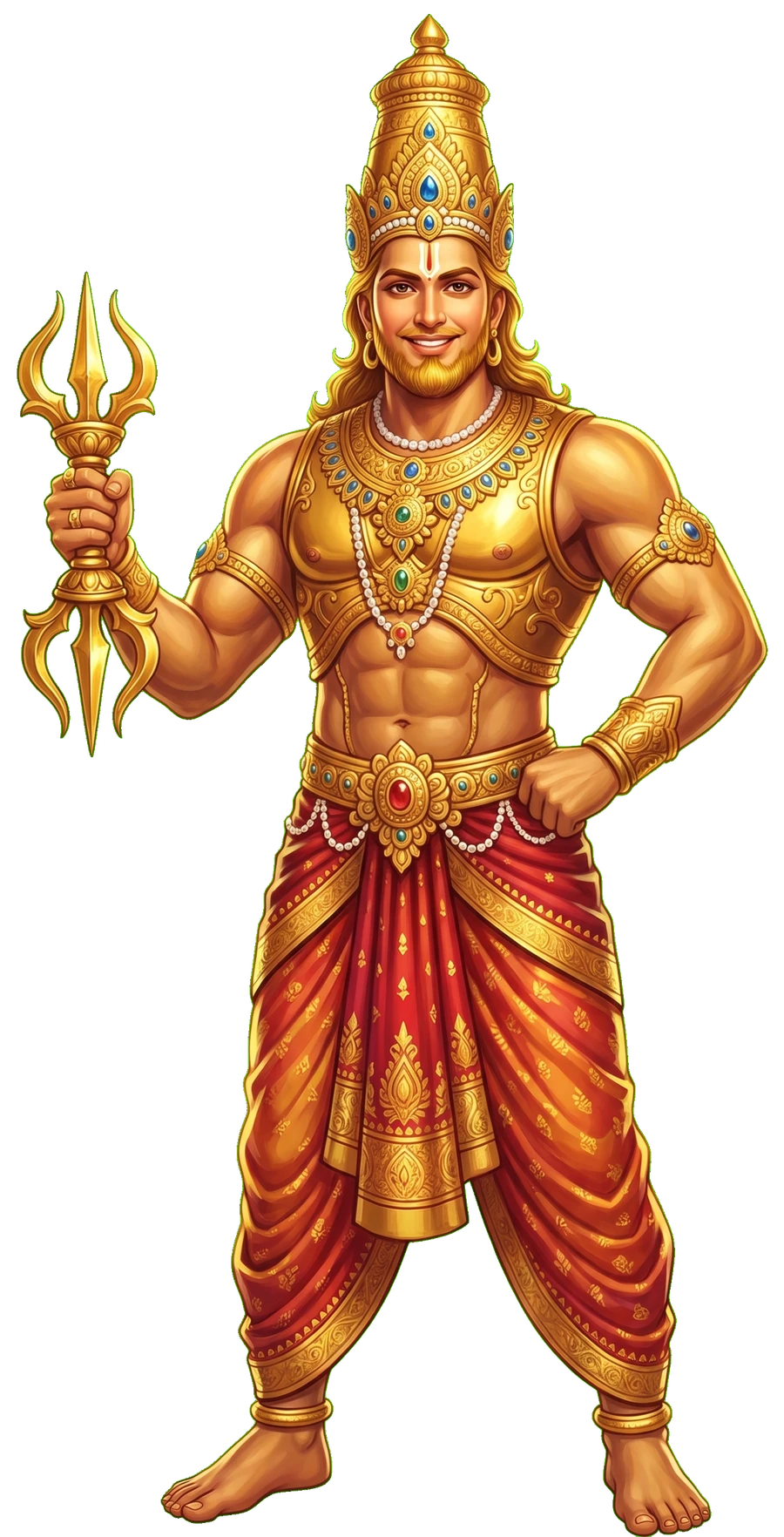
Prime godsIndra and Indrani
with 2 more
WhereAll India, above all the north and west, and Nepal
How longOne day, timed to the afternoon, after the inauspicious Bhadra period ends
The full moon of Shravana, in July or August
Why it is kept
Raksha Bandhan means the tie of protection. On the full moon of Shravana, when the monsoon is at its height, a thread is tied on a wrist and a promise goes with it. In most of India today it is the day of sisters and brothers, and it is one of the few days in the year when families scattered across a country make sure to be together, or at least to send a thread.
The rakhi is a raksha, a thing that protects. The person who ties it wishes the wearer safe, and the person who wears it is bound by it. When a sister ties it on her brother she asks for his protection and wishes him a long life, and he promises to keep her safe for as long as he lives.
The oldest stories are not about sisters. In the Bhavishya Purana Indra's wife Indrani ties a raksha on him before a war with the demons, and he cannot be beaten while it holds. In the Bali story Lakshmi ties a thread on the demon king and asks for her husband Vishnu as her gift. And Draupadi's strip of sari, bound round Krishna's cut finger, is told as a rakhi that he repaid in the dice hall. Each is a thread given in trust and answered with protection.
Vishnu as Vamana, who bound Bali by his word, and Krishna, whose cut finger Draupadi bound with a strip of her sari.
The day of Raksha Bandhan
1
Raksha Bandhan
The full moon of Shravana · Tuesday 17 August 2027
RakhiShravana Purnima
The sister bathes, fasts until the rite in many homes, and prepares a thali with the rakhi, roli and rice for the forehead mark, a lamp and sweets. She ties the rakhi on her brother's right wrist, marks his forehead, waves the lamp before him and feeds him a sweet. He gives her a gift and a promise to protect her. The rite is done after the Bhadra period of the full moon is over, usually in the afternoon.
On the same day Brahmin men of the south and many in the north and in Nepal change the sacred thread they wear across the body, the janeu or poonal, and begin the year's study of the Vedas with a rite of atonement. In Nepal a yellow raksha thread is tied on everyone's wrist by the priest.
The day as most people know it, sister and brother, with rakhis sold for weeks before in every market, from cotton threads to silver. Sisters who live far away post their rakhis, and the post offices of the north keep special counters for them.
Maharashtra, Goa and the KonkanNarali Purnima
The fishing communities of the coast offer a coconut to the sea on the same full moon, to calm it after the monsoon and open the fishing season, and then tie rakhis.
Tamil Nadu, Kerala, Karnataka and Andhra PradeshAvani Avittam
In the south the day is above all the Upakarma, when Brahmin men put on a new sacred thread. Rakhi is tied too, more and more, in the cities.
OdishaGamha Purnima
Odisha keeps the full moon for Balarama, Krishna's brother, and for the cattle, which are bathed and decorated. Rakhis are tied as well.
Bengal and BrajJhulan Purnima
The last day of Jhulan, when images of Radha and Krishna are swung on decorated swings in temples and homes.
NepalJanai Purnima
Men change the janai thread and priests tie a raksha on everyone's wrist, to be worn until Lakshmi Puja at Tihar. At Gosaikunda in the hills, pilgrims bathe in the lake.
JainsVishnukumar Muni's day
Jains keep the same full moon for the monk Vishnukumar, who saved seven hundred monks from a hostile king, and tie threads in memory of the protection he gave.
All communitiesA thread across the line
In 1905, when Bengal was divided by the British, Rabindranath Tagore called for a Rakhi Utsav in which Hindus and Muslims tied threads on one another as a sign that they were one people. Many families of every faith tie rakhis between friends and neighbours.
How it is kept
The sister prepares a thali with the rakhi, a little roli and rice, a lamp and sweets. The brother sits facing east, often with a handkerchief on his head. She marks his forehead, ties the rakhi on his right wrist, waves the lamp before him and feeds him a sweet, and he gives her money or a present. Many sisters fast until the rakhi is tied. The almanacs give the auspicious hour, after the Bhadra period of the full moon has passed, which some years pushes the rite late into the day.
A rakhi is tied on anyone a woman wishes to keep safe, a cousin, a friend, a soldier at the border, a neighbour of another faith. Priests tie a red thread on the wrists of those who come to the temple, saying the old verse about Bali, and in Nepal the priest's yellow thread is worn for months.
In the old texts
The rite is described in the Bhavishya Purana's Uttara Parva, where Krishna teaches it to Yudhishthira: a bundle of rice, white mustard, gold, durva and sandal, tied by the family priest on the king's right wrist on the Shravana full moon. Hemadri quoted it in the thirteenth century, and the verse it gives, about the thread that bound Bali, is still said today.
The Vedas know Shravana's full moon as the time of the Upakarma, when study of the Vedas begins anew, and that rite is still kept the same day. The sister and brother form of Raksha Bandhan grew later, in the north. The story that Rani Karnavati of Mewar sent a rakhi to the emperor Humayun is told in many books but is not found in the histories of the time.
Where this page comes from. Written by Devalok from the Bhavishya Purana (Uttara Parva 137), Hemadri's Chaturvarga Chintamani, the Vratraj, the Bhagavata Purana on Vamana and Bali, the Mahabharata (Sabha Parva), and accounts of the festival across India and Nepal, as recorded in the Devalok Lore. Our own words throughout.