Festival · The new year of the Deccan, the day the world began
Ugadi
Ugadi, the beginning of an age, is the new year of Andhra Pradesh, Telangana and Karnataka, on the first day of the bright half of Chaitra. Maharashtra keeps the same day as Gudi Padwa. It is told as the morning Brahma began creating the world, and it is kept with an oil bath, mango leaves at the door, a dish of six tastes and the reading of the year's almanac.
Also calledYugadiGudi PadwaSamvatsaradiChaitra Shukla Pratipada
Next, in 2027Wednesday 7 April 2027
Prime godsBrahma and Vishnu and Rama
with 1 more
WhereAndhra Pradesh, Telangana and Karnataka as Ugadi; Maharashtra and Goa as Gudi Padwa; with other new years the same day across India
How longOne day
The first day of the bright half of Chaitra, in March or April
Why it is kept
Ugadi means the beginning of an age. It is the new year's day of the Telugu and Kannada lands, the first day of the bright half of Chaitra, when the trees are putting out new leaves and the mangoes are coming. Maharashtra keeps the same morning as Gudi Padwa, and across India other new years fall on it too. Everyone starts the year with something bitter and something sweet.
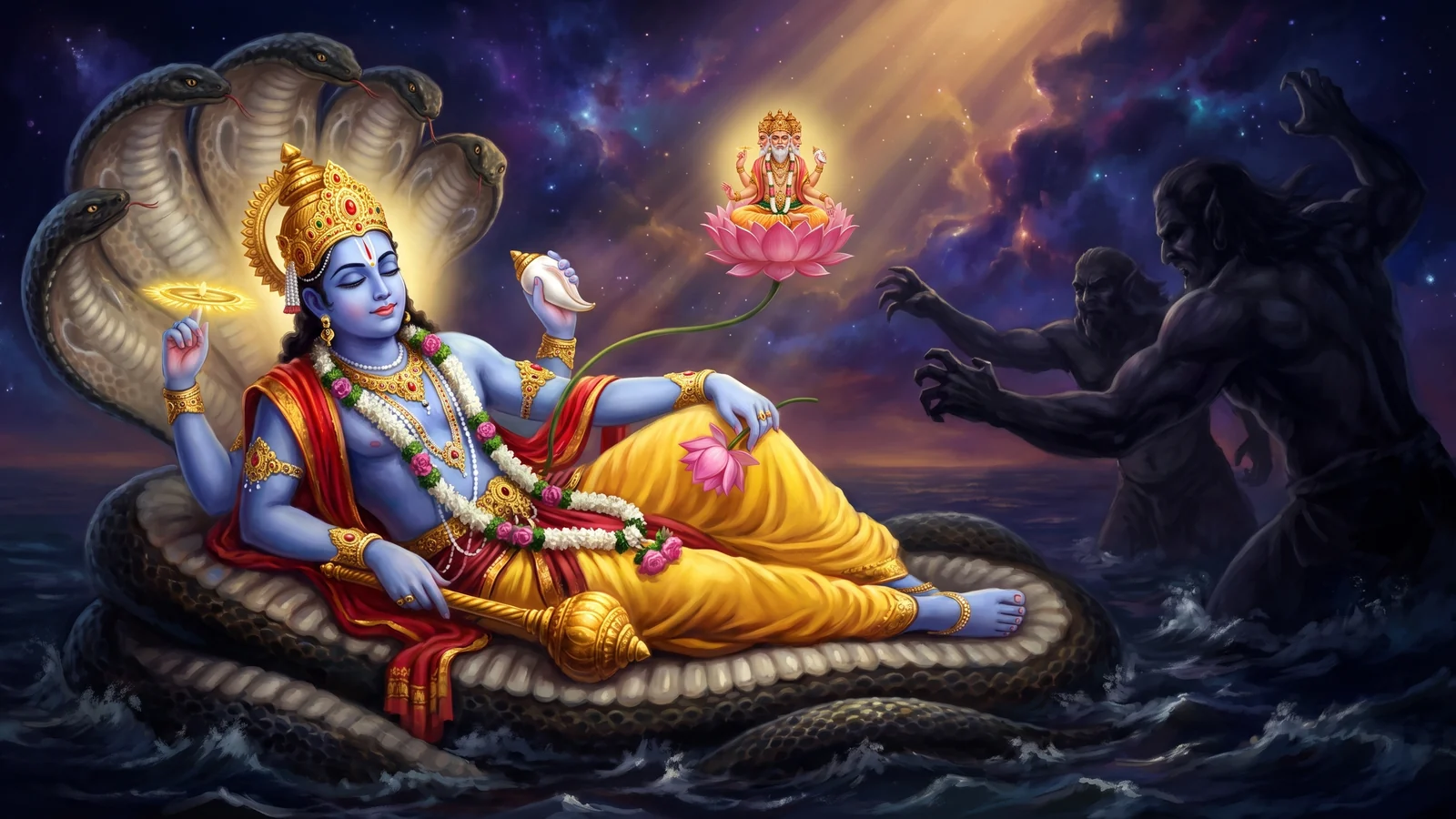
The almanacs say Brahma began making the world at sunrise on the first day of the bright half of Chaitra. In the story the Puranas tell, he woke on a lotus that grew from the navel of Vishnu, asleep on the cosmic waters, and searched a hundred years for where it came from before Vishnu showed himself and told him to create. The year begins where the world began, and the Indian calendars that count by the moon start their new year here.
In Maharashtra the gudi is also told as a victory flag: of Rama over Vali, of Rama returning to Ayodhya, or of the Shalivahana king over the Shakas, whose era some almanacs still count. Whichever is meant, the flag at the door says a new time has begun.
Who is worshipped
B
Prime god
Brahma
The creator, who woke on the lotus from Vishnu's navel and, the almanacs say, began making the world at sunrise on this day. The new year is his day of beginning.
Vishnu on the waters, from whose navel the world's lotus grew, and in Maharashtra Rama, whose victory over Vali, or return to Ayodhya, the gudi flag is said to celebrate.
The nine nights of the Goddess in spring begin on this day, so in the north it is the first day of Durga's worship as well as the new year.
The day of Ugadi
1
Ugadi
The first day of the bright half of Chaitra · Wednesday 7 April 2027
Gudi PadwaYugadi
The family rises before dawn for an oil bath, puts on new clothes and hangs a garland of mango leaves over the door. The Ugadi pachadi, of neem flowers, jaggery, tamarind, raw mango, salt and chilli, is eaten first, a taste of every kind of thing the year will bring. In the evening the priest reads the new year's panchanga, the almanac, aloud. In Maharashtra a gudi, a bamboo pole with a silk cloth, neem, a garland and an upturned pot, is raised at the house.
The great new year. The Ugadi pachadi is made in every house, the panchanga sravanam is held in temples and town halls, and poets read new verse at the Kavi Sammelanams. Bobbatlu, sweet flatbread, is the festival sweet.
KarnatakaYugadi
The pachadi is called bevu-bella, neem and jaggery, eaten for a year of sweet and bitter alike, and holige is cooked. In the evening people look for the new moon's thin crescent.
Maharashtra and GoaGudi Padwa
The gudi is raised at the right of the door or on the terrace, and processions of the Shobha Yatra fill the streets of Mumbai, Pune and Thane with women in nine-yard saris on bikes and drummers. Neem leaves with jaggery are eaten, and shrikhand and puran poli cooked.
Sindh and the Sindhi communityCheti Chand
The Sindhi new year, the birthday of Jhulelal, the river god of the Indus, kept at the first sight of the new moon of Chaitra, with offerings to the water.
KashmirNavreh
The Kashmiri Pandit new year. On the evening before, a thali of rice, walnuts, a mirror, a pen, flowers and the new almanac is laid, and it is the first thing seen on waking.
ManipurSajibu Nongma Panba
The Meitei new year, with a feast offered to the household god Lainingthou Sanamahi and a climb of the Cheiraoching hill in the afternoon.
North IndiaChaitra Navaratri and Nava Samvatsara
The first of the nine nights of the Goddess in spring and the start of the Vikram Samvat year in many almanacs of the north. Pots of barley are sown for the Goddess, and the nine nights end with Rama Navami.
All communities of the DeccanA new year for the region
Ugadi and Gudi Padwa are public holidays and are kept with the new clothes and the shopping of a new year by people of many backgrounds. Businesses and families begin new ventures and buy gold or vehicles on this day, counted as one of the three and a half most auspicious days of the year in Maharashtra.
Sikhs and Sindhi HindusCheti Chand
Many Sindhis, Hindu and Sikh, keep Cheti Chand together, and the river god Jhulelal is honoured by Sindhi Muslims as Khwaja Khizr, the saint of the waters.
How it is kept
Before dawn the house is washed, rangoli drawn at the door and a toran of mango leaves hung over it. The family takes an oil bath, puts on new clothes and worships at home or at the temple. The first thing eaten is the Ugadi pachadi, or bevu-bella, a mixture of six tastes: neem flowers for bitterness, jaggery for sweetness, tamarind for sourness, raw mango for tang, salt and chilli. It is eaten so that the year's sorrows and joys are taken together.
In the evening the panchanga, the almanac for the new year, is read aloud. The priest tells what the year will bring for rain and harvest, for kings and markets, and for each person's star, and families listen for their own. In Maharashtra the gudi is raised in the morning and taken down at sunset.
In the old texts
The verse that makes Chaitra's first bright day the beginning of creation is quoted by Hemadri in the thirteenth century, who gives it as from the Brahma Purana: in the month of Chaitra, on the first day of the bright half, at sunrise, Brahma created the world. The astronomers of the Surya Siddhanta tradition count the ages from a sunrise of the same kind, and the lunar calendars of the Deccan begin their year with it.
The story of Brahma on the lotus is told in the Bhagavata Purana's third book and in the Vishnu and Padma Puranas, though none of them gives the date. Rama's killing of Vali is told in the Valmiki Ramayana's Kishkindha Kanda, and the link with Gudi Padwa belongs to Maharashtra's own tradition.
Where this page comes from. Written by Devalok from the Bhagavata Purana (Skandha 3), the verse on Chaitra quoted by Hemadri in the Chaturvarga Chintamani, the Surya Siddhanta's reckoning, the Valmiki Ramayana (Kishkindha Kanda), and accounts of the festival across the Deccan and India, as recorded in the Devalok Lore. Our own words throughout.