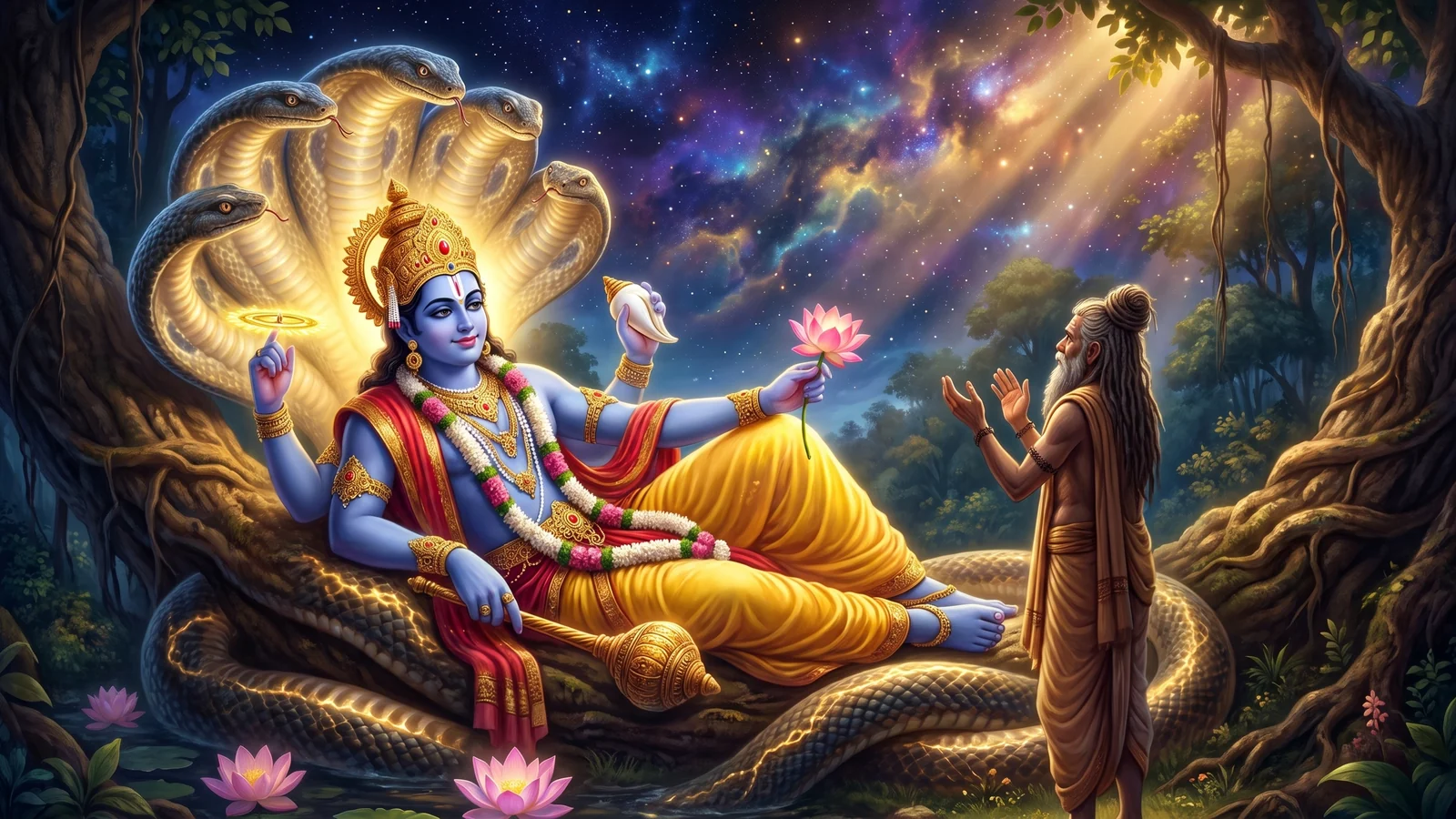
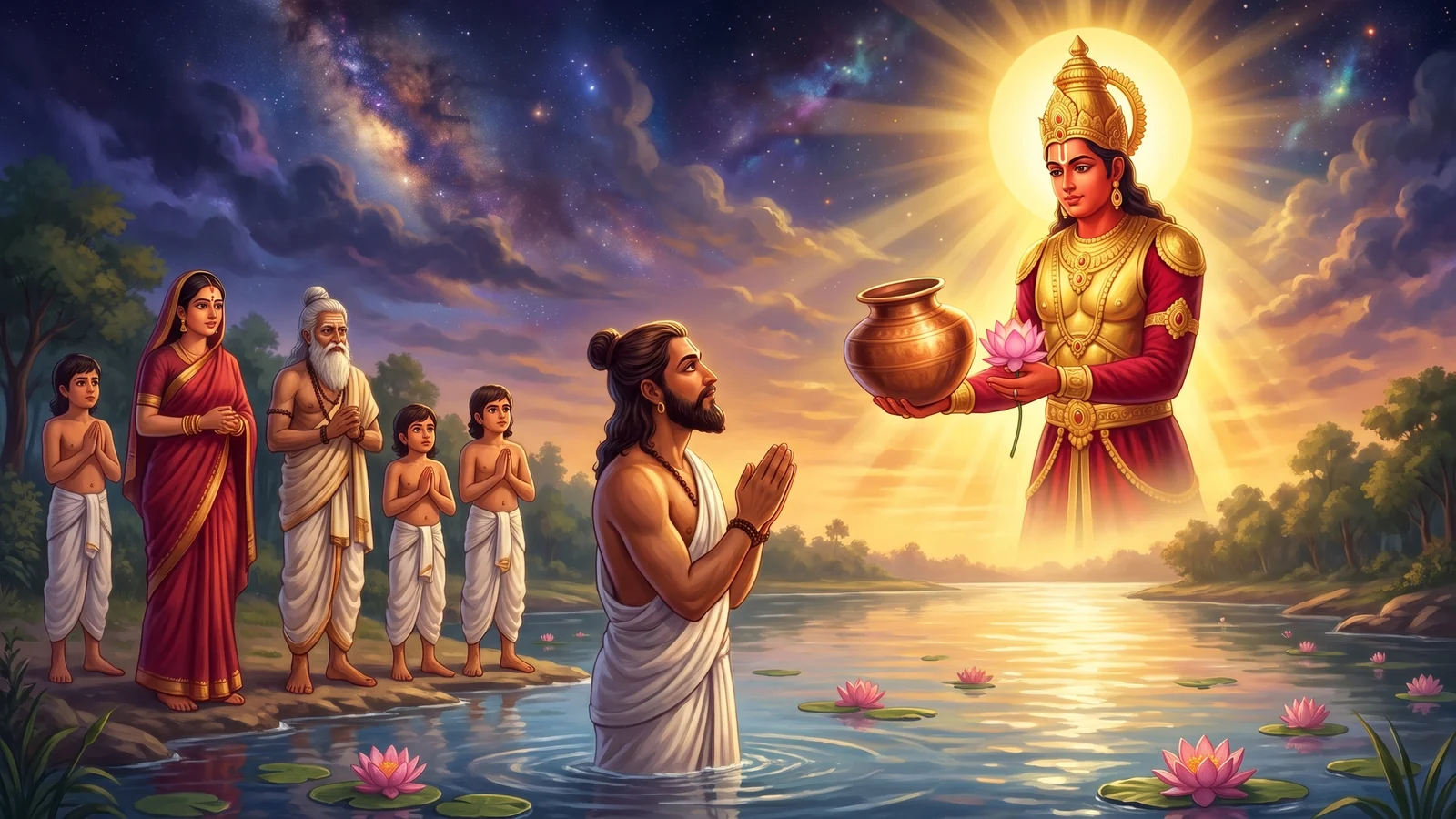
Akshaya Tritiya, the third day of the bright half of Vaishakha, is the day whose merit is said never to diminish. Whatever is given, begun or bought on it is believed to last, so it is a day for charity, for weddings and new ventures, and for buying a little gold. It is kept for Vishnu and Lakshmi and as the birthday of Parashurama, and it is told as the day Sudama brought Krishna his handful of rice.
Prime godsVishnu as Lakshmi-Narayana and Parashurama and Lakshmi
with 1 more
WhereAll India, above all the north and west, Odisha and the south
How longOne day, best kept in the morning while the third day lasts
The third day of the bright half of Vaishakha, in April or May
Why it is kept
Akshaya means that which does not run out. On the third day of the bright fortnight of Vaishakha, as the heat of summer arrives, India keeps a day on which, it is believed, nothing given and nothing begun will ever be lost. It is not a day of temples so much as of households: a handful of rice for Vishnu, a gift to someone who needs it, a little gold for the family.
The Puranas say that on this day the merit of every good act is imperishable. Charity, worship, a fast or a bath in a holy river bears fruit that never ends, and so does a beginning. The day is counted among the few that are wholly auspicious, so weddings, house-warmings and new ventures need no almanac's permission.
Many stories have gathered on it. It is the birthday of Parashurama, and the day the Treta age began. It is told as the day Ganga came down to earth, the day Kubera was made the keeper of wealth, the day the Pandavas received their pot that never emptied, and the day Krishna's poor friend Sudama came to Dwaraka with a handful of rice and went home rich. Every one of them is about something given that lasts.
Vishnu is worshipped with Lakshmi with unbroken grains of rice, the akshata that give the day its name. It is also the birthday of Parashurama, his sixth avatar, the Brahmin with the axe, and the day on which Krishna gave his poor friend Sudama everything without a word.
The goddess of wealth, whose favour a gift made on this day is said to win for good. The Kanakadhara Stotram, the hymn the boy Shankara sang to her, is recited.
K
Kubera
The treasurer of the gods, who is said to have been made the keeper of wealth on this day, and is worshipped with Lakshmi by traders.
The day of Akshaya Tritiya
1
Akshaya Tritiya
The third day of the bright half of Vaishakha · Sunday 9 May 2027
Akha TeejParashurama Jayanti
People bathe early, in a river if they can, and worship Vishnu and Lakshmi with whole rice grains, tulasi and sandal paste. They give in charity, water pots, fans, umbrellas, rice, sattu, salt and ghee, for the summer is coming. Families buy gold or silver, begin new work, lay foundations and hold weddings, because the day needs no almanac. Many fast until noon.
Farmers sow the first seed of the season, and at Puri the timber for the three chariots of the Rath Yatra is first worshipped and the building begins. The Chandan Yatra, when the images of the temple are taken out on boats on the Narendra tank, starts the same day.
Simhachalam, Andhra PradeshChandanotsavam
The image of Varaha-Narasimha, kept the rest of the year under a thick coat of sandal paste, is uncovered for a few hours, and this is the only day pilgrims see his true form.
The Himalaya
The gates of Gangotri and Yamunotri, closed through the winter, open on Akshaya Tritiya, and the Char Dham pilgrimage season begins.
Rajasthan, Gujarat and Madhya PradeshAkha Teej
A great day for weddings, needing no auspicious hour to be fixed. Farmers mark the new agricultural year and watch the winds to tell the coming rains.
BengalHalkhata
Some traders open their new account books on this day, as others do at the Bengali new year, and give sweets to their customers.
Kerala and Tamil Nadu
Kanakadhara is recited for Lakshmi, and the jewellery shops of the south open their doors early for the crowds who come to buy gold.
JainsThe fast of Rishabhanatha
Jains keep the day as the end of the first Tirthankara Rishabhanatha's year-long fast, which he broke with sugarcane juice given by King Shreyansa at Hastinapur. Those who keep the Varshitap, fasting on alternate days for a year, break it now with sugarcane juice, at Hastinapur and Palitana.
How it is kept
The morning begins with a bath and worship of Vishnu and Lakshmi, with unbroken rice grains, tulasi leaves and sandal paste. Many fast until midday. Charity is the heart of the day: pots of cool water, fans, umbrellas, sandals, sattu and rice are given away for the hot months ahead, and Brahmins and the poor are fed.
Then there is the gold. Jewellers open early and stay open late, because a coin or a piece of jewellery bought on Akshaya Tritiya is believed to bring lasting prosperity. Traders worship Lakshmi and Kubera, farmers in many places sow their first seed, and in the Himalaya the high shrines of Gangotri and Yamunotri open for the year.
In the old texts
The Matsya Purana gives the rite: on the third day of the bright half of Vaishakha, bathe in water with unbroken rice, worship Vishnu with the same rice and give it to Brahmins, and the merit is imperishable. The Bhavishya Purana and the medieval vrat books repeat it, and say the day is holier still when it falls on a Wednesday with the Rohini star.
The story of Sudama is in the Bhagavata Purana's tenth book, and the Kanakadhara hymn is attributed to Adi Shankara. Neither text dates its story to Akshaya Tritiya; the dates belong to the festival's own tradition.
Where this page comes from. Written by Devalok from the Matsya Purana (65), the Bhavishya Purana, the Bhagavata Purana (10.80 to 10.81), the Shankara tradition of the Kanakadhara Stotram, and accounts of the festival across India, as recorded in the Devalok Lore. Our own words throughout.