Festival · Ganesha comes home, and ten days later goes back to the water
Ganesh Chaturthi
The birthday of Ganesha, on the fourth day of the bright half of Bhadrapada. A clay image is brought into the house or the public pandal and worshipped as a guest for one and a half, five, seven or ten days, with modak, durva and red flowers, and then carried to the water and immersed. Maharashtra keeps it as its greatest festival.
Also calledVinayaka ChaturthiGaneshotsavGanesh UtsavVinayagar ChathurthiChavath (Goa)
Next, in 2027Saturday 4 September 2027
4 to 14 September 2027
Prime godGanesha
with 3 more
WhereAll India, above all Maharashtra, Goa, Karnataka, Telangana, Andhra Pradesh and Tamil Nadu
How longOne and a half to eleven days
The fourth day of the bright fortnight of Bhadrapada, in August or September, to Anant Chaturdashi ten days later
Why it is kept
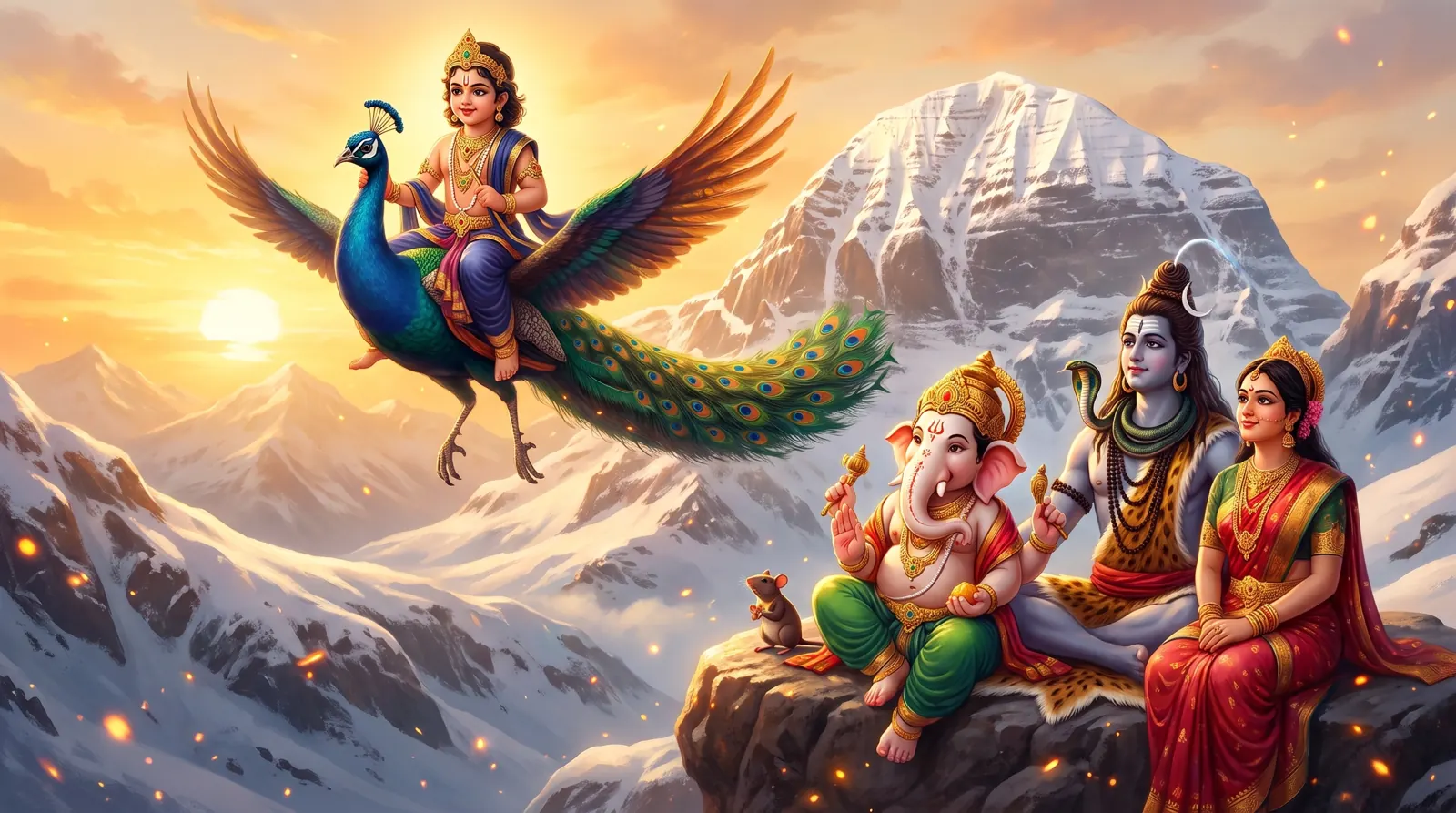
Ganesh Chaturthi is Ganesha's birthday. On the fourth day of the bright half of Bhadrapada, at the end of the rains, he is brought home as a clay guest. He stays for a day and a half, or five, or ten, and is fed and sung to every morning and evening. Then he is carried to the water and sent home to Kailasa, and everyone asks him to come back soon.
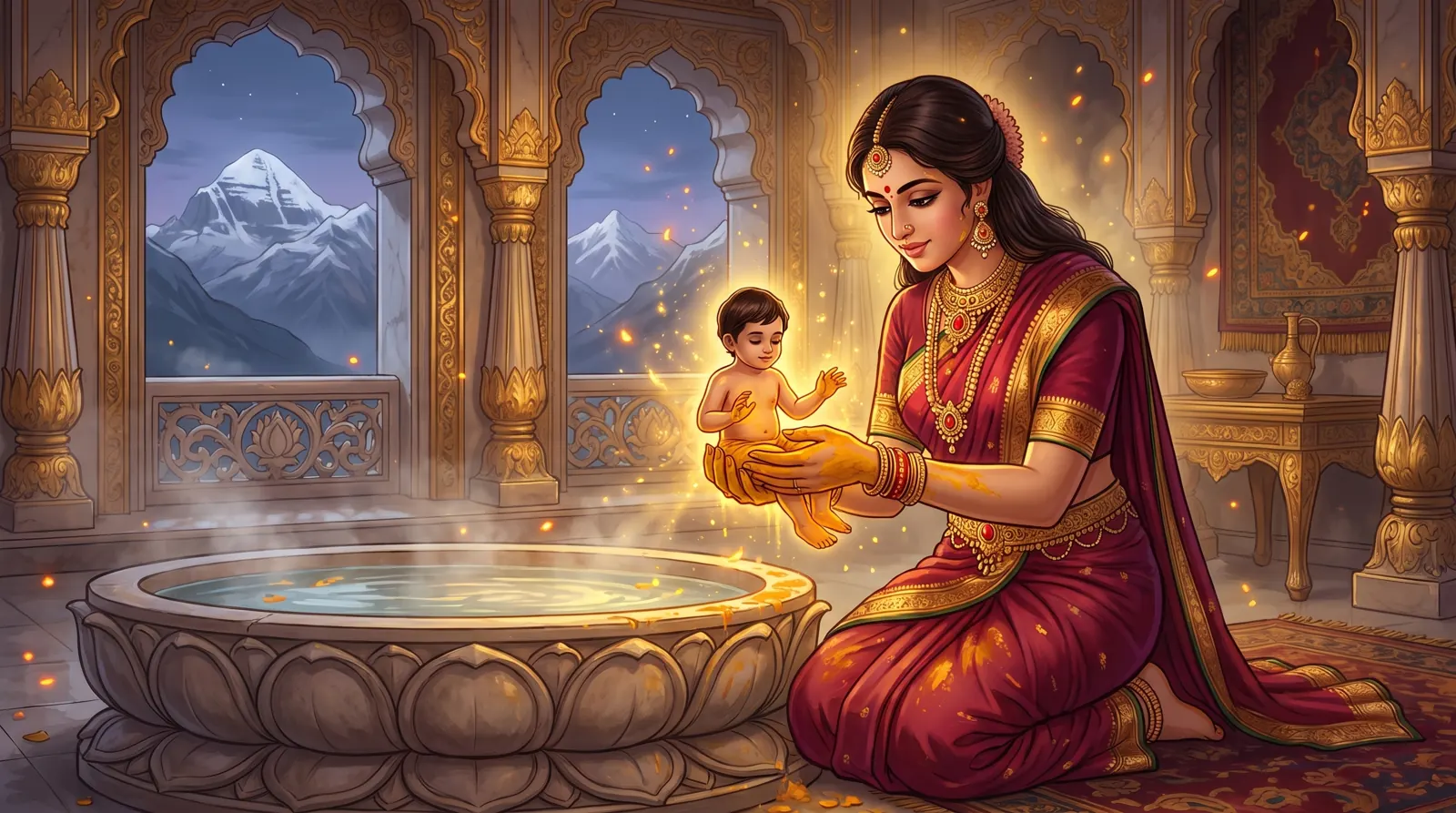
Ganesha is the first god to be worshipped in any rite and the remover of obstacles, so any beginning is his. His birthday is kept to welcome him and to ask him to clear the year ahead. The Shiva Purana gives his birth on the fourth day of the bright half of Bhadrapada: Parvati made a boy from the turmeric paste of her body and set him at her door. When he would not let Shiva in, Shiva cut off his head, and to make amends gave him the head of an elephant and made him chief of his ganas.
The stories of the festival explain its customs. The moon laughed at Ganesha when he fell from his mouse with his belly full of modak, so the Chaturthi moon is not looked at. If someone does see it, the Syamantaka story is the cure. Durva grass is laid on him because it cooled the fire of a demon he had swallowed. And the clay image is made, worshipped and dissolved because Ganesha was made from the earth of his mother's body and goes back to it.
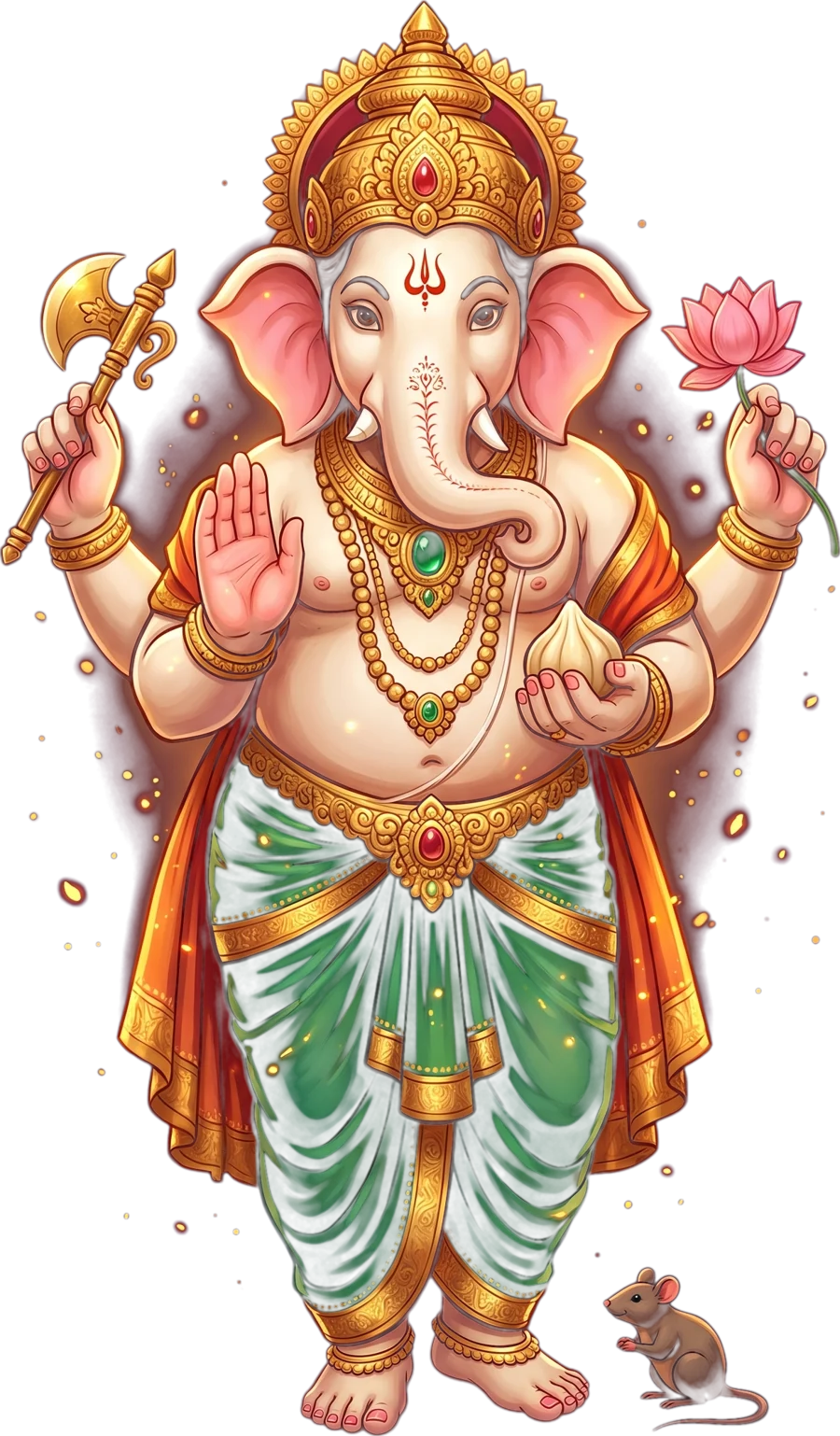
The elephant-headed son of Parvati and Shiva, remover of obstacles and the first to be worshipped in any rite. He is welcomed into the house as a guest on his birthday and sent home with a promise to come back next year.
His mother, who made him from the turmeric paste of her own body. In Maharashtra and Karnataka she comes as Gauri, his mother or sister, for three days in the middle of the festival.
The fourth day of the bright fortnight · Saturday 4 September 2027
Ganesh sthapanathe welcoming
The clay image is carried home or to the pandal with drums, its face covered until it is installed. The priest gives it breath, the pranapratishtha, at the auspicious hour of midday, when Ganesha was born. He is offered twenty-one modak, twenty-one blades of durva and red hibiscus, and the aarti is sung morning and evening. That night nobody looks at the moon.
In Maharashtra Gauri arrives in two forms, the elder and the younger, and stays for three days, worshipped with sixteen kinds of food, before she goes and the family's own Ganesha goes with her or after her.
The fourteenth day of the bright fortnight · Tuesday 14 September 2027
Ganesh visarjanthe immersion
The public Ganeshas of the cities are carried through the streets in processions that last a whole day and night, with dhol and tasha drums and gulal, and immersed in the sea, a river or a lake. Families whose Ganesha has stayed one and a half, five or seven days immerse theirs on those days. The cry is Ganapati bappa morya, pudhchya varshi lavkar ya, which asks him to come back soon next year.
The great public festival. Mumbai has thousands of sarvajanik pandals; the Lalbaugcha Raja draws lakhs of people a day, and the immersion at Girgaon Chowpatty takes all night. Pune keeps its five Manache Ganpati, the honoured Ganeshas who lead the procession, and pilgrims go round the eight Ashtavinayak temples of the region.
GoaChavath
Goa's greatest festival, kept in the family house, with the matoli, a canopy of fruit, gourds and forest leaves hung over the image, and the whole family home from wherever they are.
KarnatakaGowri Ganesha
Gowri is worshipped first, on the day before, and married women give each other bagina, offerings of turmeric, kumkum and bangles. Then Ganesha comes.
Telangana and Andhra PradeshVinayaka Chavithi
Hyderabad's Khairatabad Ganesha is one of the tallest in the country, and the city's immersion in the Hussain Sagar lake goes on for a day. At home, Ganesha is worshipped with twenty-one kinds of leaves.
Tamil Nadu and KeralaVinayagar Chathurthi
Kozhukattai, steamed rice dumplings with coconut and jaggery, are made at home, and small clay Vinayagars bought at dawn from the street are immersed in a well, a tank or the sea.
Abroad
Kept from Mauritius to Thailand and among Indians everywhere, often with immersion in the sea or a bucket at home.
People of every faithThe public festival
The sarvajanik Ganeshotsav was made a public festival by Bal Gangadhar Tilak in 1893, to gather people across caste in the struggle against British rule, and the pandals of Maharashtra are built by neighbourhoods together. In many towns Muslim families have long kept a Ganesha or helped run the mandal.
How it is kept
The image is made of clay by potter families who start work months before. It is brought home with its face covered, installed on a decorated platform, and given breath by the priest at midday. For the days he stays, Ganesha is a guest. He is woken, bathed, offered food and flowers, and sung the aarti "Sukhakarta Dukhaharta" morning and evening, with twenty-one modak, sweet dumplings of rice flour filled with coconut and jaggery, his favourite food.
Families keep him for a day and a half, five, seven or ten days, as their custom is, and on the last day carry him to the water with drums. The public Ganeshas of the cities stay the full ten days, to Anant Chaturdashi, and the immersion processions take a whole day and night. More and more families now make their image of unbaked clay and immerse it at home, so that the rivers and the sea are not harmed by paint and plaster.
In the old texts
The Shiva Purana tells Ganesha's birth from Parvati's body and his elephant head, and the Brahma Vaivarta Purana gives another version in which Shani's glance burns the baby's head away. The Ganesha Purana and the Mudgala Purana, the scriptures of the Ganapatyas, are devoted to him, and describe the Bhadrapada vow. The Syamantaka story is in the Vishnu and Bhagavata Puranas, and the vow books join it to the Chaturthi moon.
The festival was kept in the houses of the Peshwas of Pune in the eighteenth century with great display. In 1893 Bal Gangadhar Tilak brought it out into the streets as a public festival, and the sarvajanik Ganeshotsav that grew from it is the festival most people now picture.
Where this page comes from. Written by Devalok from the Shiva Purana (Rudra Samhita, Kumara Khanda), the Ganesha and Mudgala Puranas, the Bhagavata and Vishnu Puranas on the Syamantaka jewel, the Brahma Vaivarta Purana, the Gokarna temple tradition, and accounts of the festival in Maharashtra, Goa, Karnataka, Telangana and Tamil Nadu, as recorded in the Devalok Lore. Our own words throughout.