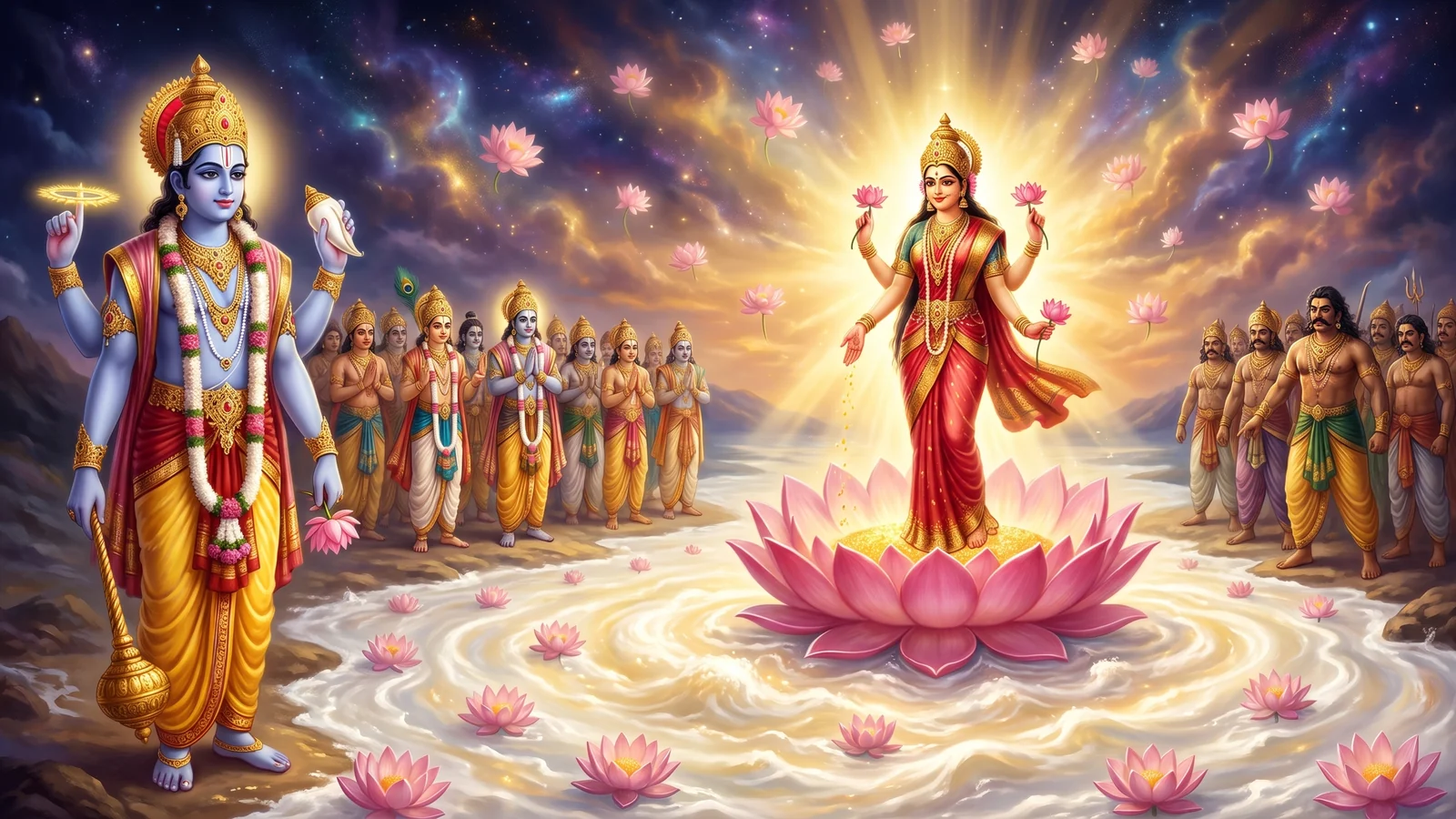
Five nights at the darkest point of the autumn month, when every house in India puts a lamp in its doorway. The lamps are lit for Lakshmi, who stays where they burn; for Rama, coming home; for Yama, at the door; and for Kali, on the new-moon night in the east. Each day has its own god and its own story.
Also calledDeepavaliDipavaliDipotsavaDipamalikaTihar (Nepal)Swanti (Newar)
Next, in 2026Sunday 8 November 2026
6 to 10 November 2026
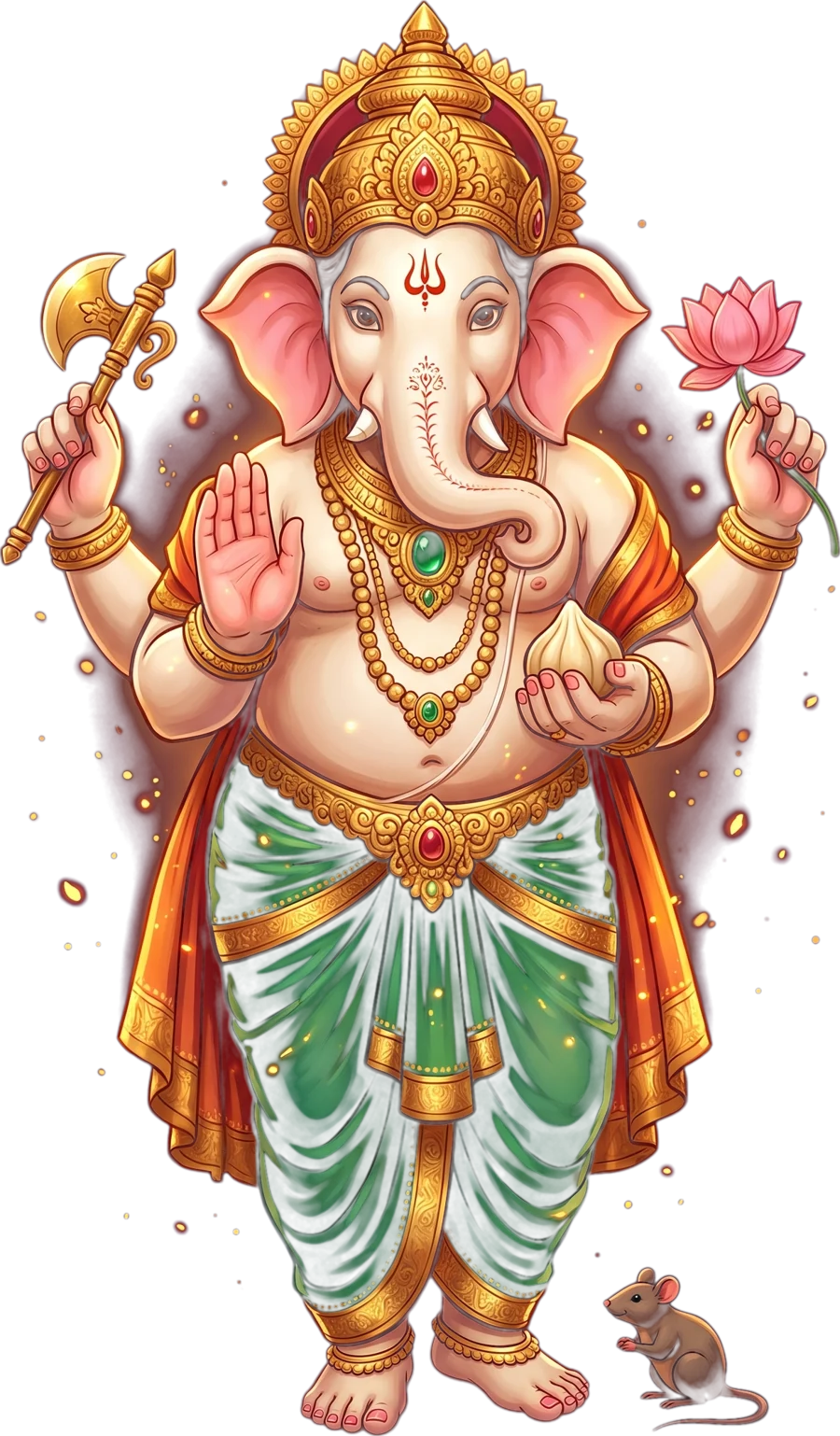
Prime godsLakshmi and Ganesha
with 6 more
WhereAcross India and Nepal, and wherever Indians have settled
How longFive days
The dark fortnight of Karttika, from the thirteenth day to the second day after the new moon, in October or November
Why it is kept
Diwali is a row of lamps. The name comes from dipavali, a line of lights, and that is what the festival looks like from a rooftop on the main night: every house in the street with lamps along its doorstep, its windows and its walls, and the sky above lit by fireworks. It falls on the darkest night of the month of Karttika, in October or November, when the rains are over and the harvest is in, and it lasts five days.
Ask why the lamps are lit and you will get a different answer in every part of India, and each answer is a story.
The oldest written answer is in the Skanda Purana. When Vishnu, as the dwarf, had taken the three worlds from King Bali, he offered the king a wish, and Bali asked for three nights of the year to be his kingdom again, and for Lakshmi to stay for good in every house that lit lamps on those nights. So the lamps are lit for Lakshmi. A house that is clean and bright is a house she will enter, and the dark house is left to her elder sister, Misfortune.
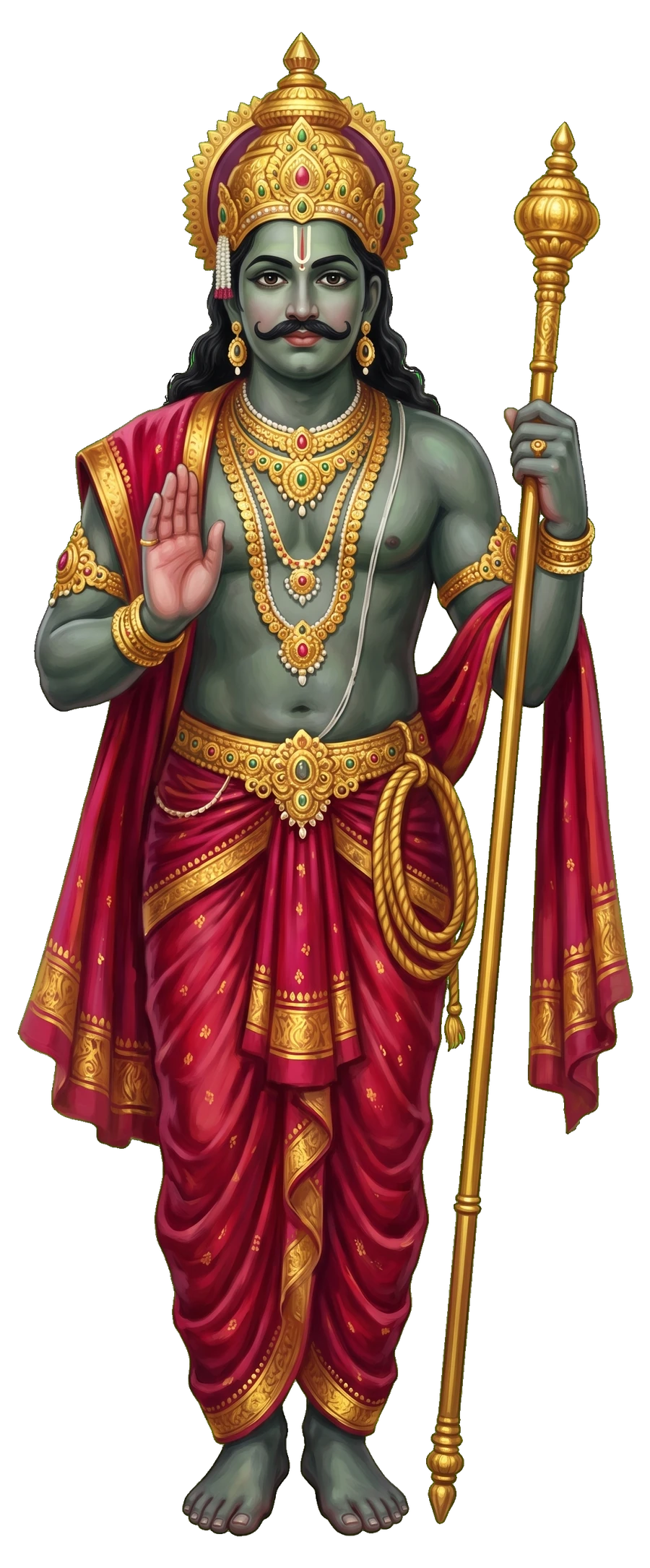
In the north the lamps are for Rama. Fourteen years after he went into the forest he came home to Ayodhya, and the city came out to meet him. In the east they are for Kali, the goddess of the new-moon night. On the first evening one lamp is turned to the south, for Yama, so that he does not come to the house before his time.
Most families keep several of these reasons at once, and none of them is wrong. What the stories agree on is the act itself: on the darkest night of the year's best season, you light the house and open the door.
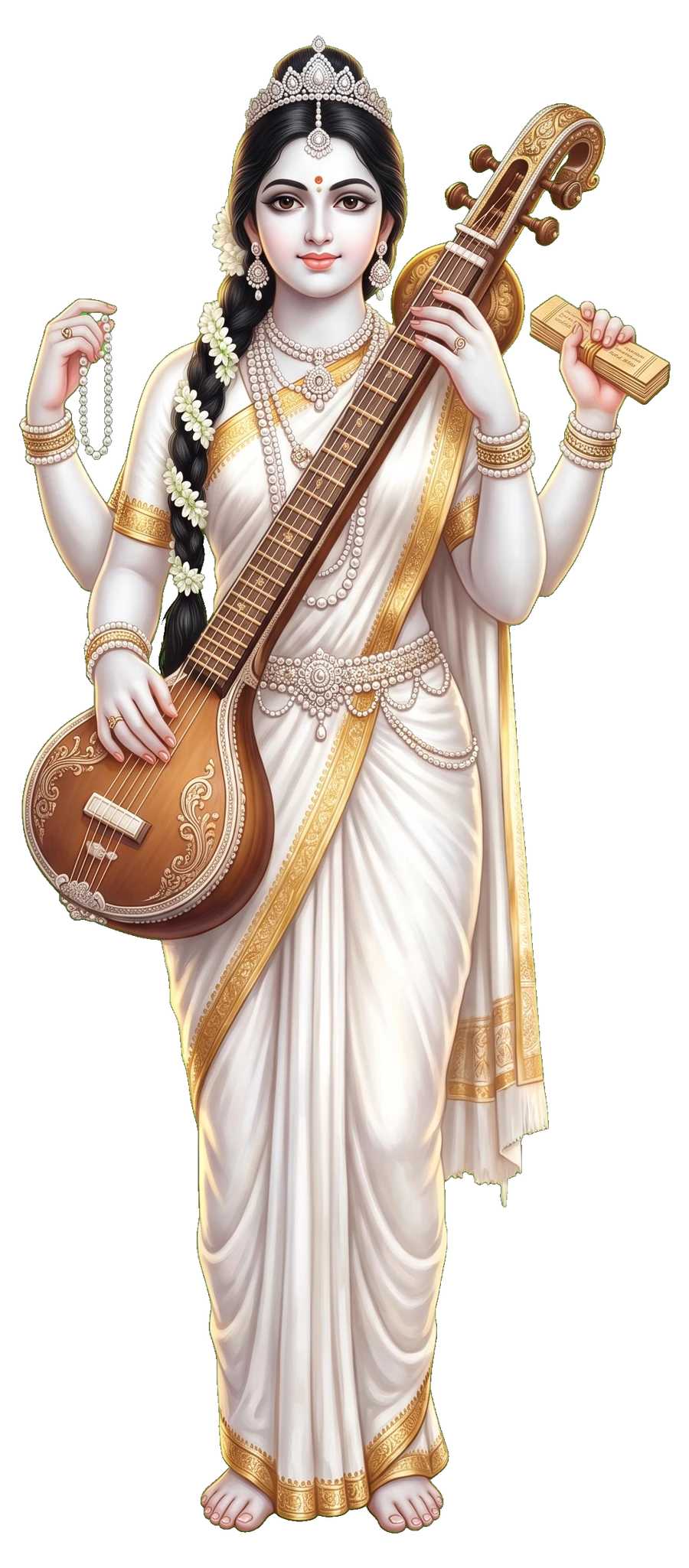
Worshipped as Sharada on the main night in Gujarat.
K
Kubera
The treasurer of the gods, honoured beside Lakshmi in many homes.
D
Dhanvantari
Physician of the gods. The first day is kept as his birthday.
The 5 days
1
Dhanteras
The thirteenth day of the dark fortnight · Friday 6 November 2026
DhanatrayodashiYama DeepamKaag Tihar in Nepal
Houses and shops are cleaned and the first lamps go out. It is the great day for buying gold, silver and new metal pots. After dark a lamp for Yama is set outside, facing south, to keep untimely death away. Dhanvantari's birthday. In Nepal the crows are fed.
The fourteenth day of the dark fortnight · Saturday 7 November 2026
Chhoti DiwaliKali ChaudasRoop ChaudasKukur Tihar in Nepal
A bath before dawn with oil and herbs, because Lakshmi lives in the oil and Ganga in the water. In the south and in Goa this is the main day of Deepavali, for Krishna's killing of Naraka. In Gujarat Hanuman is worshipped against the spirits said to walk that night. In Nepal the dogs are garlanded.
DiwaliKali Puja in the eastSharda Puja in GujaratGai Tihar in Nepal
The main night. At dusk the lamps inside and outside the house are lit and Lakshmi and Ganesha are worshipped, so that she enters the clean, bright house and stays. Sweets are shared, fireworks go up, and the dice come out. After midnight, the old texts say, the women drive Alakshmi out of the courtyard with winnowing baskets and drums. In Bengal, Odisha and Assam the night belongs to Kali.
The first day of the bright fortnight of Karttika · Monday 9 November 2026
AnnakutBali PratipadaPadwaBali PadyamiGujarati New YearMha Puja in Nepal
Govardhan is shaped in cow dung and worshipped, the cows are decorated and given the day off, and temples heap up a mountain of food, Annakut, for Krishna. In Maharashtra and Karnataka King Bali is welcomed home. Husbands and wives exchange gifts. Gujarat begins its new year. The Newars of Nepal worship their own bodies in Mha Puja.
Brothers go to their sisters' houses to be fed and marked on the forehead, as Yama went to Yamuna. In Nepal sisters ring their brothers with oil and garland them with flowers that will not wilt.
The return of Rama to Ayodhya, lamps along every ledge and roof, Lakshmi and Ganesha at dusk. In Braj the fourth day is Govardhan Puja and Annakut.
East India (Bengal, Odisha, Assam)
The new-moon night is Kali Puja, with images of Dakshinakali in great pandals. Bhai Phonta on the fifth day.
South India and Goa
Deepavali proper is the fourteenth, Naraka Chaturdashi, with an oil bath before sunrise and fireworks at dawn for Krishna's victory over Naraka. Karnataka keeps Bali Padyami.
West India (Gujarat, Maharashtra)
Sharda Puja on the main night, the new year on the day after it in Gujarat, Padwa and Bali Pratipada in Maharashtra, Bhau Beej on the fifth day.
Nepal
Tihar, five days with a creature for each. Crows, then dogs, then cows with Lakshmi, then oxen and Govardhan, and Bhai Tika for brothers on the last.
JainsMahavira Nirvana
The night Mahavira, the twenty-fourth Tirthankara, reached final liberation. Jains keep it with lamps.
SikhsBandi Chhor Divas
The release of Guru Hargobind from the Mughal prison at Gwalior Fort, and his arrival at the Golden Temple in Amritsar.
Newar BuddhistsSwanti
The Newars of the Kathmandu valley keep the same five days and pray to Lakshmi.
How it is kept
In the days before, houses are scrubbed, whitewashed and repaired, because Lakshmi will not come into a dirty house. Doorsteps are painted with rangoli in coloured powder, rice flour and petals. People buy new clothes, and on the first day something of gold, silver or metal.
Every evening, and above all on the third, small clay lamps of oil, diyas, are set along doorsteps, windows, walls and roofs, and in temples, at rivers and in cowsheds, as the Padma Purana lists them. At dusk on the main night the family worships Lakshmi and Ganesha together. Sweets, laddus and barfis among them, are made and sent to friends and neighbours. Fireworks go up after the puja. Dice and cards come out, because the Padma Purana says Shiva and Parvati played that night, and whoever wins the first throw is lucky all year.
The days after belong to the household: cows decorated and rested, a mountain of food for Krishna, husbands and wives giving each other gifts, and on the last day, brothers at their sisters' tables.
In the old texts
The rites of all five days are set out in two Puranas, the Padma and the Skanda, both put together between the seventh and tenth centuries. The Skanda Purana calls the festival Dipavali and explains it through Bali. The Padma Purana gives it to Shiva, who explains it to his son Kartikeya.
The festival is older than either text says. The emperor Harsha, in his seventh-century play Nagananda, calls it Dipapratipadotsava, the festival of lamps on the first day, when lamps were lit and newly engaged couples received gifts. In the ninth century the poet Rajasekhara called it Dipamalika and wrote of whitewashed houses and of streets and markets lit with oil lamps at night.
Travellers noticed it too. Al Biruni, in the eleventh century, recorded Deepavali on the new moon of Karttika. Niccolò de' Conti, a Venetian, saw temples and roofs covered with countless oil lamps kept burning day and night, and families in new clothes singing and feasting. In the sixteenth century Domingo Paes saw the houses and temples of Vijayanagara lit up for Dipavali in October.
Where this page comes from. Written by Devalok from the Skanda Purana (Karttikamasa Mahatmya, chapter 9), the Padma Purana (Uttara Khanda, chapter 122), the Valmiki Ramayana and the Ramcharitmanas, the Vishnu and Bhagavata Puranas, the Devi Mahatmya, and the Diwali, Kali and Dhanteras articles of Wikipedia, as recorded in the Devalok Lore. Our own words throughout.