As it is sung at the Lohri fire
Punjab · the night of 13 January · 4 min read
All day the children had been at it. They went from gate to gate in bands of six and seven, the smallest in front, and one of them sang while the rest came in on the last word of every line with a shout.
"Sundar mundriye ho!"
"Ho!"
"Tera kaun vichara ho!"
"Ho!"
"Dulla Bhatti wala ho!"
At every door they got til, gur, rewri, peanuts, a coin or two. Nobody turned them away, because a house that sends the Lohri singers off empty is asking for a bad year.
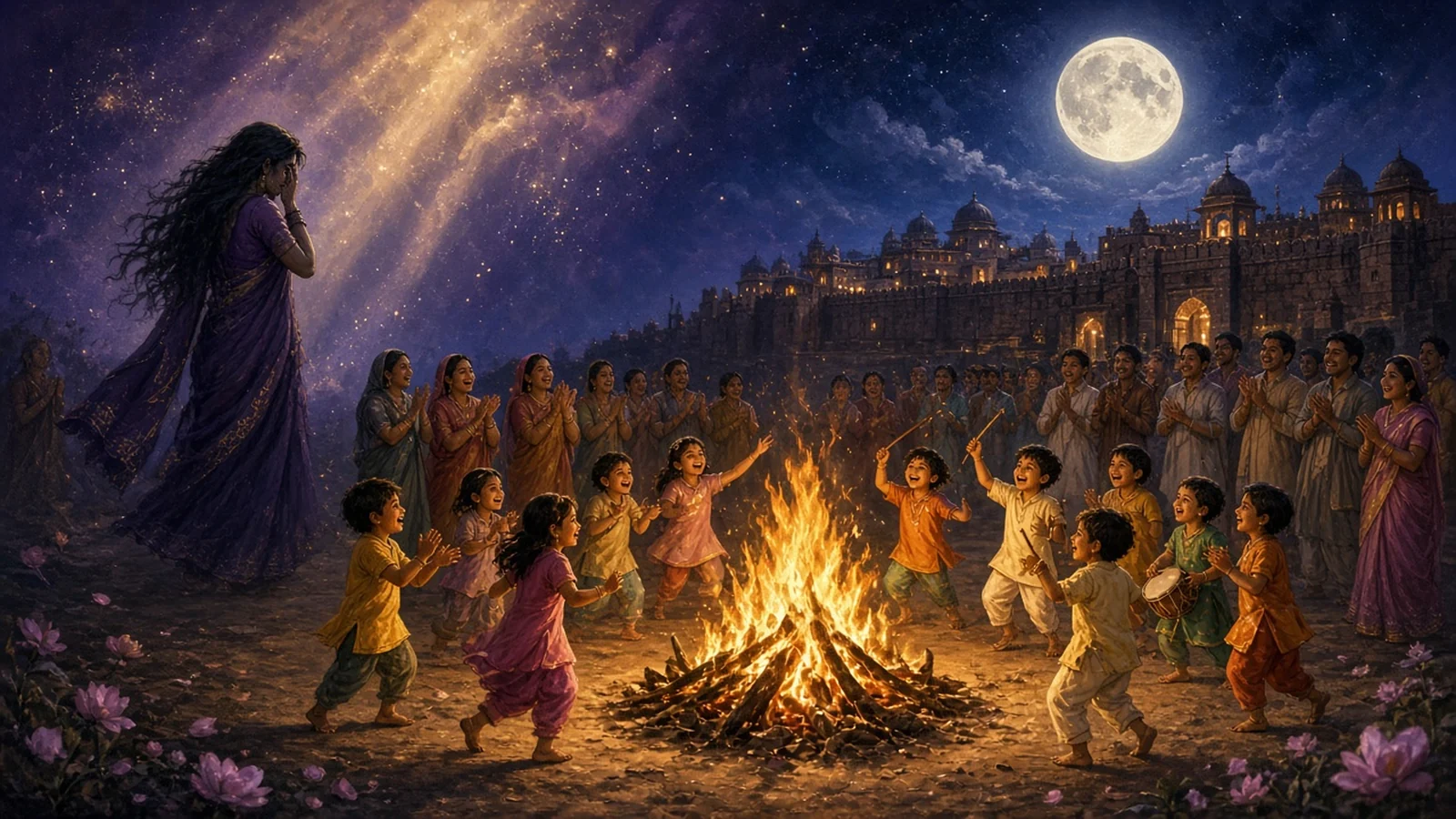
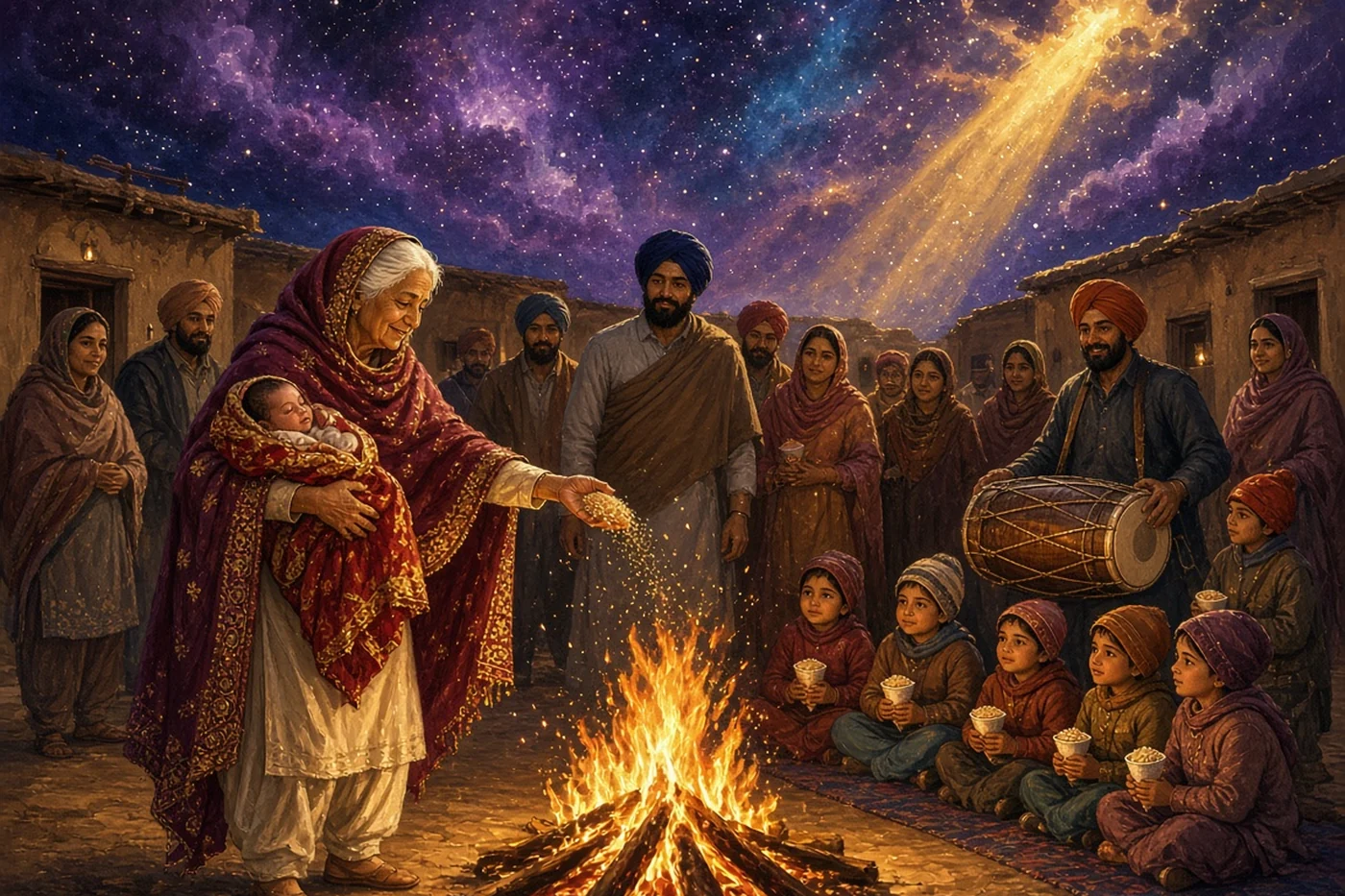
That night the fire was in Harbans Kaur's courtyard, because the house had a new baby, and the first Lohri after a birth is the big one. When the stars came out her son lit the heap, the neighbours came in with their shawls pulled tight, and the dhol began.
The old woman walked round the fire first, the baby in her arms, and threw a fistful of til and gur into the flames. "Aadar aaye, dilather jaaye," she said. Let honour come in and want go out. The others went round after her, and the children sat as close to the heat as they were allowed.
"Dadi," said the smallest, "who was Dulla Bhatti?"
"You sang his name all day and you do not know?"
"The song does not say."
"The song says enough, if you listen." She settled the baby. "He was a Bhatti, a Rajput, from Pindi Bhattian on the road to Lahore, a big landholder's son. In the emperor Akbar's day the emperor's men came for the land tax in cash, and whoever would not pay lost his head. Dulla's grandfather would not pay. His father would not pay. Dulla was born after they were gone, and when he grew up he would not pay either. He took to the forest with his friends and robbed the emperor's caravans on the Kabul road, and what he took he gave away in the villages. The poor loved him. The rich locked their doors."
"And the girl in the song?"
"Two girls. Sundri and Mundri. Their father was a poor Brahmin with nothing but two daughters and a promise that they would marry two boys of the next village. Then a man with land and soldiers saw the girls and decided he would have them. The boys' families were afraid of him and would not come for the wedding. So the Brahmin went to the one man who was not afraid."
"Dulla."
"He found him in the forest and fell at his feet. 'They will take my daughters,' he said, 'and nobody will marry them, and I cannot stop it.'"
"And Dulla said, 'Then I will marry them.'"
The children laughed. "He married them himself?"
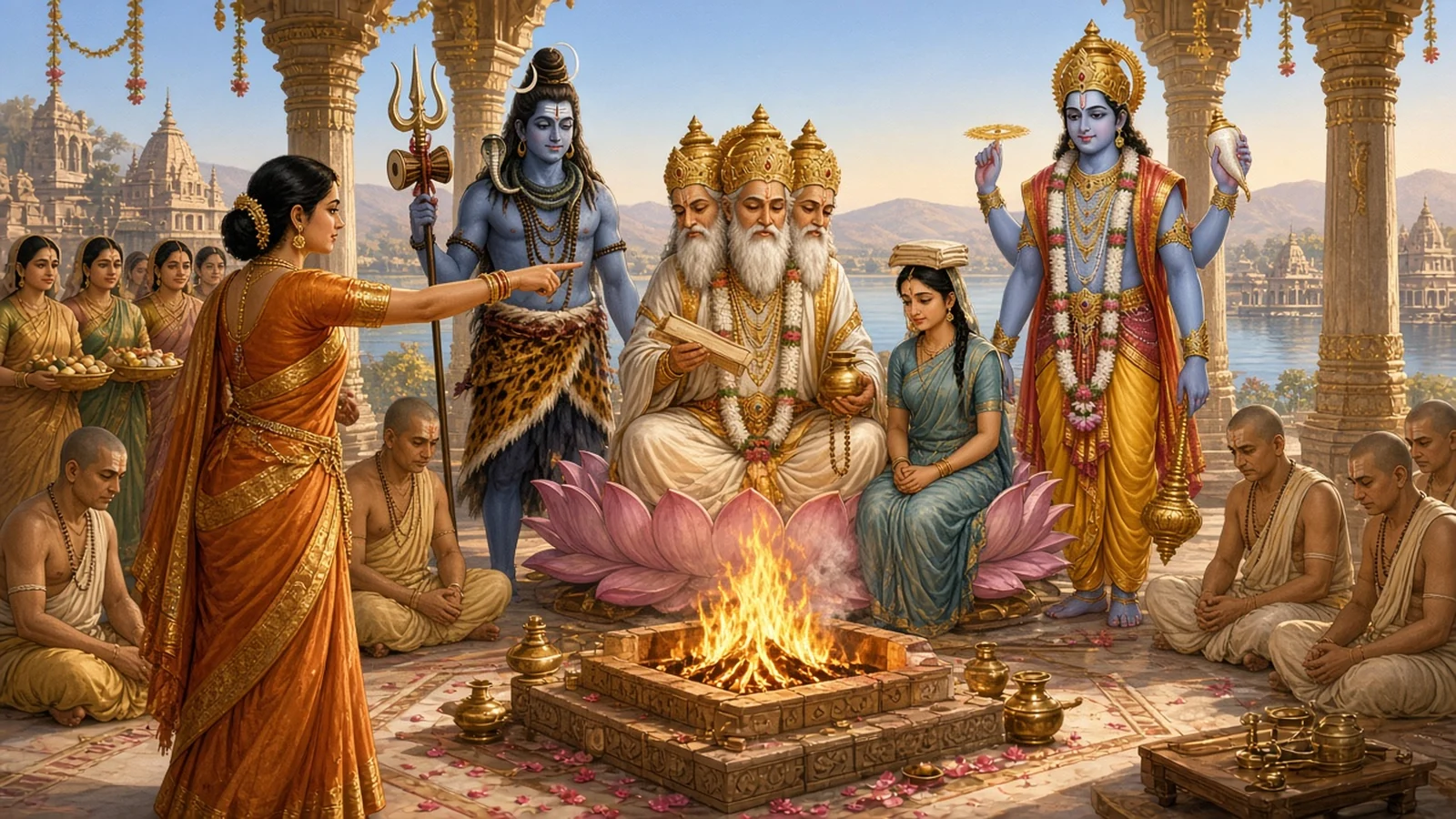
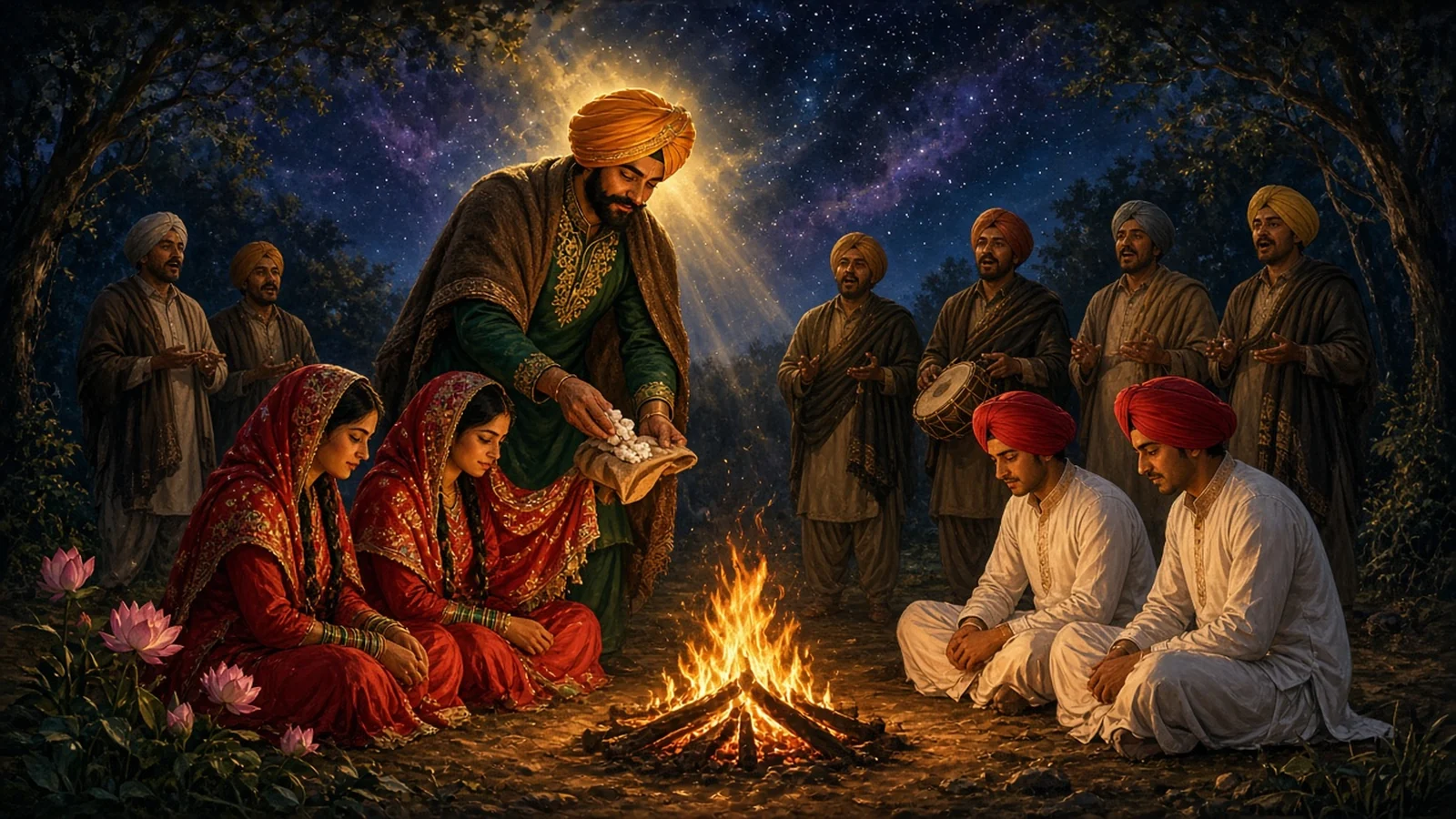
"He gave them away, as a father does. He sent for the two boys and told their fathers that Dulla Bhatti was asking, and they came. And because there was no time and no money, he did it there in the forest, that same night. He gathered wood and lit a fire like this one. The girls sat on one side in whatever red they had, the boys on the other."
"There was no priest and nobody knew the mantras, so Dulla said what he knew and his men sang what they knew, and the fire took it the way it takes everything. Then he put a ser of sugar in each girl's shawl, because that was all the dowry there was. 'Go,' he said. 'You are married, and anybody who says otherwise will answer to me.'"
"Ser shakkar payi ho," sang the smallest.
"That is the line. And the red suit, and the shawl that was torn, and the uncle who made choori for the wedding and the landlord's men who looted it. The song keeps all that. It does not keep how it ended for Dulla, and that is right, because this is a wedding song."
The bhangra had started on the far side of the fire. The old woman held the baby up so that the light fell on her face.
"Now sing it properly," she said to the children. "To the fire. He is listening."
They sang it through, every line and every "ho", down to "Sanu de de Lohri, te teri jeeve jodi," and the people round the fire laughed and gave them more.
As Punjab remembers him: the var and the gallows
Pindi Bhattian and Lahore · the ballad and the historians · 3 min read
The ballad singers of Punjab tell Dulla's whole life, and the historians who have gone looking for him tell most of it the same way.
Pindi Bhattian stood on the high road from Lahore to Kabul, in the bar country between the Chenab and the Ravi, and the Bhattis were its hereditary chiefs. In Akbar's reign the empire changed how it took its share. A set sum in cash for every village, fixed by officers from outside, and a faujdar with soldiers to collect it. Sandal Bhatti, whom some call Bijli, refused. So did his son Farid. They were taken to Lahore and beheaded, and the ballad says their heads hung on the town gate and their bodies were stuffed with chaff.
Farid's wife Ladhi gave birth four months later, in 1547 by most reckonings. The storytellers add that the emperor's own son was born the same day, and that Ladhi was made to nurse the prince, so that the rebel's house might be bound to the throne by milk. Ladhi locked the family's swords in a room and told the boy nothing.
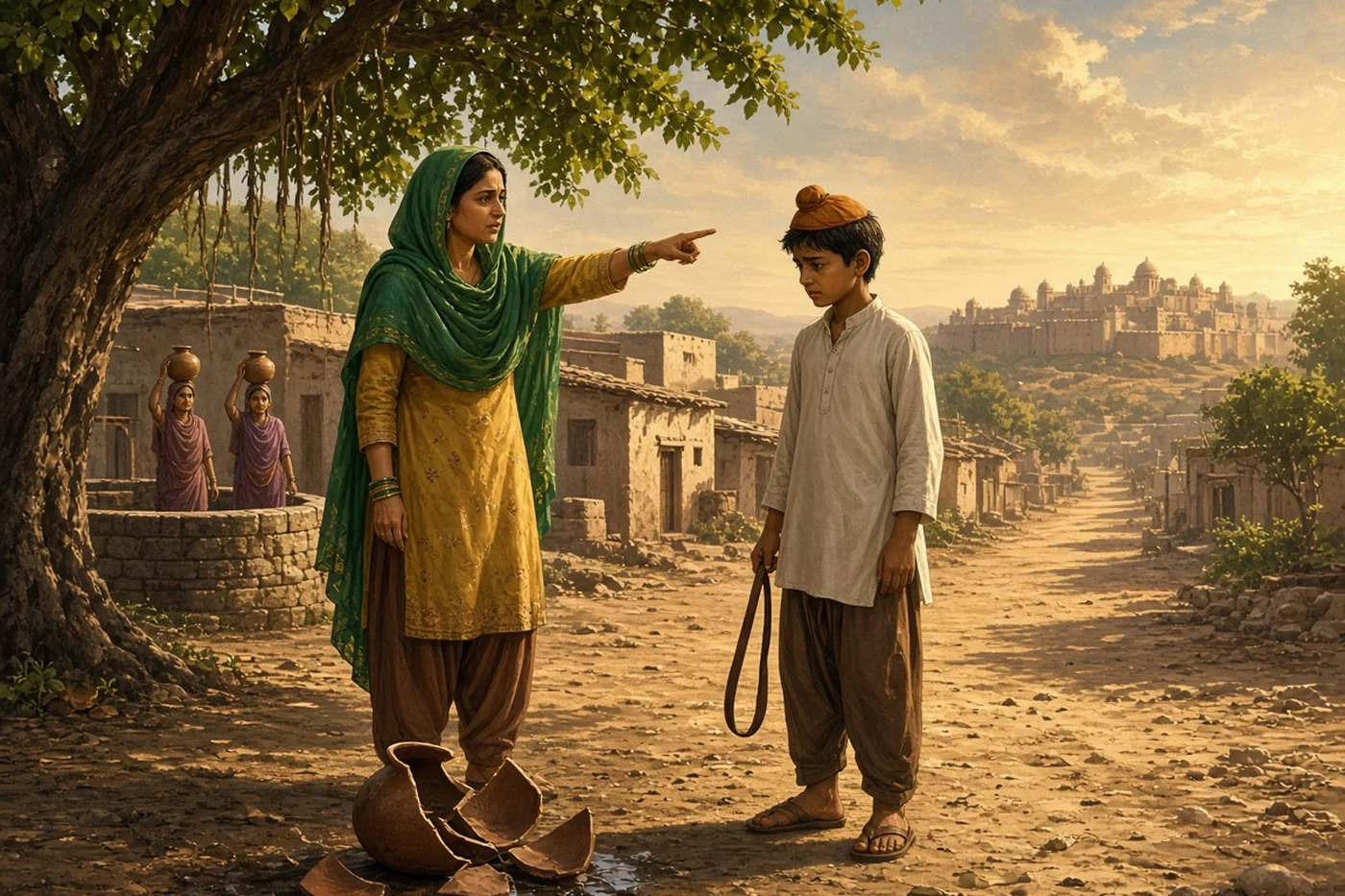
He learned it from a stranger. One day his sling broke a village woman's pitcher, and she turned on him. "You break pots," she said, "while the men who killed your father and your grandfather sit in Lahore." He went home and asked, and Ladhi opened the room.
"Take them," she said. "They were kept for you."
What followed the singers call the war of Dulla. He and his companions stopped the imperial caravans, the gifts coming down from Kashmir and Kabul to the emperor, and spread what they took through the villages. He is said to have let a captured prince go. "My quarrel is with your father," he told him, "not with you." Akbar, who was holding his court at Lahore in those years, sent commanders with a great force to Sandalwala. They came while Dulla was away at Chiniot and seized the women of his house, and one of them, Gujri, killed a commander in his own tent with a dagger.
Dulla came back and fought. When he had a surrendered commander under his sword his mother stopped him. "You drank my milk," she said. "Do not sour it." He let the man live, and the singers say that mercy cost him his life, for he was taken to Lahore.
He was hanged in the Nakhas, now Landa Bazar, in 1599, before a crowd the emperor meant as a lesson. He did not quake. His last words were against the emperor, and the kotwal who repeated them at court was hanged the same day.
Shah Hussain, the Sufi who sang in the streets of Lahore, is said to have stood in that crowd. He left a line that Punjab still quotes over the story: thrones are not got by asking. A plain grave at Miani Sahib is pointed out as Dulla's. At Pindi Bhattian the var is still sung at the fairs, and an old well is shown as the place where his house stood.